History of Taiwan: 9 Stories That Explain How a Tiny Island Became Its Own Country (Without Being Allowed to Say So)
The history of Taiwan is one of the strangest, most heartbreaking, most quietly triumphant stories ever lived on a piece of land 245 miles long. It is a story about a beautiful island that has been colonized five times in four hundred years, governed by people who couldn’t pronounce its name, mourned by a generation that wasn’t allowed to speak about its trauma, and somehow — at the end of all that — it became one of the most vibrant democracies and most important economies on Earth, while a global power tells the world it doesn’t exist.
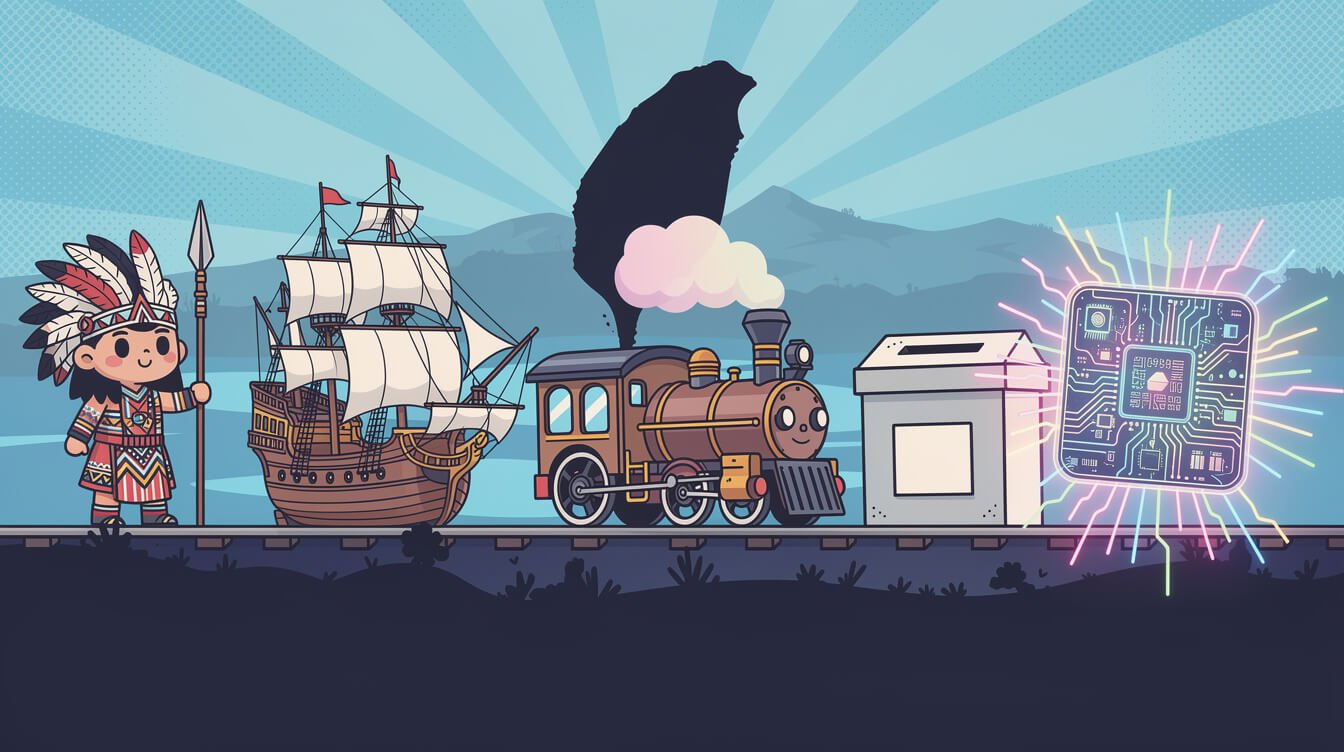
You can read the Wikipedia chronology if you want every date. We’re going to tell it differently. The history of Taiwan isn’t a textbook timeline — it is nine stories, each anchored by one person, one fort, one cigarette, one factory, one vote. Pour a cup of baozhong tea. We’re going back six thousand years.
Story One: Before Anyone Else Showed Up — 6,000 Years of Austronesian Taiwan
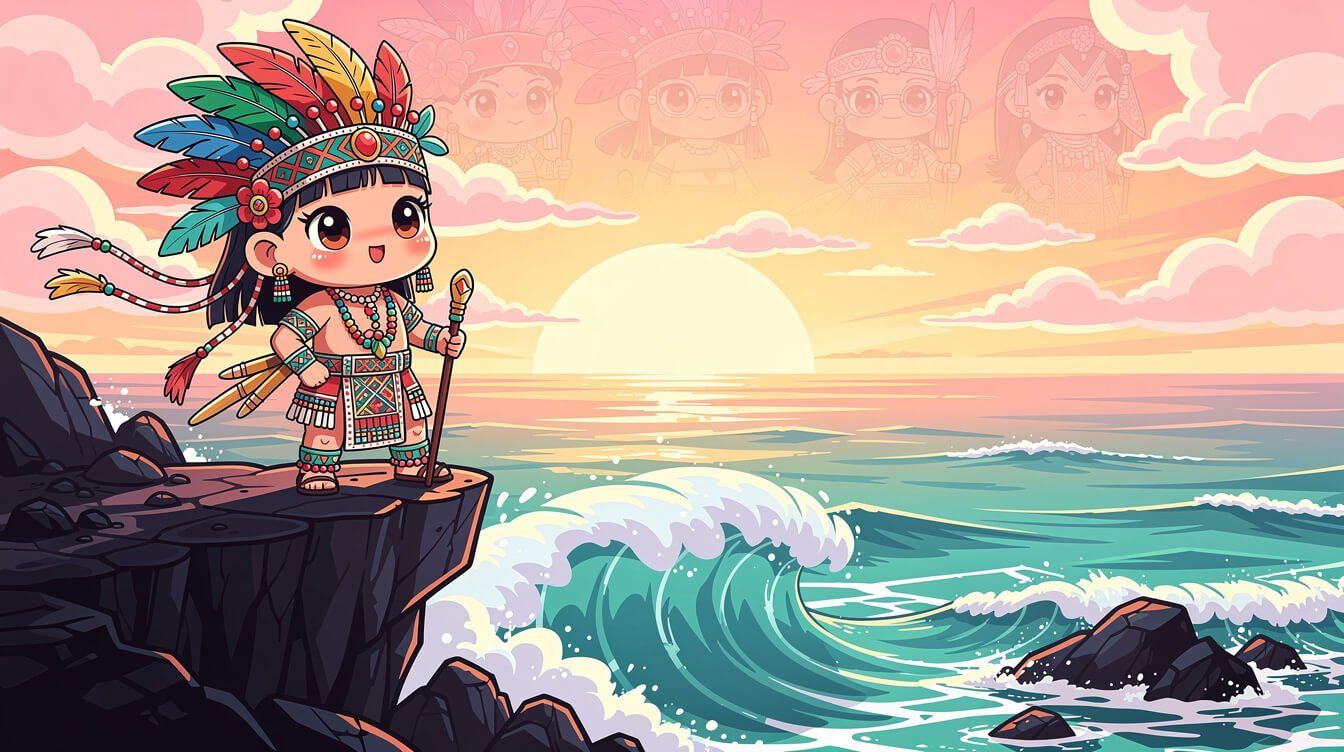
Before there was a “Taiwan,” there were the people who built the world’s largest language family on this island. Linguists have traced the entire Austronesian family — the languages spoken today from Madagascar to Hawai’i to Easter Island, by roughly 386 million people — back to a single homeland. That homeland is Taiwan.
Roughly six thousand years ago, Austronesian-speaking peoples were already farming millet, fishing the rocky coasts, and weaving the textiles whose patterns still echo through Indigenous art today. Among them were the ancestors of the sixteen officially recognized Indigenous nations that still call this island home: the Tsou in the misty central mountains around Alishan, the Atayal with their distinctive facial tattoos, the Amis who built their society along the east coast, the Bunun who climb peaks no Han settler dared, and the seafaring Tao of Orchid Island, whose flying-fish ceremonies are still performed every spring.
The Tao have a song about the very first man and woman who climbed out of a stone and a bamboo stalk, blessed by their ancestors, and built the first tatala fishing boats. That song is older than every empire that would later try to claim this island. When you read the next eight stories — about Dutch sailors, Chinese officials, Japanese governors, Generalissimos, and presidents — remember that the Tao were already here, that the Tsou were already here, and that the deepest layer of the history of Taiwan is the one that came first and never left. If you want to go deeper, our guide to Taiwan’s sixteen Indigenous peoples tells those stories one nation at a time.
Stories Two & Three: Fort Zeelandia and the Pirate-Prince Who Drove the Dutch Out
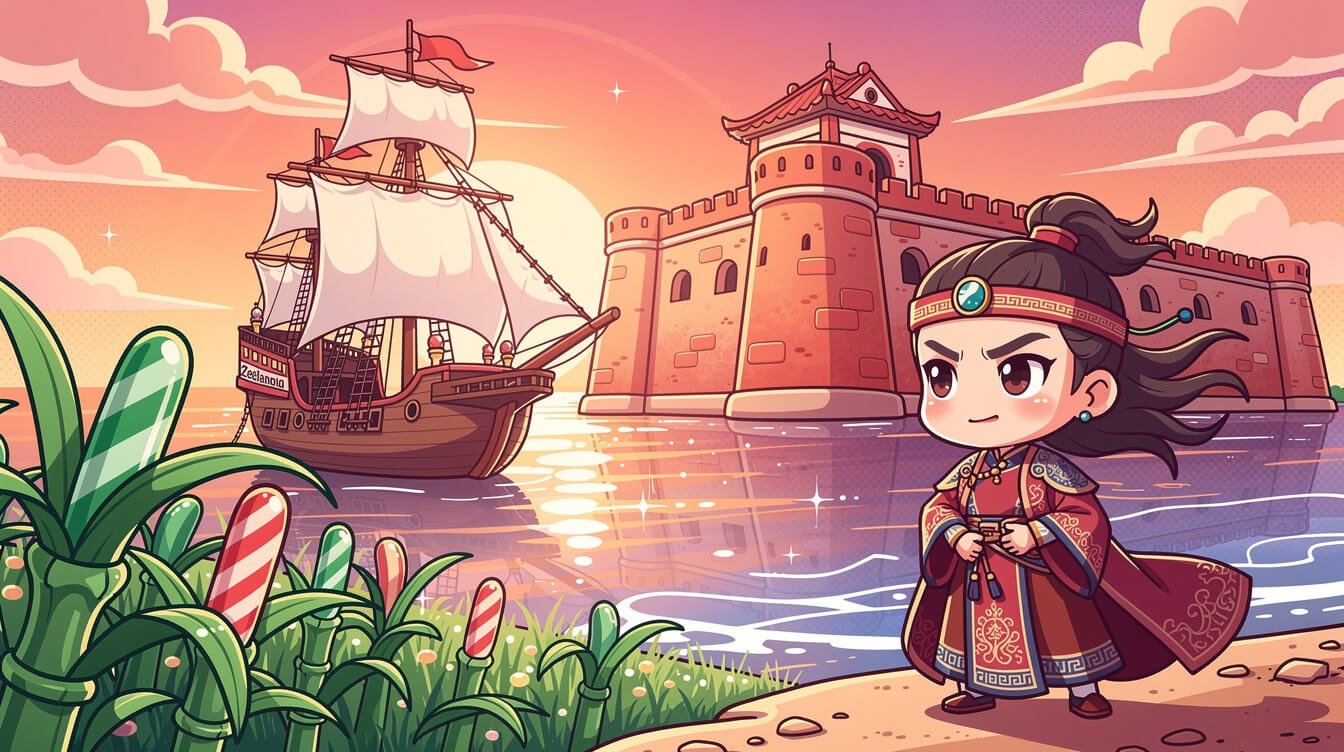
In 1624, a fleet of Dutch East India Company ships arrived off Taiwan’s southwest coast, kicked sand off their boots, and started building a coral-stone star fort on a sandbar near what is today Tainan. They called the island Formosa — “beautiful” — because Portuguese sailors had shouted that from a passing ship a few decades earlier, and Europeans tended to keep whatever name was cheapest. They named the fort Zeelandia.
For the next thirty-eight years, the Dutch ran Taiwan as a sugar-and-deerskin colony. They imported Han Chinese laborers from Fujian to work the cane fields, taxed everyone they could catch, and converted Indigenous communities to Calvinist Christianity at gunpoint. The remains of Fort Zeelandia are still standing in Anping, looking smaller than you’d expect for something that ran an empire’s southern flank.
Then in 1661, a charismatic Ming-loyalist warlord named Zheng Chenggong — known in the West as Koxinga — sailed across the strait with twenty-five thousand troops. His father had been a pirate-prince who controlled half of China’s coastal trade; his mother was Japanese; his loyalty was to a Ming dynasty that had just been destroyed by the Manchu Qing. He needed a new base. He picked Taiwan.
After a nine-month siege, the Dutch surrendered Fort Zeelandia in February 1662. Koxinga died of malaria a few months later, but his family ruled the Kingdom of Tungning — a fully independent Han-Chinese state on Taiwan — for the next twenty-one years. It is one of the most overlooked chapters in the history of Taiwan: a period when the island wasn’t a colony of anyone, when it had its own king, its own coins, and its own diplomatic relations with Japan and the European trading companies. The Tungning experiment ended in 1683 when the Qing finally sent a fleet to crush it, but the memory of an independent Taiwan ruled by a Taiwan-born monarch has never really gone away.
Story Four: 212 Years as China’s Reluctant Colony
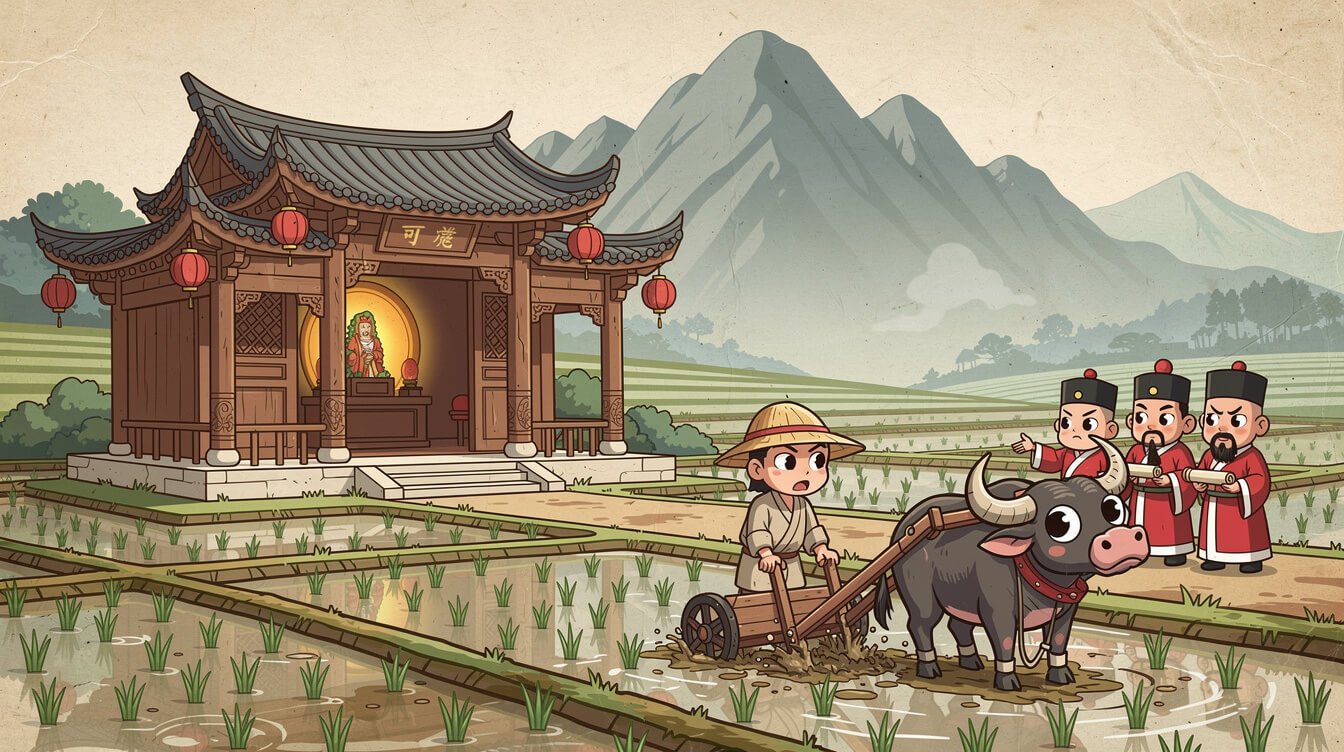
For the next two hundred and twelve years, from 1683 to 1895, Taiwan was a problem the Qing dynasty didn’t really want to solve. The Kangxi Emperor, who reluctantly annexed the island after defeating Tungning, openly debated abandoning it entirely. “A ball of mud beyond the sea,” he was reported to have muttered. “It would be no loss if we never had it.”
What kept Qing China holding on was geography. Taiwan sat astride the maritime trade routes that the empire could not afford to let a hostile power control. So the Qing held the island the way you hold something you can’t put down — at arm’s length. Coastal settlers were technically forbidden from crossing the strait, which only made the migration more chaotic. Across two centuries, waves of Hakka and Hoklo (Hokkien-speaking) farmers from Fujian and Guangdong arrived in defiance of imperial edicts. They pushed into the lowland plains, displacing or assimilating the Pingpu (plains Indigenous) communities and butting up against the mountain Indigenous nations who refused to yield.
Frontier Taiwan was famously chaotic. There is a Qing-era saying — sānnián yī xiǎofǎn, wǔnián yī dàluàn — “a small uprising every three years, a great revolt every five.” Tax revolts, clan wars between Hakka and Hoklo settlers, and full-scale rebellions like the Lin Shuangwen Uprising of 1786 kept Beijing distracted. The Qing built the temples to Mazu, the sea goddess, that still line every Taiwanese port (a habit Han migrants brought with them and that today defines Taiwan’s most important religious pilgrimage). But Beijing never invested the way it would have invested in a province it actually loved.
By the late 19th century, that calculation finally changed. Under the reformer governor Liu Mingchuan, Taiwan got Asia’s first electric streetlights, its first railway, and its first telegraph cables. The Qing had finally decided to take Taiwan seriously. It was nine years too late.
Story Five: The Japanese Half-Century That Built Modern Taiwan
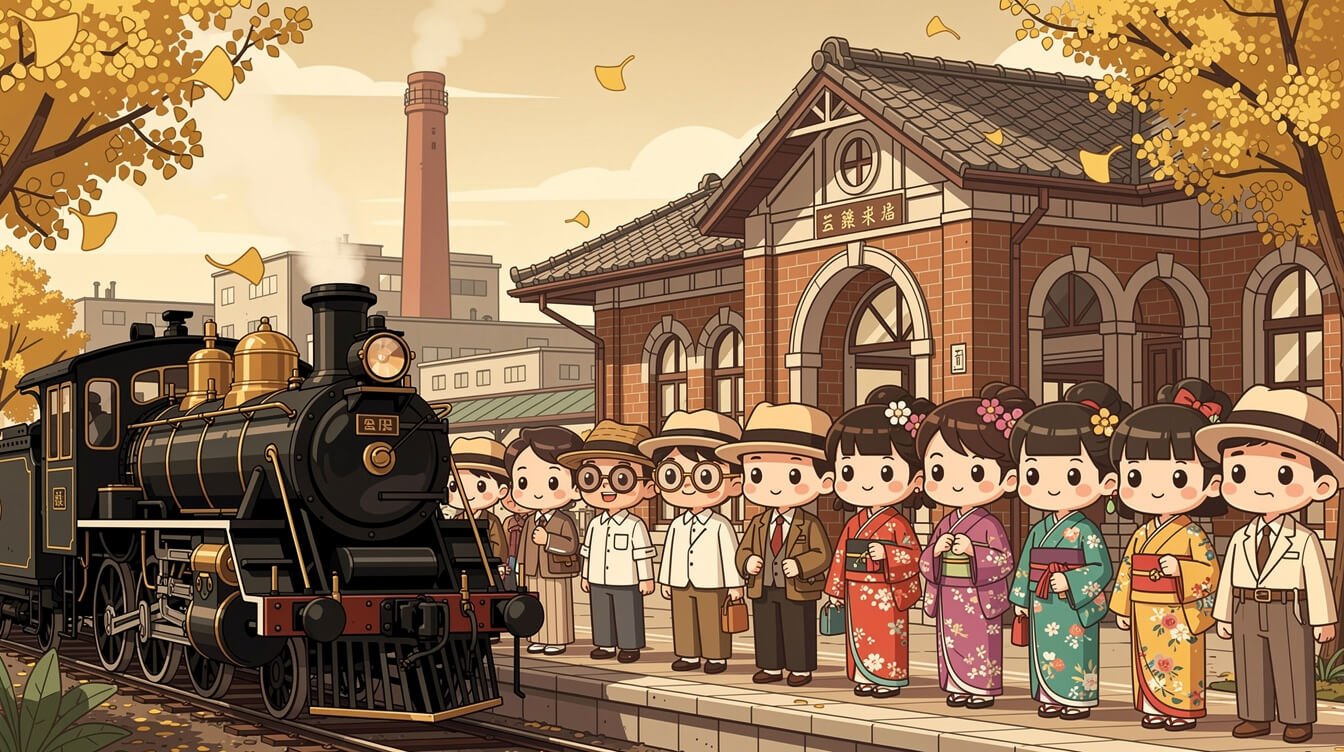
In April 1895, the Qing — humiliated in the First Sino-Japanese War — signed the Treaty of Shimonoseki and ceded Taiwan and the Penghu islands to the Empire of Japan “in perpetuity.” A short-lived Republic of Formosa declared independence within days; it was crushed by Japanese troops in five months. The Japanese half-century had begun.
It is impossible to summarize the Japanese colonial period in a paragraph, because it was simultaneously brutal and transformative. The brutal part: Indigenous mountain communities — especially the Atayal and Seediq — were waging an undeclared war against Japanese pacification campaigns that ended only after the 1930 Wushe Incident, when Mona Rudao led a Seediq uprising that was suppressed with mustard gas. Under kōminka (“imperial-subject”) policies, Taiwanese were pressured to adopt Japanese names, speak only Japanese in schools, and worship at Shinto shrines.
And yet. The Japanese half-century also built the Taiwan you can see today. They drained the malarial wetlands, electrified the cities, and laid 2,857 miles of railway — much of which is still in use as the backbone of the Taiwan Railway Administration’s network (the modern continuation of which is documented in our guide to riding the THSR). They built the sugar refineries, the modern banking system, the post office network, the public schools, the National Taiwan University, and the alpine roads that still climb to Alishan and Yushan. They introduced baseball, which remains Taiwan’s most beloved sport. They built the wood-paneled bathhouses of Beitou and Jiaoxi that still operate as hot springs today.
By 1945, when Japan surrendered and Taiwan was handed back to the Republic of China, the island had higher literacy, better infrastructure, and a higher GDP per capita than mainland China. An entire generation of Taiwanese had grown up speaking fluent Japanese, ridden Japanese trains to Japanese-built schools, and learned to think of themselves as something neither quite Chinese nor quite Japanese. That generation’s children would inherit the next chapter — and it would not be a kind one.
Story Six: The 228 Incident and the Cigarette That Sparked a Generation of Silence
If you have a Taiwanese friend whose grandparents still won’t talk about the past, this is almost certainly the reason.
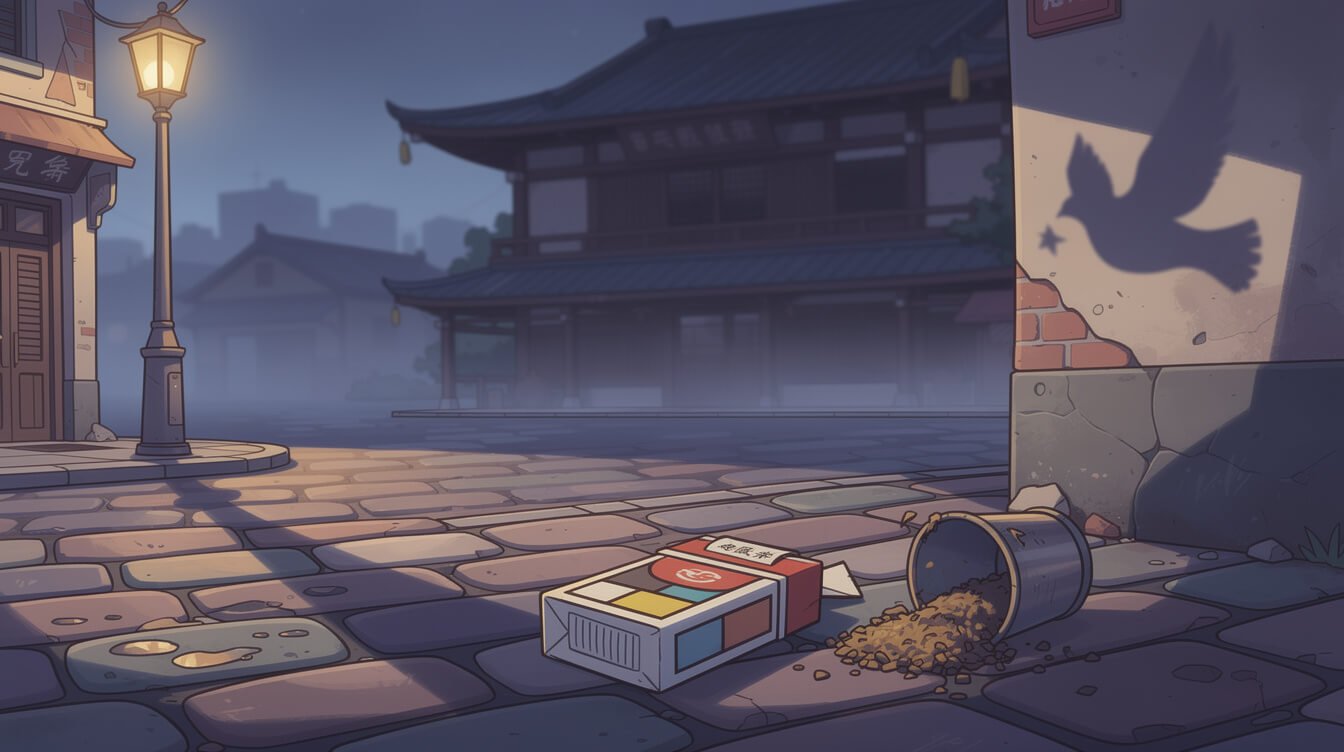
On the evening of February 27, 1947, in the Datong district of Taipei, a tobacco monopoly inspector pistol-whipped a widow named Lin Jiang-mai for selling untaxed cigarettes. A crowd gathered. Another inspector fired into the crowd, killing a bystander named Chen Wen-hsi. By the next morning — February 28, 1947, the date that gave the incident its name — the city had exploded.
The fury wasn’t really about cigarettes. It was about eighteen months of misgovernment by the Kuomintang (KMT) administration that had been sent to take over Taiwan after the Japanese surrender. The new arrivals had treated Taiwanese as a defeated, semi-Japanese population; corruption was rampant; the economy was in freefall; commodities the Japanese had managed efficiently were being looted. The 228 protests spread across the island within days. Local elites organized “Settlement Committees” to negotiate reforms.
And then the reinforcements arrived from the mainland. Beginning around March 8, KMT troops landed at Keelung and Kaohsiung and conducted a systematic massacre. Conservative academic estimates put the death toll between 18,000 and 28,000 people; some Taiwanese historians believe the true number is higher. Doctors, lawyers, judges, journalists, school principals — anyone with leadership credibility — disappeared. The killing was followed by White Terror: thirty-eight years of martial law (1949–1987), the longest unbroken period of martial law in modern world history.
This is why your Taiwanese friend’s grandparent goes silent if you ask. For an entire generation, talking about February 28 could get you killed, or quietly disappeared. It was not until 1995 that President Lee Teng-hui — himself a survivor of the era — formally apologized on behalf of the government. Today, February 28 is a national holiday called Peace Memorial Day. There is a museum in Taipei’s 228 Peace Memorial Park. The silence has finally cracked, but it took half a century.
Story Seven: From Banana Republic to Microchip Empire

In 1960, Taiwan’s largest export was bananas. By 2020, Taiwan was producing more than 60% of the world’s semiconductors and over 90% of its most advanced chips — the silicon that runs every iPhone, every NVIDIA AI accelerator, every modern car. The story of how a banana-exporting island became the gravitational center of the global tech economy is the second-most-remarkable chapter in the history of Taiwan, and it happened in roughly one human lifetime.
The transformation came in deliberate stages. In the 1950s and 1960s, with massive U.S. aid and a controversial land-reform program, the KMT government rebuilt agriculture and started promoting light industry — textiles, plastics, footwear, transistor radios. By the 1970s, Taiwan was one of the “Four Asian Tigers” alongside Hong Kong, Singapore, and South Korea, growing at roughly 10% per year for over a decade.
The real pivot came in 1980, when the government opened Hsinchu Science Park — modeled on Silicon Valley — and lured back Taiwanese engineers who had been working at U.S. semiconductor firms. The biggest catch was a Texas Instruments executive named Morris Chang. In 1987, with government backing, Chang founded the Taiwan Semiconductor Manufacturing Company (TSMC) on a single radical idea: instead of designing and manufacturing its own chips, TSMC would manufacture other people’s. It would be a “foundry” — a pure-play contract chip maker.
Almost nobody believed it would work. Today, TSMC is worth more than a trillion dollars, employs nearly 80,000 people, and makes the chips that everyone — Apple, AMD, Qualcomm, NVIDIA — designs but cannot build elsewhere. When American politicians talk about the “Silicon Shield” — the idea that the world has too much economic skin in Taiwan to allow it to be invaded — they are essentially talking about one man’s foundry idea from 1987. Taiwan went from bananas to microchips so fast that the older generation of farmers and the younger generation of chip engineers are sometimes the same families.
The wealth from this miracle is everywhere: in Taipei’s Taipei 101 skyline, in the high-speed rail that connects Taipei to Kaohsiung in 90 minutes, in the 14 million scooters that turned every Taiwanese commuter into a free agent (covered in our scooter culture deep-dive), and in the 7-Eleven on every corner. If you want to wear that improbable rise on your sleeve, our “I’d Rather Be In Taiwan” patriotic sticker captures the feeling pretty well — quiet pride for a place the world keeps underestimating.
Stories Eight & Nine: Democracy Under Missile Fire, and the Country That Isn’t One
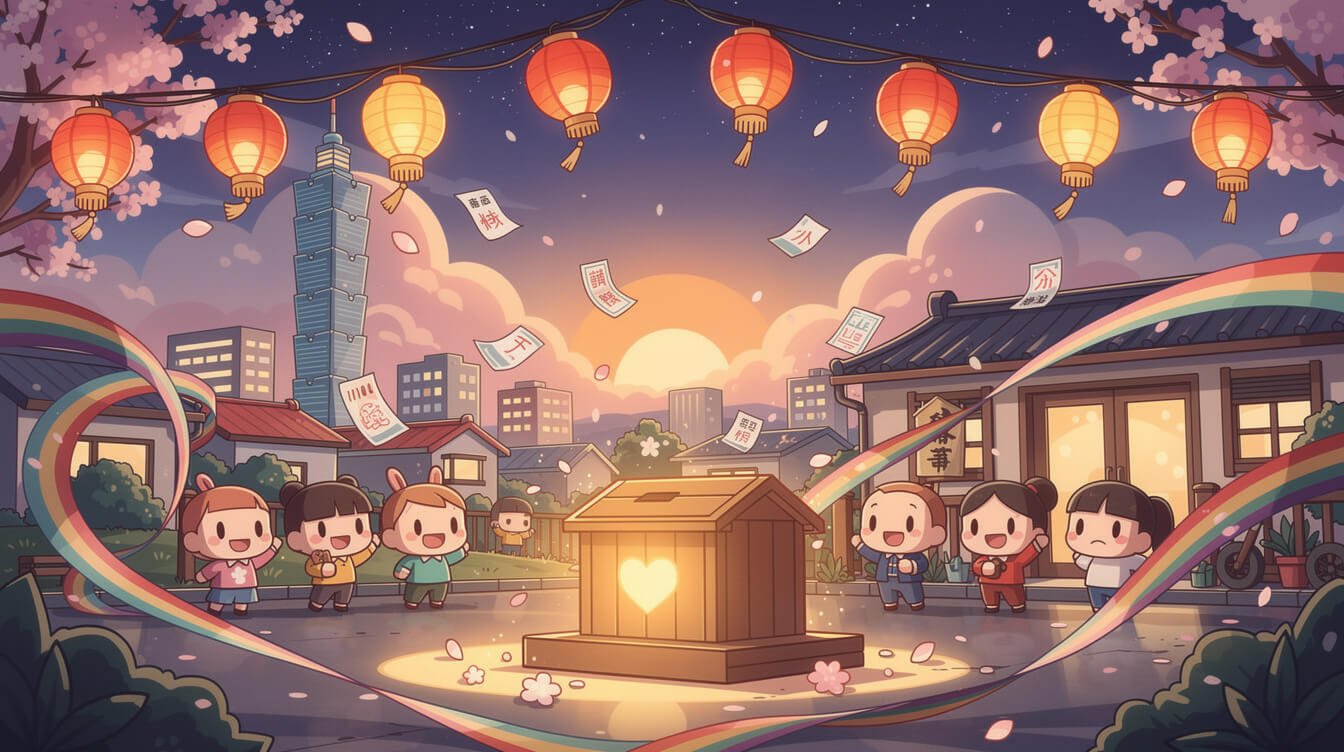
By the late 1980s, the same generation that had survived the White Terror had built one of the world’s most successful economies and decided it was time to be allowed to vote. Martial law was finally lifted in 1987. President Chiang Ching-kuo — the son of the man who had ordered the 228 crackdown — quietly tolerated the formation of the opposition Democratic Progressive Party (DPP), even though it was technically still illegal at the time.
The democratic transition that followed was remarkable for how peaceful it was. The constitution was reformed; legislative elections opened up; the press was unmuzzled. And then, on March 23, 1996, Taiwan held its first direct presidential election — the first in five thousand years of Chinese-speaking civilization.
Beijing was furious. In the lead-up to the vote, the People’s Liberation Army conducted live missile tests in the Taiwan Strait, splashing warheads in the sea lanes north and south of the island in what became known as the Third Taiwan Strait Crisis. The U.S. dispatched two carrier groups to the region. Markets convulsed. And Taiwanese voters, in record numbers, walked through the missile drills to elect Lee Teng-hui — the same president who had apologized for 228 the year before — with 54% of the vote. They had voted under fire, and they had said yes to democracy.
Today, Taiwan is consistently ranked among the freest democracies on Earth. The Economist Intelligence Unit’s Democracy Index has ranked Taiwan as the most democratic country in Asia. The island has had peaceful transfers of power between the KMT and the DPP. It legalized same-sex marriage in 2019 — the first place in Asia to do so. Its president, Lai Ching-te, was inaugurated in May 2024 after another peaceful election.
And here is the part that makes the history of Taiwan so unlike any other national story: officially, Taiwan is not a country. It is not a member of the United Nations. It is recognized as a sovereign state by only 12 of the world’s 193 UN members, and that number shrinks almost every year as the People’s Republic of China pressures small allies to switch. Most countries — including the United States, the United Kingdom, Japan, and the entire EU — maintain only “unofficial” relations with Taiwan, while at the same time selling it weapons, trading with it heavily, and treating it diplomatically as a peer. The 23 million people of Taiwan live in a country that the world recognizes economically and ignores diplomatically. They have their own passport, their own currency, their own military, their own elections, their own borders. They simply do not have a UN seat. The geopolitical context behind this is something we cover in more detail in our guide to the Taiwan Strait and our “where is Taiwan on the world map” piece.
That is the ninth and final story. A nation that has been colonized five times, traumatized once into silence, and never officially recognized — still, somehow, the freest place in Asia. The most quietly successful country that the world won’t quite call a country.
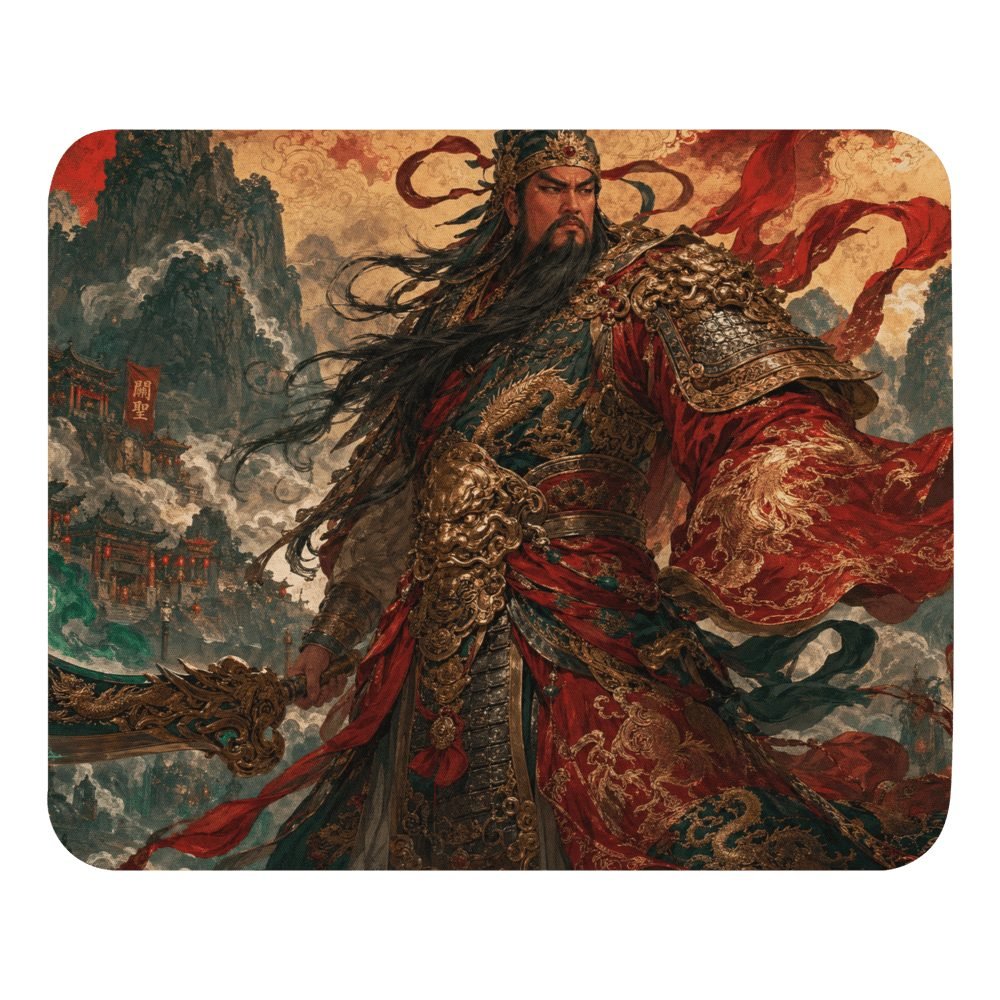
Wear the 6,000-Year Story
From Tsou warriors to TSMC engineers — Taiwan’s history is the story you carry every day. Browse the Taiwan Merch collection of heritage-themed apparel, accessories, and gifts that celebrate the island’s improbable rise.
Frequently Asked Questions About the History of Taiwan
Why isn’t Taiwan in the United Nations?
Taiwan was a UN founding member in 1945 (as the Republic of China) and held a permanent Security Council seat. In 1971, UN General Assembly Resolution 2758 transferred China’s seat to the People’s Republic of China and expelled the ROC delegation. Since then, the PRC has consistently blocked Taiwan from rejoining under any name, citing its “One China” position. Only 12 UN member states currently maintain formal diplomatic relations with Taiwan, though dozens more maintain robust unofficial relations.
Is Taiwan part of China?
The honest answer is: it depends entirely on who you ask. The People’s Republic of China claims Taiwan as a province; the Republic of China government on Taiwan has historically claimed sovereignty over all of China; and increasingly, a majority of Taiwanese (around 67% in recent polls by National Chengchi University) identify as exclusively Taiwanese — not Chinese. Functionally, Taiwan has been self-governing for the entire period since 1949 (and arguably since 1895), has never been ruled by the People’s Republic of China for a single day, and operates as an independent state in every practical sense except formal UN recognition.
What was the 228 Incident?
The 228 Incident (named for February 28, 1947) was a popular uprising against the new Kuomintang administration of Taiwan, triggered by a violent confrontation between a tobacco monopoly inspector and a widow selling untaxed cigarettes. The KMT response was a massacre that killed an estimated 18,000–28,000 Taiwanese, including most of the island’s educated elite. It was followed by 38 years of martial law known as the White Terror. The Taiwanese government formally apologized in 1995, and February 28 is now a national holiday called Peace Memorial Day.
Who was Koxinga?
Zheng Chenggong (1624–1662), known in the West as Koxinga, was a Ming-loyalist warlord and the son of a Chinese pirate-merchant and a Japanese mother. In 1662 he expelled the Dutch East India Company from Taiwan after a nine-month siege of Fort Zeelandia and founded the Kingdom of Tungning — an independent Han-Chinese state that ruled Taiwan for 21 years until the Qing dynasty annexed the island in 1683.
How long was Taiwan colonized by Japan?
Fifty years, from 1895 to 1945. Japan acquired Taiwan from the Qing dynasty under the Treaty of Shimonoseki after winning the First Sino-Japanese War, and lost it again at the end of World War II. The period was brutal in many respects (especially toward Indigenous communities and during the assimilationist kōminka campaigns of the 1930s and 40s) but also laid the infrastructure, educational system, and industrial base that Taiwan still uses today.
Why is Taiwan so important to the global semiconductor industry?
Because of TSMC (Taiwan Semiconductor Manufacturing Company), founded by Morris Chang in 1987 as the world’s first pure-play “foundry” — a contract chip manufacturer that builds the designs of other companies. TSMC now produces more than 60% of all chips and over 90% of the world’s most advanced semiconductors. Apple, NVIDIA, AMD, and Qualcomm all rely on TSMC to manufacture their chips. This concentration is sometimes called Taiwan’s “Silicon Shield” — the geopolitical argument that the world cannot afford to let Taiwan be destabilized.
The Real Lesson of Taiwan’s History
The history of Taiwan is not a story about who owns this island. It is a story about what 23 million people built on it despite the fact that, for most of those 6,000 years, somebody else thought they did. The Indigenous peoples were here first. The Dutch left a fort. The Qing left temples and a frontier mentality. The Japanese left railways and a love of baseball. The KMT left both a trauma and a state. And then the Taiwanese themselves — together, after the silence finally broke — built a democracy, a tech empire, and a culture so confident in itself that it can host the world’s largest religious pilgrimage and the world’s most important chip foundry in the same week.
If you have spent any time in Taiwan, you have probably felt the strangeness of it: this is one of the most polite, modern, functional societies on Earth, and it has no official name in most of the world’s diplomatic registries. That contradiction is the point. The history of Taiwan is the proof that a place can be ignored by the world and still, quietly, become one of the best places in it.
Taiwan Stories, Delivered Weekly
Join the Taiwan Merch newsletter for one new story about Taiwan’s culture, food, and history every week — plus first dibs on new merchandise drops.

Grab a Free Taiwan Sticker!
Drop your email and we’ll send you a limited-edition Taiwan sticker — plus insider access to new merch drops and island vibes.
No spam. Unsubscribe anytime.