Taiwan Indigenous Peoples: All 17 Nations and the Austronesian Homeland
Long before anyone sailed to Hawaii, long before the first canoe touched Aotearoa, long before Madagascar heard a word of the language it speaks today — there was an island off the coast of Asia where all of it began. That island is Taiwan. The Taiwan indigenous nations are not a footnote to the island’s story. They are the first chapter, and arguably the most consequential one any island has ever written.
Here is what most guides get wrong. They hand you a list of tribe names, a photo of someone in ceremonial dress, and a note about where to buy souvenirs. What they skip is the astonishing part: roughly 400 million people across half the planet speak languages that trace back to this one island, and the communities who still live here are navigating a very live, very current fight over recognition, land and language. In July 2026 that fight produced the biggest shift in decades.
This guide covers all seventeen officially recognised nations, the Austronesian homeland thesis in plain English, the four centuries of pressure that shaped where things stand today, festivals worth planning a trip around, where you can genuinely and ethically experience this culture, and — because we sell Taiwan-themed apparel and therefore owe you an honest answer — how to tell appreciation from appropriation when you’re buying art.
Who Are Taiwan’s Indigenous Peoples?
The Taiwan indigenous population numbered 629,456 people at the end of 2025 — about 2.7% of the island’s total population, and growing, up 2.9% on the previous year according to Ministry of the Interior figures. The Taiwan indigenous nations are Austronesian peoples, related by language and ancestry not to mainland Asia but to the seafaring cultures of the Pacific and Indian Oceans.
The population skews young. The median age is 34.9 — meaningfully below the national figure — and the dependency ratio of 44.2 sits below the national 46.1. These are not fading communities. They are young, concentrated, and increasingly organised.
Geographically, the distribution tells you most of what you need to know about Taiwan’s history. Hualien County holds around 95,000 indigenous residents, Taoyuan City about 90,000, and Taitung County 79,340. That is the mountainous spine and the Pacific-facing east coast — the parts of the island that were hardest to reach, hardest to farm, and therefore last to be taken. Taoyuan is the outlier, and it is an urban one: generations of internal migration toward work in the north.
Recognised, locally recognised, and unrecognised
Seventeen nations currently hold full official recognition from the central government. Below that sit two groups with local-government recognition only — the Makatao (in Pingtung and Fuli) and the Taivoan (in Fuli) — and then a longer list of peoples with no status at all: the Babuza, Basay, Hoanya, Ketagalan, Luilang, Pazeh and Kaxabu, Papora, Qauqaut, Taokas and Trobiawan.
Most of that second and third tier are Pingpu peoples — the “plains” nations who lived on the fertile western lowlands. Because they lived where the farmland was, they absorbed the first and heaviest waves of settlement, and by the twentieth century the official position was essentially that they had assimilated out of existence. They had not. They had been administratively erased, which is a very different thing, and correcting that erasure is the single biggest live issue in Taiwan indigenous politics right now.
The Austronesian Homeland: How Taiwan Populated Half the Pacific
This is the fact that should be the headline of every article on this subject and somehow never is.
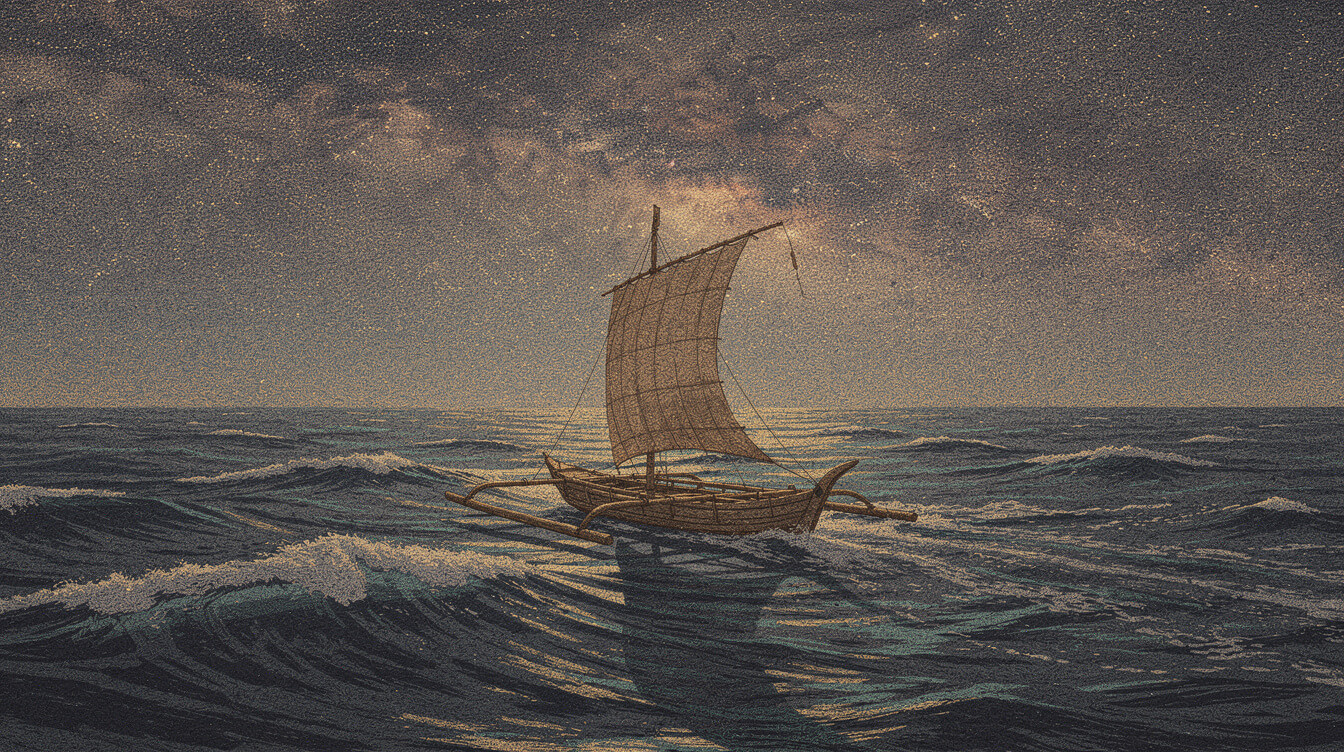
The Austronesian language family is one of the largest on Earth. It stretches from Madagascar off the coast of Africa, across Indonesia, Malaysia and the Philippines, out through Micronesia and Melanesia, to Hawaii, Rapa Nui and Aotearoa New Zealand. Somewhere around 400 million people speak an Austronesian language. And the overwhelming scholarly consensus is that the whole family radiated out from Taiwan.
The evidence is elegant and, once you see it, hard to argue with. Linguists sort a language family into primary branches — the deepest, oldest splits in the family tree. The linguist Robert Blust’s widely accepted classification finds ten primary branches of Austronesian, and nine of them exist only in Taiwan. The tenth branch is Malayo-Polynesian, and that single branch contains roughly 1,200 languages covering everything from Tagalog to Malagasy to Māori to Hawaiian.
Put simply: the deepest diversity in the family is concentrated on one island. Everything else — an ocean’s worth of everything else — is one twig on that tree. Population genetics has since lined up behind the same conclusion.
This is the classic signature of a homeland. A family diversifies most where it has been longest. Taiwan holds nine-tenths of the family’s deep structure in an area smaller than the Netherlands, while the branch that left the island went on to colonise a third of the planet’s circumference.
What that actually means on the ground
It means the ancestors of today’s Taiwan indigenous nations — the Amis, the Atayal, the Tao — were among the most accomplished open-ocean navigators in human history, and that the outrigger technology, the star-path wayfinding and the crop package that carried people to Hawaii were refined here first. It means a Māori speaker and an Amis speaker are, at enormous remove, cousins. And it means that when Hawaiian and Māori cultural delegations visit Taiwan — which they do, regularly, and which is why a Hawaiian cultural centre ranks on page one of Google for this topic — they are not tourists. They are coming home.
If you want the wider picture of how these languages sit alongside Mandarin, Hokkien and Hakka today, we’ve written separately about what language people actually speak in Taiwan and the messier question of Taiwan’s official language.
All 17 Taiwan Indigenous Nations at a Glance
Until very recently every guide on the internet — including the government’s own English-language tribe page — said sixteen. As of 30 July 2026 that number is seventeen. Here is the full list of Taiwan indigenous nations, roughly ordered by population, with where they live and what they are known for.
One caveat on the numbers, because we would rather be useful than precise-sounding: the Ministry of the Interior’s 2025 release published exact counts only for the three largest nations. Figures below that are well-established approximations, and the Siraya count is genuinely unsettled because registration only opened in August 2026.
- Amis (Pangcah) — ~235,000. Hualien and Taitung, the east coast plain. The largest nation by a wide margin. Known for the age-grade social system, the Ilisin harvest festival, and a fishing-and-farming coastal culture.
- Paiwan — ~114,000. Pingtung and southern Taitung, the southern mountains. Known for extraordinary wood and stone carving, a hereditary chiefly class, glass-bead heirlooms, and the five-yearly Maljeveq.
- Atayal — ~103,000. Taoyuan, Hsinchu, Miaoli, Nantou — the northern and central mountains. Known for backstrap-loom weaving, historic facial tattooing, and the gaga ancestral code that governs conduct.
- Bunun — around 60,000. The high central mountains of Nantou, Hualien and Kaohsiung. The highest-dwelling of the nations. Known worldwide for Pasibutbut, the eight-part polyphonic millet-prayer chant.
- Truku (Taroko) — roughly 35,000. Hualien, around the gorge that carries their name. Recognised separately in 2004. Known for weaving and for a hunting culture tied to the high marble canyons.
- Puyuma — around 15,000. The Taitung plain. Known for rigorous youth-training houses, a reputation as formidable warriors, and for producing a disproportionate share of Taiwan’s best-known musicians.
- Rukai — around 13,000. The mountains where Pingtung, Taitung and Kaohsiung meet. Known for slate-slab architecture, lily symbolism, and a contemporary art scene that punches far above its size.
- Sediq (Seediq) — around 11,000. Nantou and Hualien. Recognised as the fourteenth nation in 2008. Known internationally through the Wushe events of 1930 and the films they inspired.
- Saisiyat — about 7,000. The Hsinchu–Miaoli border hills. Known for Pas-ta’ai, the Ritual to the Short People, one of the most remarkable ceremonies in the Austronesian world.
- Tsou — around 6,500. The Alishan range in Chiayi. Known for the kuba men’s assembly house and the Mayasvi war-and-renewal ceremony.
- Tao (Yami) — under 5,000. Orchid Island (Lanyu) alone — the only nation living entirely off the main island. Known for the tatala plank canoe and a calendar built around the flying-fish migration.
- Kavalan — around 1,500. Originally the Yilan plain, now mostly the Hualien coast. Recognised in 2002. Known for banana-fibre weaving, a craft that was nearly lost and has been deliberately revived.
- Sakizaya — around 1,000. The Hualien plain. Recognised as the thirteenth nation in 2007 after spending a century administratively classified as Amis.
- Thao — around 800. Sun Moon Lake, Nantou. The first nation recognised after the Japanese-era list, in 2001. Known for the pestle-music tradition and a deep association with the lake itself.
- Hla’alua (Saaroa) — a few hundred. Kaohsiung’s Taoyuan and Namasia districts. Recognised in June 2014. Known for the miatungusu shell ceremony.
- Kanakanavu — a few hundred. Namasia, Kaohsiung. Recognised the same day as the Hla’alua, in June 2014. Known for river-ritual traditions and one of the most endangered languages on the island.
- Siraya — count pending. Tainan and the surrounding southwest lowlands. Recognised 30 July 2026 as the seventeenth nation and the first Pingpu people ever to gain central-government status. Traditionally matrilineal; the largest of the plains nations.
Two naming notes that will save you confusion. “Tao” and “Yami” refer to the same people — Yami is the older external label, Tao is what they call themselves. “Truku,” “Taroko” and “Sediq” overlap in ways that are genuinely contested among the communities themselves, so if you hear them used differently by different people, neither of them is wrong.
Four Centuries of Pressure — and the 2026 Breakthrough

You cannot understand why seventeen is such a big number without understanding how the list of recognised Taiwan indigenous nations got so short in the first place.
Dutch and Qing rule
The Dutch East India Company arrived in the 1620s and governed through indigenous intermediaries, introducing a romanised script for Siraya that survives in land contracts still readable today. Qing administration, from 1683, drew a literal boundary line across the island separating “civilised” plains communities from the mountains, taxed the former, and largely left the latter alone. The plains nations absorbed the pressure. Land passed out of indigenous hands through contracts that were often technically legal and functionally extractive.
The Japanese period
The fifty years from 1895 changed the mountains permanently. Japanese administration wanted what was up there — timber, and above all camphor, which Taiwan supplied to most of the world. We’ve written about Taiwan’s camphor boom separately, but the part that guide doesn’t dwell on is that the camphor frontier was the indigenous frontier. Extracting it meant pushing armed guard-lines into Atayal, Sediq and Bunun territory, and the resistance that produced — culminating at Wushe in 1930 — is central to how these communities remember the era. This period also produced the first formal classification of nine groups, the administrative skeleton the modern list still hangs on.
The ROC era and the long road back
Postwar policy pushed assimilation hard: Mandarin-only schooling, Chinese-style names replacing indigenous ones, and reservation land held under restrictive title. The term yuanzhumin — “original inhabitants” — only entered the constitution in 1994, replacing language that had meant something closer to “mountain compatriots.”
Then the list started growing again: Thao in 2001, Kavalan in 2002, Truku in 2004, Sakizaya in 2007, Sediq in 2008, Hla’alua and Kanakanavu together in 2014. On 1 August 2016 the president issued a formal state apology to the Taiwan indigenous nations — the date is now marked annually as Indigenous Peoples’ Day.
And on 30 July 2026, the Executive Yuan recognised the Siraya. It matters out of all proportion to the population involved, because it was done under the Pingpu Indigenous Peoples Identity Act — which means it is not a one-off. It is a doorway. Every plains nation on the unrecognised list now has a route that did not exist before. The first Siraya to complete registration, in mid-August 2026, were a mother and daughter in Tainan, reclaiming a status the paperwork had said was extinct for over a century.
Festivals Worth Planning a Trip Around
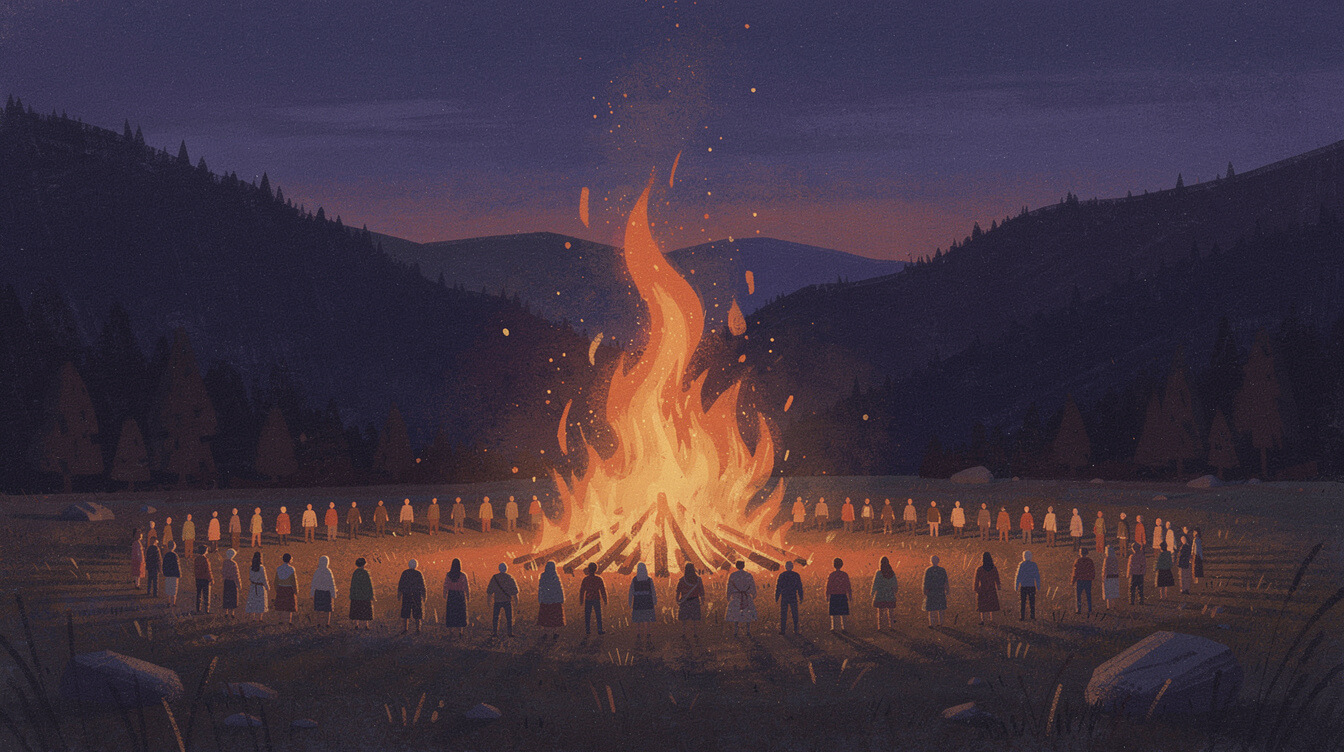
Taiwan indigenous festivals are living ceremonies, not performances scheduled for visitors. Some welcome outsiders warmly, some welcome them conditionally, and a few are closed. The dates below are indicative — most follow lunar or agricultural cycles and are confirmed locally, often only weeks ahead. Always check with the host township office or community association before you book anything.
Ilisin — Amis Harvest Festival (July–August)
The biggest indigenous gathering on the island, held village by village along the Hualien and Taitung coast across several weeks of midsummer. Days of circle dancing organised by age-grade, with the youngest men doing the heaviest ceremonial work. Some villages are openly welcoming; others hold closed days. We’ve covered Ilisin and what actually happens during it in more detail.
Malahtangia — Bunun Ear-Shooting Festival (April–May)
A rite of passage in the high mountains of Nantou and Taitung in which boys shoot at deer ears mounted on a rack, marking entry into the hunting life of the community. Usually accompanied by Pasibutbut, the polyphonic chant that made Bunun music internationally famous among ethnomusicologists.
Rayon — Tao Flying Fish Season (roughly March–June)
Not a festival so much as an entire calendar. On Orchid Island the arrival of flying fish on the Kuroshio Current opens a season governed by detailed rules about who may fish, with which boat, and what may be eaten when. Visitor etiquette here is stricter than anywhere else in Taiwan: do not photograph the tatala canoes without explicit permission, and never touch one.
Pas-ta’ai — Saisiyat Ritual to the Short People (late in the lunar year, biennial)
Held every two years with a major observance every ten, this is a ceremony of remembrance and appeasement directed at the ta’ai, a short-statured people of Saisiyat oral history. It runs for several nights of continuous singing. Portions are open; portions are absolutely not.
Maljeveq — Paiwan Five-Year Festival (once every five years, autumn)
The ancestral spirits are invited back and greeted with a ball-spearing ritual. Because of the cycle, catching one is largely luck — but if your trip coincides with a hosting village in Pingtung, reorganise your itinerary around it.
Mayasvi — Tsou war and renewal ceremony (February, Alishan)
Held at the kuba assembly house in Tapangʉ or Tfuya, usually in February. Compact, intense, and more accessible to visitors than most, partly because of Alishan’s existing tourism infrastructure.
Original Art About Taiwan — Not Anyone Else’s Heritage
We design our own work about the island we love — its food, its wildlife, its cities and its humour. When we want indigenous art, we buy it from indigenous makers, exactly as we’d ask you to.
Where to Experience Taiwan Indigenous Culture Respectfully

The single most useful filter is this: does the money and the storytelling control sit with the community, or with someone selling access to it? Both kinds of experience exist in Taiwan, they look similar from a booking page, and the difference matters enormously.
Museums — start here
The Shung Ye Museum of Formosan Aborigines in Taipei sits directly across from the National Palace Museum and is the best single-building introduction to Taiwan indigenous culture on the island. Four floors, strong English labelling, and a permanent collection that treats material culture as culture rather than curiosity. The Ketagalan Culture Center in Beitou is free, less polished, and more contemporary in focus — it programmes work by living indigenous artists and is named for the people whose land Taipei is built on. In the south, the National Museum of Prehistory in Taitung handles the deep-time Austronesian story better than anywhere else.
Community-run villages
Smangus, an Atayal village high in Hsinchu County, is the benchmark. Reachable by one long mountain road, it operates a genuine collective economy — land, labour and tourism revenue pooled and shared among participating households. You book directly with the village, you stay in village lodging, and the money stays there. Book far ahead; capacity is deliberately limited.
Orchid Island (Lanyu) requires more of you: a flight or ferry, a scooter, and real attention to Tao protocol. It repays all of it. Alishan has Tsou communities running their own guesthouses and guiding operations alongside the mass-market railway tourism — if you’re planning that trip, our Alishan visitor playbook covers logistics, and choosing a Tsou-run operator once you’re there is a straightforward decision.
The cultural park question
The Indigenous Peoples Cultural Park at Sandimen in Pingtung is government-run and does the composite-village format — architecture from multiple nations reconstructed on one site, scheduled dance performances. It is genuinely educational, well-resourced, and a reasonable half-day, especially with kids. It is also, by design, a summary rather than a place. Treat it as an index, not the book.
What to avoid
Be wary of anything marketed as an “authentic tribal experience” that cannot tell you which nation it represents. Be wary of dance shows attached to hotels with no named community partner. And if a tour operator’s website talks extensively about indigenous culture without a single indigenous person appearing in its own staff or partner listings, you already have your answer.
Reading the Patterns: What the Motifs Actually Mean
Here is the thing that separates a respectful buyer from a careless one, and it takes about ninety seconds to learn.
The patterns you see on Taiwan indigenous textiles, carvings and beadwork are not decoration. Many of them are closer to heraldry — statements about lineage, rank, achievement and relationship to ancestors. Using one you have no claim to isn’t a style choice; in the originating context it is a false statement about who you are.
The hundred-pace viper
Among the Paiwan and the Rukai, the hundred-pace viper — a real and genuinely dangerous snake — appears in carving, beadwork and textile as an ancestral figure associated with chiefly lineage. In Paiwan tradition it belongs with the sun and the sacred clay pot in an origin narrative that is specifically about who descends from whom. Historically, the right to display it was not universal within the community, let alone outside it.
Atayal weaving and the ancestral eye
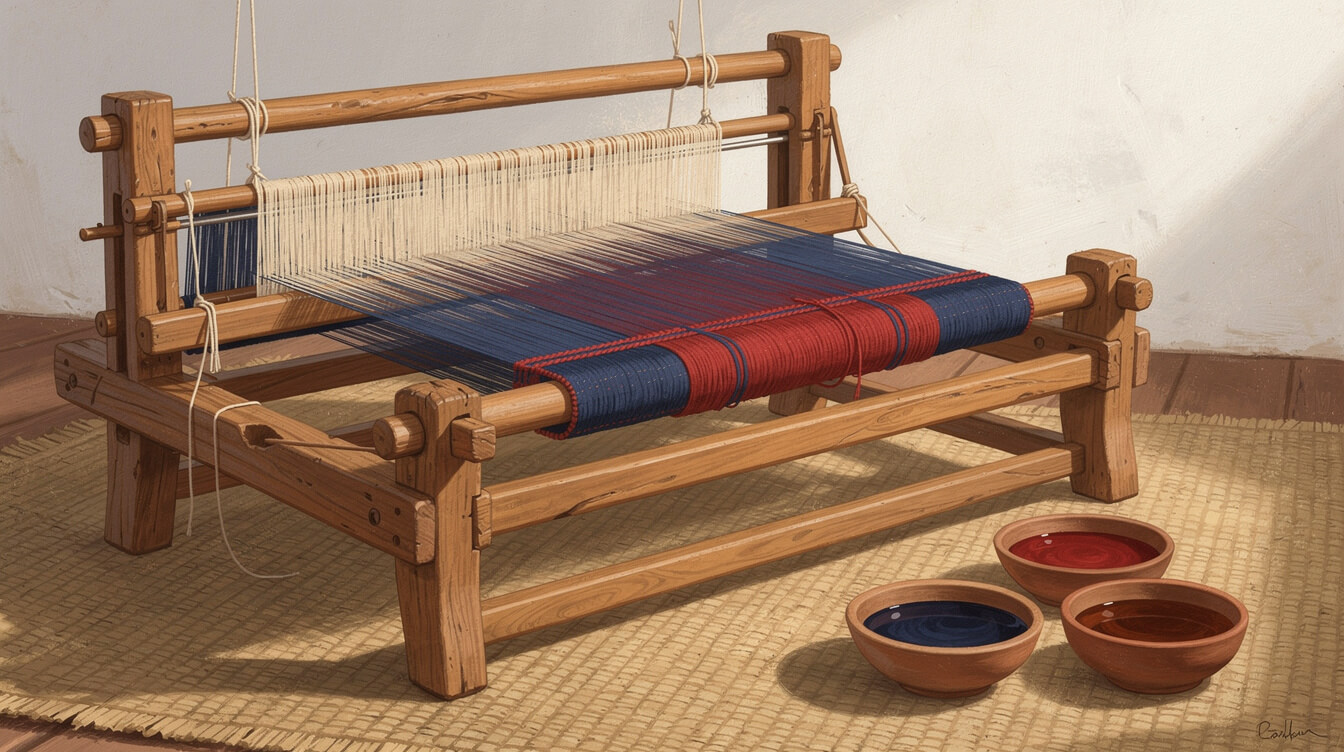
The Atayal backstrap-loom tradition is one of the most technically demanding textile practices in the Austronesian world, and the rhombus figure that recurs across it is widely understood as the eyes of the ancestors — watching, and by extension holding the weaver to the gaga. Weaving skill was itself a marker of adult standing for women, historically tied to facial tattooing. The cloth is not a canvas. It is a record.
The Rukai lily
Among the Rukai, the Taiwan lily is an honour worn on the head, and it was earned — through hunting achievement for men, and as a marker of standing and conduct for women. Wearing one was a public claim about your life. That is a very different object from a floral print.
We go deeper into the techniques, fibres and regional variation in our guide to indigenous Taiwanese textiles, and set them in the wider context of what the island has historically worn.
One honest caveat: meanings vary between nations, between villages within a nation, and between families within a village. Nothing above is the whole story, and none of it is ours to define. Treat it as a reason to ask questions, not as a decoder ring.
Appreciation vs Appropriation: Buying Indigenous Taiwanese Art Honestly
We sell Taiwan-themed apparel, which means Taiwan indigenous art sits adjacent to our own business. That gives us an obvious commercial interest in this question and, we’d argue, an obligation to answer it straight rather than dodge it.
The line is not actually blurry. Appreciation is buying the thing from the people whose thing it is. Appropriation is taking the visual language, removing the people, and keeping the margin. Almost every hard case resolves once you ask who is getting paid.
What a knockoff actually costs
Mass-produced “tribal print” goods — often not even made in Taiwan — compete directly with artisans whose work takes weeks and whose materials cost real money. A backstrap-loom weaving represents days at the loom. A mass-printed approximation undercuts it by an order of magnitude and trains buyers to think that is the correct price for the look. The artisan doesn’t just lose that sale. They lose the market’s sense of what the work is worth, which is how craft traditions actually die — not dramatically, but on margin.
Five questions to ask before you buy
- Who made this, and from which nation? A real answer names a person or a workshop. “Indigenous-inspired” is not an answer.
- Where does the money go? Community cooperatives, tribal workshops and named individual artists are all good answers.
- Was it made in Taiwan? Not a perfect test, but a printed “tribal” item from an overseas factory is rarely a good sign.
- Does the motif carry rank or lineage meaning? If yes, the right move is usually to admire it, buy something else from the same maker, and leave the heraldry to the people it belongs to.
- Would the maker recognise this as theirs? The simplest version of the whole test.
Where to buy well
Buy at the source where you can: the craft cooperatives at Smangus and in the Sandimen area, workshop shops attached to community museums, the retail arms of the Shung Ye and Ketagalan centres, and artists selling directly at festivals. Taitung and Hualien both have a strong scene of named indigenous designers working in contemporary forms — clothing, ceramics, jewellery — who are doing exactly what a living tradition is supposed to do.
For what it’s worth, this is also our own operating rule at Taiwan Merch: we design original work about Taiwan — its food, its cities, its wildlife, its very particular sense of humour — and when we want indigenous art, we buy it from indigenous makers like everyone else should. We don’t print other people’s lineage markers on a t-shirt, and you should be suspicious of anyone who does.
Taiwan Indigenous Languages and Why They Matter to the Whole Pacific
If nine of the ten primary branches of Austronesian exist only in Taiwan, then every Formosan language that goes silent takes with it a branch of the family tree that has no backup copy anywhere on Earth. This is not a sentimental claim. It is a structural one.
The position is serious. At least ten Formosan languages are already extinct and a further four or five are moribund — down to a handful of elderly speakers. Roughly sixteen remain in living use, and every one of them is classified as endangered to some degree. Only about 35% of Taiwan indigenous people speak their ancestral language.
The counterweight is real too. The Indigenous Languages Development Act gave the sixteen recognised language groups national-language status in 2017. There are immersion kindergartens, a certification system that rewards proficiency, indigenous-language broadcasting, and an increasingly confident generation of young speakers who learned the language deliberately rather than at home. And the Siraya case is the proof of concept nobody expected: a language declared extinct over a century ago, reconstructed from Dutch-era romanised documents and church records, is now being taught to children in Tainan. That reconstruction was a significant part of the evidentiary case for recognition.
Taiwan Indigenous Culture: Frequently Asked Questions
How many Taiwan indigenous groups are there?
Seventeen are officially recognised by the central government as of 30 July 2026, when the Siraya were added. Two more hold local-government recognition only, and around ten further peoples remain unrecognised. Almost every source you’ll find online still says sixteen.
What percentage of Taiwan’s population is indigenous?
About 2.7% — 629,456 people at the end of 2025. The share is small nationally but very high locally: indigenous residents are a large presence in Hualien and Taitung counties and the mountain townships.
Are Taiwan’s indigenous peoples related to Polynesians?
Yes, and the relationship runs the other way from what people assume. Taiwan is the origin point. The Austronesian language family’s deepest branches are all Formosan, and the single branch that left the island became the languages of the Philippines, Indonesia, Madagascar, Hawaii and Aotearoa.
What is the right term to use?
In English, “indigenous peoples” or “indigenous nations.” “Aborigine” is dated and increasingly avoided. Where you can, name the specific nation — Amis, Paiwan, Tsou — rather than the collective term, in the same way you’d say Welsh rather than European.
Can visitors attend Taiwan indigenous festivals?
Often yes, sometimes conditionally, occasionally not at all — and it varies by village and by day within the same festival. Contact the host community or township office first, follow photography rules exactly, and accept a no gracefully when you get one.
Where is the best place to start if I only have one day?
The Shung Ye Museum of Formosan Aborigines in Taipei. It’s central, it’s thorough, and it will make everything else you see on the island legible. Pair it with the Ketagalan Culture Center in Beitou if you have the afternoon.
Final Thoughts
The Taiwan indigenous story is usually told as heritage — something preserved, displayed, respectfully remembered. That framing misses what’s actually happening. A nation was recognised seven weeks ago. A language that the record books called extinct is being spoken by children. A legal doorway just opened for peoples who were told for a century that they had assimilated out of existence.
And underneath all of it sits the fact that should reframe how anyone thinks about this island: a third of the planet’s circumference speaks languages that started here. Taiwan is not a small place on the edge of somewhere else. For 400 million people, it is the centre of the map.
If you’re planning a trip built around any of this, our Taiwan trip planner covers the practical side — costs, timing and how to structure an east-coast route. Go slowly, ask before you photograph, buy from the maker, and let the people whose island this first was tell you their own story.
A Postcard From Taiwan, Every Week
Culture stories, food deep-dives, travel tips, and first looks at new designs — straight to your inbox. No spam, just Taiwan.

Grab a Free Taiwan Sticker!
Drop your email and we’ll send you a limited-edition Taiwan sticker — plus insider access to new merch drops and island vibes.
No spam. Unsubscribe anytime.