Yangmingshan National Park: Taipei’s Active Volcano, Silver Grass Season, and the Hikes Locals Actually Do
Taipei has a volcano. Not a metaphorical one, not an extinct pile of rock with a plaque on it — an actual volcanic system with steam venting out of the ground, sulfur crystals growing on the rocks, and a summit you can reach on a city bus. Yangmingshan National Park sits at the top of the Taipei Basin like a lid, and most visitors treat it as a flower-viewing day trip and nothing more.
That’s the miss. Yangmingshan (陽明山) is the northern tip of Taiwan’s volcanic arc, a mountain that got its Chinese name from a Ming dynasty philosopher, its geothermal plumbing from the same magma chamber that heats Beitou’s hot springs, and its autumn identity from a sea of silver grass that turns the whole ridgeline gold every November. It is also, officially, the quietest urban park on the planet.
This guide covers what the mountain actually is — the geology, the seasons, the hikes locals repeat, the transport that avoids the crowds, and the after-dark side almost nobody writes about. Consider it the Yangmingshan briefing you’d get from a Taipei friend who hikes it monthly, not the checklist you’d get from a brochure.
What Is Yangmingshan National Park? Taipei’s Active Volcano Hiding in Plain Sight

Yangmingshan National Park covers 113.38 square kilometers of volcanic highland immediately north of downtown Taipei — roughly half inside Taipei City limits and half inside New Taipei City. It was formally established on September 16, 1985, making it Taiwan’s third modern national park after Kenting and Yushan. But its history as protected land runs much deeper: in 1937, under Japanese rule, this same terrain became part of Daiton (Datun) National Park, one of the first three national parks ever designated in Taiwan.
What makes it structurally weird among national parks is the elevation. Most parks protect remote high country. Yangmingshan tops out at just 1,120 meters at the summit of Qixing Mountain (七星山, “Seven Star Mountain”) — which happens to be the highest point in Taipei City — and drops to around 200 meters at its lower edges. That narrow vertical band packs in ridges, valleys, waterfalls, crater lakes, grass plateaus, and steaming fumaroles, all within an hour of a metro station.
The Name Is a Political Story
For most of its recorded history this mountain wasn’t called Yangmingshan at all. During the Qing dynasty it was Grass Mountain (草山, Chháu-soaⁿ), named in reference to Datun Mountain. And it was genuinely grass — because Qing officials, worried about thieves helping themselves to the mountain’s rich sulfur deposits, periodically set the mountain on fire. Burn it often enough and trees never get established. An entire landscape aesthetic, created by anti-theft policy.
In 1950, Chiang Kai-shek renamed it Yangmingshan to honor Wang Yangming, the Ming dynasty scholar whose philosophy of “unity of knowledge and action” he admired. Chiang built retreats up here — Grass Mountain Chateau, a Japanese-era mountain lodge, was one of them — and the mountain became a semi-official seat of power hovering above the capital. When you hike past a suspiciously grand villa in the middle of the woods, that’s why.
The World’s First Urban Quiet Park
In June 2020, Quiet Parks International certified Yangmingshan as the world’s first Urban Quiet Park — a designation recognizing that a metropolitan area of over seven million people has a place inside it where you can hear wind through grass instead of scooters. Stand on the Qingtiangang plateau on a weekday morning and you’ll understand why it won. That silence is a resource, and it’s twenty-five minutes from Shilin.
The Volcanic Science: Why Xiaoyoukeng Still Smells Like Sulfur
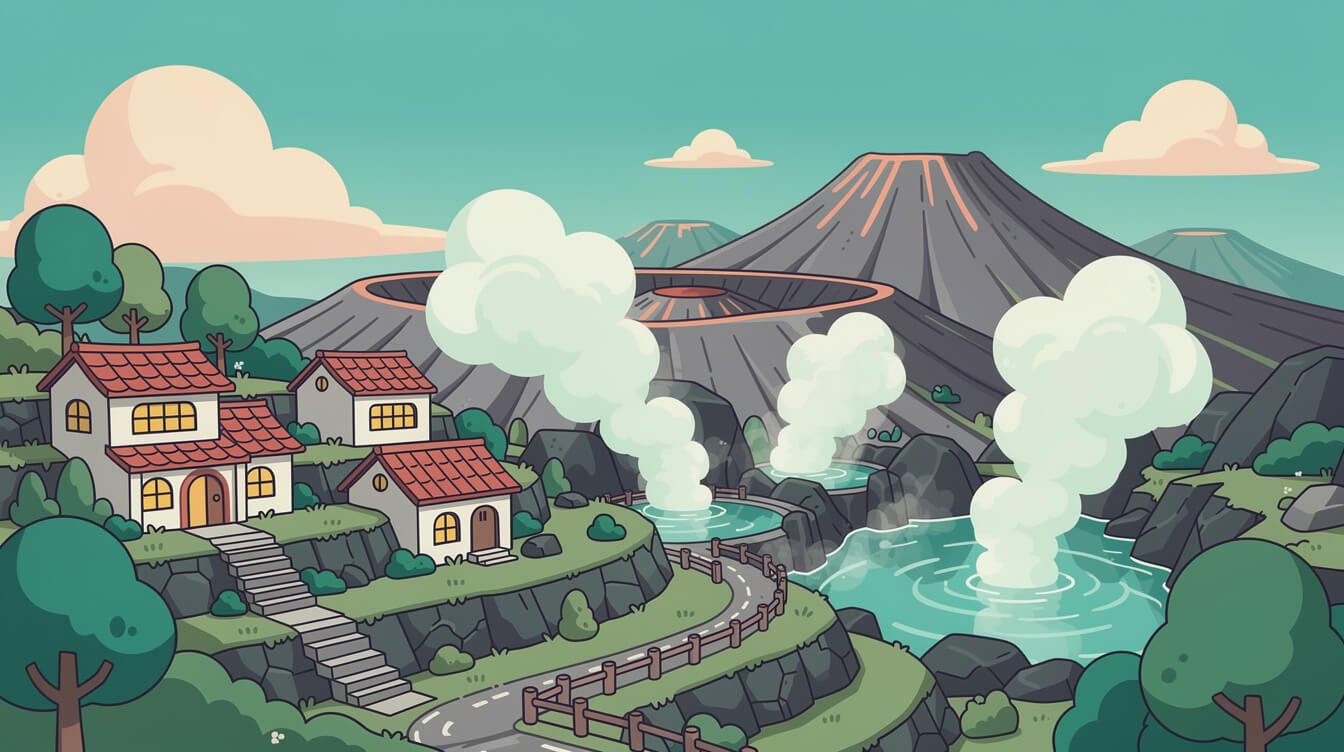
Here’s the part almost every guide skips. Yangmingshan is built on the Datun Volcanic Group — a cluster of some twenty volcanic peaks and cones formed by eruptions that shaped this corner of northern Taiwan. The rock underfoot is mostly andesite, the grey, gritty stone that typical subduction-zone volcanoes produce. The mountain isn’t a scenic backdrop that happens to have hot springs. The mountain is the hot springs, seen from above.
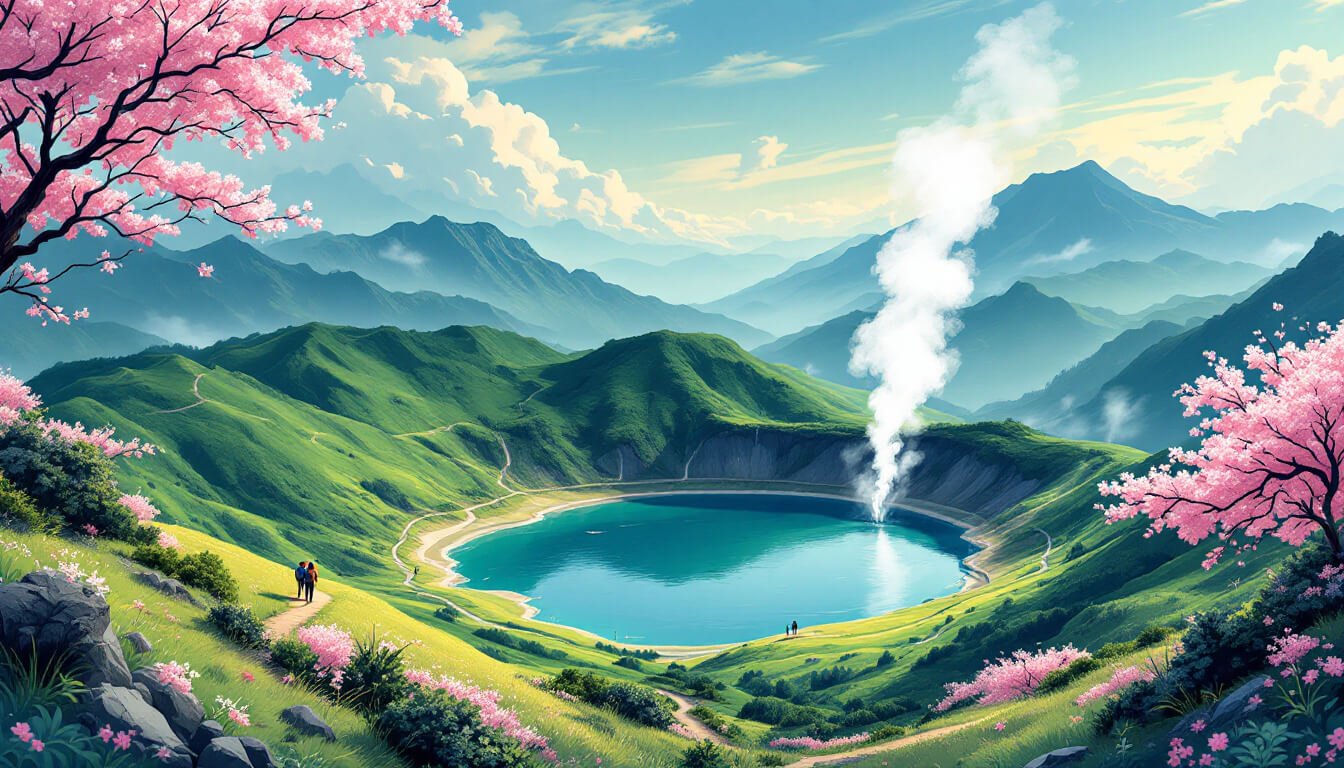
The best place to feel that is Xiaoyoukeng (小油坑, “Little Oil Pit”), a post-volcanic landscape at about 805 meters on the northwestern flank of Qixing Mountain. It’s a five-minute walk from the parking lot to the viewing platform, and the sensory hit is immediate: fumaroles roaring steam out of a scarred hillside, yellow sulfur crystals crusting the vent rims, water boiling out of the ground beside the trail, and a smell that announces itself long before you see anything. That smell is hydrogen sulfide — the mountain venting off gas from the magma system below.
What “Post-Volcanic” Actually Means
“Post-volcanic activity” is a phrase you’ll see on every sign up there, and it’s doing a lot of quiet work. It means the eruptions have stopped, but the heat engine hasn’t. Groundwater seeps down, hits hot rock, and comes back up as steam, acidic springs, and sulfur deposits. Researchers have found evidence that the Datun group is better described as dormant rather than dead, which is why Taiwan maintains a volcano observatory monitoring it. There is no cause for alarm on your hike — but it does mean you’re standing on live geology, not a fossil.
That heat rewrote the biology too. Volcanic soil here is highly acidic, and the northeast monsoon dumps a staggering amount of rain — the Anbu weather station inside the park averages around 4,700 millimeters a year, several times what downtown Taipei gets. Cold, wet, acidic, and windswept produces plant communities you’d normally have to climb much higher to find. The park holds roughly 1,360 vascular plant species, 168 butterfly species, and 122 bird species, plus Taiwan isoetes, an aquatic quillwort fern found in Menghuan Pond (夢幻湖, “Dream Lake”) and nowhere else on Earth.
Season by Season: When to Visit Yangmingshan National Park
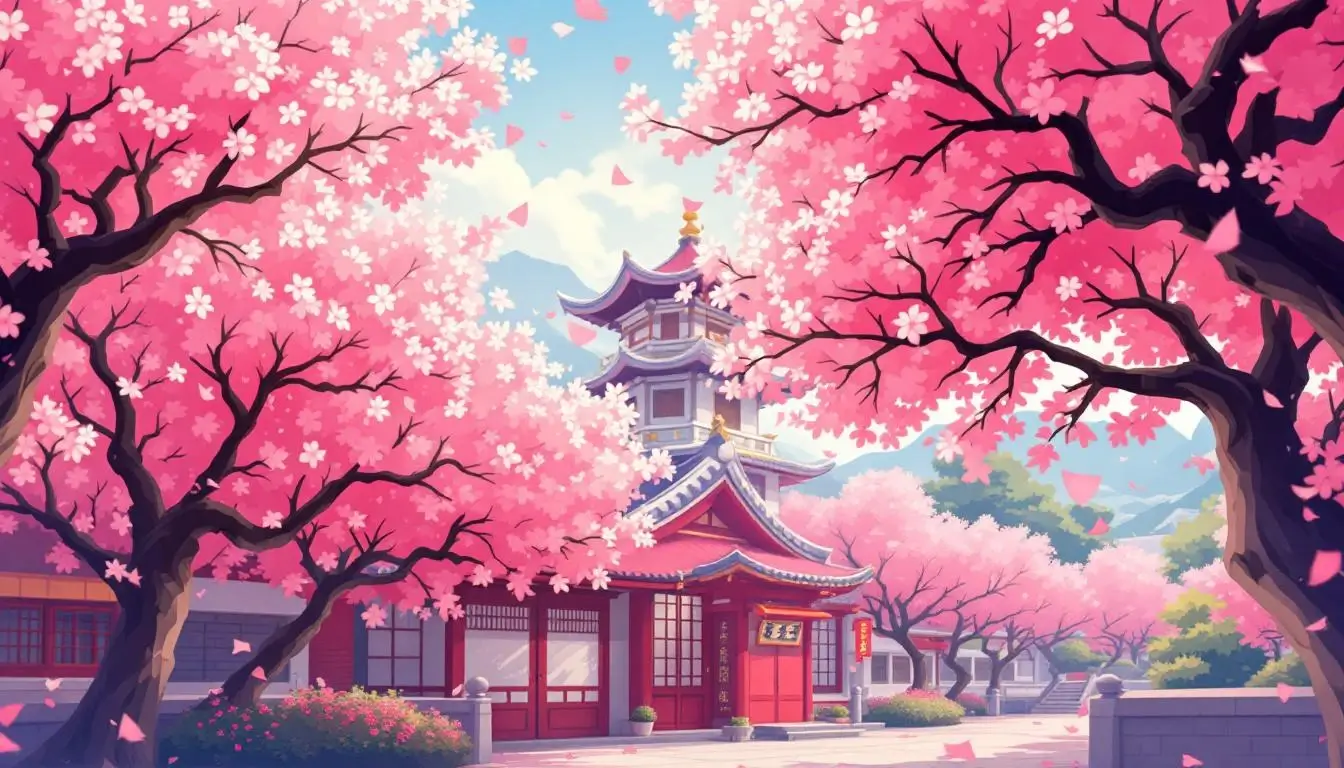
Yangmingshan runs on a flower calendar, and knowing it is the difference between a magical day and a two-hour bus queue. Here’s the year at a glance:
| What’s Blooming | When | Where to See It | Crowd Level |
|---|---|---|---|
| Cherry blossoms | Mid-February to early March | Flower Clock Park, Pingjing Street Lane 42, Qianshan Park | Extreme on weekends |
| Azaleas (Taipei’s official flower) | March | Flower Clock area, Azalea Camellia Garden | High |
| Calla lilies | Mid-March to mid-April | Zhuzihu (竹子湖) flower farms | Extreme on weekends |
| Hydrangeas | Mid-May to mid-June | Zhuzihu flower farms | High |
| Silver grass (芒草) | October to December, peaking in November | Qingtiangang, Xiaoyoukeng, Qixingshan, Lengshuikeng | Moderate — the local secret |
Why Silver Grass Season Is the Local Favorite
Cherry blossom season gets the Instagram traffic. Silver grass season gets the Taipei hikers. From October through early December, the mountain’s grasslands turn into shifting fields of pale gold plumes that catch light like they’re lit from inside, and because there’s no single “peak bloom day” to chase, the crowds spread out instead of stacking up. Locals call it 芒草季 — silver grass season — and it’s arguably the most beautiful the mountain gets all year.
It’s also the most photogenic light. Autumn brings clearer air and lower humidity than the muggy summer, so the ridgelines that vanish into haze in July stand out sharply in November. If you only get one Yangmingshan day per year, make it a November weekday.
The Weather Rule That Trips Up Every First-Timer
Yangmingshan makes its own weather. It’s consistently several degrees cooler than the city, and it is routinely foggy or raining up there while central Taipei is sunny. Fog can roll in inside ten minutes at any time of year and is most persistent in winter, when cold, wet, grey days on the mountain are genuinely miserable. Check the park’s live webcams before you commit, bring a layer you wouldn’t need in the city, and treat “it’s nice in Taipei” as zero evidence about conditions at 1,000 meters. If you’re visiting between June and October, also read our Taipei typhoon season guide — the park closes trails during storm warnings.
One consolation prize for all that mist: Yangmingshan holds the record for the world’s longest-lasting rainbow, observed for just under nine hours. Rainbows are common here for exactly the reason the fog is.
The Hikes Locals Actually Do (Not the Tourist Loops)
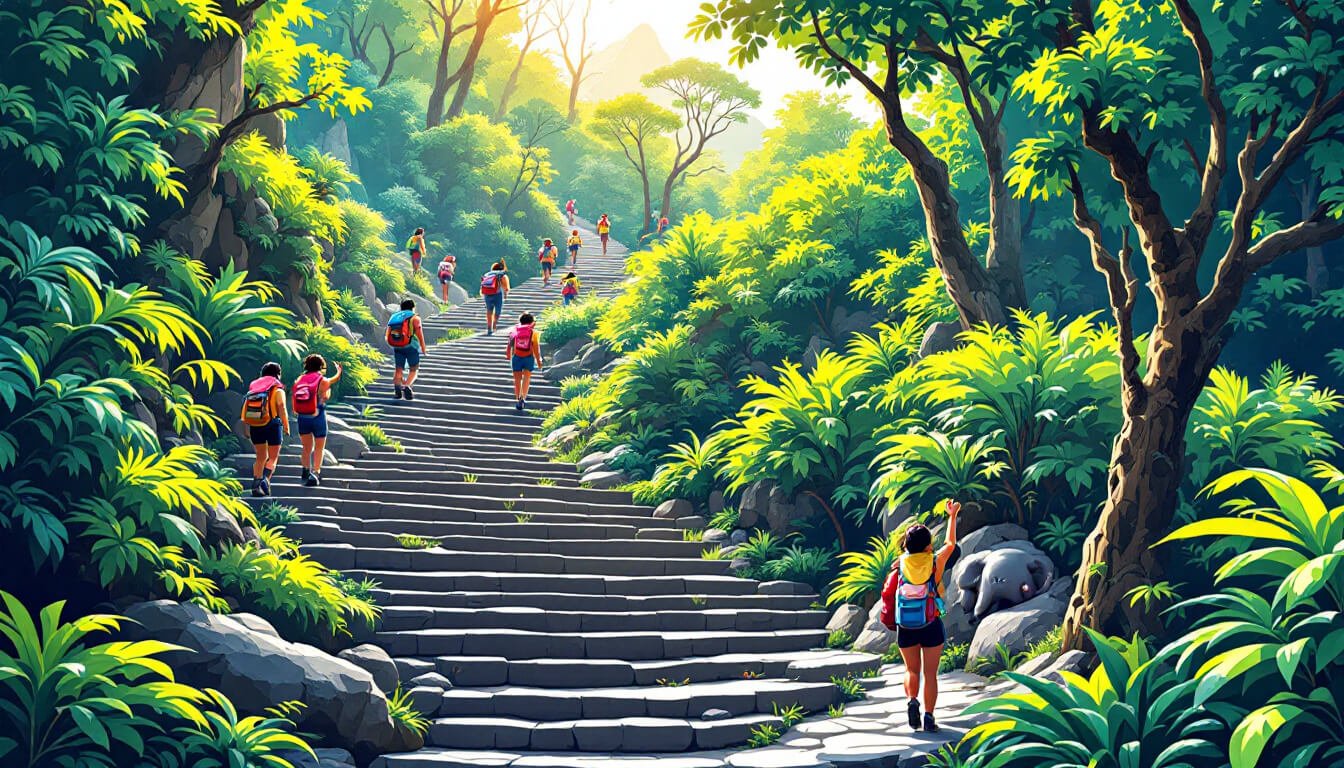
Most visitors get dropped at a viewpoint, take a photo, and get back on the bus. Regulars do point-to-point routes that use the bus network as a shuttle — walking one direction and riding back from a different stop. Here are the four that matter.
1. Xiaoyoukeng to Qixing Summit to Lengshuikeng (the classic traverse)
The trail leaves from beside the Xiaoyoukeng bus stop and reaches the 1,120-meter summit in a little over an hour. It is almost entirely stairs, and they’re steep — this is a stair-climbing workout with a view, not a stroll. The move that separates locals from tourists: don’t backtrack. Descend the far side to Lengshuikeng, where you can catch a bus out. You get both flanks of the volcano, the summit, and a completely different landscape on the way down, for the same effort as an out-and-back.
2. Lengshuikeng to Qingtiangang (the easy win)
Cross the Jingshan Suspension Bridge and you’re on a 30-minute, roughly 60-meter-gain connector to Qingtiangang grassland. It is the highest scenery-to-sweat ratio in the park and it’s fully doable in sneakers with kids in tow.
3. The Qingtiangang Loop (buffalo country)
A flat, 45-minute loop around a mountaintop grass plateau where you are all but guaranteed to meet the park’s famous semi-feral water buffalo. They’re descendants of working animals left behind when grazing here wound down, and they now own the place. Give them a wide berth — they’re not aggressive, but they are enormous, unfenced, and entirely uninterested in your itinerary. This is also prime silver grass ground in November, and there’s zero shade, which matters in summer.
4. Juansi Waterfall Trail (the one that skips the crowds entirely)
From Lengshuikeng, the Juansi Waterfall trail descends about an hour to the highway, where bus S15 will take you back toward Jiantan or Shilin. It’s shaded, wet, green, and gets a fraction of the foot traffic of the grassland routes. Perfect for a hot day, and a good pairing with an evening back in the city.
Before You Go
Entry to the park is free, trails are well signposted in English and Chinese, and the bus network genuinely works. Bring more water than you think you need for the exposed routes, a light rain shell year-round, and shoes with grip — volcanic stone plus permanent damp equals slick. Also: mobile coverage is patchy in the valleys, so screenshot your bus times.
Getting to Yangmingshan National Park From Taipei Without the Crowds

There’s no MRT line up the mountain — you take the metro to a transfer point, then a bus. Tap on with an EasyCard, same as everywhere else in Taipei. If you’re still getting your bearings on the metro itself, our Taipei MRT guide breaks down every line.
The Main Approaches
- From Taipei Main Station: Bus 260 runs all the way up toward the Flower Clock area and Yangmingshan Bus Terminal. Longest ride, but zero transfers.
- From Jiantan or Shilin MRT: The fastest, most popular approach — including bus S15 toward Lengshuikeng. This is the standard local route.
- From Beitou or Shipai MRT: Bus S9 climbs a different road, passing Sulphur Valley on the way to Flower Clock and the bus terminal. Slightly longer, far more interesting, and it lets you combine the mountain with a hot spring soak.
- Deeper into the park: From Yangmingshan Bus Terminal, buses S8 and S9 serve Zhuzihu (S8 drops right into the flower farms; S9 stops on the highway above, a 5–15 minute walk down).
- From the north coast: Bus 1717 links Jinshan and the coast road to Xiaoyoukeng and the terminal — the escape route if you hike Jinbaoli Trail down the back side.
The Anti-Crowd Playbook
Three rules do most of the work. Go on a weekday — the flower-season crowds are overwhelmingly a Saturday-Sunday phenomenon, and buses run packed with full parking lots. Start early, ideally on the mountain before 9am, which also buys you the clearest air of the day. And walk against the flow: enter at Xiaoyoukeng and exit at Lengshuikeng or Qingtiangang, because the tour-bus tide moves the other way.
If you’d rather stay on the pavement, the neighborhood-by-neighborhood breakdown in our complete Taipei attractions guide pairs well with a half-day up here. And if riding Taipei’s transit system has become your personality — no judgment, it’s a great system — the Taipei Metro Shiba Inu Civic Pride Roundel T-Shirt is the most Taipei thing you can wear to a trailhead.
The Beitou Connection: One Volcano, Two Destinations
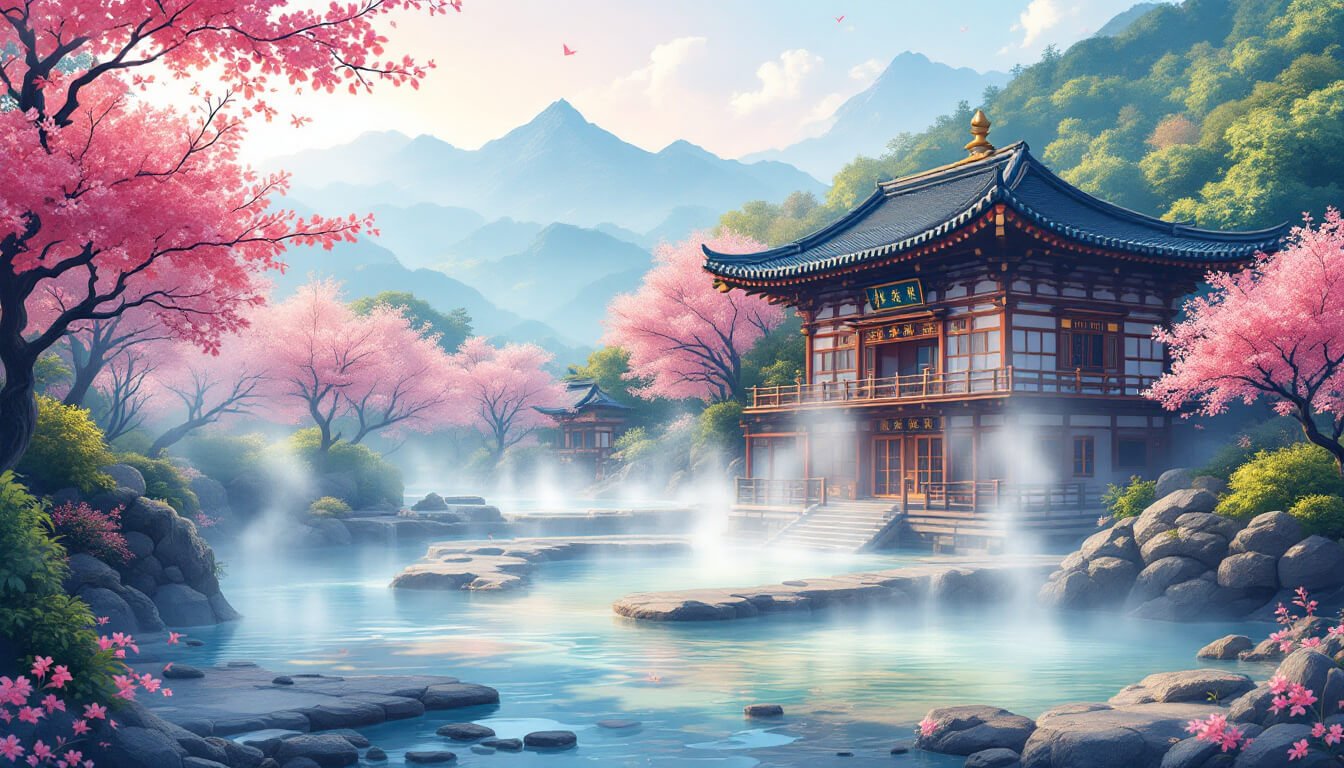
Most people treat Yangmingshan and Beitou as two separate day trips. Geologically, they’re the same trip. The hot water that fills Beitou’s bathhouses is heated by the same Datun volcanic system that vents steam at Xiaoyoukeng — Beitou is simply where that plumbing surfaces at the bottom of the hill, inside the city, where it’s convenient to build a bathhouse around it.
You can watch the gradient happen from a bus window. Ride the S9 up from Beitou and you’ll pass Sulphur Valley (硫磺谷), a steaming, bleached-out basin of vents partway up the slope — the midpoint between a bathhouse and a fumarole. Same gas, same heat source, different altitude.
That’s what makes the combination itinerary so good: hike the volcano in the morning, then descend and soak in what the volcano is producing. Beitou’s water is unusually mineral-rich even by Taiwan standards, and one Beitou spring is famous for hokutolite, a rare radium-bearing crystal named after the district itself. We’ve gone deep on the chemistry and bathhouse etiquette in our Beitou hot spring guide, and on the district beyond the baths in our guide to Beitou, Taipei. Taiwan has over 130 hot spring areas nationwide, and this is the most accessible cluster of them all.
Free Soaks on the Mountain Itself
You don’t have to descend to bathe. Lengshuikeng has a free public hot spring inside the park, plus a foot-soaking pool just outside the building. Its water runs cooler than Beitou’s scalding sources — hence the name, which literally means “cold water pit” — and after a stair-heavy descent from Qixing summit, a free soak at the bottom is one of the great small luxuries of Taipei hiking. Bring a towel.
Stargazing, Silence, and Whether to Stay Overnight

Here’s the sharpest underrated fact about the mountain: light pollution drops off fast as you climb. Taipei’s glow is intense in the basin, but the ridgelines block a surprising amount of it, and once you’re on the far side of the summit ridge, the sky opens up in a way that shouldn’t be possible twenty kilometers from a capital city. On a clear, moonless autumn night, Qingtiangang and the upper parking areas become genuine stargazing spots — which is precisely the quality that earned the park its Urban Quiet Park certification.
Two practical warnings. First, buses thin out dramatically after dark and stop entirely fairly early, so an evening visit realistically means driving, scootering, or arranging a taxi. Second, mountain fog kills star visibility more often than city light does — autumn and winter nights after a cold front are your best odds, and the live webcams are worth checking even at 9pm.
Day Trip or Overnight?
For most people: day trip. Accommodation inside the park is genuinely limited, the mountain is under an hour from central Taipei, and there’s not much of a night scene up there once the last flower farm closes.
Stay overnight if one of three things is true: you want a hot spring hotel with a private tub and mountain air; you want to be on the trail at sunrise without a pre-dawn bus scramble; or you want the night sky. There are a handful of hot spring hotels inside the park boundary along the main road from Taipei, and a bigger cluster on the ocean side near Jinshan in New Taipei City — note that several of those carry “Yangmingshan” in the name but sit an hour’s drive from the park’s main attractions, so read the map before you book. If it’s the baths you’re after rather than the trails, staying in Beitou and day-tripping up is the smarter play.

Wear the Mountains Home
Our Formosa Black Bear tee puts Taiwan’s most iconic animal against clean mountain silhouettes — a quiet nod to the island’s wild side that works just as well on the trail as it does at brunch.
Yangmingshan National Park FAQ
Is Yangmingshan National Park free to enter?
Yes. There’s no entrance fee for the park itself. You’ll pay only for transport, parking if you drive, and optional extras like the guided tour of Yangmingshan Zhongshan Hall (around NT$100, Mandarin only, limited time slots).
How long should I spend there?
Half a day covers one area — say Xiaoyoukeng plus a summit attempt, or Zhuzihu in flower season. A full day lets you traverse the mountain and finish with a soak. Two days only makes sense if you’re staying overnight for sunrise or stargazing.
Is Yangmingshan’s volcano still active?
The Datun Volcanic Group is best described as dormant rather than extinct — the eruptions stopped long ago, but the geothermal system is very much alive, which is what produces the fumaroles, sulfur deposits, and hot springs. Taiwan monitors it scientifically. There is no hazard to visitors on marked trails.
What’s the best month to visit?
November, for silver grass season and clear autumn air, with fewer crowds than spring’s flower peaks. Late February to early March is the runner-up if cherry blossoms are your priority — just go on a weekday.
Can I visit Yangmingshan National Park without a car?
Absolutely, and most locals do. Buses from Taipei Main Station, Jiantan, Shilin, and Beitou MRT stations serve the park, and internal routes connect the major trailheads. An EasyCard covers all of it.
Will I actually see the water buffalo?
At Qingtiangang, most likely yes — the herd grazes the plateau year-round. Keep your distance, don’t feed them, and don’t get between an adult and a calf.
Is it suitable for kids?
Very. The Qingtiangang loop, the Lengshuikeng connector, and the Xiaoyoukeng viewing platform are all short, flat-ish, and dramatic. Save the Qixing summit stairs for older kids with hiking legs.
Final Thoughts: The Mountain Taipei Forgets to Brag About
Taipei markets itself on food, night markets, and a very tall building. It rarely mentions that it has a live volcanic massif on its doorstep with the world’s quietest urban wilderness on top of it. Yangmingshan National Park is the most accessible national park in Taiwan and one of the strangest — a mountain named after a philosopher, shaped by sulfur thieves and arson, heated by magma, and reachable with the same card you use to buy a coffee.
Go on a weekday in November. Take the bus to Xiaoyoukeng, climb the stairs into the steam, cross the summit, and come down the far side to a free hot spring. Then ride down to Beitou and soak in the same volcano from the bottom. That’s the day locals build, and it costs about the price of lunch.
Taiwan does this constantly — hides something extraordinary in plain sight and declines to make a fuss about it. Learning to notice is the whole trick.
Love Everything Taiwan?
Get Taiwan culture highlights, travel tips, and exclusive merch drops delivered to your inbox. Join thousands of Taiwan fans worldwide.

Grab a Free Taiwan Sticker!
Drop your email and we’ll send you a limited-edition Taiwan sticker — plus insider access to new merch drops and island vibes.
No spam. Unsubscribe anytime.