Tea Egg Recipe: How to Make Taiwan’s Iconic 7-Eleven Snack at Home
Step into any 7-Eleven in Taiwan and something hits you before you even reach the counter: a warm, deeply savory aroma that seems to exist nowhere else on earth. It’s spiced, slightly sweet, rich with tea — the unmistakable smell of a bubbling pot of tea eggs (茶葉蛋, chá yè dàn).
This is what a great tea egg recipe smells like, and for millions of Taiwanese people, it’s the smell of everyday comfort. For diaspora living abroad, it’s nostalgia in one sniff. For first-time visitors to Taiwan, it’s one of those unexpected food encounters that changes the way you understand a culture.
Taiwanese tea eggs are hard-boiled eggs cracked (not peeled), simmered in an aromatic brine of black tea, soy sauce, and warming spices, then left to marinate overnight until the whites turn a deep mahogany and the famous marble pattern emerges through every crack. At NT$15 each — roughly fifty US cents — they’re the ultimate snack: cheap, protein-packed, impossibly satisfying.
In this guide, you’ll get the complete tea egg recipe plus the cultural story behind why this humble egg became one of Taiwan’s most beloved food icons. Whether you’re recreating a taste of home or making them for the first time, this is the recipe that gets it right.
What Are Taiwan Tea Eggs? (茶葉蛋)
Tea eggs are one of China and Taiwan’s most enduring street foods — but the Taiwanese version has its own distinct character, and it’s worth understanding what makes them special before you start cooking.
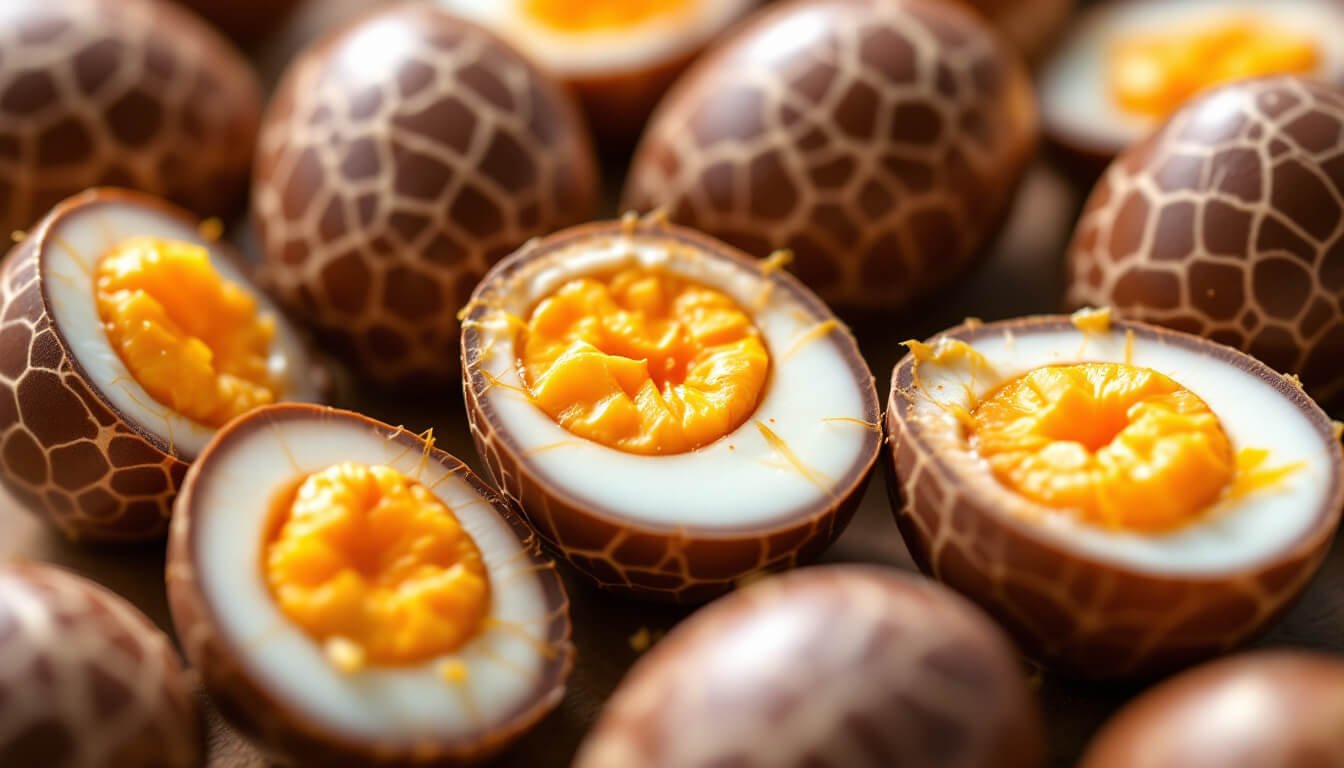
The name 茶葉蛋 translates literally as “tea leaf egg,” and the technique is both simple and brilliant. You hard-boil eggs, then crack the shells all over (without removing them) to create a fine web of fractures across the surface. These cracked eggs are then simmered in a deeply seasoned brine of black tea, soy sauce, dark soy sauce, and aromatic spices. As the eggs cook in the brine, the liquid seeps through every crack, staining the egg whites a rich golden-brown and infusing them with layer upon layer of flavor. When you finally peel the egg, you’re left with a beautiful marble pattern — like brown veins running through a cream-colored stone.
Taiwan Tea Eggs vs. Mainland Chinese Tea Eggs
While tea eggs originated in mainland China, the Taiwanese version has evolved into something distinct. Mainland-style tea eggs often use Pu-erh or heavily fermented teas and simmer for hours until intensely flavored and deeply set. The result is bold and earthy — excellent, but an acquired taste.
The Taiwanese convenience store version leans differently. The brine is built on plain black tea (Assam or a local Taiwanese variety), regular and dark soy sauce, rock sugar, and a five-spice blend. The extended simmer is gentler, and the overnight marination is where most of the flavor work happens. The result is more balanced: spiced and savory, but with a subtle sweetness and cleaner tea note that doesn’t overpower.
This is the style of tea egg recipe this guide focuses on — authentic to what you’d buy at 7-Eleven in Taipei, Taichung, or Kaohsiung.
Why Taiwan’s 7-Eleven and Tea Eggs Are Inseparable

To understand Taiwanese tea eggs, you need to understand Taiwan’s convenience store culture — because the two are completely intertwined.
Taiwan has the highest density of 7-Eleven stores of any country in the world: over 6,700 locations for a population of just 23 million people. That’s roughly one store for every 3,400 people. And unlike the convenience stores you might know elsewhere, Taiwanese 7-Elevens are genuinely useful: they’re where you pay utility bills, pick up parcels, print documents, buy concert tickets, and eat surprisingly good food.
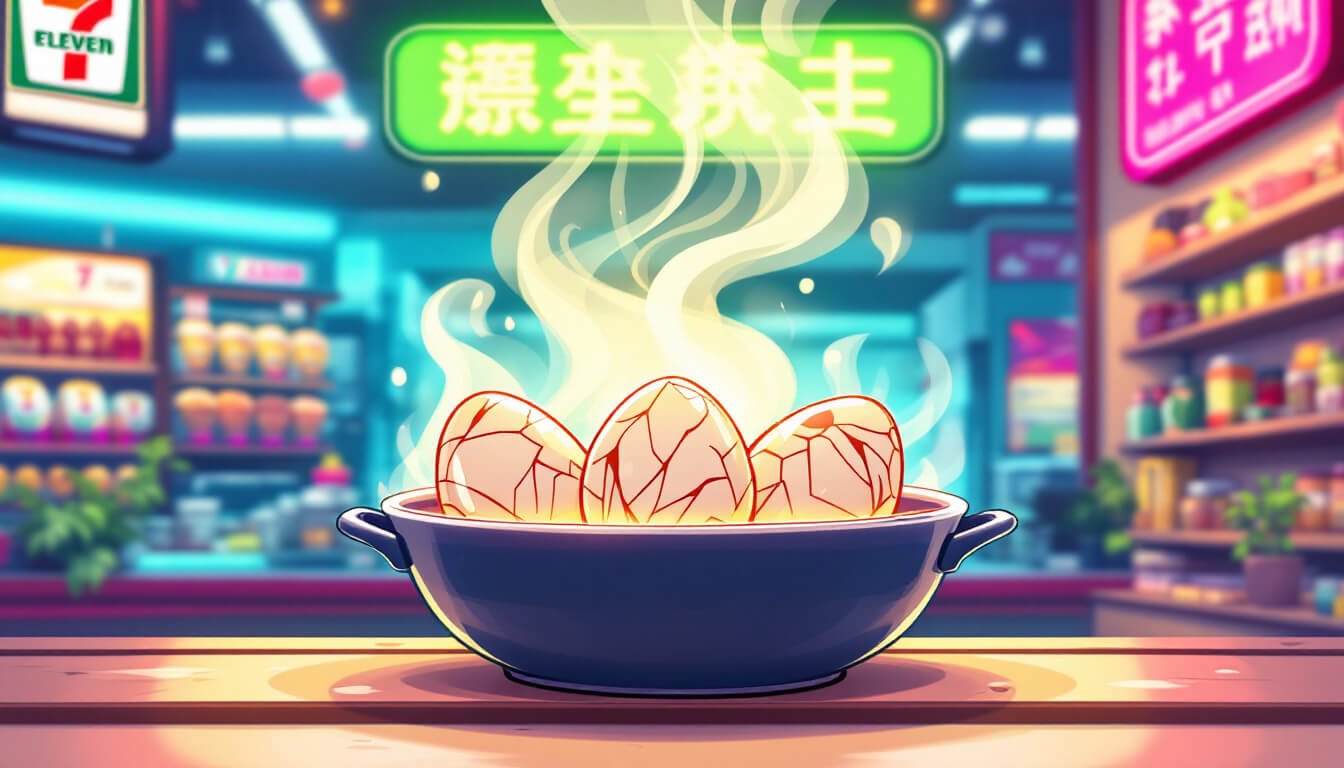
At the center of every hot food display, day and night, sits a bubbling clay pot of tea eggs. They’re always NT$15. They’re always dark and aromatic. And that smell — the warm mix of soy sauce, star anise, cinnamon, and black tea — is the olfactory signature of the store.
For Taiwanese people who move abroad, the tea egg is consistently one of the first foods they try to recreate. It’s comfort food and cultural marker at once. Travelers who spent time in Taiwan often describe the smell of a 7-Eleven as the thing that transports them most immediately back to the island — more than any photograph.
The tea egg even became the center of a cultural moment in 2011, when a government official’s dismissive comment about young Taiwanese salaries — framed around whether workers could afford to eat more eggs — sparked widespread outrage. “Tea egg” briefly became political shorthand for the cost of living debate. That’s how embedded this food is in Taiwanese public consciousness.
It’s not just a snack. It’s an icon.
Ingredients for Authentic Taiwanese Tea Eggs
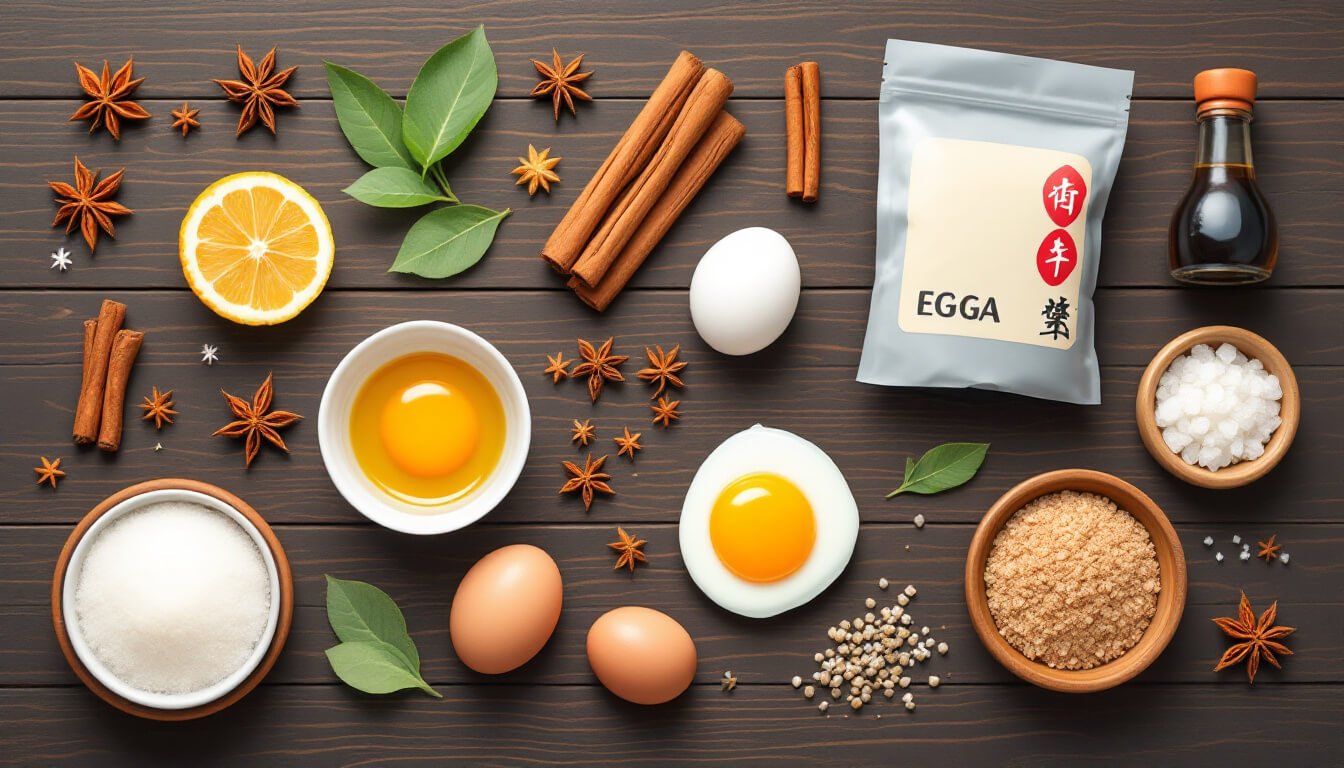
This tea egg recipe uses ingredients available at any Asian grocery store. Most can also be ordered online. Here’s what you need for a batch of 12 eggs:
The Eggs
- 12 large eggs, room temperature (cold eggs crack more when moved from water to brine)
The Brine
- 2 cups water
- 3 tablespoons soy sauce (regular — not light or dark alone; you need the standard saltiness)
- 1 tablespoon dark soy sauce (essential for that deep mahogany color)
- 2 black tea bags (Assam, Ceylon, or a generic black tea — nothing flavored or herbal)
The Spice Blend
- 2 whole star anise pods
- 1 cinnamon stick
- 2 bay leaves
- 1 teaspoon five-spice powder
- 1 tablespoon rock sugar (brown sugar works as a substitute, but rock sugar dissolves more cleanly)
Optional Add-ins for Extra Depth
- 1 small piece dried tangerine peel (陳皮, chén pí) — a classic Taiwanese trick that adds a citrus-floral note
- 3–4 Sichuan peppercorns — for a very subtle numbing warmth in the background
Tea selection tip: The tea type matters more than you’d expect. Standard black tea (Assam or Ceylon) gives the clean, mellow flavor of the convenience store version. Pu-erh gives a more intense, earthy depth if you prefer bold flavor. For something uniquely Taiwanese, try a black oolong. Avoid green or white teas — they’re too delicate and will disappear entirely in the brine.
Speaking of tea: if you want to explore the extraordinary range of teas Taiwan produces, our complete guide to Taiwan oolong tea is a great starting point — it covers everything from high-mountain Alishan oolongs to the roasted depth of Dong Ding.
The Complete Tea Egg Recipe, Step by Step
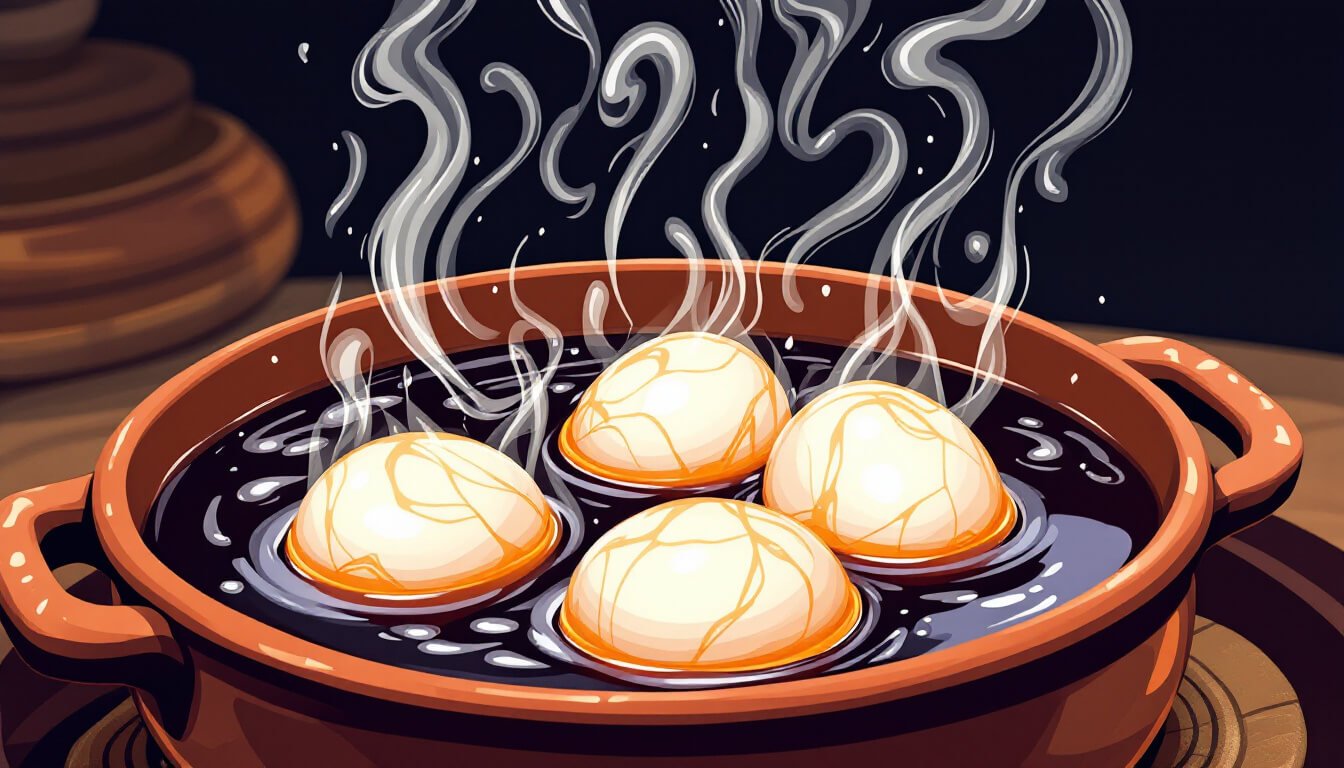
This tea egg recipe produces 12 eggs with the deep, balanced flavor profile of the Taiwanese convenience store classic. The process takes about an hour of active work, plus overnight marination — plan ahead.
Step 1: Cook the Eggs
Place eggs in a saucepan and cover with cold water by at least one inch. Bring to a boil over medium-high heat, then reduce to a gentle simmer. Cook for 10 minutes for slightly firm yolks, or 12 minutes for fully set yolks. The fully set version holds up better during the second simmering and is closer to the traditional Taiwanese style.
The moment your timer goes off, transfer the eggs to a bowl of ice water. Let them cool for at least 5 minutes. This stops the cooking and makes cracking easier.
Step 2: Crack the Shells (The Marble Step)
Here’s where the visual magic happens. Using the back of a spoon, gently tap each egg all over to create a fine network of cracks across the entire shell. Work all the way around — top, bottom, sides — until the whole surface is covered in a web of fine fractures. More cracks means more marble lines and more brine penetration.
Pro tip: After tapping, roll the egg gently under your palm on the countertop for an even, uniform crack pattern. The goal is a dense web of thin cracks, not broken chunks of shell. If a piece of shell falls off, that’s fine — the egg will still marinate beautifully, just without a marble pattern in that spot.
Step 3: Build the Brine
In a medium saucepan, combine the water, soy sauce, dark soy sauce, tea bags, star anise, cinnamon stick, bay leaves, five-spice powder, and rock sugar. Bring to a full boil, stirring to help the sugar dissolve. Reduce to a low simmer and cook for 5 minutes to bloom the spices and infuse the tea.
Your kitchen will smell incredible at this point. The dark soy sauce turns the brine a deep amber-black — this is what gives the finished eggs their rich color.
Step 4: Simmer the Cracked Eggs
Gently lower the cracked eggs into the brine. They should be fully submerged — if they float, weight them down with a small plate or lid. Adjust the heat to the lowest possible setting: you want the brine barely simmering, almost still.
Simmer for 40–60 minutes. At 40 minutes, you’ll get a lighter, more delicate flavor with a subtler marble pattern. At 60 minutes, the flavor is deeper and the color more intense — closer to the classic 7-Eleven version. Don’t rush this step; low and slow is everything.
Step 5: Cool and Marinate Overnight
This is the step most people skip — and it’s the most important one. After simmering, turn off the heat and let the eggs cool in the brine at room temperature for about an hour. Then transfer everything (eggs, brine, and all the spices) into a sealed container and refrigerate for at least 8 hours. Overnight is better. 24 hours is better still.
As the eggs marinate in the cold brine, the flavor deepens significantly and the marble pattern darkens and sharpens. Don’t rush it.
Step 6: Peel and Serve
When you’re ready to eat, carefully peel the eggs to reveal the marble pattern. The whites should be a rich golden-brown, crisscrossed with darker lines tracing every crack. Serve them as they are, or warm them by simmering for 5 minutes in the reserved brine.

Wear Your Taiwan Food Obsession
From boba tea to tea eggs, Taiwan’s food culture is worth celebrating every day. Our Boba Tea Cat T-Shirt is the perfect way to wear your love for the island.
How to Serve and Store Your Tea Eggs
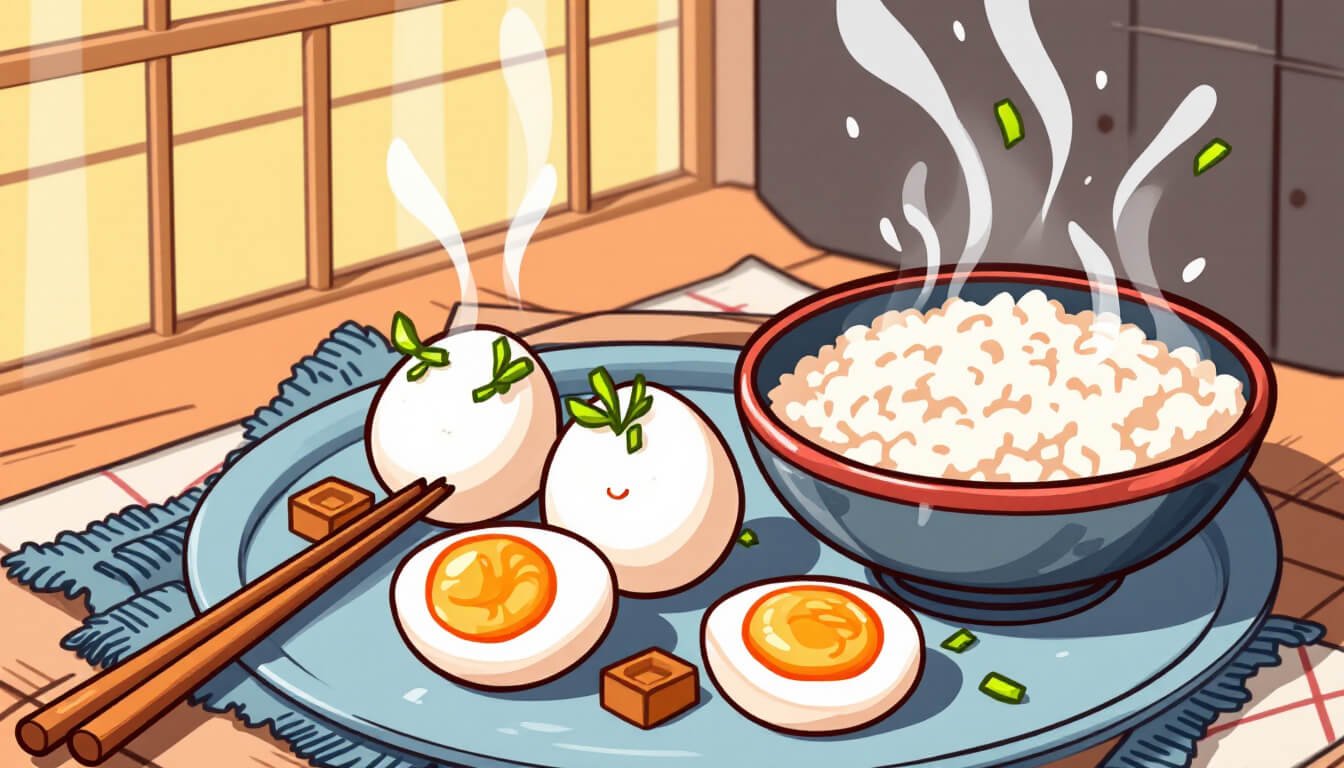
Tea eggs are genuinely versatile, and that flexibility is a huge part of their appeal. In Taiwan, they’re eaten at every time of day — grabbed from a 7-Eleven pot as a morning snack, packed into school lunch boxes, dropped into evening ramen.
Serving Suggestions
- As a standalone snack — the classic. Eat them as you’d eat a hard-boiled egg, perhaps with a pinch of salt.
- With steamed white rice — slice the eggs and lay them over a bowl of plain rice. The brine-infused whites are salty enough to season the rice with every bite.
- In instant ramen or noodle soup — halved, placed on top. The marble pattern makes even a simple bowl look intentional and beautiful.
- In a Taiwanese bento box — alongside rice, stir-fried greens, and a piece of braised pork or lu rou fan, this is a complete Taiwanese home meal.
- As a party snack — halved and arranged on a platter with toothpicks. They’re impressive-looking and always a conversation starter.
If you love exploring Taiwanese food culture, our guide to Taiwan pineapple cake is another essential read — it covers the fascinating history of the island’s most famous souvenir food, including why it contains no pineapple (depending on who you ask).
Storage: Keep Them in the Brine
This is the most important storage rule: keep your tea eggs in the brine. Storing peeled eggs on their own causes the whites to dry out and the flavor to fade. In the brine, they stay moist, continue to absorb flavor, and last up to 5 days in the refrigerator.
The brine can also be reused — a standard practice in Taiwan. After each batch, bring the brine to a boil, add a fresh tea bag and a splash more soy sauce, and you’re ready for the next batch. Many Taiwanese households have a brine that’s been running for years, getting richer and more complex with every cycle.
Soft-Boiled Tea Eggs
The classic Taiwanese style is fully hard-boiled, but the soft-boiled version has become popular among food enthusiasts. For a jammy, slightly runny yolk: reduce the initial boil to 7–8 minutes, simmer the cracked eggs on the lowest possible heat for 30 minutes (not 60), and marinate for 12–24 hours. The yolk will deepen to a rich amber and develop a creamy, concentrated flavor. Handle these more gently when peeling — they’re softer.
Just like bubble tea, which also started in Taiwan and became a global phenomenon, the tea egg is proof that the island’s food culture consistently produces ideas that spread far beyond its shores.
Frequently Asked Questions About Tea Egg Recipe
Why aren’t my tea eggs taking on color?
Two likely causes: not enough dark soy sauce, or insufficient crack coverage. Regular soy sauce alone produces a light tan color — dark soy sauce is essential for the deep mahogany hue. Also check that the entire shell surface is cracked; uncracked sections won’t absorb color or flavor.
How long should I marinate tea eggs?
At minimum, 8 hours. Overnight (12+ hours) is standard for authentic flavor. Up to 24 hours produces the most intense result — at that point, the egg white is fully saturated with the brine and the yolk begins to take on color from the inside out.
Can I make tea eggs without five-spice powder?
Yes. You can use the individual components: star anise, cloves, fennel seeds, cinnamon, and Sichuan peppercorns. But five-spice powder is inexpensive and available at any Asian grocery, so it’s usually easier to use.
What’s the best tea for a tea egg recipe?
Black tea is the standard — Ceylon, Assam, or any generic supermarket black tea works well. Pu-erh gives a deeper, earthier flavor for those who want something more intense. Avoid green tea (too delicate — it disappears in the brine) and any flavored or herbal teas.
Can I prepare tea eggs in advance?
Absolutely — and they’re actually better made ahead. Prepare them two days before you need them, keep them in the brine in the refrigerator, and serve at room temperature or gently warmed. They improve with every hour they spend in the brine.
Can I use a slow cooker?
Yes. After cracking the eggs and making the brine, combine everything in a slow cooker on the low setting for 4–6 hours. This produces deeply flavored eggs with minimal hands-on time, though you lose some control over the final texture of the yolk.
Final Thoughts: The Most Rewarding Snack You’ll Ever Make
Making this tea egg recipe for the first time is one of those cooking experiences that rewards patience with a result that feels almost magical. You started with a plain hard-boiled egg. You cracked it, simmered it, and let it sit overnight — and what you peel the next morning is something genuinely beautiful: rich mahogany color, intricate marble pattern, flavor that goes all the way through.
It’s also a recipe that opens up as you explore it. Once you understand the basics, you’ll find yourself adjusting the spice blend, trying different teas, experimenting with marination time. Every variable shifts the result in interesting ways.
More than anything, though, a great tea egg recipe connects you to something larger. This is the food of Taiwan’s convenience stores, its morning commuters, its school lunchboxes. It’s the smell of 6,700 7-Elevens across a small island that manages to punch well above its cultural weight. Make a batch, peel one while it’s still warm, and you’ll understand immediately why this humble egg refuses to stay humble.
Love Taiwan’s Food Culture?
Get weekly stories about Taiwanese food, culture, artisans, and the people who make the island so unforgettable — delivered straight to your inbox.

Grab a Free Taiwan Sticker!
Drop your email and we’ll send you a limited-edition Taiwan sticker — plus insider access to new merch drops and island vibes.
No spam. Unsubscribe anytime.