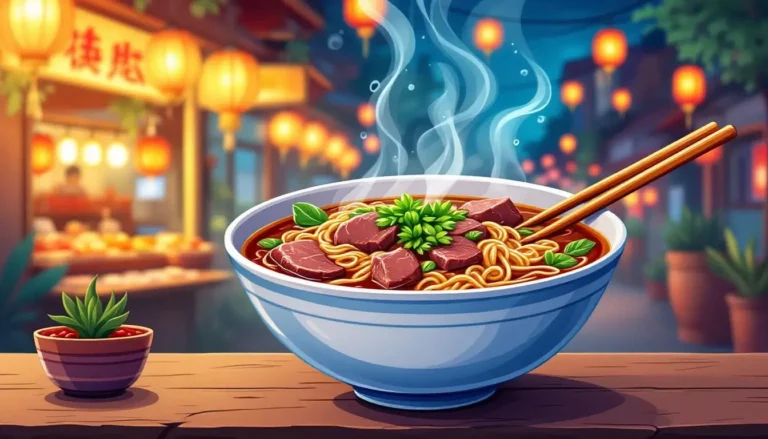
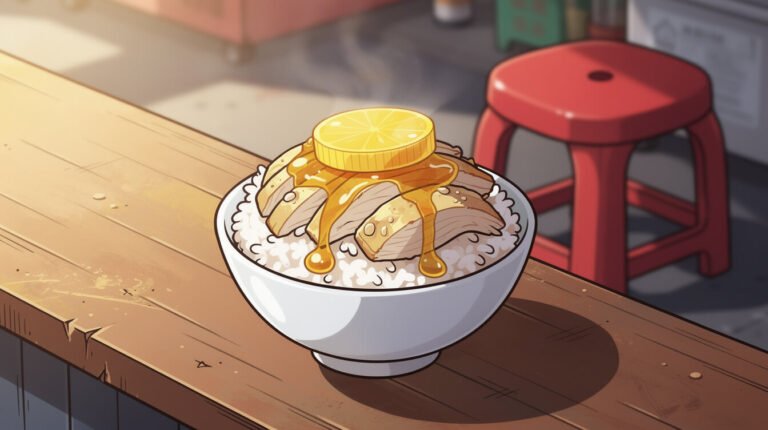
Liuhe Night Market Kaohsiung: The Complete 2026 Guide to Southern Taiwan’s Most Iconic Street Food Destination
If you’re plotting a food-first swing through southern Taiwan, Liuhe Night Market Kaohsiung is the address you keep hearing from every guidebook, Instagram feed, and half-drunk backpacker on the HSR platform. And for good reason. Tucked into the Xinxing District a five-minute stroll from Formosa Boulevard MRT, this ~100-stall street food party is Kaohsiung’s most tourist-friendly night market — the one where the aisles are wide enough to walk without shoulder-checking a scooter, the papaya milk stalls have been open since 1965, and the pineapple-eyed teenager grilling squid speaks just enough English to make you dangerous.
This is the complete 2026 guide to Liuhe Night Market Kaohsiung — how to get there, what to eat (with actual stall names and prices), why locals gently roll their eyes at the tourist crowd, the halal-certified food story that no other guide bothers to tell, and how it stacks up against Ruifeng, Kaohsiung’s more “real” night market. Grab a napkin. You’re going to need it.
The Story Behind Liuhe Night Market
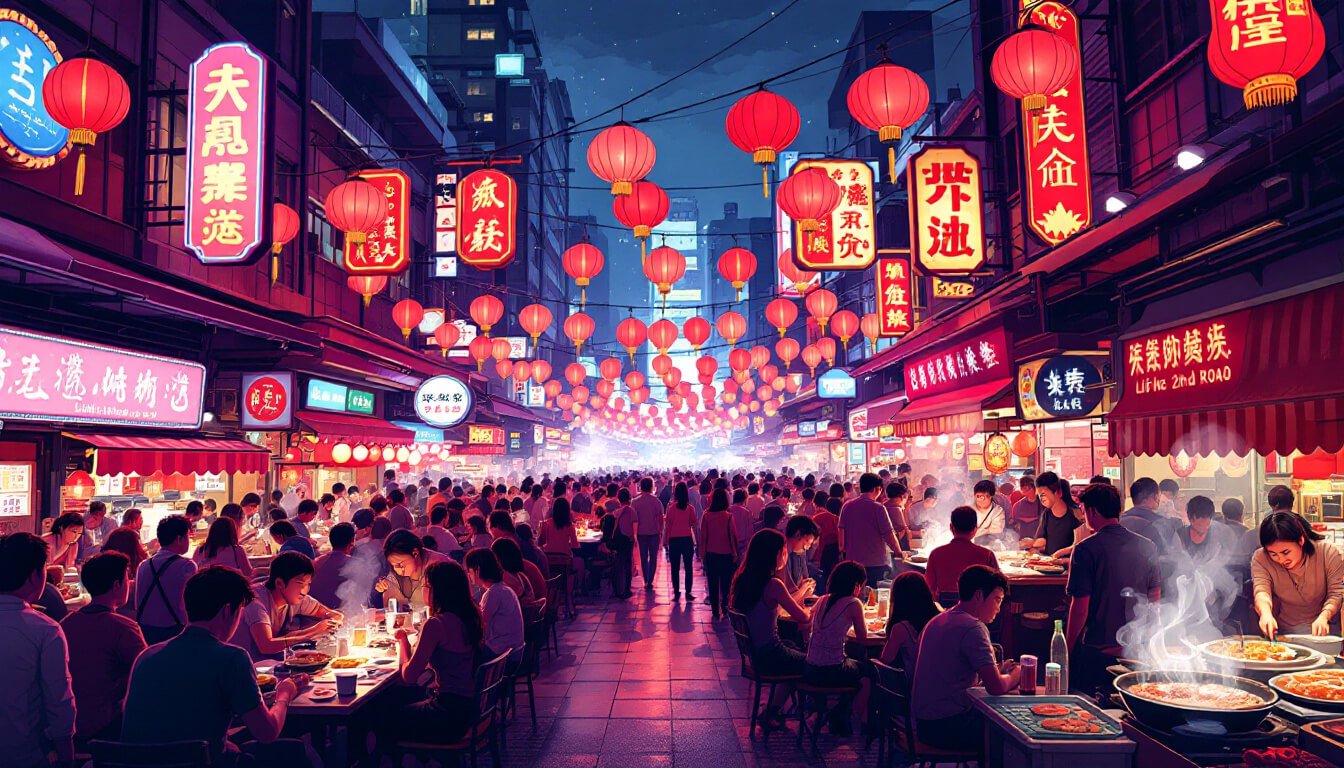
Liuhe Night Market didn’t start out as Liuhe. Rewind to the 1950s and this stretch of Xinxing District (then called Sinsing) was known as Dagangpu Night Market (大港埔夜市) — a scrappy collection of food stalls serving dockworkers, migrants, and post-war families who had drifted south looking for work at Kaohsiung’s booming harbor. Dagangpu wasn’t planned. It grew the way most Taiwanese night markets grow: a couple of push-carts stopping in the same spot every evening, then a few more, then eventually the whole block committing.
By the 1970s the informal cluster had spilled onto Liuhe 2nd Road and taken on the name it carries today. “Liuhe” (六合) literally translates as “six harmonies” — a nod to the six adjoining wards that fed the market its customers. The city eventually formalized the whole thing by closing the road to traffic every evening, and the tourist board slapped “Liuhe Tourist Night Market” on the official signage, which is when it started showing up in guidebooks in the pinyin spellings you’ll see today: Liuhe, Liouhe, Liu-ho, take your pick.
Today the market runs roughly four blocks of Liuhe 2nd Road, from the Formosa Boulevard end to the elevated Zhongshan Road overpass. Around 100 vendors operate nightly, most opening between 5:00 and 6:00 PM and cooking until roughly midnight, later on weekends. Compared to Taipei’s night markets, the aisles feel almost European: broad, uncluttered, no scooters weaving between diners. That’s not an accident — the city planned it that way to make Liuhe legible to visitors. If you’ve done Shilin or Raohe in the north, Liuhe will feel like the “Kaohsiung remix” — same energy, more breathing room.
How to Get to Liuhe Night Market from the Formosa Boulevard MRT
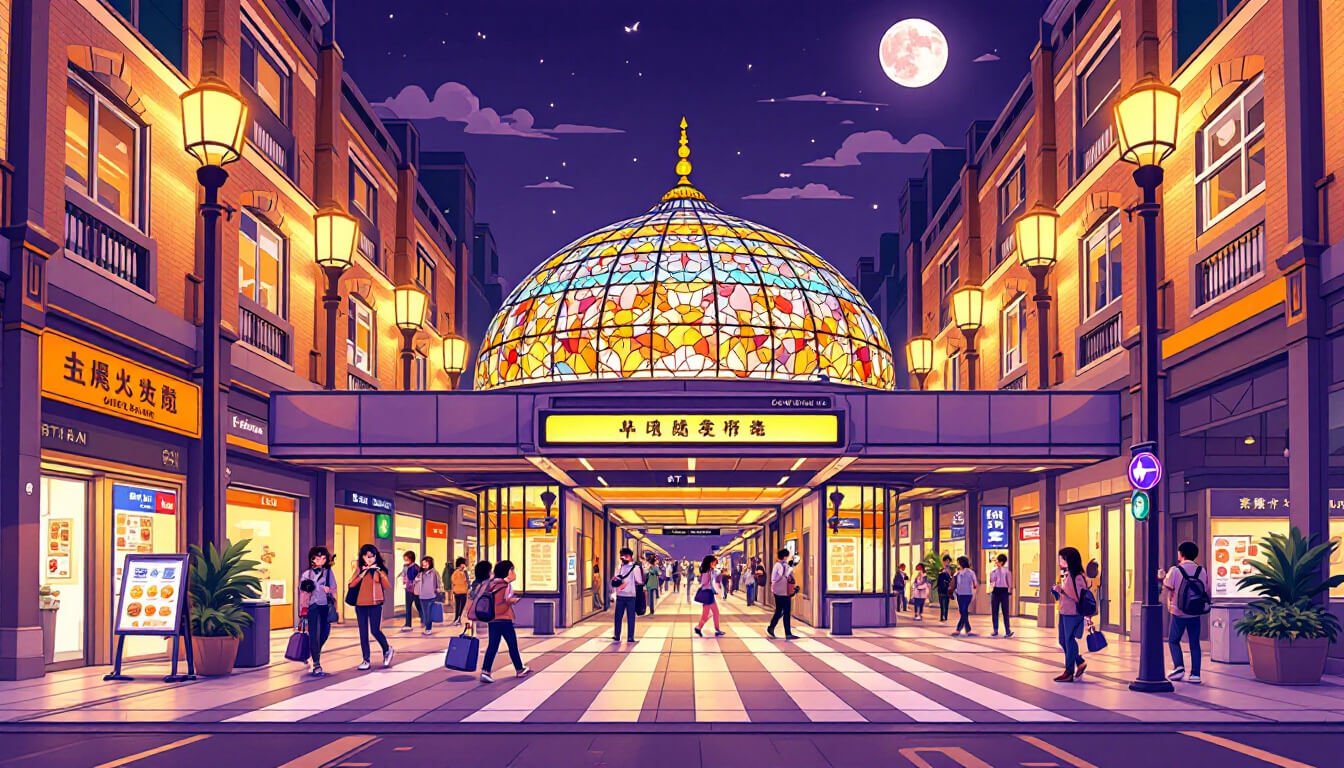
Getting to Liuhe is comically easy — a byproduct of it sitting one MRT stop from the most famous piece of public art in Taiwan. Take the Kaohsiung MRT Red Line or Orange Line to Formosa Boulevard Station (美麗島站). If you’re arriving from Taipei via the Taipei-Kaohsiung HSR, it’s a quick transfer at Zuoying — three Red Line stops south and you’re there.
Before you leave the station, look up. Formosa Boulevard is home to The Dome of Light (光之穹頂) — a 30-meter stained glass ceiling by Italian artist Narcissus Quagliata, and one of CNN Travel’s picks for the world’s most beautiful subway stations. Locals will tell you to stand under the central pillar and rotate once before heading upstairs. It’s not really a superstition, just a thing everyone does. Give in.
Now the exits. There are three that dump you into Liuhe:
- Exit 11 — the tourist-favorite, drops you directly at the eastern end of the market. Turn right out of the escalator and Zheng’s Old Brand Papaya Milk is your first stall on the left.
- Exit 1 — surfaces at the big traffic circle with the four glass MRT canopies (photogenic at dusk). Walk west and you’ll hit the western entrance to the market.
- Exit 9 — the “back door.” Skip unless you’re coming from a specific hotel on that side.
If you’d rather stitch Liuhe into a longer evening, walk in from downtown Kaohsiung. From Central Park MRT it’s a 12-minute stroll east; from Kaohsiung Main Station (via the Blue Line’s KRTC connection) it’s about 15 minutes south. Cabs from anywhere in central Kaohsiung run under NT$150. For the full lay of the land, check our complete Kaohsiung 2026 guide.
The Signature Stalls You Cannot Skip at Liuhe Night Market Kaohsiung
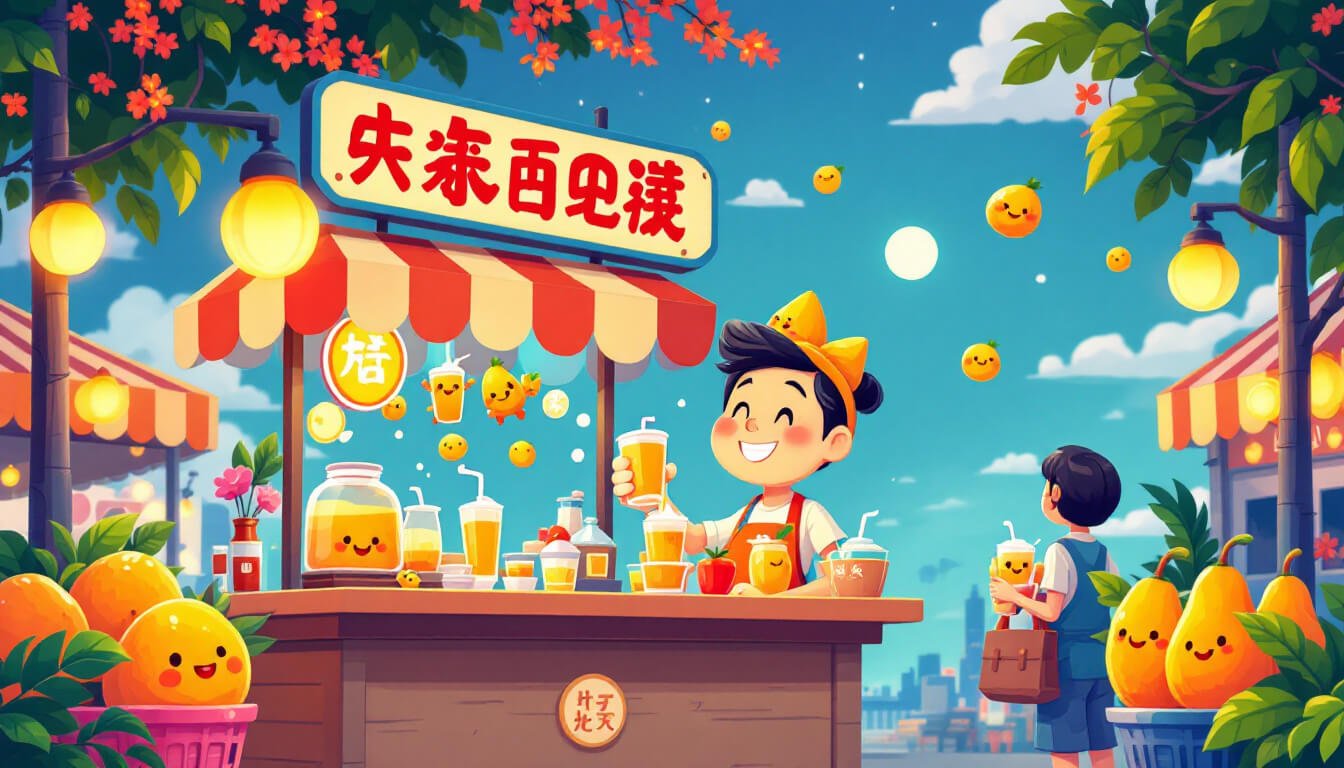
Here’s the truth nobody publishes: about half the stalls at any Taiwanese night market are functionally interchangeable — grilled sausages, fried squid, shaved ice with syrup. What makes Liuhe Night Market Kaohsiung worth the trip is the other half — the stalls with genuine pedigree, some running for more than 60 years, most surviving on repeat-customer word of mouth rather than tourist buzz. If you’ve only got one night, hit these.
Zheng’s Old Brand Papaya Milk (鄭老牌木瓜牛奶)
Opened in 1965. Located just past the traffic barricade at the eastern entrance, on your left. This is the drink locals send tourists to try, and locals send their grandmothers to try. A cup of the signature papaya milk (木瓜牛奶) runs NT$60 to NT$70. The stall pours it painfully sweet by default — ask for xiao tang (小糖, “less sugar”) or bu yao jia tang (不要加糖, “no added sugar”) if you’d like to actually taste the fruit. Their watermelon juice (西瓜汁) and pudding milk (布丁牛奶) are also excellent. Yes, tourists get charged roughly double what Ruifeng vendors charge — the trade-off for the convenience of the location.
Spanish Mackerel Soup (土魠魚羹)
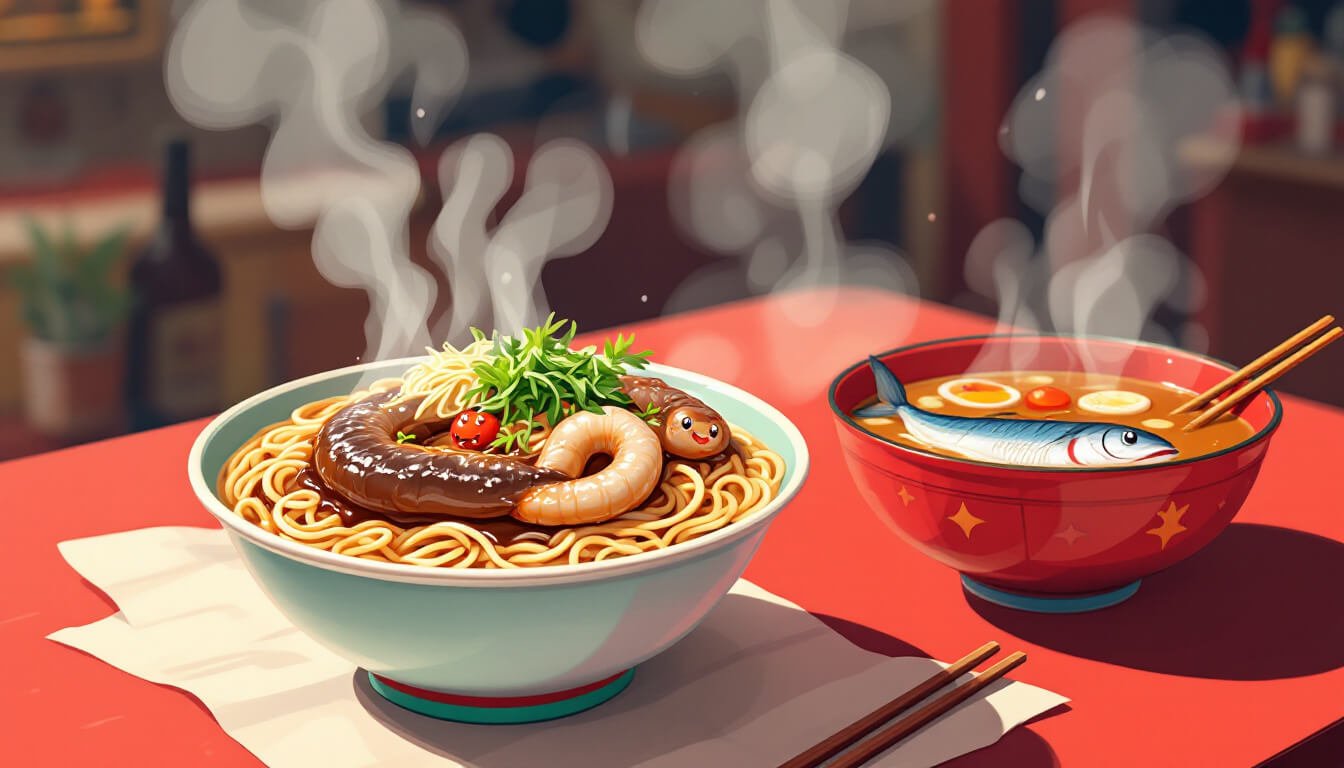
Two neighboring stalls just inside the market, both on the right side, both serving a Tainan-originating classic that punches above its NT$60 price tag. The broth is thick, sweet-and-sour, built on bonito flakes and dotted with Taiwanese cabbage; on top float chunks of battered, deep-fried Spanish mackerel (土魠魚). Ask for noodles (加麵) if you’re hungry. Both stalls have a few tables — grab one. This soup is best eaten within 60 seconds of being ladled, before the fried fish loses its crackle.
Eel Lady’s Eel Noodles (鱔魚姊 鱔魚意麵)
Right side, a few stalls past the mackerel soup. The eel here is shan yu (鱔魚, rice-paddy eel) — earthier, firmer, and totally distinct from the Japanese unagi you know from sushi bars. The classic order is eel yi noodles (鱔魚意麵) at NT$100 — egg-based yi noodles doused in a thick black-vinegar sauce with cabbage. If you’d rather taste the eel without filling up, go for the pan-fried eel (生炒鱔魚, NT$150). Say yes when they ask about spice. Southern Taiwan doesn’t play.
Fangji Dumplings (方記水餃)
Opposite the first 7-Eleven, on the left. Ten hand-folded pork-and-chive dumplings (豬肉韭黃水餃) for NT$70. Add a bowl of hot-and-sour soup (酸辣湯) for NT$35. Google reviewers are cranky about the service; ignore them and look at the line. The line always tells the truth.
7-Eleven Draft Beer
Yes, really. The second 7-Eleven you’ll pass — on the left side — pours draft beer on tap. NT$119 for a full pint of Buckskin (Taiwan’s most beloved craft lager) or a rotating international pour like Sapporo. It’s one of the great weird flexes of Taiwanese convenience store culture: a pint of fresh draft, cheaper than any bar, drunk on the curb watching the food stalls fire up. Pair it with the eel noodles across the street.
Dongshan Duck Head (高雄東山鴨頭)
A local luwei (滷味, “master-braise”) stall at the far western end, on the left. The counter is papered with old magazine spreads and Polaroids of celebrity visits. Duck head is the specialty (adventurous eaters only — you’re gnawing meat off the skull), but everything in the display case gets braised in the same fragrant soy-and-spice broth: duck wings, tofu, quail eggs, kelp. Point at what looks good; they’ll chop, sauce, and bag it.
Other worth-the-detour stalls
- Bird Egg Shrimp Balls — deep-fried shrimp studded with tiny quail eggs. Weirdly delightful.
- Liuhe Oyster Omelets and Soup Dumplings — the oyster omelet (蚵仔煎) here is thicker and more chewy than the Tainan style, closer to what you’d find at Raohe Night Market in Taipei.
- Wuji Guangdong Congee — pair it with guan cai ban (棺材板, “coffin bread”) — a hollowed-out toast pan filled with creamy seafood chowder.
- Iced Lemon Aiyu (愛玉) and Douhua (豆花) — the pre-departure dessert stop. Aiyu is a jelly made from figs; douhua is silken tofu in ginger syrup. Both cost under NT$50.
If you’re loving the boba-tea corner of Taiwan’s food identity — and Zheng’s papaya milk is basically the OG bubble-tea starter drink — you’ll probably also love our Taiwan Boba Tea Cat T-Shirt, our best-selling homage to the island’s most photogenic beverage. It’s the shirt Jon wears when he’s showing friends around Liuhe.
The Halal Food Revolution at Liuhe Night Market

Here’s the story no other Liuhe guide bothers to tell. In 2019, the Kaohsiung city government partnered with the International Muslim Tourism Industry Development Association to subsidize halal certification for stalls in Liuhe Night Market. It wasn’t a marketing gimmick — it was a serious economic bet on Southeast Asian tourism from Indonesia, Malaysia, and Brunei, three of Taiwan’s fastest-growing inbound markets.
Why here? Because Liuhe already had the reputation as Kaohsiung’s most legible market for foreign visitors, and because a critical mass of stalls used no pork or lard in their signature dishes — the papaya milks, the seafood soups, the fruit stands, the aiyu jelly and douhua. The subsidy pushed a dozen-plus vendors to formalize their kitchen practices, source certified halal meats where relevant, and post the green halal logo on their storefronts.
What this means for you as a visitor: if you or anyone in your travel group observes halal, Liuhe is one of the very few night markets in Taiwan where you can eat freely without cross-checking every stall. Look for the green halal decal in the window. Ask Qīngzhēn ma? (清真嗎? “Is this halal?”) if you’re not sure. Vendors are trained to say yes or point you toward a certified neighbor — no awkwardness, no missed dinner. It’s a small thing that makes Liuhe punch above its weight in the “inclusive night market” category, and it’s one of the reasons the market has bounced back so strongly from the COVID-era vendor closures.
Liuhe Night Market vs Ruifeng Night Market: Which One?
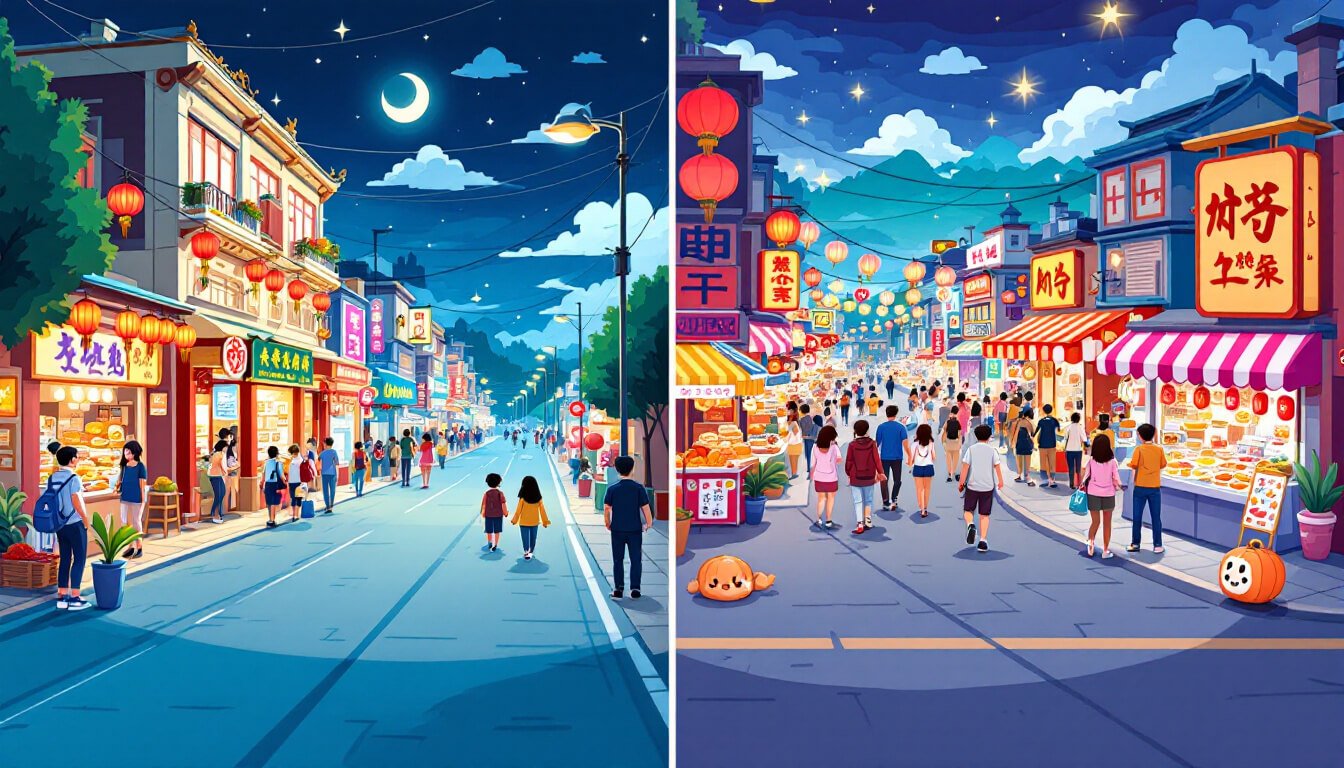
Every Kaohsiung local you ask will eventually deliver the same line: “Liuhe is for tourists, Ruifeng is for us.” It’s not a diss — it’s an honest divide, and both markets have earned their audiences. Here’s how to choose.
Liuhe Night Market — pick this if:
- You’re in Kaohsiung for one or two nights and want the convenient, MRT-adjacent experience
- You’d rather have space to walk and take photos than shoulder through crowds
- Your travel group includes children, elderly parents, or anyone who can’t handle scooter traffic
- You care about halal certification, English menus, or accessible bathrooms
- You want to bolt the market onto a Dome of Light photo stop
Ruifeng Night Market — pick this if:
- You’ve already done Liuhe and want the local-favorite deeper cut
- You’re on a tight budget — Ruifeng prices run 30-50% cheaper for equivalent dishes
- You want the chaotic, elbow-to-elbow, scooter-in-the-aisle energy that defines the Taiwanese night market cliché
- You’re staying near Kaohsiung Arena MRT (which is on the Red Line and about 8 stops north of Liuhe)
- You want to eat where 20-something Kaohsiung locals go before a night out in the Zuoying district
The honest verdict for most visitors: do both if you have three nights in Kaohsiung; do Liuhe if you have one. The dishes overlap significantly, but the vibe is meaningfully different. Ruifeng feels like a night market. Liuhe feels like a food street. Neither is worse — they’re aiming at different rooms.
For a broader tour of the city’s other options — Jinzuan Night Market, Nanhua Night Market, the daytime Sanmin Street Night Market — see our Kaohsiung neighborhood-by-neighborhood guide.
When to Visit + Practical Tips
The market technically opens around 5:00 PM, but most of the good vendors don’t have their oil hot or their broths steaming until 6:30. Peak arrival time: 7:00 to 8:00 PM. This is when the papaya milk lines start, the eel noodles vendor has hit her rhythm, and the last remaining natural light gives the red-lantern glow its best photographic contrast.
Avoid Fridays 6:00-7:00 PM if you don’t like crowds — that’s when Kaohsiung’s office workers descend before their weekend starts. Rainy Tuesdays are heavenly if you don’t mind a poncho. The market runs 365 nights a year and doesn’t really shut down for holidays, though Chinese New Year eve is thin.
Budget: A well-fed solo diner can waddle out of Liuhe for NT$300-500 (US$10-16) including drinks. A hungry couple: NT$600-900. Bring cash — most stalls don’t take LinePay or Apple Pay, and the ATM inside the second 7-Eleven works with foreign cards.
What to skip: the “prawn fishing” carnival stalls (fun photo op, tourist trap), the massage-chair vendors, and the giant squid-on-a-stick stalls if you’ve already had grilled squid at Shilin — the Liuhe version is fine but not distinctive. Also: the stinky tofu at Liuhe is not the platonic ideal. Save that pilgrimage for Taiwan’s stinky tofu heartland in the north.
What to grab on the way out: One souvenir food to take home is Kaohsiung’s pineapple cake — the southern versions use whole-fruit pineapple filling rather than the winter-melon blend common in Taipei. There’s a stall about two-thirds of the way down the market that sells single-serving boxes for NT$120. It’s a small taste of southern Taiwan you can smuggle home.
Frequently Asked Questions About Liuhe Night Market Kaohsiung
What time does Liuhe Night Market open and close?
Most stalls open between 5:00 and 6:00 PM and close around midnight (later on weekends, closer to 1:00 AM). Peak dining hours are 7:00-9:00 PM. A handful of vendors run limited daytime hours, but the full market experience is strictly nocturnal.
Is Liuhe Night Market free to enter?
Yes. It’s a public street market — no admission, no cover charge, no minimum spend. You only pay for what you eat, drink, or buy. Individual food items typically run NT$50-150.
How is Liuhe pronounced?
“Liuhe” is pronounced lyoo-huh (roughly), or with a slight glide, “leo-heh.” You’ll also see it romanized as Liouhe (Wade-Giles), Liu-ho, or the older Liu-ho spelling on some tourist maps. All refer to the same market.
Is Liuhe Night Market vegetarian-friendly?
Yes, more than most Taiwanese night markets. Several stalls specifically cater to Buddhist vegetarians (素食, sushi) — look for the yellow swastika symbol (an ancient Buddhist emblem, unrelated to Western associations) or the character 素 (su). The papaya milk, aiyu jelly, douhua, and most fruit vendors are naturally vegetarian. Vegans should still cross-check for milk, egg, and honey.
Can I take a food tour at Liuhe Night Market?
Yes. Several English-language operators run guided food walks that cover the papaya milk stand, the mackerel soup vendors, and the eel noodles house. Prices run US$40-70 per person for a 2-3 hour tour. Look for tours listing “Liuhe Night Market” plus “Formosa Boulevard” as the meeting point.
Is Liuhe Night Market safe?
Taiwan is one of the safest countries in Asia for solo and family travelers, and Liuhe specifically is one of the most tourist-managed markets in the country. Petty theft is rare; violent crime is essentially unheard of. Watch your bag around the peak crowds, keep valuables in front pockets, and you’ll be fine. See our Taiwan travel safety guide for the full breakdown.
Which night market is better, Liuhe or Shilin?
Different beasts. Shilin Night Market in Taipei is bigger, older, and more chaotic — it’s the alpha of Taiwan’s night market scene. Liuhe is smaller, cleaner, more focused on Southern Taiwanese cuisine, and infinitely easier to navigate. If you’re in Taipei, do Shilin. If you’re in Kaohsiung, do Liuhe. Don’t fly between them just to compare.
Final Thoughts: Why Liuhe Belongs on Your Kaohsiung Night
Liuhe Night Market Kaohsiung isn’t the biggest night market in Taiwan, and locals will happily tell you it’s not even the most “authentic.” What it is is the most gettable — the market that meets first-time visitors where they are, hands them a papaya milk and a bowl of mackerel soup, and lets them fall in love with Taiwanese street food without ever feeling out of their depth. That accessibility is a feature, not a compromise. Every food capital needs one market that opens the door, and in Kaohsiung, that’s Liuhe.
Come at 7:00 PM. Bring cash and an appetite. Do a full walk from Formosa Boulevard exit 11 all the way to the western end and back before you commit to your dinner order — you’ll want to see the whole board before you spend your stomach real estate. Ask for less sugar. Try the eel. Grab the draft beer at 7-Eleven. And when you get home and start missing that first bite of papaya milk on a hot Kaohsiung night, you’ll know why we keep coming back.
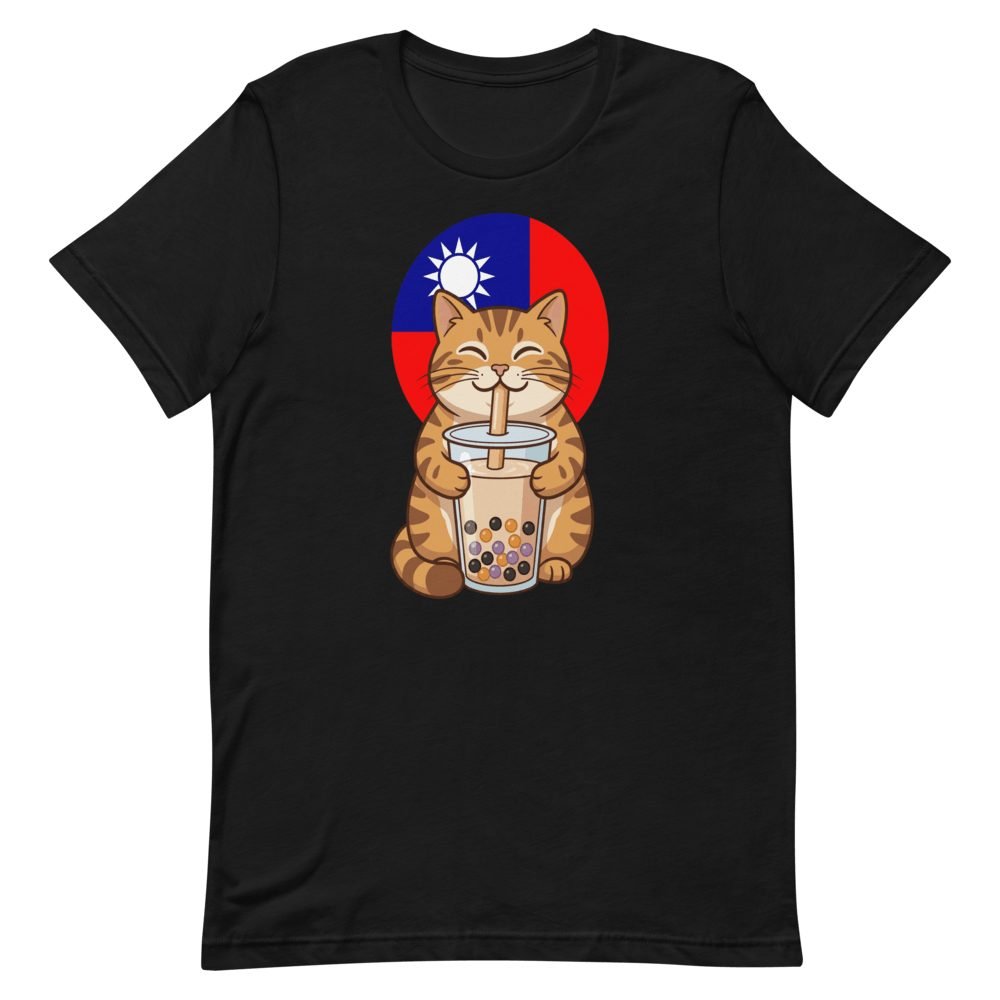
Wear Your Liuhe Papaya Milk Pride
Zheng’s Old Brand Papaya Milk since 1965 is basically Taiwan’s original boba. Our Taiwan Boba Tea Cat Tee celebrates the drink that started it all — soft cotton, kawaii vibes, and printed to order.
Get Weekly Taiwan Food & Culture Guides
Join thousands of Taiwan lovers who get our best guides to street food, night markets, festivals, and hidden gems delivered every week. Free, no spam.
Grab a Free Taiwan Sticker!
Drop your email and we’ll send you a limited-edition Taiwan sticker — plus insider access to new merch drops and island vibes.
No spam. Unsubscribe anytime.