Jiufen Taro Balls (芋圓): The Mountain-Town Dessert That Turns a Root Vegetable Into a Chewy Rainbow
Wander up the stone staircase of Jiufen on a foggy afternoon and you’ll smell them before you see them: a warm, faintly sweet, earthy steam drifting out of a shopfront window. Peek inside and there’s a woman pulling a lump of purple dough off a wooden board, rolling it thin, and slicing it into a river of pillowy little cubes. That’s yu yuan (芋圓) — Jiufen’s famous taro balls — and they’re one of the most quietly genius desserts Taiwan has ever invented.
What Taro Balls Actually Are
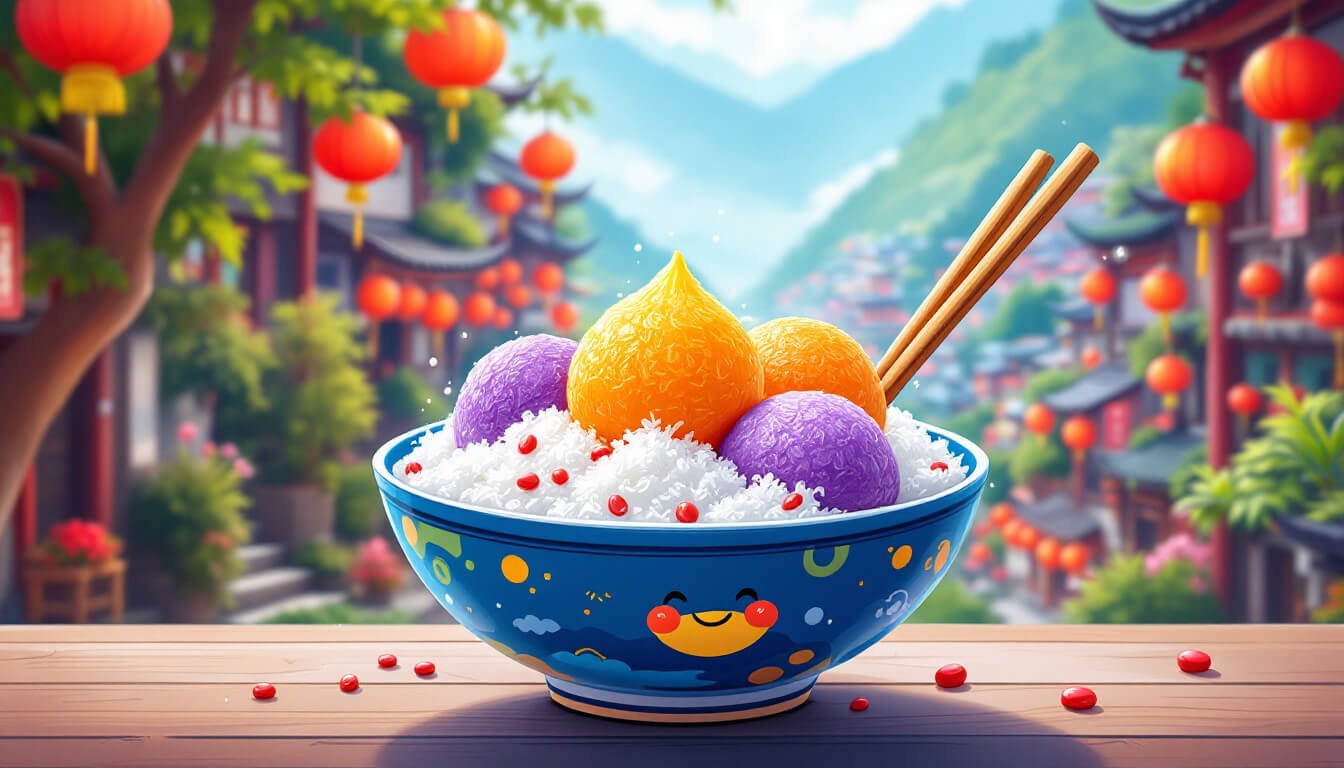
Yu yuan are chewy dessert balls made from steamed, mashed root vegetables kneaded with sweet potato flour. That’s it. No filling. No frosting. Just root, starch, and a little sugar. The magic is in the texture: QQ — the untranslatable Taiwanese word for that specific bouncy-chewy-springy sensation that Taiwanese dessert culture has spent a century perfecting.
Traditional Jiufen shops make five colors from five ingredients:
- Purple — taro (芋頭)
- Orange — sweet potato (地瓜)
- Green — matcha or mugwort
- Yellow — pumpkin
- White — plain sweet potato starch
They land in your bowl looking like edible confetti.
Why Jiufen Owns This Dessert
Yu yuan exist all over Taiwan, but Jiufen is the birthplace. The hillside town was a gold-mining boomtown from the 1890s through the 1950s, and taro grew easily in the mountain soil above. When the mines closed and Jiufen quieted down, the taro remained — and so did the grandmother-run dessert shops that had been feeding hungry miners for generations.
The town’s most famous shop, Ah Gan Yi Yu Yuan (阿柑姨芋圓), sits near the top of Shuqi Road and looks out over the entire Pacific coastline. Order a bowl, take it to the window seats, and you’re eating the same dessert miners ate a hundred years ago — with a much better view.
Hot in Winter, Cold in Summer
This is the trick that makes yu yuan a year-round staple. In winter, they arrive in a hot bowl of sweet ginger syrup with red bean, taro chunks, and warm peanut soup — the whole thing steaming and comforting after a cold ferry ride from Taipei. In summer, they land ice-cold: shaved ice on the bottom, chilled sugar syrup, taro balls, red bean, aiyu jelly, and a scoop of grass jelly on top. Same balls. Completely different dessert.
Right now, in July, it’s the cold version everyone’s after. Taiwan hits 34°C by midmorning and the line at Ah Gan’s stretches down the staircase.
The Texture Secret No Recipe Explains
Making yu yuan sounds easy: mash cooked taro, knead in sweet potato starch, cut, boil. But the ratio is brutal. Too much starch and they turn rubbery. Too little and they dissolve in the pot. The old shops in Jiufen keep their exact ratios secret and only mix small batches by hand, three or four times a day.
The other secret: they’re never made ahead. Yu yuan turn stiff and grainy within hours. That’s why the best shops in Jiufen make them fresh every morning and toss the leftovers by close. If you’re eating pre-packaged yu yuan back home, you’re eating a shadow of the real thing.
The Takeaway
If you’re heading to Taiwan this summer, take the 1062 bus from Taipei to Jiufen, climb the staircase past the tea houses and the red lanterns, and order a cold bowl of five-color yu yuan with grass jelly and red bean. Sit by the window. Watch the fog roll in off the ocean. This is Taiwan doing what it does best: turning a humble mountain root into something worth traveling for.
Craving more Taiwanese food stories? Check out our complete guide to Taiwan desserts — and if you love repping the island’s food culture, our Taiwan-themed apparel celebrates everything from bubble tea to night market classics.

Grab a Free Taiwan Sticker!
Drop your email and we’ll send you a limited-edition Taiwan sticker — plus insider access to new merch drops and island vibes.
No spam. Unsubscribe anytime.