Zhongshan, Taipei: Three Neighborhoods Hiding Inside One MRT Stop
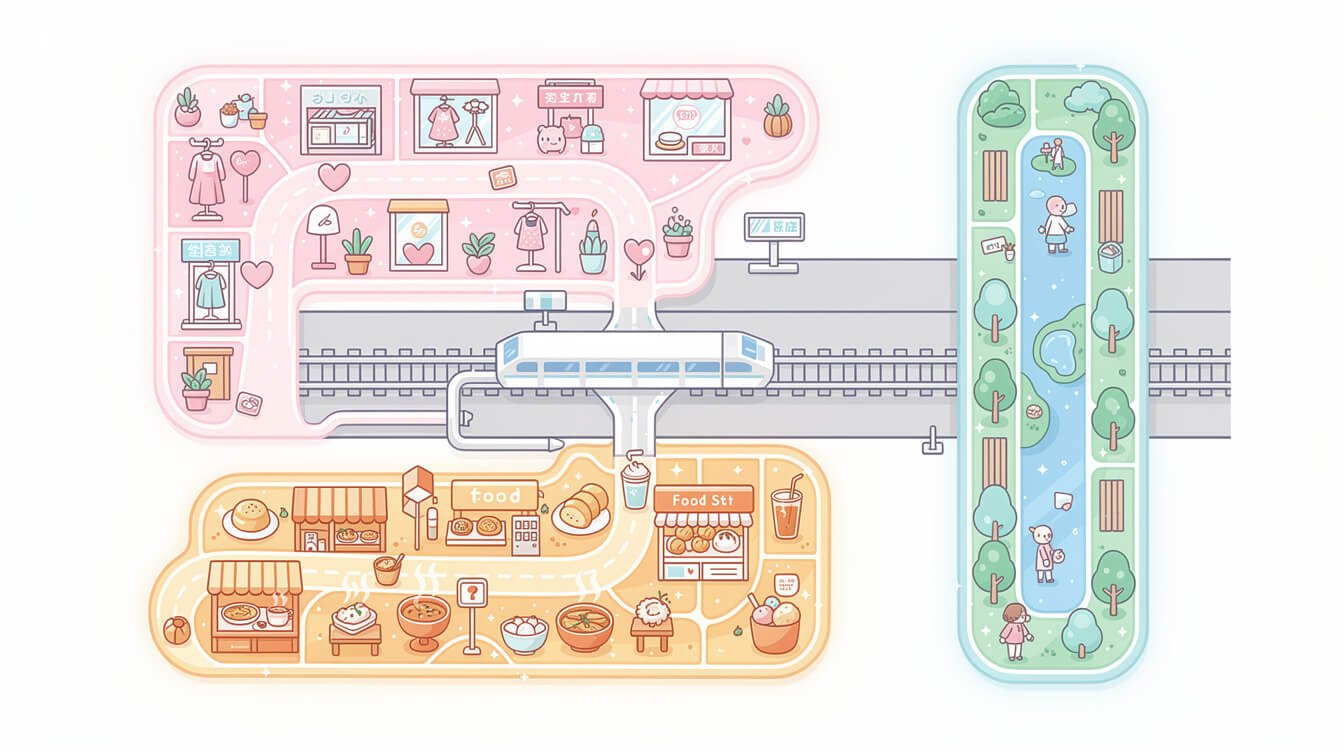
Get off at Zhongshan MRT and you’ll swear you’ve landed in one of Taipei’s newer neighborhoods. Everything’s neat, walkable, and covered in cafes. But Zhongshan Taipei is playing a trick on you. That single MRT stop is stitched to three distinct micro-districts that most travel guides mash into one blob — a Japanese-boned commercial spine, a Sunday-only Filipino quarter, and a linear park that used to be a rail line. Miss the seams and you’ve missed the whole point of coming here.
This guide breaks Zhongshan into what it actually is on the ground: three neighborhoods hiding inside one address. Whether you want the design boutiques and underground book streets, the boba shops locals actually drink at, or the corner of Taipei that turns into Manila every Sunday afternoon, you’ll know exactly where to stand.
Why Zhongshan Feels Like Three Different Cities in One Address
Zhongshan District is one of Taipei’s twelve official administrative districts, sitting north of the Old City and pressed up against the Keelung River. It’s massive — 13.7 square kilometers, roughly 216,000 residents. But when travelers say "Zhongshan" they almost never mean the district. They mean the tight rectangle that fans out from Zhongshan MRT Station on the Red Line, and that’s where the whole neighborhood pretends to be one place.
The trick is that Zhongshan Station sits at a geographic crossroads. Walk north up Linear Park and within ten minutes you’re in Shuanglian, a slower, older stretch where mahjong parlors and standing-only breakfast counters still hold their ground. Walk south into the lanes off Nanjing West and you hit the design-forward core — the boutiques, the underground book street, the cafes photogenic enough to have Instagram queues at 10 a.m. on a Tuesday. Walk west along Minquan and by Sunday afternoon you’re in Little Manila, where thirty thousand Filipino workers in Taipei come to eat, worship, remit money home, and just be somewhere that feels like home.
Same MRT stop. Three completely different Taipeis. Once you see the seams, you can’t unsee them — and you’ll plan your day very differently.
The Japanese Bones: How Ohashi Became Zhongshan
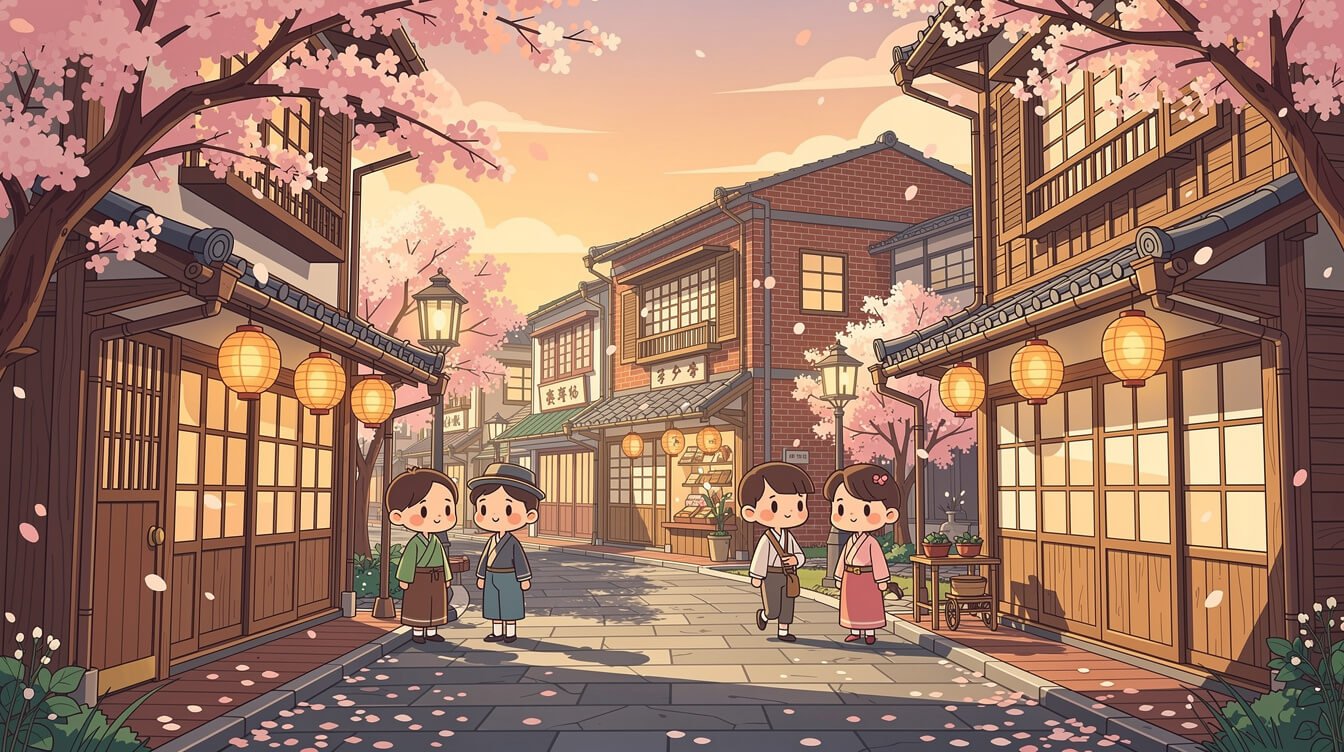
The reason Zhongshan feels weirdly grid-like for an Asian city is that it wasn’t built by Han Taiwanese merchants — it was drawn from scratch by Japanese urban planners between 1895 and 1945. During the Japanese colonial period, this whole area was called Ohashi-cho (大橋町, "big bridge") and Nakayama-cho (中山町, "middle mountain"). Straight roads, right-angle intersections, and low-density plots for civil servants and businesspeople. Even today, if you look at a map of central Taipei, the Zhongshan grid is visibly cleaner than the tangled lanes of Wanhua or Dadaocheng, which were laid out organically centuries earlier.
When the Republic of China government took over in 1945, they renamed nearly everything after Kuomintang heroes. Nakayama — which in Japanese means "middle mountain" — was a perfect fit for a second act. Zhongshan (中山) is literally the same two characters, but pronounced in Mandarin. And "Zhongshan" also happens to be the courtesy name of Sun Yat-sen, founder of the Republic of China. One name change, two meanings. You’ll see it repeated across Taiwan: Zhongshan Road, Zhongshan Park, Zhongshan Memorial Hall — all pointing back to Sun.
The Japanese-era grid is what makes Zhongshan so walkable today. It’s also why the district feels almost European in places, especially around the Regent Hotel and the old Ambassador’s residence that now houses SPOT Taipei Film House. That building was Chiang Kai-shek’s parting gift to a departing US Ambassador in 1979 — you can still see the mission-style arches. If you love history hiding in plain sight, Taiwan’s layered colonial past is written all over Zhongshan’s walls.
The Shuanglian End: Linear Park, Old Streets, and the Morning Market Ghost
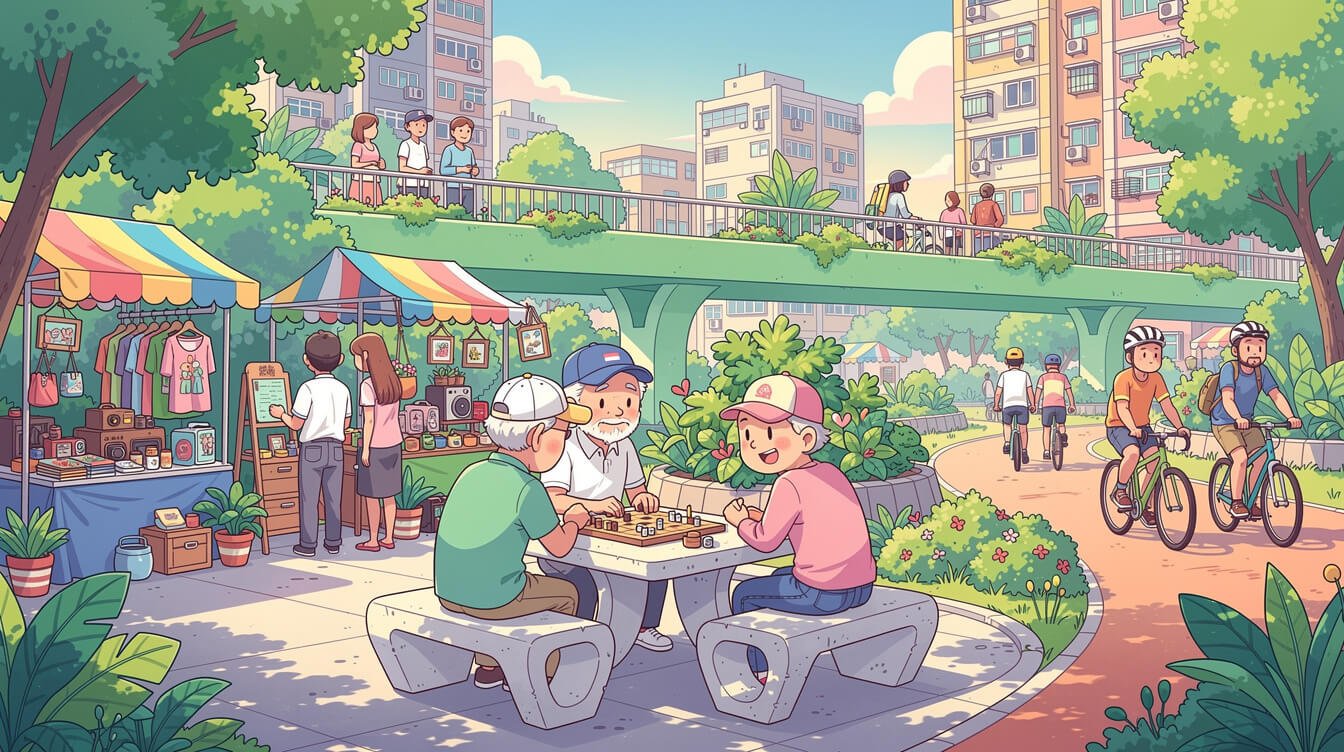
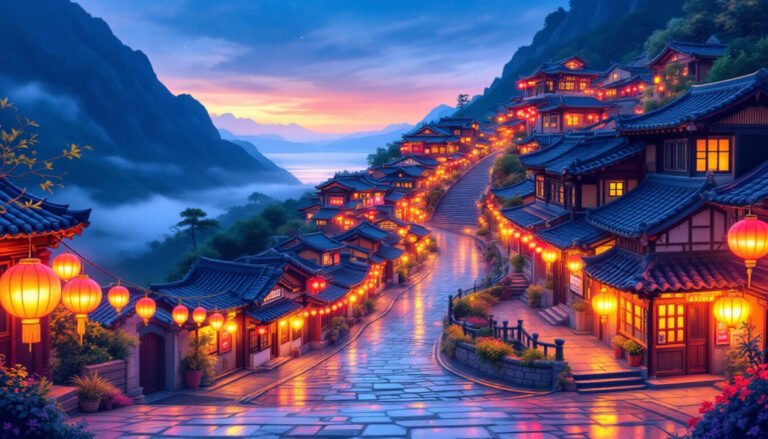
Head north from Zhongshan MRT along the Xinzhongshanxianxing Linear Park — a long, thin green ribbon that runs above the old Tamsui-Xinyi rail line — and you enter the neighborhood’s oldest, quietest quarter. This is Shuanglian, the "double lotus" district. It sits between Zhongshan and Shuanglian MRT stations, roughly a 10-minute walk end to end.
The linear park itself is worth the visit — landscape architect Guo Chung-Twu redesigned it in 2019 with sculptural benches, small performance stages, and rotating pop-up markets. On weekends you’ll find flea markets, food stalls, and once a month, a full craft festival. But the park is a decoy. What makes Shuanglian special is what happens two streets deeper in either direction.
East of the park: Shuangcheng Street Night Market, one of Taipei’s smallest and most underrated night markets. No LED signage, no bubble tea influencer traps, just twenty-something stalls where the Cantonese-style roast duck, Malaysian nasi lemak, and old-school Taiwanese oyster omelets have been served by the same families for two generations. It runs every night but hits peak energy on Fridays.
West of the park: Shuanglian Morning Market, tucked into Minsheng West Road Lane 45. It opens at 6 a.m. and is essentially empty by noon. Uncles selling live grouper, aunties bagging seasonal fruit, and one legendary stall that fries scallion pancakes so oil-soaked and salty that Taiwanese food critics still argue about them online. If you want to know what Taipei ate before boba tea existed, come here at 8 a.m. on a weekday.
The Core: Where Underground Books, Vintage Shops, and Design Culture Collide

Now walk south from Zhongshan Station and you enter the neighborhood’s most-photographed stretch — the two-block wedge between Nanjing West Road, Zhongshan North Road, and Chang’an West Road. This is the design core, and it’s where most of Zhongshan’s international reputation was built.
The centerpiece is the Zhongshan Underground Book Street, a 300-meter tunnel connecting Zhongshan MRT to Taipei Main Station. It’s operated by Eslite — Taiwan’s beloved 24-hour bookstore chain — and stuffed with pop-up stationery brands, indie zines, and enough Muji-adjacent aesthetic to make anyone reach for their wallet. It’s the only place in Taipei where you can browse a curated art book collection at 11 p.m. on a Tuesday. If you want to understand why Taiwanese design punches above its weight globally, spend an hour here.
Above ground, the same aesthetic spills into the lanes. Chifeng Street, Nanjing West Road Lane 25, and Zhongshan North Road Section 2, Lane 20 are lined with tiny boutiques selling Taiwanese-designed apparel, ceramics from Yingge, hand-thrown glassware, and second-hand vintage. Prices are noticeably softer than Ximending, and the crowd skews design students and freelancers rather than tour buses. Speaking of Taiwan-designed wearables, our Taiwan Merch collection was inspired by exactly this kind of lane-hunting energy — small runs, cultural specificity, and the kind of graphics you don’t see anywhere else.
Cafe density hits absurd levels in this quadrant. Fujin Tree, Hoto Cafe, % Arabica Zhongshan, R9 Cafe, Iyoshi Cola, Draftland — you can’t walk 100 meters without a third-wave espresso bar or a soft-serve counter. Locals ranked in Google Maps’ 2026 "most reviewed cafe districts in Asia" put this pocket in the top ten. If you’re into Taiwan’s coffee and tea culture, this is the epicenter.
Minquan West: Taipei’s Little Manila and the Sunday That Belongs to Someone Else
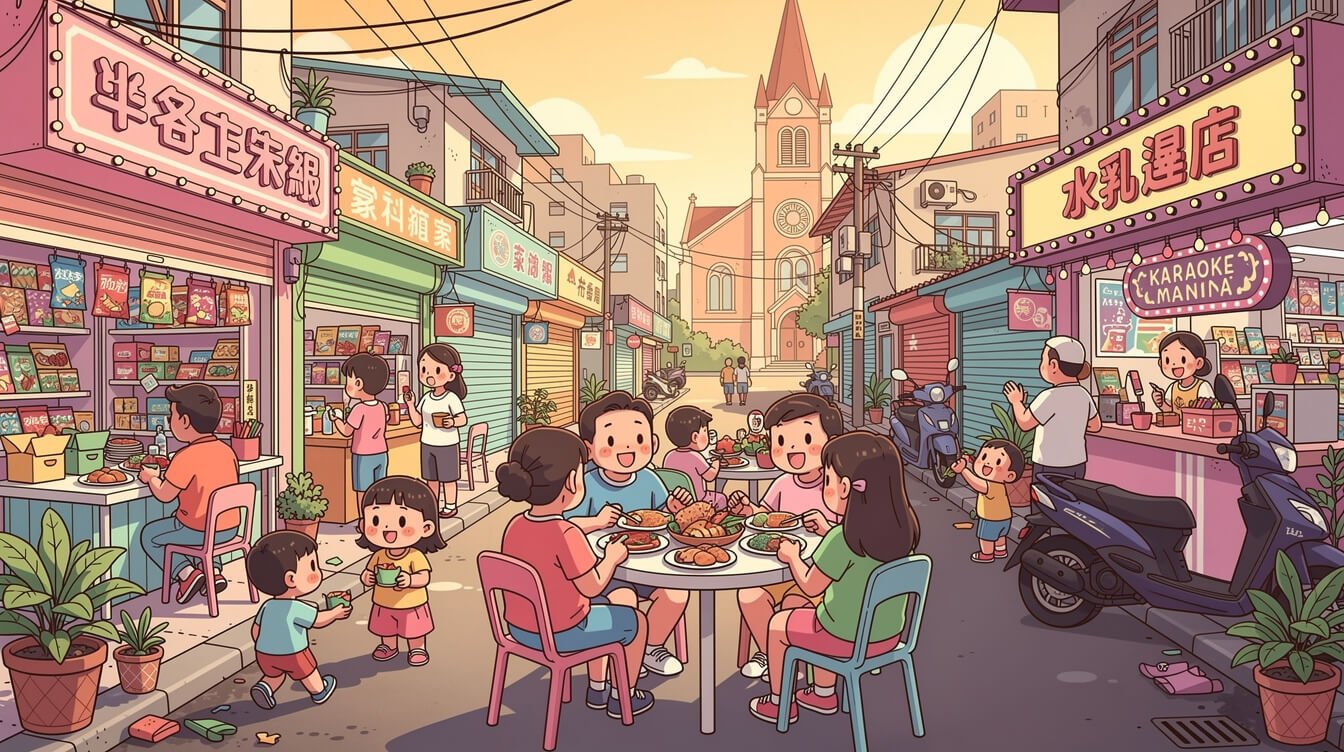
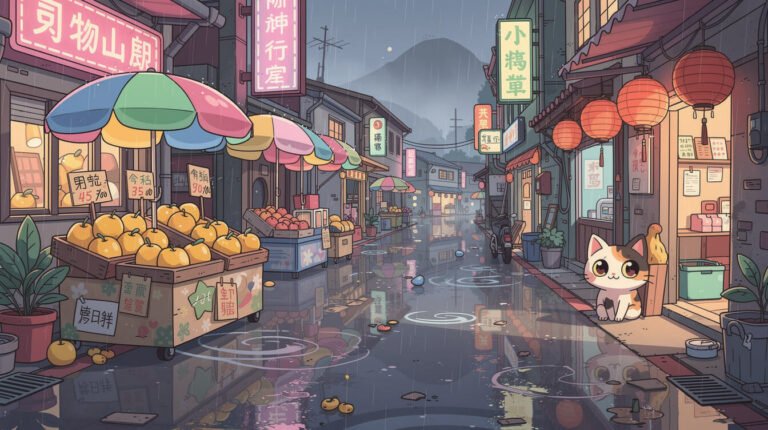
Walk seven minutes west of Zhongshan MRT along Minquan West Road and something quietly shifts. The Chinese signage thins out. Filipino sari-sari stores appear. A grocery advertising longganisa, pandesal, and Bicol Express. Karaoke bars playing OPM ballads instead of Mando-pop. This is Little Manila — Taipei’s Filipino heart — and most travel guides don’t mention it at all.
Taiwan is home to roughly 150,000 Filipino migrant workers, and about 30,000 of them live and work in greater Taipei. On Sundays — their one guaranteed day off — thousands converge on this stretch of Minquan West and the streets around St. Christopher’s Catholic Church. The church runs Filipino-language mass throughout the day; the surrounding blocks turn into a full-service Filipino town: remittance offices open, Jollibee-style fried chicken counters sell out, and the sidewalks fill up with families having lunch on plastic stools.
It’s an extraordinary cultural crossover that Taipei mostly leaves alone. Nobody’s advertising it as a tourist attraction, which is exactly why it works. If you visit on a Sunday afternoon, be respectful — this is a community’s rest day, not a photo op. Order something (the halo-halo is fantastic), sit down, and take in what it means to build a home away from home in a city that speaks a different language. Filipinos in Taiwan navigate two cultures every day; watching a whole neighborhood exhale on their one day off is a genuinely moving thing.
Nearby, the Zhongshan Presbyterian Church (built 1937) also runs services in Tagalog and Ilocano. Both churches quietly anchor the community. If you show up on any other day, you’ll walk right through and never know Little Manila exists. That’s the whole point.
The best entry points are the intersections of Minquan West Road with Zhongshan North Road Section 3, and Minquan West with Linsen North. Look for the ATM signs advertising remittances to the Philippines — that’s your marker. Grocery stalwarts like EEC Trading and specialty shops selling Philippine snacks (Boy Bawang, polvorón, Chippy) cluster within a block. On Sunday, the sidewalks belong to the community; on Monday morning, it’s a quiet Taipei street again.
What to Eat in Zhongshan (and Where the Locals Actually Go)
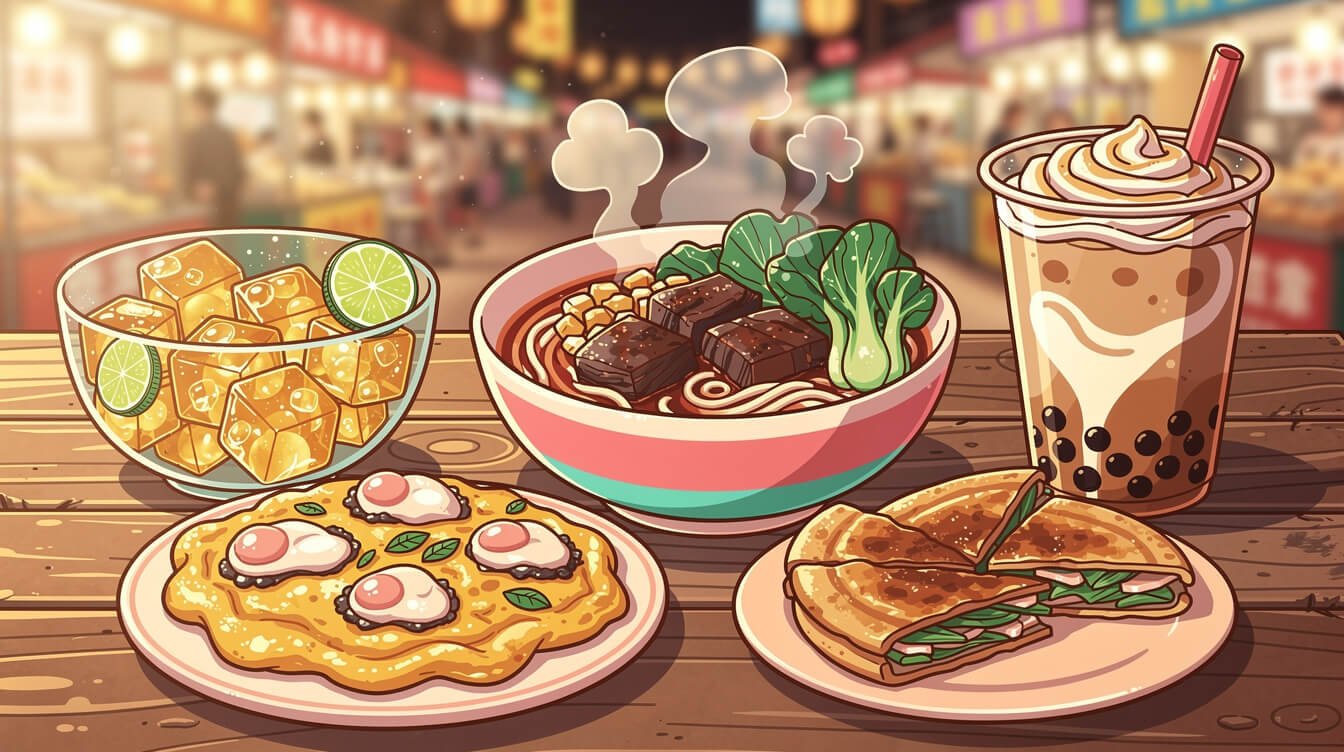
Zhongshan food splits into three tiers, and knowing which one you’re aiming for saves a lot of aimless wandering.
Tier 1 — Legacy Taiwanese: The stall network around Shuangcheng Street and Ningxia (a short walk south) is where you eat the classics — oyster omelets, beef noodle soup, braised pork rice, aiyu jelly. Cash only, no English menu, expect to point. For a fuller tour of Taipei’s night-market food, see our Taipei street food guide.
Tier 2 — Modern Taiwanese & Japanese Fusion: This is Zhongshan’s specialty. Try The Wrice for a modern take on scallion pancake wraps, Kafe Tsuki Kato for a Japanese-inflected brunch, or Regent Hotel’s Brasserie buffet if you want the full old-school Taipei power lunch (reserve ahead). Fujin Tree’s Zhongshan location does an all-day breakfast that’s become a rite of passage.
Tier 3 — Cafe Culture: If you’re here for the coffee — and honestly, half of Zhongshan’s visitors are — pace yourself. The neighborhood has more specialty cafes per square kilometer than any other part of Taipei. Standout picks: % Arabica Zhongshan for the visuals, Hoto Cafe for the pastries, Iyoshi Cola for something unusual, and Draftland Zhongshan (a cocktail bar that runs cocktails on tap) for after dark. Don’t miss Shuangcheng Street Night Market for late-night snacks after cafe hours.
Wash it all down with Taiwan’s original invention: bubble tea, which is never more than three doors away.
Practical Guide: Getting There, When to Visit, and What to Skip

How to get to Zhongshan
The easiest access is Zhongshan MRT Station on the Red Line (R11) — one stop north of Taipei Main Station. From Taipei Main Station, walk through the Zhongshan Underground Book Street and you’re already halfway into the neighborhood. From Taoyuan Airport, take the MRT Airport Line to Taipei Main, transfer to Red Line, and you’re at Zhongshan in about 45 minutes total.
When to visit
Zhongshan is a year-round neighborhood, but timing matters more than in other parts of Taipei:
- Weekday mornings (7-10 a.m.) — best for Shuanglian Morning Market and cafes without queues.
- Weekend afternoons — Linear Park pop-up markets peak here, but the design lanes also get busy.
- Sunday afternoons — Little Manila is at full life. Wonderful to experience, but come as a respectful observer.
- Rainy season (May-June) — the underground book street becomes a legitimate all-weather destination. Locals treat it like a covered mall.
What to skip
A few Zhongshan attractions travel guides push that just aren’t worth the detour: the Miniatures Museum of Taiwan (tiny, expensive, aimed at families with small kids), the Museum of Contemporary Art Taipei only if their current exhibition matters to you personally (the building is more interesting than the average show), and any tour that lumps Zhongshan together with Taipei 101 in a single half-day itinerary. Zhongshan rewards slowness. Do it properly or skip it.
Frequently Asked Questions
Is Zhongshan a good area to stay in Taipei? Yes — arguably one of the best. It’s central, walkable, safe, has 24-hour convenience stores on every block, and gets you to Taipei Main Station in one MRT stop. Look for hotels along Nanjing West Road or Chang’an West Road for the shortest walks.
How long do you need for Zhongshan? Half a day for the highlights, a full day if you want to eat and cafe-hop properly, two full days if you want to catch a Sunday in Little Manila and a Friday at Shuangcheng Night Market. Zhongshan is a "linger" neighborhood, not a "check the box" one.
Is Zhongshan safe at night? Extremely. Taiwan’s overall safety record is exceptional and Zhongshan is one of Taipei’s most well-lit, well-policed districts. Solo travelers, including solo women travelers, report it as one of the most comfortable areas in the city.
What’s the difference between Zhongshan District and Zhongshan neighborhood? Zhongshan District is one of Taipei’s twelve official administrative units (huge — 216,000 residents). The "Zhongshan neighborhood" travelers talk about is a much smaller area around Zhongshan MRT Station. Both are called Zhongshan. It’s confusing until you look at a map.
Wear the Skyline That Sways
Taipei 101 was engineered to sway up to 60cm in a typhoon and still hold its ground. Our minimalist Taipei 101 tee celebrates the skyline that watches over Zhongshan — a quiet flex for anyone who’s fallen for this city.
Final Thoughts: One MRT Stop, Three Taipeis
Most Taipei guides will tell you Zhongshan is "trendy." That’s true, but it’s the least interesting thing about it. What actually makes this neighborhood worth a full day of your trip is the way it stacks three completely different Taipeis on top of each other — a Japanese-planned commercial grid, a Sunday-only Filipino town, and a rewilded rail-line linear park that runs through the whole thing like a green spine.
Get off at Zhongshan MRT. Walk north, walk south, walk west. You’ll hit three different neighborhoods, three different sound worlds, three different definitions of what "Taipei" is. And you’ll understand something about the city that no guidebook will tell you: it’s not one place. It never was.
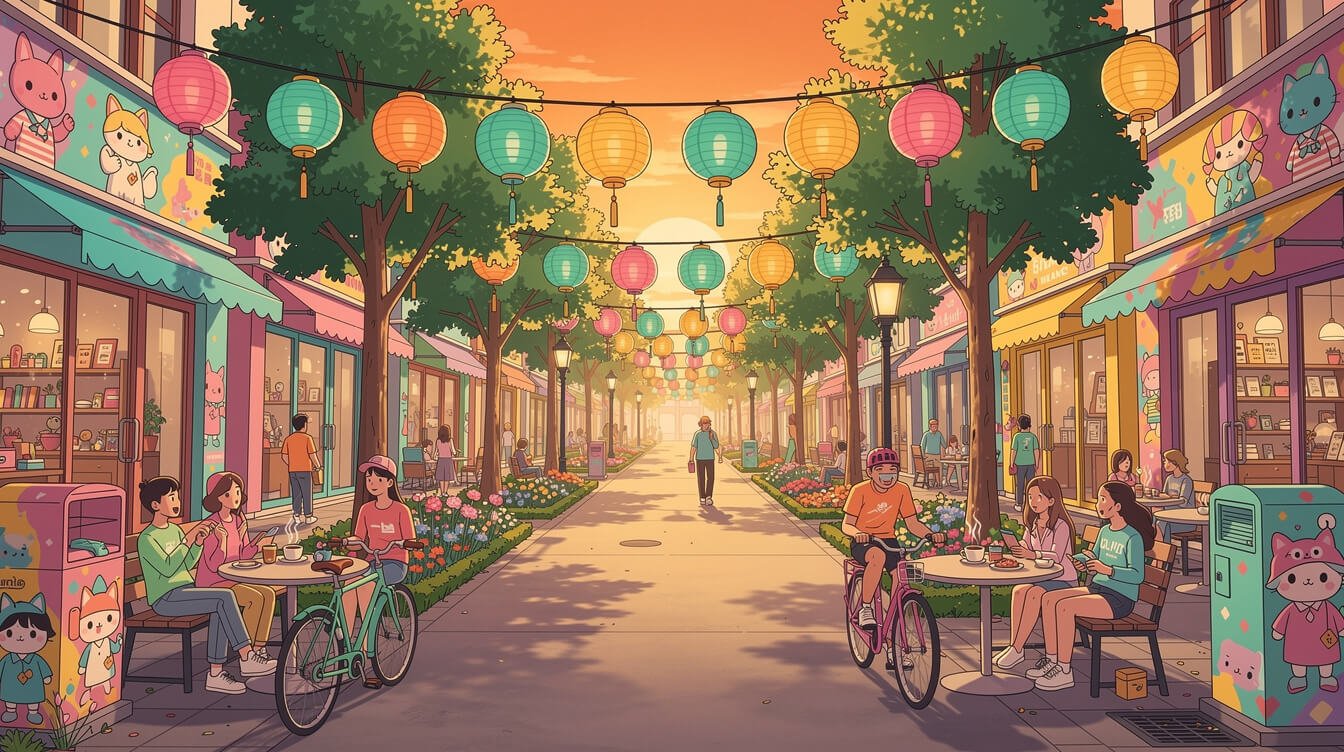
Postcards from Taiwan, in Your Inbox
Weekly stories from Taiwan’s night markets, neighborhoods, and small artisans — plus first dibs on new Taiwan Merch drops.
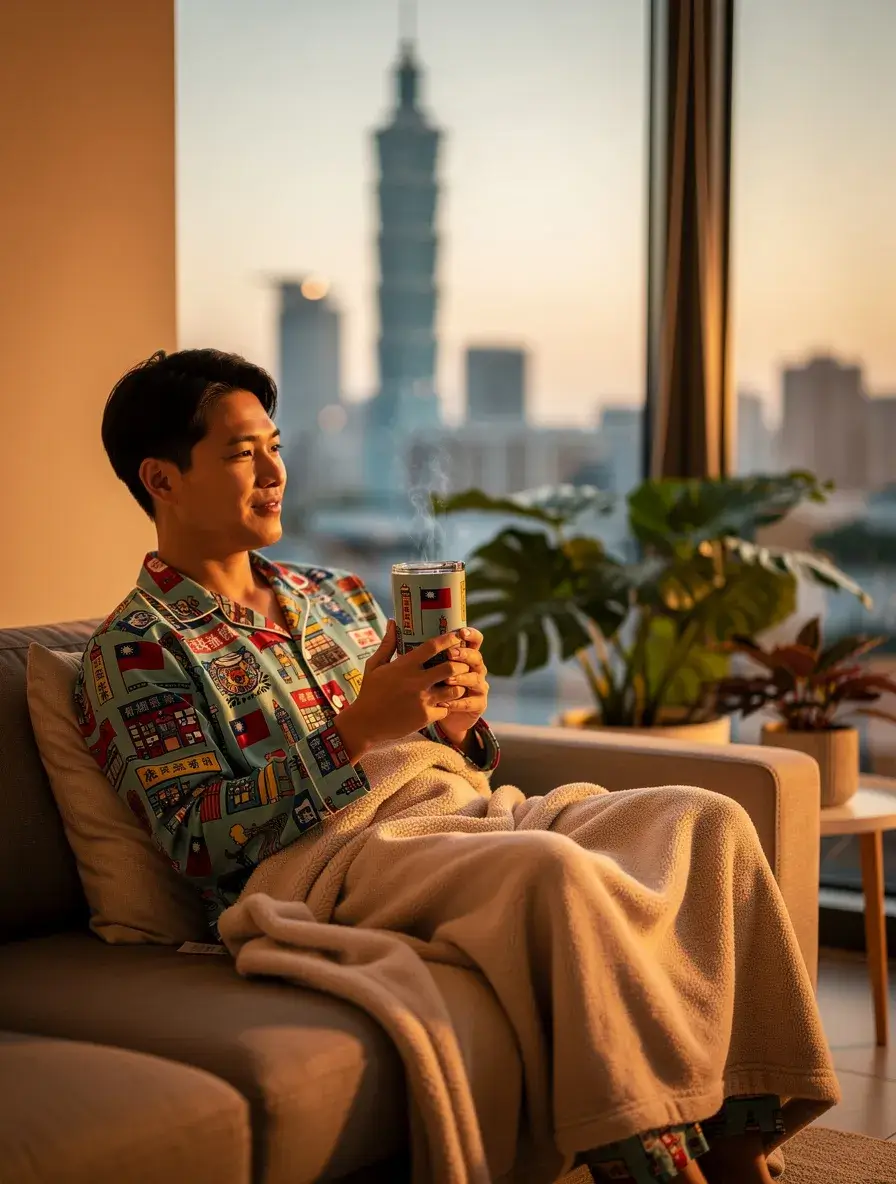
Grab a Free Taiwan Sticker!
Drop your email and we’ll send you a limited-edition Taiwan sticker — plus insider access to new merch drops and island vibes.
No spam. Unsubscribe anytime.