Taipei Street Food: The Complete Guide to the Best Eats in Taiwan’s Capital
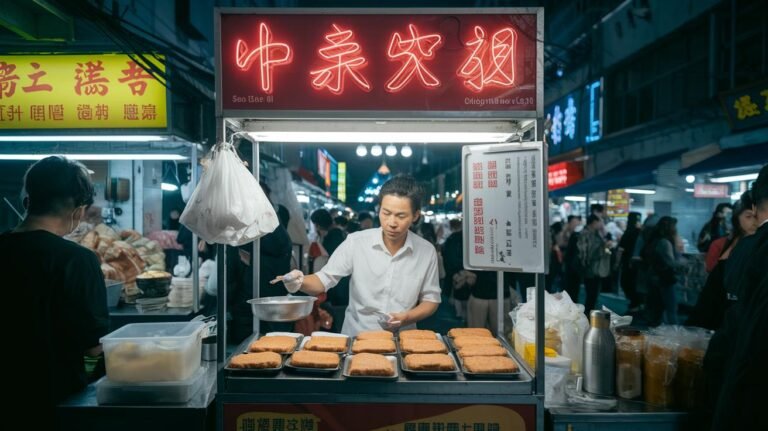
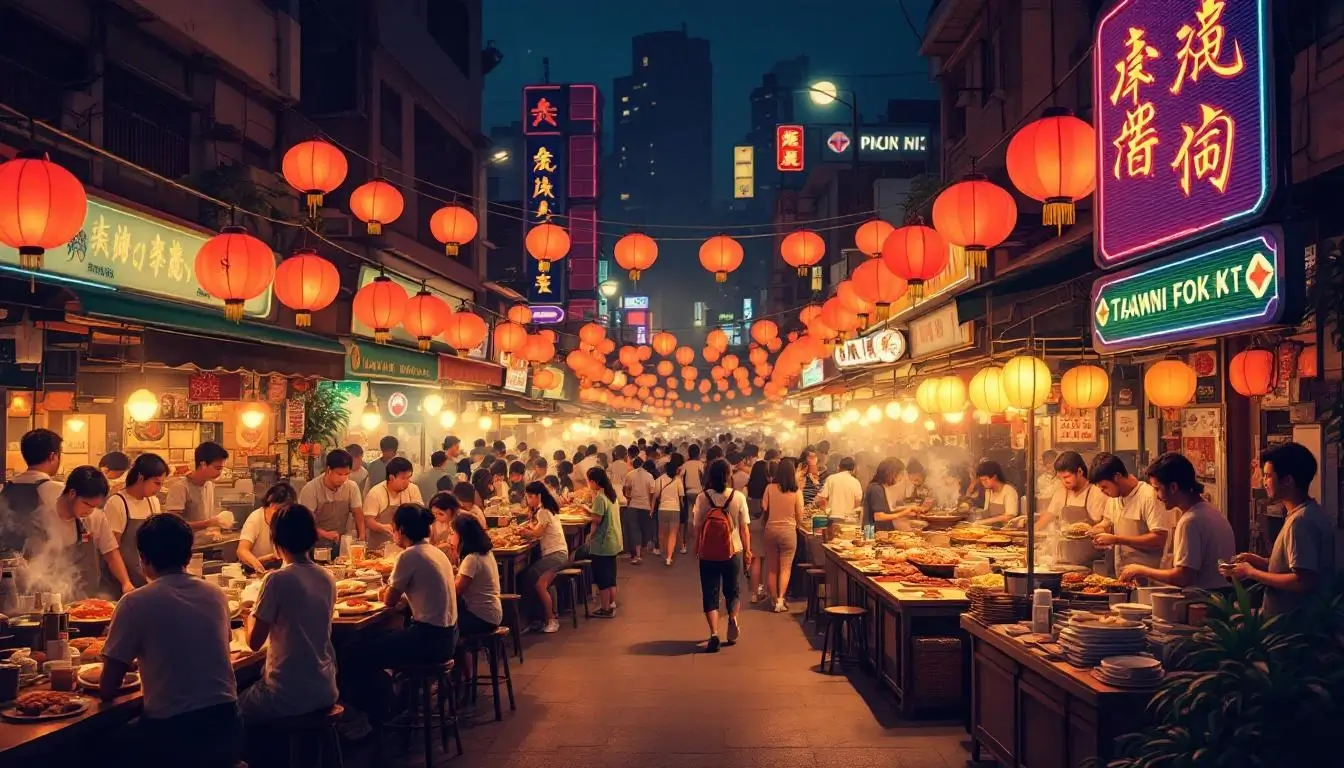
Taipei street food isn’t just a meal — it’s the heartbeat of Taiwan’s capital city. From sizzling pepper pork buns at Raohe to the intoxicating aroma of braised pork rice wafting through narrow alleys in Zhongzheng, this city runs on street eats the way other capitals run on coffee. With over 40 night markets and thousands of daytime food carts scattered across every district, Taipei has earned its reputation as one of the greatest street food cities on Earth.
Whether you’re a first-time visitor overwhelmed by the sheer volume of choices or a returning food lover looking to dig deeper, this guide covers every essential Taipei street food dish, where to find the best versions, what to pay, and how to eat like a local. Let’s dive in.
The Essential Taipei Street Food Dishes You Have to Try
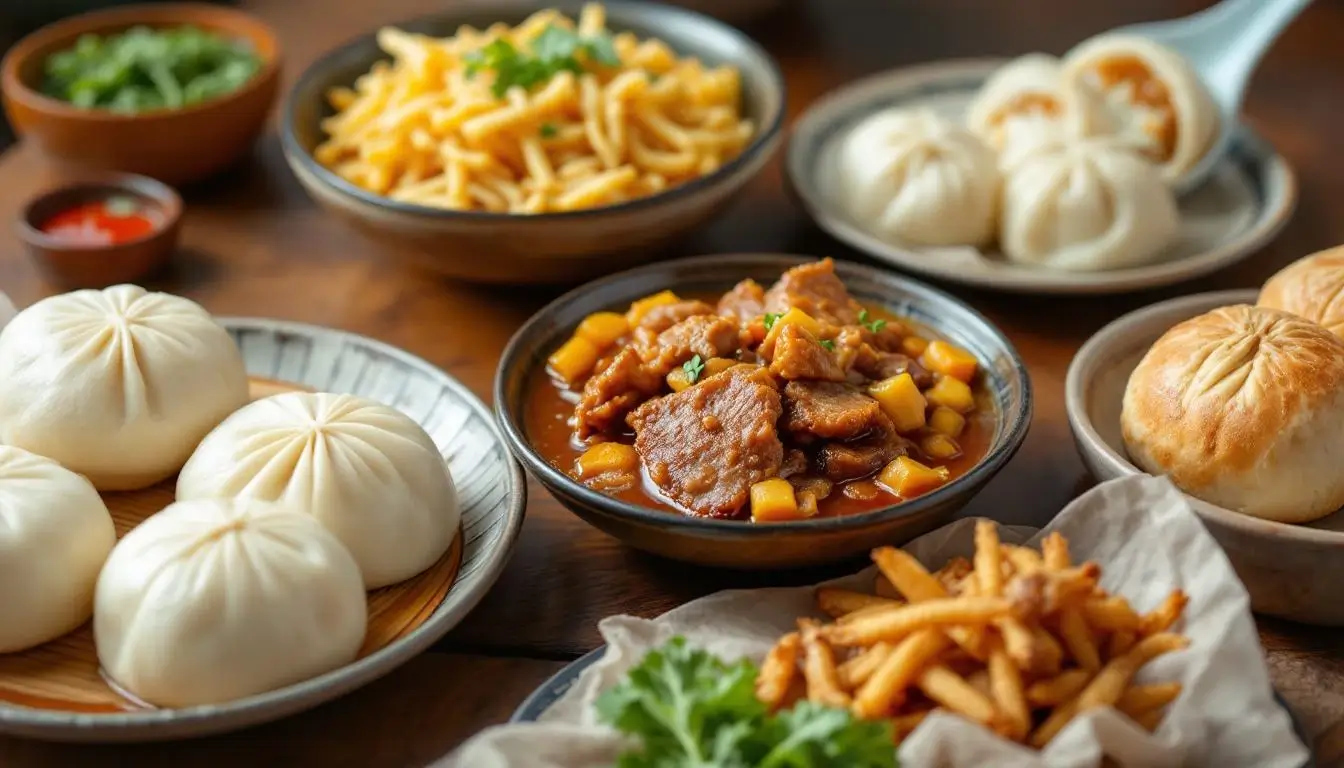
Every city has its signature bites — the dishes that define the food culture and keep locals coming back night after night. Taipei’s essential street food lineup is extraordinary in both variety and quality. Here are the dishes that belong on every food lover’s hit list.
Hu Jiao Bing (Pepper Pork Buns)
If there’s one Taipei street food that stops traffic, it’s hu jiao bing. These fist-sized buns are packed with juicy pork, scallions, and a generous hit of black pepper, then slapped onto the inside wall of a blazing clay oven — not unlike an Indian tandoor. The result is a flaky, charred exterior giving way to a molten, savory interior that’s impossible to eat gracefully. The most famous stall sits right at the entrance of Raohe Night Market, where the line can stretch for 30 minutes, but every second of waiting is worth it.
Lu Rou Fan (Braised Pork Rice)
Ask any Taiwanese person what their comfort food is, and nine out of ten will say lu rou fan. This deceptively simple dish — soy-braised minced pork belly ladled over steaming white rice — is the soul of Taiwanese home cooking translated into street food form. The best versions feature pork that’s been slow-simmered for hours with five-spice, fried shallots, and rice wine until it becomes almost jammy. Jin Feng on Roosevelt Road near Zhongzheng Memorial Hall is the undisputed king, but you’ll find excellent versions at almost every night market. A bowl rarely costs more than NT$40 (about $1.25 USD), making it arguably the best value meal in all of Asia.
Xiao Long Bao (Soup Dumplings)
While Din Tai Fung made xiao long bao world-famous, Taipei’s best soup dumplings aren’t always found in sit-down restaurants. Night market stalls across the city serve their own interpretations — thicker-skinned, juicier, and sold for a fraction of the price. The trick is in the fold: each dumpling should have at least 18 pleats sealing in a burst of hot, savory broth. Bite a small hole, sip the soup, then devour the rest. It’s a ritual every Taiwan food lover eventually masters.
Gua Bao (Pork Belly Bun)
Long before the Western world started putting everything in a bao bun, Taiwan had perfected the original: a pillowy steamed bun cradling thick-cut braised pork belly, pickled mustard greens, ground peanuts, and fresh cilantro. The combination of sweet, salty, tangy, and nutty in every bite is pure genius. Lan Jia Gua Bao near Gongguan Night Market has been serving what many consider the definitive version since the 1990s.
Chou Doufu (Stinky Tofu)
You’ll smell it before you see it — and that’s exactly the point. Stinky tofu is Taipei’s most polarizing street food, fermented in a brine that ranges from mildly funky to genuinely nose-wrinkling. The deep-fried version served at night markets is the most beginner-friendly: golden and crispy on the outside, creamy on the inside, served with pickled cabbage and chili sauce. Once you get past the smell, the flavor is remarkably addictive. Shilin and Ningxia night markets both have legendary stinky tofu vendors.
Oyster Omelet (O-A-Jian)
This night market staple combines small, plump oysters with beaten eggs and a starchy sweet potato batter, cooked on a flat griddle until the edges go crispy while the center stays wonderfully gooey. The whole thing gets doused in a sweet-and-savory red sauce that ties everything together. It’s messy, it’s comforting, and it’s quintessentially Taipei. Ningxia Night Market is particularly famous for its oyster omelets, with several vendors competing for the title of best in the city.
Best Night Markets for Taipei Street Food
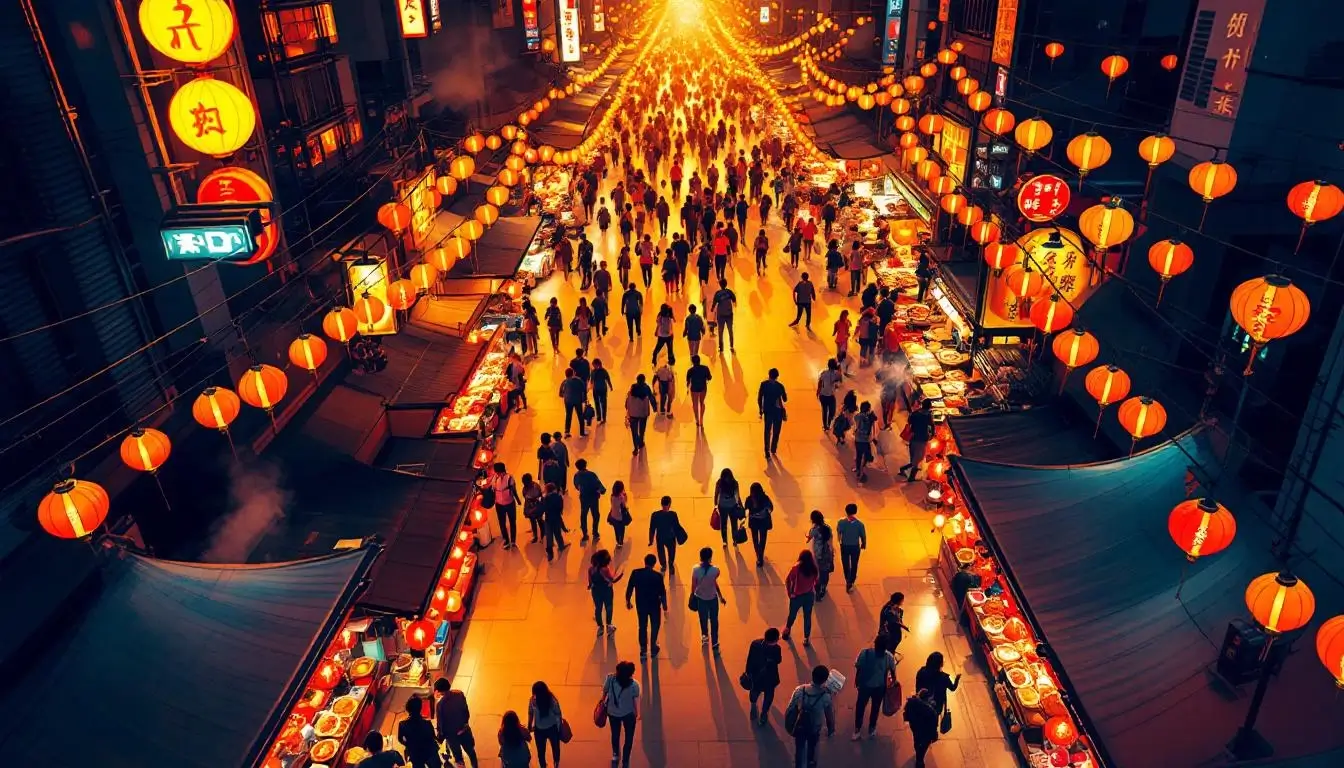
Taipei’s night markets are the stage where street food performs its nightly show. Each market has its own personality, specialties, and loyal following. Here’s where to go depending on what you’re craving.
Raohe Street Night Market
Compact, focused, and absolutely packed with incredible food, Raohe is many food lovers’ top pick. The single-lane format means you can’t miss anything. Must-eats: hu jiao bing at the entrance, medicinal pork ribs soup (yao dun pai gu), and the flame-torched wagyu beef cubes that draw Instagram crowds every night. Arrive before 6 PM to beat the worst of the crowds.
Shilin Night Market
Taipei’s largest and most famous night market is a labyrinth of food, games, and shopping spread across multiple blocks. Shilin can be overwhelming, but that’s part of the charm. Head to the underground food court (Shilin Market Food Court) for the concentrated food experience, where vendors serve enormous fried chicken cutlets, oyster omelets, and the iconic Shilin large sausage — a glutinous rice sausage split open and stuffed with a garlic pork sausage. It’s the double-decker hot dog of Taiwan.
Ningxia Night Market
While other markets mix shopping with food, Ningxia is almost exclusively about eating. This compact market in the Datong District has earned multiple Michelin Bib Gourmand nods, and the food quality reflects it. Don’t miss the taro balls, oyster omelets, braised pork rice, and the legendary egg yolk taro pastries. Ningxia is also more manageable than Shilin, making it perfect for a focused street food crawl.
Tonghua (Linjiang Street) Night Market
Located near Taipei 101, Tonghua is where locals go when they want great food without the tourist crowds. The market runs along a single street in the Da’an District and is known for its exceptional lu rou fan, charcoal-grilled corn, and one of the city’s best scallion pancake vendors. If you’re staying in the eastern part of Taipei, this is your go-to.
Nanjichang Night Market
The insider’s pick. Nanjichang in Zhongzheng District is tiny, off the tourist radar, and serves some of the most authentic Taipei street food you’ll find anywhere. The braised pork knuckle, sesame oil chicken soup, and handmade mochi here are the real deal — and prices are noticeably lower than at the bigger markets.
Beyond Night Markets: Taipei’s Best Daytime Street Food

Taipei street food doesn’t clock out when the sun comes up. Some of the city’s greatest eats happen before noon or in the buzzing lunch hour rush. Here’s where to find them.
Traditional Breakfast Streets
Every Taipei neighborhood has its cluster of zaocan dian — traditional breakfast shops that open at dawn and close by 10 AM. These no-frills joints serve dan bing (egg crepes), shao bing you tiao (sesame flatbread wrapped around fried dough sticks), warm soy milk, and fan tuan (sticky rice rolls stuffed with pork floss, pickled vegetables, and a you tiao). Yonghe district is the birthplace of Taiwan’s soy milk breakfast culture, and Yonghe Soy Milk King near Dongmen MRT remains a pilgrimage site for Taiwanese breakfast lovers.
Lunch Hour Heroes
Between 11 AM and 1 PM, sidewalk vendors and tiny shop-front restaurants come alive across Taipei. Look for hand-pulled noodle shops in Zhongshan, Hakka-style ban tiao (flat rice noodles) near Zhongxiao Fuxing, and the iconic Taiwan beef noodle soup shops that dot every major street. Yong Kang Street in the Da’an District is ground zero for daytime food exploration — within a few blocks you’ll find world-class beef noodle soup at Yong Kang Beef Noodles, mango shaved ice at Smoothie House, and scallion pancakes at Tian Jin Onion Pancake.
Afternoon Snack Culture
Taipei has a deeply ingrained afternoon snack culture that revolves around two things: bubble tea and sweet treats. Around 2-4 PM, the city’s hand-drink shops hit peak demand as office workers line up for their daily boba fix. Between tea runs, look for wheel cakes (che lun bing) — little round cakes filled with red bean, custard, taro, or chocolate — sold from carts on busy sidewalks. They’re fresh, warm, cheap (NT$10-15 each), and impossibly satisfying.
Taipei Street Food Prices: What to Expect and How to Order
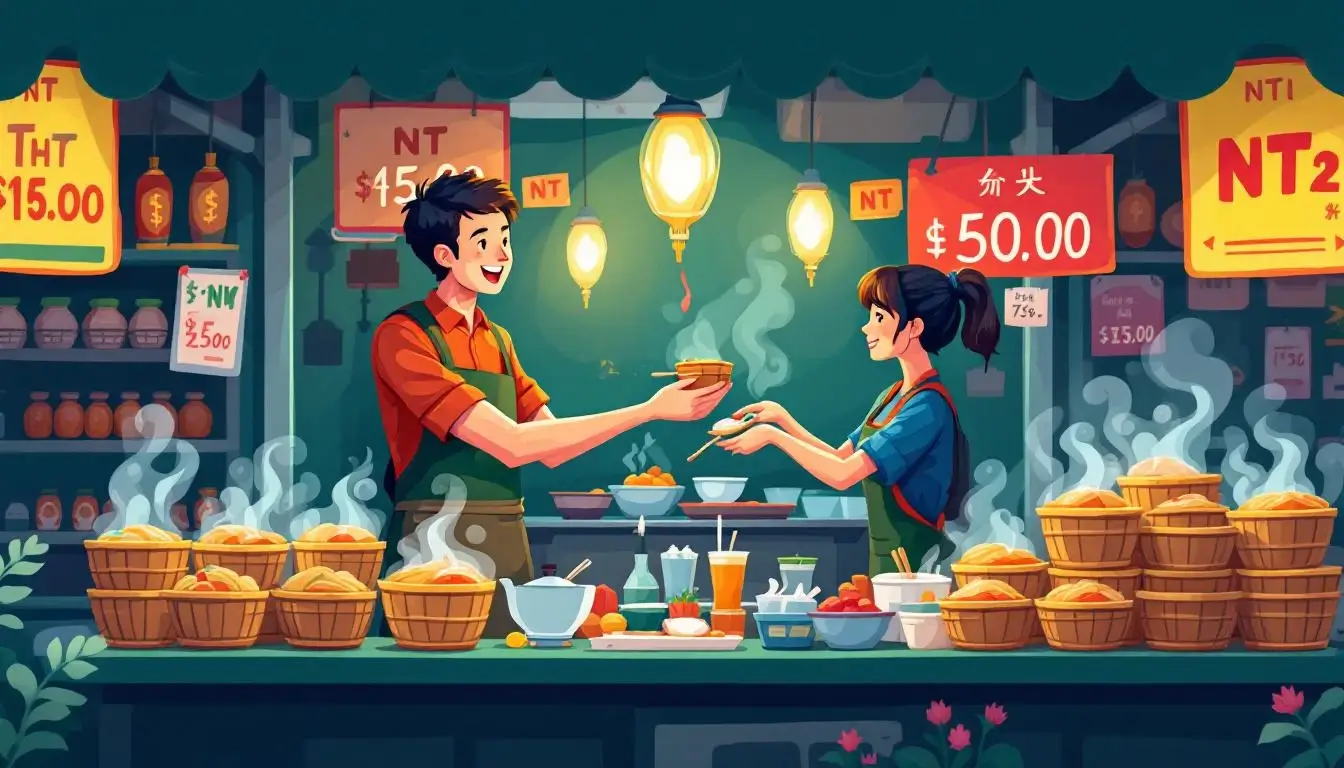
One of the most beautiful things about Taipei street food is how absurdly affordable it is. Even with inflation, you can eat like royalty for the cost of a single restaurant appetizer back home.
Price Guide by Dish
- Lu rou fan: NT$30-50 ($1-1.60 USD)
- Hu jiao bing: NT$50-60 ($1.60-2 USD)
- Oyster omelet: NT$60-80 ($2-2.60 USD)
- Gua bao: NT$50-70 ($1.60-2.25 USD)
- Stinky tofu: NT$50-70 ($1.60-2.25 USD)
- Bubble tea: NT$40-70 ($1.30-2.25 USD)
- Xiao long bao (8 pcs): NT$80-120 ($2.60-3.90 USD)
- Fried chicken cutlet: NT$65-85 ($2.10-2.75 USD)
- Beef noodle soup: NT$130-180 ($4.20-5.80 USD)
A full night market dinner sampling 4-5 dishes typically costs NT$200-400 ($6.50-13 USD). Budget travelers can eat three full meals a day of Taipei street food for under $15 USD — and eat well.
Ordering Tips for First-Timers
Most Taipei street food vendors are used to non-Chinese speakers pointing at what they want, and that’s perfectly fine. But a few key phrases will earn you smiles and sometimes extra-generous portions:
- “Zhe ge” (這個) — “This one” (point and say it)
- “Yi fen” (一份) — “One serving”
- “Bu yao la” (不要辣) — “No spicy” (crucial if you can’t handle heat)
- “Wai dai” (外帶) — “To go”
- “Nei yong” (內用) — “Eating here”
- “Duo shao qian” (多少錢) — “How much?”
Cash is still king at most street food stalls, though an increasing number now accept LINE Pay and other mobile payments. Keep small bills (NT$100 and NT$50 coins) handy.
Taipei Street Food Etiquette
There are a few unwritten rules that locals follow. Don’t linger in front of a stall counting your change while a line builds behind you — step to the side. If a market has communal seating, eat quickly and give up your seat when done. Carry your own trash to a bin; Taiwan’s culture of cleanliness extends to its night markets. And tip? Never. Tipping isn’t part of Taiwan’s food culture, and vendors will likely chase you down to return the extra money.
Speaking of Taiwanese food culture, if you’re craving a way to bring some of that night market energy home, check out our Taiwan Street Food Watercolor Greeting Card — it captures the warmth and charm of an evening stroll through Taipei’s food stalls perfectly.
Hidden Gems: Under-the-Radar Taipei Street Food Spots
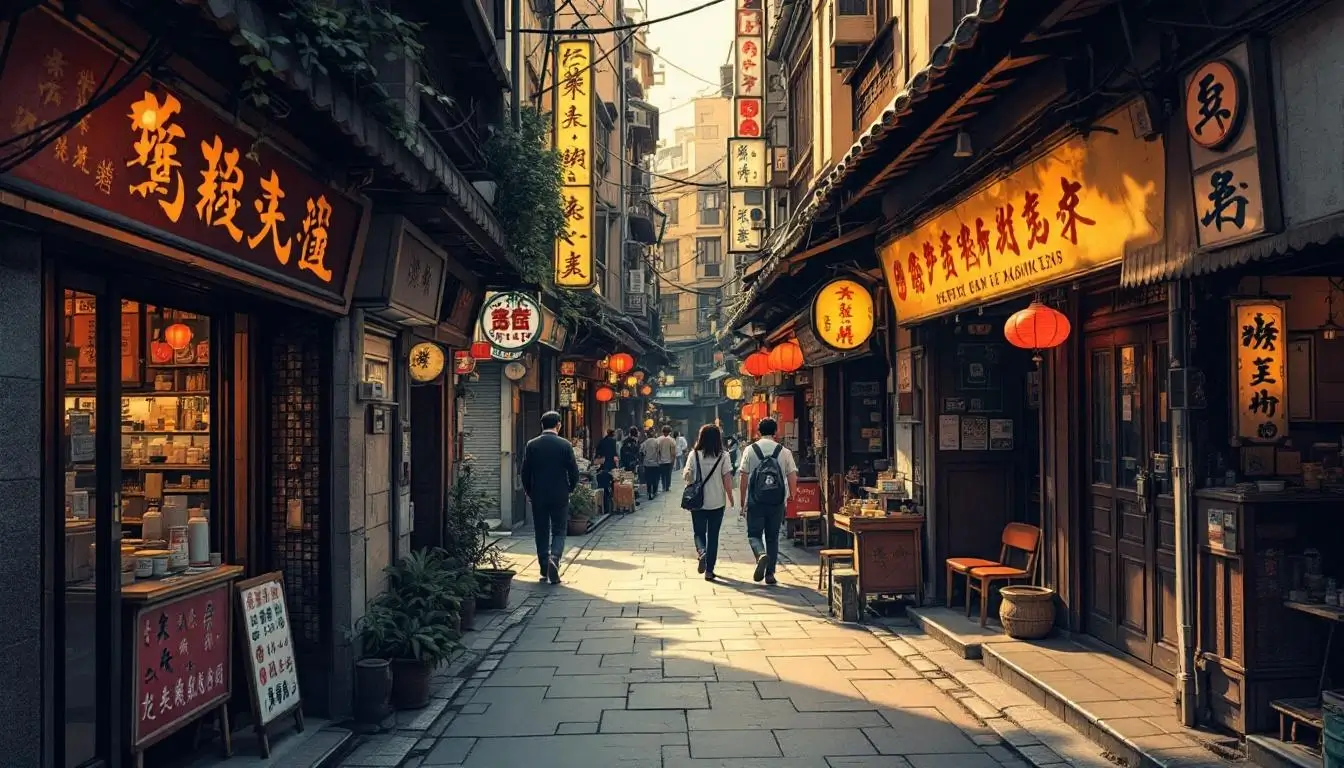
Beyond the big-name night markets, Taipei hides incredible food in places most tourists never find. These are the spots that food-obsessed locals whisper about.
Nanmen Market (South Gate Market)
This daytime market near Chiang Kai-shek Memorial Hall is where Taipei’s home cooks shop for ingredients and prepared foods. The market relocated to a modern building in 2023 but kept its soul — vendors here have been selling Shanghainese-style smoked fish, Hunan cured meats, hand-wrapped zongzi, and the city’s best selection of traditional pastries for decades. Come hungry, because the prepared food section is essentially a seated street food court with white-tablecloth quality at plastic-stool prices.
Addiction Aquatic Development (Upper Market Area)
While the sushi and sashimi downstairs get all the attention, the upper floor street food area at this Zhongshan District complex serves outstanding Taiwanese-style grilled seafood, salt-and-pepper shrimp, and some of the freshest oyster omelets outside of a night market. It’s a daytime destination that food tourists consistently overlook.
Gongguan Night Market
Clustered around National Taiwan University, Gongguan skews young and cheap. University-area pricing means generous portions at student-friendly prices, and the concentration of Taiwan snacks — from flame-grilled corn to Thai-style papaya salad carts — reflects Taipei’s increasingly diverse food scene. The Lan Jia Gua Bao stall near the MRT exit has been named one of the best gua bao spots in the city by multiple food critics.
Dihua Street (Dadaocheng)
This historic street in the Datong District is famous for dried goods and traditional Chinese medicine shops, but the food scene has exploded in recent years. Between the preserved heritage shophouses, you’ll find artisan coffee shops, innovative takes on traditional Taiwanese desserts, and street vendors selling old-school favorites like peanut ice cream rolls and handmade nougat. During the Lunar New Year market season, Dihua Street transforms into one of Taipei’s most spectacular food destinations.
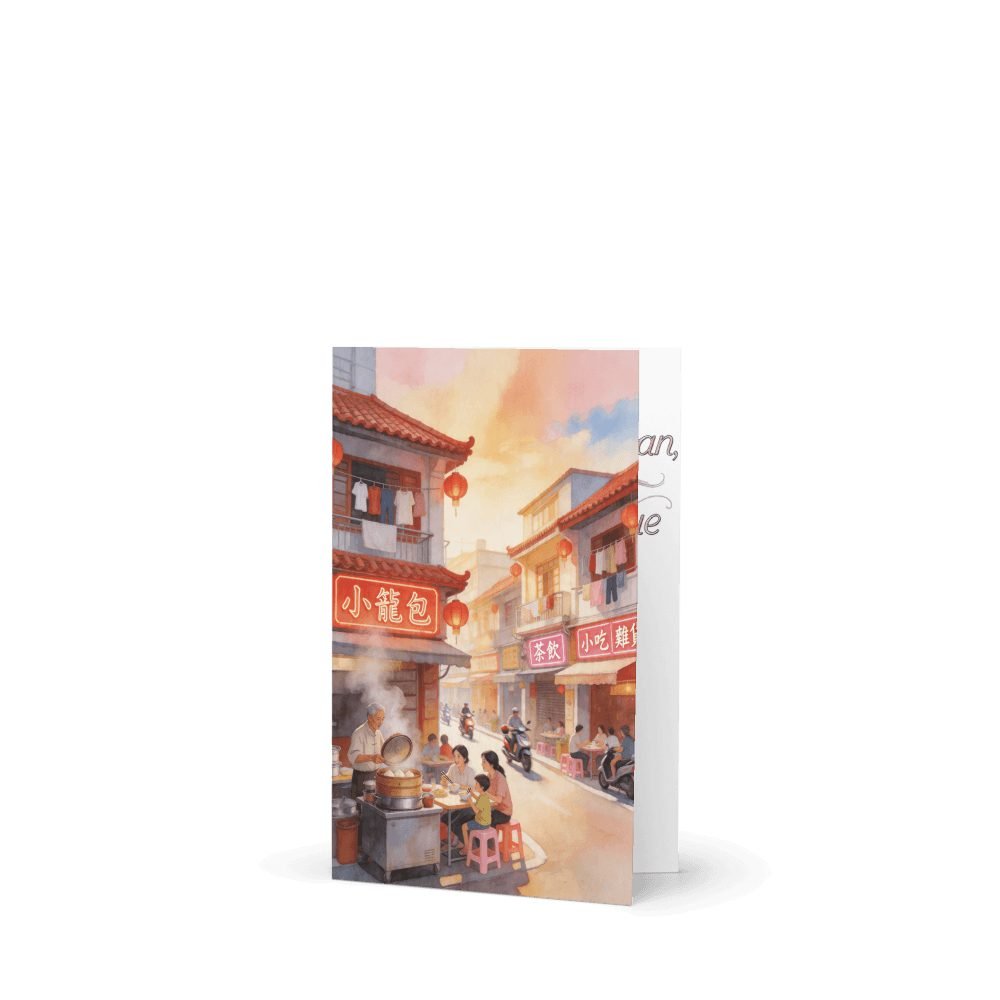
Bring Taipei’s Street Food Vibes Home
Our Taiwan Street Food Watercolor Greeting Card captures the warmth and nostalgia of an evening stroll through Taipei’s bustling food stalls. Perfect for anyone who misses Taiwan — or dreams of visiting.
Taipei Street Food for Every Diet
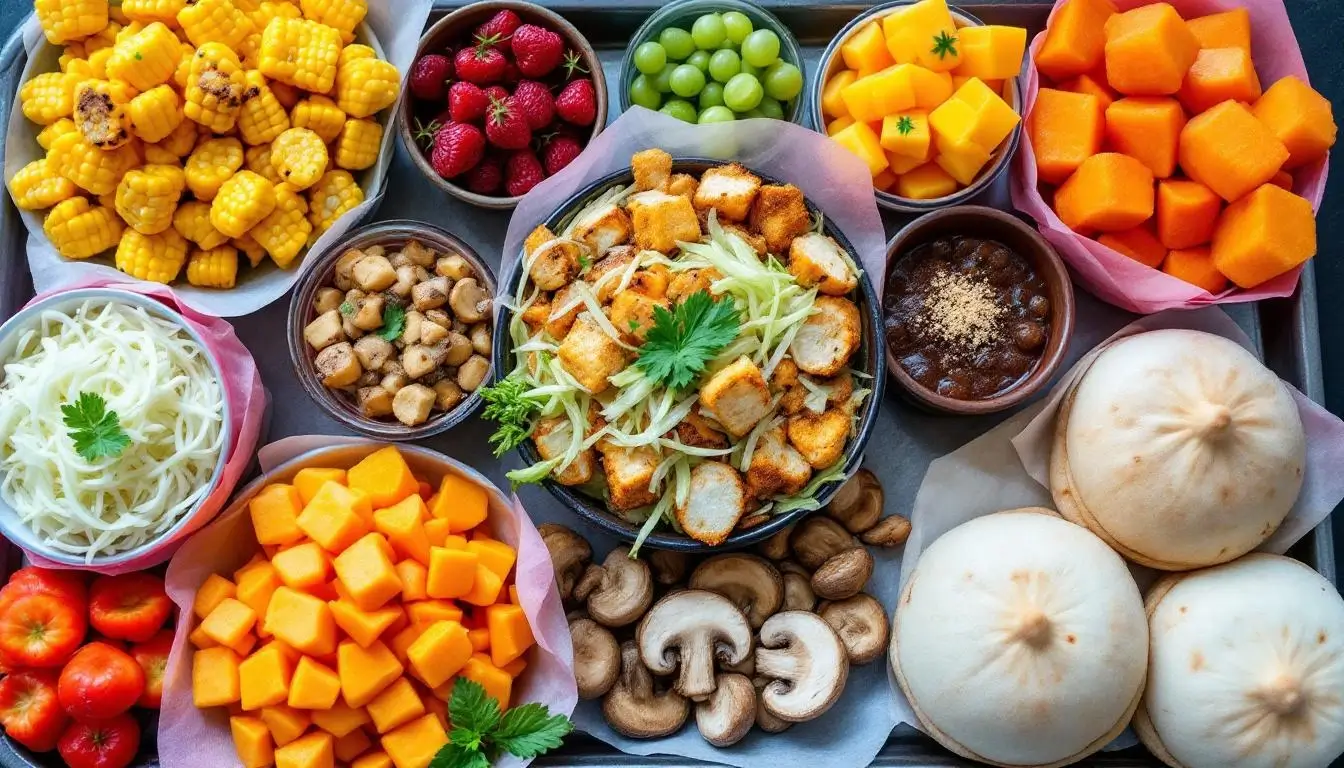
Taipei is surprisingly accommodating for dietary restrictions — if you know where to look.
Vegetarian and Vegan Street Food
Taiwan has one of the highest concentrations of vegetarians in Asia, thanks to Buddhist dietary traditions. Look for stalls marked 素食 (su shi) — meaning vegetarian. Taipei’s vegetarian street food includes stinky tofu (the fried kind is almost always vegan), mushroom and vegetable bao, sesame noodles, grilled corn, sweet potato balls, and the incredible vegetarian buffet stalls found at every night market where you fill a plate and pay by weight. Ningxia Night Market has several dedicated vegetarian vendors.
Gluten-Free Options
Many classic Taipei street foods are naturally gluten-free: rice-based dishes like lu rou fan, oyster omelets (made with sweet potato starch, not wheat flour), grilled meats on skewers, fresh fruit, and all forms of shaved ice and taro desserts. The main things to avoid are anything wrapped in wheat-flour buns or skins (gua bao, xiao long bao, hu jiao bing) and soy sauce-heavy dishes where tamari isn’t available.
Halal-Friendly Options
While Taiwan isn’t traditionally a halal food destination, Taipei’s halal scene is growing fast. Several night market vendors near Taipei Main Station now carry halal certification, and the area around Taipei Grand Mosque in Da’an has a cluster of halal-certified eateries. Seafood-based street foods (grilled squid, oyster omelets, shrimp tempura) are generally safe options, and many fruit and dessert stalls are inherently halal.
Frequently Asked Questions About Taipei Street Food

Is Taipei street food safe to eat?
Absolutely. Taiwan has some of the strictest food safety regulations in Asia, and Taipei’s health inspectors regularly check night market vendors. The high turnover at popular stalls means food is always fresh. As with any street food anywhere in the world, stick to stalls with long lines (high turnover = fresh food) and you’ll be fine. Tap water in Taipei should be boiled before drinking, but all the ice used in drinks at reputable stalls is made from filtered water.
What’s the best time to visit Taipei night markets?
Most night markets open around 5-6 PM and run until midnight or later. The sweet spot is 6:30-8 PM — stalls are fully operational but the peak crowds haven’t hit yet. Weekday evenings are significantly less crowded than weekends. If you’re visiting Shilin Night Market, aim for a Tuesday or Wednesday for the shortest waits.
How many night markets should I visit in one trip?
Quality over quantity. Rather than rushing through five markets in five nights, pick 2-3 markets and spend real time at each. A thorough food crawl through a single night market takes 2-3 hours if you’re sampling strategically. Pair a big market (Shilin or Raohe) with a smaller, more food-focused one (Ningxia or Nanjichang) for contrast.
Can I eat Taipei street food with kids?
Taipei is one of the most family-friendly street food cities in the world. The food is mild (you have to specifically request spice in most cases), portions are small enough for sharing, and night markets are safe, well-lit, and stroller-accessible on the main paths. Kids gravitate toward fried chicken cutlets, wheel cakes, cotton candy, and the endless varieties of creative ice cream and fruit drinks.
What about food allergies?
The biggest allergen challenges in Taipei are peanuts (used in gua bao and as a topping on many dishes), sesame (ubiquitous in sauces and oils), shellfish (oyster omelets, shrimp dishes), and soy. Learning to say your allergy in Mandarin is helpful: “Wo dui huasheng guomin” (我對花生過敏) means “I’m allergic to peanuts.” Most vendors will understand and accommodate you.
Where can I learn to cook Taiwanese street food at home?
If you fall in love with Taipei street food and want to recreate the flavors at home, check out our Taiwan food recipe guide for authentic recipes covering everything from lu rou fan to dan bing. Many of these dishes are surprisingly simple to make once you have the right ingredients.
Your Taipei Street Food Adventure Starts Now
There’s a reason food lovers from around the world put Taipei at the top of their must-visit lists. This city doesn’t just feed you — it tells you stories through every bite. The pepper bun vendor whose family has been working the same clay oven for three generations. The grandmother ladling braised pork rice from a pot that hasn’t stopped simmering since sunrise. The university student flipping egg crepes at lightning speed before her morning classes.
Taipei street food is affordable, extraordinary, and endlessly surprising. The only mistake you can make is not bringing a big enough appetite.
Whether you’re planning your first trip or your tenth, Taipei’s streets are always serving something new. Start with the essentials in this guide, follow the crowds, trust your nose, and let the city feed you. Your taste buds will thank you.
For more deep dives into Taiwan’s incredible food culture, explore our guides to Taiwan night market food, traditional Taiwanese dishes, and the sweetest desserts the island has to offer.

Grab a Free Taiwan Sticker!
Drop your email and we’ll send you a limited-edition Taiwan sticker — plus insider access to new merch drops and island vibes.
No spam. Unsubscribe anytime.