Suan Mei Tang: The Smoky-Sour Iced Plum Drink Taiwan Pulls Out the Moment the Mercury Climbs
It is 35°C in Taipei, the air has the consistency of warm soup, and you have just demolished a paper carton of lu rou fan slick with five-spice fat. The local at the next stool isn’t reaching for water or beer. He’s holding up two fingers at the auntie behind the counter and getting handed a tall plastic cup of something the color of cola, the color of motor oil, the color of a thunderhead at dusk. He pierces the lid with a fat straw, takes one long sip, and his eyes briefly roll back. That drink is suan mei tang (酸梅湯), Taiwan’s smoky-sour iced plum brew — and once you understand what’s actually in the cup, you’ll never order anything else when the mercury climbs.
A Qing-Dynasty Palace Recipe That Caught the Last Boat to Taiwan
Suan mei tang isn’t a Taiwanese invention. The recipe traces back to the imperial kitchens of the Qing dynasty, where palace cooks brewed it for the Manchu emperors as a “summer thirst-quencher” (解渴湯) prescribed by court physicians. The most famous historical purveyor was Xinyuanzhai (信遠齋), a Beijing shop dating to the 1740s whose plum tea reputedly cleared the imperial palate after heavy roast-meat banquets.
When the Republic of China retreated to Taiwan in 1949, an entire generation of mainland cooks, merchants, and palace-recipe descendants came with it. Suan mei tang traveled across the strait inside their stainless-steel pots and folk-knowledge memory — and within a decade it had quietly become the unofficial state beverage of any Taiwanese summer afternoon over 32°C.
What Is Actually In The Cup
Five core ingredients, simmered low for an hour, then chilled hard:
- 烏梅 (wumei) — Chinese smoked dried plums. Not the salty pickled umeboshi of Japan. These are plums dried over wood smoke until they turn glossy black and taste like a campfire kissed a tamarind. They’re the soul of the drink.
- 山楂 (shanzha) — dried hawthorn berries. Tart, slightly funky, packed with the digestive enzymes that Chinese medicine has prescribed for greasy meals for two thousand years.
- 甘草 (gancao) — licorice root. A whisper, not a shout. It rounds the sour edges into something almost wine-like.
- 桂花 (guihua) — dried sweet osmanthus blossoms. Floated in at the end. Optional but ubiquitous in better Taipei versions.
- 冰糖 (bingtang) — rock sugar. Just enough to keep the tartness from hurting.
The finished liquid is a translucent, mahogany-into-cola brown. It is sour the way good vinegar is sour — bright on the tip of the tongue, smoky in the back of the throat, faintly floral on the exhale. A proper cup tastes like a summer storm rolled across a plum orchard.
Why Taiwan Drinks It With Greasy Food
There is actual Traditional Chinese Medicine theory behind why a $40 NTD cup of plum tea sits beside every plate of fried chicken cutlet, every bowl of danzai noodles, every paper sleeve of stinky tofu. Hawthorn is classified as xiao shi (消食) — literally “digests food” — and is believed to break down meat and fat. Wumei is sheng jin (生津) — “generates fluids” — meaning it restores moisture lost to summer humidity. The whole drink is engineered to balance a meal so heavy it would otherwise sit in your chest like a brick until dinner.
You will not find a single Taiwanese person under 40 who can explain this in TCM jargon. You will find every single one of them ordering it instinctively the moment the meal arrives. The body knows.
Where to Drink the Real Thing in Taipei
Convenience-store cold brews from 7-Eleven and FamilyMart are perfectly fine for the train. For the proper hand-simmered version, hunt these:
- 公館夜市 Gongguan Night Market — multiple stalls do classic small-pot batches
- 永康街 Yongkang Street — the boutique tea shops here serve premium osmanthus-heavy versions in glass mugs
- 南門市場 Nanmen Market — old-school Beijing-flavor vendors who’ve been simmering the same recipe for three generations
- 霞海城隍廟 Xia Hai City God Temple area in Dadaocheng — temple-adjacent stalls during summer festivals
The Sibling Drink You Should Try Next
If suan mei tang is the smoky-sour sibling, its caramel-sweet counterpart is winter melon tea (dongguacha) — another pre-bubble-tea Taiwanese summer staple that locals have been sipping for a century. Order one of each and you have the full Taiwanese summer-drink playbook in two cups.
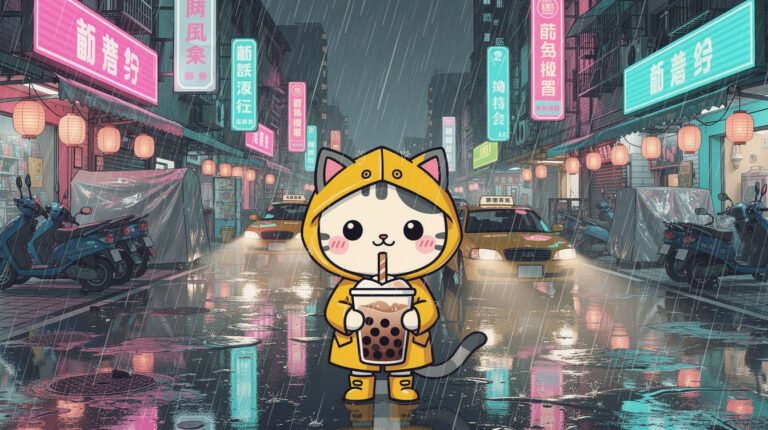
One more pro tip: suan mei tang is at peak demand during the brutal late-July through September stretch, which also happens to be Taiwan’s typhoon season. Stockpile a few bottles before the storms hit. There is no better drink for sipping iced in an apartment when the rain is coming sideways and the air is so wet you could wring it out.
Cheers — and stay sour.
Grab a Free Taiwan Sticker!
Drop your email and we’ll send you a limited-edition Taiwan sticker — plus insider access to new merch drops and island vibes.
No spam. Unsubscribe anytime.