Taiwan Yuhe Lychee: Why the Island’s Most Prized Summer Fruit Only Shows Up for Six Weeks
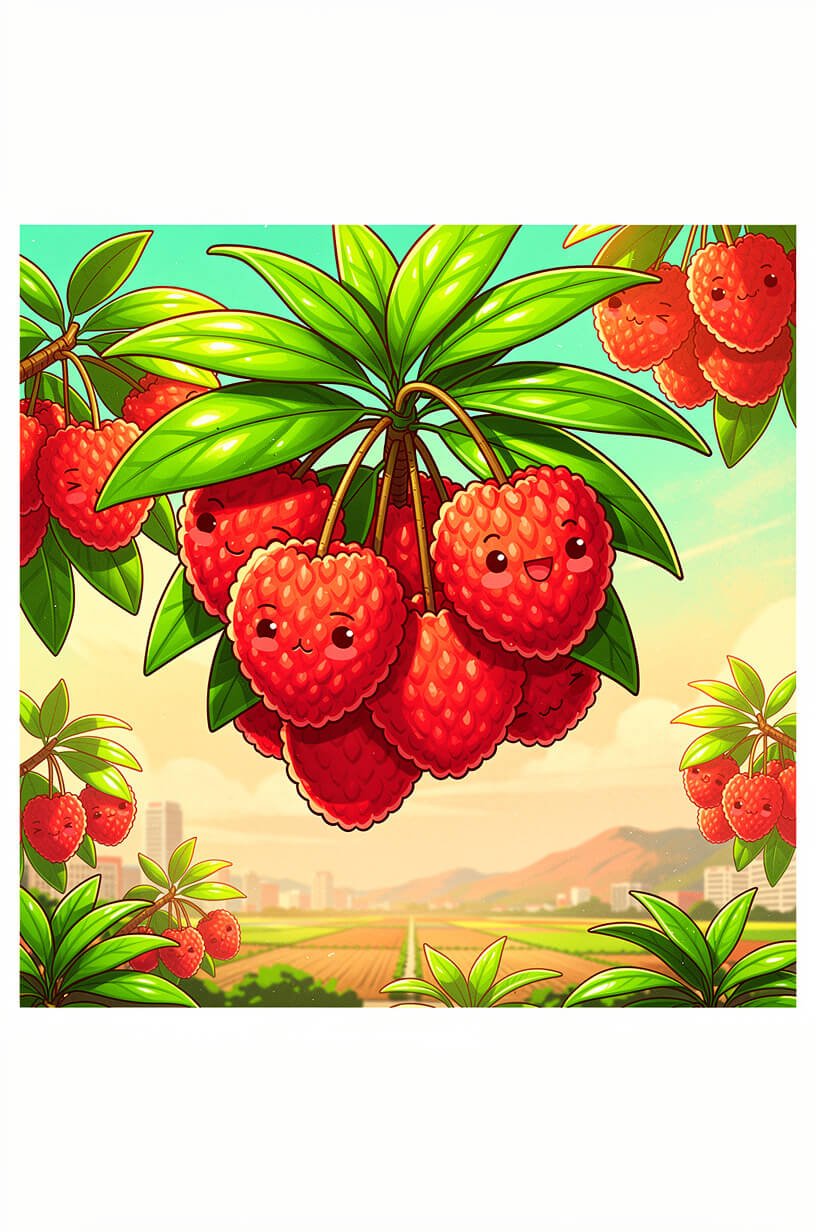
Walk past any roadside fruit stand in Kaohsiung right now and you will see them piled up like edible rubies — knobbly red-skinned bunches still attached to leafy branches, sold by the jin (台斤, 600g) from the back of a flatbed truck. These are Yuhe lychees (玉荷包), and Taiwan only gets them for about six weeks a year. We are inside that window right now.
The “Jade Purse” Lychee
Yuhe translates literally as “jade purse” — a nod to the fruit’s distinctive heart-shaped profile, which Qing Dynasty growers thought resembled the embroidered silk purses ladies tucked into their sleeves. The variety arrived in Taiwan from Fujian Province centuries ago and was slowly refined on the island into something the mother orchards no longer produce in the same form.
What makes Yuhe special: the seed is freakishly small (sometimes shriveled to a tiny dark sliver) while the translucent white flesh is thick, snappy, and floral. Bite into one and you get an almost grape-like crunch followed by a wash of rose and honey. Compare that to the more common Heiye (黑葉, “black leaf”) lychees that flood markets in late June — bigger, juicier, but with a fat brown seed and a less perfumed taste — and you understand why Yuhe sells for nearly double the price.
Why Kaohsiung Owns This Fruit
Roughly 90% of Taiwan’s Yuhe lychees come from a single district: Dashe (大社區) in Kaohsiung. The granite-derived soil, the proximity to the warm Kaohsiung plain, and the timing of the late-spring rains create the exact conditions Yuhe needs to set fruit. Neighboring Tainan grows a respectable crop too, but Dashe is the heartland. Every May, the district hosts the Yuhe Lychee Festival (大社玉荷包荔枝節), where you can pick fruit straight from the branch and watch elderly farmers crack jokes about the city kids who do not know how to twist the stem properly.
The Plum-Rain Connection
Yuhe season is not arbitrary. It piggybacks on the méiyǔ plum rain front we wrote about earlier this week. The same wet system that frustrates beach-bound tourists is exactly what plumps up the lychee — too little rain and the fruit stays small; too much and the skin splits. This year’s méiyǔ arrived right on cue, which is why the bunches at Beitou Market this past weekend looked picture-perfect.
How to Eat One Like a Local
Forget peelers and knives. Find the natural seam running down the side of the fruit, press your thumbnail in, and the shell will pop apart like a clamshell. Pop the pearl in your mouth, work the flesh off the seed with your tongue, and spit the seed out. Locals will warn you not to eat more than ten or fifteen at one sitting — Taiwanese folk medicine considers lychees a “hot” food (上火), blamed for causing mouth sores, sore throats, and even nosebleeds when overdone. Pair them with chilled barley tea or salted plum (酸梅) to balance out the heat.
Where to Find Them Right Now
Any traditional morning market in Taipei, Taichung, Tainan, or Kaohsiung will have Yuhe through mid-June. Premium bunches with leaves and branches still attached signal same-day freshness. Expect to pay NT$150 to NT$250 per jin (about US$5–8) at retail, less if you drive down to Dashe and buy direct from the orchard. After June 20-ish, Yuhe disappears and Heiye takes over — still wonderful, but a different fruit entirely.
If you ever wondered why Taiwan is called the Kingdom of Fruits, the Yuhe lychee is exhibit A.

Grab a Free Taiwan Sticker!
Drop your email and we’ll send you a limited-edition Taiwan sticker — plus insider access to new merch drops and island vibes.
No spam. Unsubscribe anytime.