Did You Know? Taiwan’s Most Famous Crab Is Named After a Town It Doesn’t Live In
It’s October, which on Taiwan’s north coast means exactly one thing: crab. Walk into a seafood restaurant anywhere between Keelung and Taipei right now and you’ll see 萬里蟹 — Wanli crab — chalked up as the catch of the day. Here’s the part that trips people up: the crabs don’t actually come from Wanli.
Named after the fishermen, not the fishing ground
Wanli is a small district in New Taipei City, tucked along the north coast. The crabs themselves are hauled out of the Northwest Fishing Ground — the waters off Fugui Cape and well beyond. What Wanli supplies is the fleet: more than fifty dedicated crab boats and the captains who know those grounds in the dark.
New Taipei City’s government turned that into a brand on 29 August 2012, and the official figure is the showstopper: around 80% of the sea crab on Taiwan’s tables is landed by Wanli fishermen. It’s one of the few food brands anywhere named after a crew rather than a place of origin — a nice reminder that the best branding usually points at people.
Know your three crabs
- 花蟹 (rust-spotted / flower crab) — the biggest, the sweetest, the priciest.
- 三點蟹 (three-spot crab) — named for the three dark dots across its greenish shell.
- 石蟳 (stone crab) — smallest and hardest-shelled, with the most concentrated flavour.
Crab season comes with a ruler
Taiwan guards this fishery closely. There’s a year-round minimum size — 9 cm shell width for flower and three-spot crabs, 7 cm for stone crabs. And from 1 August to 31 December, which is essentially the entire eating season, it is illegal to catch an egg-bearing female, and equally illegal to sell one or even display it on ice. Fines run from NT$30,000 to NT$150,000.
The Fisheries Agency widened those rules in 2022 and estimates they now protect roughly 60% of egg-bearing females each year, with the national crab catch settling at around 1,400 tonnes. Taiwan does this sort of thing more than visitors realise — it’s the same regulatory instinct behind the caffeine figure printed on your boba cup.
Why the rules actually work: the basket
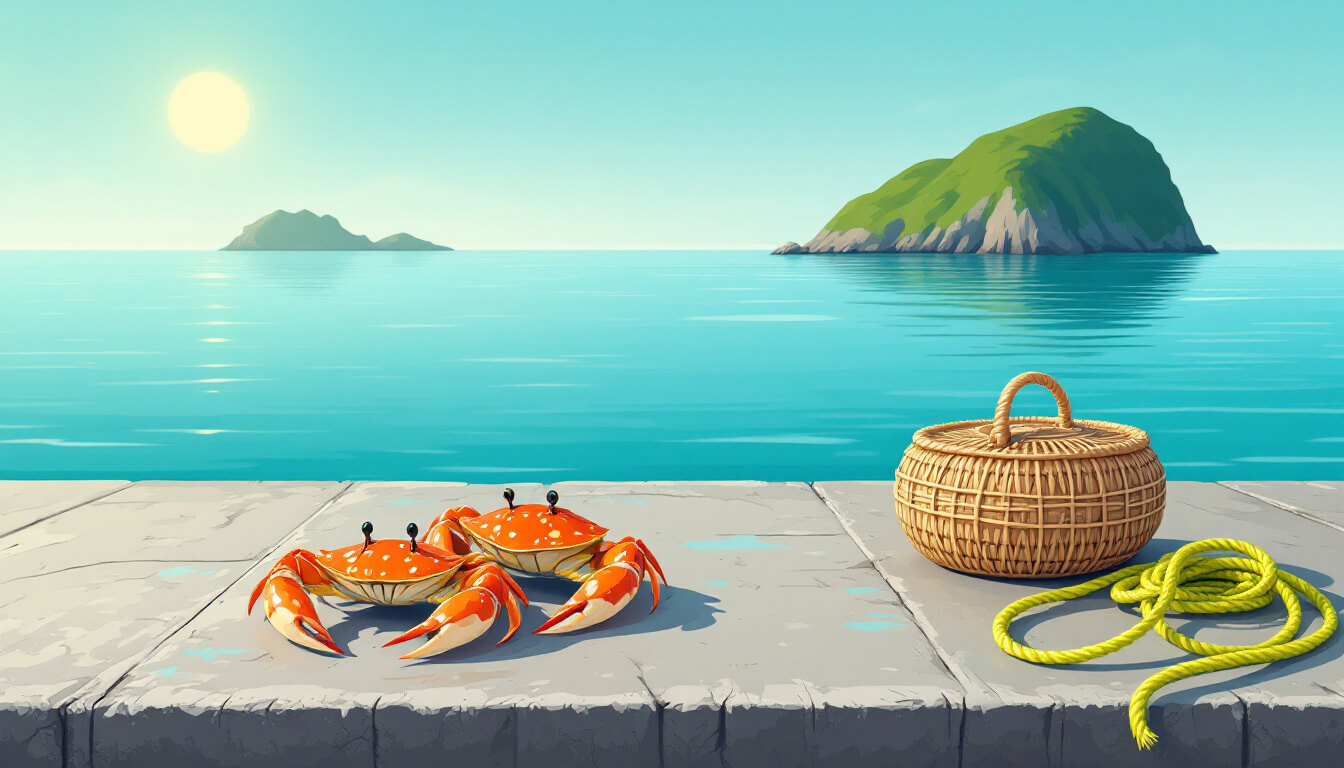
Wanli crabs are caught in 蟹籠 — round woven traps with three entrances and a bait chamber in the middle, loaded with saury or bonito. It’s passive gear. The crabs climb in, and they come up alive and undamaged, which means a captain can check every single one for size and for eggs and tip the rest back over the side still kicking. A net can’t do that. The gear is what makes the ruler enforceable.
One myth while we’re here: that fluorescent green rope you see binding every Wanli crab? Gorgeous, instantly recognisable — and not a certification. There’s no rule about rope colour at all. It’s a fishermen’s convention that quietly became a look.
Where to eat it
Head for Guihou Fishermen’s Market (龜吼漁夫市集) in Wanli, which the city rebuilt in 2025: 32 fresh seafood stalls on the ground floor, 12 cooked-food stalls upstairs with sea views. It’s a short drive from Yehliu Geopark, so you can queue for the Queen’s Head in the morning and be cracking claws by lunch.
The takeaway: Wanli crab isn’t a place name — it’s a fleet, a gauge, a closed season and a market that rebuilt itself. In Taiwan, the story behind the food is almost always a story about the people who bring it in.
Love this kind of Taiwan detail? We put it on shirts. Shop Taiwan Merch →

Grab a Free Taiwan Sticker!
Drop your email and we’ll send you a limited-edition Taiwan sticker — plus insider access to new merch drops and island vibes.
No spam. Unsubscribe anytime.