You Are the Apple of My Eye: Why Taiwan’s #1 Movie Still Defines a Generation
Ask any Taiwanese person in their thirties or forties to name the movie that shaped their generation, and you will hear the same six words: You Are the Apple of My Eye. Released in 2011, this coming-of-age romance became more than a hit — it became a cultural mirror. Fifteen years later, it still holds the record as Taiwan’s highest-grossing romance film worldwide, and it launched a pan-Asian nostalgia genre that Korea, Japan, and Thailand have all tried to copy. If you want to understand modern Taiwan through a single film, this is where you start.
This guide unpacks why You Are the Apple of My Eye — a movie about a mischievous Taiwanese boy chasing an honor student across a decade of near-misses — matters far beyond its plot. We will cover the true story behind director Giddens Ko’s semi-autobiographical hit, the plot without spoilers, the cultural chord that made Taiwan and all of Asia fall hard, where to stream it in 2026, what happened to the cast, and what to watch next if you love it. Whether you are new to Taiwan cinema or a diaspora reader returning to a classic, consider this your welcome mat.
What “You Are the Apple of My Eye” Actually Is
You Are the Apple of My Eye — the Chinese title is 那些年,我們一起追的女孩, which translates more evocatively as “Those Years, The Girl We Went After Together” — is a 2011 Taiwanese coming-of-age film written and directed by Giddens Ko (real name Ko Ching-lun). It stars Kai Ko as Ko Ching-teng, a prankster who cannot get out of his own way, and Michelle Chen as Shen Chia-yi, the class honor student everyone quietly worships. The film is set in the 1990s in Changhua County, follows the two from high school into their late twenties, and clocks in at a tight 110 minutes.
On paper it sounds like a straightforward first-love story. In practice it broke records on a scale no Taiwanese romance had touched before. The film earned US$24.5 million globally on a US$1.7 million budget — the kind of return that makes studio executives cry. It grossed more than NT$420 million in Taiwan alone (third-highest film of 2011), captured 50.6 percent of Hong Kong’s opening-day box office, and set records in Singapore and Malaysia. Distribution came from 20th Century Fox. That is a Hollywood-scale footprint for a Taiwanese indie shot mostly on nights and weekends.
Why does it still matter in 2026? Because it did something no earlier Taiwanese film had pulled off: it exported Taiwan-specific nostalgia — the uniforms, the after-school cram schools, the paper-thin walls of Changhua apartments — as a universal experience that Hong Kongers, Malaysians, mainlanders, and eventually the entire Asian diaspora recognized as their own. It was the film that proved Taiwan could tell its own coming-of-age story without borrowing from Hollywood or Japan. And it kicked off a decade of imitators, from Our Times (2015) to the Korean, Japanese, and Thai remakes still being released.
The True Story Behind Giddens Ko’s Semi-Autobiographical Blockbuster

Here is the wild part: this movie almost did not get made. Giddens Ko — a Taiwanese blogger and pulp novelist who by 2010 had already published more than fifty books — wrote the source novel in 2005 as a serialized love letter to his real high school crush. It was semi-autobiographical to the point that the male lead’s character name, Ko Ching-teng, is Giddens Ko’s actual birth name. Chia-yi is a lightly fictionalized version of a girl he pursued from junior high through university, and never won.
When Ko decided to adapt the novel himself, the Taiwanese film industry was in a rough patch. Domestic productions rarely broke NT$50 million at the box office. Investors would not fund a first-time director whose day job was churning out internet novels. So Ko mortgaged his house, drained his savings, and pulled together a NT$50 million budget (about US$1.7 million). He told interviewers at the time that the whole exercise was, on some level, a very expensive gesture aimed at his ex. Producer Angie Chai helped scrape together the rest.
The casting was equally unconventional. Michelle Chen was already a moderately known TV actress, but Kai Ko was a virtual unknown when Giddens tapped him for the lead. Filming took place almost entirely in Changhua County — including scenes shot at Jingcheng Senior High School, the real institution Giddens attended — which gave the movie a documentary specificity most romances lack. When you watch the classroom scenes, you are literally watching Giddens’s memories restaged in the rooms where they happened.
The result of one blogger, one mortgage, and one unrequited crush was a film that eventually earned back more than fourteen times its budget, made Kai Ko and Michelle Chen household names across Asia, and turned Giddens Ko into Taiwan’s most bankable director for the next five years. It also, quietly, may have been the most expensive love letter ever sent.
The Plot in Three Acts (Without Ruining the Ending)
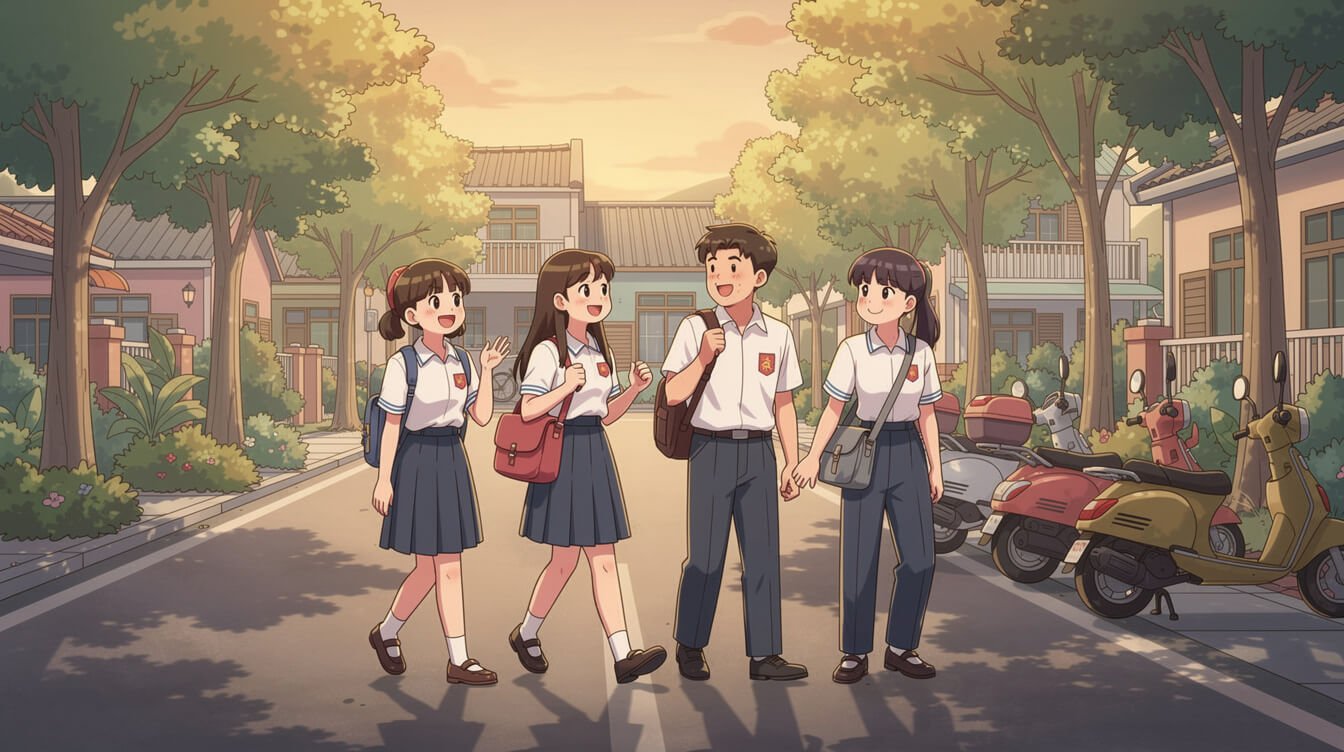
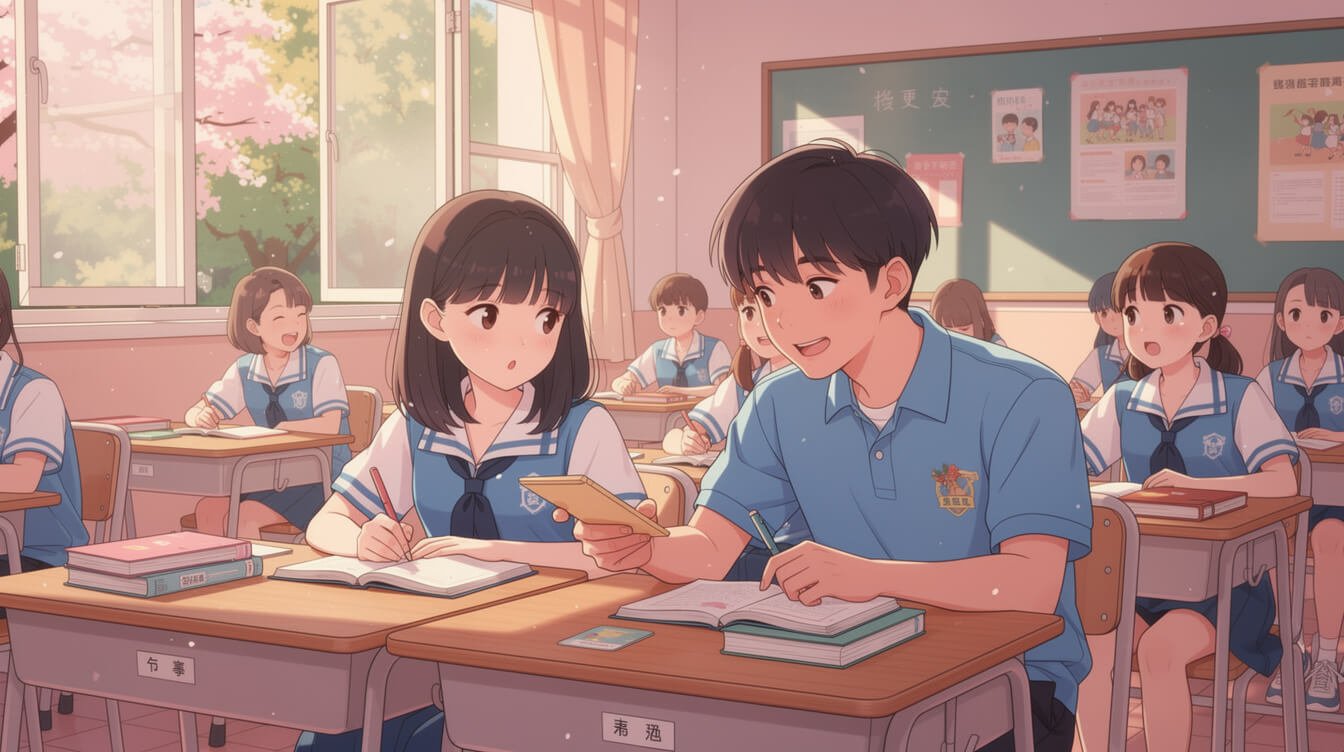
The story opens in 1994 at a Changhua high school. Shen Chia-yi is the type of student teachers dream about — quiet, top of the class, universally admired. Ko Ching-teng is the opposite — smart enough to be dangerous, unmotivated enough to be constantly in trouble, and part of a rowdy pack of five boys who all share the same open secret: they are all quietly in love with Chia-yi.
The turning point is small and perfect. Chia-yi forgets her textbook. Ching-teng slides his across the aisle and takes the punishment for the missing one — hands-up detention, the classic 1990s Taiwanese teacher’s discipline. Touched, Chia-yi starts preparing extra practice exams for him. He starts studying. They grow closer over months of after-school tutoring sessions. It is the beginning of a slow-burn dance that will last, in various forms, for more than a decade.
Act two follows the group through university. Ching-teng moves to Taipei. Chia-yi stays behind. They orbit each other across long-distance phone calls, letters, and near-misses. Act three fast-forwards to 2005 and a wedding scene that is one of the most-quoted final acts in modern Asian cinema. To say more would be a crime. Just know that the last twenty minutes contain a single sequence that has been meme-referenced, parody-remade, and copied across at least four national film industries. Watch it once, and you will understand why.
A key thing to know if you are new to Taiwanese cinema: this is not a plot-driven film. It is a memory film. The scenes are episodic, the humor lands on a specifically Taiwanese frequency (there are jokes about entrance exams, night market snacks, and Taiwanese parental logic that will read as inside baseball on first watch), and the emotional payoff comes from cumulative recognition, not narrative surprise.
Why Taiwan and All of Asia Fell Hard: The Cultural Chord It Struck
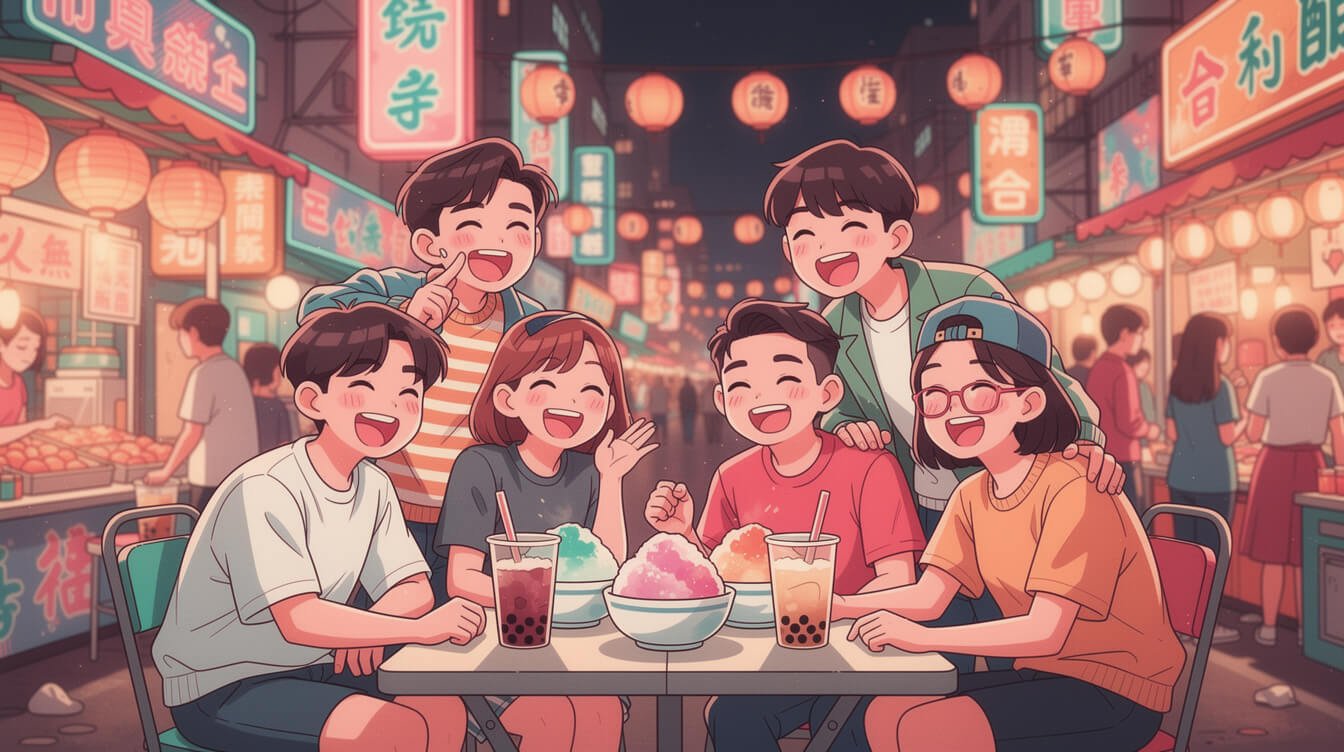
Explaining why You Are the Apple of My Eye hit so hard requires unpacking three overlapping layers. The first is the universal one — every culture has its “the one that got away” archetype, and this film nails it with unusual honesty. The second is pan-Asian. The third is distinctly Taiwanese.
The pan-Asian layer is where the film’s cross-border success lives. Anyone who grew up in a Chinese-language school system — Hong Kong, Singapore, Malaysia, mainland China — recognizes the uniforms, the hands-up punishment, the pressure of the joint college entrance exam, the after-school cram-school treadmill, and the specific brand of shy, communal, group-based courtship that shapes teenage romance across Confucian-educated societies. Group friendships are the default social unit. You do not date one-on-one at fifteen — you circle each other inside a pack of five friends for years. The film captures that dynamic more accurately than any other Asian romance of its era.
The distinctly Taiwanese layer is what makes it a piece of national identity. The Changhua County setting, the 1990s Taiwan Miracle economic optimism as backdrop, the specific street food (fried chicken cutlets, papaya milk, hand-cranked shaved ice), the scooter culture, the after-school KTV singing scenes, the way the boys speak in a rapid-fire Taiwanese Mandarin peppered with Hokkien phrases — all of it is a portrait of a Taiwan that existed at a very specific moment in the late 1990s and early 2000s. For Taiwanese in their thirties and forties today, watching this film is closer to reading their own diary than watching a movie.
The universal layer is the emotional honesty. Most first-love films tell you it worked out or it hurt. This one does something rarer: it tells you the ache never fully resolves, and that this is fine — that carrying an unfinished story from your teens into your thirties is part of what makes you an adult. The final wedding sequence lands because it refuses the easy Hollywood catharsis. Whether you grew up in Taipei or Toronto, that refusal is why the film sticks.
Speaking of Taiwan-specific texture — the film’s whole thesis is that being Taiwanese means cheering on your friends and yourself even when the odds are terrible (“jiayou / 加油”). Our Taiwan Black Bear Jiayou T-Shirt puts that exact energy on your chest, complete with the Formosan black bear making direct eye contact. It is the piece of Taiwan you can actually wear.
If this cultural thread pulls at you, you might enjoy our complete guide to Taiwanese culture, which unpacks the school-system, food-culture, and family-dynamic context that quietly shapes every scene in this film.
Where to Watch It in 2026 and Which Version to Choose
Fifteen years in, the streaming situation for the original Taiwanese You Are the Apple of My Eye is more complicated than it should be. Rights have shifted between distributors multiple times, and availability varies wildly by region. Here is what actually works in 2026:
- Netflix: Available in South Korea, Japan, and some Southeast Asian regions. Currently NOT available on Netflix US as of this writing — a source of ongoing frustration for diaspora viewers.
- Prime Video / Apple TV rentals: The film pops in and out of availability in the US as a US$3.99 rental. Search “Apple of My Eye 2011 Taiwan” and check the year — the 2024 Korean remake now clogs search results.
- Free ad-supported services (Tubi, Plex): Occasionally licensed with English subtitles. Rotation changes monthly.
- Vimeo On Demand and iQiyi International: The most reliable options for a legal purchase with proper subtitles. Around US$5-10 depending on region.
Which version should you watch? For a first viewing, always go with the original 2011 Taiwanese film. The remakes exist for reasons — Japan’s 2018 version relocates the story to a Japanese high school and reworks the tone to be softer and slower, the Thai My Precious (2023) plays it as pure sweet nostalgia, and the 2024 Korean version starring Dahyun and Jung Jin-young re-skins it as a K-drama-style feature. Each one is a legitimate cultural adaptation of the story, but only the original carries the specific Taiwanese texture that made it a phenomenon.
Subtitles matter. The Mandarin dialogue includes a fair amount of casual Hokkien and Taiwanese slang that translates roughly. Look for the newer, fan-corrected English subtitle tracks over the original theatrical release subtitles, which flatten some of the jokes. If you are on Vimeo or iQiyi, you generally get the cleaner tracks.
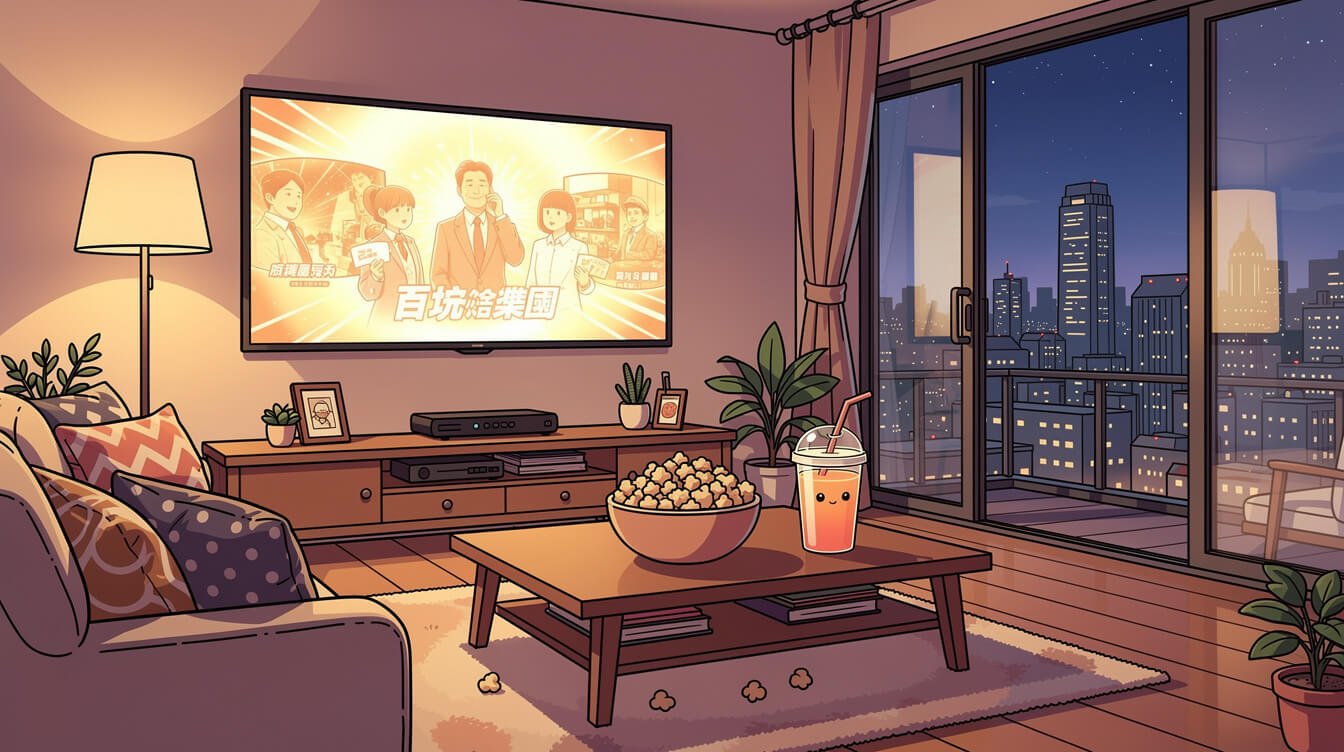
Watching for the first time? Set aside an uninterrupted two hours in the evening, dim the lights, and — this is a real recommendation — have a bowl of Taiwanese shaved ice or a papaya milk ready. The film uses food beats to anchor emotional beats, and having the actual food nearby makes the experience noticeably better. Our guide to Taiwan night market food covers everything the boys eat in the movie.
Where to Get the Book
Giddens Ko’s original 2005 novel — the one that started everything — is available in Mandarin from most Taiwanese online booksellers. An official English translation was released in 2018 by Locus Publishing. Used copies show up on AbeBooks and eBay. The book is longer, funnier, and more crass than the film, and it fills in a lot of the interior monologue the movie skips.
Life After Apple of My Eye: What Happened to Kai Ko, Michelle Chen, and Giddens
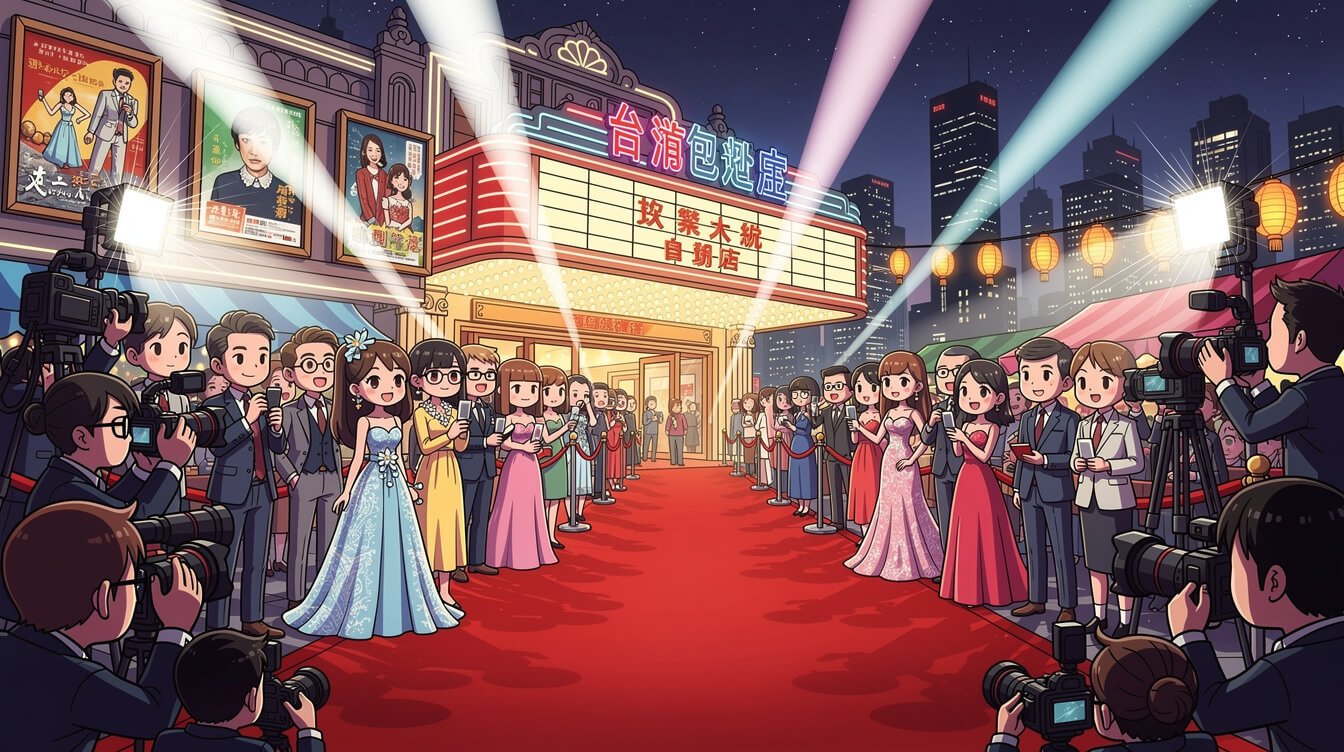
One of the more interesting things about You Are the Apple of My Eye is what happened after the credits rolled — for the film’s three biggest names, the trajectories diverged sharply.
Michelle Chen became one of Taiwan’s most in-demand romantic leads through the 2010s, moved between Taiwanese and Chinese productions, married Hong Kong actor Chen Xiao in 2016, and stepped back from acting for several years to raise their son. She has slowly returned to film and TV work in the 2020s, and her name is still shorthand in Taiwan for the perfect first-love archetype. If you are new to her filmography, Café. Waiting. Love. (2014) is the natural next stop.
Kai Ko — real name Ko Chen-tung — had the messier post-Apple arc. He won Best New Performer at the Golden Horse Awards for the role, became a pan-Asian teen idol overnight, and headlined several Chinese productions in the following years. In August 2014 he was arrested in Beijing for marijuana possession as part of a Chinese government crackdown on celebrity drug use, and he was blacklisted from mainland productions for years. He has since rebuilt his career in Taiwan and Southeast Asia, appearing in films like Bad Genius (2024) and stage productions, and his story has become its own subgenre of Taiwanese entertainment-industry commentary. He is now widely regarded as a Taiwan-focused actor of quiet, mature range.
Giddens Ko continued directing, releasing Café. Waiting. Love. (2014, as producer), Mon Mon Mon Monsters (2017), Till We Meet Again (2019), and Miss Shampoo (2023). He remains one of Taiwan’s most productive commercial directors and still writes prolifically — his back catalog now runs past seventy books. In 2015 he publicly apologized for an extramarital affair, which briefly derailed his public persona. He has since kept a more private profile while continuing to release roughly one film every two to three years.
The three of them have never formally reunited on screen — despite years of fan campaigns for a sequel or reunion project. Giddens has said in interviews that he considers the original film complete and that revisiting it would cheapen the memory. That answer, in a way, is the most Apple of My Eye thing he could have said.
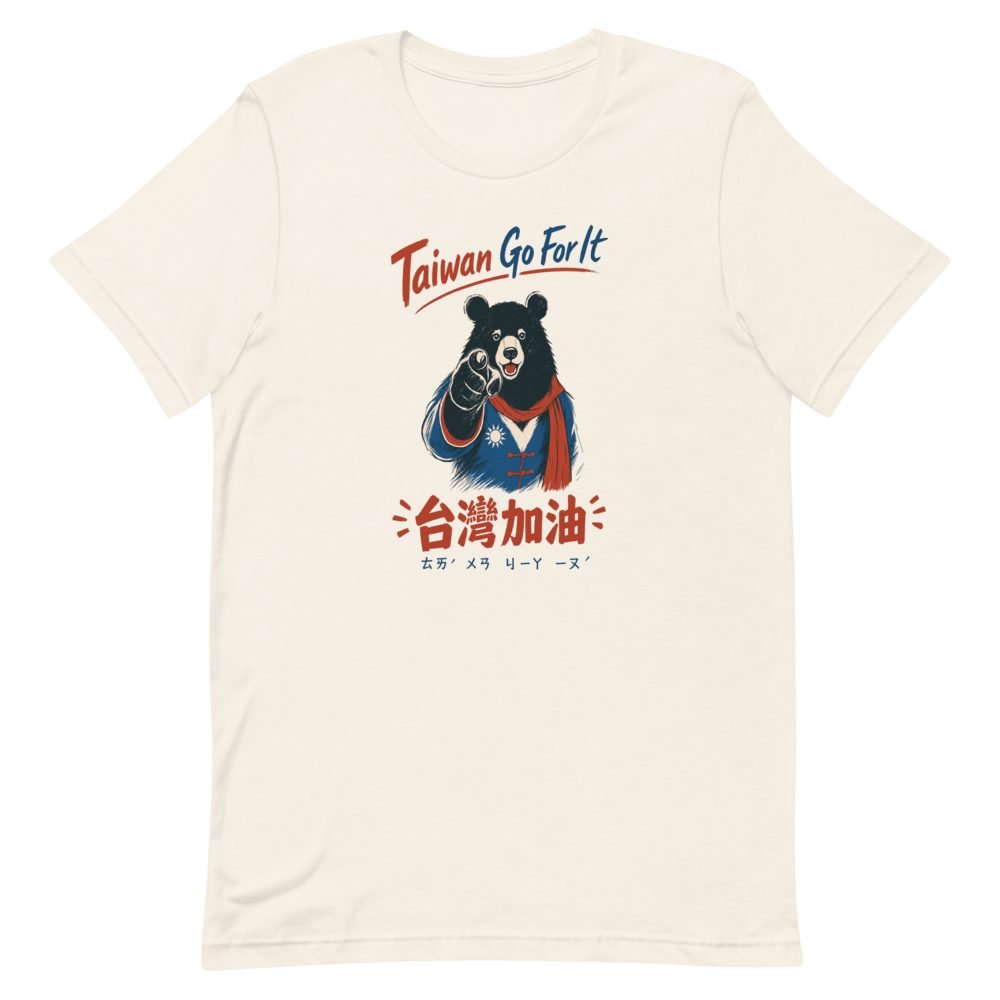
Wear Your Taiwan Pride — Jiayou Style
Ching-teng and the gang would have absolutely worn this. Our Taiwan Black Bear Jiayou tee channels the same underdog-energy the film celebrates — Taiwan cheering itself on, one 加油 at a time.
Frequently Asked Questions
Is You Are the Apple of My Eye based on a true story? Yes, semi-autobiographically. Director Giddens Ko wrote the source novel about his own decade-long unrequited high school crush. The male lead’s name, Ko Ching-teng, is Giddens Ko’s real birth name. The female lead is a fictionalized version of a real girl he pursued through school and university.
What does the Chinese title mean? The Mandarin title 那些年,我們一起追的女孩 translates literally as “Those Years, The Girl We Went After Together.” The English title borrows the older English idiom for “the person you cherish most” — which does not quite carry the collective, group-of-friends nuance the Chinese title captures.
How long is the movie? 110 minutes in the original theatrical cut. There is no significantly longer director’s cut for the original Taiwanese film, though the source novel is much longer.
Is there a sequel? No. Giddens Ko has repeatedly turned down sequel proposals. There are, however, four official remakes: a Japanese version (2018), a Thai version called My Precious (2023), and a South Korean remake (2024) starring Dahyun and Jung Jin-young that premiered at the Busan International Film Festival.
Is it appropriate for teenagers? The film is rated PG-13 equivalent in most markets. It contains one memorable shower/masturbation-joke sequence, mild language, and some Taiwanese teenage-boy locker-room humor, but no nudity or violence. It is generally considered a family-friendly rite-of-passage watch for Asian teenagers.
Where was it filmed? Almost entirely in Changhua County, Taiwan — mostly at and around Jingcheng Senior High School (精誠中學), the real high school director Giddens Ko attended. Some fans still make pilgrimages to the school, which has become a minor Taiwanese film-tourism site.
Who sings the theme song? The title track “Those Years” (那些年) is performed by Hu Xia (胡夏). It was nominated for Best Original Song at the 48th Golden Horse Awards and became a karaoke standard across Chinese-speaking Asia for years afterward. If you visit a Taiwan KTV in 2026, you will still see it in the top-100 rotation.
Final Thoughts: Why You Should Watch This Weekend
You Are the Apple of My Eye is one of those rare films that manages to be both intensely local and universally readable. It is a Taiwanese memory rendered so specifically that Taiwanese viewers cry the moment the opening scene starts, and rendered so honestly that a viewer with no connection to Taiwan can still feel the ache. That combination is rare. It is what made this film Taiwan’s most successful romantic export, and it is why fifteen years later the streaming rights are still being fought over.
If you are building a foundation in Taiwanese cinema, start here. Follow it with Our Times (2015), Café. Waiting. Love. (2014), Edward Yang’s Yi Yi (2000), and Hou Hsiao-hsien’s A City of Sadness (1989). That five-film starter kit will give you a working literacy in the last three decades of Taiwanese storytelling — from the coming-of-age romances that dominate the Taiwan Netflix category today all the way back to the New Wave masters who built the industry. And if you want to dive deeper into how Taiwan’s pop culture connects to its broader identity — the food, the schools, the diaspora, the language mix — our full Taiwan culture and merch collection is where a lot of that starts.
Grab the papaya milk. Dim the lights. Give it 110 minutes. Report back to us — we would love to know which scene finally landed for you.
Get the Taiwan Culture Postcard Weekly
Cultural bites, film picks, night-market finds, and new drops — straight from Taipei to your inbox. No spam, ever.
Grab a Free Taiwan Sticker!
Drop your email and we’ll send you a limited-edition Taiwan sticker — plus insider access to new merch drops and island vibes.
No spam. Unsubscribe anytime.