Why Taiwan’s Mango Snow Ice Isn’t Actually Shaved Ice (And Why That Tiny Difference Changed Asian Dessert Forever)
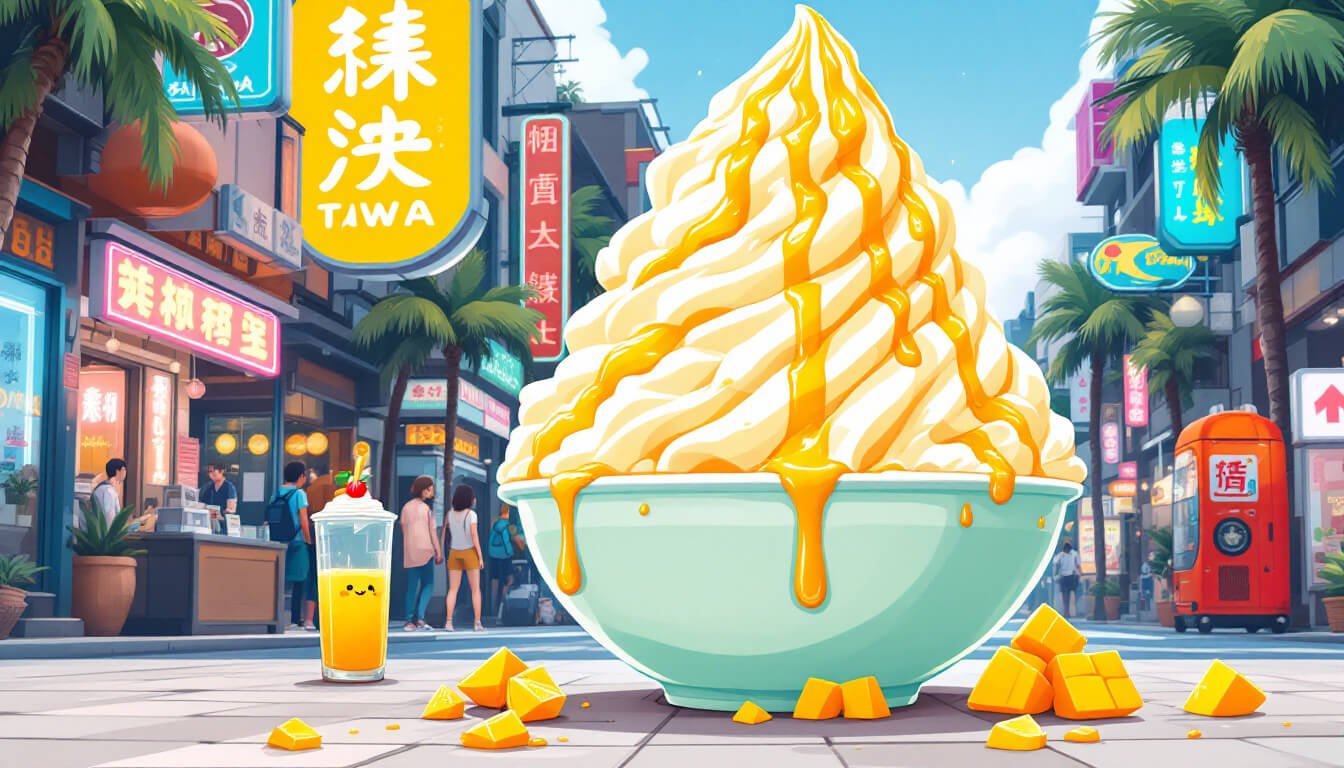
Did you know? The mango “shaved ice” plastered all over Taiwan’s tourism marketing — that fluffy mountain of pale-yellow ribbons that dissolves the second it hits your tongue — isn’t actually shaved ice. Not by any traditional definition.
In Taiwanese it’s called xuě huā bīng (雪花冰) — literally “snowflake ice” — and it’s a completely separate invention that quietly rewired Asian dessert culture in the 1990s.
The Frozen-Milk Trick That Changed Everything
Old-school shaved ice (the kind you’ve eaten at Mexican raspados stands or Japanese kakigōri shops) starts with a block of pure water ice that gets dragged across a blade. The result is crunchy. Slightly icy. Melts in seconds and pools at the bottom of the bowl.
Taiwanese snow ice is made by freezing flavored milk into a block first. That block — pre-sweetened with condensed milk, often infused with mango purée, taro, peanut, or matcha — then gets fed into a machine that shaves it into impossibly thin ribbons. Because milk fat and dissolved sugar lower the freezing point, those ribbons come out not crunchy but soft. Almost creamy. They literally taste like flavored snow.
The first stall to commercialize it was Yongkang Street’s Ice Monster (永康冰館) in 1995, and Taipei’s mango snow ice scene grew from there. By the 2000s the format had spread to mainland China, Singapore, and Los Angeles. Korea’s now-famous bingsoo? It’s directly descended from Taiwanese xuě huā bīng, with the milk-block technique adopted whole. Even Japan’s modern “shirayuki” desserts borrow the texture.
Why Late June Is the Window
The peak of the experience is happening right now. Aiwen mangoes from Tainan’s Yujing district hit their sweetness peak between mid-June and early August — the same six-week window we wrote about in our Aiwen mango deep-dive — and that’s when every dessert café in Taiwan piles cubed Aiwen on top of mango-flavored xuě huā bīng, drizzles condensed milk, scoops a quenelle of mango sorbet on top, and charges NT$200–300 for what’s genuinely one of the most photogenic desserts on earth.
Where to Try It
- Yongkang Street, Taipei — Smoothie House (思慕昔), the Ice Monster successor, is still the most famous, with a perpetual queue.
- Tainan old town — stalls have been making xuě huā bīng since before it was Instagram-famous, and prices are roughly half of Taipei’s.
- Yujing District, Tainan — the mango motherland, where cafés source fruit picked that morning.
The takeaway: If you’re in Taiwan in June or July, this dessert is the closest thing to an edible national monument. Order it once and you’ll understand why hot summer afternoons here run on a frozen-milk loophole that pretends to be shaved ice.
Want a deeper dive into Taiwan’s whole edible repertoire? Our Taiwan Street Food guide covers the full lineup, from xiao long bao to stinky tofu. And if you want to wear your Taiwan obsession on your sleeve, the Taiwan Merch shop has a Boba Cat tee that’s about as kawaii as a dessert this fluffy.

Grab a Free Taiwan Sticker!
Drop your email and we’ll send you a limited-edition Taiwan sticker — plus insider access to new merch drops and island vibes.
No spam. Unsubscribe anytime.