Taiwan Kinmen Island: The Front-Line Island Where Cold War Cannon Shells Became Kitchen Knives
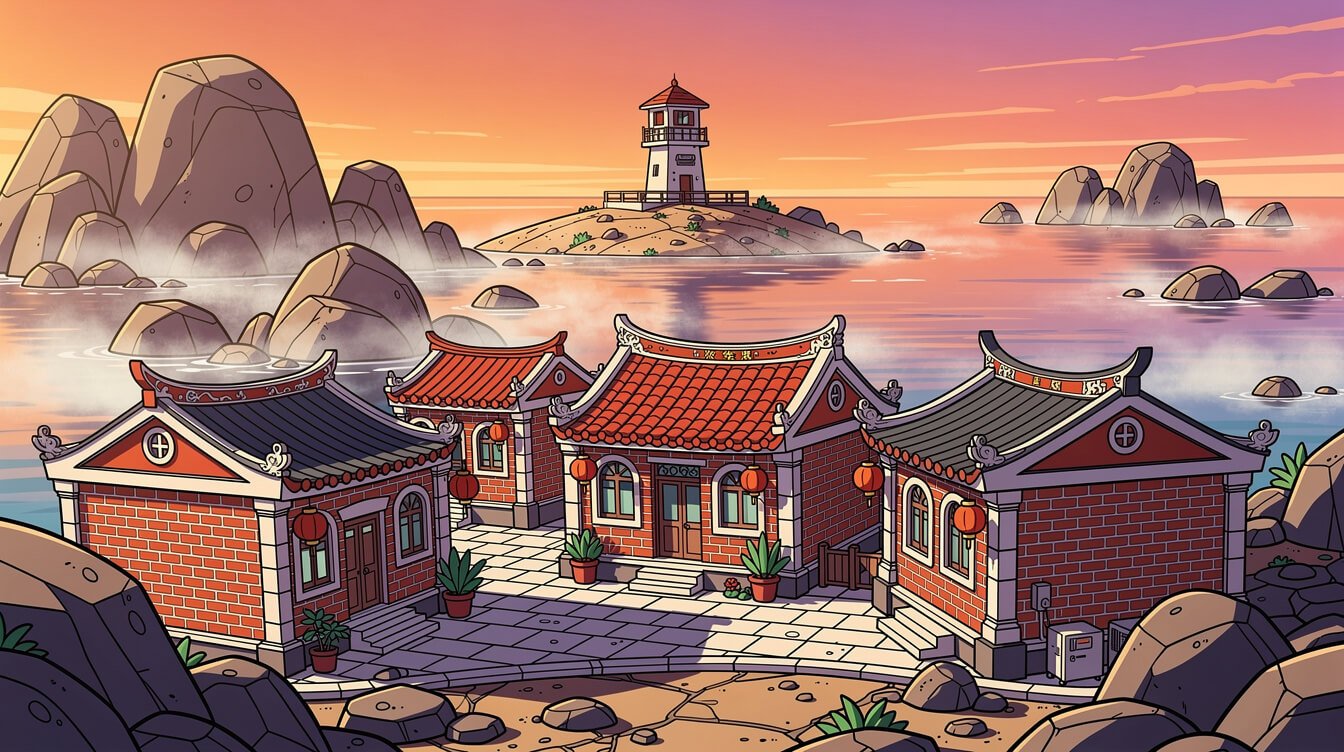
Kinmen is the strangest island in the Taiwanese archipelago — and we mean that as a compliment. It sits just 3 kilometers from mainland China, more than 200 kilometers from Taiwan’s main island, and you can see Xiamen’s skyscrapers from the beach without squinting. For four decades it was the most bombarded piece of real estate in the Cold War. Today it’s a sleepy island of red-brick swallowtail roofs, kaoliang distilleries, and knife makers who forge kitchen cleavers out of the artillery shells that once landed in their grandparents’ rice paddies.
If Taiwan is a beautiful, well-trodden travel destination, Taiwan Kinmen Island is its weird, wonderful uncle. The crowds skip it. The guidebooks reduce it to a footnote. And that, dear reader, is exactly why you should go — and why we wrote the most complete guide to Kinmen on the internet. We’re going to cover the history (so much history), the food (sand-baked clams will change your life), the kaoliang liquor that locals drink like water, where to ride a scooter, where to sleep, and what to bring home. Pour yourself a tiny cup of something amber and let’s dig in.
Where Taiwan Kinmen Island Actually Is (And Why Taiwan Still Owns It)
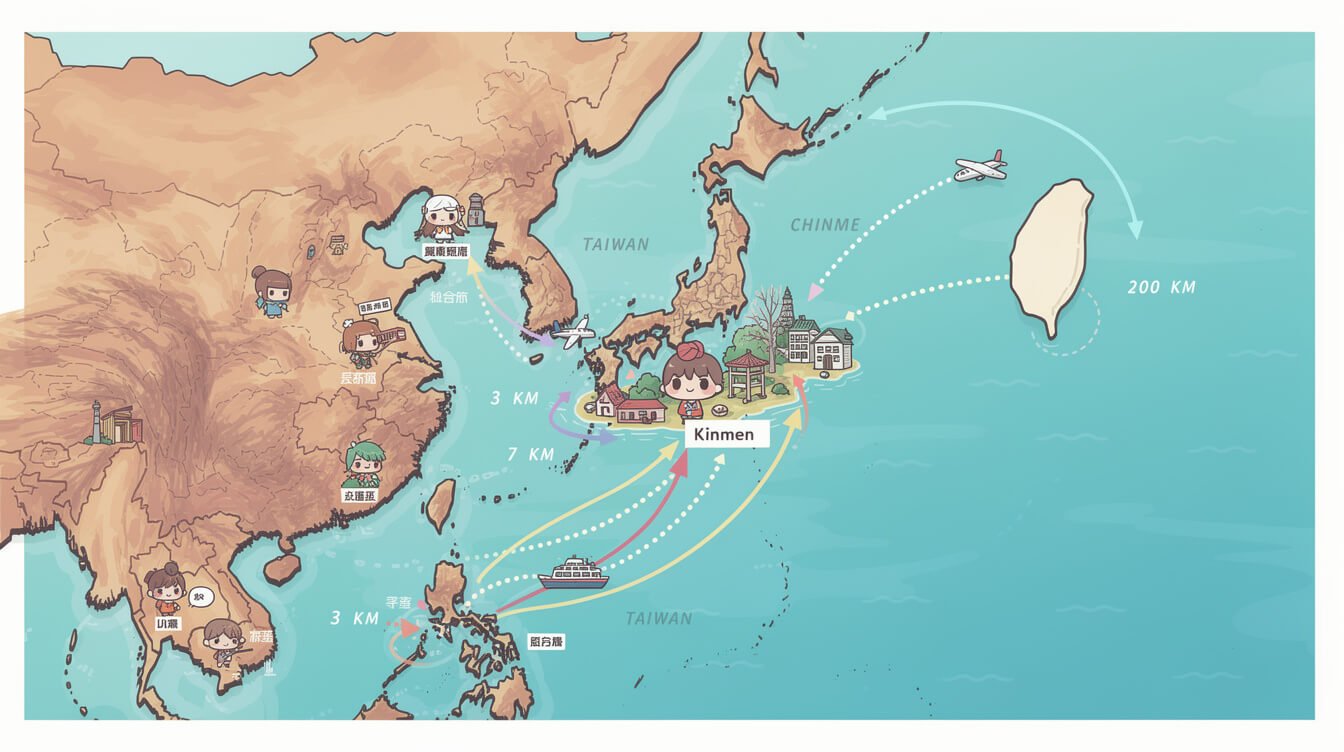
Pull up a map of Taiwan and your eyes go to the big sweet-potato-shaped main island in the middle of the strait. Kinmen is not there. To find it, you have to scroll west — past the entire Taiwan Strait — until you almost hit the coast of Fujian Province in mainland China. That’s where Kinmen lives. It’s so close to Xiamen that on a clear day you can see ferries crossing the bay between them in under ten minutes.
So how is Kinmen part of Taiwan? Blame (or thank) the Chinese Civil War. When the Nationalist Republic of China army retreated from the mainland in 1949, they held onto a handful of offshore islands as defensive perches. Kinmen and the Matsu Islands were the two biggest. The Communist forces tried to take Kinmen in October 1949 in the Battle of Guningtou and got their faces handed to them — over 9,000 PLA soldiers were killed, captured, or drowned in a brutal three-day battle on the beach. Kinmen stayed Taiwanese. It has stayed Taiwanese ever since.
Kinmen County actually includes two populated islands — the main island, called Kinmen (or sometimes Big Kinmen), and Little Kinmen (Lieyu Township) a short ten-minute ferry hop to the west. There are also several uninhabited rocks and the famously sensitive Dadan and Erdan islets, which sit so close to mainland China that they were once used as broadcast platforms blasting anti-communist propaganda. For a deeper dive into how all these scattered bits fit together, our complete Taiwan map guide covers every region, outlying island, and hidden corner of the country.
The Battle of Guningtou and the Cannons That Shaped a Generation
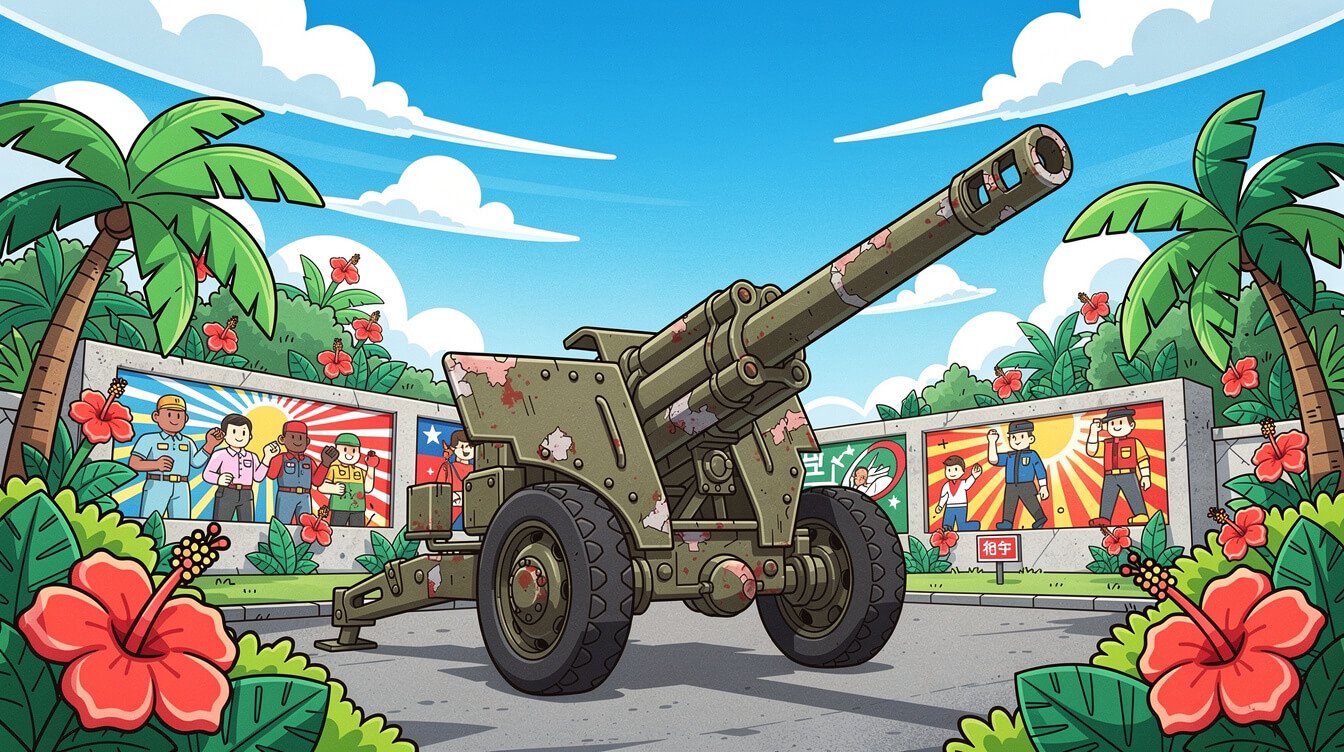
If you visit Kinmen and skip the military history, you’re doing it wrong. The island wears its Cold War scars like a badge of honor, and the older locals will happily tell you stories that sound like they were ripped from a Cold War thriller. The two biggest events you need to know about: the Battle of Guningtou (1949) and the 823 Artillery Bombardment (1958).
The Battle of Guningtou happened on October 25, 1949, when roughly 20,000 PLA soldiers attempted to storm Kinmen’s northwest beach in a flotilla of fishing boats. The plan was to seize the island and then push on to Taiwan. The plan did not go well. The Nationalist defenders were dug in, the tide stranded the PLA’s wooden boats on the beach at sunrise, and three days of fighting ended with the PLA force annihilated. You can visit the Guningtou Battle Museum right on the actual battlefield — it’s blunt, moving, and full of artifacts that make the abstraction of Cold War history feel viscerally close.
Then came the 823 Artillery Bombardment, which kicked off on August 23, 1958. Over the next 44 days, the PLA fired roughly 470,000 artillery shells onto Kinmen — a population of about 50,000 people. To put that in perspective, that’s almost ten shells for every person on the island. The bombardment continued at a reduced “even days only” tempo until 1979 — China would shell Kinmen on August 23 and 25 and 27, and Kinmen would shell back on the even days. By the end, Kinmen had absorbed something like one million shells. The unexploded ones still get pulled out of fields by farmers from time to time.
This is why every village in Kinmen has bomb shelters wedged between the houses. It’s why the island is laced with tunnels. And it’s why every kitchen in Kinmen has at least one famously durable knife made from the casings of those shells. We’ll get to the knives.
Touring Kinmen’s Cold War Tunnels and Military Sites

The tunnels are the headline attraction. Kinmen has miles and miles of military tunnels carved through solid granite, originally built to hide everything from supply boats to artillery to thousands of soldiers. Many of them are now open to the public, and walking through them is genuinely one of the most surreal travel experiences in all of Taiwan.
Zhaishan Tunnel is the must-see. It’s an A-shaped tunnel cut through bedrock at the south of the main island, designed to shelter naval landing craft during artillery attacks. Today the tunnel is full of seawater again and you can walk along a stone path that follows the channel — granite walls towering above you, your footsteps echoing for what feels like minutes. The acoustics are so dramatic that every September the island hosts the Kinmen Cong Music Festival inside the tunnel, with musicians playing chamber music to crowds seated on stone ledges. If your travel dates line up, go.
Mashan Observation Station sits at the northernmost tip of Kinmen, the closest point to mainland China. Through the periscope-style viewing windows you can see Chinese fishing boats and the buildings of Jiaoyu, the closest mainland village, just 2 kilometers across the water. The station also houses one of the giant propaganda loudspeakers that used to blast anti-communist messages and Teresa Teng love songs at China for decades. (Yes, soft power deployed Teresa Teng’s voice. The PLA reportedly didn’t mind it.)
Other military stops worth your time: the Beishan Broadcast Wall, an enormous concrete megaphone array still standing on the north coast; Sihwei Tunnel, dug entirely by hand and used to move troops in secret; and August 23 Artillery Battle Museum, where the 1958 bombardment is documented shell by shell. If military history is your thing, you could spend two full days in Kinmen just visiting fortifications.
Why Kaoliang Liquor Is Taiwan Kinmen Island’s Most Famous Export

If you’ve spent any time around Taiwanese drinking culture, you already know kaoliang — the fierce, clear, sorghum-based spirit that Taiwanese friends will pour into small ceramic cups and toast you with at every wedding, birthday, and Lunar New Year dinner. What you might not know is that almost all of Taiwan’s kaoliang is distilled on one island: Kinmen.
The story is wonderful, and totally accidental. When the Nationalists set up their forward defense on Kinmen in the 1950s, they had a soldier-to-civilian ratio that occasionally hit 1:1. The garrison’s commander, General Hu Lien, decided the locals needed a cash crop they could grow on Kinmen’s poor sandy soil, and the soldiers needed something to drink that wasn’t smuggled in from China. The answer: sorghum, which thrives in dry conditions. The state-owned Kinmen Kaoliang Liquor Inc. (KKL) was founded in 1952, and the distillery has been pumping out 58% alcohol liquor ever since.
Today KKL is one of Taiwan’s most successful state-owned enterprises. It pays for a meaningful chunk of Kinmen’s public services and produces a spirit that ranges from a smooth daily 38% sipper to the eye-watering 58% “white label” that locals swear has medicinal properties. The taste is sharper than vodka and more aromatic than soju — sorghum has a distinctive grassy, slightly sweet undertone that gets layered with notes of pear, leather, and (depending on aging) caramel.
The KKL distillery at Jincheng offers tours and tastings. You can walk past wood-fired stills, taste-test from across the lineup, and pick up commemorative bottles for absurdly low prices (compared to Taipei). Just pace yourself. A tasting flight of Kinmen kaoliang is not a flight of pinot noir. If you want to dive deeper into Taiwan’s spirits scene more broadly, our guide to Kavalan whisky covers the island’s other globally celebrated liquor.
What to Eat on Kinmen: Sand-Baked Clams, Beef Noodles, and Salt-Fried Oysters
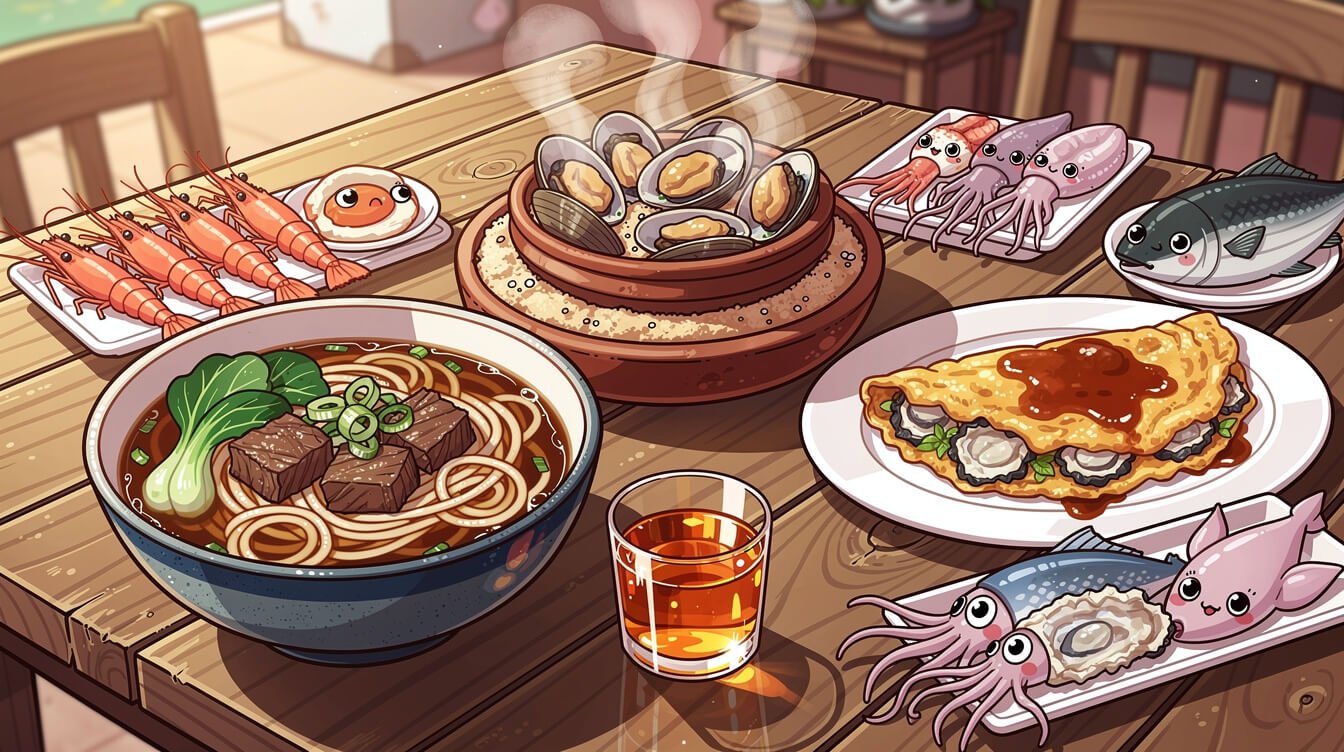
Kinmen’s food is its own thing — Fujianese-rooted, military-rationing-influenced, and built around a handful of hyper-local specialties that you genuinely cannot eat anywhere else in Taiwan. Plan your meals before you even book the flight.
Sand-baked clams (沙茶蚵) are the islanders’ most distinctive dish. Fresh clams are buried under hot sand on the beach (or in a metal vessel filled with sand on a stove) and cooked from all sides at once. The shells pop open, the meat steams in its own juices, and you get something briny, smoky, and absurdly tender. The best place to eat them is right on the beach at Liaoluo in the south of the main island, where small family restaurants serve them with cold Kinmen beer and a side of pickled vegetables.
Then there’s Kinmen beef noodle soup (金門牛肉麵). The beef on Kinmen comes from a small herd of cattle that have been on the island since the Cold War (when the military brought them in to supplement the food supply). The cows graze on grass laced with sorghum mash from the kaoliang distillery, which gives the meat a flavor that Taiwanese food writers seriously argue tastes different from any other beef on the island. The broth is clear, the noodles are thick and chewy, and the meat is fork-tender. Yong Chun in Jincheng township is the most famous spot.
Other must-try Kinmen specialties: oyster omelet (蚵仔煎) made with the absurdly plump oysters farmed off the island’s tidal flats; guang bing (廣餅), a thick savory pancake stuffed with pork and vegetables that’s basically Kinmen’s answer to a burrito; salt-fried peanuts (often coated in sugar or wasabi) sold at every roadside stall; and vermicelli soup with crab, which uses local swimming crabs from the strait. For more on Taiwan’s broader food culture, our guide to Taiwan’s traditional food covers everything from beef noodle soup to night-market street eats.
How to Get to Taiwan Kinmen Island and What to Do in Three Days
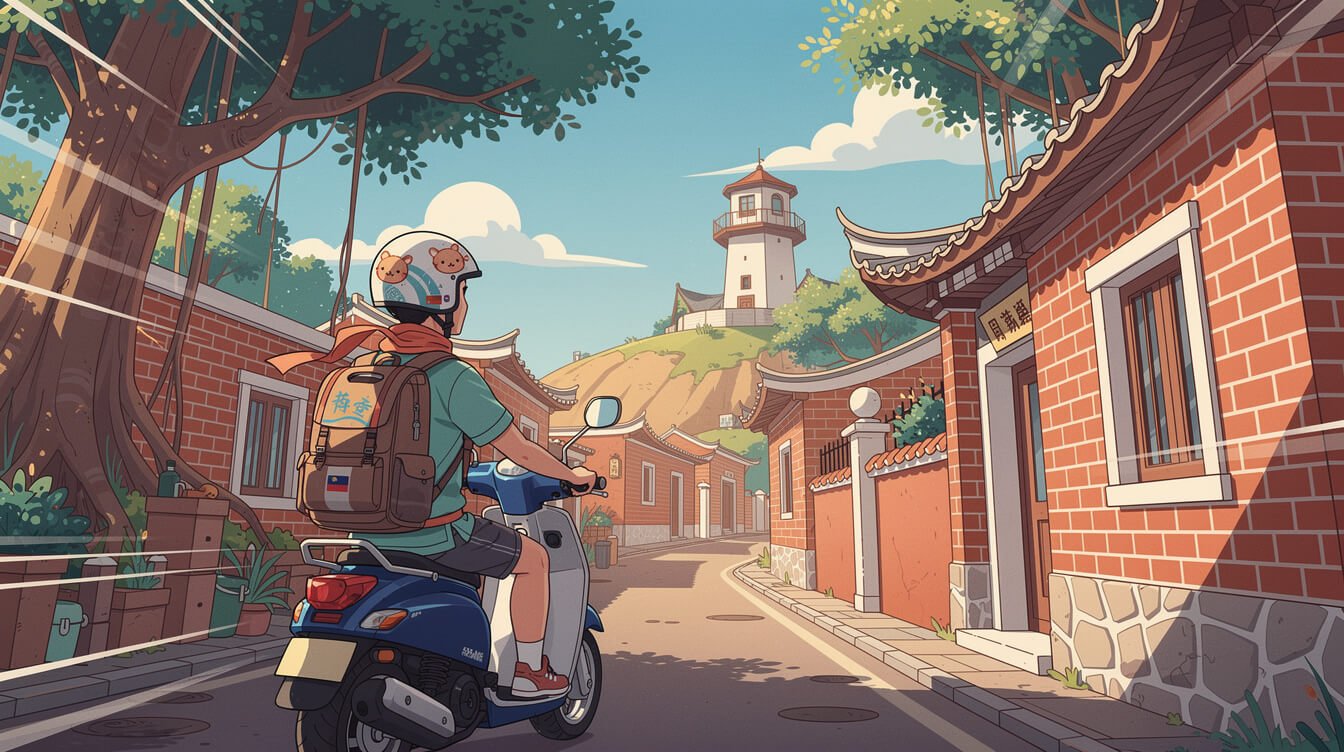
Getting to Kinmen is easy. Domestic flights from Taipei (Songshan), Taichung, Chiayi, Tainan, and Kaohsiung land at Kinmen Airport multiple times a day. Round-trip airfare runs NT$3,500–5,500 (about $110–170 USD) depending on the season. Flights from Taipei take about an hour. There are also ferries from Xiamen across the bay, but those require both Taiwan and China entry clearance and aren’t usually the right move for most tourists. Just fly.
Once you land, the smartest play is to rent a scooter — Kinmen is small (only 152 km² on the main island), the roads are excellent, and the gas prices are state-subsidized. Most rentals run NT$400–600 per day, including a helmet. You’ll want an International Driving Permit. If scooters scare you, electric bikes and rental cars are also widely available.
A solid three-day Kinmen itinerary looks like this:
Day 1 — History deep-dive. Fly in by mid-morning. Head to the Guningtou Battle Museum, then drive south to the Zhaishan Tunnel for the afternoon. Eat dinner in Jincheng township and walk around Mofan Street, a beautifully preserved Qing-dynasty pedestrian street lined with food stalls and tea shops.
Day 2 — Villages and kaoliang. Spend the morning in Shanhou Folk Culture Village, a stunning preserved hamlet of 18 swallowtail-roof Fujian houses dating to the 1900s. Lunch at Yong Chun for beef noodles. Afternoon: KKL distillery tour and tasting. Sunset at Cihu Lake, watching egrets settle in for the night.
Day 3 — Little Kinmen. Take the morning ferry to Little Kinmen (Lieyu). Rent a bike or scooter on arrival. Tour the Bada Tunnel, the propaganda loudspeakers at Lieyu Beach, and have sand-baked clams for lunch right at the water’s edge. Ferry back to the main island, fly home in the evening.
If you want to extend, easily turn it into five days by adding more military sites, the southwest sand beaches, and a day of just slowly riding the village lanes. Our complete Taiwan travel itinerary guide covers how to slot Kinmen into longer 7-, 10-, and 14-day trips.
Kinmen Souvenirs: Maestro Wu Cannon-Shell Knives, Kaoliang, and More
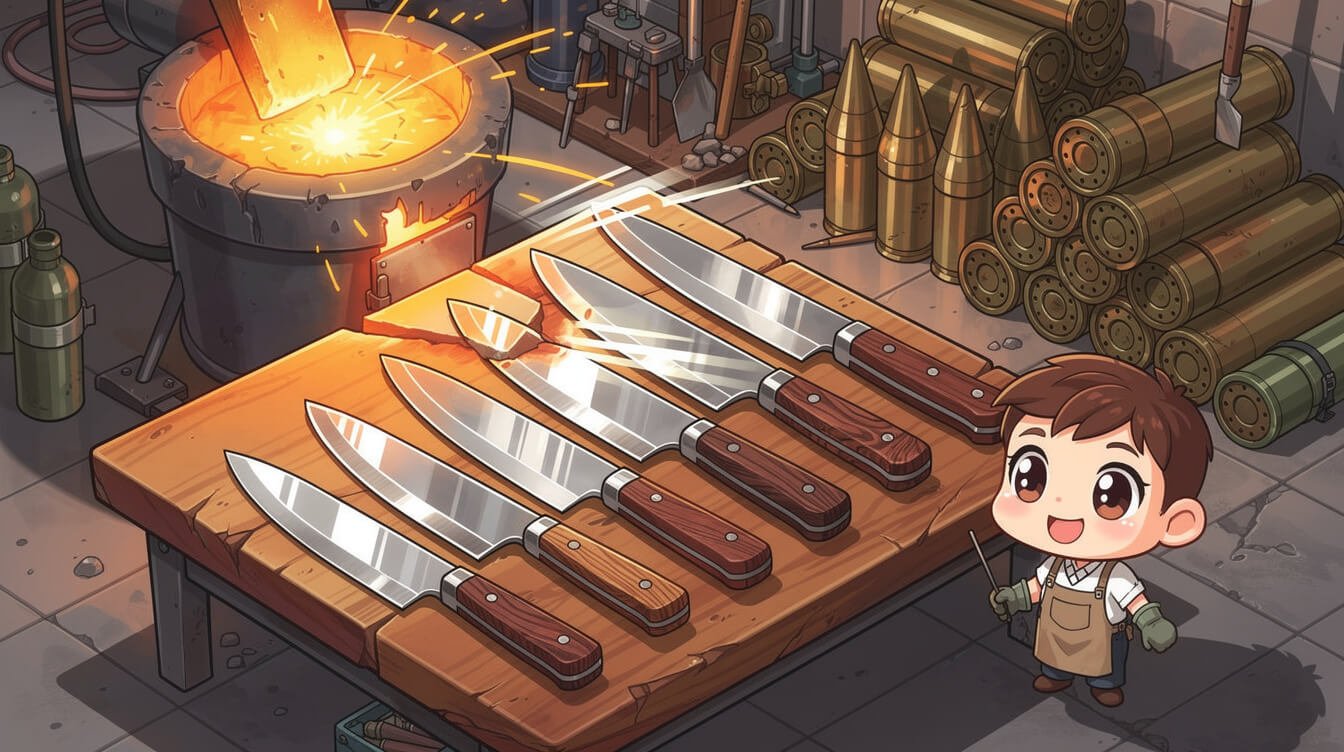
This is the most Kinmen-y thing in the world: locally made kitchen knives forged from the steel of actual artillery shells dropped on the island during the 1958 bombardment. The shop is called Maestro Wu (金合利鋼刀), and the family has been making knives since 1937. After 1958 they realized they had a near-infinite supply of high-quality steel scattered in their fields, and the rest is culinary history.
The knives are beautiful — sharp, balanced, and engraved with the date and number of the shell they were forged from. Cleavers, chef’s knives, paring knives, the whole lineup. They run from NT$1,500 for a small paring knife to NT$5,000+ for a hand-forged chef’s knife. You can watch the smiths working through a viewing window at the Jincheng workshop. They’re heavy, durable, and they hold a remarkable edge. If you can’t take one home in your luggage, you’ll have to ship — but they’re the most one-of-a-kind souvenir on the entire island.
Other great Kinmen souvenirs worth your suitcase real estate: kaoliang in cute commemorative bottles (you can find adorable mini-bottles for under NT$200); kaoliang vinegar for cooking; kong tang (貢糖), a flaky peanut candy that’s lighter than the Taipei version; and Kinmen-style guang bing pancakes in dry-stored gift packs. For Taiwan-themed apparel and cultural merch you can bring home from anywhere on the island (or order from your couch in another country), browse the Taiwan Merch shop — our tees, hats, and accessories celebrate Taiwan’s culture, food, and outlying islands like Kinmen with the same playful spirit you’ll find on the streets of Jincheng.

Wear Your Love for Taiwan
From Kinmen kaoliang to Taipei night markets — celebrate the island you love with our curated collection of Taiwan-themed apparel, accessories, and home goods. Designed by Taiwan fans, for Taiwan fans.
Frequently Asked Questions About Taiwan Kinmen Island
Is Kinmen safe to visit? Completely. There hasn’t been live shelling since 1979, and Kinmen is one of the most peaceful, low-crime places in all of Taiwan. The biggest risks are getting too friendly with the kaoliang and falling off a scooter.
Can I see mainland China from Kinmen? Yes — and clearly. From Mashan Observation Station on the north coast you can see Xiamen’s high-rises with the naked eye. They’re roughly 2-10 kilometers away depending on which point of Kinmen you’re standing on. On a clear evening you can watch the lights come on across the bay.
How long do I need on Kinmen? Three days minimum if you want to see the headlines (Guningtou, Zhaishan, KKL distillery, Shanhou village, Little Kinmen). Five days lets you slow down, ride the village lanes, and actually taste the food at the right places. We don’t recommend a day trip — you’d miss everything.
What’s the best time of year to visit? October through April is comfortable, dry, and cool. May through September is hot and humid, with a real risk of typhoons in late summer. For typhoon-season planning, our Taiwan typhoon season guide covers what to expect. The annual Cong Music Festival in September is worth braving the heat for.
Do I need a passport or visa? A passport, yes — Kinmen is part of Taiwan, so the same entry rules apply. Most passport holders (US, EU, UK, Australia, Japan, etc.) can enter Taiwan visa-free for 90 days. If you’re already on Taiwan’s main island, your domestic flight to Kinmen needs only your passport.
Can I bring kaoliang home? Yes — within your country’s duty-free alcohol limits. Most international flights allow 1–2 liters of spirits in checked luggage. Pack the bottles well, ideally wrapped in clothing in the middle of your suitcase. Kinmen Airport sells kaoliang at very reasonable prices in the duty-free shop.
Is English widely spoken? Less than on Taiwan’s main island. Hotel staff and younger restaurant servers usually have functional English. Older locals speak mostly Taiwanese Hokkien or Mandarin. Google Translate on your phone covers the rest.
Final Thoughts: Why Taiwan Kinmen Island Deserves a Spot on Your Trip
Most travelers to Taiwan never make it to Kinmen. They land in Taipei, eat their way through the night markets, ride the high-speed rail south, maybe make it to Sun Moon Lake or Penghu, and head home thinking they’ve seen Taiwan. They’ve seen a beautiful slice of it. They’ve completely missed the other Taiwan — the island that sat in artillery range of the world’s biggest army for 40 years, made friends with sorghum, and turned cannon shells into the best kitchen knives on the planet.
Kinmen rewards travelers who are willing to slow down. It’s not a place you check off — it’s a place you absorb. You drink kaoliang with a local in Jincheng. You walk through a tunnel where boats once hid from artillery. You eat clams that were cooked under sand on a beach where Taiwanese and Chinese forces traded fire for decades. You buy a knife forged from a 1958 propaganda shell. And then you go home and tell everyone you know about the strangest, warmest, most fascinating island in Taiwan.
Hopefully this guide helps you get there. And if you fall as hard for the island as we did, swing by the Taiwan Merch shop and find something to wear that celebrates the wonderful weirdness of this whole archipelago. We promise we’ll never make a kaoliang-flavored tee, but we will make sure your Taiwan obsession has somewhere to live in your closet.
Get Taiwan in Your Inbox
Weekly stories about Taiwan’s culture, food, hidden corners, and the artisans behind our merch. No spam, just good island energy.

Grab a Free Taiwan Sticker!
Drop your email and we’ll send you a limited-edition Taiwan sticker — plus insider access to new merch drops and island vibes.
No spam. Unsubscribe anytime.