Green Island (Lyudao): Why Taiwan’s Snorkeling Paradise Was Once Its Most Notorious Political Prison
Stand on the southern edge of Taiwan’s Green Island at sunrise, look out across the Pacific, and you can see two stories layered onto the same volcanic shoreline. The first is the one every guidebook tells you: Lyudao — Taiwan’s snorkeling capital, home to one of only three saltwater hot springs in the world, a 17-kilometer coastal road that makes for the dreamiest scooter loop in East Asia. The second is the one most travel articles quietly skip: this 16-square-kilometer rock once held more than 20,000 of Taiwan’s political prisoners under martial law, and the cellblocks where Bo Yang and Shih Ming-teh slept are still standing about a five-minute walk from the dive shops.
That juxtaposition — turquoise water lapping at the foundations of what was, for forty years, Taiwan’s gulag — is what makes Green Island unlike anywhere else in the country. This guide takes both histories seriously. We’ll walk through the White Terror prison story, visit the Human Rights Memorial Park where a wall of names commemorates every dissident sent here, and then we’ll soak in Zhaori at sunrise, snorkel the brain coral at Shihlang, and circle the island on a rented scooter the way every Taiwanese twenty-something does on their first bidao trip. You’ll leave knowing exactly when to come, what ferry to catch from Taitung, and why visiting Green Island is one of the most quietly meaningful things you can do in Taiwan.
The Island With Two Histories
Geographically, Green Island is a tiny volcanic outcrop — about 16 square kilometers in total, sitting roughly 33 kilometers off the southeastern coast of Taiwan, due east of Taitung City. The Indigenous Tao people of nearby Orchid Island knew it as Sanasai, the Han fishermen who began visiting in the Qing era called it Huoshao Dao (Fire-Burned Island, after the flames of a brush-clearing fire visible from the mainland), and the modern Mandarin name Lyudao (綠島, literally “Green Island”) only stuck after 1949. The Tao connection matters: Green Island shows up in their oral histories as a stopover on the migration south to Orchid Island, and if you want the wider context for those journeys, our guide to the 16 Indigenous peoples of Taiwan sketches it out in full.
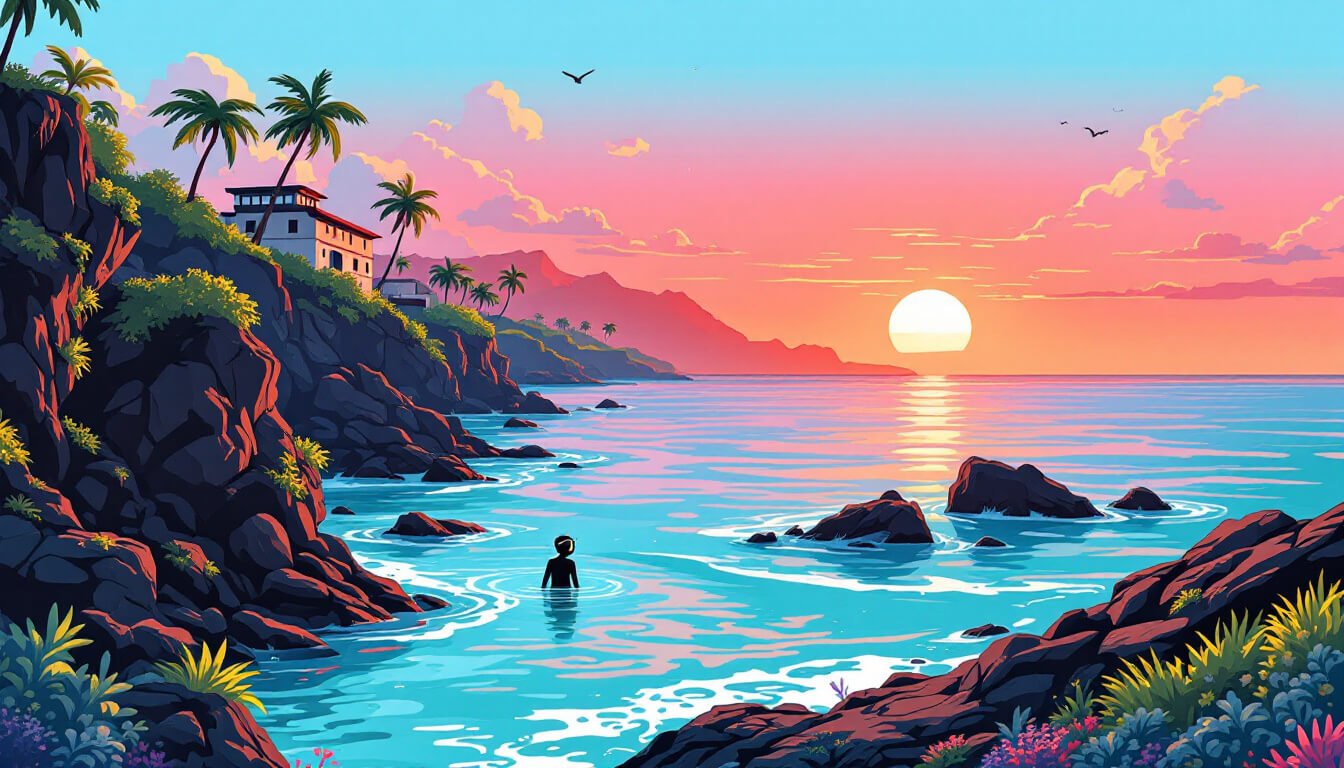
Today, Green Island is almost entirely defined by tourism. About 3,000 people live here year-round, mostly in three small fishing-village clusters — Nanliao (where the ferry docks), Gongguan, and Wenquan. Between April and October, the population can quadruple on summer weekends. Walk into Nanliao at 7 a.m. and the streets are full of twenty-somethings in board shorts pushing rental scooters out of homestay garages, all heading the same direction: clockwise around the coastal ring road. By 2 p.m. the snorkel guides are leading groups out to Chaikou, and by sunset everyone is at Zhaori watching the dolphins surface beyond the hot-spring pools.
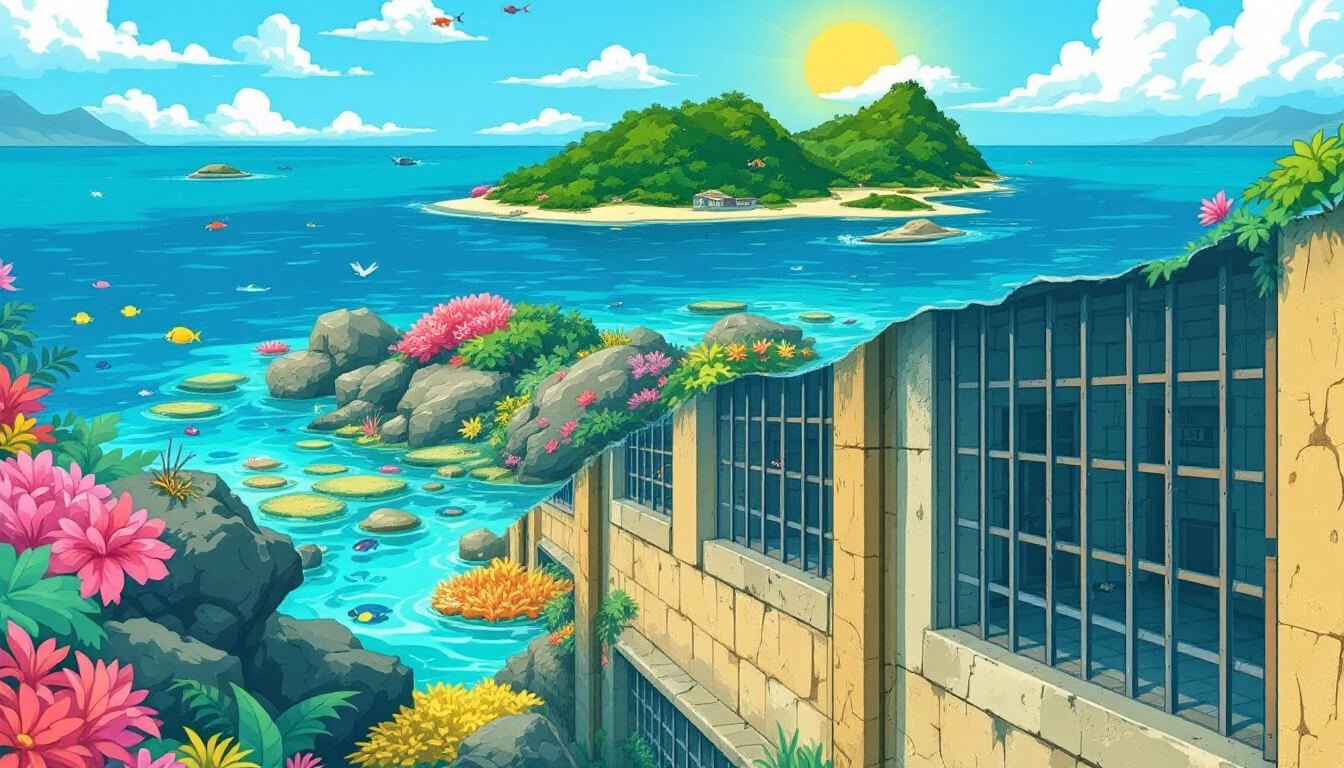
What almost no first-time visitor realizes — and what no guidebook properly explains — is that the road they’re scootering on passes the front gate of what was, until 1987, one of the most notorious political prisons in Cold War Asia. The cellblocks are still there. The watchtowers still stand. Some buildings have been turned into a memorial museum, others were left exactly as they were. You can be paddling above a coral reef at 11 a.m. and standing inside a martial-law-era cell by 11:45. That collision of paradise and political memory is what makes this island feel so different from Penghu or the other outlying islands. It’s beautiful and it’s heavy. Both things are true at the same time.
The White Terror Years: When Green Island Was Taiwan’s Gulag
To understand why Green Island matters, you have to understand the White Terror. After the Chinese Civil War ended in 1949 and the Kuomintang (KMT) government retreated to Taiwan, Chiang Kai-shek imposed martial law on the entire island — a state of emergency that would last 38 years, the longest in modern history at the time. Under martial law, sedition was defined so broadly that owning a Russian-language dictionary, attending a poetry reading, or writing a letter critical of the government could land you a 10-to-15-year sentence. The historical arc behind this period, from the 2-28 Incident to the end of martial law, is the spine of our longer history of Taiwan guide.
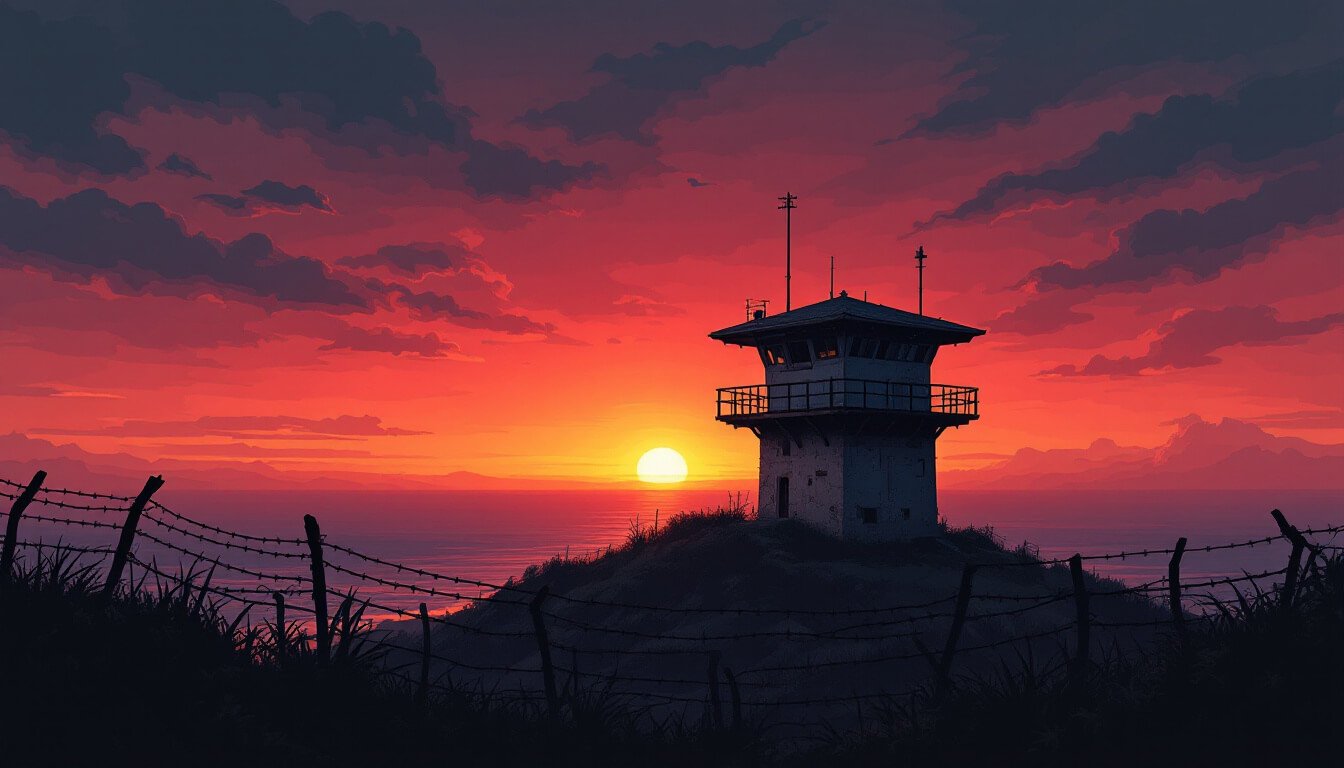
Estimates vary, but most historians agree that between 140,000 and 200,000 Taiwanese were arrested for political crimes during the White Terror, and roughly 3,000 to 4,000 were executed. Tens of thousands more were imprisoned, and that’s where Green Island comes in. The KMT needed somewhere remote and difficult to escape from, and a tiny volcanic rock 33 kilometers offshore with strong currents and unforgiving cliffs was perfect. Beginning in 1951, a series of prison camps was built on the western and southern coasts: the Xinsheng Training Center (新生訓導處, “New Life Correction Center”), the Oasis Villa (綠洲山莊), and several smaller blocks.
Over the next four decades, more than 20,000 political prisoners passed through these facilities. The roster reads like a who’s who of mid-century Taiwanese intellectual life. Bo Yang — the satirist whose translations of Popeye comics were judged seditious — served 9 years here. Shih Ming-teh, who later led the Democratic Progressive Party and would become Taiwan’s longest-serving political prisoner, spent more than a decade behind these walls. The writer Lee Ao, the human rights lawyer Peng Ming-min, the journalist Lei Chen — almost every famous dissident of the era did time on Green Island. Prisoners worked in the coral quarries, built the very roads tourists now scooter, and slept in concrete cellblocks where typhoon winds could be heard rattling the corrugated roofs at night.
Martial law was lifted in 1987, the last prisoners released by the early 1990s, and most facilities formally closed by 2002. But unlike many former gulags around the world, the buildings here were not torn down or hidden. The Taiwanese government, recognizing what had happened, preserved them. Today, walking the same paths the prisoners walked is one of the most powerful things you can do on this island — and it’s only 200 meters from the snorkel-rental shop.
The Human Rights Memorial Park: Where Taiwan Confronts Its Own Past
The Green Island Human Rights Memorial Park (綠島人權紀念公園), formally opened in 2002 and expanded several times since, is one of the most important political memorial sites in East Asia — and one of the least-visited by foreign tourists, mostly because no one tells them it’s there. It sits on the northern coast, about a 4-minute scooter ride from the Nanliao ferry pier, with an entrance fee of NT$0 (it’s free) and opening hours from 8:30 a.m. to 5 p.m. daily. Plan on 90 minutes minimum, longer if you read the bilingual exhibits.
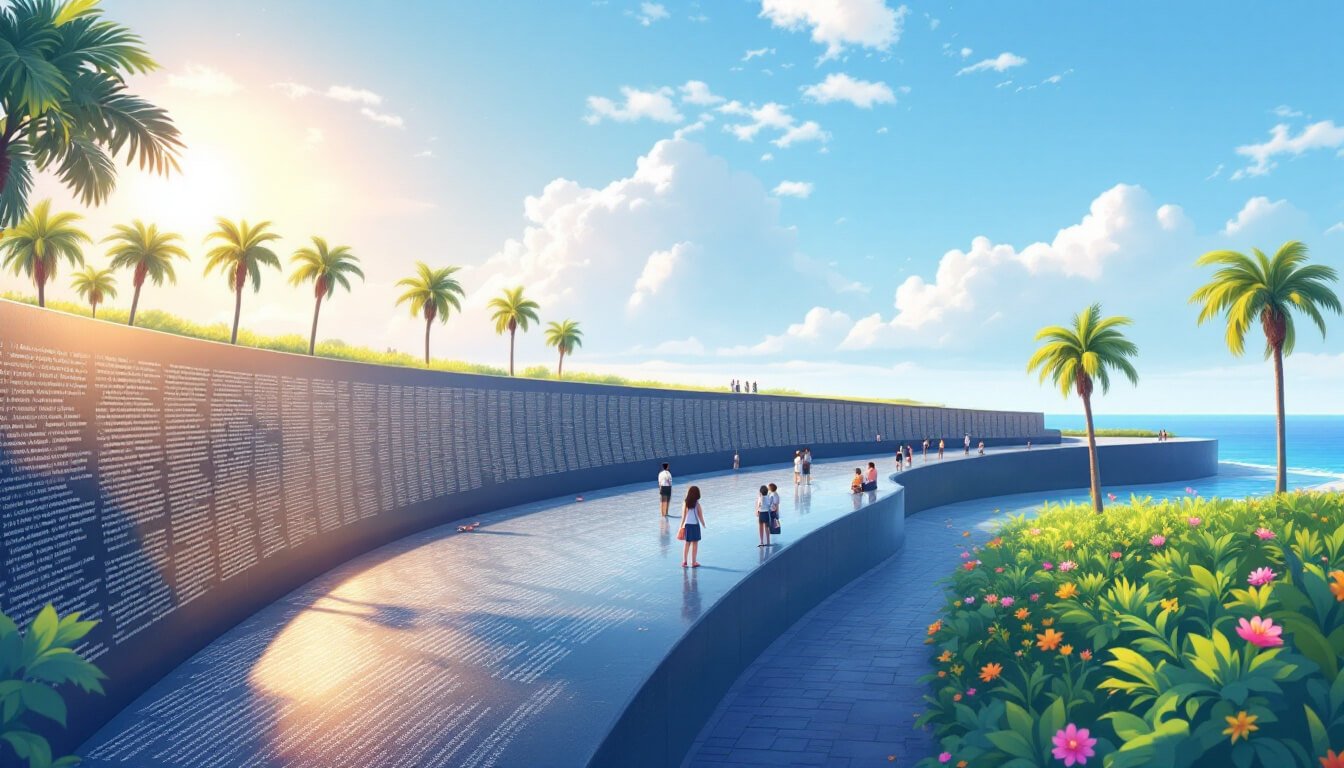
The park has three core areas. The first is the Wall of Names — a long curved black granite memorial inscribed with the names of every political prisoner sent to Green Island whose identity could be officially confirmed. It runs to thousands of names, and as you walk along it the scale becomes overwhelming in a way that no statistic can quite convey. Family members still come here to find names. The second is the preserved Oasis Villa (Lüzhou Shanzhuang), which housed prisoners considered the most dangerous to the regime — political theorists, writers, organizers. The cellblocks have been kept almost exactly as they were, down to the iron beds, the wash basins, and the propaganda posters on the walls.
The third area is the Xinsheng Training Center ruins further down the coast — the older prison complex from the early 1950s, where prisoners were subjected to “ideological re-education” and forced labor. Much of it is open-air, with foundation slabs and watchtower bases marking where buildings once stood. A small museum nearby tells the broader story of the White Terror and includes recorded testimony from survivors, much of it in Mandarin and Taiwanese with English subtitles. The audio guide is genuinely well-produced and free with a Taiwan ID or passport deposit.
A note on tone: the memorial park is not somber for the sake of being somber. It’s also a working space for Taiwanese civil society. School groups visit on field trips. Survivors’ families still hold annual commemorations here. If you happen to be on the island in late September, the Green Island Human Rights Arts Festival brings poetry readings, theatre performances, and oral history sessions to the prison grounds, with most events free and open to the public. Quietly, this is one of the most meaningful things to do in all of Taiwan.
Zhaori Saltwater Hot Spring: One of Only Three in the World
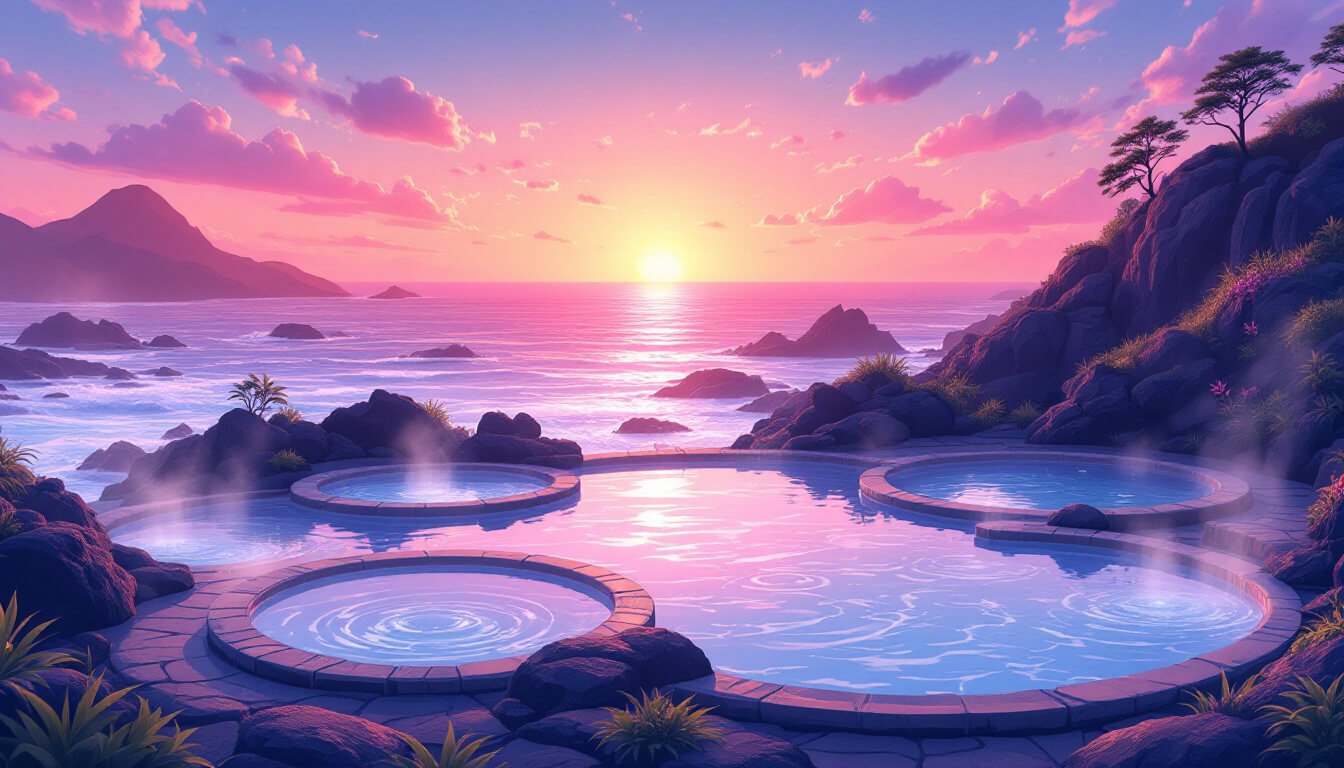
Continue clockwise around the island and you’ll reach Zhaori Hot Spring (朝日溫泉, literally “greeting the sun”) on the southeastern coast — one of just three saltwater hot springs in the world. The other two are at Kuchino-shima in Japan’s Tokara archipelago and at Vulcano on Italy’s Aeolian Islands. What makes a saltwater hot spring so rare is the combination of conditions required: a coastal volcanic vent producing hot mineralized water, plus tidal seawater seeping into the spring system to give it its distinct salinity. Most of the world’s hot springs are freshwater. These three are not. For the wider context on Taiwan’s hot-spring culture and the volcanic plumbing that makes it possible, our complete Taiwan hot springs guide covers the whole island.
Zhaori has three main soaking pools carved directly into the volcanic black rock at the edge of the Pacific, plus a series of smaller “natural” pools you can scramble down to at low tide. The water temperature ranges from 53°C (127°F) in the hottest pool to a more reasonable 38°C (100°F) in the cooler ones. The dissolved minerals — sulphates, chlorides, and significant levels of metasilicate — are credited locally with everything from joint pain relief to skin conditions, though the real reason to come is more atmospheric than medicinal.
The name “greeting the sun” exists for a reason: Zhaori faces due east, and the magic time to soak is the hour just before dawn. The spring opens at 5 a.m. specifically so visitors can be in the water when the sun comes up over the Pacific horizon. Entrance is NT$200 (about US$6) — bring a swimsuit, not a bathrobe, because this is a public bathing complex with both gender-mixed outdoor pools and gender-separated indoor pools. Dolphins are routinely spotted offshore during summer mornings; if you’re lucky, you’ll see them surface 100 meters away while you’re in the hottest pool watching steam rise off your shoulders.
Practical notes: the saltwater is rough on metal jewelry (take it off), the rocks are slippery (move slowly), and the early-morning crowd is mostly Taiwanese — almost no foreign tourists realize the pre-dawn slot is the one to book. If you’re going to be on the island only one full day, make Zhaori your first stop on day-of-arrival night-before, and aim to be at the gate at 4:45 a.m. It’ll be the single best 90 minutes of your trip.
Underwater Green Island: Why Divers Call It Taiwan’s Best Reef
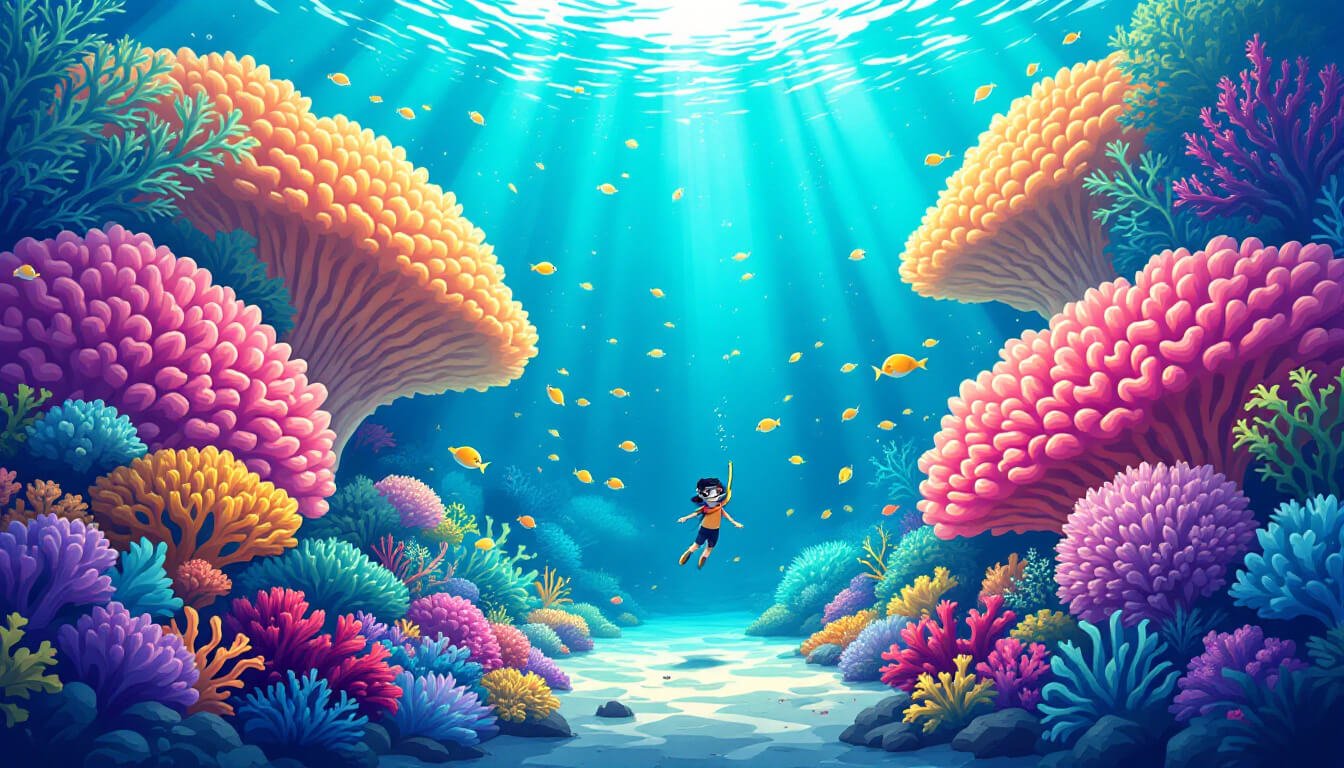
If you ask any Taiwanese diver what the best reef in Taiwan is, they’ll say Green Island and then immediately argue with you about which specific site. The reef around the island is part of the larger Kuroshio Current ecosystem, which sweeps warm nutrient-rich water up from the Philippines and dumps it on the island’s eastern shore. The result is a coral system that’s both visually stunning and ecologically resilient — coral bleaching events have hit Green Island, but recovery has been faster than at most reefs in the Indo-Pacific.
Shihlang Reef (石朗潛水區) on the western coast is the entry-level snorkel and dive site, accessible from a small beach with paved entry steps. Visibility usually runs 15–30 meters in summer, the reef shelves quickly to about 12 meters depth, and you’ll see soft coral, anemone clusters, and the famous brain coral colonies in the first 5 minutes of any swim. Many of the brain coral here are estimated to be 400+ years old and stand more than 3 meters tall — they predate the prison, the KMT, and arguably the modern concept of Taiwan itself.
Chaikou (柴口) on the northwest coast is the second main snorkel area, slightly less crowded and known for schools of parrotfish, butterflyfish, and the occasional reef shark. For scuba divers, the more advanced sites — Dabaisha (大白沙) on the south coast and the Sashayang Pillars (the underwater volcanic columns off the southeastern point) — require a guide and a dive shop boat. Expect to pay NT$1,800–2,500 (US$55–80) for a full guided dive day including gear and lunch.
A quick aside on logistics: every dive shop in Nanliao rents wetsuits, masks, fins, and snorkels by the day for around NT$400 (US$12). You don’t need to bring anything except a swimsuit. For the more committed, our guide to Taiwan’s best beaches and swim spots lays out the rest of the coast — but for sheer underwater density, nothing on mainland Taiwan touches what’s offshore here. Bring an underwater camera or rent one; the visibility on a calm August morning is something you’ll want to remember.

Snorkel Green Island in Style
Soft-shelled coral, brain coral the size of a small car, parrotfish in every direction — Green Island’s reef deserves something better than your generic surf shop rash guard. Our Taiwan Flag Geometric Rash Guard is UPF 50+, quick-dry, and quietly Taiwanese.
The 17-Kilometer Scooter Loop: A 4-Hour Tour of Everything
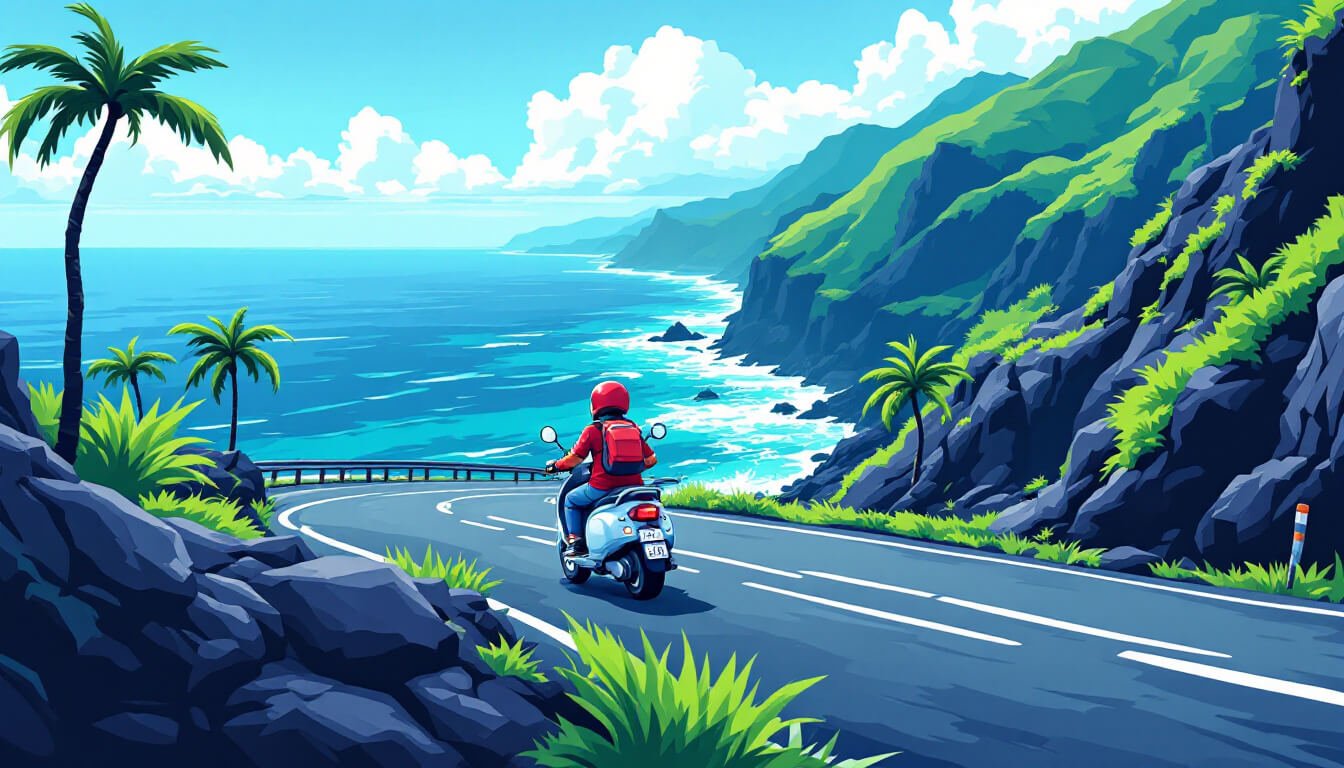
The defining Green Island experience is the coastal ring road, a 17-kilometer paved loop that circles the entire island and connects every village, prison site, hot spring, snorkel beach, and lookout. Most visitors rent a scooter from a Nanliao shop the morning they arrive, ride the full loop in a leisurely 3-4 hours with photo stops, and use the scooter to bounce between activities the rest of their stay. The road is well-maintained, sparsely trafficked outside of summer weekends, and almost entirely scenic — the eastern coast in particular has cliff-edge views that look like a Studio Ghibli storyboard.
The clockwise route is the standard. Starting from Nanliao, you head north along the western coast past Shihlang Reef and the snorkel beaches, round the northern point at Niutoushan Lookout (great sunrise spot, especially in May when the lily fields are in bloom), then come down the eastern cliff-side stretch — the most dramatic part of the ride — past Guanyin Cave and the Sleeping Beauty Rock formation. The southern stretch passes Zhaori Hot Spring, the Xinsheng prison ruins, and the Human Rights Memorial Park before looping back to Nanliao. Plan to stop every 10 minutes; there is almost no spot on this island that isn’t photo-worthy.
Logistics: scooter rental is NT$400–600 per day (US$12–18), and most shops will rent to anyone with an international driving permit, though enforcement has historically been loose. If you’ve never ridden a scooter before, ask the shop for a 5-minute parking-lot lesson — they’re used to first-timers and won’t blink. Gas stations are limited to two on the island (one in Nanliao, one in Gongguan), and a full tank gets you around the loop several times over. Bring sunscreen; the cliff-edge stretch has no shade.
A note on style: if you want to lean into the local scooter culture properly, the Mazu’s Scooter Blessings Hoodie from our shop is built around exactly this — Mazu is Taiwan’s sea-and-protection goddess, and Taiwanese scooter drivers traditionally ask for her blessing before long rides. Green Island, surrounded by Pacific water on all sides, is about the most fitting place in Taiwan to wear it. For the wider geographic context of where Green Island sits relative to Taitung and the rest of the island, our Taiwan map guide shows the full layout.
How to Visit Green Island: Ferry, Where to Stay, When to Go
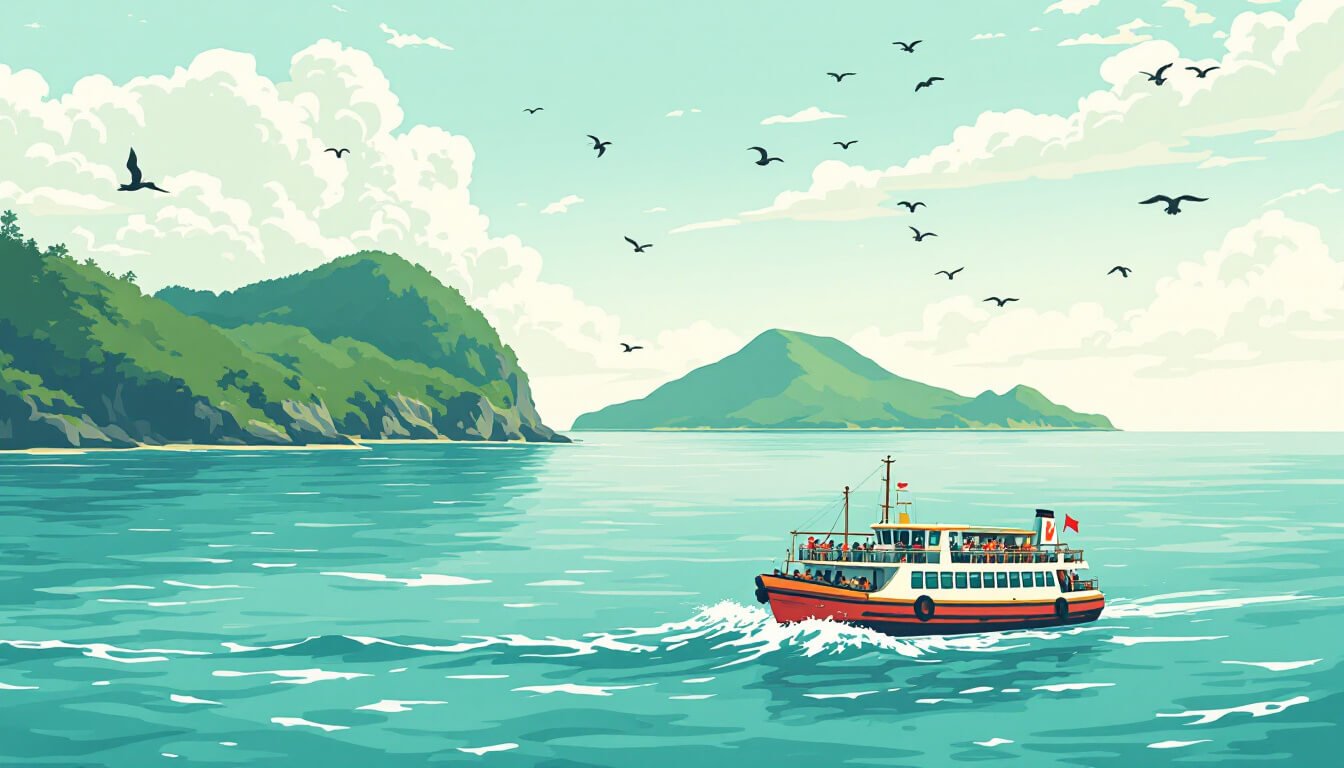
Getting to Green Island is straightforward but the logistics matter. The standard route is by ferry from Fugang Fishing Harbor (富岡漁港) just north of Taitung City. The crossing takes 50 minutes, costs NT$460 (US$14) one way, and there are typically 4-6 sailings per day in peak season (April through October) and 2 daily sailings in the winter low season. The two main operators are Kaixuan and Green Island Ferry; both have online booking, but in summer it’s worth reserving 2-3 days ahead because boats fill up.
A serious warning: the Kuroshio Current and the Pacific swell combine to make this crossing notoriously rough. The ferry is small, the swells are big, and seasickness is the norm, not the exception. Bring motion sickness medication and take it 30 minutes before boarding even if you’re a strong sailor. Sit in the middle of the boat low to the water, look at the horizon, and don’t try to read. If you really can’t handle boats, the alternative is the Daily Air Taiwan flight from Taitung Airport — a 15-minute hop in a small Dornier 228 aircraft, NT$1,376 one way (US$42), but only a few flights per day and weight-limited (15 kg per person).
Accommodation is almost entirely minsu (Taiwanese homestays/B&Bs) clustered in Nanliao, Gongguan, and Wenquan villages. Expect to pay NT$1,500–3,500 (US$45–105) per night for a clean basic room with private bath, breakfast usually included. Booking platforms work, but in summer the better-rated places sell out 2-4 weeks ahead. Camping is allowed at designated sites near Daibaisha on the south coast with no reservation needed, NT$200 per tent per night.
The best time to visit is April through October, with mid-May to mid-July being the sweet spot — water is warm (26–28°C), visibility is at its annual peak, and you’re squarely between the rainy season and typhoon season. From August through October, typhoon risk climbs significantly; ferries are routinely cancelled with 24 hours’ notice, and a bad cancellation can strand you on the island for 2-3 days. Our Taiwan typhoon season guide covers the patterns in detail — short version: check Central Weather Administration the night before any planned Green Island ferry from August through October. November through March is technically off-season; some homestays close, water is too cold for comfortable snorkeling without a thick wetsuit, but the island is empty, atmospheric, and cheap.
Frequently Asked Questions About Green Island
How long should I spend on Green Island?
Two full nights is the sweet spot: arrive evening of day 1, scooter the loop and snorkel on day 2, visit the Memorial Park and soak Zhaori on day 3, ferry back afternoon of day 3. A single overnight is doable but leaves no margin for weather. Three nights is luxurious if you want to dive multiple sites.
Is Green Island safe to visit politically?
Yes. Green Island is part of Taiwan’s Taitung County and has been a fully open tourist destination since 1987. The former prison facilities are explicit memorial sites maintained by the Taiwanese government — visiting is encouraged, photographing is permitted, and there is no political sensitivity around foreign tourists engaging with the history.
Can I visit without a scooter?
Yes but reluctantly. There is a small public minibus that loops the island roughly every 90 minutes, and several homestays offer airport-style shuttle service to specific attractions. But the scooter culture is integral to the experience, and at NT$500/day it’s the single best value on the island. If you absolutely can’t ride a scooter, rent an electric bicycle (NT$300/day) — the loop is flat enough that an e-bike can finish it in 4 hours.
Do I need cash?
Largely, yes. There are two ATMs on the island, both in Nanliao at the post office and 7-Eleven, and they sometimes run out of cash on summer weekends. Most homestays, restaurants, and rental shops accept cash only. Bring at least NT$5,000 (US$150) per person per day to cover everything.
Is the prison history difficult or upsetting for kids?
The Memorial Park is designed to be accessible to school groups and is age-appropriate for kids 10 and up. Younger children may find some of the cellblock interiors and audio testimony heavy. The grounds themselves are beautiful and walkable, and even very young children can visit the Wall of Names and the outdoor exhibits without distress.
Why Green Island Belongs on Your Taiwan List
Most people who visit Green Island come for the snorkeling and leave talking about the prison. That’s not an accident. It’s what happens when you take a place this beautiful, layer four decades of political violence onto it, then let the survivors and their families build the memorial themselves. The result is an island that asks more of you than a typical beach destination does — and gives more back. You can do this in a long weekend from Taipei: high-speed rail to Taitung, ferry to Nanliao, three nights on the island, ferry back. It will be one of the most memorable trips you take in Taiwan, and one of the very few that quietly changes how you think about the country.
Taiwan Stories in Your Inbox
Cultural deep dives, hidden-gem destinations, and the occasional new design drop — once a week, no spam. Made for Taiwan obsessives.

Grab a Free Taiwan Sticker!
Drop your email and we’ll send you a limited-edition Taiwan sticker — plus insider access to new merch drops and island vibes.
No spam. Unsubscribe anytime.