Northern vs Southern Taiwanese Zongzi: The Annual Dragon Boat Festival Food War That Divides the Island
Tomorrow is Duanwu — Dragon Boat Festival — and right now Taiwanese grandmothers from Keelung to Kenting are tying bamboo leaves around sticky rice. But what’s inside those leaves, and how it gets cooked, depends entirely on which half of the island the grandma comes from. Welcome to the Northern vs Southern Zongzi War (北部粽 vs 南部粽), the most beloved annual food argument in Taiwan.
What’s Actually in the Leaf
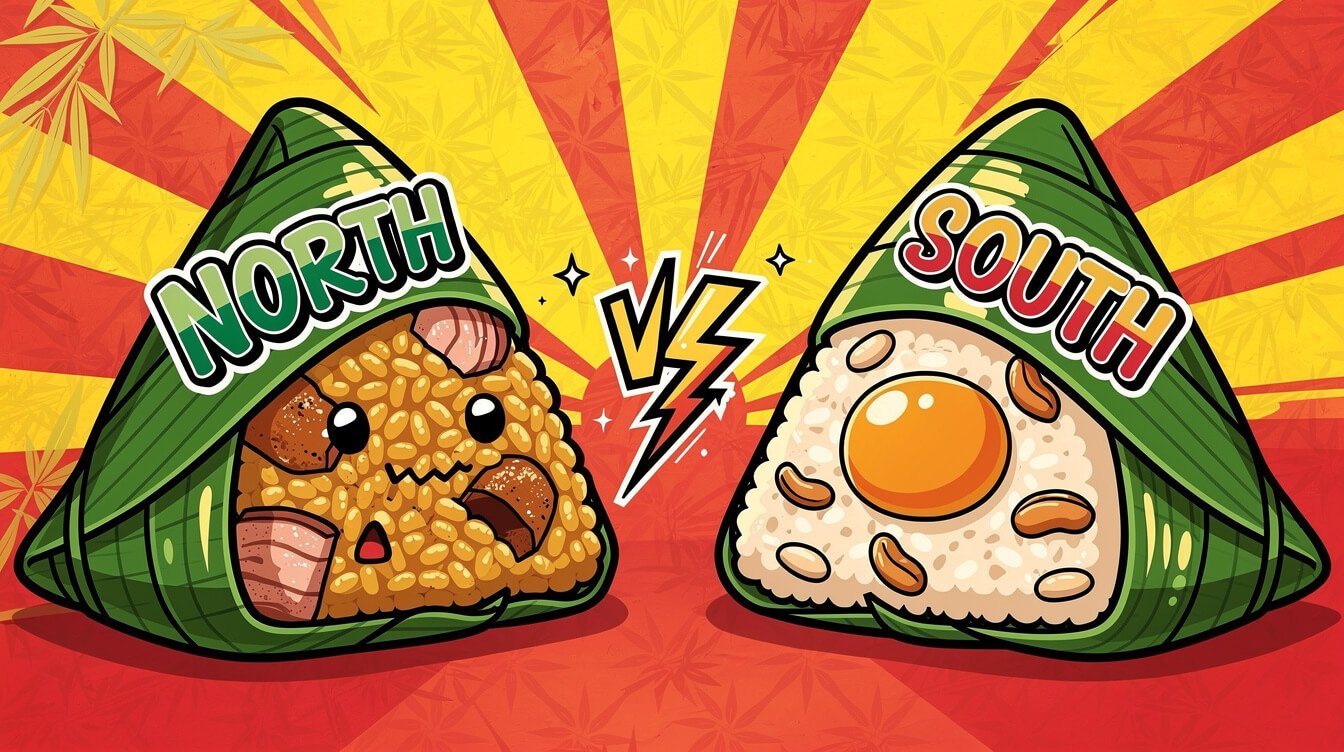
A Northern-style zongzi (北部粽) starts with glutinous rice that’s been stir-fried first with soy sauce, fried shallots, and dried shrimp until it’s brown and oily. Then the rice gets wrapped around fillings like braised pork belly, salted egg yolk, mushrooms, and chestnuts, and the whole package is steamed. The result is drier, looser, and tastes like a portable, leaf-wrapped serving of Taiwanese fried rice (油飯).
A Southern-style zongzi (南部粽) starts with raw glutinous rice — sometimes mixed with raw peanuts — wrapped around similar fillings and then boiled in water for hours. The rice cooks slowly inside the leaf, absorbing flavor from the pork and bamboo, and comes out soft, sticky, and almost custard-like. Southerners typically eat theirs with a drizzle of sweet chili sauce or peanut sauce on top.
Why Taiwanese Argue About This Every Single Year
The debate isn’t really about cooking — it’s about which one is the "real" zongzi. The fight kicks off on PTT and Facebook every June, and it gets brutal:
- Northerners say Southern zongzi is just "leaf-wrapped sticky-rice porridge" and accuse the South of cheating by not pre-cooking the rice.
- Southerners fire back that Northern zongzi is just "3D fried rice" (3D油飯) — a viral roast from a famous 2017 PTT thread that Taiwanese still quote today.
Local food writer Hsu Hsing-tse once joked that the divide runs cleanly along the Zhuoshui River, the same geographic line that separates Taiwan’s northern and southern dialects, weather patterns, and political tendencies. Zongzi is just one more way the island gently teases itself.
The Forgotten Cousins
The North-South rivalry hogs the headlines, but Taiwan actually has at least four other zongzi traditions worth knowing about:
- Hakka zongzi (客家粄粽) — uses a sticky rice flour dough wrapper instead of whole grains, giving it a chewy mochi-like texture. Look for these in Miaoli and Hsinchu.
- Indigenous abai (阿拜) — made by Paiwan and Rukai communities in the south, wrapped in shell ginger leaves with millet and pork.
- Alkaline zongzi (鹼粽) — a translucent, golden-yellow sweet zongzi soaked in alkaline water, eaten chilled with brown sugar syrup or honey. This is the dessert option.
- Vegetarian temple zongzi (素粽) — packed with mushrooms, peanuts, taro, and dried tofu, made by Buddhist temples and given out as offerings.
How to Try Both Sides Without Picking One
If you’re in Taiwan this week, here’s the lazy diplomat’s move: pick up one Northern-style from a stand in Taipei’s Ningxia Night Market (Wang Ji 王記 is the legend), one Southern-style from Tainan’s century-old Yuanhuan 圓環 area, and one Hakka 粄粽 from the Hsinchu train station basement food court. Eat all three side-by-side and refuse to declare a winner. That is the true Taiwanese way.
If you’re nowhere near Taiwan, ask your favorite Taiwanese friend which zongzi style they grew up eating — then watch their eyes light up. You’ve just unlocked an hour of food memories, family stories, and gentle trash-talk about "the other side." That is the real magic of Duanwu: not the dumpling, but the argument about the dumpling.
Want the full Dragon Boat Festival playbook? Our complete 2026 guide covers everything happening tomorrow — dragon boat races, mugwort doorway rituals, noon water at the wells, and (yes) where to find every style of zongzi. And if you’re hungry to actually make some, our Taiwanese zongzi recipe walks you through the Southern style step-by-step.
Happy Duanwu — and may your zongzi be exactly the style you grew up with. 端午節快樂!

Grab a Free Taiwan Sticker!
Drop your email and we’ll send you a limited-edition Taiwan sticker — plus insider access to new merch drops and island vibes.
No spam. Unsubscribe anytime.