Weather of Taiwan: The Complete Region-by-Region, Month-by-Month Climate Guide for 2026
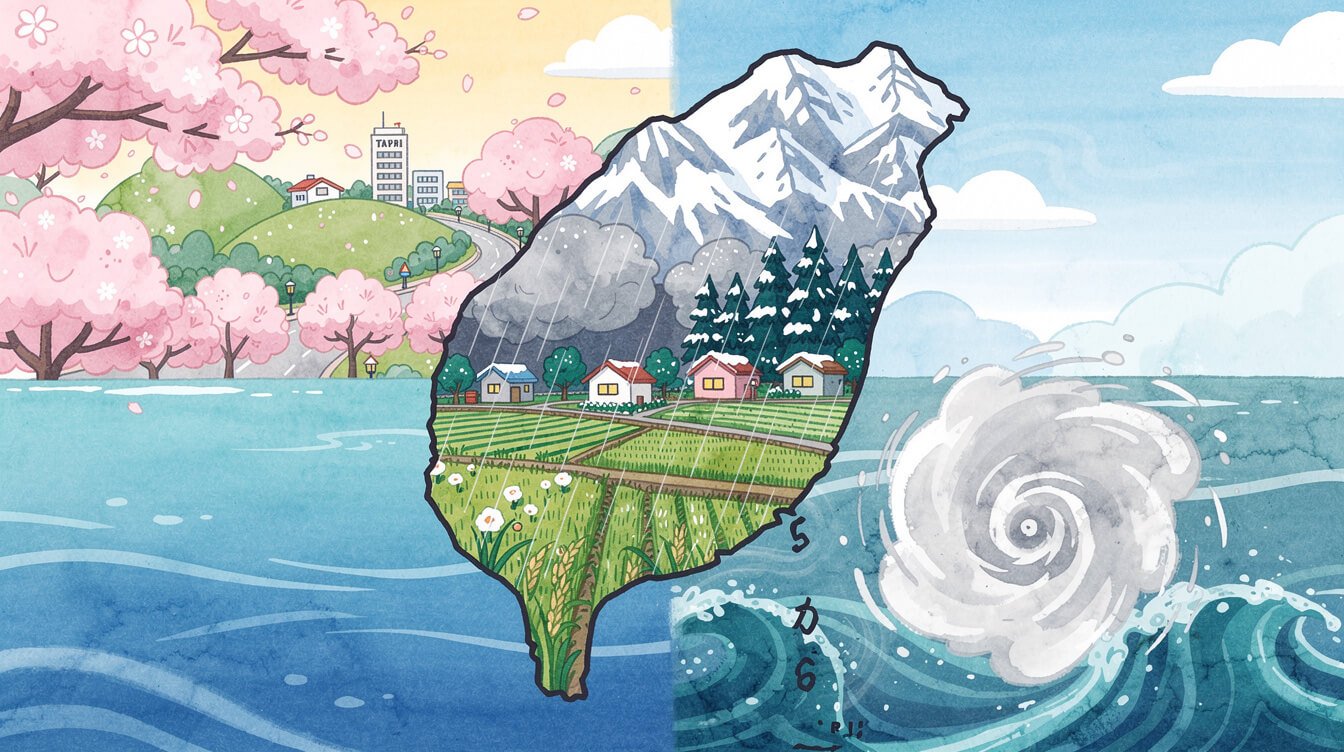
The weather of Taiwan is one of the most misunderstood things about visiting this beautiful island. The forecast widgets will tell you the temperature in Taipei tomorrow. The Wikipedia entry will hit you with Köppen climate classifications. None of that tells you what you actually need to know — which is that Taipei in January can feel colder than Tokyo while Kaohsiung the same day feels like a beach vacation, that the rainy season has a poetic name and a six-week calendar, that the high mountains can dump fresh snow on you in February, and that locals plan their entire year around five seasons, not four.
This guide is the editorial counterpart to a forecast app. We’ll walk through Taiwan’s climate region by region, season by season, and month by month — with the cultural rhythms that go along with each shift. If you’re trying to decide when to visit Taiwan, our best time to travel to Taiwan guide is the decision companion to this one. Bookmark both — you’re going to need them.
What’s the Weather Like in Taiwan?
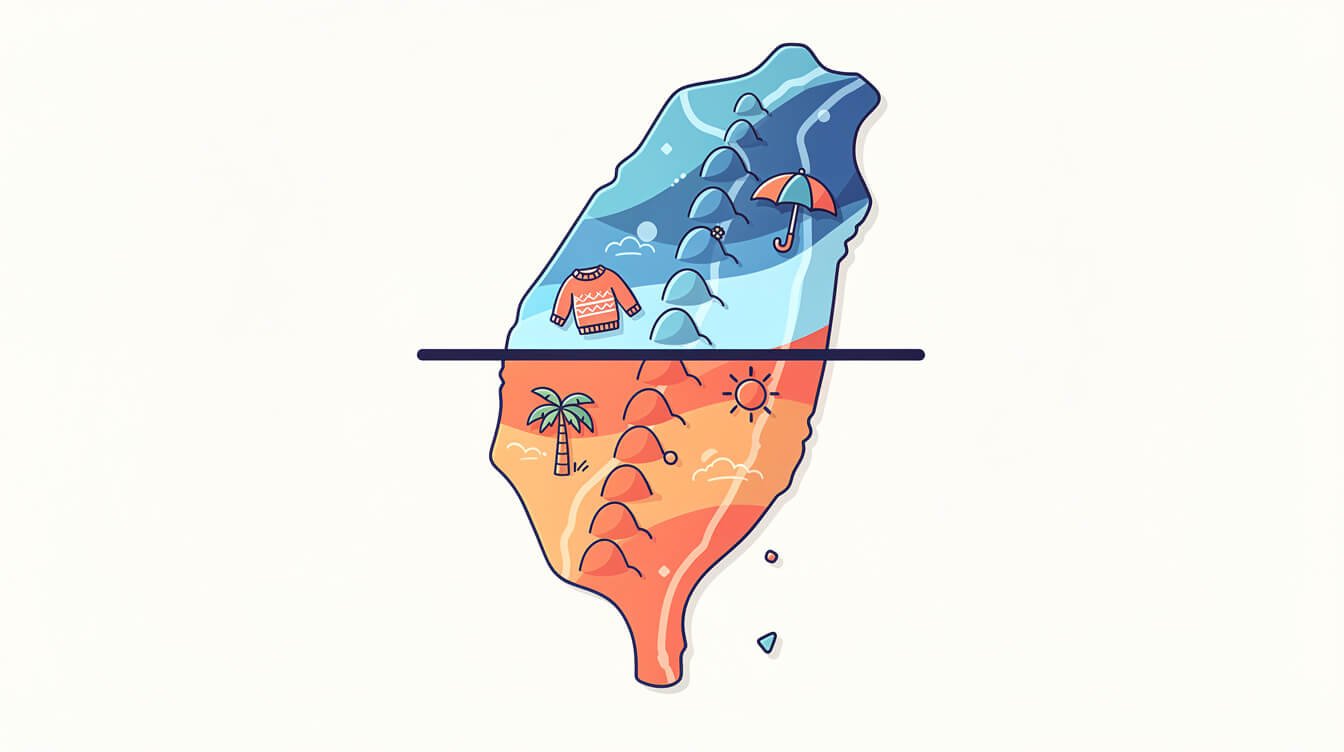
Taiwan sits at the climatic crossroads of East Asia. The Tropic of Cancer, that imaginary line you learned about in fifth-grade geography, cuts the island horizontally just below Chiayi City — and that line is doing real work. North of it, you get a humid subtropical climate with proper-feeling four seasons, including chilly damp winters that can dip into single-digit Celsius. South of it, you get a tropical monsoon climate where the year basically alternates between hot-and-wet and hot-and-dry, with winter just being “the slightly less sweltering months.”
Down the spine of the island runs the Central Mountain Range, which acts as a second climate divider — this one between the eastern and western coasts. The mountains catch the moisture-laden northeast monsoon winds in winter and dump rain on the east coast (Hualien, Yilan), while the west coast (Taichung, Tainan) sits in a rain shadow and gets long stretches of sunshine. Then come summer, the pattern flips: the southwest monsoon shoves rain onto the west coast while the east stays comparatively drier — until typhoons come and rewrite everyone’s plans.
The annual averages tell part of the story. Taiwan gets about 2,600 mm of rainfall per year on average, which is more than triple the rainfall in London. Taipei’s daily mean temperature swings from 15.9°C in January to 30.1°C in July. Taichung is a couple degrees warmer in winter. Kaohsiung in the south barely dips below 19°C even in January and stays around 29°C through summer. The numbers are one thing — what the weather actually feels like is another, and that’s where this guide gets useful.
The Four Seasons Taiwan Actually Has (and the Hidden Fifth — Plum Rain)
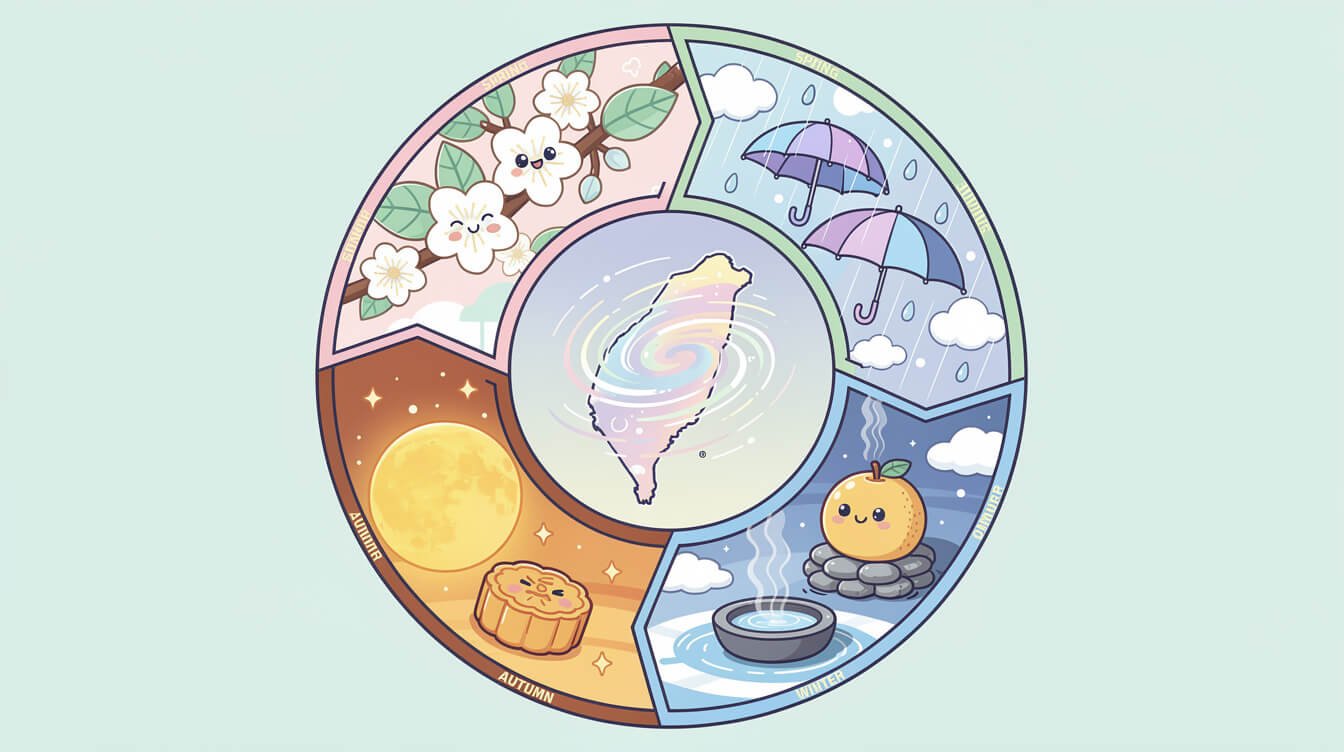
Western travel guides love to talk about Taiwan’s “four seasons.” Talk to a Taiwanese aunty, and she’ll tell you about five. The hidden one — plum rain season or 梅雨 (méiyǔ) — gets its own name, its own calendar window, and its own emotional weather. It’s the polite stationary front that parks itself over the island from mid-May to mid-June, drizzling for weeks at a time. We wrote a whole love letter to it in our plum rain season piece; it’s the season that fills the reservoirs and makes the lychees sweet.
Spring (March to early May) is the unsung hero of Taiwan weather. Daytime temperatures sit in a friendly 18 to 25°C, the humidity hasn’t fully cranked up yet, and the hillsides explode with tung blossoms (the famous “April snow”), azaleas, and cherry blossoms in the higher elevations. Tea harvest is in full swing in the central mountains. If you don’t mind occasional showers, this is the most underrated travel window of the year.
Plum rain (mid-May to mid-June) is the bridge to summer — gray, drizzly, surprisingly cool, and culturally tied to bamboo shoots, mulberries, and the start of mango season. Bring waterproof shoes and a sense of humor. The reward is genuinely lush green everywhere.
Summer (mid-June through August) is the headline event. Daytime highs of 32 to 35°C with humidity north of 75% mean walking outside feels like wading through warm soup. This is also typhoon season — Taiwan averages three to four direct typhoon hits per year, mostly between July and September. We cover the survival playbook in our typhoon season guide. But summer is also peak mango, peak Aiwen mango shaved ice, and the months when 7-Eleven sells the most Supau sports drinks. It’s brutal and it’s wonderful.
Autumn (September to November) is, no exaggeration, the best travel weather Taiwan offers. Highs cool to 26 to 30°C, humidity drops, the sky finally goes blue, and the Mid-Autumn Festival rolls around with mooncakes and pomelos. October and November are when locals book their domestic trips.
Winter (December through February) is where Taiwan splits in half. In the north, expect damp, drizzly 14 to 18°C days — the kind of cold that gets into your bones because heating is rare indoors. In the south, you might be in a t-shirt at 24°C. And up in the high mountains, you might be making snowballs.
The fifth-season framework matters because Taiwanese culture organizes itself around it. Tea farmers harvest in spring waves. Fruit cycles through the year — strawberries, mangoes, lychees, pomelos, sugar apples — each tied to a precise window. Festivals lock to the lunar calendar but feel inseparable from the weather: Lunar New Year in the chilly drizzle, Dragon Boat in the steaming heat, Mid-Autumn under the clear October moon. Once you learn to read Taiwan’s calendar in five seasons instead of four, every trip starts making more sense.
North vs South Taiwan: The 10-Degree Winter Gap

Here’s the single most useful fact in this entire guide: Taipei in January and Kaohsiung in January can be ten degrees Celsius apart on the same afternoon. A drizzly 14°C Taipei morning, where you’re hunched under an umbrella wishing you’d packed a real coat, is a 24°C sunny Kaohsiung afternoon two hours south on the high-speed rail. People who don’t know this fact arrive at Taoyuan in January expecting “tropical Taiwan” and immediately freeze.
The reason is the northeast monsoon. From November through March, cold dry air sweeps down from Siberia, picks up moisture over the East China Sea, slams into northern Taiwan, and dumps weeks of gray drizzle on Taipei, Yilan, and the entire northeast coast. The Central Mountain Range stops it from reaching the south, so Kaohsiung and Tainan stay sunny, dry, and warm. This is why locals have a saying — go south in winter, north in summer (冬天南下,夏天北上). It’s not a tourism slogan; it’s basic climate logic.
For travelers, this means two things. First: do not pack for “tropical Taiwan” if you’re visiting Taipei between December and February. You want a real layer — a packable down jacket, long pants, closed shoes. Indoor heating is uncommon and the damp 14°C feels colder than a dry 5°C back home. Second: if your trip is in winter and you want sun and warmth, plan most of your time in Tainan, Kaohsiung, or Kenting. Take the high-speed rail down on day three and don’t look back.
East Coast vs West Coast: The Rain-Shadow Effect
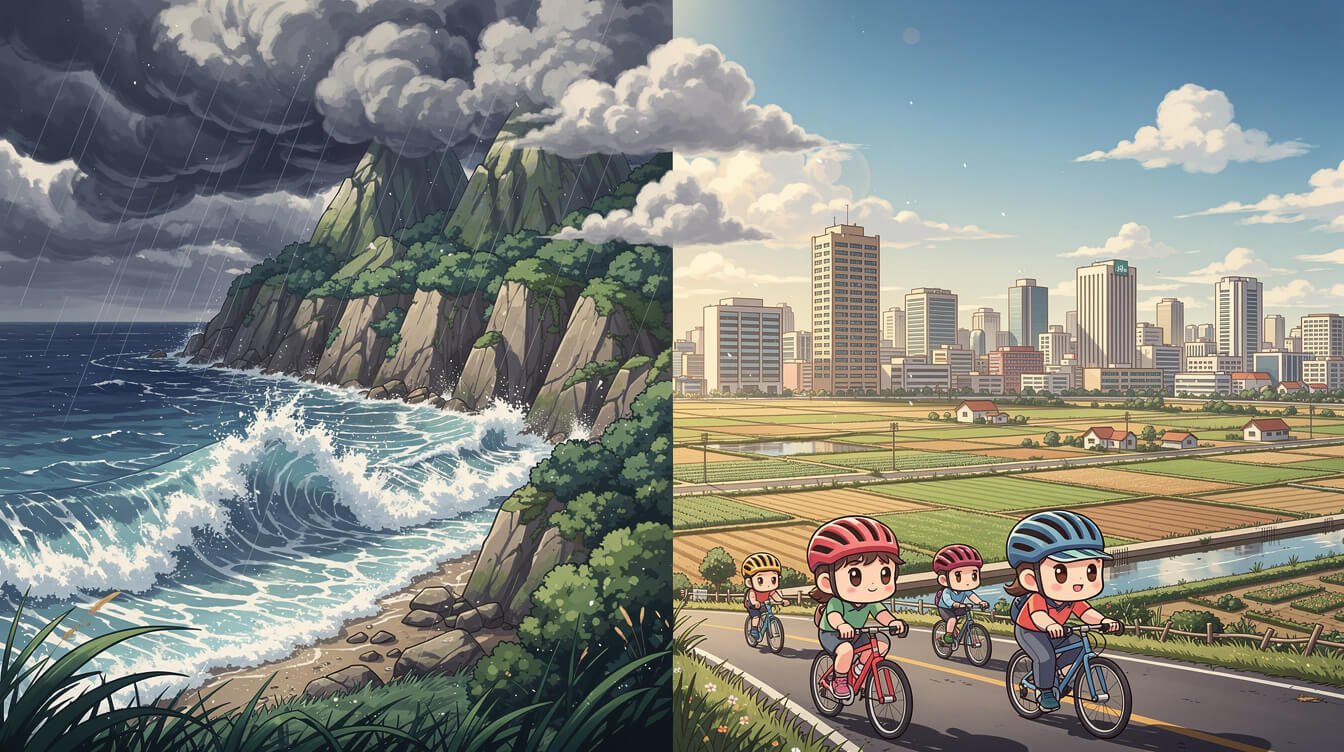
If north-south is one climate divide, east-west is the other. The Central Mountain Range — peaks topping 3,000 meters running from Yilan all the way down to Pingtung — creates a textbook rain-shadow effect that shapes life on either side of the island.
The east coast (Yilan, Hualien, Taitung) catches the brunt of the northeast monsoon in winter and gets soaked. It also takes the first hit from incoming Pacific typhoons in summer. Annual rainfall in Yilan can exceed 3,000 mm — more than New York City and London combined. The trade-off is wild, dramatic landscape: Taroko Gorge’s marble cliffs, the long quiet Pacific beaches around Hualien, the rural east-coast highway that runs all the way down to Taitung. Fewer tourists, more weather.
The west coast (Taoyuan, Hsinchu, Taichung, Tainan, Kaohsiung) sits in the rain shadow and gets dramatically less precipitation — especially in winter. Taichung’s January rainfall averages just 36 mm versus Taipei’s 94 mm. This is one reason the west coast holds most of Taiwan’s population, industry, and farmland. It’s also why a sunny Taichung getaway in January is one of the best-kept secrets in Taiwan travel.
The flip happens in summer. The southwest monsoon brings rain to the west coast and the southern plains, while the east coast can stay sunny and dry — at least until a typhoon shows up. For trip planners, the simple rule is: follow the sun by switching coasts. Winter trip? Stay west. Summer trip? Consider some east-coast days. The high-speed rail and the cross-island highways make it remarkably easy to chase the better weather.
One more nuance worth flagging: the east coast’s relative isolation from the bigger weather systems means it has the cleanest air quality on the island. Air-quality particulate readings in Hualien and Taitung are routinely a third of what they are in Kaohsiung or western industrial corridors. If you’re sensitive to air quality and traveling outside peak tourist season, the east-coast highway between Hualien and Taitung is the cleanest, quietest, most weather-rewarding stretch of road in Taiwan. We get into the logistics in our Taroko Gorge guide and the Taiwan train map guide.
Month-by-Month Weather + Cultural Rhythm
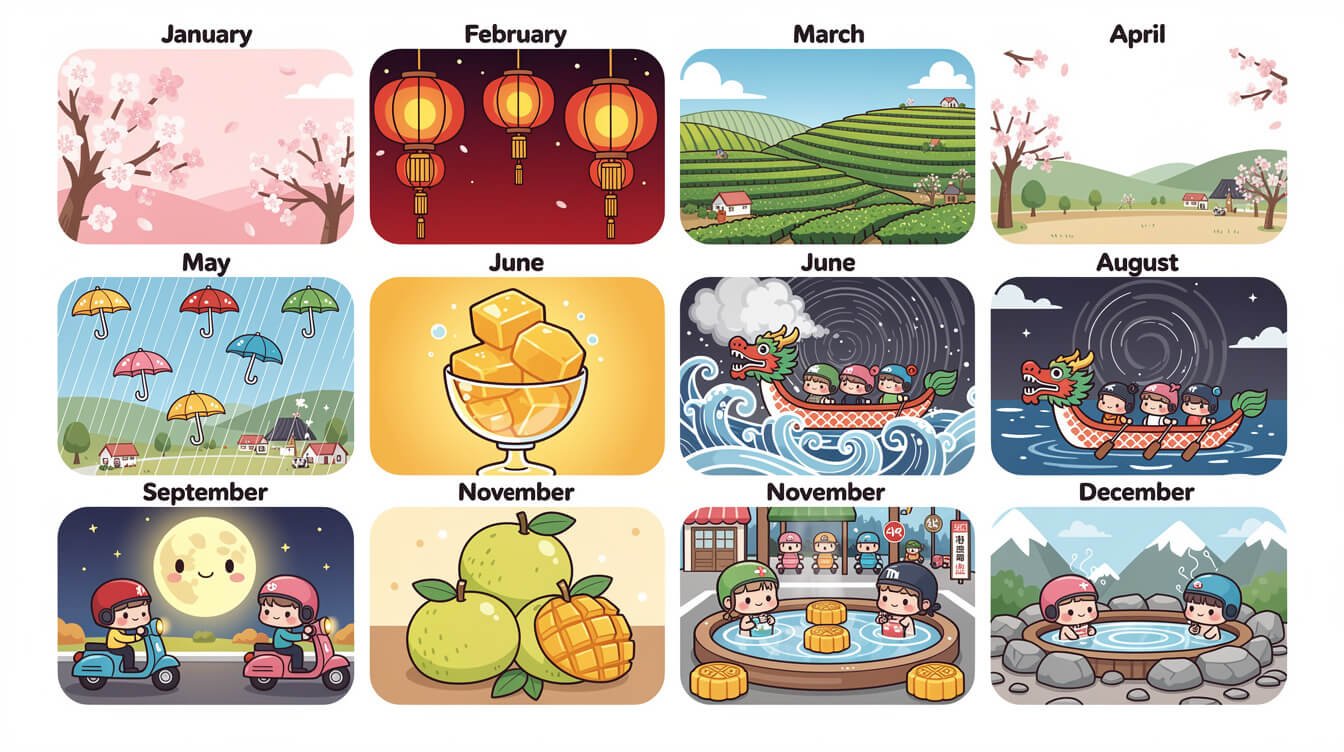
Forecast widgets give you numbers. Locals give you a rhythm. Here’s the full year, month by month, with what’s happening in the sky and what’s happening culturally — because the two are inseparable in Taiwan.
- January: Coldest month in the north. Taipei averages 15.9°C, often drizzly. Kaohsiung sunny and warm in the low 20s. Cherry blossoms start appearing in higher-elevation Yangmingshan and Alishan. Lunar New Year prep heats up.
- February: Still cold and damp in the north, glorious in the south. Pingxi Sky Lantern Festival, Lantern Festival, and peak Lunar New Year travel. Cherry blossoms peak. Plum blossoms in central mountains.
- March: Spring arrives. Taipei warms to 18 to 22°C, occasional cool drizzle. Tea harvest begins. Strawberries in Miaoli. Mazu Pilgrimage season starts.
- April: Best month for outdoor activities island-wide. Tung blossoms (“April snow”) cover Miaoli and Taoyuan hillsides. Daytime 22 to 26°C. Tomb-Sweeping Day. Drinkable evenings.
- May: Hot and increasingly humid. Plum rain arrives mid-month — pack waterproof everything. Mangoes start appearing at markets. Firefly season in central mountains.
- June: Plum rain wraps up in mid-June. Dragon Boat Festival usually falls here. Lychee and pineapple peak. Heat index starts hitting “feels like 38°C” territory.
- July: Hottest month. Taipei daily highs of 35°C with brutal humidity. First typhoons of the season possible. Peak Aiwen mango shaved ice. Beaches at Kenting and Fulong are packed.
- August: Hottest and stormiest. Typhoon season peaks. Ghost Month — locals avoid swimming, weddings, and major decisions. Hot, sticky, occasionally apocalyptic.
- September: Heat eases slightly, typhoons still active. Mid-Autumn Festival usually falls here — mooncakes everywhere, BBQs in every park. Daytime drops to a more manageable 31°C.
- October: Peak travel weather. Taipei 25 to 28°C, blue skies, low humidity. Pomelos start appearing. National Day Oct 10 is the big civic holiday.
- November: Autumn in full effect. North cools to 22 to 24°C with crisp evenings. Hot spring season officially begins — locals start heading to Beitou, Wulai, Jiaoxi.
- December: Winter begins. Taipei drops to 18 to 20°C and the northeast monsoon kicks in. South still pleasantly warm. Pomelo and sugar-apple season. Christmas markets in Taipei.
If you want this calendar from the trip-planning angle rather than the weather angle, our best time to travel to Taiwan guide picks it apart by traveler type.
The High-Mountain Surprise: Yes, It Snows in Taiwan
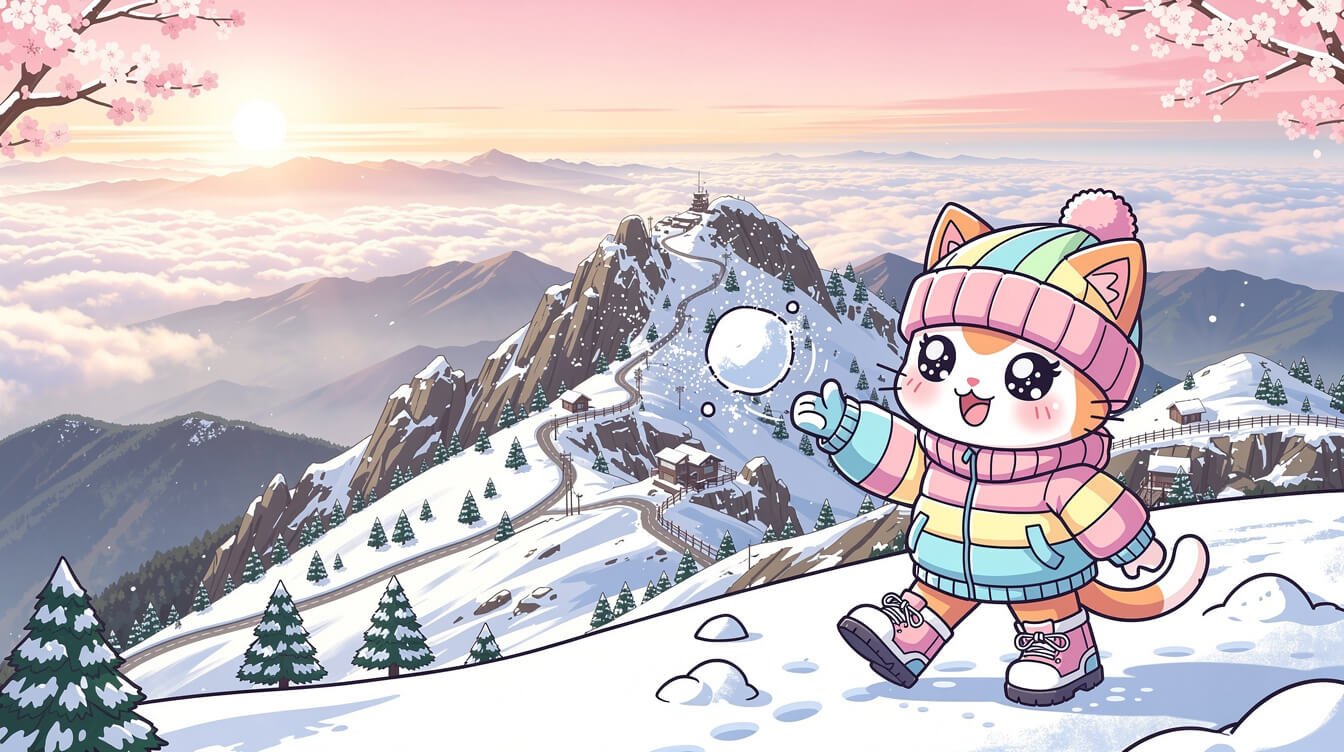
One of the most counterintuitive facts about Taiwan weather: there’s a snow season. From late December through February, peaks above 2,500 meters elevation regularly catch fresh snow — Hehuanshan, Yushan (Jade Mountain), and the Alishan area on a cold-snap weekend. Hehuanshan in particular is one of the most accessible snowy spots in subtropical Asia, with a road that runs above 3,200 meters and a parking lot that occasionally gets buried.
When a major cold front rolls in, Taiwanese social media lights up with snow tracking — people will drive seven hours from Taipei to throw snowballs for thirty minutes. It’s a cultural event. The CWA (Central Weather Administration) issues mountain snow alerts. Tour operators run dedicated overnight buses. If you’re visiting in January or February and have a free weekend, it’s worth chasing a snow report.
The catch: if you go above 2,500 meters in winter, you need actual cold-weather gear. We’re talking sub-zero Celsius windchill, icy road conditions, and oxygen at altitude. Layers, gloves, a real jacket, and a willingness to wake up at 4 AM to catch the sunrise above the clouds. Our Alishan guide gets into the specifics of high-altitude visits.
Outside the snow window, the high mountains are still cool year-round — Alishan sits at around 2,200 meters and rarely exceeds 20°C even in July. This is the trick locals know: when summer in Taipei is unbearable, take a train and a bus into the mountains and you’ve got natural air conditioning.
What to Pack, Season by Season

Packing for Taiwan is mostly an exercise in respecting humidity and surprise rain. Here’s the season-by-season cheat sheet that will save you from buying emergency raincoats at a 7-Eleven (although the NT$100 ones there are actually pretty solid).
Spring (March–May): Lightweight layers. Daytime 20 to 25°C with cool evenings. A long-sleeve shirt and a light jacket cover most situations. A small folding umbrella is non-negotiable — pop-up showers are routine. Walking shoes that handle wet pavement.
Plum Rain + Summer (June–August): Quick-dry everything. Cotton dies in this humidity. Pack synthetic or merino tees, quick-dry pants or skirts, waterproof sneakers or sandals you can soak. A portable umbrella stays in your day bag. Sunscreen (the UV index regularly hits 11+). Electrolyte drinks help — speaking of which, if you’re visiting in summer and want to fully embrace the local hydration scene, our Super Supau Taiwanese Sports Drink Tee is a love letter to the green-bottle sports drink that locals chug all summer long.
Autumn (September–November): Easiest season to pack for. T-shirts and long pants by day, light jacket by evening. Less rain than spring. Comfortable walking shoes.
Winter (December–February): This is where most travelers underestimate. For the north, pack like you’re visiting damp coastal northern Europe — a real packable down or fleece jacket, long pants, closed-toe shoes, a beanie if you run cold. Add thermals if you’re going into the mountains. Indoor heating is unusual in homes, hotels, and restaurants, so the cold stays with you all day. For the south, bring a light jacket for evening and short-sleeve options for daytime.

Survive Taiwan Summer the Local Way
Supau is the green-bottle sports drink locals chug through 35°C summers and post-typhoon cleanups. Wear the legend.
Frequently Asked Questions About the Weather of Taiwan

Is Taiwan always hot?
No — and this is the most common misconception. Southern Taiwan stays warm year-round, but northern Taiwan has a real winter with damp 14 to 18°C days from December through February. High-mountain areas can drop below freezing and get snow. The “always tropical” assumption catches a lot of travelers out.
Does it snow in Taiwan?
Yes, in the high mountains. Peaks above 2,500 meters — including Hehuanshan, Yushan, and parts of the Alishan area — see regular snowfall from late December through February when cold fronts arrive. It does not snow at sea level. The cities never get snow, but they can get cold-snap winters down to around 5°C.
When is typhoon season in Taiwan?
Typhoon season runs from June through October, with the peak in August and September. Taiwan averages three to four direct typhoon hits per year. The Central Weather Administration issues advance warnings 48 to 72 hours out, and major typhoons often trigger official “typhoon days off” — see our dedicated typhoon season guide for the full survival playbook.
What’s the best month for sunshine in Taiwan?
July and August have the most sunshine hours statistically (around 180 hours per month in Taipei), but it’s also brutally hot. For a balance of sunshine and pleasant temperatures, October is the sweet spot island-wide — blue skies, low humidity, and daytime highs around 27°C.
What’s the rainiest month in Taiwan?
It depends on where you are. In Taipei, the wettest months are May through September, each averaging over 200 mm of rainfall, peaking in plum rain (May–June) and typhoon season (August–September). In Taichung and the southwest, the rainy season is more concentrated in June through August, when southwest monsoon dominates.
What’s the best weather app for Taiwan?
Locals use the official CWA (Central Weather Administration) app, which is the most accurate for radar, typhoon tracking, and mountain forecasts. Windy and AccuWeather are solid international alternatives. For typhoon-specific tracking, Taiwan’s CWA pushes mobile alerts in Chinese and English.
Do I need an umbrella in Taiwan?
Yes — pretty much year-round. Even in dry winter months, surprise showers happen. The good news is that every 7-Eleven and FamilyMart sells compact umbrellas for around NT$100, and you’ll see them tucked into bags everywhere. Locals also use them as parasols on hot sunny days, which is a habit worth borrowing.
Final Word: Plan Around the Climate, Not the Forecast
The biggest unlock for understanding the weather of Taiwan is realizing that the island doesn’t have one climate — it has half a dozen, layered geographically and seasonally. A January trip to Taipei is a completely different experience from a January trip to Kaohsiung. A July beach week in Kenting is a different planet from a July tea-mountain weekend in Alishan. Once you stop checking tomorrow’s temperature and start thinking about which Taiwan you want to visit, planning gets a lot easier.
The local rhythm — plum rain, mango heat, typhoon days, mooncake autumn, hot spring winter, snow weekends in the mountains — is what makes the island feel alive. It’s also why Taiwanese culture is so seasonally rich, from the food to the festivals to the daily small talk. Pay attention to the sky, pack accordingly, and let the weather pull you toward the right places at the right times. That’s how Taiwan rewards you.
A few last practical anchors. Download the CWA app before you fly. Bookmark our best time to travel guide for the decision-making side, and our Taiwan culture guide for the cultural backbone underneath every seasonal shift. If you’re a returning visitor who wants to chase a specific weather window — cherry blossoms, fireflies, mangoes, snow — plan three months ahead because that’s how the locals do it. If you’re a first-timer, October through early December is the safest bet, with the second-best window being late March through early May. And if you’re stuck visiting in plum rain or peak typhoon season, lean into it: museum days, hot pot dinners, indoor night markets, and the kind of slow travel that the weather forces on you. Some of the best Taiwan trips happen exactly because the sky refused to cooperate.
A Taiwan Postcard, Once a Week
Stories, food finds, seasonal guides, and the occasional merch drop — straight to your inbox.

Grab a Free Taiwan Sticker!
Drop your email and we’ll send you a limited-edition Taiwan sticker — plus insider access to new merch drops and island vibes.
No spam. Unsubscribe anytime.