Taiwan Street Food: The Ultimate A-Z Guide to 40+ Must-Try Night Market Eats (2026)
Taiwan street food is not a category — it’s a way of life. Across the island, more than 300 night markets and thousands of daytime stalls serve up an encyclopedia of flavors that has shaped how Taiwanese people eat, socialize, and remember home. Whether you’re chasing the legendary funk of stinky tofu in Taipei or hunting down danzai noodles in Tainan, this guide is the only Taiwan street food primer you’ll need.
What makes this guide different: most articles give you a quick list of 10 famous dishes and call it a day. Here you’ll get 40+ must-try items organized by category, a dedicated vegetarian and vegan section honoring Taiwan’s massive Buddhist food culture, the exact Mandarin phrases to order without panic, regional specialties mapped to where to actually find them, current 2026 prices in NT$, and the unwritten etiquette rules that separate clueless tourists from confident eaters.
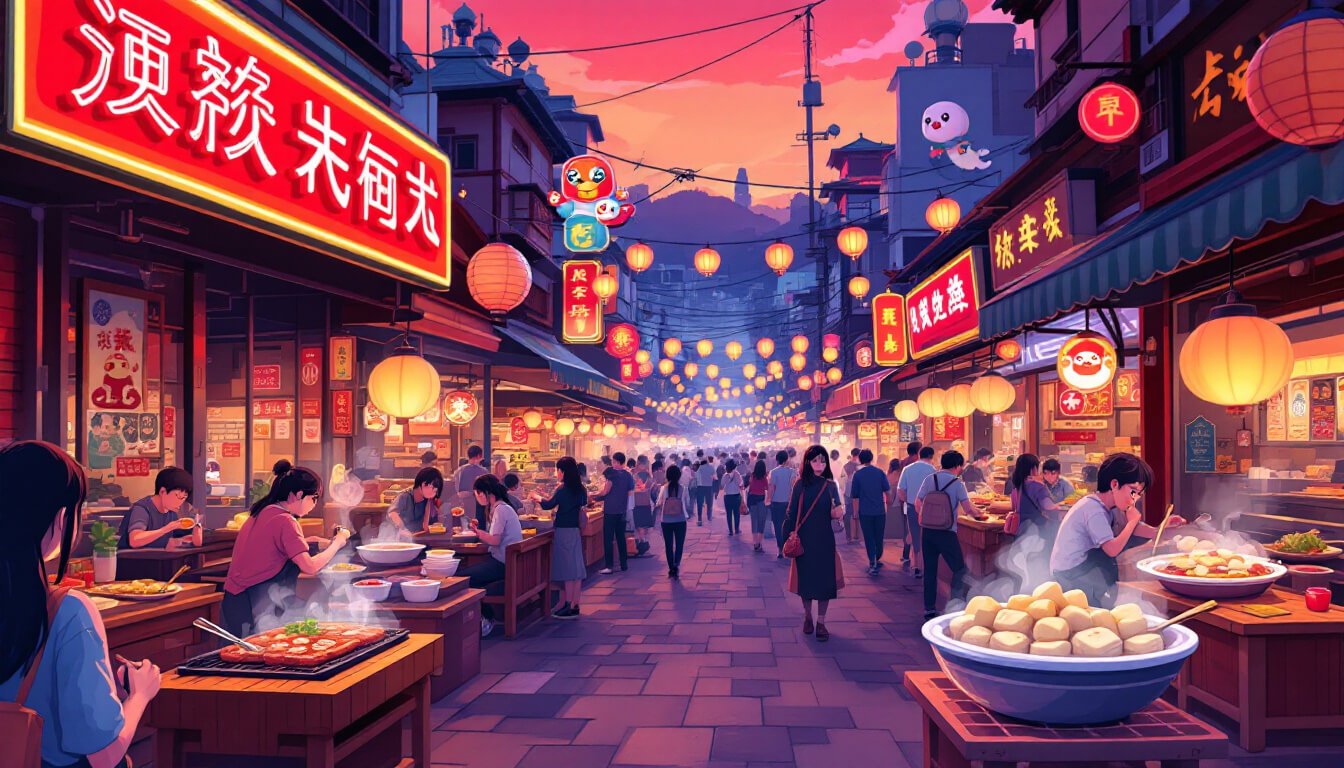
Taiwan Street Food Culture: Why Night Markets Are Sacred
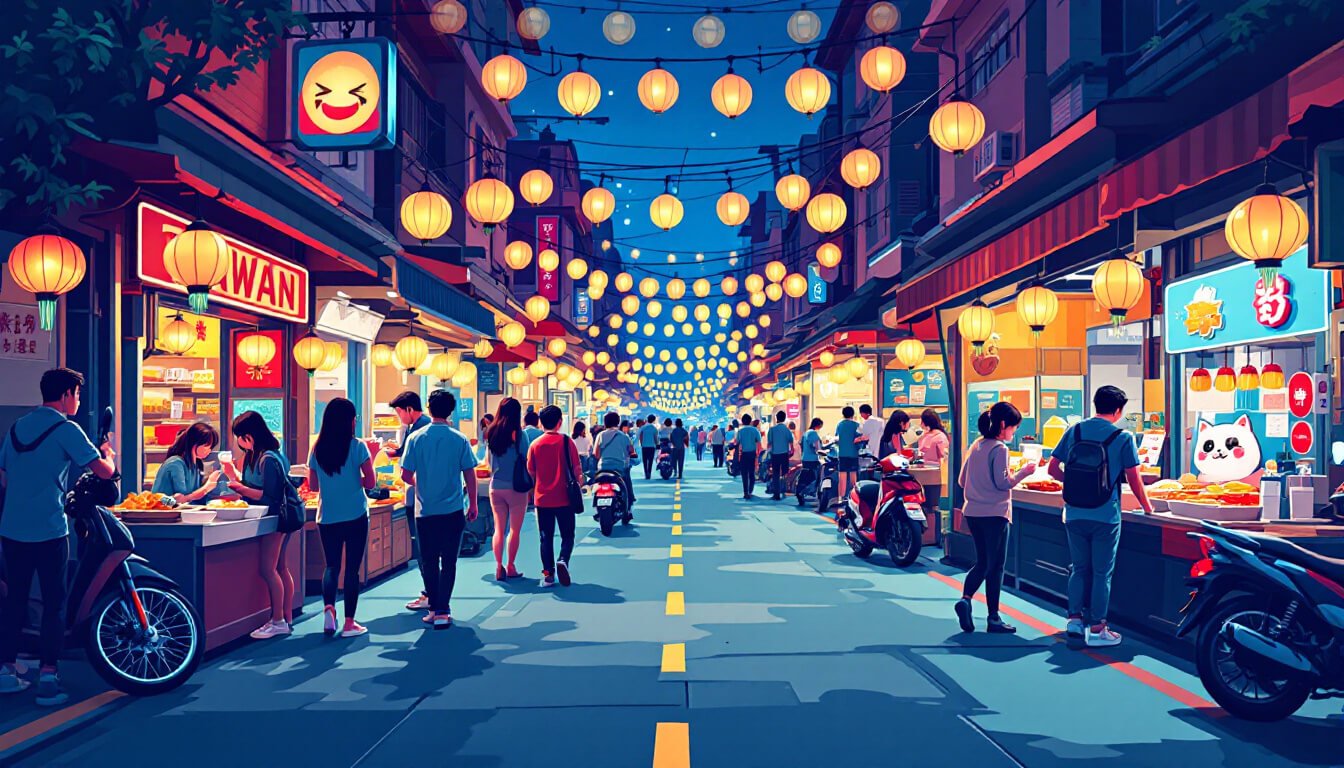
To understand Taiwan street food, you have to understand the night market — the yèshì (夜市). These open-air food bazaars are the beating heart of Taiwanese eating culture, and they’ve been that way for nearly 70 years. The first organized night markets emerged in Taipei in the early 1950s, when post-war street vendors clustered around temples and busy intersections to sell late-night meals to factory workers. What began as practical street commerce has become Taiwan’s most beloved cultural institution.
Taiwan’s island scale is part of what makes this food culture so dense. In an area smaller than the U.S. state of Maryland, you’ll find more than 300 night markets, plus countless breakfast stalls (zaocandian), morning markets (chaoshi), and rolling food trucks. Eating from a stall is not “street food” the way it might be in another country — it’s just food. Locals eat this way nightly, not occasionally. Bring a five-year-old or a grandmother, and they’ll order from the same vendor.
The cultural logic of Taiwan street food is built on three pillars: affordability (most dishes are NT$50–150, or US$1.50–$5), specialization (each stall typically masters one dish for decades), and community (you eat shoulder-to-shoulder with strangers, on plastic stools, under fluorescent lights). The result is some of the cheapest, most authentic, and most varied food on earth — and a social fabric that turns dinner into a nightly festival.
Practical note: every major Taiwanese city has at least one famous night market, and many have a dozen. Shilin, Raohe, and Ningxia draw Taipei’s crowds. Fengjia anchors Taichung. Liuhe rules Kaohsiung. The Michelin Guide has even started awarding Bib Gourmand stars to night market stalls — a recognition that “street food” in Taiwan can also be world-class fine dining served on paper plates.
The Classic Must-Try Street Foods (Top 15 Essentials)
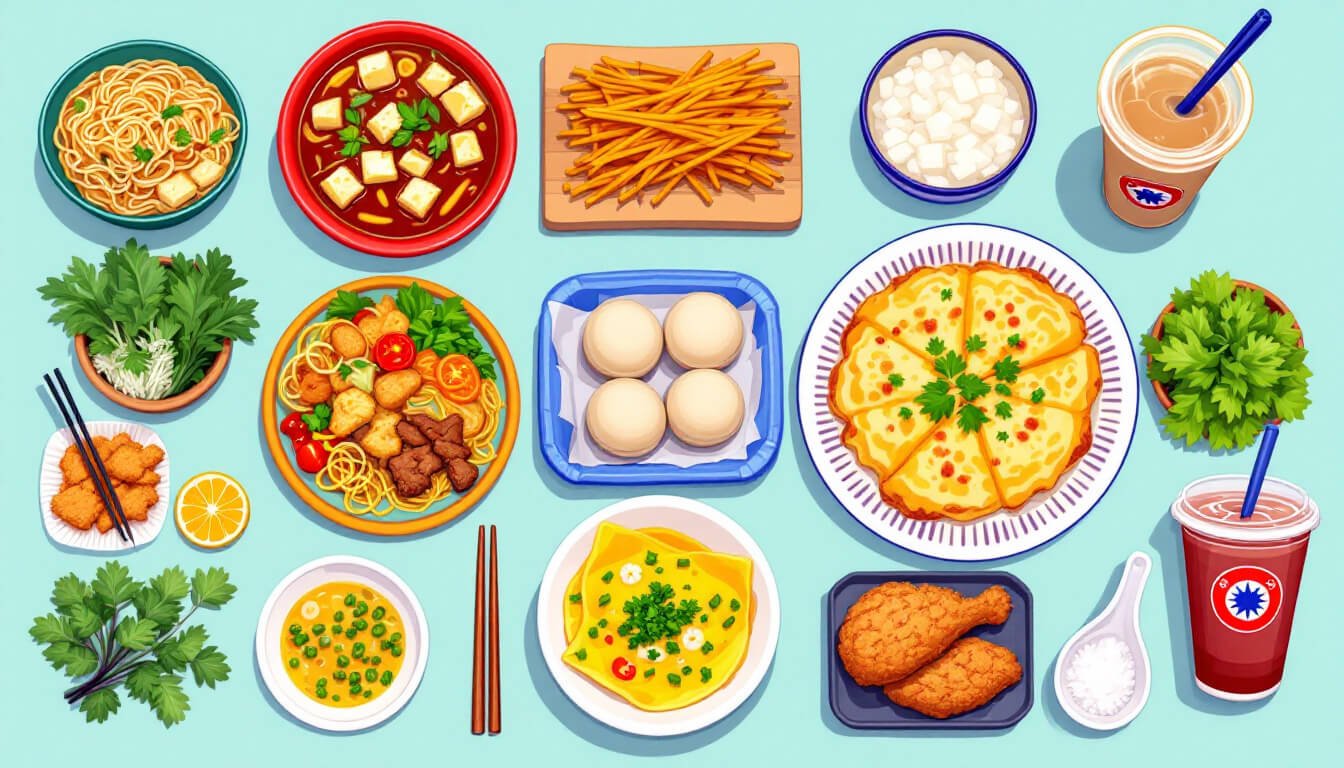
If you only have a few nights in Taiwan, these are the dishes you cannot skip. They are the canon — the foods every Taiwanese person grew up eating, the ones that define the country’s flavor identity. Try at least 10 from this list, and you’ll have a baseline understanding of why Taiwan punches so far above its weight gastronomically. For a deeper dive into the night-market-specific classics, our companion guide to Taiwan night market food walks through seven legendary dishes in detail.
- Stinky tofu (臭豆腐, chòu dòufu) — Fermented tofu deep-fried until golden, served with pickled cabbage and chili sauce. The pungent aroma is famous; the taste is creamy, salty, and addictive. Best at Shenkeng Old Street.
- Beef noodle soup (牛肉麵, niúròu miàn) — Taiwan’s unofficial national dish. Hand-pulled wheat noodles in a deep, dark broth braised with star anise, soy sauce, and slow-cooked beef shank. Yongkang Street in Taipei is the pilgrimage site.
- Gua bao (割包) — The original “Taiwanese hamburger.” Steamed bun stuffed with braised pork belly, pickled mustard greens, crushed peanuts, and cilantro. Sweet, salty, fatty, fresh.
- Oyster omelet (蚵仔煎, ô-á-jiān) — Plump oysters folded into a sweet-potato-starch batter, topped with greens and a tangy pink sauce. Order at any market — but Shilin’s version is iconic.
- Xiao long bao (小籠包) — Soup dumplings. Thin-skinned, pork-filled, pleated 18 times by tradition. Din Tai Fung made them famous; the city is full of equally good shops at one-third the price.
- Pepper bun (胡椒餅, hújiāo bǐng) — A clay-oven bun stuffed with pork, scallions, and an aggressive hit of white pepper. Best fresh from a Fuzhou-style street oven near Raohe.
- Scallion pancake (蔥抓餅, cōng zhuā bǐng) — Flaky, chewy, pan-fried wheat pancake. Often topped with egg, cheese, or basil. Yongkang Street vendor Tian Jin Cong Zhua Bing is legendary.
- Lu rou fan (滷肉飯) — Finely minced pork belly braised in soy, five-spice, and sugar, ladled over white rice. The platonic ideal of Taiwanese comfort food, available at almost every breakfast stall too. Read our deep dive on lu rou fan for the north-south style war.
- Fried chicken cutlet (大雞排, dà jīpái) — A chicken breast pounded flat the size of your face, breaded with sweet-potato flour, fried, and dusted with plum or basil powder. Hot-Star Large Fried Chicken started this craze worldwide.
- Bubble tea (珍珠奶茶, zhēnzhū nǎichá) — Born in Taichung in the 1980s. Tapioca pearls in sweetened milk tea. Sold on every block. Local favorites include Chun Shui Tang (the original) and Tiger Sugar.
- Small sausage in big sausage (大腸包小腸) — A grilled pork sausage tucked inside a hollowed-out sticky-rice “sausage.” Brush with sweet-spicy sauce, eat with garlic clove on the side.
- Salt and pepper chicken (鹹酥雞, xián sū jī) — Bite-sized chicken pieces fried with basil leaves and sprinkled with five-spice salt. Ordered by the bag, eaten with toothpicks.
- Oyster vermicelli (蚵仔麵線, ô-á mī-sòaⁿ) — Thick, savory rice-vermicelli soup studded with oysters and pork intestine. The thickener is sweet potato starch; eat it with black vinegar.
- Coffin bread (棺材板, guāncái bǎn) — A Tainan invention: thick-cut fried toast hollowed out and filled with chicken stew. Named for its shape. Read the story of how it was invented in 1950s Tainan.
- Pig’s blood cake (豬血糕, zhū xiě gāo) — Sticky rice steamed in pig’s blood, skewered, dipped in peanut powder and cilantro. Texture-forward, completely delicious once you commit.
Vegetarian & Vegan Street Food in Taiwan (The Buddhist Tradition)
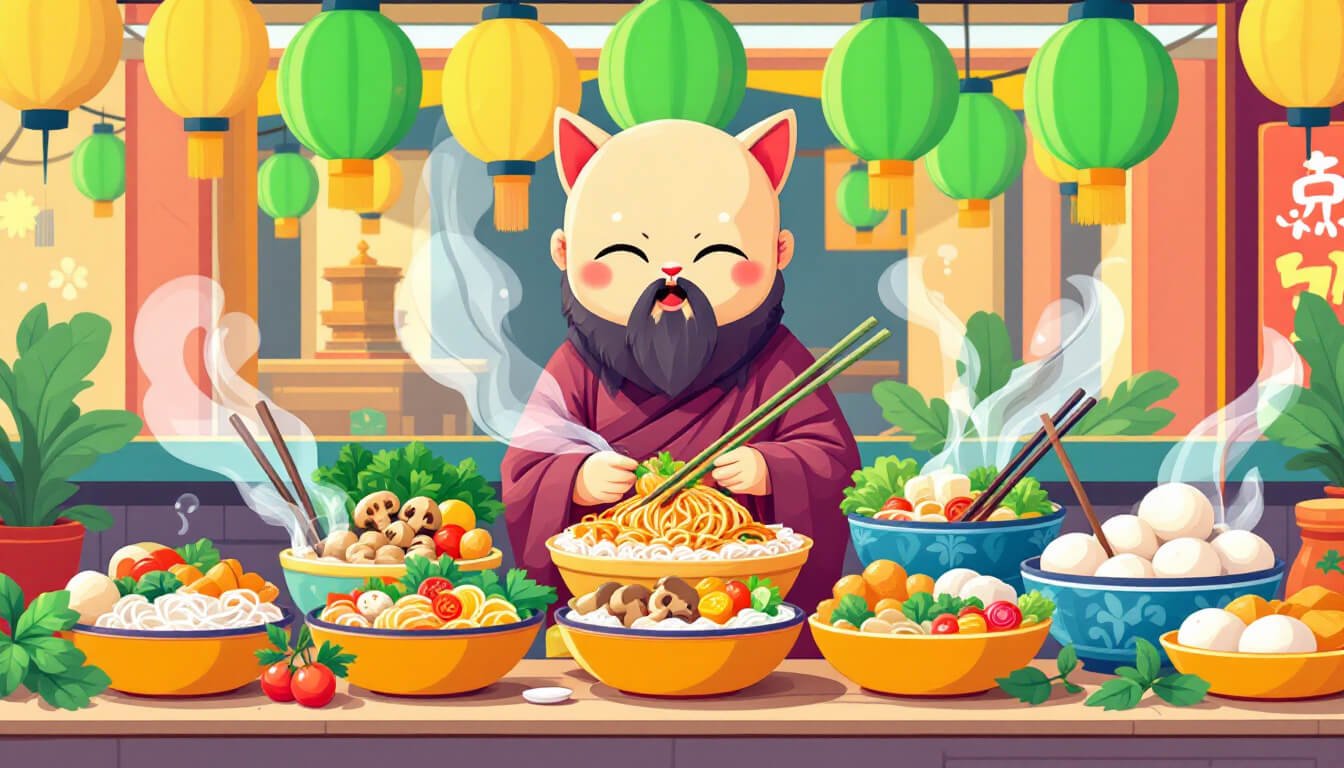
Here is the section nobody else writes: Taiwan has one of the highest vegetarian populations in Asia. Roughly 13–14% of Taiwanese people eat vegetarian regularly, driven by a centuries-old Buddhist tradition and a strong modern environmental movement. The result is that nearly every night market has vegetarian stalls (look for the symbol 素, sù, meaning “plain/pure”), and many restaurants have separate vegetarian menus. Strict Buddhist vegetarian (chún sù) excludes the five pungent vegetables — garlic, onion, scallion, chives, and leek — but most secular vegetarian food is more relaxed.
Must-try vegetarian street foods:
- Vegetarian beef noodle soup (素牛肉麵) — Made with wheat gluten “beef” that has the chew and umami depth of the original. Many beef noodle shops keep a vegetarian variant.
- Steamed mugwort cakes (草仔粿, tshàu-á-kué) — Sticky rice cakes wrapped around mushrooms, dried radish, or sweet bean. Wrapped in banana leaf, faintly herbal.
- Sweet potato balls (地瓜球, dìguā qiú) — Hollow fried orbs of sweet-potato dough. Crunchy outside, mochi-chewy inside. Universal night market snack.
- Taro balls (芋圓, yùyuán) — Chewy taro and sweet-potato dumplings served in shaved ice or hot soup. Jiufen’s old-street version is the original.
- Tofu pudding (豆花, dòuhuā) — Silken tofu in sweet ginger or sugar syrup, topped with peanuts, red bean, or taro balls.
- Scallion pancake without egg — Ask for “sù de” (素的, “the plain one”) to skip the egg and meat fillings.
- Mushroom stew skewers (素滷味) — A self-serve cold case of vegetables, mushrooms, tofu, and seaweed. Pick your skewers; the vendor warms them in master stock and snips them into a bowl.
- Black sugar mochi (黑糖麻糬) — Hand-stretched glutinous rice cakes rolled in peanut and sesame powder. Hualien’s Zenglin Stretching Mochi is the original viral version.
- Bubble tea — All major chains have non-dairy options; ask for dòunǎi (soy milk, 豆奶) or yànmài nǎi (oat milk, 燕麥奶).
- Fried oyster mushroom (杏鮑菇) — Skewered king oyster mushrooms, grilled, brushed with sweet soy and white pepper. A vegan stand-in for grilled squid.
Vegan-only neighborhoods worth visiting: Taipei’s Da’an District has the highest density of vegan and vegetarian restaurants in Asia per square kilometer, with over 200 establishments. Vegan visitors should also stop at Ningxia Night Market, where multiple Buddhist-tradition stalls have operated for generations. Our Taiwan traditional food guide covers the Buddhist culinary heritage in more depth.
Regional Specialties: What to Eat Where (Taipei vs. Tainan vs. Kaohsiung)
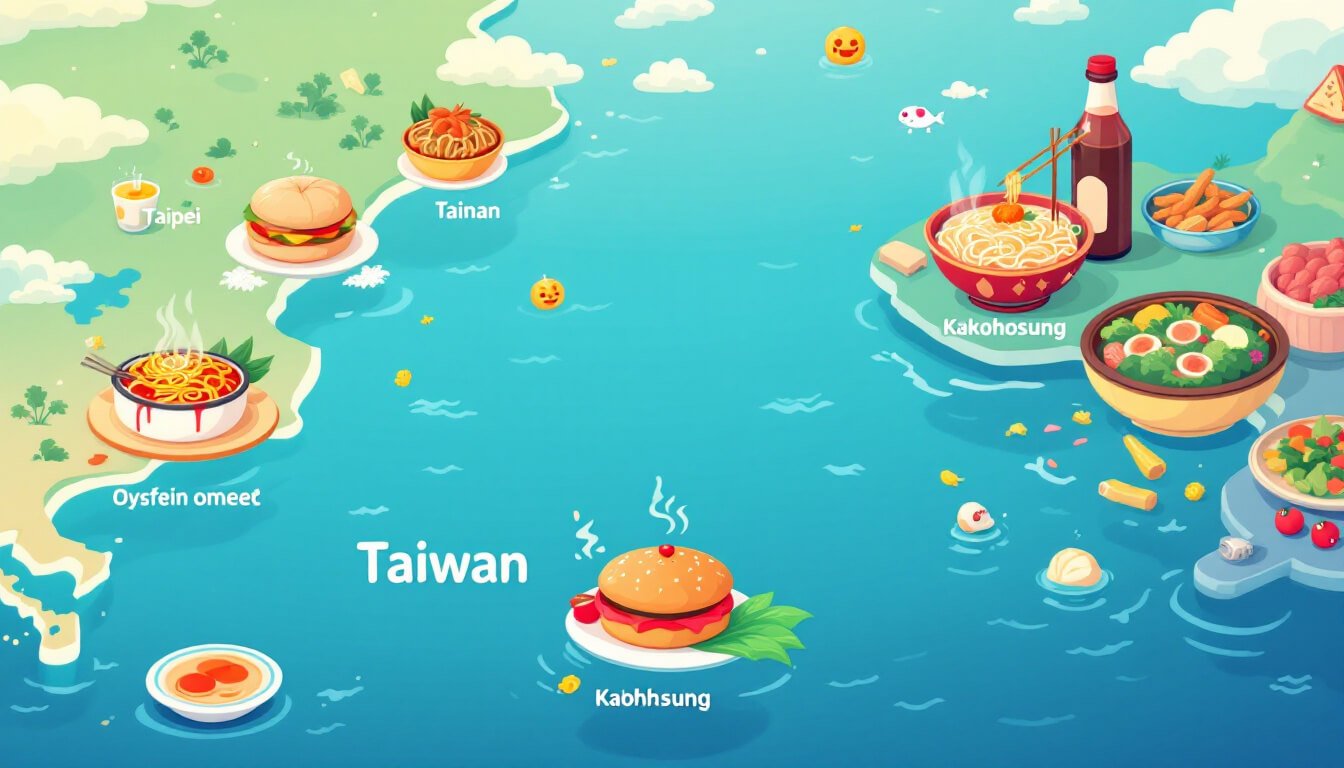
Most guides treat Taiwan street food as one homogenous category. It isn’t. The island’s three major culinary regions — northern (Taipei), southern (Tainan), and southern coastal (Kaohsiung) — have evolved distinct flavor profiles, signature dishes, and even ordering customs. Eating the right dish in the right city is the difference between a tourist meal and a great one.
Taipei (Northern Taiwan): Refined, Salty, Cosmopolitan
Northern flavors are sharper, saltier, and more influenced by Fujianese and northern Chinese migration. This is the region for soup dumplings, beef noodle soup (the entire dish was popularized in Taipei after 1949), gua bao, oyster omelets, and pepper buns. Don’t miss: Yongkang Street’s beef noodle alley, Raohe Night Market’s pepper buns, Ningxia Night Market’s taro balls. Our Raohe Night Market guide and Shilin Night Market guide map the best individual stalls.
Tainan (Southern Taiwan): The Sweet Capital
Tainan is Taiwan’s oldest city — the former capital under both the Dutch and Qing eras — and it has the country’s most developed and distinctly sweet street food tradition. Locals add sugar to almost everything: soy sauce, broths, even pickles. Must-try Tainan specialties: danzai noodles (擔仔麵) with shrimp and minced pork, coffin bread (棺材板), milkfish belly soup (虱目魚肚湯), shrimp rolls (蝦捲), and the city’s famous beef soup (牛肉湯) served with raw beef poached at the table. Visit Garden Night Market on Thursdays, Saturdays, and Sundays; Wusheng Night Market the other nights.
Kaohsiung (Southern Coastal): Seafood, Fruit, and Hakka Influence
Kaohsiung’s port-city heritage means seafood dominates. The city is also a stronghold of Hakka cooking and tropical fruit. Local specialties: papaya milk (木瓜牛奶) at Liuhe Night Market, milkfish congee for breakfast, grilled mackerel, Hakka lei cha (擂茶), and bowls of aiyu jelly (愛玉) with lemon. Tainan and Kaohsiung pair well as a single food trip — they’re 50 minutes apart by high-speed rail.
Speaking of bringing Taiwan’s street food obsession home — fans of the country’s funkiest food often want a piece of that culture for the desk. Our Stinky Tofu King Night Markets Taiwan Street Food Mousepad is exactly that kind of wink — pure night-market spirit in a form that fits next to your laptop.

Wear Your Boba Obsession
Bubble tea was invented in Taichung in the 1980s and conquered the world. Our kawaii Taiwan Bubble Tea Cat tee captures that pop-culture energy in a soft, everyday wearable.
How to Order: Essential Mandarin Phrases for Night Markets
Most Taipei night-market vendors will not speak conversational English. The good news: you don’t need much Mandarin to order well. A dozen phrases plus a smile will carry you through a week of stalls. The phrases below use Romanized pinyin with tone marks; the numbers indicate tone (1 high, 2 rising, 3 dipping, 4 falling). If you can hit the tones, great. If you can’t, point at what someone else is eating — universally accepted.
Essential ordering vocabulary:
- “Hello” — nǐ hǎo (你好) — Universal greeting. Smile.
- “One of these, please” — yí ge zhège, xièxie (一個這個,謝謝) — Point and say this.
- “How much?” — duōshǎo qián? (多少錢?) — The single most useful phrase.
- “Spicy / not spicy” — là / bú là (辣 / 不辣) — Critical for chili-shy travelers.
- “Vegetarian / vegan” — sù shí / chún sù (素食 / 純素) — “Sù” means plain or vegetarian; “chún sù” means strict vegan/Buddhist vegetarian.
- “No cilantro” — bú yào xiāngcài (不要香菜) — Save yourself if you’re a cilantro-tastes-like-soap person.
- “Takeaway” — wài dài (外帶) — Useful when stalls have no seating.
- “To eat here” — nèi yòng (內用) — When you do want a plastic stool.
- “Delicious!” — hǎo chī! (好吃!) — Always appreciated by vendors.
- “Thank you” — xièxie (謝謝) — Polite end to every transaction.
- “I don’t want pearls” — bú yào zhēnzhū (不要珍珠) — For bubble tea minimalists.
- “Less sugar / less ice” — shǎo táng / shǎo bīng (少糖 / 少冰) — Standard bubble tea customization.
For numbers — useful when vendors hold up fingers to indicate price — learn one through ten: yī, èr, sān, sì, wǔ, liù, qī, bā, jiǔ, shí. Most prices land between NT$30 and NT$200, so you really only need one through nine plus “hundred” (bǎi). “Three hundred” = sānbǎi. Pay in cash — most stalls don’t accept cards.
Street Food Prices: What to Expect in 2026
Inflation has touched Taiwan’s street food, but it remains one of the world’s best food values. A satisfying full meal at a night market — say, beef noodle soup, a side of dumplings, and bubble tea — typically runs NT$200–300 (US$6–9). Compared to comparable cities like Tokyo or Singapore, Taipei delivers 30–50% more food value per dollar. Here’s what to expect in 2026 NT$:
- Stinky tofu: NT$50–80 (US$1.50–2.50) for a plate of four pieces with sides
- Beef noodle soup: NT$160–280 (US$5–9) for a standard bowl; premium shanks NT$320+
- Gua bao: NT$50–70 per bun (US$1.50–2.20)
- Oyster omelet: NT$75–100 (US$2.30–3.10)
- Xiao long bao: NT$160–240 for 8–10 dumplings at a market stall; NT$280+ at Din Tai Fung
- Pepper bun: NT$55–75 each (US$1.70–2.30)
- Scallion pancake plain: NT$45–60; with egg and cheese NT$80–110
- Fried chicken cutlet (Hot-Star size): NT$80–110
- Bubble tea: NT$55–90 for a medium standard cup; premium chains (Tiger Sugar, The Alley) NT$120–180
- Sweet potato balls: NT$40–60 per bag
- Small sausage in big sausage: NT$60–80
- Lu rou fan small bowl: NT$35–50 (the cheapest filling meal in the country)
Cash is king. Most night market stalls do not accept cards or LINE Pay. ATMs are widely available — every 7-Eleven has one, and they accept foreign cards. Keep small bills (NT$100 and NT$50 coins are gold). Tipping is not customary and can confuse vendors; round up to the nearest NT$10 if you want to leave change. For visitors planning a longer Taiwan food trip, our Taiwan budget shopping guide covers what else costs less than you’d expect.
Street Food Etiquette: Unwritten Rules Every Visitor Should Know
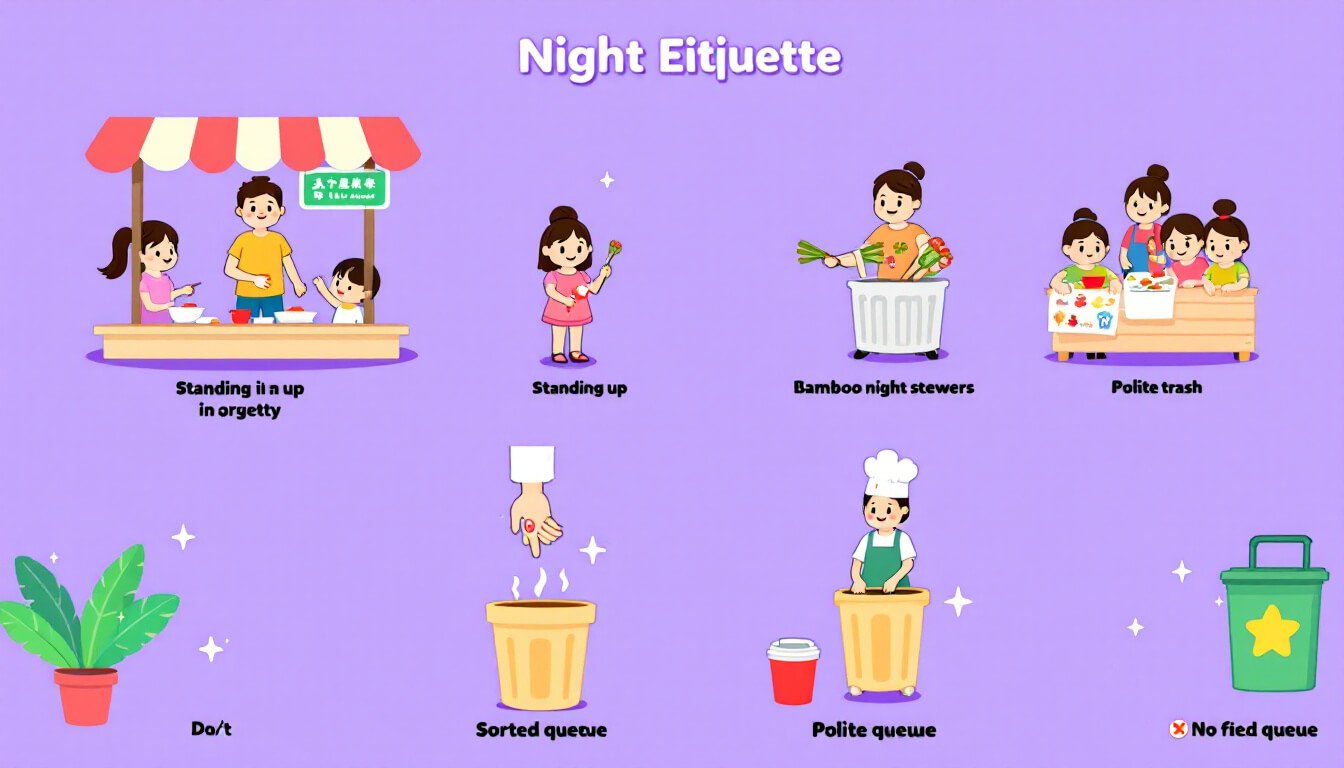
Taiwan night markets are forgiving spaces — vendors expect foreign visitors and rarely take offense. But a handful of unwritten rules will make you blend in, get faster service, and earn the small smiles that turn an okay meal into a memorable one. These are the conventions every Taiwanese kid absorbs by age five that nobody bothers to write down for tourists.
The basics:
- Eat standing up if there’s no seating. Many stalls have no tables. Stand to the side, finish quickly, return the dish, move on. Don’t park yourself in front of the stall and block customers.
- Don’t ask to take photos before ordering. Buy first. Then snap. Vendors are happy to pose if you’ve bought something; photographing their stall like a museum exhibit without buying is considered rude.
- Use the bamboo skewer bins. Many grilled foods come on skewers; markets provide tall narrow trash bins specifically for them. Don’t toss skewers into the regular trash or on the street.
- Sort your trash. Taiwan is obsessive about recycling. Look for color-coded bins: blue for recyclables, red/orange for food waste, green for general trash. When in doubt, ask vendors.
- Tipping is not a thing. Don’t tip stall vendors. Round up to the nearest NT$10 only if you want to skip the coin change.
- Queue without queuing. Taiwanese vendors operate on a soft queue: stand near the counter, make eye contact when ready, and the vendor will signal when it’s your turn. Don’t shout your order; wait to be acknowledged.
- Eat what you order. Wasting food is frowned upon. Order one dish at a time and only get more if you actually want more.
- Don’t expect English menus. Most stalls have only Chinese signage. Photo menus or pointing at someone else’s food are accepted strategies.
- Cilantro is everywhere. If you hate cilantro, learn “bú yào xiāngcài” (no cilantro) and use it preemptively. It comes on many savory dishes by default.
- Walk and eat — but carefully. Walking while eating is fine, but Taipei’s pavement is busy with scooters; eat near the stall or off to the side.
Frequently Asked Questions About Taiwan Street Food
Is Taiwan street food safe to eat? Yes, broadly speaking. Taiwan’s food safety regulations are strict by Asian standards, vendors are inspected, and the country’s tap water is treated to a higher standard than most of the region. Stick to stalls with high turnover (fresh food cooked to order), and you’ll be fine. Travelers with sensitive stomachs may want to ease in slowly — the cilantro, fermentation, and oils can be heavy at first.
What’s the difference between a night market and a day market? Night markets (yèshì) operate roughly 5 PM to midnight, focused on prepared foods, snacks, drinks, and merchandise. Day markets (chuántǒng shìchǎng) operate roughly 6 AM to noon and sell raw ingredients, breakfast foods, and household goods. Both are worth visiting; both have stall food.
Can I bring street food back to my hotel? Yes, almost everything is available as takeaway (wài dài). Vendors pack soups in heat-sealed plastic bags with separate rice and toppings — a Taiwanese specialty.
How many night markets should I visit? Three or four across a one-week trip is plenty. Don’t try to do them all. Pick one famous tourist market (Shilin or Raohe), one neighborhood market (Tonghua or Linjiang), and one regional market if you travel outside Taipei.
Are credit cards accepted at street stalls? Almost never. Bring cash. The major branded chains (Din Tai Fung, the larger bubble tea chains) take cards; independent stalls do not.
What time should I go? 6:30–9:00 PM is the sweet spot at most night markets — vendors are open, food is fresh, crowds are manageable. Avoid Saturday nights at Shilin and Raohe (insanely crowded) unless you love a press of humanity.
Is anything vegetarian-friendly at random night markets? Yes. Mochi, taro balls, sweet potato balls, scallion pancakes (ask for no egg), grilled mushrooms, tofu pudding, bubble tea (with non-dairy options), and roasted corn are all reliably vegetarian. See the dedicated vegetarian section above.
What’s the single best night market in Taiwan? Locals will argue forever, but Ningxia Night Market in Taipei is the most concentrated, most traditional, and has the highest density of Bib Gourmand recognitions. For sheer scale, Shilin. For old-Taipei feel, Raohe. Outside Taipei, Fengjia (Taichung) is the country’s largest.
Final Thoughts: How to Actually Experience Taiwan Street Food
The biggest mistake first-time visitors make is treating Taiwan street food like a checklist. Don’t sprint through ten markets in five nights ticking off dishes. Instead, pick a market, spend two hours, eat slowly, and let the rhythm of the place wash over you. Talk to vendors with broken Mandarin. Notice which stalls have lines and which don’t (the lines are almost always right). Share food. Sit on the plastic stool. Drink the soup before the noodles get soft.
Taiwan’s street food is more than dinner — it’s the country’s most important social institution outside of family. To eat it well, you have to slow down. The dishes will still be there tomorrow night, and the night after that, and for the next 70 years, just as they have been for the last 70. The night market is forever. You just have to show up.
If this guide helped, you’ll love our deep dives on individual classics like Taiwan traditional food, Taiwan snacks worth bringing home, and the most famous Taiwanese dishes overall. Every dish has a longer story; every stall has a history.
Get a Taste of Taiwan in Your Inbox
Weekly Taiwan culture deep dives, street-food field reports, and first dibs on new merch drops. No spam — just the good stuff from the island.

Grab a Free Taiwan Sticker!
Drop your email and we’ll send you a limited-edition Taiwan sticker — plus insider access to new merch drops and island vibes.
No spam. Unsubscribe anytime.