Taiwan Alishan: The Tea Mountain, Sunrise, and Tsou Story Behind Taiwan’s Most Visited Park
You’ve probably seen the photos. A boardwalk full of bundled-up travelers in pre-dawn darkness, then orange light spilling across an endless sea of clouds as the sun cracks the horizon. That’s Taiwan Alishan — the most visited high-altitude park on the island and the only place where Taiwan’s tourist crowds happily set their alarms for 3 a.m.
But Alishan is so much more than a sunrise. It’s the ancestral home of the Tsou indigenous people, a 6,000-year-old culture that named these mountains long before the first Japanese surveyor mapped them. It’s where Taiwan’s best high-mountain oolong tea is grown, on terraced slopes that sit in cloud nine months a year. And it’s where a stubborn little narrow-gauge railway — built by the Japanese in 1912 to haul cypress logs out of the forest — still climbs 2,216 meters into the mist, one switchback at a time.
If you only have time for one mountain in Taiwan, this is it. Here’s everything you need to know about Alishan — the people who shaped it, the tea that grows there, the trains that survived it, and what to actually do when you arrive.
Why Alishan Sits at the Top of Every Taiwan Bucket List

Alishan isn’t actually one mountain — it’s a 415-square-kilometer national scenic area covering the western edge of the Yushan range in Taiwan’s central highlands. The peaks here top out around 2,663 meters at Mt. Datasi, but most visitors spend their time around the Alishan Forest Recreation Area, which sits at a breathable 2,216 meters above sea level.
What makes the park so magnetic is the combination of things you can do in a single morning. You can wake up at 3 a.m., catch the Forest Railway’s special sunrise train up to Zhushan Observation Platform, watch the famous yúnhǎi (云海) or sea of clouds light up gold and pink, then walk back through 3,000-year-old red cypress groves before lunch. By afternoon you’re sipping oolong at a working tea farm whose owner’s family has been there for four generations.
Nowhere else in Taiwan compresses so much — geology, indigenous culture, tea craft, Japanese colonial history, primeval forest, alpine flora — into such a small footprint. The national park gets roughly 2.5 million visitors a year, which makes it Taiwan’s most popular high-altitude destination by a wide margin. And yet, walk five minutes off the main loop trail and you’ll often find yourself completely alone in the cypresses.
One detail tourists rarely register: Alishan is also a township. The Alishan Township in Chiayi County has just 5,374 residents (as of January 2023), most of them Tsou indigenous people living in small mountain villages like Dabang, Lijia, and Tefuye — well off the scenic-area tourist track. The scenic area you visit is essentially borrowed land. Which brings us to the people who got there first.
The Tsou People: Alishan’s First Storytellers

Long before “Alishan” had a Chinese name, the Tsou people called this place Psoseongana. Their oral histories — which anthropologists now date back at least 6,000 years — place their origin not in these mountains but on a peak called Patungkuonu (Yushan, Taiwan’s highest mountain), where their ancestors are said to have descended from the sky after a great flood. Alishan was where they settled when the waters receded.
The Tsou are one of Taiwan’s 16 officially recognized indigenous nations — you can read about all of them in our deep-dive on Taiwan’s indigenous peoples — but the Tsou are unusual even within that group. There are only about 6,500 of them today, making them one of the smallest Austronesian populations on the island. Their language, also called Tsou, is taught in just a handful of mountain schools. And historically they were the only Taiwanese indigenous group whose territorial structure was organized around two large communal “men’s houses” called kuba, which still stand today in Dabang and Tefuye villages.
Two ceremonies dominate the Tsou ritual calendar and both are still observed. Mayasvi, held in February, is a war-and-victory ritual that originally celebrated successful headhunts (yes, the Tsou were one of Taiwan’s headhunting peoples until the early 20th century) and now commemorates the warrior tradition with chanting, the singing of the Tsou flag-pole, and offerings to the war god Yiafafeoi. Homeyaya, held in July or August, is the millet-harvest festival — older Tsou will tell you it’s the more spiritually significant of the two.
What’s tragic, and worth knowing before you visit: the Japanese colonial administration (1895–1945) banned Tsou rituals, forced Japanese names on the people, and relocated entire villages to make logging easier. The Kuomintang government that arrived in 1945 wasn’t kinder — it suppressed indigenous languages in schools well into the 1980s. Most Tsou elders alive today grew up forbidden to speak their own language. When you ride that nostalgic red Forest Railway up the mountain, you’re following tracks built by people who took the land from the people who named it.
If you want to engage with Tsou culture rather than just photograph the scenery, skip the main Alishan Forest Recreation Area for a day and head down to Dabang or Tefuye village. Dabang has a small but excellent Tsou cultural museum, and the village’s kuba (men’s house) is open to respectful visitors. Several Tsou families also run homestays and tea farms — buying tea directly from them is one of the most meaningful souvenirs you can bring home from Taiwan.
Alishan High-Mountain Oolong: Tea That Tastes Like the Clouds
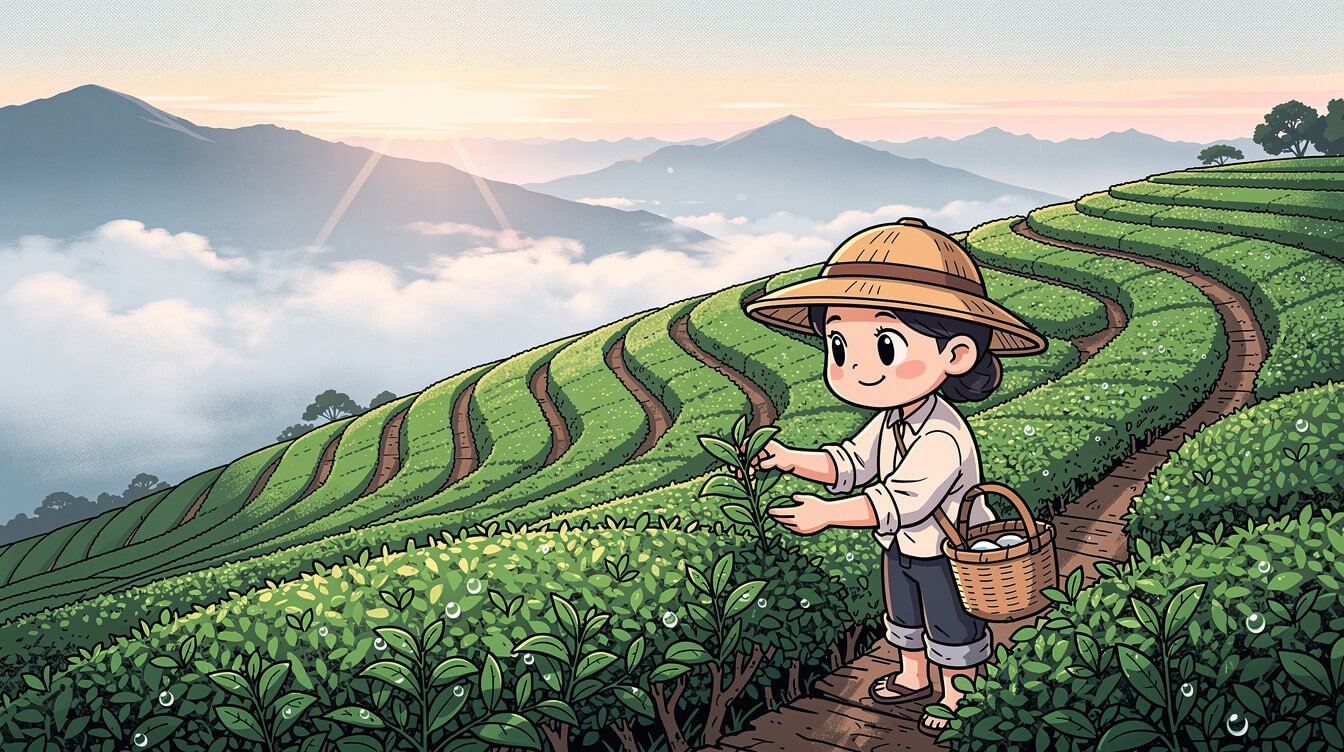
If you ask any Taiwanese tea drinker what the best oolong on the island is, you’ll get one of two answers: Lishan or Alishan. The really obsessive ones will tell you it depends on the lot, the season, and how the weather behaved during the spring picking — but the point is that Alishan sits in tea’s top tier for a reason.
The reason is altitude. Alishan’s tea fields sit between 1,000 and 1,600 meters above sea level, in a zone Taiwanese growers call gāoshān chá (高山茶) — “high mountain tea.” At that elevation, the temperature swing between cool nights and sun-bright days slows the tea bush’s growth, concentrating amino acids and aromatic compounds in the leaves. The near-constant cloud cover diffuses the sunlight, which keeps the leaves tender and reduces the bitterness you get from low-elevation tea. Add Alishan’s slightly acidic, mineral-rich volcanic soil and you get a cup that’s unmistakable: thick mouthfeel, a buttery floral aroma that tea nerds describe as “milky orchid,” and a long, sweet aftertaste that lingers minutes after you swallow.
Alishan oolong is what’s called a “lightly oxidized” tea — typically 15–25% oxidized, compared to a Tieguanyin at 30–40% or a heavily roasted Dong Ding oolong at 40–60%. The result is a tea that’s closer in color and character to green tea than to a roasted oolong, but with the depth and complexity that only oxidation can produce. If you’ve only ever had supermarket oolong tea bags, an unrolled Alishan winter pick is a religious experience.
The best way to taste it is at the source. Shizhuo village, on the road up to Alishan, is the tea capital of the region — there are dozens of family-run tea farms within a 10-minute drive, many of which welcome walk-in tastings. Most charge a small fee (NT$100–300, or about US$3–9) for a proper gōngfū brewing session where you’ll taste three or four different lots side by side. Buy directly from the farmer if you can — you’ll pay less than you would in a Taipei tea shop, you’ll get tea that was picked weeks rather than years ago, and your money goes straight to the people who actually grew it.
If you want to bring a little Alishan tea ritual home, our Taiwan Aboriginal Geometric Pattern Mug pairs beautifully with high-mountain oolong — its earthy terracotta-and-forest-green pattern is inspired by the textile traditions of Taiwan’s indigenous tribes, including the Tsou. It also holds heat well, which matters when you’re trying to coax three or four steepings out of a single scoop of leaves the way Taiwanese tea growers do.
For more on Taiwan’s tea landscape outside Alishan, our complete Taiwan oolong tea guide covers every variety, region, and brewing method — but Alishan’s the one you’ll keep coming back to.
The Forest Railway the Japanese Built and Taiwan Refused to Lose
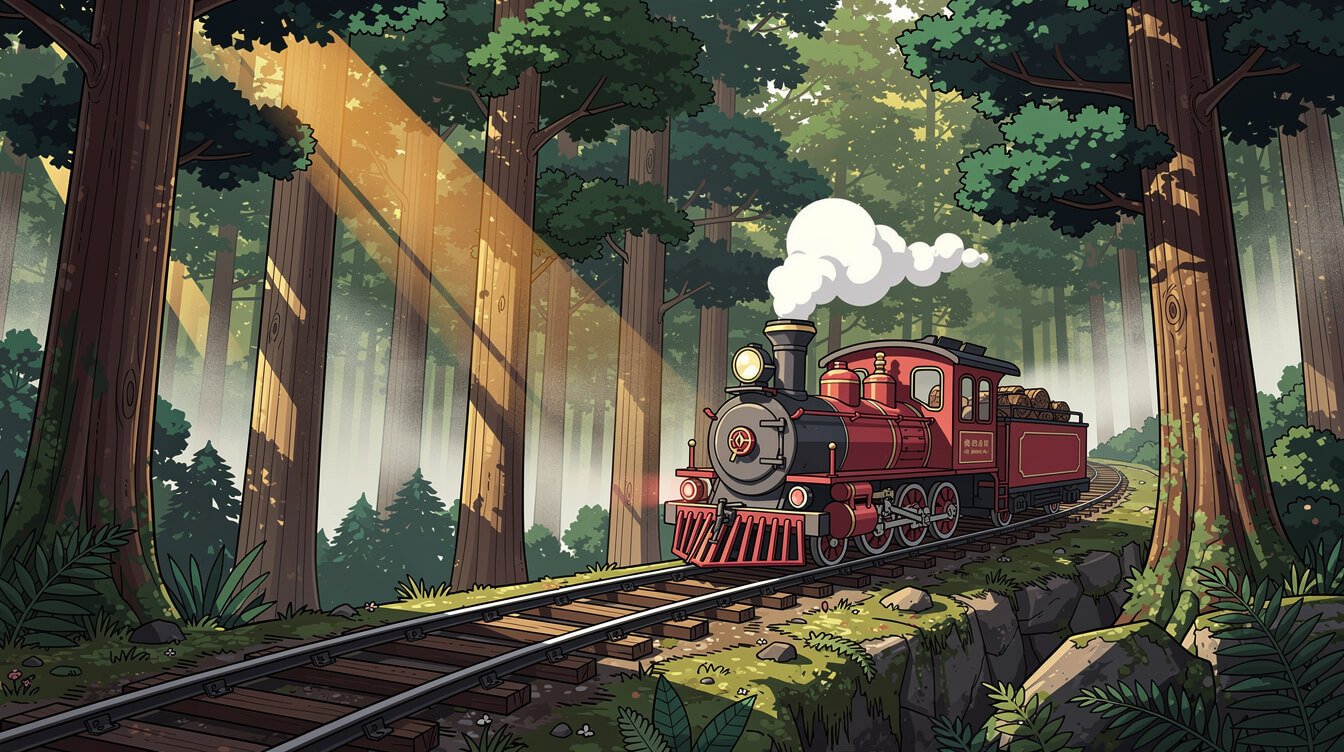
The Alishan Forest Railway is one of only three remaining mountain railways in the world that uses Z-shaped switchback ascents to climb sheer terrain (the others are in India and Chile). It was built by the Japanese colonial government starting in 1899 — not for tourists, but to haul cypress logs out of the mountains for shrine construction back in Japan. Construction was brutal: 11 years, 50 tunnels, 77 bridges, and hundreds of Taiwanese laborers dead from accidents, malaria, and exposure.
When the railway opened in 1912, it climbed 2,216 meters in just 71.4 kilometers of track — one of the steepest gradients of any non-cog mountain railway anywhere. To gain altitude on such a tight footprint, the engineers used three remarkable solutions: spiral loops where the train circles around and over itself, Z-shaped switchbacks where the train reverses direction at each turn, and tunnels that corkscrew through solid rock to gain height inside the mountain. From above, sections of the track look like a child’s drawing of railway madness.
The logging stopped in the 1970s when the government finally banned commercial felling in old-growth forests, but the railway survived because of tourists. For a few decades it was Taiwan’s most photographed train: a red-and-yellow narrow-gauge train climbing through fog past 3,000-year-old red cypresses. Then came August 2009 and Typhoon Morakot, the worst storm Taiwan had seen in 50 years. Morakot dropped 2,777mm of rain on Alishan in 72 hours, triggering landslides that destroyed major sections of the track. For years, the only operating segment was the short Zhaoping–Zhushan sunrise leg at the top.
The repairs took 15 years and cost more than the original construction. In July 2024, the full Chiayi–Alishan main line finally reopened for the first time since the typhoon, a moment so emotional for older Taiwanese that the inaugural train sold out within minutes. Today you can once again board a slow narrow-gauge service at Chiayi Station (sea level), climb 3.5 hours up the mountain, and step off at Alishan Station inside a cypress forest at 2,216 meters. The Zhaoping–Zhushan sunrise shuttle runs daily, departing roughly 90 minutes before dawn.
A practical note: the sunrise train sells out in peak season (March–May for cherry blossoms, summer weekends, and Lunar New Year). Book through the Taiwan Railways e-booking site at 8 a.m. exactly 14 days before your visit. The electric shuttle bus is a fine backup if you miss out, and arguably better for sunset and night photography of the surrounding forests.
For broader context on Taiwan’s railway network — including the Taiwan High-Speed Rail Map that gets you to Chiayi in 80 minutes from Taipei — we’ve mapped the whole thing.
What to Actually Do When You Get There
Most travelers stay one or two nights in the small cluster of hotels just outside Alishan Station. That’s enough to see the major sights. If you’re tea-curious or hiking-curious, three nights gives you room to breathe. Here’s the realistic ranking of what to actually prioritize:
Catch the Sunrise at Zhushan Observation Platform
The headline act. The sunrise train leaves Alishan Station around 4 a.m. depending on the time of year — staff at your hotel will tell you the exact time the night before. The ride takes 25 minutes, then a 10-minute walk through dark forest brings you to the wooden platform. Bring layers (it’s often 5–8°C even in summer) and a thermos of tea. The sea of clouds appears about 70% of mornings; on the other 30% you’ll either see a clear sunrise without clouds or you’ll be inside the cloud and see nothing at all. Either way, you’re at 2,488 meters in a cypress forest at dawn — that’s not a bad consolation.
Walk the Sister Ponds and Giant Tree Trails
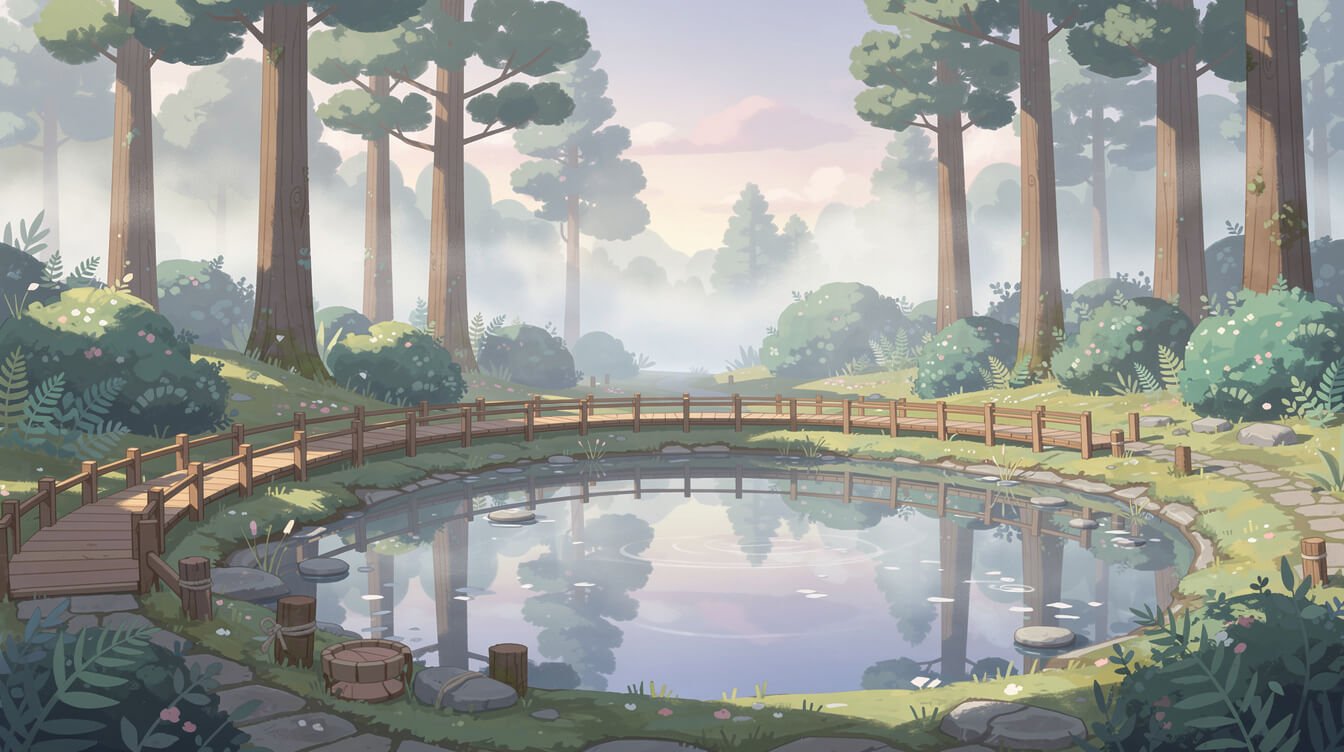
These are the two most beautiful trails inside the recreation area and they connect into a single 4-kilometer loop. The Sister Ponds (姊妹潭) are two small spring-fed mountain ponds named for two Tsou sisters who, in local legend, both died there over a doomed love affair — the kind of melancholy lake-naming Taiwan does especially well. The Giant Tree Trail winds past Alishan’s red cypress giants, some of which are over 2,000 years old and standing more than 50 meters tall. Allow 2–3 hours.
Visit Shouzhen Temple
The 17th-century Shouzhen Temple sits inside the recreation area and is dedicated to Xuantian Shangdi, a Taoist deity of the north. It’s worth a 20-minute stop. More interesting: the small Sacred Tree remains near the temple — what’s left of a 3,000-year-old red cypress that was struck by lightning in 1956 and finally felled in 1998 after slowly decaying. The stump alone is the size of a small car.
Tea Tasting at Shizhuo
If you only do one off-the-loop activity, do this. The drive from Alishan down to Shizhuo takes about 40 minutes. Several farms cluster around the village center and the Eryanping Trail. Hsinyi Tea Garden, Long Yun Leisure Farm, and Plum Garden are all reliable starting points. Bring cash — many small farms don’t take cards.
Sunset and Stargazing
Most tourists leave after sunrise, which is a tactical mistake. Alishan sunsets — best seen from the Cixin Pavilion or the area around Alishan Station — are often more dramatic than the sunrise, with the sun dropping behind layered ridges of mountains into the Taiwan Strait. After dark, Alishan is one of Taiwan’s best stargazing spots; the official observation deck above Zhaoping Station is dark-sky certified, and on clear winter nights you can see the Milky Way arching directly overhead.
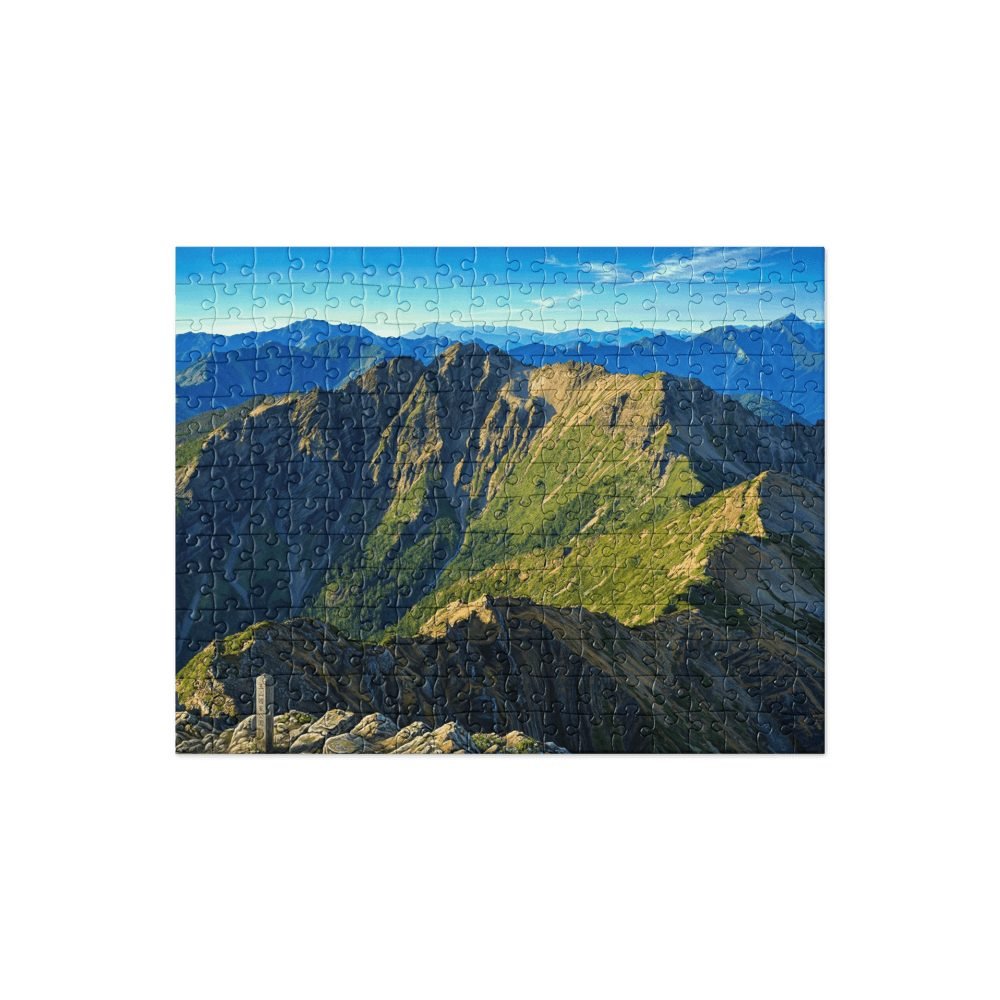
Bring Taiwan’s High Mountains Home
Our Jade Mountain hyper-realistic 1,000-piece jigsaw puzzle captures the ridges, light, and golden sunrise of Taiwan’s tallest peak — a meditative companion piece for anyone who’s stood in awe on an Alishan platform at dawn.
Cherry Blossoms, Sea of Clouds, and the Best Time to Go
Alishan sits at the rare altitude where Taiwan’s subtropical climate flips to something almost alpine. Daytime temperatures rarely exceed 22°C even in midsummer; winter nights occasionally drop below freezing. That moderate climate gives Alishan four genuinely distinct seasons — something most of low-elevation Taiwan doesn’t get — and each one has a defining moment.
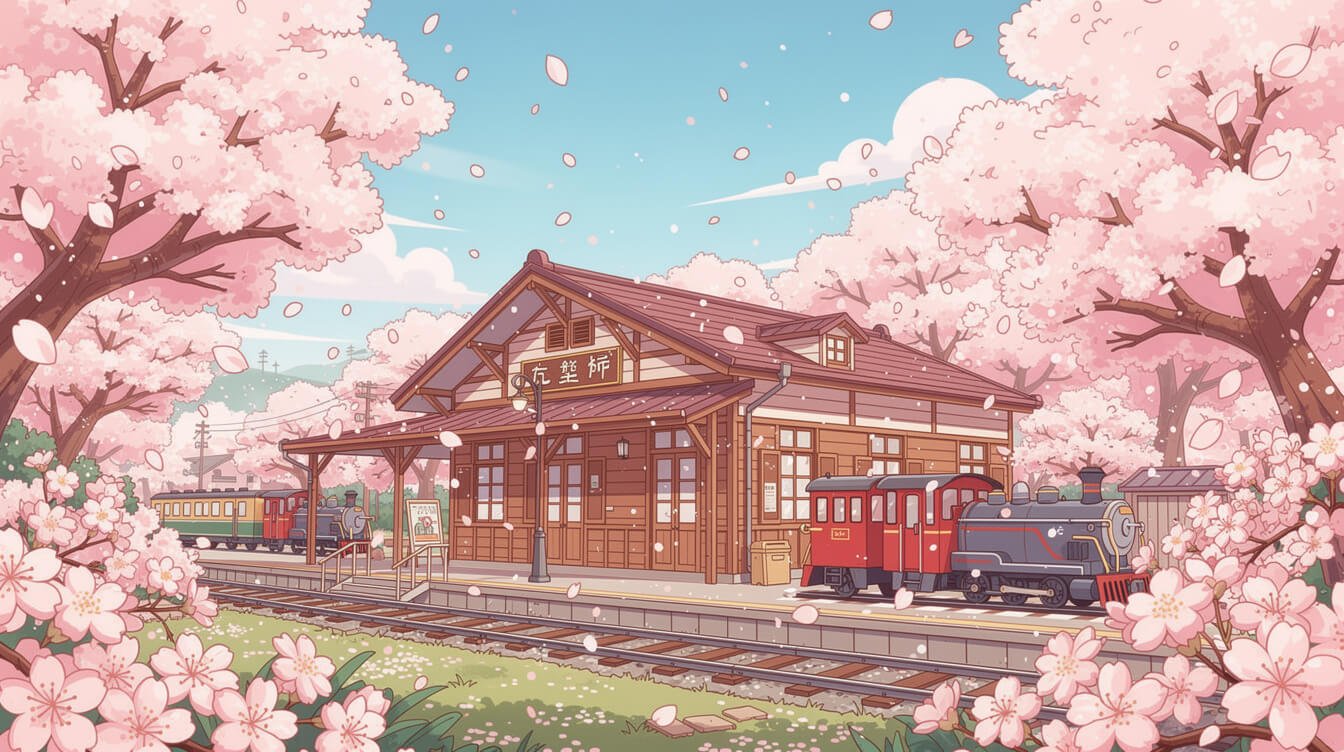
The headline season is cherry blossom season, which runs from mid-March through mid-April. The park is planted with around 1,800 cherry trees in dozens of varieties, including Yoshino, Kawazu, and Showa Sakura. The peak two-week window is the busiest tourist period of the year — accommodation prices double, the sunrise train sells out 14 days in advance, and the trails get crowded. It’s also undeniably stunning, especially the section around Alishan Station where Yoshino blossoms drift onto the railway tracks like pink snow.
If you’d rather skip the crowds, the secret seasons are May–June (firefly season, see our Taiwan firefly guide) and September–October, when summer’s heat finally breaks and the cypress forests turn their best shade of damp green. The sea of clouds appears most reliably in the cooler months — November through February are statistically the best — but those months are also the coldest, and you’ll need actual winter clothes for pre-dawn sunrise viewing.
One season to avoid if you can: July–August typhoon and rainy season. Alishan’s already wet climate (annual rainfall around 4,000mm) gets dramatic in summer. Trails close, the railway sometimes suspends service, and that famous sea of clouds gives way to actual cloud — meaning visibility of about ten meters. If you’re going in summer, plan for flexibility and stay an extra night.
For a month-by-month breakdown of when to visit Taiwan as a whole, see our complete best time to travel to Taiwan guide. The short version: late October is the universal sweet spot for Alishan specifically — cool, mostly clear, low crowds, and the maple-and-cypress combination is at its photogenic peak.
Frequently Asked Questions About Visiting Alishan
How do you get to Alishan from Taipei?
The fastest route is High Speed Rail (THSR) from Taipei Main Station to Chiayi Station (about 80 minutes), then either the restored Alishan Forest Railway (3.5 hours) or the public Bus #7322 (about 2.5 hours) up the mountain. Total door-to-door time is around 5 hours by train-and-rail, or 4 hours if you take the bus. Driving yourself is possible but the road has 50+ hairpin turns; only attempt it if you’re comfortable with mountain driving.
How much time should I spend at Alishan?
One night minimum, two nights ideal. With one night you can do sunrise plus the Sister Ponds–Giant Tree loop. With two nights you can add a tea-farm visit at Shizhuo or a day trip down to a Tsou village. Three nights only if you’re hiking the longer trails or seriously studying tea.
Do I need to book accommodation in advance?
Yes, especially during cherry blossom season (mid-March to mid-April) and any summer weekend or public holiday. The accommodation cluster inside the recreation area is small (about a dozen hotels) and books out months ahead during peak weeks. Alishan House and Alishan Gou Hotel are the two largest. For more space and lower prices, stay in Shizhuo at a tea-farm homestay and drive up for sunrise.
Is Alishan good for hiking?
Yes for moderate hikers. The main loop trails (Sister Ponds, Giant Tree, Plum Garden) are paved or boardwalk and suitable for almost anyone. For real hikers, the Eryanping Trail near Shizhuo offers stunning tea-farm views, and serious mountaineers can attempt the multi-day route from Alishan to Yushan, Taiwan’s highest peak at 3,952 meters (permits required).
Can I buy Tsou indigenous craft directly?
Yes. The Tsou cultural museum in Dabang village sells weavings, beadwork, and millet wine produced by local Tsou artisans. Several tea farms in Lijia and Tefuye are also Tsou-owned. Be respectful when photographing villages — ask first, and don’t enter the kuba (men’s house) without permission.
Is the Forest Railway always running?
The full Chiayi-to-Alishan main line reopened in July 2024 after 15 years of typhoon-damage repairs. Service does still get suspended after major storms — check the Taiwan Forestry Bureau’s English website (recreation.forest.gov.tw) before your trip. The Zhaoping–Zhushan sunrise shuttle is more reliable and runs nearly every day.
Final Thoughts: More Than a Sunrise
It’s easy to come to Alishan, watch the sun rise over a sea of clouds, take the photo, post it, and leave. Roughly half the daily visitors do exactly that. But this mountain rewards the people who slow down. The Tsou stories carved into the place names. The way Alishan oolong tastes when it’s brewed in the village where it grew. The fact that the railway you’re riding was built on the backs of people whose great-grandchildren now run the cypress-wood gift shops at the station — and that the cypresses themselves, the silent giants you walk past on the trail, have been here since before anyone living spoke a word.
Taiwan is full of places that look like postcards. Alishan is one of the few that actually means something underneath the picture. Wake up early, drink the tea, talk to the people who live there. Then watch the clouds.

Get More Taiwan in Your Inbox
Weekly love letters from Taiwan — culture, food, artisans, and the occasional behind-the-scenes story from our design studio. No spam, ever.

Grab a Free Taiwan Sticker!
Drop your email and we’ll send you a limited-edition Taiwan sticker — plus insider access to new merch drops and island vibes.
No spam. Unsubscribe anytime.