Did You Know? The Taiwan Gaji Bag Was Woven From Grass Until 1971
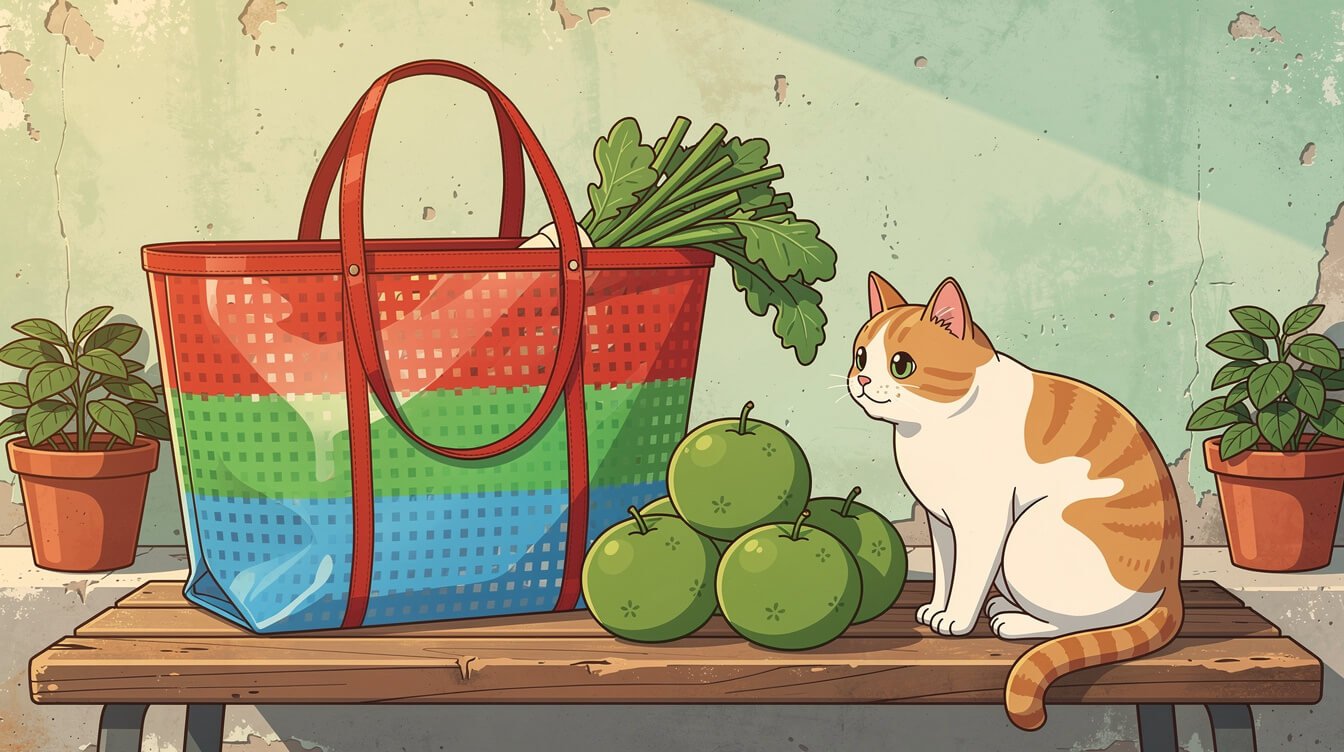
It is day three of Taiwan’s four-day Mid-Autumn weekend, which means a large share of the island is hauling pomelos, barbecue trays and beer home from the market — and a startling amount of it is riding in the same bag. Red, green and blue stripes. Woven plastic mesh. About NT$60 at any traditional market or hardware store, NT$90 for the big one.
Visitors call it “the Taiwanese LV.” Its actual name is the 茄芷袋, pronounced ka-tsì-á in Taiwanese — and for most of its life it was not plastic at all.
It started as a grass bag in one Tainan village
The gaji bag traces back to Jingliao, a farming village in Houbi District, Tainan — the same village that became famous through the documentary 無米樂 (Let It Be). Before nylon, the bags were hand-woven from 茳芏, a three-cornered sedge, and were called exactly what they were: 草袋仔, grass bags.
The prep work was punishing. Cut the sedge, sun-dry it, flatten it under a stone roller, then work rice bran into the fiber so it would bend instead of snapping. A weaver got through five or six bags in a day, and each one sold for two or three New Taiwan dollars. If that sounds familiar, it is the same rural weaving economy that produced Taiwan’s rush grass hats up the coast in Miaoli.
1971: the year the grass lost
Two things happened at once. Farming shifts pushed the sedge fields over to rice, and Taiwan’s plastics industry took off. Rush mildewed in the humidity; nylon mesh was washable, scrub-proof, and would carry a watermelon without complaining. So the material swapped out — and nothing else did.
That is the part worth sitting with. The rectangle, the slouch, the short doubled handles: Taiwan’s cheapest bag is a faithful copy of its own grandmother, re-cut in a new fabric.
The stripes, and the women still sewing them
The red-green-blue banding was originally just the mesh that was available, but the workshop that keeps the bags in production frames it more generously: 人情紅 for human warmth, 田野綠 for the fields, 天空藍 for the sky. Marketing, probably. It has also stuck, which is its own kind of true.
At the 茄芷阿嬤工坊 — the “Gaji Grandma Workshop” on Jingliao’s old street — the sewing is still done by village women who average over 75 years old, at the machines from eight in the morning, with the profits routed back into the community. Small runs, sewn by hand, so the local joke is that you will never show up somewhere carrying the identical bag to someone else.
Then it went to Paris
On 27 July 2024, Taiwan’s pavilion at the Cultural Olympiad in Paris opened with 500 limited gift packs: Taiwan Beer, bubble tea ice cream, Taiwanese snacks and a pin shaped like a blue-and-white slipper, all bundled inside a striped gaji bag. They were gone within an hour of the doors opening. A NT$60 market bag, rationed in Paris.
The takeaway
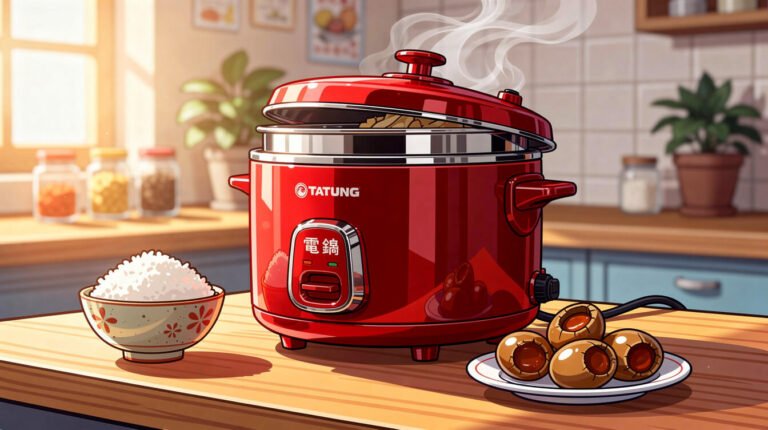
Taiwan’s design classics are almost never the expensive things. They are the objects so cheap and so useful that nobody thought to protect them — the slipper, the rice cooker, the striped bag that outlived the grass it was named for. Next time you are at a market or night market, skip the free plastic and buy the stripes. It costs less than a bubble tea and it will outlast your phone.
Love the everyday icons more than the souvenirs? We put Taiwan’s objects, snacks and street corners on things you can actually carry and wear — start with the bags. Shop Taiwan Merch.
Grab a Free Taiwan Sticker!
Drop your email and we’ll send you a limited-edition Taiwan sticker — plus insider access to new merch drops and island vibes.
No spam. Unsubscribe anytime.