Taiwan Pineapple Cake: The Complete Guide to the Island’s Most Iconic Souvenir
Taiwan pineapple cake — 鳳梨酥 (fènglísū) — is the most gifted, most photographed, and most debated souvenir to ever come out of the island. You’ll find it at every airport, every night market, and every convenience store. Tourists buy them by the boxful. Locals argue passionately about which brand is best. And somewhere in Taichung in the 1920s, a baker looked at a mountain of surplus pineapples and decided the world needed a buttery, crumbly pastry that would one day generate NT$40 billion a year.
This is that story — and your complete guide to buying, choosing, and gifting the best Taiwan pineapple cake, whether you’re wandering the streets of Taipei right now or ordering a box from the other side of the world.
From the history behind the golden shell to the heated real-pineapple-vs-wintermelon debate, the brands worth queuing for, and the cultural etiquette behind giving them as gifts — we’ve got it all covered.
What Is Taiwan Pineapple Cake? The Story Behind 鳳梨酥
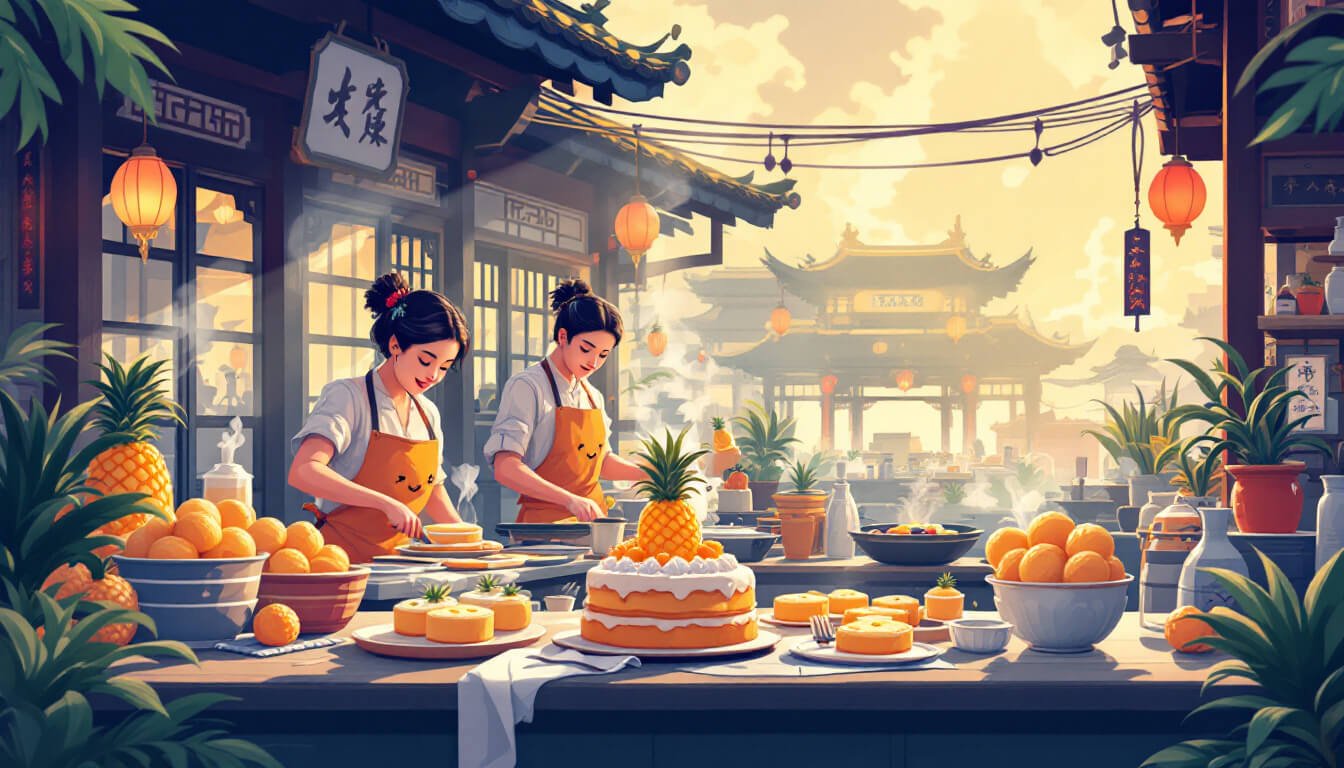
At its simplest, Taiwan pineapple cake is a small rectangular pastry: a buttery, crumbly shortcake shell encasing a jam filling, traditionally made from pineapple, and wrapped in a gift box that somehow manages to feel both humble and luxurious at the same time.
The Chinese name, 鳳梨酥 (fèng lí sū), translates literally to “pineapple shortcake.” In Taiwanese Hokkien, pineapple is ông-lâi (旺來) — which sounds exactly like the phrase for “prosperity arriving.” This linguistic coincidence transformed the pineapple cake from a simple pastry into a culturally charged gift: presenting someone with a pineapple cake is a way of wishing them wealth, good fortune, and abundance. It’s one of those rare foods where the symbolism is baked right in.
From Formosa to Food Festival
The pineapple arrived in Taiwan around the 16th century, carried by Portuguese merchants who called the island “Ilha Formosa.” During the Japanese colonial era (1895–1945), Japan invested heavily in Taiwan’s pineapple industry, importing cultivars and building processing plants across the island. By the late 1930s, Taiwan had become the world’s third-largest pineapple exporter.
When fresh pineapple production shifted toward domestic consumption after the war, local bakeries began turning surplus pineapples into pastries. Pineapple cakes had historically been ceremonial — served at weddings, Lunar New Year celebrations, and housewarming gifts — but they became mainstream snacks and souvenirs through a combination of government promotion and globalization.
In 2005, the Taipei City Government launched the annual Taipei Pineapple Cake Cultural Festival, cementing the pastry’s status as a city icon. By 2013, Taiwan’s pineapple cake industry was generating NT$40 billion annually — over US$1.2 billion — driven in large part by souvenir tourism and the diaspora gift economy.
Today, pineapple cake isn’t just a snack. It’s a declaration of Taiwan’s culinary identity: something ancient in symbolism and brilliantly modern in execution.
The Great Filling Debate: Real Pineapple vs Winter Melon
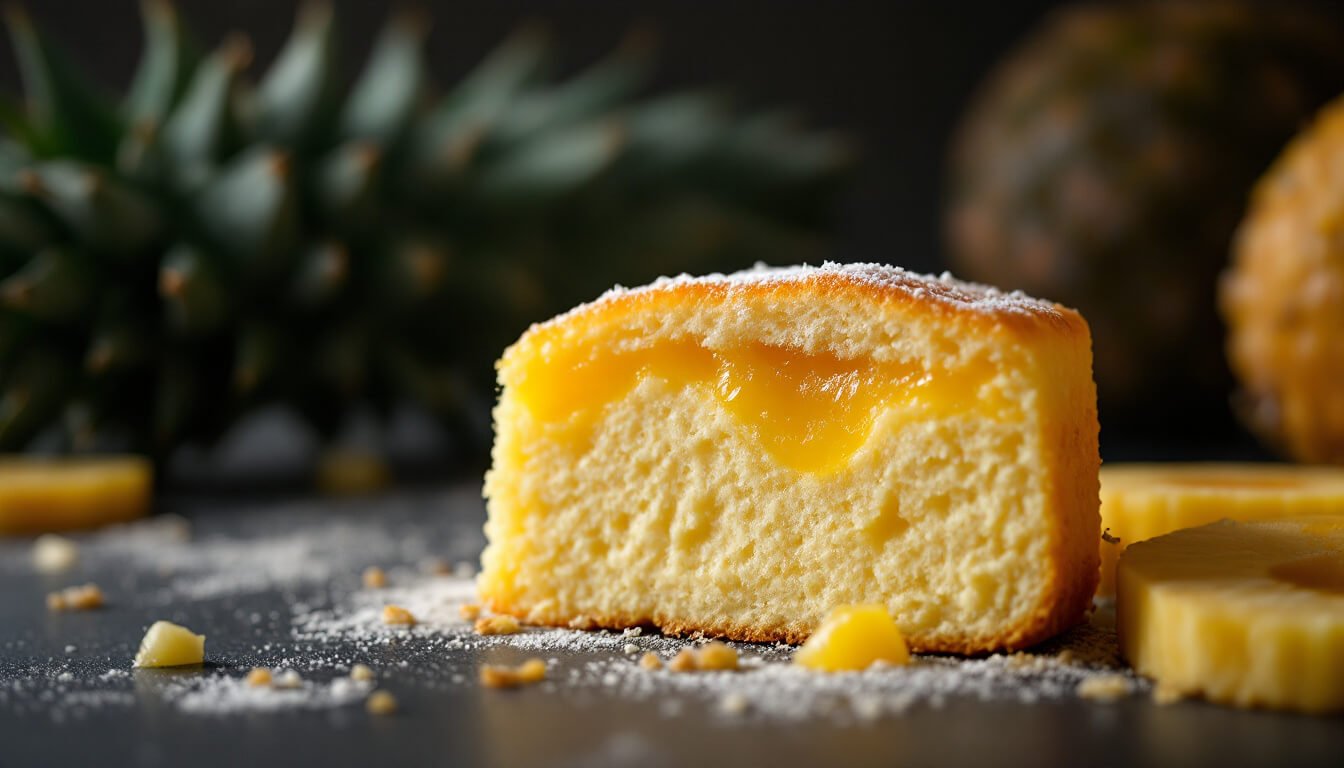
Ask any local about pineapple cake and you’ll quickly find yourself in the middle of Taiwan’s most passionate food argument. It’s not about chili heat or soup dumplings. It’s about the filling.
Traditional pineapple cake was made with — logically — pineapple jam. But somewhere along the way, many manufacturers started substituting winter melon (冬瓜, dōng guā) for part or all of the filling. The reasons are practical: winter melon is cheaper, has a milder flavor, and is easier to process at scale. A blend softens the tartness of raw pineapple into something more neutral and widely palatable.
So Which Is Better?
Real pineapple filling: Tart, bright, and distinctly fruity. The filling has texture and personality — you can actually taste the tropical sweetness of Taiwanese pineapple against the buttery pastry. Premium brands like SunnyHills use 100% real pineapple and the difference is immediately obvious. These tend to be more expensive and have a slightly shorter shelf life.
Winter melon blend: Sweeter, softer, and more uniform. Less polarizing in flavor, which is why mass-market brands favor it. If you grew up eating standard pineapple cakes from convenience stores, this is probably the flavor profile you’re used to. It’s not inferior — just different.
The hybrid approach: Many mid-tier brands use a thoughtful ratio of pineapple to winter melon that delivers the best of both: brightness from the pineapple, smoothness from the melon. Chia Te Bakery — widely considered the gold standard — uses this approach to great effect.
How to Tell Before You Buy
Check the ingredient list. If 冬瓜 (dōng guā / winter melon) appears before 鳳梨 (pineapple), winter melon is the dominant ingredient. Premium brands will often boldly state “100% 土鳳梨” (tǔ fènglí, “native pineapple”) on the packaging — that’s your signal that you’re getting the real thing.
Best Taiwan Pineapple Cake Brands, Ranked
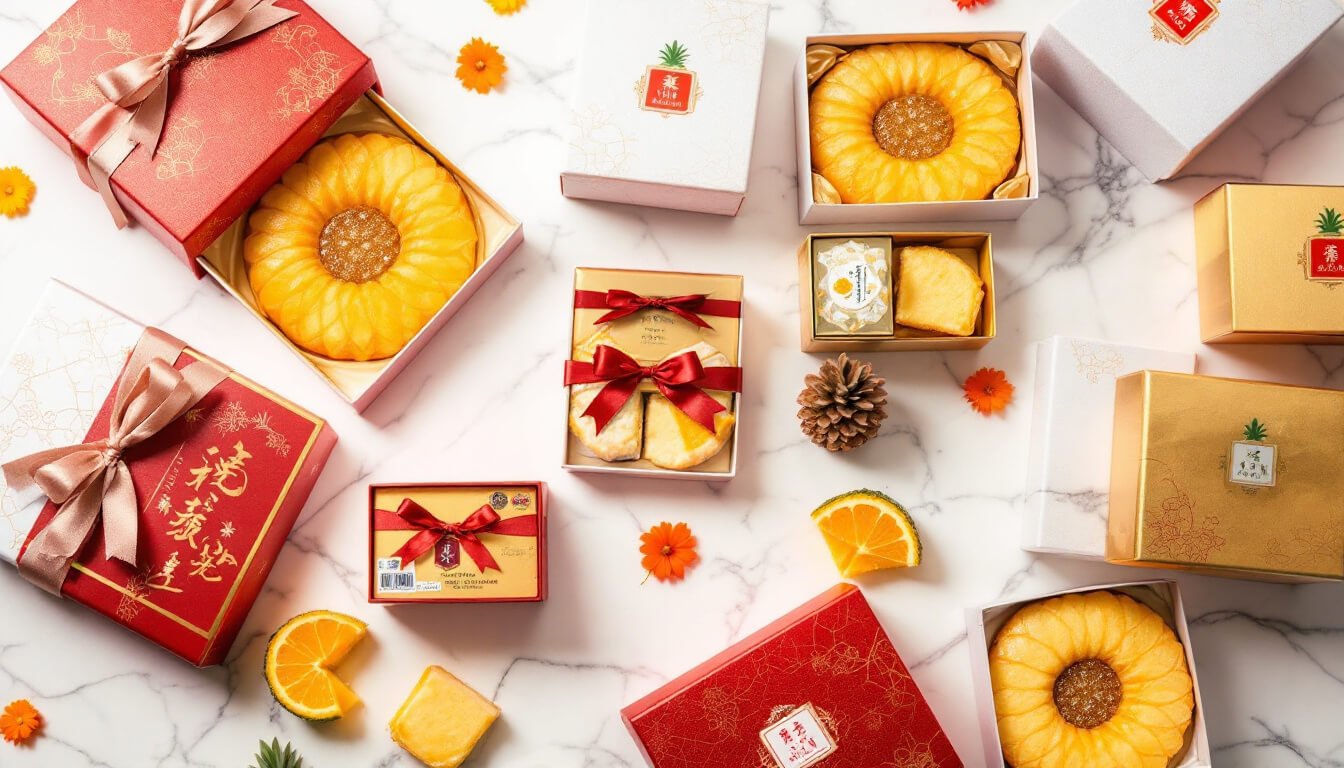
The pineapple cake market in Taiwan ranges from supermarket gift boxes to artisan bakeries with queue management systems. Here’s a breakdown of the brands worth knowing.
1. Chia Te Bakery (佳德糕餅)
The undisputed legend. Chia Te’s pineapple cakes are consistently voted the best in blind taste tests, including major community polls among local foodies. Their filling uses a pineapple-winter melon blend that balances brightness with smooth sweetness, wrapped in a pastry shell that crumbles in the most satisfying way. The downside: the main Songshan branch runs out daily. Queuing starts at opening time. Worth every minute.
📍 Taipei, Songshan District — near Nanjing Fuxing MRT
2. SunnyHills (微熱山丘)
SunnyHills built its entire brand around one claim: 100% real pineapple filling. No winter melon, no shortcuts. They use tǔ fènglí (native Taiwanese pineapple) sourced from specific farms, giving their cakes a distinctly fresh, bright, almost tangy profile. They’re more expensive than most — but they’re also the most transparent product on the market. Their Taipei flagship offers a free sample with tea before you buy. No pressure. Just trust.
📍 Taipei (Da’an District) + international locations in Japan and Hong Kong
3. Lee Chi (李製餅家)
A classic choice that’s widely available, including at major airports. Lee Chi’s cakes are reliable, well-packaged, and travel extremely well — which is why they’re the default airport buy for travelers running short on time. The filling leans more toward winter melon, but the pastry is notably buttery and melt-in-mouth. A dependable choice when you need quantity over rarity.
📍 Available at Taoyuan International Airport and Taiwan city locations
4. Niko Bakery
A rising star among younger Taipei foodies. Niko runs smaller batches and experiments more with filling ratios and pastry textures. Their version has a slightly denser shell and a more intensely pineapple-forward filling. Limited availability makes them a discovery rather than a default — which is exactly the kind of thing you want to find.
5. Taichung Artisan Bakeries
Taichung is where the pineapple cake was born — and the city’s local bakeries often offer more rustic, artisan versions that are less polished but more personal. If you’re visiting central Taiwan, ask locals for their current favorite: you’ll rarely get the same answer twice, and that’s part of the charm. Miyahara ice cream parlor in downtown Taichung sits at the center of the city’s bakery district and is a perfect starting point.
Taiwan’s food culture runs deep, and pineapple cake is just one chapter. Our Taiwan desserts guide covers the full landscape — from shaved ice to tang yuan to everything in between.
Where to Buy Taiwan Pineapple Cake in Taipei, Taichung & Beyond
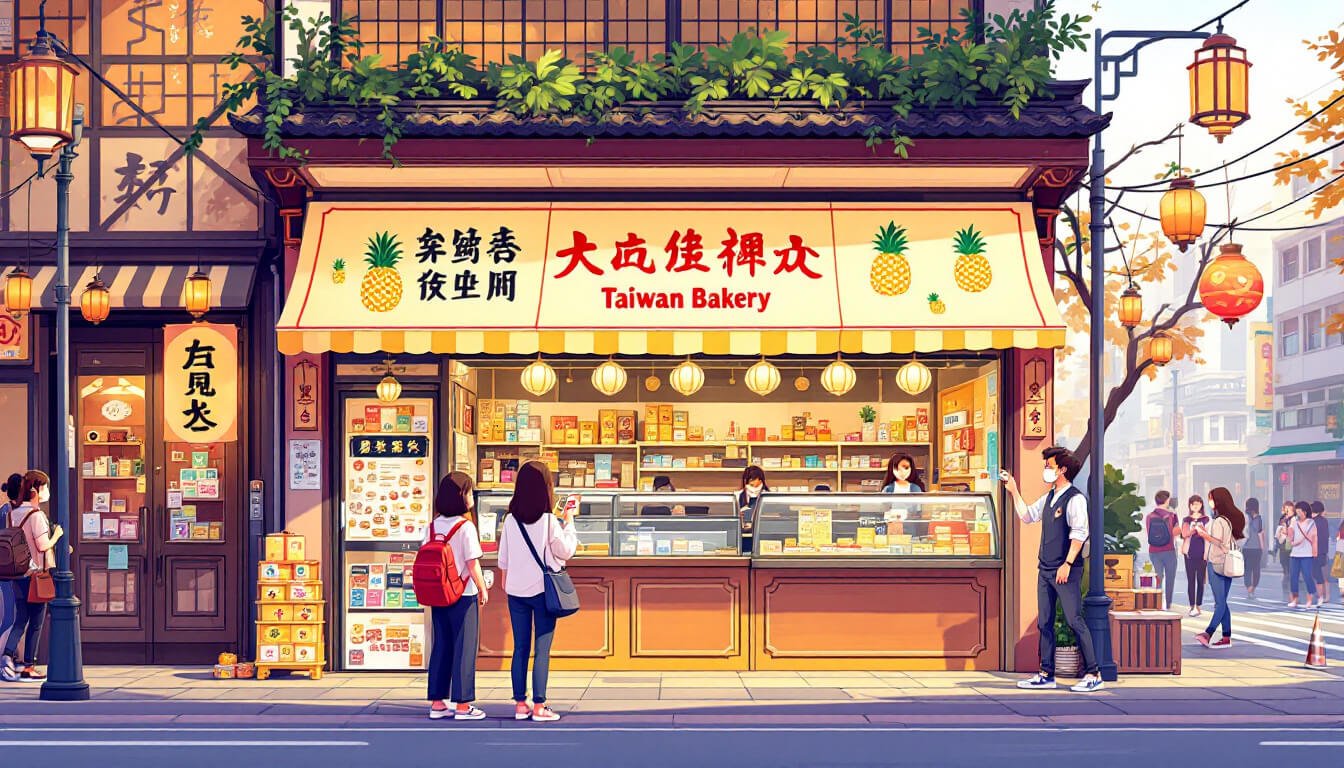
Knowing what to buy is only half the challenge. Here’s where to actually find them — whether you’re on the ground in Taiwan or planning ahead.
In Taipei
Chia Te Bakery (佳德糕餅), Songshan: The holy grail. Show up early — the shop opens at 8:30am and sellouts happen by noon. Take the MRT to Nanjing Fuxing station, walk five minutes. The queue is part of the experience. Bring cash, and bring patience.
SunnyHills (微熱山丘), Minsheng: A beautiful concept shop where the focus is on the provenance story. Free sample policy means you can try before committing. Great for gifts that need to impress and for anyone who wants to understand why this cake deserves its reputation.
Department Stores: Sogo, Breeze Center, and Taipei 101’s food hall all carry curated selections of premium brands. If you’re shopping for multiple people, this is the most efficient route — multiple brands, one stop, consistent quality.
Night Markets: You’ll find pineapple cakes at stalls throughout major Taipei night markets, though quality varies considerably. Think of these as the budget tier — fine for casual snacking, not ideal for serious gifting.
In Taichung
Taichung is the spiritual home of pineapple cake. Head to the Miyahara ice cream parlor area in the historic downtown for a concentration of artisan bakeries and souvenir shops. Sun Cakes (太陽餅, tàiyáng bǐng) are Taichung’s other iconic pastry, and many shops sell both — making the city’s bakery district a must for sweets lovers doing a central Taiwan loop.
At Taoyuan Airport (TPE)
If you’re rushing to catch a flight, every departure hall has pineapple cake shops. Lee Chi is reliably present. Gift boxes are pre-wrapped and carry-on approved. Prices run slightly higher than city-center shops, but the convenience is very real. Stock up on your way out — this is the last chance.
7-Eleven and FamilyMart
Yes, really. Taiwan’s convenience stores stock pineapple cakes — usually the mass-market winter melon variety. At NT$30–50 per piece, they’re a fine way to taste test the format before investing in a premium brand. But if you’re buying to give as a gift, step up a tier.
Speaking of gifting — our guide to gifts from and for Taiwan has the full picture on what travels well, what lands with diaspora friends, and what says “I actually know Taiwan” instead of “I went to the airport gift shop.”
How to Choose the Best Taiwan Pineapple Cake: A Taste Guide
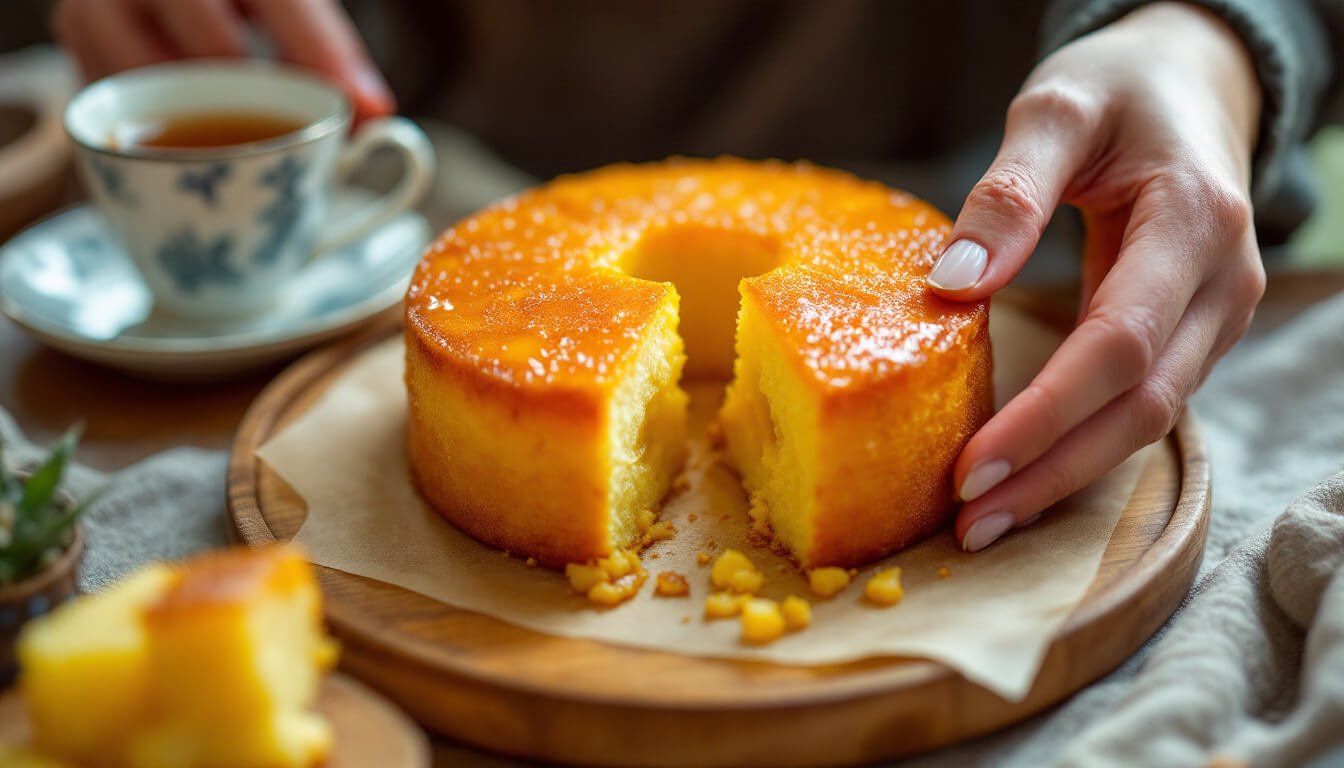
Not all pineapple cakes are equal. Here’s what to look for when evaluating quality — whether you’re tasting in-store or choosing between brands online.
The Shell
A great pineapple cake pastry is short and crumbly — it should break apart gently with slight pressure and melt on the tongue without being greasy. If it’s dense, chewy, or leaves an oily residue, it’s a lower-quality formulation. The best shells use a high ratio of butter and egg yolk for richness without heaviness.
The Filling
Premium filling should have visible texture — small fibrous strands from real pineapple, not a perfectly smooth paste. The flavor should have brightness and slight tartness, not just sweetness. If it tastes like apple jam with no personality, you’ve got a heavily melon-blended version.
The Shell-to-Filling Ratio
The ideal cake is roughly 60–65% pastry to 35–40% filling by volume. Too much pastry and the flavor is lost in butter. Too much filling and the cake falls apart and doesn’t travel well. Premium brands get this balance right consistently.
Shelf Life Matters for Gifting
Quality pineapple cakes typically last 2–3 weeks at room temperature. Premium brands (SunnyHills, Chia Te) use natural preservatives or thoughtful packaging to extend this. Always check the 賞味期限 (shǎngwèi qíxiàn, best before date) before purchasing for travel or international shipping.
Packaging as a Quality Signal
Premium brands invest in packaging — rigid gift boxes, individual wrapping, clear ingredient labeling. If the packaging feels flimsy or the ingredient list is ambiguous about filling content, calibrate your expectations accordingly. The box tells you a lot about what’s inside.
If you love Taiwan’s food culture as much as we do, there’s a whole world beyond pineapple cake. The Taiwan night market food guide covers the street food classics that complete the picture.
Ordering Taiwan Pineapple Cake Online: Gifting from Anywhere
Can’t make it to Taiwan? Good news: the best brands ship internationally, and the online pineapple cake market has matured significantly in recent years.
Official Brand Websites
SunnyHills ships internationally from their main website and maintains physical retail locations in Japan and Hong Kong for regional buyers. Their online store is well-maintained with English-language ordering and transparent sourcing information.
Chia Te is trickier — they have a limited online presence and focus on in-store sales. For Chia Te cakes shipped overseas, look for verified resellers on platforms like Shopee or Momo (Taiwan’s major e-commerce platforms). Always verify the reseller reputation before buying.
Amazon and Global Platforms
Amazon carries several Taiwan pineapple cake brands, including gift set options and seasonal packs. These tend to be mass-market varieties, well-suited for casual gifting or first-time tasting. Check reviews specifically mentioning freshness and shelf life — the transit time matters.
The Taiwan Diaspora Gift Economy
Pineapple cakes are among the most emotionally resonant gifts you can send to a Taiwanese friend or family member living abroad. They travel well, they’re familiar, and they carry the symbolism of 旺來 (ông-lâi — prosperity arriving). A well-chosen box from a premium brand — SunnyHills, or a boutique Taichung producer — says “I know Taiwan” in a way no generic souvenir can match.
And if you want to pair that gift box with something wearable — something that celebrates Taiwan’s playful, proud, culturally-rich spirit — check out our Taiwan Boba Tea Cat T-Shirt. It’s the kind of Taiwan-loving gift that pairs perfectly with a box of fenglisu.
Pineapple Cake Gift-Giving Etiquette & Frequently Asked Questions
When Do You Give Pineapple Cakes as a Gift?
Pineapple cakes are appropriate for almost any occasion: Lunar New Year, weddings, housewarming gifts, business gifts, and general souvenirs for friends and family. The lucky symbolism (旺來 = prosperity arriving) makes them particularly apt for new beginnings — a new job, a new home, a new year. There’s never really a wrong time.
How Many Per Box?
Gift boxes typically come in sets of 6, 9, 12, or 16. The number 9 is especially auspicious in Chinese culture — but a practical set of 12 or 16 (enough to share with colleagues) is equally popular for office gifting. One thing to note: avoid sets of 4, as the number four (四, sì) sounds like “death” (死, sǐ) in Mandarin. Most quality brands know this and don’t sell 4-packs.
Can You Bring Them on a Plane?
Yes — pineapple cakes in commercial packaging are allowed in both carry-on and checked luggage. They don’t qualify as liquids. A standard gift box fits comfortably in overhead bin space. The only customs consideration is bringing large quantities (10+ boxes) into certain countries — declare them if in doubt, especially when entering the United States, Australia, or the EU.
Are They Gluten-Free or Vegan?
Standard pineapple cakes are not gluten-free (they contain wheat flour in the pastry) and not vegan (they contain butter and egg yolk). Some specialty bakeries in Taipei offer alternative versions — worth seeking out if you have dietary requirements. Ask specifically for 素食 (sùshí, vegetarian/vegan) options.
What’s the Difference Between Taiwan Pineapple Cake and Singapore Pineapple Tart?
Pineapple tart (common in Singapore and Malaysia) is typically an open-faced pastry with visible pineapple jam on top, often rolled into a ball shape. Taiwan pineapple cake is fully enclosed in a thick rectangular shortcake shell. The textures and forms are quite different — Taiwan’s version is denser, more gift-friendly, and more shelf-stable. Same fruit, very different pastry traditions.
Why Does Taiwan’s Pineapple Cake Cost So Much More Than I Expected?
Premium Taiwan pineapple cakes use high-quality ingredients — real pineapple jam, high-butter pastry, individual packaging. The price reflects the sourcing transparency, shorter shelf life (no artificial preservatives), and in some cases, the cult-brand premium that comes with queuing culture. You’re not just buying a snack. You’re buying a story.
Why Taiwan Pineapple Cake Will Always Earn Its Icon Status
Taiwan pineapple cake isn’t just a pastry. It’s a carrier of history — from Portuguese-era tropical cultivation to Japanese colonial economics to a post-war bakery industry that turned surplus into something the world wanted to bring home. It’s a symbol of prosperity and good wishes, pressed into a buttery golden rectangle. And it’s a flashpoint for passionate debate between people who take their sweets seriously.
Whether you’re buying a box of Chia Te and queuing for 45 minutes, sampling SunnyHills’ farm-sourced real-pineapple version for the first time, or sending a gift box to a Taiwanese friend across the world — you’re participating in one of Taiwan’s most distinctly, deliciously itself traditions.
The beauty of Taiwan pineapple cake is that it asks very little of you: just an open mind and a willingness to take the first bite. After that, the debate about which brand is best can begin — and you’ll find yourself defending your pick with more passion than you expected.
For more of Taiwan’s iconic food and culture, explore our complete Taiwan desserts guide — covering everything from tang yuan to shaved ice to the many pastries that sit alongside fenglisu in Taiwan’s beloved gift-shop windows.
More Taiwan, delivered to your inbox
Cultural stories, food guides, and Taiwan-themed design drops — straight to you. No noise, just the good stuff.

Grab a Free Taiwan Sticker!
Drop your email and we’ll send you a limited-edition Taiwan sticker — plus insider access to new merch drops and island vibes.
No spam. Unsubscribe anytime.