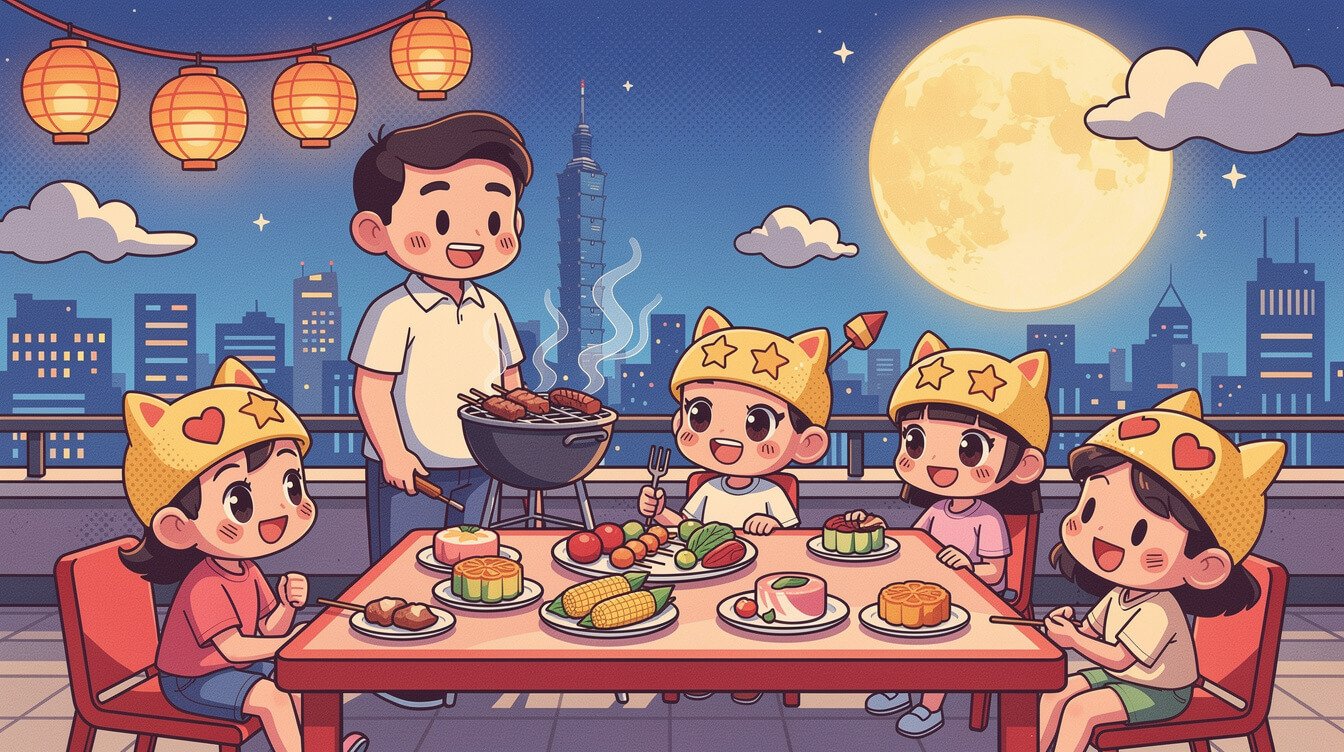
Did You Know? Taiwan Barbecues for Mid-Autumn Festival — And It All Started With a Soy Sauce Commercial
Ask any Taiwanese person what happens on Mid-Autumn Festival, and they’ll answer without hesitation: 烤肉 (kǎo ròu) — barbecue.
Not mooncakes. Not gazing at the moon while sipping osmanthus wine. Not reciting Tang dynasty poetry. Grilled pork belly, sausages, corn on the cob, and a suspicious amount of soy sauce.
Here’s the wild part: this beloved tradition isn’t centuries old. It’s barely 40. And it exists almost entirely because of one very effective 1980s TV commercial.
The Wan Ja Shan Ad That Rewired a Holiday
In 1986, the Taiwanese soy sauce brand Wan Ja Shan (萬家香) aired a now-legendary ad with the slogan “一家烤肉,萬家香” — “One family barbecues, ten thousand families smell the aroma.” It was a clever play on the brand’s own name (Wan Ja Shan literally means “ten thousand families of fragrance”).
The ad was catchy, warm, and hammered into households through the 15-second commercial slots that dominated Taiwanese TV in the era before streaming. In the early 1990s, rival brand Kimlan (金蘭) doubled down with its own iconic barbecue-marinade campaign, spreading branded bottles of BBQ sauce into every supermarket aisle.
By the mid-1990s, Mid-Autumn Festival — traditionally a quiet family evening of mooncakes and moon-gazing — had morphed into a nationwide grill-out. Parking lots became BBQ pits. Riverside parks filled with smoke. Apartment building entrances were blocked by folding tables and portable grills. To this day, Taipei’s Environmental Protection Bureau publicly begs residents to please stop grilling in the stairwells.
What Actually Happens on the Night
Modern Taiwanese Mid-Autumn (中秋節, held on the 15th day of the 8th lunar month — falling on September 25, 2026) still involves the classics: pomelos, mooncakes, and a fat full moon. But layered on top is a whole grilling ritual:
- The setup — Everyone brings a grill. Extended families, coworkers, neighbors. Charcoal, tongs, disposable foil trays.
- The menu — Thin-sliced pork belly (五花肉), Taiwanese sausages (香腸), corn on the cob (烤玉米), king oyster mushrooms, squid, shrimp, chicken wings basted in soy sauce, and — critically — toast slices painted with condensed milk and garlic butter. Yes, really.
- The pomelo hat — Kids peel a whole pomelo (柚子) and wear the top half as a tiny pointy hat. It’s a rite of passage.
- The moon — Somewhere between the third and fourth round of grilled corn, someone will remember to look up.
Why This Is So Beautifully Taiwan
Most cultural traditions get invented over hundreds of years. Taiwan took a 15-second ad, said “yeah, that tracks”, and locked it in as national practice within a decade. It’s pragmatic, communal, and joyfully unpretentious — which, honestly, describes a lot of Taiwanese culture in one sentence.
It’s also a reminder that traditions don’t have to be ancient to be meaningful. The pomelo hats, the shared skewers, the soy-sauce smoke drifting through Taipei alleyways in late September — that’s a real culture doing real culture things, in real time.
The takeaway: If you find yourself in Taiwan around Mid-Autumn, don’t look for a fancy ceremony. Follow the smell of grilling pork. Someone will hand you a paper plate.
Want more warmly weird Taiwanese cultural stories? Check out Taiwan’s Ghost Month rules that locals still quietly follow, or our full Taipei typhoon-season guide — because Mid-Autumn also lands squarely in storm season, and knowing when the BBQ gets rained out is a survival skill.
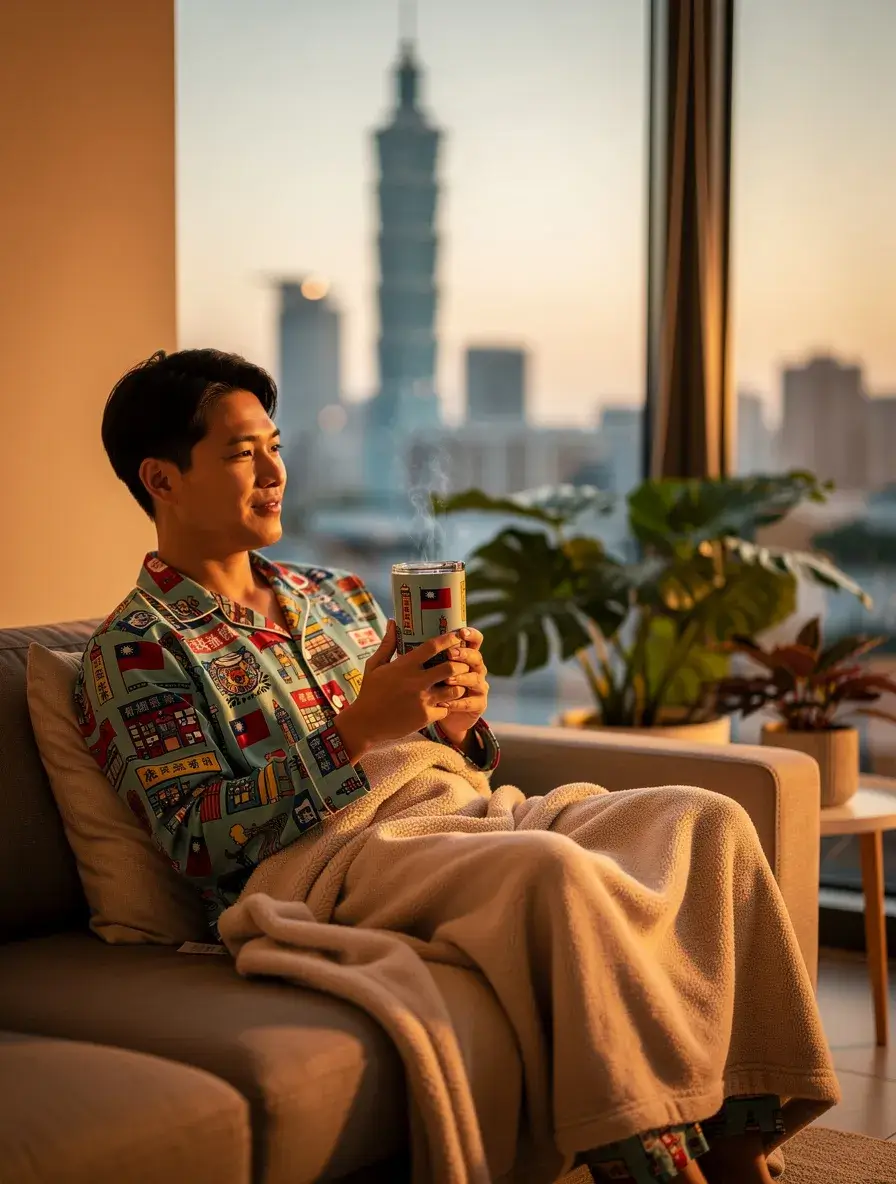
And if you love Taiwan’s quirks as much as we do, grab a shirt to wear it on your sleeve. 🥮🔥
Grab a Free Taiwan Sticker!
Drop your email and we’ll send you a limited-edition Taiwan sticker — plus insider access to new merch drops and island vibes.
No spam. Unsubscribe anytime.