BugCat Capoo: The Complete Guide to Taiwan’s Beloved Blue Cartoon Cat
Somewhere between a cat, a bug, and a chaos demon lives BugCat Capoo — a chubby blue six-legged cartoon creature who has quietly become one of Taiwan’s most beloved cultural exports. He eats meat by the plateful. He terrifies vegetables. He rides turtle-buses through a world where physics is optional. And in 2014, he emerged from the sketchbook of a Taiwanese illustrator named Yara and never looked back.
If you have ever texted a friend on LINE, WhatsApp, or Facebook Messenger anywhere in Asia and been ambushed by a smiling blue blob stealing food, that was Capoo. If you have wandered a Taichung side street and spotted a plush toy the size of a scooter helmet in a cafe window, that was also Capoo. This guide covers who he is, where he came from, why Taiwan adopted him as an unofficial mascot, and where to find him in the real world (Taichung, obviously, but not only Taichung). We’ll also point you at the merch, the collaborations, and the surprisingly tender philosophy that hides behind those tiny fangs.
Who Is BugCat Capoo? Meet Taiwan’s Blue Six-Legged Ball of Chaos
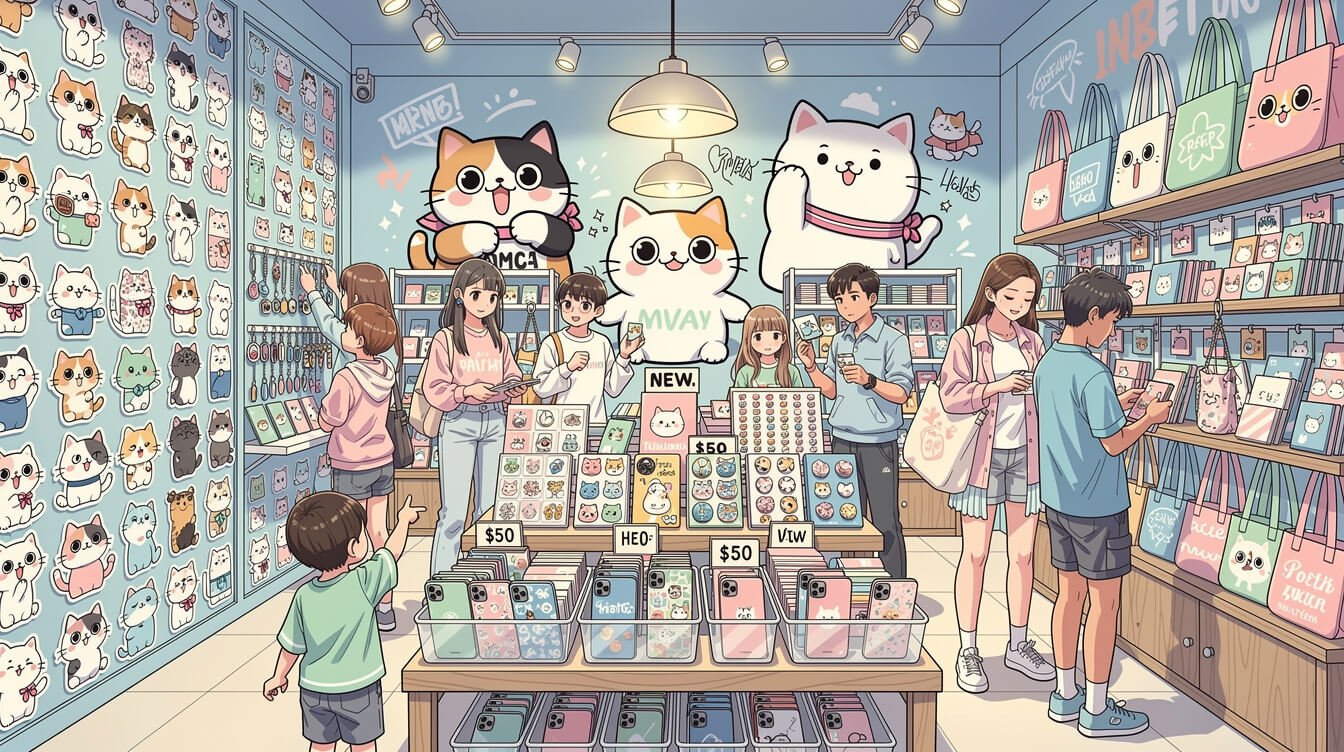
Officially, BugCat Capoo is a fictional cartoon character. His Traditional Chinese name is 貓貓蟲咖波 (Māomāochóng Kābō), which literally translates as “Cat-Cat-Bug Capoo.” That name is the whole design brief in three words: a creature that is a little bit cat, a little bit bug, and undeniably its own thing. Physically, he is a plump baby-blue orb with six short legs — four in front, two in back — round black eyes, and a permanent smile that occasionally reveals two tiny fangs. He is small enough to sit on a rice cooker and stubborn enough to unplug it.
Personality-wise, Capoo is best described in the artist’s own words: “a little monster like a cat and like a bug, both violent and cute, who loves to eat meat.” He is not a sanitized mascot. He is greedy, occasionally destructive, and openly hostile to anything green on his plate. What makes him beloved rather than annoying is the timing. Every strip lands somewhere between a Tom-and-Jerry gag and a Studio Ghibli quiet moment, so you laugh at the chaos and then feel weirdly protective of the chaos afterwards.
He lives in a house with three main companions: his long-suffering human owner Lala, a preternaturally competent dog named Dogdog who appears to be immortal and skilled in every trade, and a masochistic pink bunny called Tutu who is very much in love with Capoo despite the beatings. His younger sister Mika shows up regularly, as do the yellow round chick creatures who exist mostly to be chased and, occasionally, eaten. If that reads as unhinged, that is the point — and it is exactly why the character resonates.
The Origin Story: How Yara Turned a Doodle Into a Full-Time Career (2014–2020)
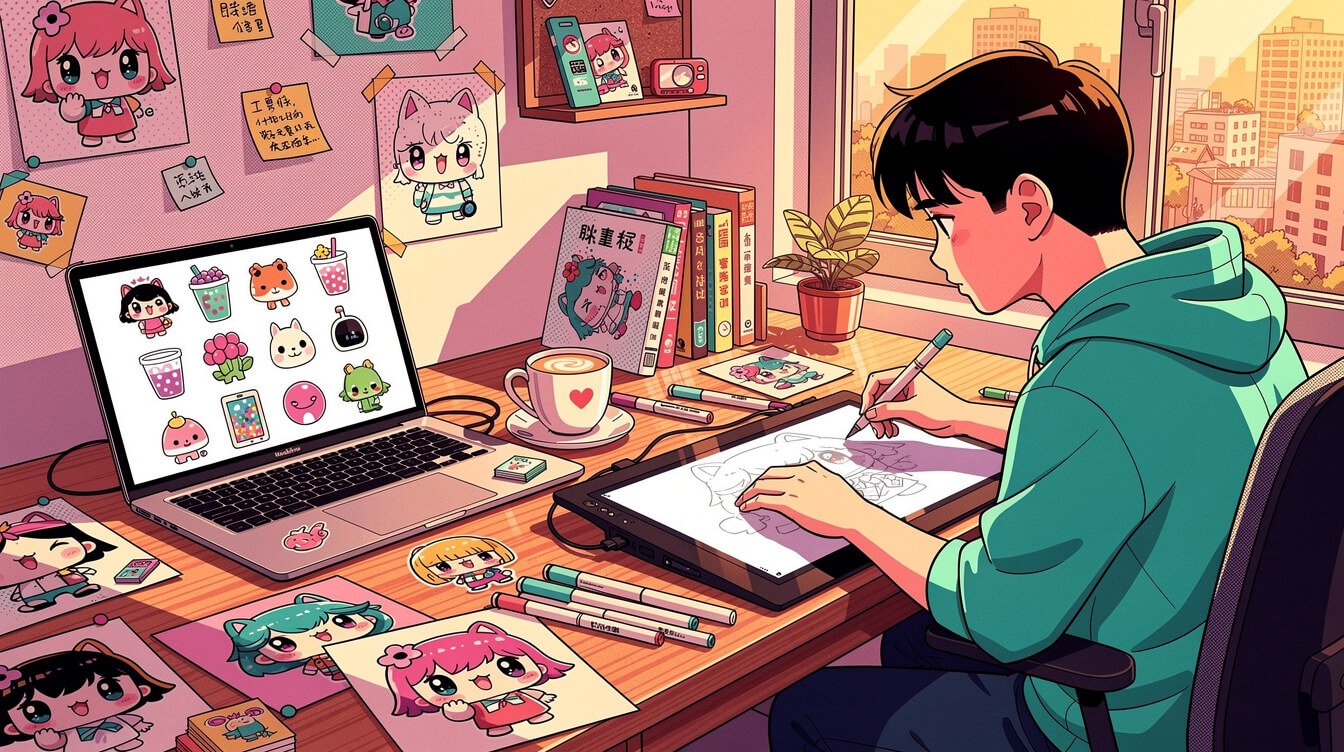
Capoo was born in May 2014 on Bahamut (巴哈姆特), the massive Taiwanese ACG (anime, comics, games) forum that has launched half of Taiwan’s indie illustrators. His creator is an artist who goes by the pen name Yara (亞拉). At the time, Yara was drawing short comic strips for fun and posting them to Bahamut’s home.gamer.com.tw hobbyist community. The premise was simple: a weird little cat-bug does something absurd, Lala reacts, everyone learns nothing. Readers loved it.
The real pivot came five months later. In October 2014, Yara published a set of 40 Capoo stickers on the LINE Creators Market — Taiwan’s home turf for the messaging app that dominates every group chat in the country. The stickers exploded. LINE stickers are how Taiwanese texters actually communicate emotion (Western-style emojis feel flat by comparison), and Capoo’s expression range — smug, drooling, sobbing, plotting — was tailor-made for the format. The sticker sales alone were enough for Yara to quit day work and become a full-time illustrator.
In 2015, Capoo won the short-comic category at the WEBTOON Original Comic Competition, one of Asia’s most-watched digital comic contests. That trophy converted him from viral sticker to serialized comic. From 2015 until March 2020, Capoo ran as an official LINE WEBTOON series, publishing weekly strips that turned the character into a fixture of Taiwanese pop culture. LINE built promotional events around him. Brands started calling. By 2017, Yara was ranked the #7 sticker creator on the entire LINE Creators Market — a global platform. By 2020, that rank had climbed to #5. Today, the LINE WEBTOON run has ended, but new strips still drop weekly across Facebook, Instagram, and YouTube, where the channel has racked up hundreds of millions of views.
The Capoo Universe: Lala, Dogdog, Tutu, and the Turtle-Bus World
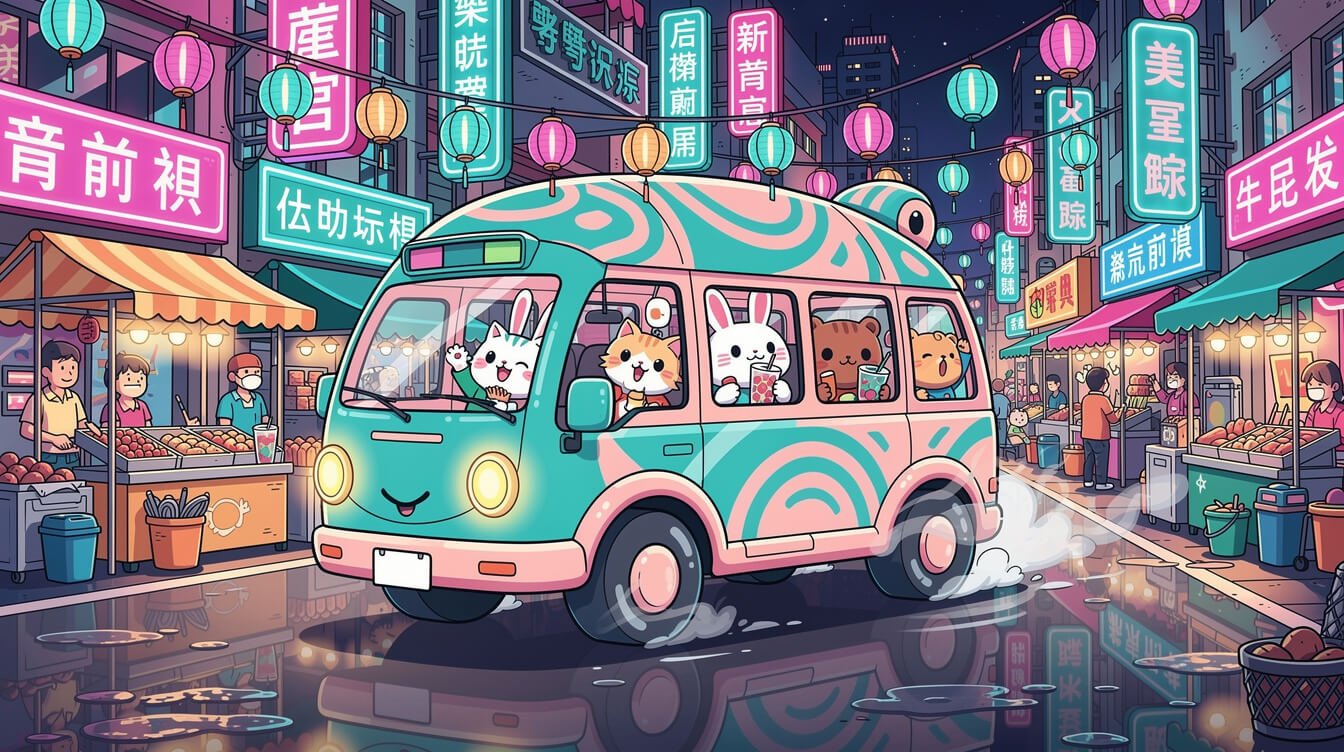
One reason Capoo has aged well is that Yara built a full comic universe around him rather than milking a single joke. The world is grounded in modern Taiwan — apartment blocks, night markets, scooters, convenience stores — but small physical laws are quietly broken until the whole thing tilts into dream logic. Buses are replaced by enormous friendly turtles who let passengers ride on their shells. Household objects are sentient and have opinions. Trees occasionally file complaints. It is Taipei viewed through a slightly hallucinatory kawaii filter.
The recurring cast holds it all together. Lala is Capoo’s owner and the strip’s straight-woman: quiet, patient, and armed with the kind of resigned expression every cat owner recognizes. Dogdog is a large fluffy white dog whose defining trait is competence — he can play any instrument, cook any dish, fix any problem, and quietly appears to be immortal. He functions as the deadpan foil to Capoo’s chaos.
Tutu, the pink bunny, is where the strip gets weird in a good way. Tutu is in unrequited love with Capoo and enjoys being physically abused by him, which the comic plays for slapstick rather than commentary. It’s a strange dynamic that somehow works because both characters are drawn as such obvious cartoons that the emotional weight lands in the “cartoon violence” category rather than the “concerning” one. Mika, Capoo’s little sister, is the sweeter counterweight — a smaller blue cat-bug with more legs than sense, prone to getting stuck in things.
Then there are the chick creatures: tiny round yellow blobs who exist as an ambient food source in Capoo’s world. They peep. They wander. They are frequently eaten. If you have ever watched a Studio Ghibli movie and wondered what happened to the soot sprites off-camera, the Capoo chicks are the darker answer.
The Cute-Macabre Philosophy: Why a Meat-Eating Cat Won Taiwan’s Heart
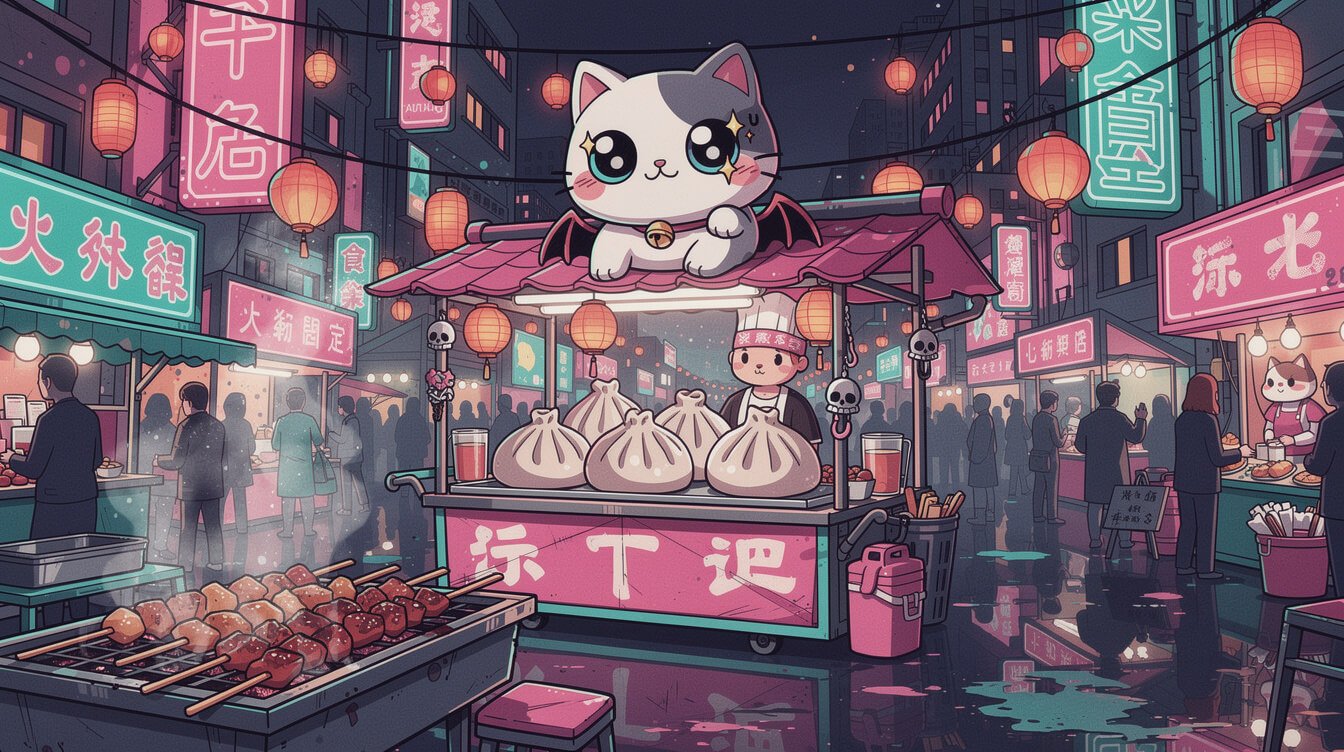
To understand why Capoo hit so hard in Taiwan, you have to understand the Taiwanese aesthetic of kě’ài (可愛, “cute”). Cuteness is a serious cultural currency here — night market signage, city mascots, the vending machines on the Taipei MRT, even the trash trucks (which famously play Für Elise on their approach) — everything is designed to be a little bit adorable. Against that backdrop, characters that are relentlessly saccharine get lost in the noise. Characters with a mean streak stand out.
Capoo’s genius is the cute-macabre juxtaposition. He looks like a stress-ball marshmallow. Then he tries to eat the cast. He is drawn in soft pastel blues and rounded edges, then depicted doing genuinely terrible things — swallowing chicks whole, deleting Lala’s homework, plotting minor crimes against the mail carrier. This tension is the joke. It gives readers permission to enjoy a character without having to also enjoy the tyranny of pure sweetness, which anyone who has spent time around aggressive cartoon mascots will recognize as a real reader-fatigue problem.
There is also a food angle that makes the strip land specifically in Taiwan. Capoo’s meat obsession is not a generic gag — the meats he covets are recognizable Taiwanese dishes. He drools over lu rou fan (滷肉飯, braised pork rice), fights Dogdog for the last piece of xiaolongbao, and would sell Lala’s laptop for a plate of grilled squid from a Taiwanese night market. He is a food-first character in a food-first culture. That is not an accident — it is why he transcended a niche webcomic audience and became a general-audience mascot.
From Stickers to Superstardom: LINE, WEBTOON, and the Taichung Empire
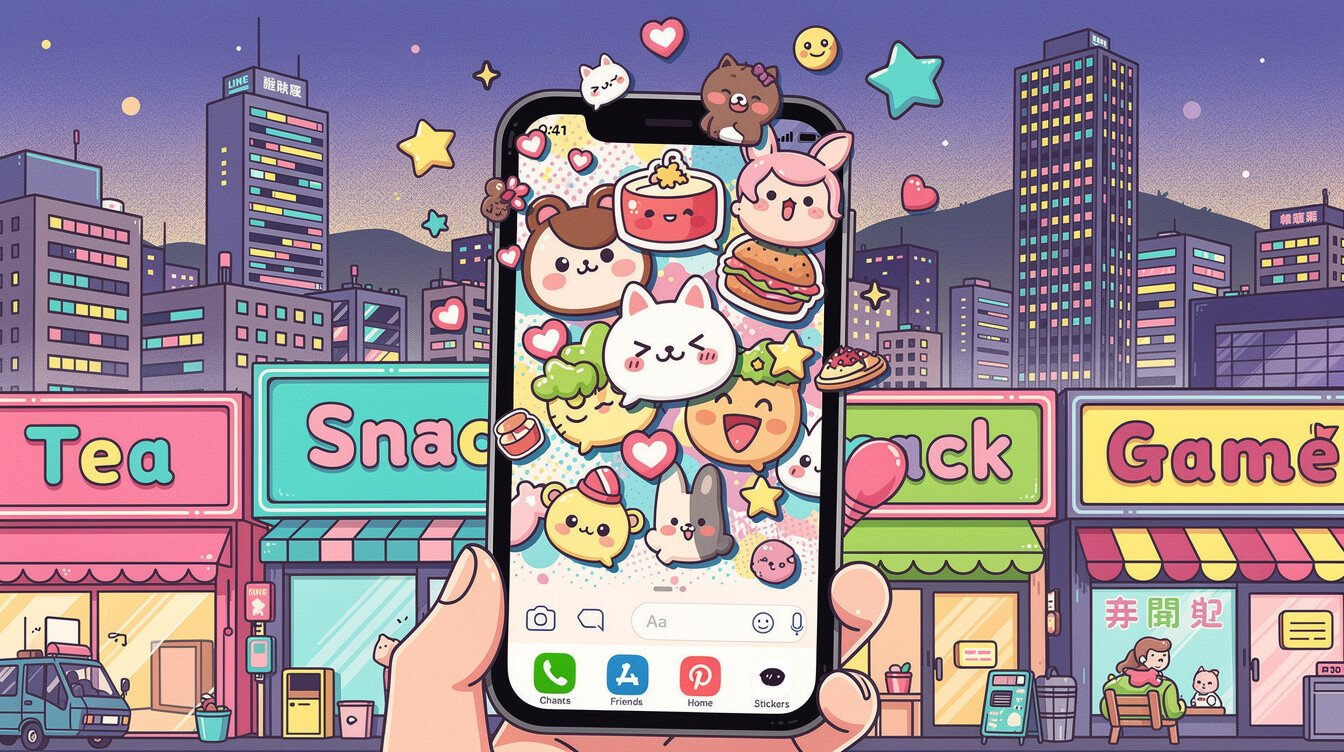
The clearest measure of Capoo’s success is where he shows up. LINE stickers were the launchpad, and they are still the daily interface most casual fans have with him — dozens of sticker packs are available in the LINE Store, and Yara’s ranking as a top-five creator in a market of hundreds of thousands of illustrators is genuinely remarkable. But the character long ago outgrew the phone.
Brand collaborations are how Capoo really printed money. The character has appeared on Taiwan High Speed Rail promotional campaigns, has been the face of limited-run 7-Eleven Taiwan point-collection promotions (the kind where you spend NT$70 to earn a stamp and eventually claim a Capoo plate or mug), has co-branded with mobile games, and has appeared in cross-over merchandise with everything from Korean skincare to Japanese confectionery. If you live in Taiwan long enough, you accumulate a small Capoo shelf whether you meant to or not.
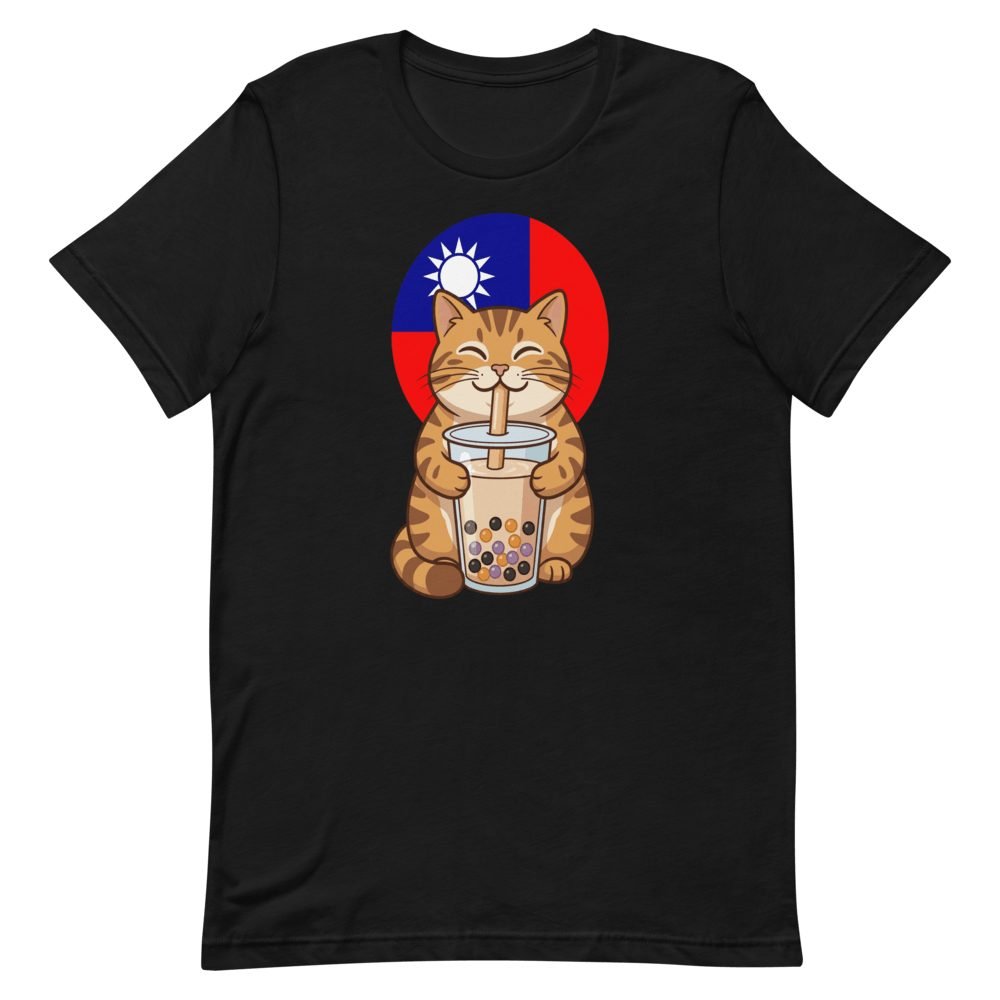
And then there is the merch. Beyond the official Yara-run Capoo store, an entire fan-merch ecosystem has grown up around the character — t-shirts, phone cases, plush toys, tote bags, laptop stickers. If you are the kind of person who owns Capoo stickers on your MacBook, you probably also want to represent Taiwan’s kawaii-meets-street-food identity in your wardrobe more broadly. Our Taiwan Boba Tea Cat T-Shirt is the spiritual cousin of the Capoo aesthetic — a chubby cartoon cat hugging a cup of Taiwanese bubble tea, drawn in the same playful pop-culture register that makes Capoo work. Same energy, official Taiwan Merch design.
Live the Capoo Energy — In Cotton
If BugCat Capoo made you fall in love with Taiwan’s chubby-cat-plus-food school of design, our Taiwan Boba Tea Cat Tee is the wearable version. Original Taiwan Merch artwork — same playful pop-culture energy, none of the vegetable rejection.
Real-World Pilgrimages: Where to See BugCat Capoo in Taiwan
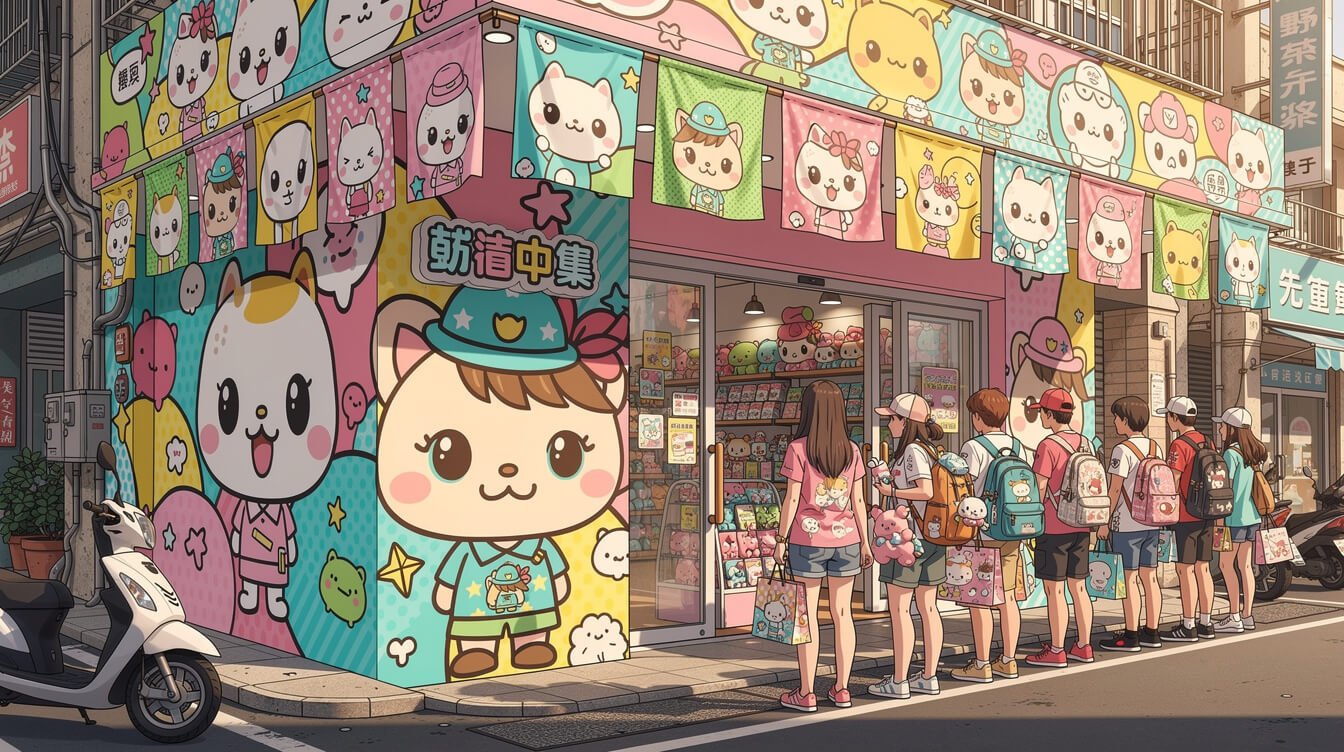
If you are visiting Taiwan and you want to make Capoo pilgrimages part of your trip, the answer is Taichung. Taichung is Yara’s home base and where the character’s physical footprint is most visible.
The Capoo House Store
The flagship Capoo House (咖波屋) in Taichung is the closest thing to an official Capoo destination. It functions as a themed lifestyle store — plush toys the size of house pets, mugs, homeware, stationery, and rotating seasonal drops. The interior is decorated as if you have walked into the comic, which is exactly the photo op most fans came for. Follow the official Capoo social channels before you visit; the store runs limited exclusive merch that never appears online.
The Foam Cat Cafe
Also in Taichung is the Foam Cat Cafe (泡沫貓咖啡), a Capoo-themed cafe where the food and drinks are plated in-character. Latte foam is topped with Capoo faces. Waffles are shaped like his silhouette. Dessert plates are stamped with the whole gang — Capoo, Tutu, Mika, and the chicks. Reservations are strongly recommended on weekends; the cafe is small and Taichung’s kawaii tourism scene has discovered it.
Pop-ups and Collaborations Nationwide
Outside Taichung, the best way to catch Capoo is through pop-up collaborations. Department stores in Taipei (particularly around Huashan 1914 Creative Park and Xinyi District), Kaohsiung, and Tainan run limited Capoo installations tied to seasonal campaigns — Lunar New Year, Mid-Autumn Festival, summer holidays. 7-Eleven Taiwan collab campaigns are also worth watching; when Capoo lands there, the stamp cards move fast and the merchandise sells out inside a week. If you spot a Capoo pop-up while you are on the ground, treat it like a limited-time drop and do not “come back tomorrow.”
Online: The Official Store and LINE
If you cannot get to Taiwan, the official Capoo Store ships internationally (with the standard caveat that shipping to some Western markets is slow and lumpy customs surprises happen). The LINE Store is where you buy the official sticker packs — a low-commitment way to keep Capoo on your daily phone screen without importing a plush the size of a small dog. And of course, if you want Taiwan-culture apparel in the same visual family, our full Taiwan Merch shop ships worldwide with US warehousing that skips the Taiwan-import wait entirely.
BugCat Capoo FAQ: Everything Newcomers Ask
Is BugCat Capoo Taiwanese or Japanese?
Taiwanese. This is the single most common mistake. The kawaii aesthetic reads as Japanese to Western eyes, but Capoo was created by a Taiwanese artist (Yara), launched on a Taiwanese platform (Bahamut), and rose to fame via Taiwan-native LINE stickers. He is often mentioned alongside Japanese characters like Rilakkuma and Gudetama in “cute Asian mascot” lists, which is fair company but incorrect nationality.
What does “Capoo” mean?
Nothing, really. Kābō (咖波) is a made-up phonetic name — the sound came first, the characters were chosen for their look and sound rather than meaning. It is intentionally cute nonsense, in the same way “Pikachu” or “Rilakkuma” are constructed sound-first. The full name 貓貓蟲咖波 translates literally as “Cat-Cat-Bug Capoo,” which describes the design more than it defines it.
Why does Capoo have six legs?
Because he is a cat-bug hybrid. The “bug” half of the concept is where the extra legs come from — insects have six, so does Capoo. In the original 2014 sketches, Yara has said the six-legged look was largely because it was funny; canonically it stayed because “cat-bug” is one of the two words in his name.
Is the comic still running?
Yes. The LINE WEBTOON serialization officially wrapped in March 2020, but Yara continues to publish new Capoo comics regularly on Facebook (@capoocat), Instagram (@bugcat_capoo), and the BugCat Capoo YouTube channel, which has hundreds of animated shorts and hundreds of millions of cumulative views. The Taiwanese X (Twitter) account @bugcat_capoo_tw handles more of the local-market news, product drops, and collab announcements.
Can I buy Capoo merch outside Taiwan?
Yes, but it takes work. The official Capoo Store ships internationally, though shipping to the US and Europe is not fast. LINE stickers are available globally through the LINE Store. Amazon and Etsy carry a mix of official and unofficial merch — check for the “咖波” or “Bugcat Capoo” branding on tags to avoid knockoffs. For general Taiwan-culture apparel that lives in the same design world, our Taiwan Merch shop is US-warehoused with fast worldwide shipping.
Are there other Yara characters worth knowing?
Capoo is the flagship, but the same universe includes Mika (his sister), Tutu (the pink bunny), Dogdog, Lala, and the chick tribe — all appear regularly and are increasingly getting their own sticker sets and merchandise lines. If you already love Capoo, following @bugcat_capoo on Instagram will surface the extended cast within a week.
Final Thoughts: Why Capoo Matters Beyond the Stickers
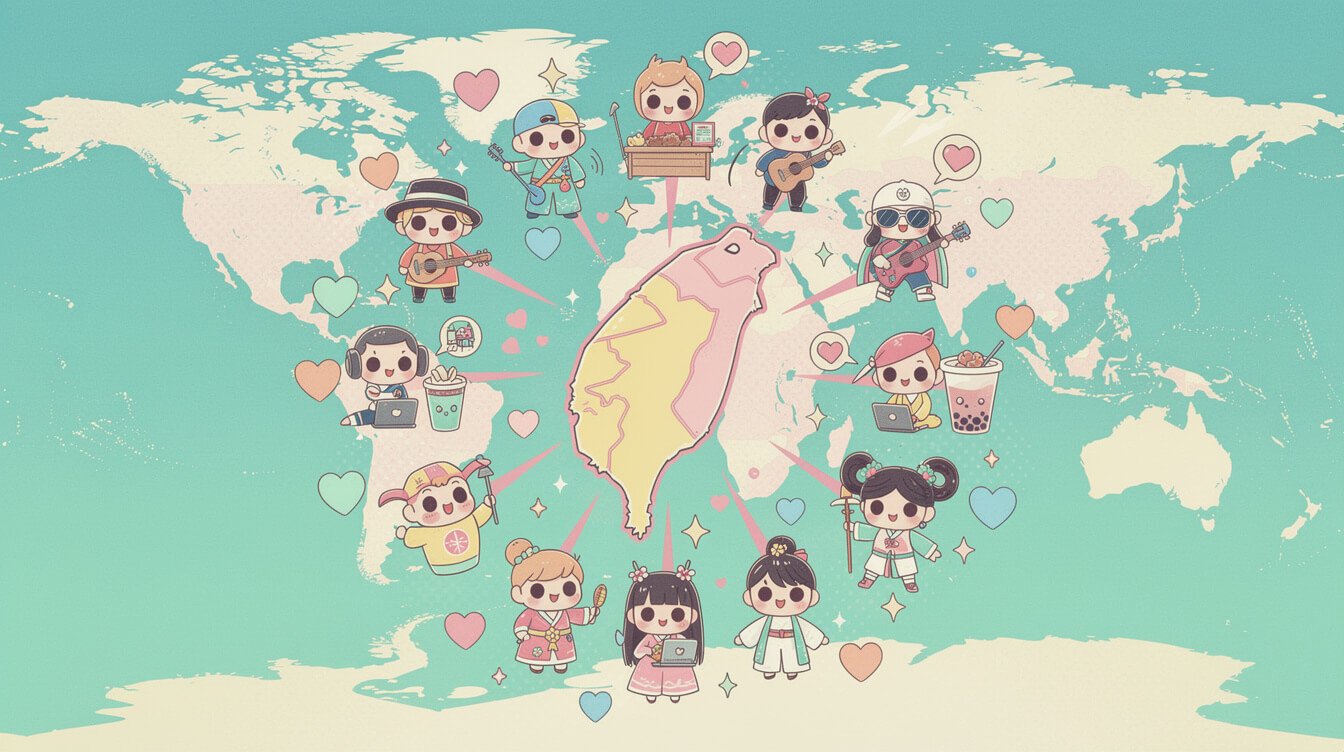
It is easy to file BugCat Capoo under “cute character, moves plush toys” and move on. But part of what makes him a genuinely important Taiwanese cultural export is that he pulls off the trick every mascot tries and most fail at: he has a voice. He is not a blank vessel for merchandise — he is a specific, weird, meat-loving, vegetable-hating little chaos agent, and Taiwanese readers know exactly which cousin or coworker each Capoo strip is secretly about. That specificity is what let him leap from LINE stickers to WEBTOON to real-world stores to nationwide 7-Eleven promotions to international pop culture. Cute is cheap. Cute plus personality is what wins.
For visitors, he is also a low-stakes, high-joy entry point into Taiwanese pop culture. You do not need to speak Mandarin to enjoy a Capoo strip — the gags are visual, the emotions are universal, and the food obsession will make sense to anyone who has ever eaten themselves stupid at a Taiwan night market. Add him to your phone via LINE stickers, spot him in the wild during your trip, bring home a plush or a t-shirt, and you have a small piece of Taiwan that will make you smile every time you see it. Which, honestly, is exactly what the best souvenirs are supposed to do — check our full Taiwan souvenirs guide for more on that whole art form.
And if BugCat Capoo taught us anything, it is this: the world is more fun when we let a chubby blue creature with too many legs run it.
Weekly Taiwan, Delivered.
Join thousands of Taiwan lovers, diaspora, and travelers who get our best culture guides, artisan spotlights, and early merch drops in their inbox every week. No spam. Just Taiwan.

Grab a Free Taiwan Sticker!
Drop your email and we’ll send you a limited-edition Taiwan sticker — plus insider access to new merch drops and island vibes.
No spam. Unsubscribe anytime.