Qixi Festival in Taiwan 2026: The Complete Guide to Chinese Valentine’s Day (August 19)
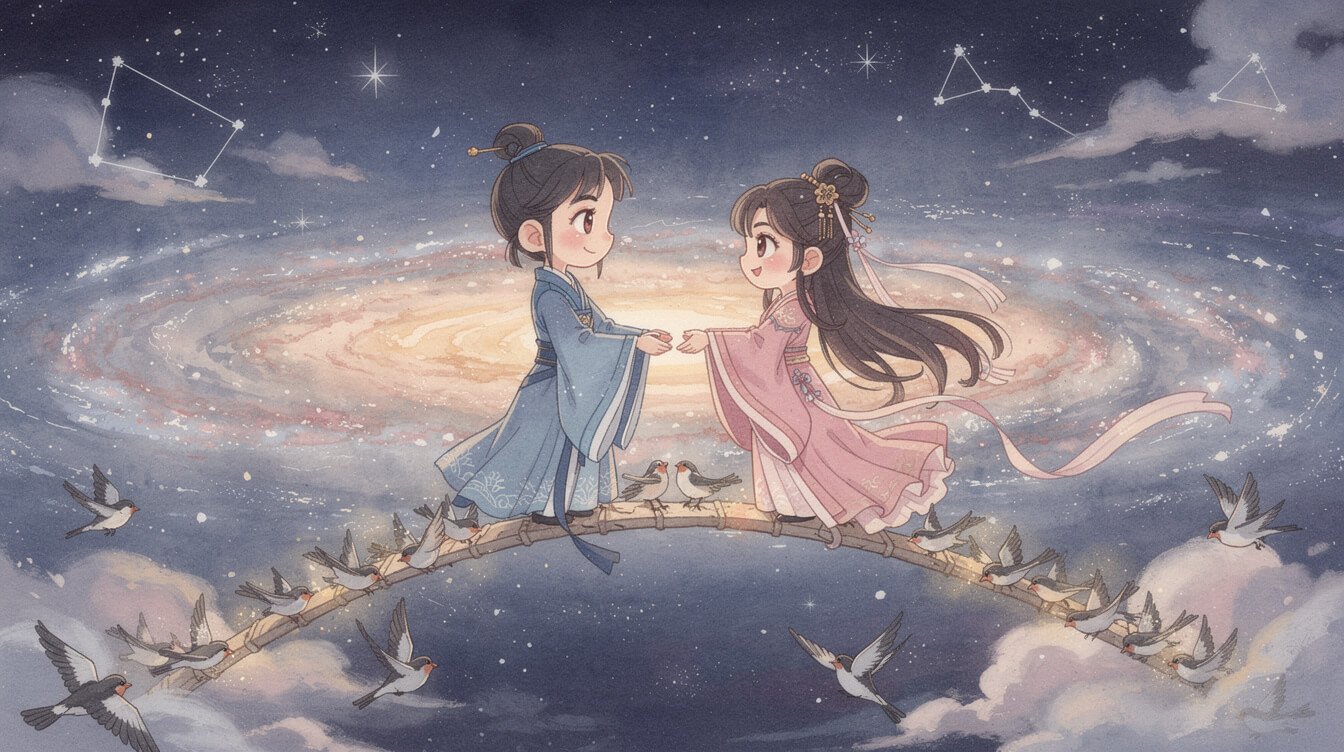
On the seventh night of the seventh lunar month, the Milky Way is supposed to part. A bridge made of magpies stretches across the stars, and two long-separated lovers — the cowherd Niulang and the weaver girl Zhinu — meet for their one night together. That’s Qixi Festival, and in Taiwan, it’s celebrated with a quiet intensity that makes February 14th feel a little bit shallow by comparison.
Most guides you’ll find online treat Qixi as a mainland Chinese festival. Wikipedia gives you the ancient legend. Chinahighlights.com covers Beijing dumplings. But Qixi Festival in Taiwan is its own thing — a hybrid of temple ritual, modern romance, and pop-culture gift-giving that no other place in the Chinese-speaking world does quite the same way.
This is the guide we wish existed when we first tried to figure out how Taiwanese couples actually celebrate Chinese Valentine’s Day. You’ll learn the real date for 2026, the 2,000-year-old love story behind it, why Taiwan celebrates three Valentine’s Days a year, where couples actually go on Qixi night, and the one temple in Tainan that still practices a 16-year-old coming-of-age ritual you’ve never heard of.
When Is Qixi Festival 2026? (August 19, Wednesday)
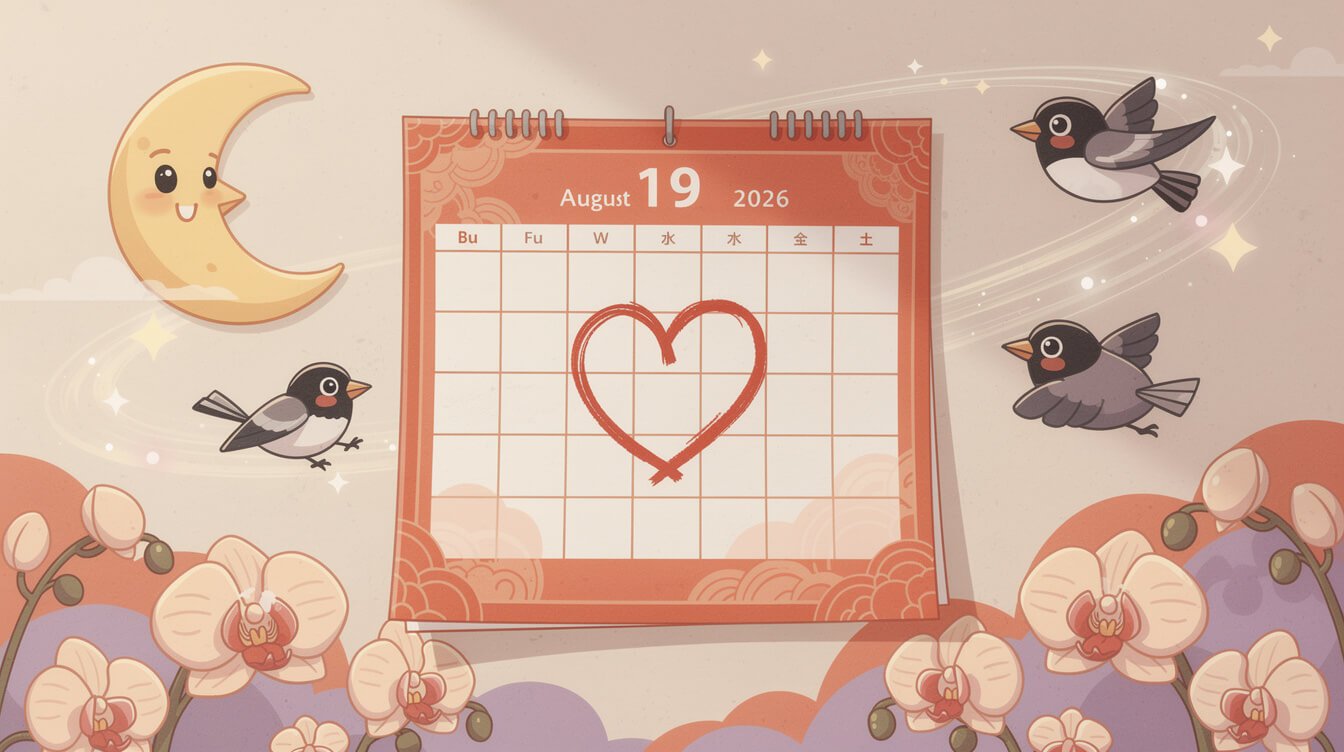
Qixi Festival 2026 falls on Wednesday, August 19. That’s the seventh day of the seventh month on the Chinese lunar calendar — 七月初七 — which is where the name Qixi (七夕, literally “seventh evening”) comes from.
Because Qixi tracks the lunar calendar, its Gregorian date shifts every year. In 2025 it was August 29. In 2027 it will land on August 8. The rule of thumb: if you’re planning a Qixi date night in Taiwan, expect it somewhere between late July and late August.
Why the Date Matters More Than You’d Think
The seventh lunar month is also Ghost Month — a 30-day stretch when Taiwanese avoid weddings, home moves, and swimming. Qixi is the one romantic bright spot inside that otherwise cautious month. If you’ve ever wondered why Taiwanese couples don’t get married in August, this is why. And if you’re planning a Taiwan trip in August, Qixi is a perfect cultural pivot after Ghost Month begins on August 13, 2026.
For a full breakdown of Taiwan’s August cultural landscape, our Taiwan culture guide covers Ghost Month traditions, Qixi, and the Mid-Autumn Festival in one place.
The 2,000-Year-Old Love Story: The Legend of the Cowherd and Weaver Girl
Every good festival needs a myth, and Qixi’s is one of the most beautiful in East Asian folklore. The version passed down in Taiwan goes like this:
Zhinu (織女, the “Weaver Girl”) was the seventh daughter of the Jade Emperor, tasked with weaving the clouds and rainbows of heaven. Niulang (牛郎, the “Cowherd”) was a poor mortal orphan who lived on Earth with only his ox for company. The ox — secretly a demoted deity — told Niulang that if he stole the robe of a bathing celestial maiden, she’d have to stay on Earth and marry him.
He did. She did. They had two children and a very happy peasant life until the Jade Emperor discovered his daughter had married a mortal, sent his queen to drag Zhinu back to heaven, and separated the couple with the Milky Way — a silver river of stars that Niulang couldn’t cross.
Moved by the couple’s grief, the world’s magpies took pity. Once a year, on the seventh night of the seventh month, they form a living bridge across the Milky Way. That’s the night Niulang and Zhinu are allowed to see each other. That’s Qixi.
If you look up at the night sky on Qixi, the stars Vega and Altair — separated by the bright band of the Milky Way — really do appear on opposite sides of the celestial river. Taiwanese grandparents will tell you they’re Zhinu and Niulang, still waiting.
In Taiwan, this story isn’t dusty history. It’s told to children, painted on temple walls, printed on Qixi greeting cards, and referenced in modern K-drama-influenced Taiwanese romance TV. The magpie is the unofficial mascot of Qixi — you’ll see them on everything from mooncake tins to greeting cards for weeks before the festival.
How Taiwan Celebrates Qixi Differently From Mainland China
Here’s the part most guides miss. Qixi looks fundamentally different in Taiwan than it does across the strait — and understanding why matters for anyone trying to grasp modern Taiwanese culture.
1. Taiwan Kept the Temple Traditions Alive
The Cultural Revolution (1966–1976) suppressed folk religion in mainland China, and while Qixi has been revived commercially since the 2000s, most mainland temples don’t run active Qixi rituals anymore. Taiwan — which never went through the Cultural Revolution — preserved the temple side of Qixi. In particular, worship of Qiniangma (七娘媽, the “Seven Mother Goddesses”), the celestial patronesses who bless children and unmarried women, is still very much alive in Tainan.
2. Qixi Isn’t the Biggest Retail Day
In mainland China, Qixi has become the year’s #1 luxury shopping day, with brands like Louis Vuitton and Cartier running Qixi-specific campaigns worth billions of yuan. In Taiwan, Qixi is still meaningful, but the retail intensity sits behind Feb 14 Valentine’s Day and White Day. Taiwanese couples spend on Qixi — but the emphasis is on handmade gifts, meaningful dinners, and shared experiences, not designer flexing.
3. The Language Is Gentler
Mainland media calls Qixi 中国情人节 (“Chinese Lovers’ Day”). Taiwan more often uses 七夕情人節 or simply 七夕. The framing is less nationalistic, more folkloric. A small distinction, but locals notice it immediately.
4. Aboriginal and Hakka Twists Exist
Taiwan’s Indigenous and Hakka communities have folded their own touches into modern Qixi celebrations — from Hakka handmade paper-cutting workshops in Hsinchu to Amis-style shared feasting in Hualien. It’s a festival that keeps absorbing local flavor rather than staying frozen.
Taiwan’s Three Valentine’s Days: Feb 14, White Day, and Qixi Explained
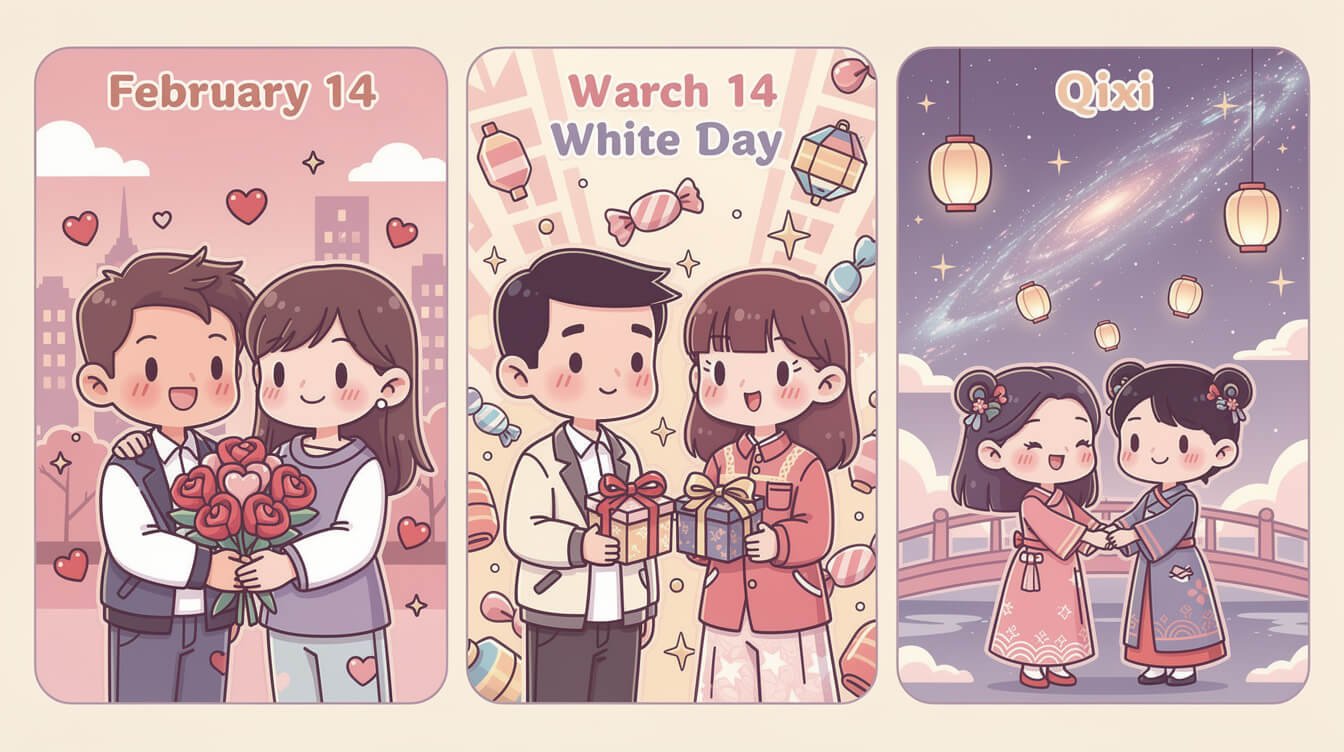
Yes — Taiwan celebrates three separate Valentine’s Days every year. This confuses first-time visitors more than anything else about Taiwanese romance culture. Here’s the cheat sheet:
Western Valentine’s Day (2/14)
February 14 is the loudest, most commercialized, and most public-facing of the three. Women receive flowers, chocolates, and dinner. Restaurants triple their prices. Instagram floods with couple photos. This is Taiwan’s rehearsal Valentine’s Day — the one that copies the Western template most closely.
White Day (3/14)
Exactly one month after Feb 14 comes White Day, imported from Japan. On White Day, men return the gesture — traditionally with white chocolate, marshmallows, or jewelry. In Taiwan, White Day has become the “quality control” holiday: if a guy skips it, it’s a public sign the relationship isn’t serious. Younger Taiwanese couples treat White Day almost as importantly as Feb 14.
Qixi Festival (Lunar 7/7)
And then, months later, comes Qixi — the traditional Valentine’s Day. This is the one for couples who want something with meaning behind it. There’s less pressure to buy expensive gifts, more emphasis on cultural rituals: writing wishes on paper, visiting a temple together, watching the stars from a mountain. Qixi is the Valentine’s Day you take seriously if you’re serious about each other.
The unwritten rule in Taiwan: Feb 14 is for showing off, White Day is for reciprocity, and Qixi is for meaning. A couple that celebrates all three is signaling long-term commitment.
Where Taiwanese Couples Go on Qixi Night: The Best Spots for Romance
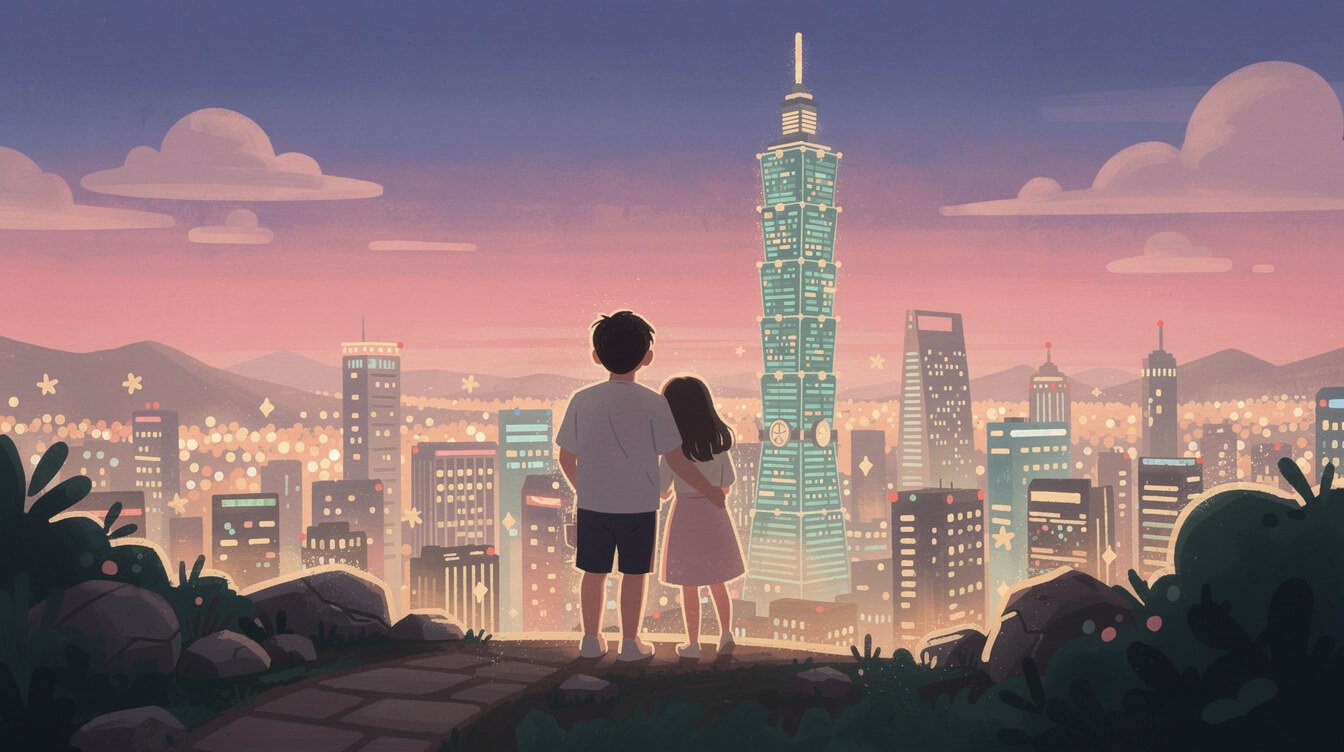
Ask a Taiwanese couple where they went on their last Qixi date, and you’ll get answers that lean surprisingly toward outdoor spots — because star-gazing is baked into the folklore. Here are the classics.
Elephant Mountain (象山) — Taipei
Elephant Mountain’s viewing platforms overlook the entire Taipei skyline, including a perfectly-framed Taipei 101. On Qixi night, the trails fill with couples hiking up around 6pm, catching the sunset, and staying for the city lights. It’s the most Instagrammed Qixi date in Taipei, and the 20-minute hike keeps the crowds thinner than street-level date spots.
Sun Moon Lake (日月潭) — Nantou
The most romantic destination in central Taiwan, Sun Moon Lake books out early for Qixi. Couples typically stay overnight at one of the boutique lakeside hotels, hire a private boat at dusk, and watch the fireflies (yes — even in August, the higher-altitude edges of the lake still glow). Some resorts run Qixi-specific candlelit dinner packages worth splurging on.
Tainan Old City (台南舊城) — Tainan
For couples who want cultural depth over rooftop views, Tainan is unmatched. The old capital is home to the Qixi tradition’s spiritual epicenter — the Seven Sisters Temple, which we’ll cover next — and its narrow Anping alleys, night markets, and Confucian temple gardens make for a slow, meaningful date. Tainan is where you go on Qixi if you want to remember it in five years.
Ximending (西門町) — Taipei
For younger couples, especially those in their teens and early 20s, Ximending is the default Qixi hangout. Photo booths, claw machines, matching couple accessories, night-market street food, and the giant neon signs make it a low-pressure date spot. Not spiritual — but perfectly Taiwanese in its own way.
Kenting Beach (墾丁) — Pingtung
For the Southern crowd, Kenting’s summer beach vibe makes for the most laid-back Qixi date. Beach barbecues, sunset drinks at Sail Rock, and stargazing on the sand — because Qixi is fundamentally an astronomical festival, and Kenting has some of the darkest skies in Taiwan.
Sacred Traditions: Tainan’s Seven Sisters Temple and the Coming-of-Age Ritual
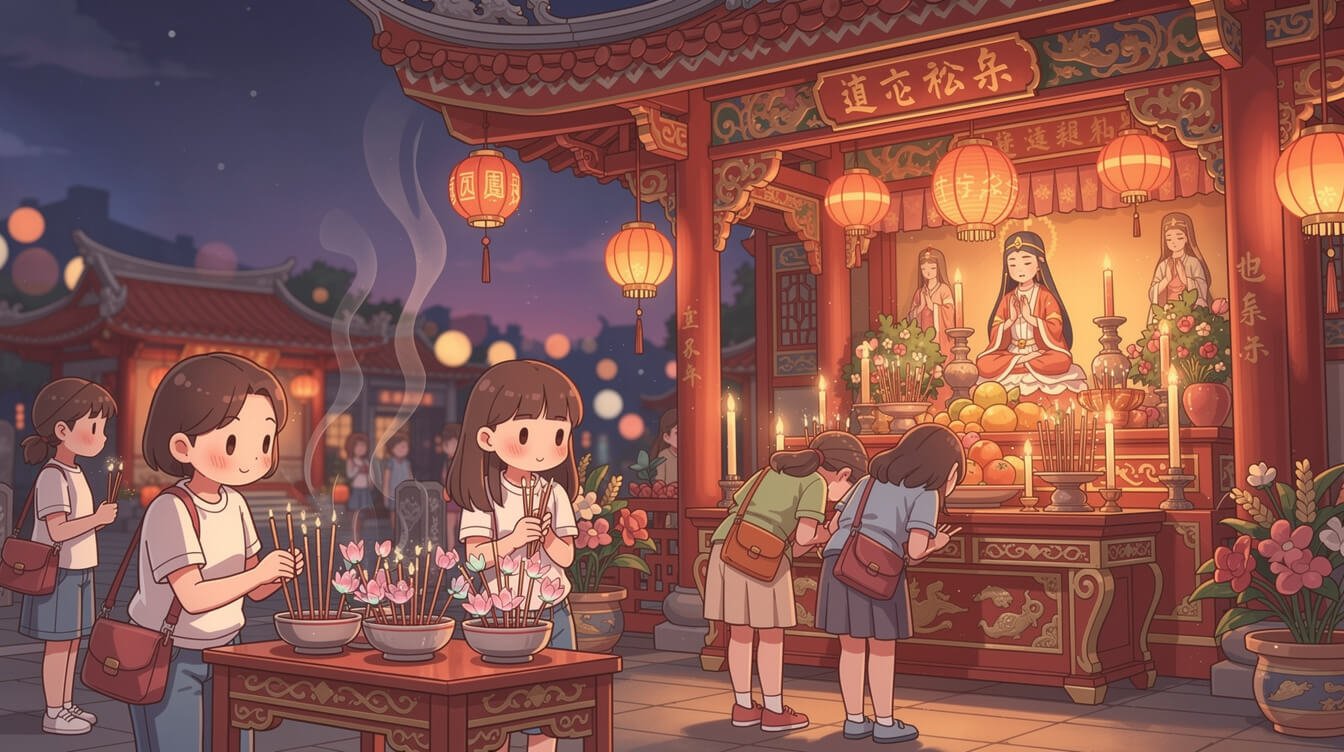
Now the part almost no English-language guide covers. On the corner of Zhongshan and Kaishan Road in Tainan sits Kai Long Gong (開隆宮), better known as the Seven Sisters Temple — the only temple in Taiwan solely dedicated to Qiniangma, the seven goddesses of the Qixi legend.
Kai Long Gong was founded in 1732. For nearly three centuries it has hosted Taiwan’s most distinctive Qixi ritual: the Zuo Shiliu Sui (做十六歲, “coming-of-age at sixteen”) ceremony.
The Coming-of-Age at Sixteen Ritual
In old Tainan, children under 16 were considered “under the wing” of the Seven Sisters — celestial patronesses who watched over them from birth. On the Qixi following a child’s 16th birthday, families would bring them to Kai Long Gong for a ceremony that formally released them into adulthood.
The ritual involves the teenager crawling under a paper “Seven Mother Pavilion” (七娘媽亭), a small ornate structure that represents the goddesses’ celestial home. Emerging from the other side is the symbolic transition — the child is now old enough to enter adult society, get married, work, and stand on their own.
What makes this remarkable is that Kai Long Gong still runs this ceremony every Qixi. Every year, dozens of Tainan 16-year-olds go through it, and even outside of Tainan, families make the pilgrimage back to the temple for the ritual. It’s a living tradition, not a museum piece.
Other Qixi Rituals Still Practiced
- Offering flowers, powder, and combs to Qiniangma — because the goddesses are patronesses of beauty, women bring makeup and grooming items to the altar.
- Burning paper mudan (peony) flowers — a symbol of feminine beauty and grace.
- Preparing “seven sister” meals — some Tainan families cook seven separate dishes on Qixi eve, one for each goddess.
- Writing wishes on paper and hanging them near the altar — often love-related, but also for school, career, and children.
If you’re visiting Taiwan around Qixi and want to see one of the island’s most authentic living festivals, get to Kai Long Gong early. The ceremony peaks around 3pm on Qixi day and is open to respectful visitors. If you’re new to Taiwan’s rich religious calendar, our Taiwan Mazu Pilgrimage guide gives helpful etiquette context for visiting any Taiwanese temple.
Modern Qixi Gifting Etiquette: What to Give (and What to Skip) in 2026
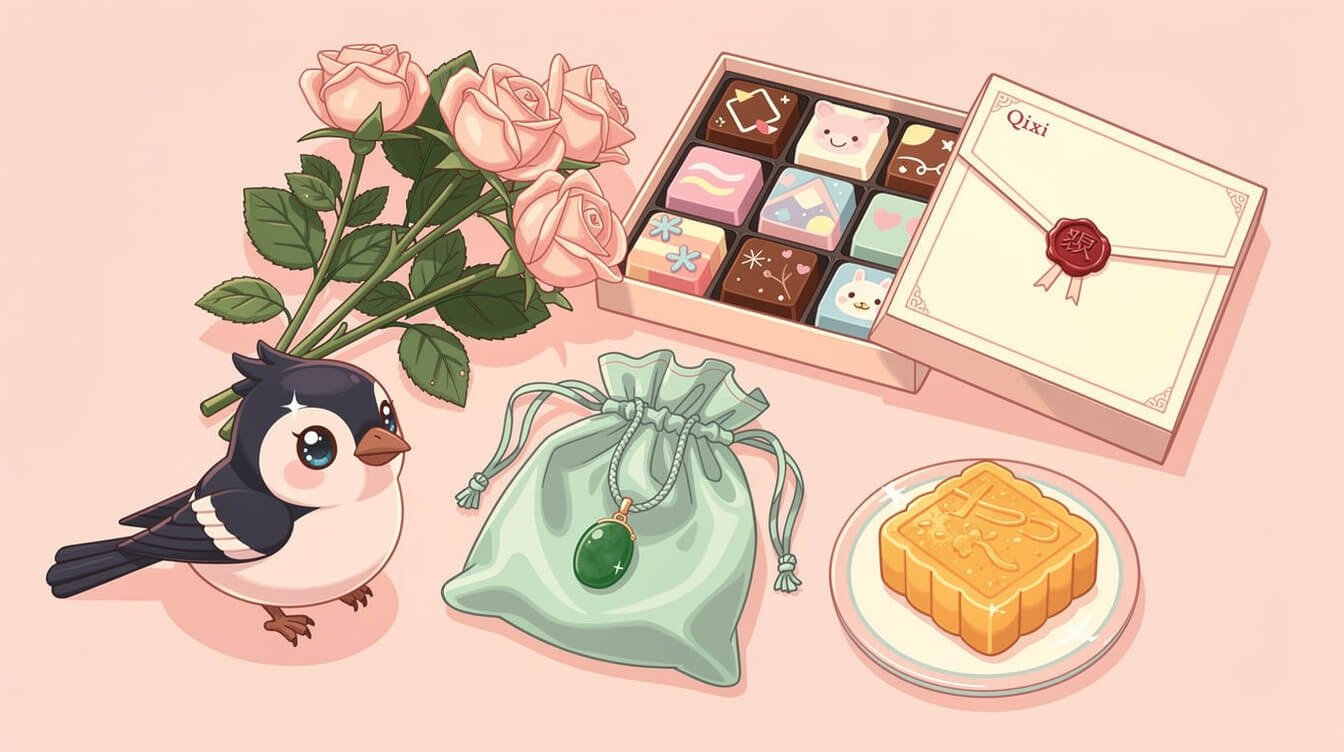
Qixi gifting in Taiwan has its own etiquette — different from Feb 14, subtly Taiwanese in ways that mainland guides won’t tell you. Here’s the modern 2026 landscape.
Gifts That Land Well
- Flowers, but not just roses — Taiwanese florists lean into Qixi with mixed bouquets featuring peonies, jasmine, and orchids alongside roses. A single-color rose bouquet reads slightly generic for Qixi. Mix it up.
- Handmade chocolate boxes — Taiwan’s dessert scene is world-class, and a small artisan chocolate box from a Taipei chocolatier like Rose Chocolat or Chocolabs feels far more Qixi-appropriate than a mass-produced Godiva box.
- Handwritten letters — this is the traditional Qixi gift. Even in 2026, a heartfelt written letter still lands harder in Taiwan than in most Western cultures.
- Matching-couple items — Taiwan is a matching-couple-clothing capital of Asia. Coordinated t-shirts, sneakers, or accessories are wildly popular among Qixi couples in their 20s. Our Taiwanese Boba Tea & Fried Chicken Duo Tee is a fun option here — it literally frames the couple as a Taiwanese street-food power duo, which is exactly the kind of playful matching gesture that reads well on Qixi.
- Experience gifts — cooking classes, tea ceremony workshops, or overnight boutique hotel bookings all beat physical objects in the 2026 Taiwanese gifting mood.
Gifts to Skip
- Clocks or watches — the word for “gifting a clock” (送鐘) sounds identical to the word for “attending a funeral” (送終). Universal taboo across Chinese-speaking cultures.
- Anything white or funereal — white flowers, white chrysanthemums, and white envelopes with money are for funerals, not Valentine’s Day.
- Sharp objects — scissors, knives, and letter openers symbolize cutting the relationship.
- Umbrellas — the word 傘 (sǎn, umbrella) sounds like 散 (sàn, to separate). Don’t do it.
- Shoes — folk belief says gifting shoes lets your partner “walk away” from you.
For a deeper cultural read on Taiwanese gift-giving in general — birthdays, business, weddings — our complete guide to gifting in Taiwan covers the full etiquette landscape.
2026 Trends: What’s New This Year
Two Qixi trends are worth flagging for 2026. First, Taiwanese small-batch food gifts are having a moment — especially artisan pineapple cakes, hand-picked oolong tea sets, and heritage-brand nougat. Second, experience gifts on Kavalan whisky distillery tours, private Sun Moon Lake boat rides, and Alishan mountain retreats are seeing 3-4x demand from couples who did the flowers-and-chocolate routine in 2025 and want something different this year.
Whatever you choose, one rule stays constant: on Qixi, the story behind the gift matters more than the price. That’s the whole point of the festival.
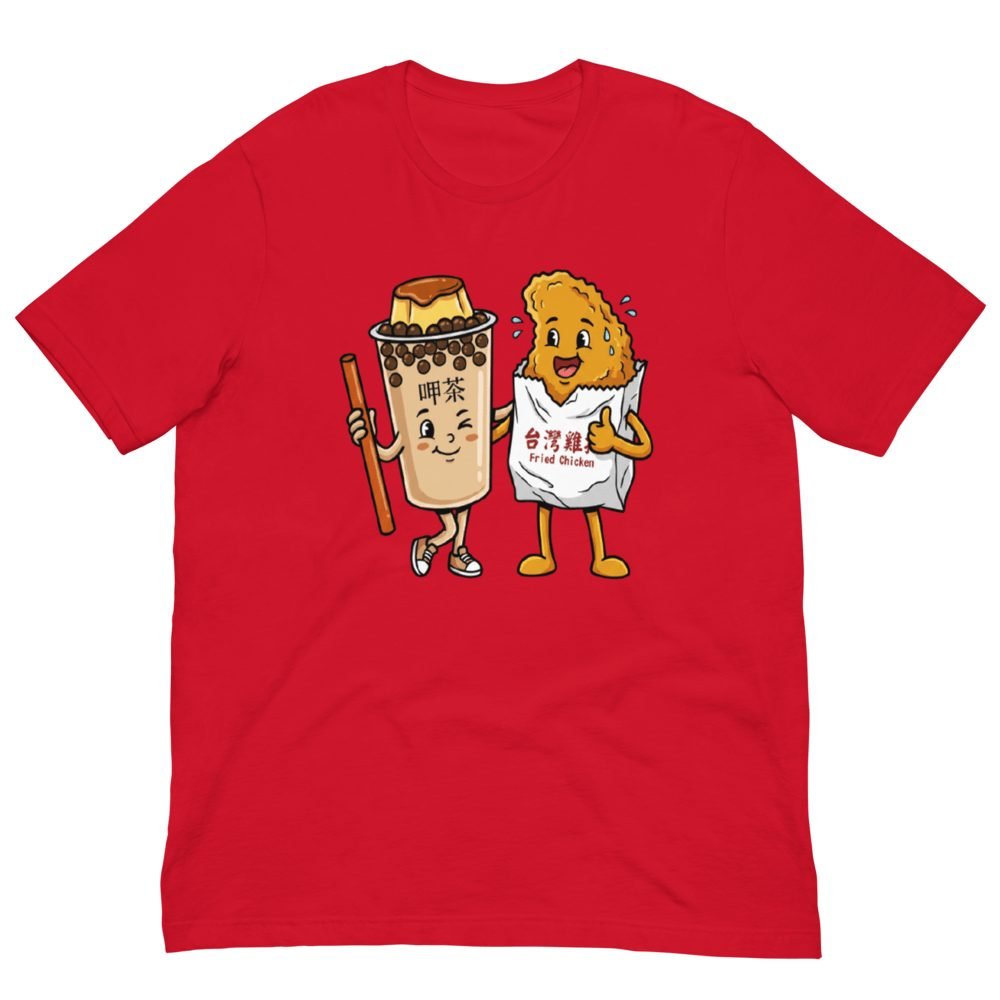
The Ultimate Qixi Matching-Couple Tee
The iconic Taiwanese street-food power duo, worn together. A playful, Taiwan-proud matching gift that beats any generic Qixi bouquet — and lasts a lot longer.
Final Thoughts: Why Qixi Festival Still Matters in Taiwan
Every year in Taiwan, tens of thousands of couples choose Qixi over Feb 14 as their real Valentine’s Day. Not because Qixi is louder — it isn’t. Not because it’s flashier — it isn’t. But because it carries something Western Valentine’s Day has lost somewhere along the way: a story.
A story about patience. About waiting a year for one night. About a bridge of magpies and a river of stars. About temples that have been running the same ritual since 1732, and 16-year-olds still crawling under paper pavilions in Tainan every August, and Taiwanese grandparents pointing up at Vega and Altair and telling their grandkids that those two stars are lovers still trying to reach each other.
That’s why Qixi Festival in Taiwan still matters. And why, on August 19, 2026, the seventh night of the seventh lunar month, we hope you’ll find your own way to celebrate it — with the person who’s worth waiting a year to see, or with the meaning-loaded gift that says more than a bouquet ever could. For more of Taiwan’s most beloved festivals, take a look at our Dragon Boat Festival 2026 guide and our Taiwan traditional food guide — because in Taiwan, culture always shows up on the plate first.
Happy Qixi. 七夕快樂.
Grab a Free Taiwan Sticker!
Drop your email and we’ll send you a limited-edition Taiwan sticker — plus insider access to new merch drops and island vibes.
No spam. Unsubscribe anytime.