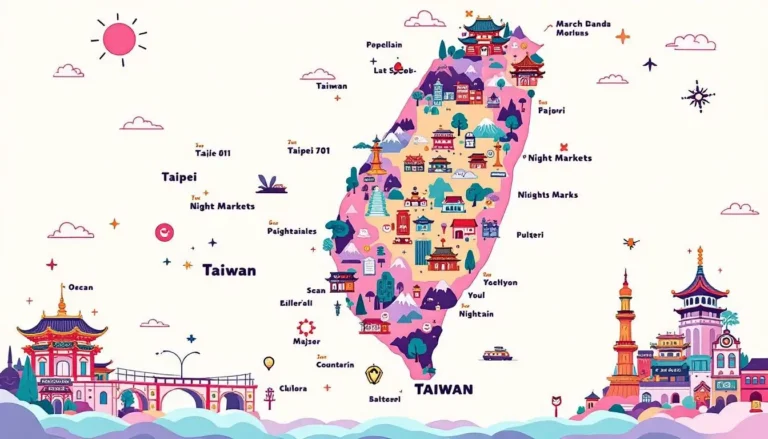
Cijin Island Taiwan: The Complete Guide to Kaohsiung’s Black-Sand Day-Trip Paradise
The first thing you notice on Cijin Island Taiwan is that the sand is the wrong color. It’s dark, almost charcoal in the bright Kaohsiung sun, glittering with mineral specks that catch the light like crushed glass. Five minutes ago you were standing on a busy ferry pier in Taiwan’s second-largest city. Now you’re on a barrier island where seafood grills smoke under red lanterns, retirees pedal rental bikes past a 19th-century lighthouse, and container ships the length of three city blocks slide by close enough to see the rust on their hulls.
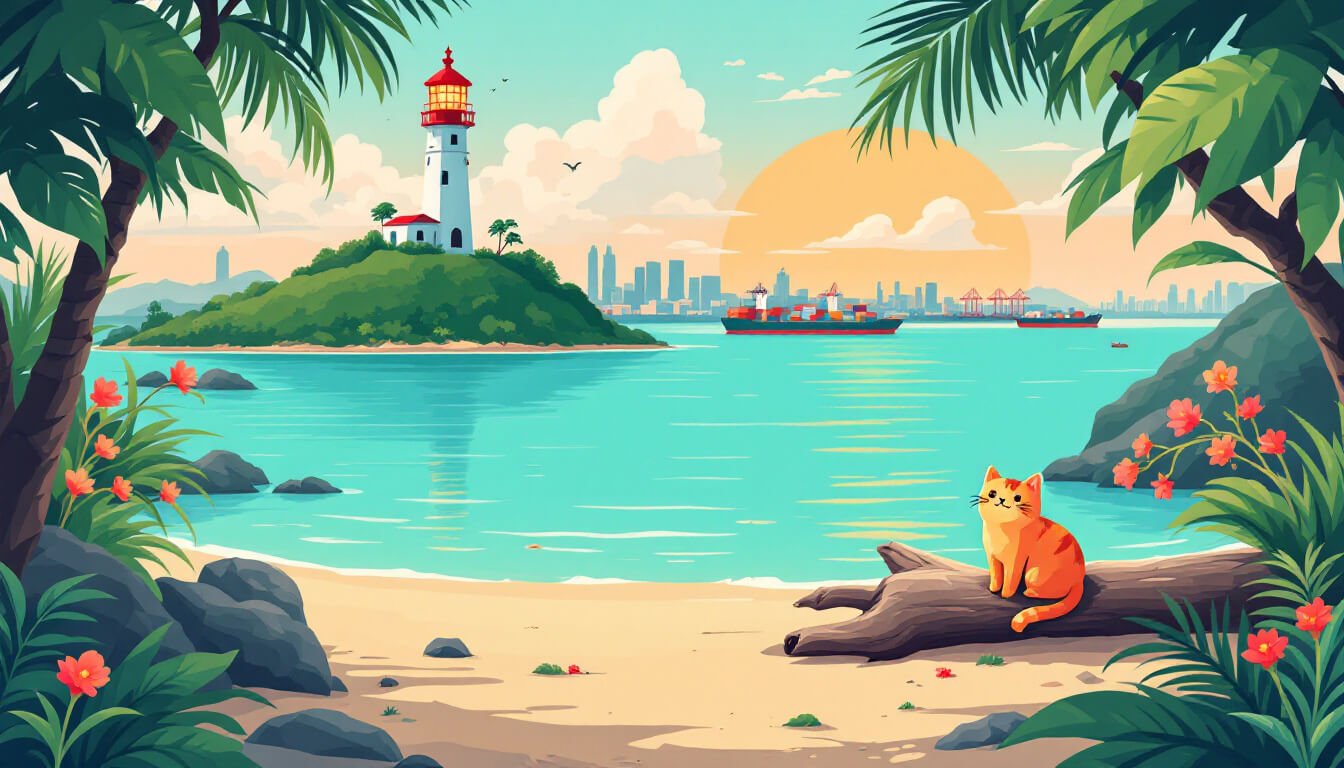
Cijin (旗津) — sometimes spelled Qijin — is the slim sandbar that protects Kaohsiung Harbor from the Taiwan Strait, and for the price of a NT$30 ferry ride it might be the single most underrated day trip in southern Taiwan. This guide covers everything you need to plan it well: how to get there, what to eat, what to skip, the legend behind Tianhou Temple, and the best stretch of the seaside promenade for a sunset that no one will believe you didn’t filter.
Why Cijin Island Is Kaohsiung’s Most Underrated Day Trip
Most Taiwan itineraries route travelers straight from Taipei to Sun Moon Lake to Tainan, then maybe a half-day in Kaohsiung before flying home. Cijin almost never makes the cut, and that’s the gift. While Shilin Night Market in Taipei runs shoulder-to-shoulder on weekends and Jiufen feels like a theme park during cherry blossom season, Cijin Island still moves at the pace of an island where the ferry is the road.
The geography is what makes it special. Cijin is technically the second-smallest district in Kaohsiung City — just 1.46 square kilometers — but it stretches eleven kilometers north to south, a narrow strip of land that the harbor authority deliberately preserved as a barrier against typhoons. To your east you have one of Asia’s busiest container ports. To your west, the open Taiwan Strait. Walk the width of the island in fifteen minutes; cycle the length in under an hour.
For an outlying-island experience without the planning cost of a flight to Penghu or a ferry to Kinmen, Cijin is unbeatable. You can be eating grilled squid by 11 a.m. and back on the Kaohsiung MRT for dinner. The vibe is closer to Green Island than to a city beach: salt in the air, scooters on the ferry, and a temple that’s older than every building in Kaohsiung’s skyline combined.
How to Get to Cijin Island: The Iconic Five-Minute Ferry
There are technically three ways to reach Cijin Island from mainland Kaohsiung, but only one of them is worth doing.
Option 1: The Gushan Ferry (the only one you should take)
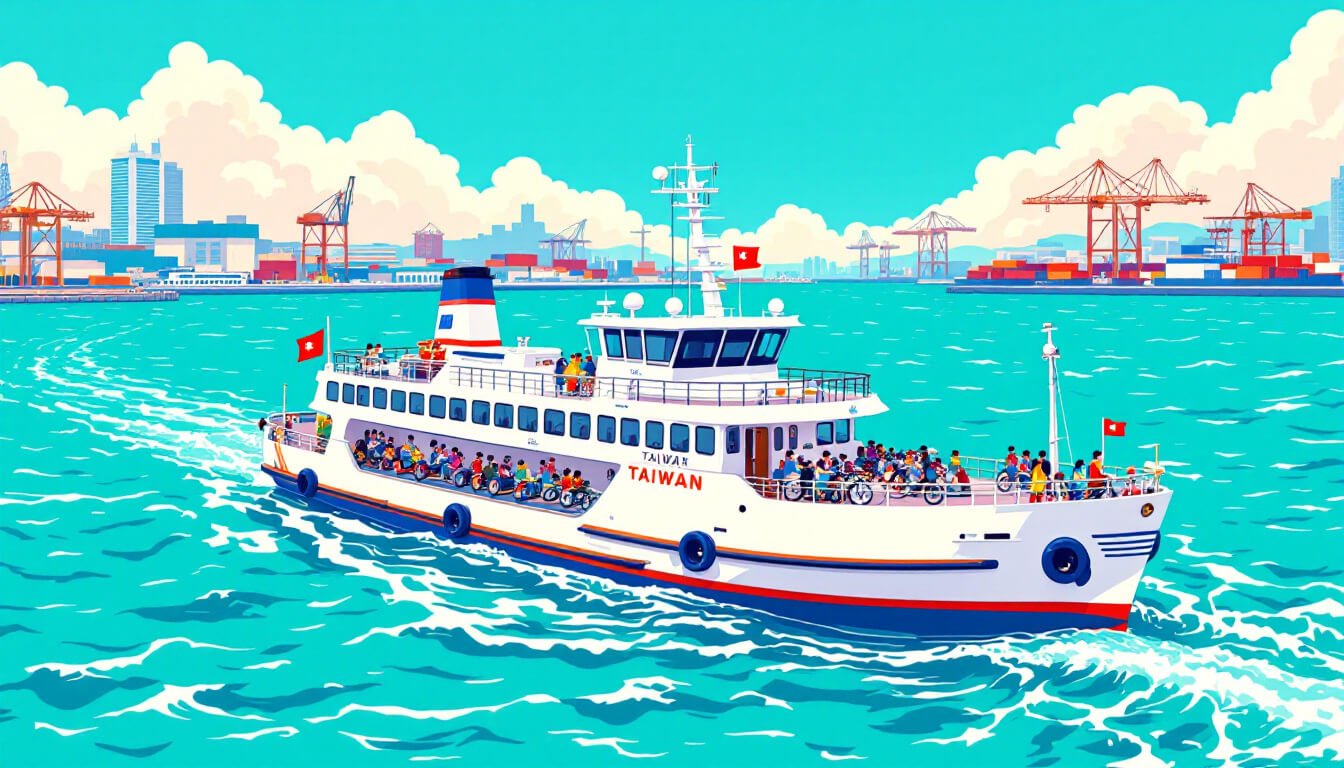
Take the Kaohsiung MRT orange line to Sizihwan Station (O1) and walk five minutes west to the Gushan Ferry Pier. Ferries run every five to ten minutes from roughly 5 a.m. to 2 a.m. — yes, almost twenty-four hours — and the crossing takes literally five minutes. The fare is NT$30 (about US$1) one way, paid by tapping your EasyCard at the gate. Scooters and bicycles board for an extra NT$30, which is why every other passenger seems to be a local commuter rolling a moped onto the lower deck.
Sit on the upper deck if you can. The view of Kaohsiung’s container port — the cranes lined up like a row of giant white herons, the cruise ship terminal, the 85 Sky Tower glinting in the haze — is one of the most underrated five-minute experiences in Taiwan.
Option 2: The Kaohsiung Cross-Harbor Tunnel
If you’re driving or scootering, the Cijin Cross-Harbor Tunnel (高雄港過港隧道) runs under the channel. It’s quick but you miss the entire point of going to an island, which is the boat ride. Skip it unless you have heavy luggage.
Option 3: The Light Rail Loop (long way around)
Kaohsiung’s circular light rail (LRT) does eventually loop down to a Cijin-adjacent stop, but the journey takes about an hour from the city center and dumps you at the south end of the island, far from the action. Useful only if you want to bike the length of Cijin north toward the ferry pier — which, honestly, isn’t a bad way to do it in reverse.
Best plan: Take the ferry over in the morning, walk and eat your way around the north end (where everything is concentrated), rent a bike if you want to explore south, and ferry back at sunset.
Cijin Beach: The Story Behind Taiwan’s Most Unusual Stretch of Sand

Most travel sites describe Cijin Beach as a “black sand beach,” which is technically true and also slightly misleading. The sand isn’t volcanic-black like the famous beaches in Iceland or Hawaii. It’s a deep gray-brown, flecked with mica and iron deposits washed down from the Central Mountain Range and deposited at the mouth of the Love River over centuries. In bright sun it sparkles. At sunset it turns warm bronze. After rain it darkens to near-charcoal.
The beach runs for several kilometers along the island’s western edge, with the most accessible stretch sitting directly behind the Cijin Seafood Street. There are public showers, changing rooms, and rented umbrellas. The official swimming area is patrolled in summer, but the surf can be deceptively strong — Cijin faces the open Taiwan Strait, and rip currents do happen. Stick to the flagged zone and you’ll be fine.
What surprises most first-time visitors is how the beach feels: not Mediterranean, not Caribbean, but specifically Taiwanese. Kids in school uniforms scream past on rented quad bikes. Families set up portable canopies that wouldn’t be out of place at a night market. A few couples take wedding photos against the lighthouse backdrop. Everyone is barefoot.
If you’re putting together a wider Taiwan beach itinerary, Cijin pairs naturally with Kenting on the south coast and Fulong up north. Of the three, it’s the only one where you can be eating fresh-grilled squid within sixty seconds of leaving the sand.
Cijin Seafood Street: Point, Grill, Devour

If Cijin Island had to choose one thing to be famous for, the seafood strip would win on a unanimous vote. The main commercial drag — Miaoqian Road (廟前路), the street that runs between the ferry pier and Tianhou Temple — is lined for several blocks with seafood restaurants, and they all operate on the same wonderfully unintimidating system.
You walk past a row of ice-packed display tanks at the entrance. You point at what you want: grilled squid the length of your forearm, butterflied prawns, fat scallops still in the shell, sashimi-cut sailfish, a whole bream destined for the steamer. A server scribbles it down, names a price, and waves you to a table. Twenty minutes later your food arrives in the order it finished cooking, with a tiny dish of soy-wasabi for the sashimi and a sweet-spicy chili dip for the grilled stuff.
A few rules that locals know and tourists usually learn the hard way:
- Confirm prices before you point. A few restaurants quote by-the-fish; most quote by weight. Ask for the per-jin (600g) price up front and there are no surprises.
- The big squid is the move. Grilled whole squid (烤大魷魚) is what put Cijin on every Taiwan-food list. It’s brushed with garlic sauce, charred over open flame, and sold by the foot.
- Skip the abalone unless you’ve checked the price first. Real Taiwan abalone is excellent and expensive. Some stalls quote it at three or four times the going rate to first-time visitors.
- Try the papaya milk at the corner stand. It is, somehow, the perfect chaser for grilled seafood. Trust the locals on this one.
Budget around NT$400-700 per person (US$13-22) for a serious seafood meal here, less if you stick to a single grilled item plus rice. For more on Taiwan’s broader food culture, our guide to traditional Taiwanese food covers what to order across the island.
Tianhou Temple, the Cijin Lighthouse, and the Island’s Historic Spine
Cijin is far older than Kaohsiung. Long before the modern city’s container cranes existed, this barrier island was a fishing community of immigrants from Fujian, China, who arrived in the late 17th century and built — almost immediately — a temple to Mazu, the sea goddess.
Cijin Tianhou Temple (旗津天后宮)
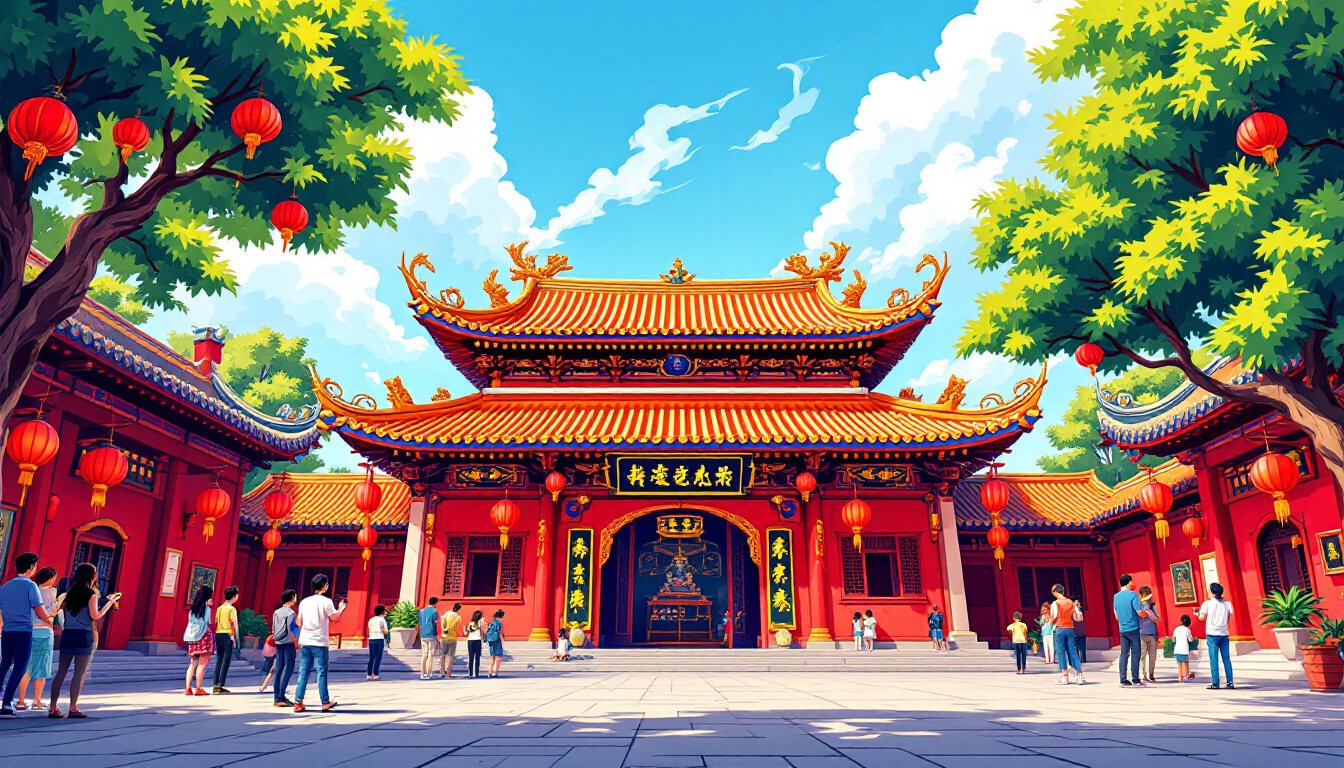
Built in 1673 and now a designated national historic monument, Cijin Tianhou Temple is the oldest Mazu temple in Kaohsiung and one of the oldest in all of Taiwan. The current building has been renovated multiple times, but the original timbers, stone columns, and shrine layout are largely intact. You can spot offerings of fresh fish placed at Mazu’s altar — a tradition you won’t see at inland temples, because here the goddess actually patrols a working seaport. Mazu pilgrimages remain one of Taiwan’s biggest religious events; for context on the broader tradition, see our Mazu pilgrimage guide.
Visitors are welcome. Step over (never on) the high wooden threshold, walk in a clockwise direction, and don’t photograph anyone praying without permission. The incense smoke is intentional — keep moving and you’ll be fine.
Cijin Lighthouse (旗津燈塔)
From the temple, follow signs uphill (it’s about a fifteen-minute climb) to the Cijin Lighthouse, also called Cihou Lighthouse. The original wooden tower was built in 1883 by the Qing dynasty to guide ships into the newly opened harbor. The current octagonal white-brick structure dates from 1916, built by Japanese colonial engineers, and it’s one of only a handful of Taiwan lighthouses still open to the public. Admission is free, the view from the platform takes in the entire Kaohsiung skyline, and on clear days you can see all the way down the Taiwan Strait.
The Old Fort (Cihou Battery, 旗後砲台)
A short walk from the lighthouse, the ruins of the 1875 Qing-dynasty fort sit on the hilltop. The original red-brick arches and gunpowder vaults are intact, and the strategic logic is immediately obvious — anyone trying to attack Kaohsiung Harbor by sea had to come within point-blank range of these cannons. The fort played a role in the 1895 Japanese invasion of Taiwan, which is documented on bilingual plaques on site. Free admission, and the views from here are arguably better than from the lighthouse itself.
If you’re a fan of bringing home authentic Taiwan-themed pieces from your travels, our Taiwan-themed apparel and accessories are designed to capture exactly this kind of moment — places like Cijin that most travelers never hear about.

Bring a Piece of Taiwan Home
Loved Cijin? Our island-inspired tees, totes, and accessories celebrate Taiwan’s lighthouses, night markets, and barrier-island vibes — all designed with that playful kawaii-meets-street-art aesthetic.
Bikes, Tunnels, and Sunsets: How to Spend an Afternoon Beyond the Tourist Trail
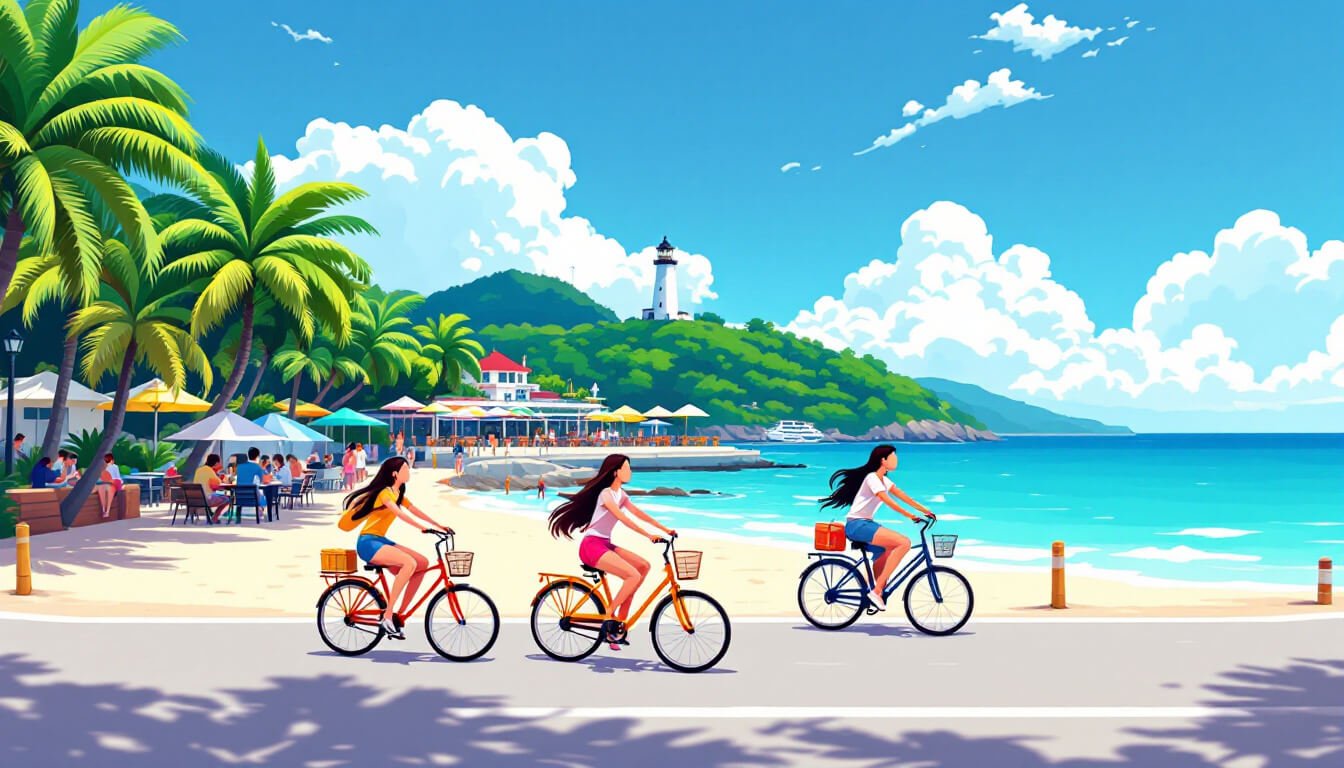
Once you’ve eaten yourself stupid on grilled squid and ticked off the temple and the lighthouse, most visitors think they’re done with Cijin. They aren’t. The second half of the island — the long southern stretch that the day-trip crowd usually skips — is where Cijin actually relaxes.
Rent a bike (or a tandem, or a four-person buggy)
Rental shops cluster within two blocks of the ferry pier. A single-speed cruiser runs around NT$100 for two hours. Tandems are NT$150-200. The four-person canopy-covered “family bike” — half pedal car, half rolling shade structure — runs NT$400 and is what you rent if you’re traveling with parents or kids. ID deposit is standard. Helmets aren’t, but the seafront bike path is car-free so it isn’t strictly necessary.
The Cijin Wind Turbine Park
Five kilometers south of the ferry pier, a row of giant white wind turbines lines a windswept park overlooking the Taiwan Strait. It’s photogenic in a strange, post-industrial way. The wind here can be aggressive — a small preview of why typhoon season reshapes the island regularly — and the turbines are usually spinning hard. Bring sunglasses; the sand blows.
The Rainbow Church Installation
An Instagram-bait public art piece consisting of a series of vertical rainbow arches set on a small reflective pool. It’s photogenic, free, and takes about three minutes to enjoy. Don’t make a special trip — but if you’re cycling past, stop.
Sunset at the Cijin Star Tunnel
The pedestrian tunnel cut through the hill near the lighthouse is decorated with constellation murals and LED stars. It connects the temple side of the island to a small park on the western coast that faces directly into the sunset. Plan to be there roughly forty-five minutes before sunset, walk through the tunnel, find a bench facing the strait, and watch the container ships line up to enter the harbor as the sky goes pink-orange-purple. There is no better free thirty minutes in Kaohsiung.
Cijin Island FAQ: Planning Your 2026 Day Trip

Is Cijin Island worth visiting?
Yes — particularly if you’re already spending more than one day in Kaohsiung. The combination of a short ferry ride, walkable scale, world-class casual seafood, a 350-year-old temple, and a working historic lighthouse makes it one of the highest value-per-effort outings in southern Taiwan.
How long should I spend on Cijin?
A relaxed half-day (four to five hours) covers the ferry, the temple, the lighthouse, a seafood lunch, and a walk along the beach. A full day adds a bike ride south, the wind turbine park, the rainbow installation, and a sunset. We recommend full day unless your Kaohsiung itinerary is genuinely tight.
When is the best time to visit Cijin?
October through April. Kaohsiung sits in Taiwan’s tropical south, which means winters are mild and sunny while summers run hot, humid, and prone to typhoons. May through September is swimmable but uncomfortable; for context on Taiwan’s seasonal rhythms, our month-by-month travel guide breaks down what to expect island-wide. Avoid the immediate aftermath of any typhoon warning — debris on the beach, ferry suspensions, and closed seafood stalls are all common for a day or two.
Can I swim at Cijin Beach?
Yes, but only inside the patrolled flagged zone during posted hours. Cijin faces open ocean and rip currents are a real risk outside the safe zone. Lifeguards are on duty in summer; outside summer, swim at your own risk and stay close to shore.
Is Cijin family-friendly?
Extremely. The island is flat, walkable, scooter-rental-friendly, and the main food street has plenty of options for picky eaters (the seafood places almost all serve fried rice and chicken too). The four-person family bikes are a hit with kids, and the beach has gentle entry inside the safe zone.
How much does a Cijin day trip cost?
Cheap. Ferry both ways: NT$60. Bike rental: NT$100-200. Lunch: NT$400-700. Temple, lighthouse, and old fort: all free. You can do a thorough day on Cijin for under NT$1,000 (about US$32) per person, including food.
Where do I store luggage if I have a flight later?
Use a locker at Sizihwan MRT station before you board the ferry. There’s no reliable luggage storage on the island itself. For broader trip planning, our Taiwan travel itinerary guide covers how to slot Kaohsiung and Cijin into a 7, 10, or 14-day trip.
Is Cijin Island the same as Qijin?
Yes. Cijin (旗津) is the official Mandarin pinyin spelling adopted in 2008. Qijin is the older Wade-Giles romanization still used on many maps, tour-company websites, and the TripAdvisor listing. They’re the same place.
Final Thoughts: Why Cijin Should Be on Your Kaohsiung Itinerary
Taiwan rewards travelers who slow down. Most itineraries treat Kaohsiung as a checkbox — one night, two meals, a quick photo of the Pier-2 Art Center — and move on. But the city’s character lives on its harbor, and the harbor’s character lives on Cijin. Five minutes by ferry, three centuries of temple history, a beach that doesn’t look like any other beach in Taiwan, and the kind of casual point-and-grill seafood scene that doesn’t really exist outside East Asia.
Go in the morning. Eat too much squid. Climb the lighthouse. Stay for the sunset. Take the late ferry back to Kaohsiung with the smell of charcoal smoke in your clothes. That, more than any night market or Taipei landmark, is what most repeat visitors to Taiwan end up calling their favorite afternoon on the island. Pair it with our wider things to do in Kaohsiung guide and you’ll have a Kaohsiung weekend that almost no foreign tourist actually pulls off.

Postcards from Taiwan — In Your Inbox
Weekly stories on Taiwan culture, hidden corners like Cijin, and first dibs on new Taiwan Merch drops. No spam, just the good stuff.

Grab a Free Taiwan Sticker!
Drop your email and we’ll send you a limited-edition Taiwan sticker — plus insider access to new merch drops and island vibes.
No spam. Unsubscribe anytime.