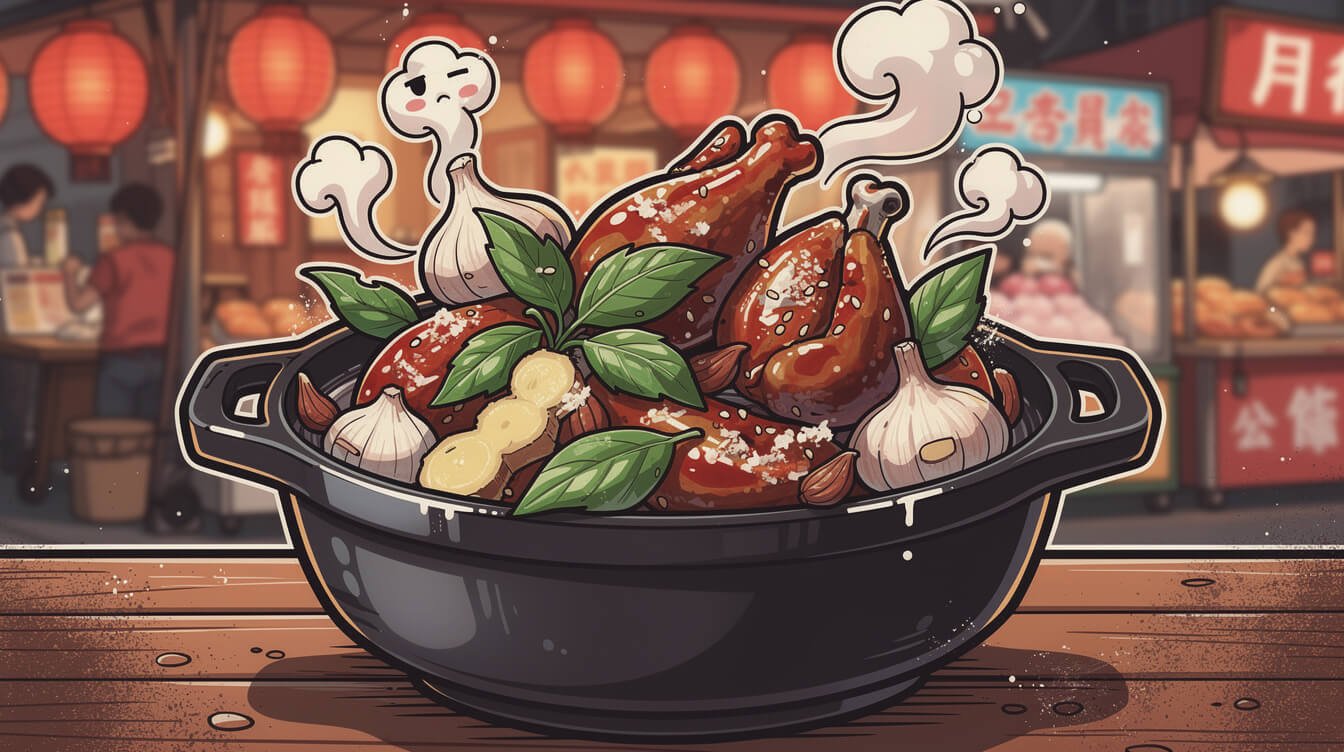
Sanbeiji: Why Taiwan’s Three-Cup Chicken Uses Exactly One Cup of Three Magic Ingredients
Walk past any rechao (熱炒) joint in Taiwan after 8pm and your nose will lead you straight to it. That sizzling, sticky-sweet, basil-perfumed clay pot at table 4? That’s sanbeiji (三杯雞) — three-cup chicken. And the name is literal: one cup of sesame oil, one cup of soy sauce, one cup of rice wine. No measuring spoons. No fussing. Just three cups and a fistful of Taiwanese basil that hits the hot pot at the very last second.
The Recipe Is the Name
The brilliance of sanbeiji is that it tells you exactly how to make it. San (三) means three. Bei (杯) means cup. Ji (雞) means chicken. That’s the entire recipe in three characters. Old Taiwanese grandmothers can cook this dish without ever measuring — just pour equal parts of each liquid into a heavy claypot with bone-in chicken thighs, smashed ginger, whole garlic cloves, and dried chilies. Cover. Simmer until the sauce reduces to a glossy, mahogany lacquer. Toss in a generous handful of nine-layer pagoda basil (九層塔, jiucengta) right before serving. Done.
From Song Dynasty Prison to Taipei Night Market
The legend is properly dramatic. In 1283, Song Dynasty loyalist Wen Tianxiang (文天祥) was awaiting execution in a Yuan Dynasty prison in Beijing. An elderly woman from his hometown of Jiangxi, hearing he had only days left, snuck three cups of ingredients — sesame oil, soy sauce, rice wine — past the guards and cooked him a final meal of chicken. Wen was beheaded the next day. The dish stayed in Jiangxi for 700 years as a regional comfort food.
Then it crossed the strait. When mainland Chinese fled to Taiwan after 1949, Jiangxi cooks brought sanbeiji with them — but Taiwan rewrote the dish. Mainland sanbeiji is darker, soupier, and sometimes uses sugar. Taiwanese sanbeiji is drier, glossier, and absolutely demands the basil bomb at the end. The basil is the Taiwanese signature. Skip it and the dish is naked.
How to Spot the Real Thing
Order sanbeiji at any decent rechao (Taiwan’s late-night stir-fry diners) and a server will bring it to your table still hissing in a black clay pot. Three signs you got the good version:
- The basil arrives loud and bright green — not wilted into the sauce, but tossed on at the last second so it scents the whole pot.
- The chicken is bone-in. Boneless thighs are a shortcut. The marrow is half the flavor.
- The sauce coats the chicken, not pools around it. A proper reduction should be sticky enough to cling — almost candied.
Next time you’re at a Taiwanese night market, skip the stinky tofu queue for one night and find sanbeiji instead. It’s the most Taiwanese dish you’ve never heard of — and the only recipe in the world that doubles as its own ingredient list.

Grab a Free Taiwan Sticker!
Drop your email and we’ll send you a limited-edition Taiwan sticker — plus insider access to new merch drops and island vibes.
No spam. Unsubscribe anytime.