Taichung, Taiwan: Why the Bubble-Tea Birthplace Is the Island’s Most Underrated Big City
Taichung Taiwan is the city that gave the world bubble tea — and yet most first-time visitors to the island still skip it for Taipei in the north or Tainan in the south. That’s a mistake. Taichung is Taiwan’s second-largest city, the geographic center of the island, a former industrial powerhouse that’s quietly transformed itself into the country’s most exciting creative capital. It’s where teahouse owner Liu Han-Chieh’s afternoon experiment in 1986 became a global drink, where a retired veteran turned a doomed military village into a rainbow folk-art pilgrimage, and where a Japanese architect built one of the most stunning modernist opera houses in Asia.
This guide breaks down exactly why Taichung deserves a spot on your Taiwan itinerary — what to see, where to eat, how to get there, and the cultural backstory that makes this central-Taiwan city so much more than a list of tourist stops. Whether you’re staying two days or two weeks, here’s everything to know about visiting Taichung, Taiwan.
Where Is Taichung Taiwan and Why It Matters
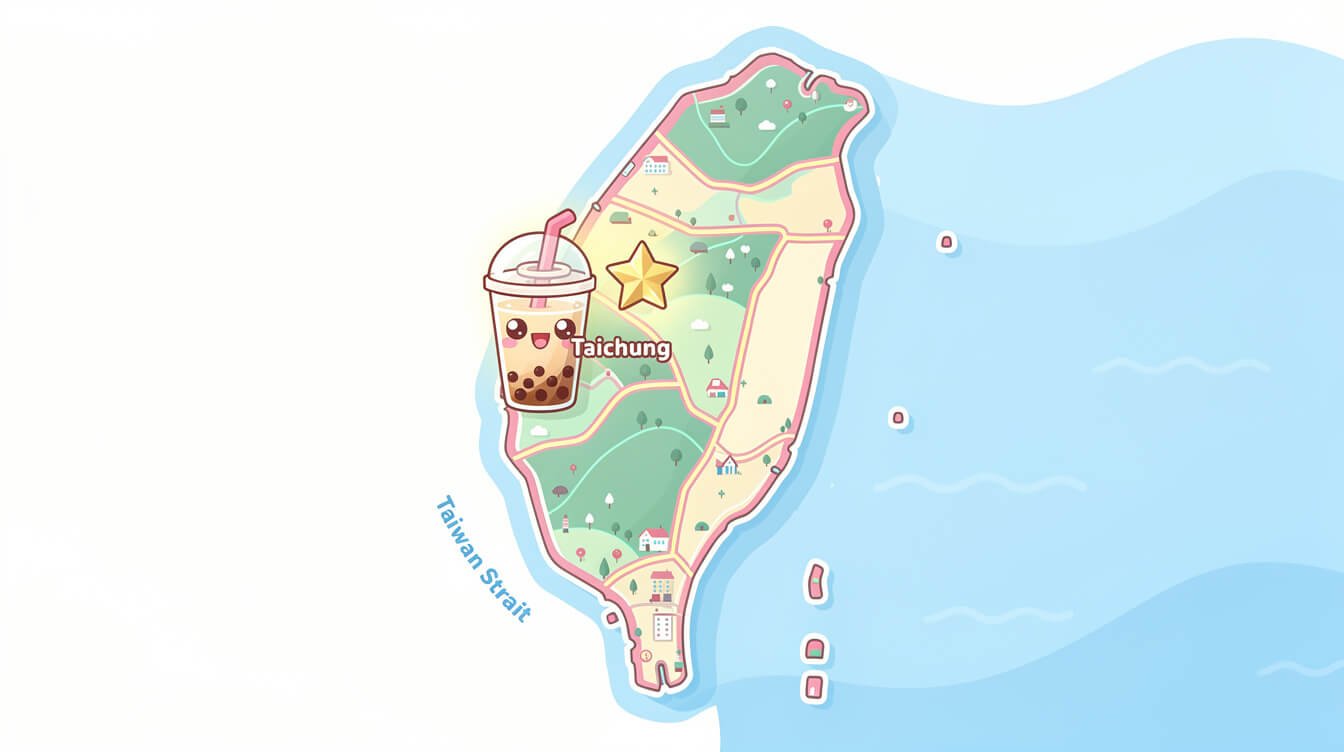
Taichung sits on Taiwan’s central west coast, roughly midway between Taipei in the north and Kaohsiung in the south. By high-speed rail it’s about 50 minutes from Taipei Main Station and around 55 minutes from Zuoying in Kaohsiung — which technically makes Taichung the most convenient base on the island for travelers who want to see everything without backtracking. Geographically, the city presses up against the foothills of the Central Mountain Range to the east and slides west toward the Taiwan Strait, with the Da’an and Dajia rivers framing its agricultural plains.
With more than 2.8 million residents across 29 districts, Taichung is Taiwan’s second-largest special municipality. For a long stretch of the 20th century it was the country’s manufacturing heart — bicycle frames, machine tools, precision optics, and the export-oriented industries that powered Taiwan’s economic miracle all ran through here. That industrial DNA still shapes the city. Giant Bicycles, the world’s largest bike brand, is headquartered just outside Taichung, and you’ll find more dedicated bike paths around the city than almost anywhere else in Taiwan.
The climate is part of the appeal too. Taichung sits in a sheltered basin, which means it sees significantly less rain than rainier Taipei (roughly half the annual rainfall) and avoids the worst of the northeast monsoon. For most of the year the weather here is the most consistently pleasant in Taiwan — a fact that has slowly turned the city into a magnet for domestic tourists, digital nomads, and retirees from the wetter coasts. If you’re trying to plan a trip in the shoulder seasons, our best time to travel to Taiwan guide breaks down what to expect month by month, and Taichung wins on weather more often than any other major city on the island.
The Bubble-Tea Birthplace: Chun Shui Tang and the 1986 Origin Story

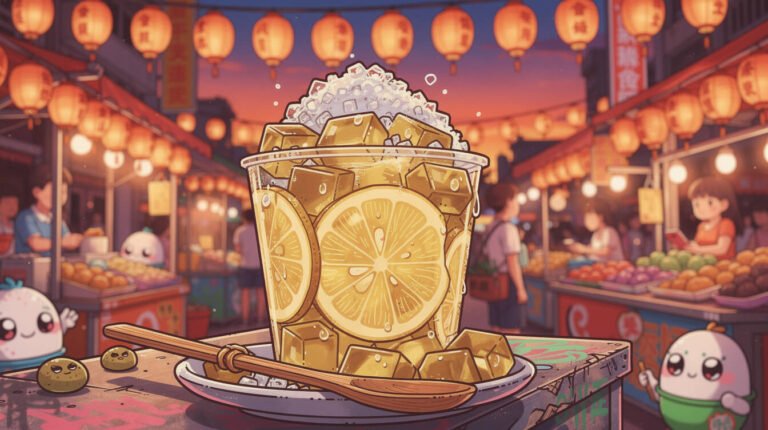
Of all the things Taichung has given the world, bubble tea is the biggest. The drink that now anchors a global industry worth more than $3 billion was invented inside a Taichung teahouse called Chun Shui Tang (春水堂) in 1986. The story goes like this: Liu Han-Chieh, the teahouse’s founder, had recently returned from a trip to Japan, where he’d seen iced coffee being served in a way Taiwanese tea drinkers traditionally avoided — cold. He started experimenting with chilled, shaken black tea served in cocktail-style glasses.
Then came the accident. In a marketing meeting in early 1986, one of the company’s product development managers, Lin Hsiu-Hui, brought along a bowl of fen yuan (粉圓) — the chewy tapioca pearls Taiwanese kids had been eating in shaved ice for decades. On a whim, she dumped them into a glass of cold milk tea and stirred. The drink was a hit at the meeting. It went on the menu. It hit the streets of Taichung within months. Within a decade it was on every corner of every city in Taiwan. Today there are more than 30,000 bubble tea shops on the island and tens of thousands more around the world.
The original Chun Shui Tang storefront still operates in Taichung’s Siwei Street neighborhood, and pilgrimage drinkers (yes, that’s a thing) line up there daily for the “original” pearl milk tea served in the same tall glass it always was. If you’re a bubble tea fan, drinking one here is an essential Taichung ritual. While you’re at it, our deep dive on Taiwan bubble tea covers the invention dispute (a Tainan teahouse claims they got there first) and the full history of how the drink conquered the planet.
If you want to wear your bubble-tea love on your sleeve, our Taiwan Bubble Tea Cat T-Shirt pairs the Taichung-born drink with the kawaii cat aesthetic Taiwanese pop culture is famous for — a perfect souvenir from the city that started it all.
From Industrial Hub to Creative Capital: How Taichung Taiwan Reinvented Itself
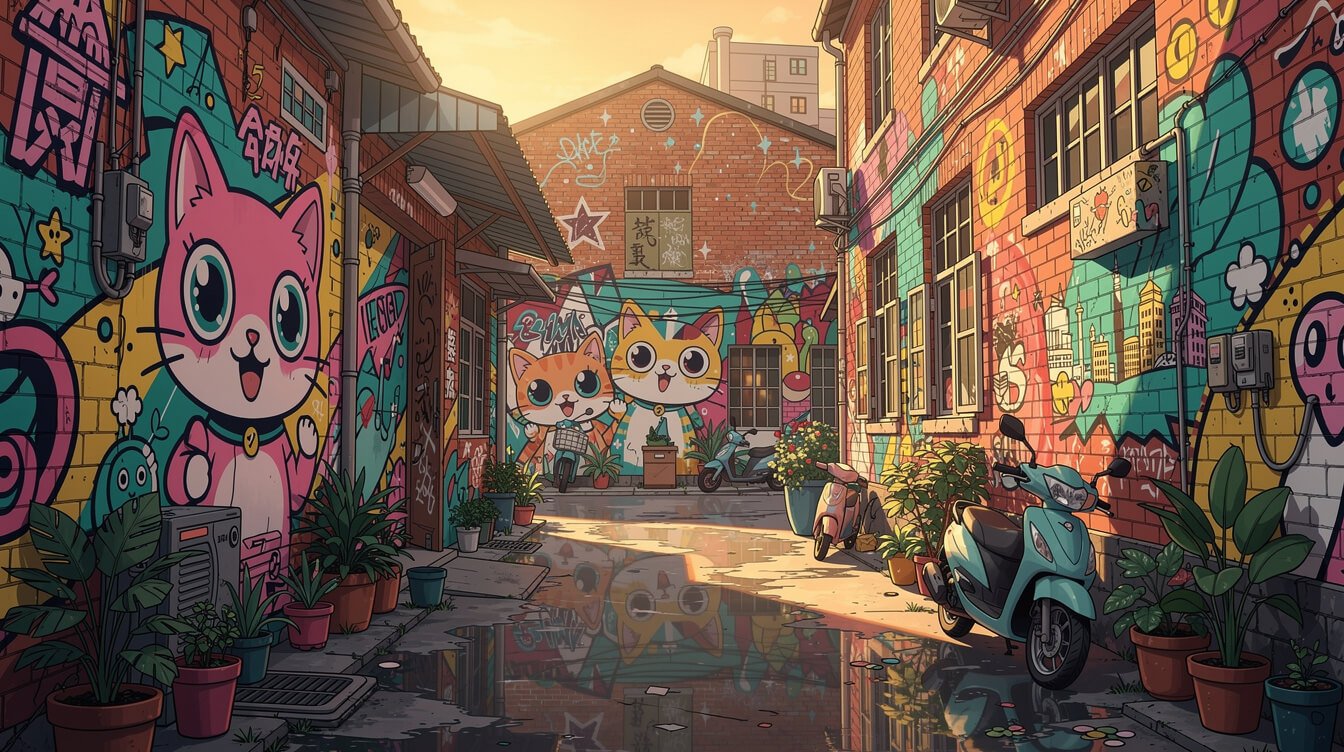
For most of the 20th century, Taichung’s reputation outside Taiwan was, frankly, boring. It was a factory town. The reputation was earned: at one point the city manufactured a quarter of all bicycles sold worldwide and the bulk of Taiwan’s precision optics. But somewhere around the early 2010s, something shifted. Aging factories along Calligraphy Greenway began converting into design studios. The old Taichung Railway Station — a beautiful 1917 Japanese-colonial-era building — was decommissioned in 2016 and reopened as a public cultural park.
Shen Ji New Village, a former government dormitory complex from the 1960s, was rescued from demolition and re-imagined as an outdoor design market full of indie shops, craft coffee, and small galleries. The old Fourth Credit Union bank building was repurposed into Miyahara, an extravagantly Harry-Potter-esque ice cream parlor and pineapple cake shop. The Taichung Creative and Cultural Industries Park — a former Imperial Japanese sake brewery — became a year-round arts venue. Old buildings everywhere in this city have been quietly reborn.
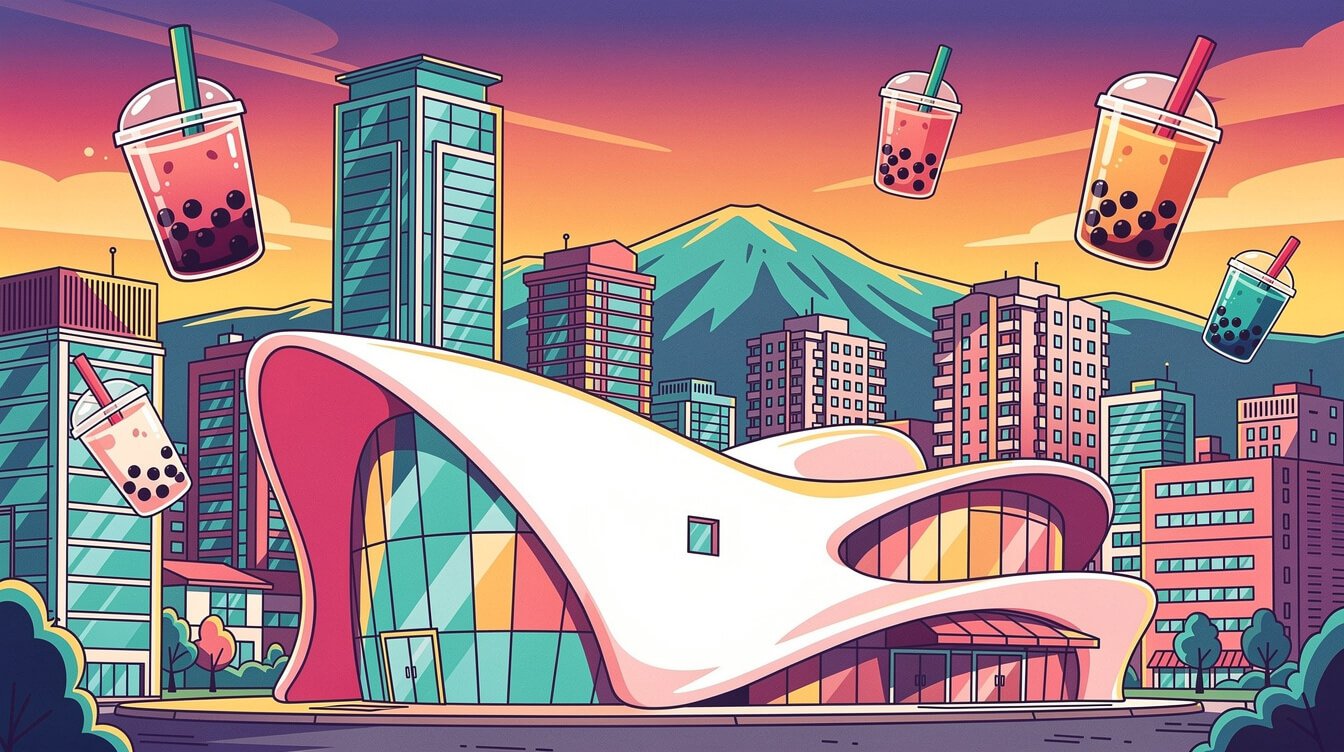
The clearest symbol of the new Taichung is the National Taichung Theatre, designed by Japanese architect Toyo Ito and opened in 2016. Its curving, cave-like concrete walls have no straight lines anywhere — a feat of engineering so technically demanding that construction took over a decade. Today it sits at the heart of the 7th Redevelopment Zone (Taichung’s most fashionable district), a building that announced to the world that Taichung was no longer just a factory town.
Taichung Taiwan’s Must-See Cultural Landmarks
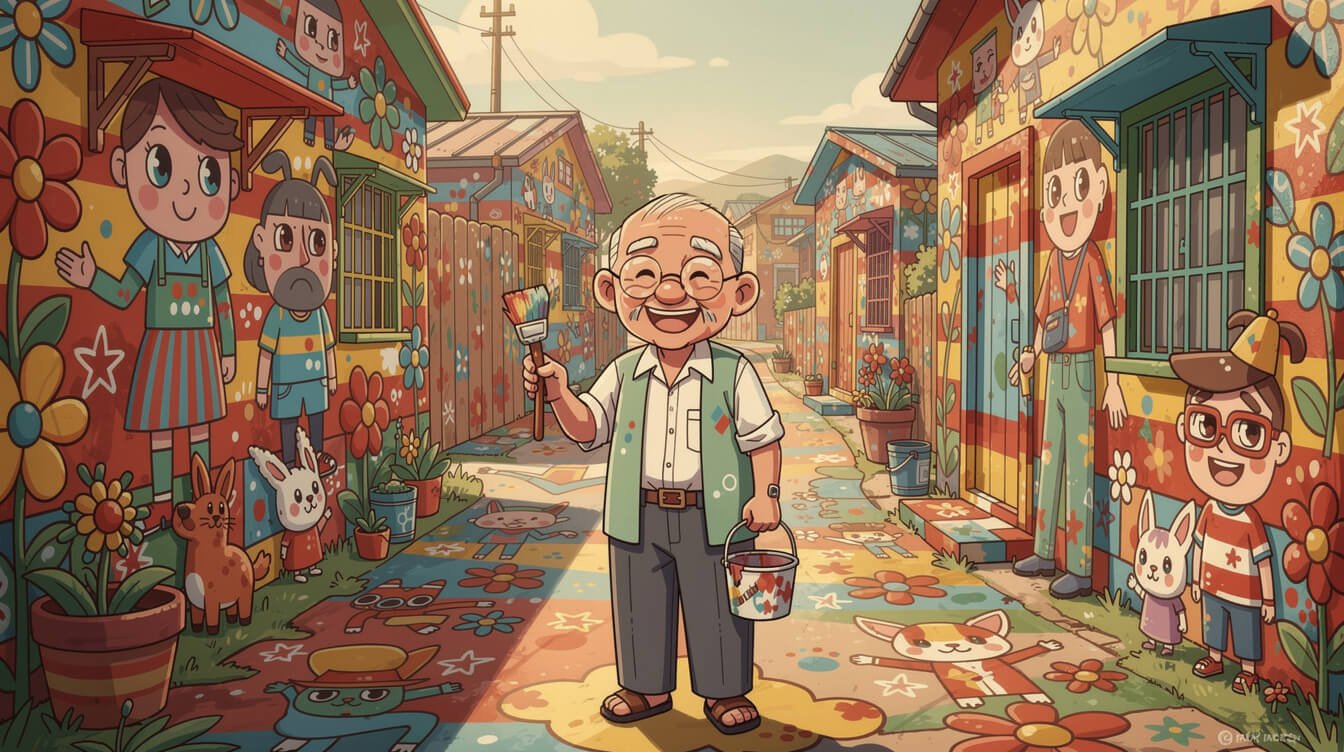
If you only have two days in Taichung, these are the landmarks to anchor your itinerary around. They’re spread across different districts but most are MRT-accessible or a short cab ride apart.
Rainbow Village (Caihongjuan Village, 彩虹眷村)
The story of Rainbow Village is the kind of thing that sounds invented. In the 1970s and ’80s, the small military-dependent village in Nantun District was scheduled for demolition. A single retired veteran named Huang Yung-Fu — known affectionately as “Rainbow Grandpa” (彩虹爺爺) — refused to move out and instead began painting the entire village in colorful folk-art murals. Birds, animals, characters from his childhood, slogans about love and peace. Local university students rallied to save the village. Today it’s a protected heritage site, and Huang, who passed away in 2024 at age 101, painted nearly every surface himself across more than two decades.
National Taichung Theatre (臺中國家歌劇院)
Even if you have zero interest in opera, the building is worth a visit. Toyo Ito’s “Sound Cave” concept makes the entire structure one continuous curving surface — there are no flat walls anywhere inside the public lobbies. The free upper-floor terrace garden offers some of the best skyline views in central Taichung. Performances run year-round but the architecture is the real draw.
Miyahara (宮原眼科)
An old Japanese-era eye clinic converted into a maximalist ice cream parlor and confectionery. Two stories of dark wood, vintage chandeliers, towering bookshelves stacked with custom tea boxes and pineapple cakes, and dozens of ice cream flavors served in hand-formed waffle cones. It looks like a Wes Anderson movie. The lines on weekends are notorious but the queue moves quickly.
Shen Ji New Village (審計新村)
A former government accountants’ dormitory complex reborn as an open-air market full of indie design shops, weekend craft stalls, third-wave coffee bars, and the kind of stationery stores that justify their own pilgrimage. Best visited on a Saturday or Sunday when the outdoor market is fully open.
Eating in Taichung: Night Markets, Sun Cakes, and Taiwan’s Most Underrated Food Scene
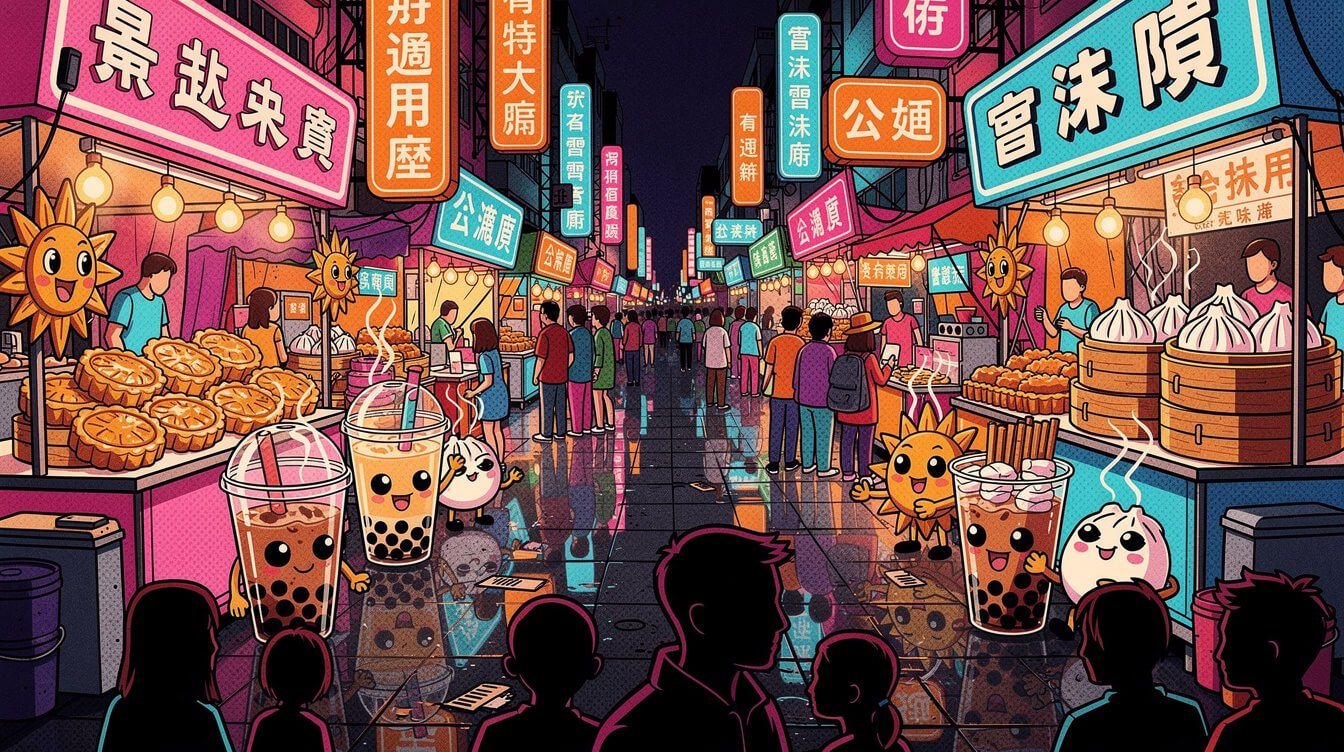
Taipei gets most of the press for Taiwan’s street food scene, but ask Taiwanese eaters where they actually want to eat and Taichung shows up surprisingly often. The city’s food culture sits at the geographical crossroads of north and south Taiwan, which means you get the savory Hokkien-influenced dishes of the south alongside the lighter, sweeter northern style — often in the same market.
Fengjia Night Market (逢甲夜市)
This is the biggest night market in Taiwan — bigger than Taipei’s Shilin, with over 1,000 stalls stretching across roughly 1.5 kilometers around Feng Chia University. It’s also the most experimental. Vendors here are college students testing new recipes for college-student customers, which means Fengjia is where new Taiwanese street-food trends are often born. Big-portion fried squid, oversized fried chicken cutlets, deep-fried mochi, and Taiwanese-style shaved ice all have Fengjia origin stories. Our complete Fengjia night market guide covers exactly what to order and how to navigate the chaos.
Sun Cakes (太陽餅)
Taichung’s signature pastry. Flaky pastry shell, sticky maltose-honey filling, traditionally about the size of a teacup saucer. The pastry was invented in Taichung in the early 20th century and the city’s “Sun Cake Street” (Taiwan Boulevard Section 2) is still lined with competing bakeries — each with a decades-long claim to the original recipe. Buy a box at Tai Yang Tang (the original) or Wei Sun (the most famous tourist destination) and bring them home as a gift.
Yizhong Street Night Market (一中街夜市)
If Fengjia is for college students, Yizhong is for younger high schoolers — it’s clustered around Taichung First Senior High School. The food is cheaper, the stalls are more concentrated, and the energy is even more youth-driven. This is where you’ll find the latest TikTok-driven trend foods alongside classic Taiwanese street snacks.
Second Market (第二市場)
A traditional covered market built in 1917 that serves as Taichung’s local lunchtime canteen. The big draw is the Yamaguchi-style mountain pork rice bowl (山河魯肉飯), bubble noodle soup, and Lao Lai Mahu (老賴茶棧) — yet another teahouse that claims to have an authentic version of the original bubble tea recipe. Local debates about the “true” origin of pearl milk tea are a Taichung sport.
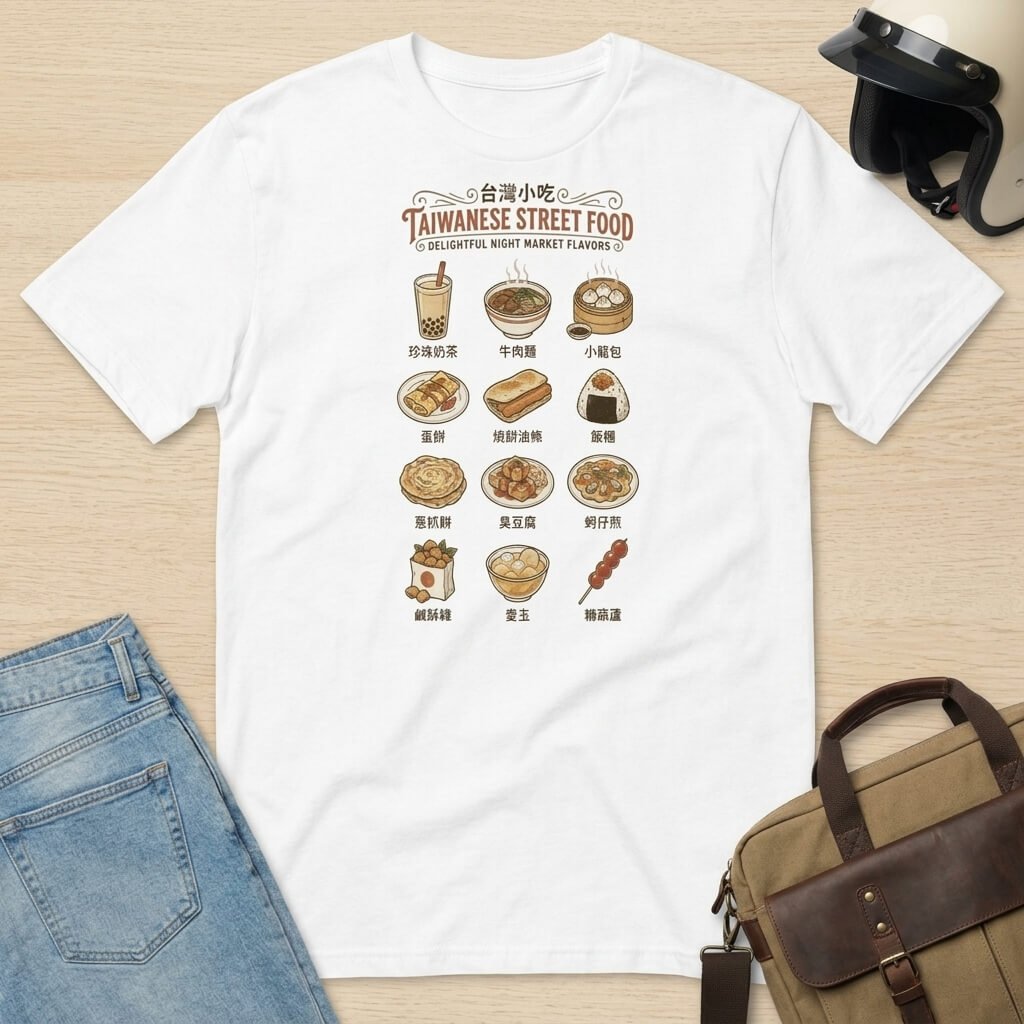
Wear the Night Market Vibe
A vintage-poster tribute to every iconic Taiwanese street-food classic — from oyster omelet to bubble tea. Wear the smell of Fengjia home.
Practical Visitor’s Guide: Getting There, Getting Around, and the Best Time to Visit
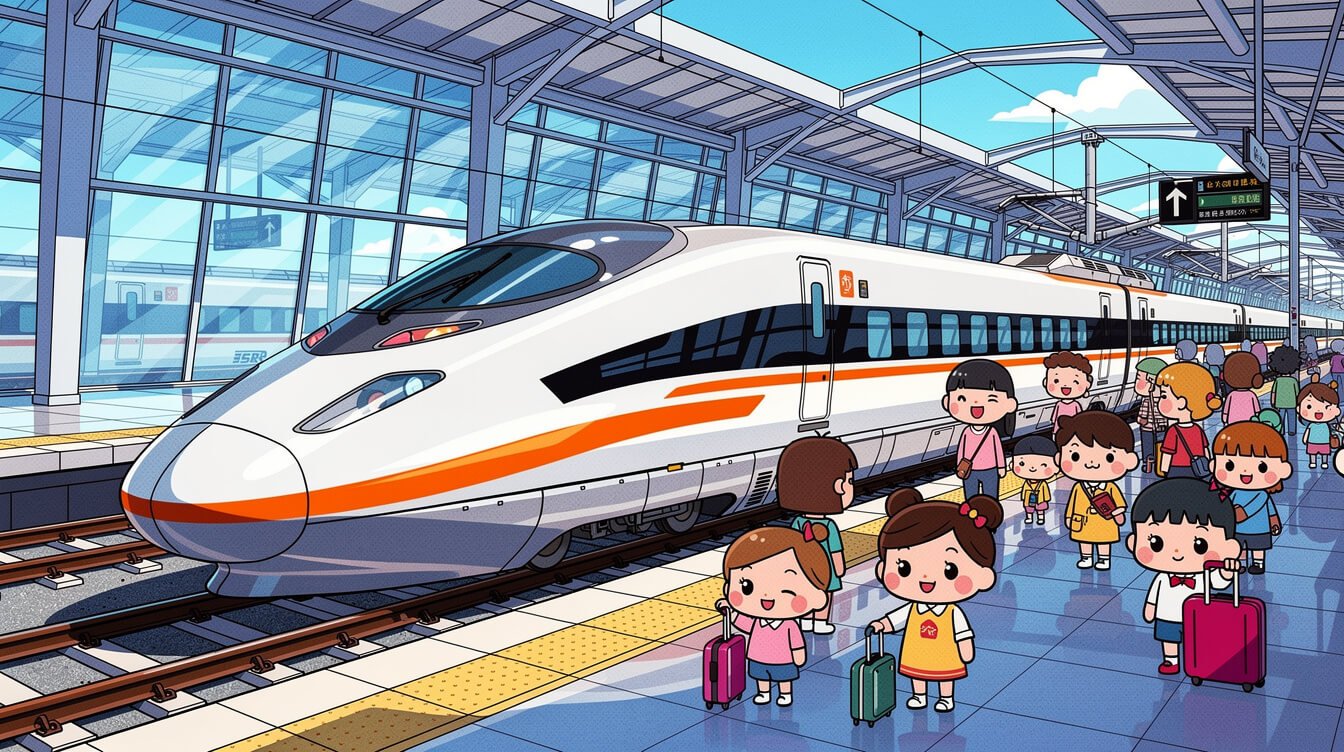
One of Taichung’s quietly underrated advantages is how easy it is to reach. From Taipei, the Taiwan High Speed Rail (THSR) gets you to Taichung Station in about 50 minutes for around NT$700. From Kaohsiung’s Zuoying station, it’s about 55 minutes. Taipei Songshan Airport runs no direct flights, but Taoyuan International Airport (Taiwan’s main hub) is just over two hours away by HSR with a single connection. Our Taiwan High Speed Rail map guide covers the full route, ticketing, and reserved-seat strategy.
One thing to know: the HSR station (“Taichung HSR Station” / Wuri) is about 8 km southwest of the actual city center. You’ll need to transfer either to the local TRA train (a 12-minute hop to Taichung Main Station), the MRT Green Line (which now connects HSR to downtown), or a taxi (about NT$300 to the 7th Redevelopment Zone).
Getting Around the City
The Taichung MRT Green Line opened in 2021 and connects the HSR station to the city center along a single north-south axis. It’s useful but doesn’t reach Rainbow Village or many of the older districts. For most visitors, a combination of MRT, city buses (which are free for trips under 10 km with an EasyCard), and occasional Uber/taxi rides covers everything you’d want to see. The city is also exceptionally bike-friendly thanks to that local-Giant heritage — YouBike rental stations are everywhere.
When to Visit
Taichung’s sheltered basin location means it has the most consistent weather in Taiwan. October to April is ideal — warm days, cool evenings, very little rain. May through September is hotter and more humid but still drier than Taipei. Avoid the heart of typhoon season (August-September) if you can; the city is well inland but storms can still disrupt HSR service. Our complete Taiwan weather guide has the full month-by-month breakdown, and our typhoon season guide covers what to expect if you do travel in the wet months.
Where to Stay
The 7th Redevelopment Zone (around the National Taichung Theatre) is the most modern, walkable area — best for first-timers. The area around Taichung Main Station is grittier but more affordable and closer to traditional markets and old-town Taichung. Fengjia, near the night market, is popular with younger travelers and college visitors but is far from most other landmarks.
Frequently Asked Questions About Taichung Taiwan
Is Taichung worth visiting?
Yes — especially if you’ve already done Taipei. Taichung gets significantly fewer foreign tourists than the capital, which means lower prices, smaller crowds, and a more authentically Taiwanese pace. Two to three days is enough to hit the major landmarks, eat well, and base yourself for day trips to Sun Moon Lake or the Central Mountain Range.
How many days do you need in Taichung?
Two full days is the minimum to see the main cultural landmarks (Rainbow Village, National Taichung Theatre, Miyahara, Shen Ji New Village) plus one night market. Three days gives you room for a Sun Moon Lake day trip or a tea-tasting excursion in nearby Nantou. A week is ideal if you want to use Taichung as a base to explore central Taiwan.
Is Taichung safe for tourists?
Yes — Taiwan as a whole consistently ranks as one of the safest countries in the world for travelers, and Taichung is no exception. Petty crime is rare, scams targeting tourists are uncommon, and walking around at night is generally safer than in most major US or European cities. The main hazards are scooter traffic and crossing the road during rush hour.
What is Taichung famous for?
Three things stand out: bubble tea (invented at Chun Shui Tang in 1986), the bicycle industry (Giant is headquartered nearby), and increasingly its arts and design scene — anchored by the National Taichung Theatre, Rainbow Village, and the converted-industrial creative quarters scattered across the city. Sun cakes (太陽餅) are the local sweet specialty.
Is Taichung better than Taipei?
Different rather than better. Taipei is denser, more international, and has more nightlife. Taichung has better weather, lower prices, more space, the country’s best food markets per capita, and the deepest connection to two of Taiwan’s most-exported cultural products: bubble tea and bicycles. Most people who actually spend time in both end up loving Taichung’s calmer pace.
Can you do Taichung as a day trip from Taipei?
Technically yes — the HSR makes it possible. Realistically you’ll cram in Rainbow Village, Miyahara, and maybe one night market and miss most of what makes the city interesting. Stay at least one night.
Final Thoughts: Why Taichung Belongs on Your Taiwan Itinerary
Taichung is the kind of city you discover by accident and then can’t stop talking about. It’s not flashy. The skyline is not iconic. The international airport is not its own. But it’s the place that invented Taiwan’s most famous drink, the place where a retired soldier turned a doomed village into a permanent monument to folk art, the place where a Japanese architect built one of the most beautiful buildings in Asia, and the place where Taiwan’s most ambitious young chefs, designers, and entrepreneurs are setting up shop.
Add it to your Taiwan trip. Drink a bubble tea at the place that started it all. Eat your weight in sun cakes. Take the slow walk around Rainbow Village. And then, like the rest of us, wonder why no one ever told you Taichung was this good.
Grab a Free Taiwan Sticker!
Drop your email and we’ll send you a limited-edition Taiwan sticker — plus insider access to new merch drops and island vibes.
No spam. Unsubscribe anytime.