Taiwan Lu Rou Fan: Why North and South Taiwan Can’t Agree on What’s Actually in the Bowl
Walk into any Taiwanese eatery and order lu rou fan (滷肉飯). What lands in front of you depends entirely on where you are in the country — and locals will argue about which version is the “real” one until their tea goes cold.
The dish that’s a cultural identity in a bowl
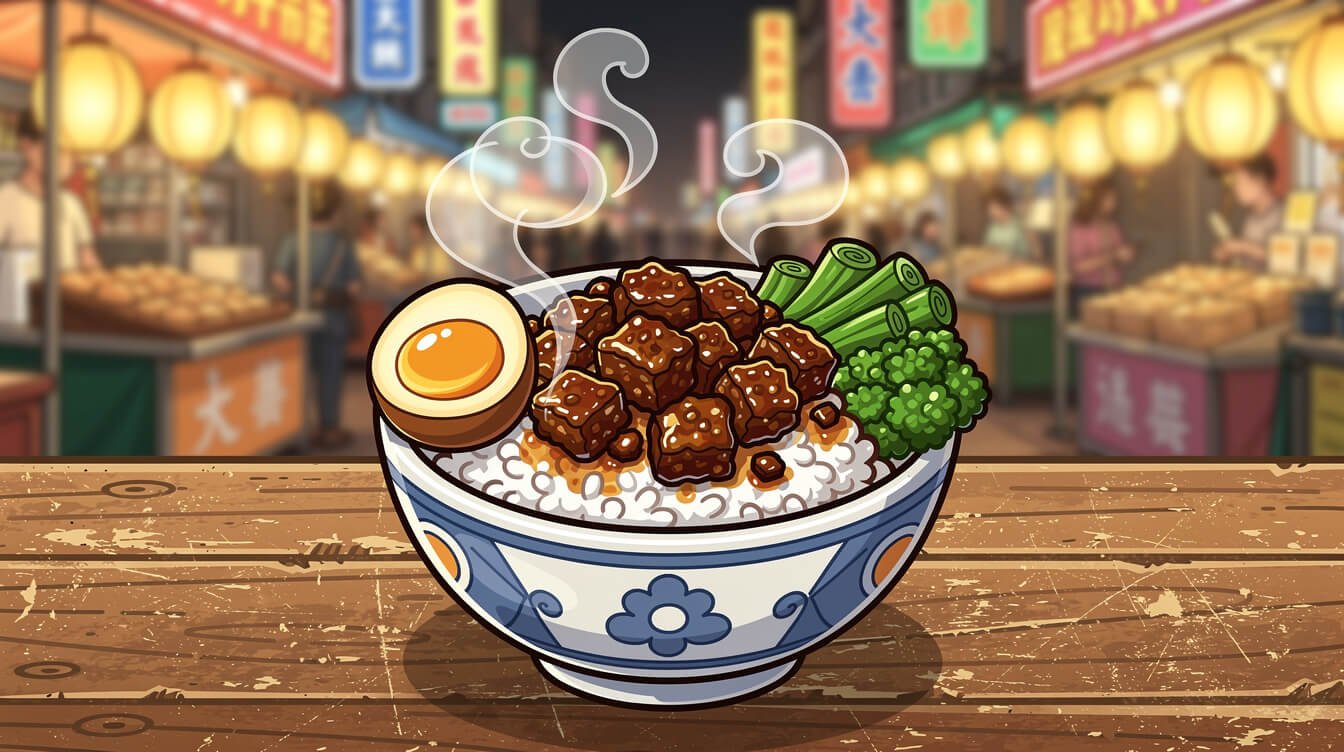
Lu rou fan is Taiwan’s quiet national dish — a small bowl of glistening, soy-braised pork heaped over short-grain rice, often crowned with a stewed egg and a sliver of pickled mustard greens. It costs around NT$30–60 (about US$1–2), it’s served at breakfast stalls and Michelin-starred restaurants alike, and almost every Taiwanese person carries a strong opinion about whose version is best (usually their grandmother’s).
The dish traces back to wartime frugality. Pork fat and trimmings were too precious to waste, so home cooks simmered them down with soy sauce, rock sugar, rice wine, fried shallots, and five-spice until the meat collapsed into something silkier than the sum of its parts. It became the dish that fed Taiwan through hard decades — a $1 bowl that tastes like four hours of patience.
Here’s where it gets messy: the north–south naming war
If you order lu rou fan in Taipei or anywhere in northern Taiwan, you’ll get the classic version most foreigners picture: finely minced or hand-chopped pork belly, braised until it’s almost a sauce, spooned over rice. The pork pieces are barely distinguishable — they melt into a savory, glossy slick.
Order the exact same dish in Tainan, Kaohsiung, or anywhere south of Taichung, and you may get something entirely different: a single thick, fatty slab of braised pork belly (爌肉, kong rou) sitting on top of the rice. Locals down south often call this 滷肉飯 too — using the same characters for completely different food.
To make things worse: what northerners call lu rou fan (minced pork), southerners often call 肉燥飯 (rou zao fan, “meat sauce rice”). What southerners call lu rou fan, northerners call 爌肉飯 (kong rou fan, “braised pork belly rice”). Same words, different dishes, opposite ends of the island. It’s the culinary version of two people arguing about football while one means soccer and the other means American football.
Why this small bowl matters more than it looks
In 2011, the regional naming chaos got so heated that the Tourism Bureau actually had to step in and acknowledge both versions on official translations. Anthony Bourdain, when filming in Taipei, called minced lu rou fan “one of the great dishes of the world.” Taiwanese-American chef Eddie Huang put it on his Baohaus menu in New York. And every November, Taiwan’s largest food publications run side-by-side “best lu rou fan” rankings that inevitably trigger regional pride brawls in the comments.
The dish even has its own holiday: 滷肉飯節 (Lu Rou Fan Festival), held annually in Taipei since 2011, drawing tens of thousands of fans who line up to taste dozens of competing versions.
What to order so you actually get what you want
If you’re traveling around Taiwan and want the minced/chopped version (the iconic photo you’ve probably seen), here’s how to order it without confusion:
- In the north (Taipei, Taoyuan, Hsinchu): Just say lu rou fan (滷肉飯) — you’ll get the minced version by default.
- In the south (Tainan, Kaohsiung, Pingtung): Ask for rou zao fan (肉燥飯) instead. If you want the pork-belly slab, then ask for lu rou fan or kong rou fan.
- Vegetarian? Many Buddhist su shi shops do a soy-based version called su lu fan (素滷飯) — mushrooms and dried tofu instead of pork, same braised soy magic.
Whichever bowl lands in front of you, eat it the Taiwanese way: small bowl, sit-down or standing at a counter, no rush, and definitely save room for the soy egg. Wash it down with hot soup or a cold bottle of unsweetened tea — never soda. And if you want the full island experience, follow up with a stop at a night market for dessert.
The best part? After tasting versions in both regions, you’ll have a strong opinion of your own — and a small piece of Taiwan’s most beloved food debate to carry home with you. Add it to your Taiwan food bucket list before any tourist guidebook tells you to.
Love Taiwanese food culture? Wear it. Our Taiwan-themed tees celebrate the island’s iconic dishes, night markets, and street food scenes — designed for fans, expats, and anyone who knows the joy of a perfect bowl of lu rou fan.

Grab a Free Taiwan Sticker!
Drop your email and we’ll send you a limited-edition Taiwan sticker — plus insider access to new merch drops and island vibes.
No spam. Unsubscribe anytime.