Taiwan Boba Tea: The Ultimate Guide to Ordering, Tasting & Touring the Birthplace of Bubble Tea
Taiwan boba tea isn’t just a drink — it’s the island’s chewiest, most joyful cultural export, and the love letter Taiwan keeps sending the world one fat straw at a time. If you’ve only ever sipped it from a mall kiosk in your home country, you’ve tasted the cover version. The original? It’s fresher, less sweet, absurdly cheap, and woven into daily life on every Taiwanese street corner.
This is the complete guide to Taiwan boba tea: where it was actually invented (and the decades-long legal feud over who did it), how to order it like a local without freezing at the counter, which shops are genuinely worth your stomach space, and how to plan a boba pilgrimage to the birthplace itself. By the end, you’ll order with the confidence of someone who grew up doing it.
Boba, Bubble Tea, or Pearl Milk Tea? Decoding Taiwan Boba Tea’s Many Names
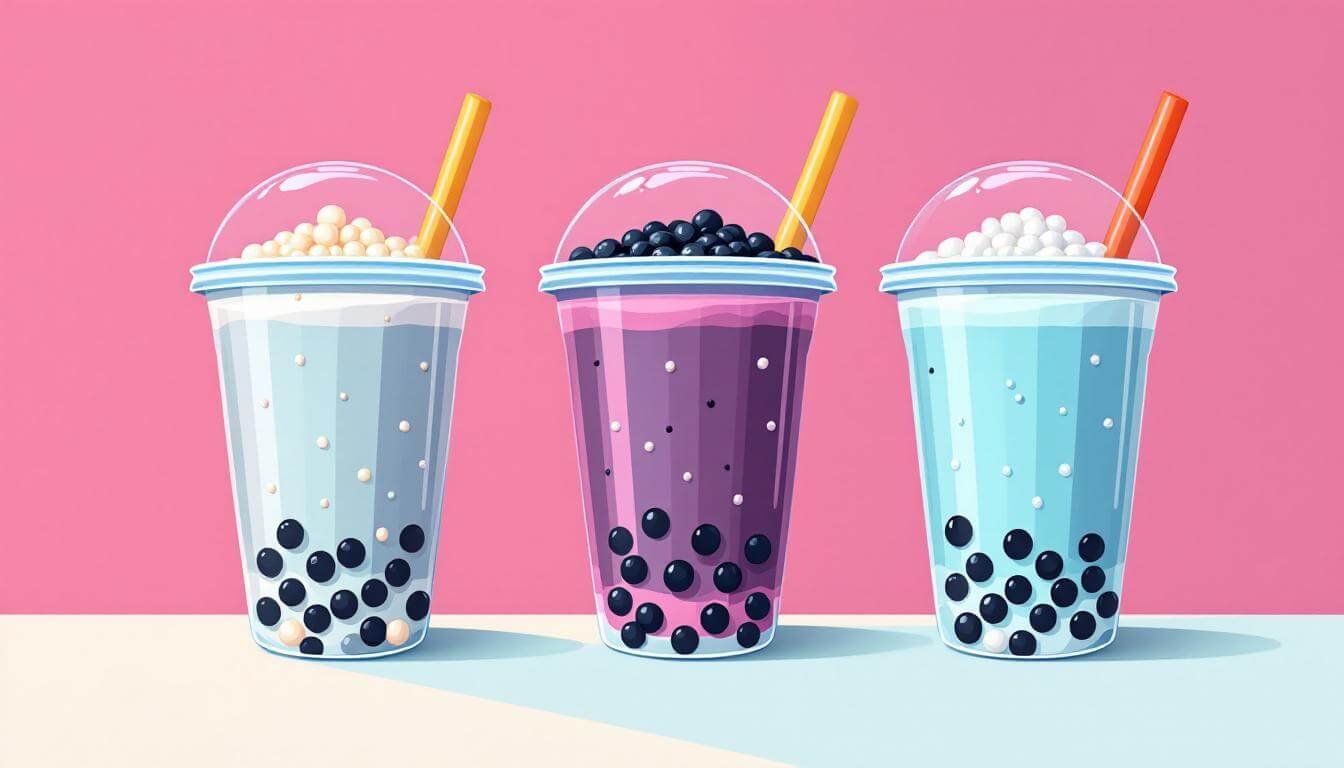
First, let’s clear up the naming chaos, because it confuses even devoted fans. Boba, bubble tea, and pearl milk tea all describe the same family of drinks — sweetened tea, usually with milk, plus chewy tapioca balls you slurp through an oversized straw. In Mandarin it’s most commonly 珍珠奶茶 (zhēnzhū nǎichá), literally “pearl milk tea.”
So why three English names? It comes down to which Taiwanese term traveled where. “Pearl” is a direct translation of 珍珠 (zhēnzhū), the smaller tapioca balls. “Boba” comes from 波霸 (bōbà), originally Taiwanese slang for the larger pearls — a cheeky 1980s nickname borrowed from a curvy Hong Kong actress, because the bigger pearls were, well, bustier. “Bubble tea,” meanwhile, refers not to the pearls at all but to the frothy bubbles that form when sweet milk tea is vigorously shaken with ice.
In Taiwan today, locals just say 珍奶 (zhēn nǎi) for short. Overseas, the West Coast of the US adopted “boba,” the East Coast leaned “bubble tea,” and the rest of the world picked a lane. They’re all correct — and they all point back to one tiny island. If you love how Taiwan keeps reinventing tea, our deep dive on Taiwan tea culture and the world’s best oolong shows where this obsession really began.
Where Taiwan Boba Tea Was Born: The Chun Shui Tang vs Hanlin Origin Story
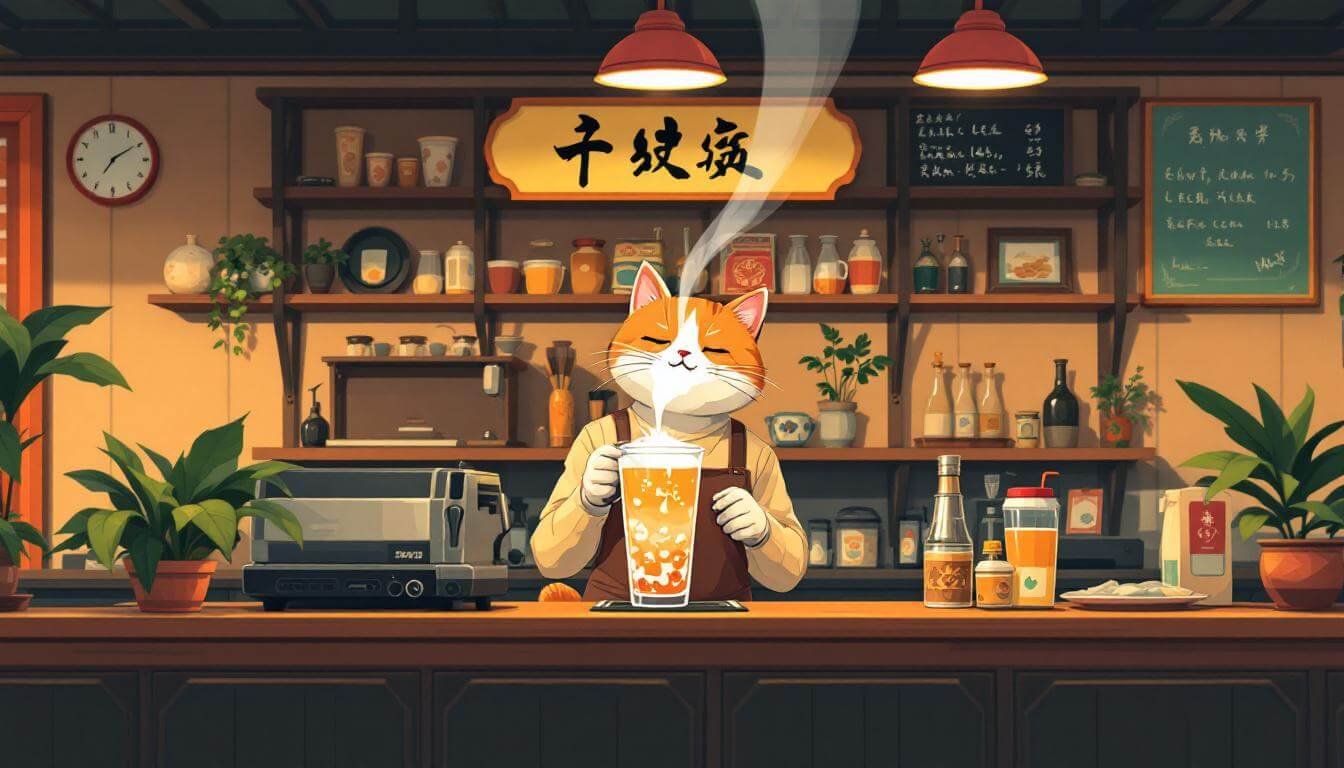
Every great drink has an origin myth. Taiwan boba tea has two — and a courtroom battle to match. Both claimants are real, both are still open, and the rivalry is part of the fun.
Chun Shui Tang (春水堂) in Taichung is the most widely credited birthplace. In the early 1980s, founder Liu Han-Chieh began serving tea cold and shaken — radical at a time when tea was sipped hot and slow. The lightning-bolt moment came around 1987, when product-development manager Lin Hsiu-Hui playfully dumped a Taiwanese tapioca dessert called fen yuan into her iced milk tea during a staff meeting. Everyone loved it. It went on the menu. The world changed.
Hanlin Tea Room (翰林茶館) in Tainan tells a different story. Founder Tu Tsong-he says he was inspired by white tapioca balls he saw at a local market in 1986, adding them to tea and later switching to the now-iconic black pearls. Tainan, naturally, backs its hometown hero.
The dispute escalated into a years-long lawsuit over who could claim the invention. The courts ultimately ruled that nobody could patent or exclusively own the idea — tapioca-in-tea belonged to everyone. In a way, that verdict is the most Taiwanese ending possible: a beloved thing, shared freely, improved endlessly. The drink’s Taiwanese roots went global again in 2024 when actor Simu Liu publicly called out a company for erasing boba’s origins — a reminder that this island invented something the whole planet now drinks. For the full invention timeline, see our companion guide on how Taiwan invented bubble tea.
How to Order Taiwan Boba Tea Like a Local

Here’s where most visitors freeze up. In Taiwan, ordering boba is a quick, customizable ritual — every shop lets you dial in sugar and ice, and locals always do. Master these and you’ll never get a sugar-bomb you didn’t ask for again.
Pick your sweetness
Taiwanese default sweetness is far lower than the overseas norm. The standard ladder:
- 全糖 (quán táng) — 100%, full sugar
- 少糖 (shǎo táng) — 70%, slightly less
- 半糖 (bàn táng) — 50%, half sugar (the local sweet spot)
- 微糖 (wéi táng) — 30%, lightly sweet
- 無糖 (wú táng) — 0%, no added sugar
Pick your ice
- 正常冰 (zhèngcháng bīng) — normal ice
- 少冰 (shǎo bīng) — less ice
- 微冰 (wéi bīng) — light ice
- 去冰 (qù bīng) — no ice (drink stays full-strength)
- 熱 (rè) — hot
Pick your toppings
Pearls are just the beginning. Common add-ins: 珍珠 (pearls), 波霸 (jumbo boba), 椰果 (yēguǒ, chewy coconut jelly), 仙草 (xiāncǎo, grass jelly), 布丁 (bùdīng, egg pudding), 芋圓 (yùyuán, taro balls), 愛玉 (àiyù, citrusy aiyu jelly), and 紅豆 (hóngdòu, red bean).
A bulletproof local order sounds like: “珍珠奶茶,半糖,少冰” — pearl milk tea, half sugar, less ice. Can’t manage the tones? Point at the menu, hold up fingers for percentages, or use the shop’s number system. Nobody will judge you; staff serve hundreds of these an hour at devilish speed.
Beyond Pearl Milk Tea: Taiwan Boba Variations You Have to Try
If you only ever order classic pearl milk tea, you’re seeing one room of a mansion. Taiwan’s tea-drink culture is relentlessly inventive, and the menu board at any decent shop hides a dozen worlds. Here are the variations worth crossing the island for.
Brown sugar boba (黑糖珍珠). The viral one. Caramelized brown-sugar syrup is swirled up the inside of the cup and pearls are simmered in it, then topped with cold fresh milk — no tea at all in the purest version. It’s dessert disguised as a drink, and Tiger Sugar built an empire on it.
Fruit tea (水果茶). Taiwan is the “Kingdom of Fruit,” and it shows. Real chunks of seasonal pineapple, passionfruit, mango, kumquat, and plum muddled into green or black tea — bright, tart, and barely sweet. Yi Fang and Macu are masters of this.
Cheese tea / milk foam tea (奶蓋茶). A salty-sweet whipped cream-cheese foam crowns a cup of unsweetened tea. You sip the tea through the cap so the two mingle. Sounds bizarre, tastes addictive — and it’s another Taiwanese original the world copied.
Winter melon & sugarcane. Old-school caffeine-free classics. Winter melon tea (冬瓜茶) is mellow and honeyed; fresh sugarcane juice (甘蔗汁) is pure green energy. Order these to taste what locals drank before chains existed.
Taro and matcha milk. Stone-ground taro gives a purple, nutty, almost ice-cream-like cup; Taiwanese-grade matcha makes a grassy, low-sugar favorite. Both are spectacular with pudding instead of pearls.
Aiyu and grass jelly coolers. For hot months, citrusy aiyu jelly (愛玉) and herbal grass jelly (仙草) drinks are the island’s natural air-conditioning — light, jiggly, and refreshing in a way milk tea isn’t.
The rule of thumb: if a shop is busy with locals and has a chalkboard of seasonal specials, order whatever the person ahead of you ordered. Taiwan rewards the adventurous palate, the same way its endlessly varied famous food scene does.
The Best Boba Tea Shops in Taiwan: A Chain-by-Chain Ranking
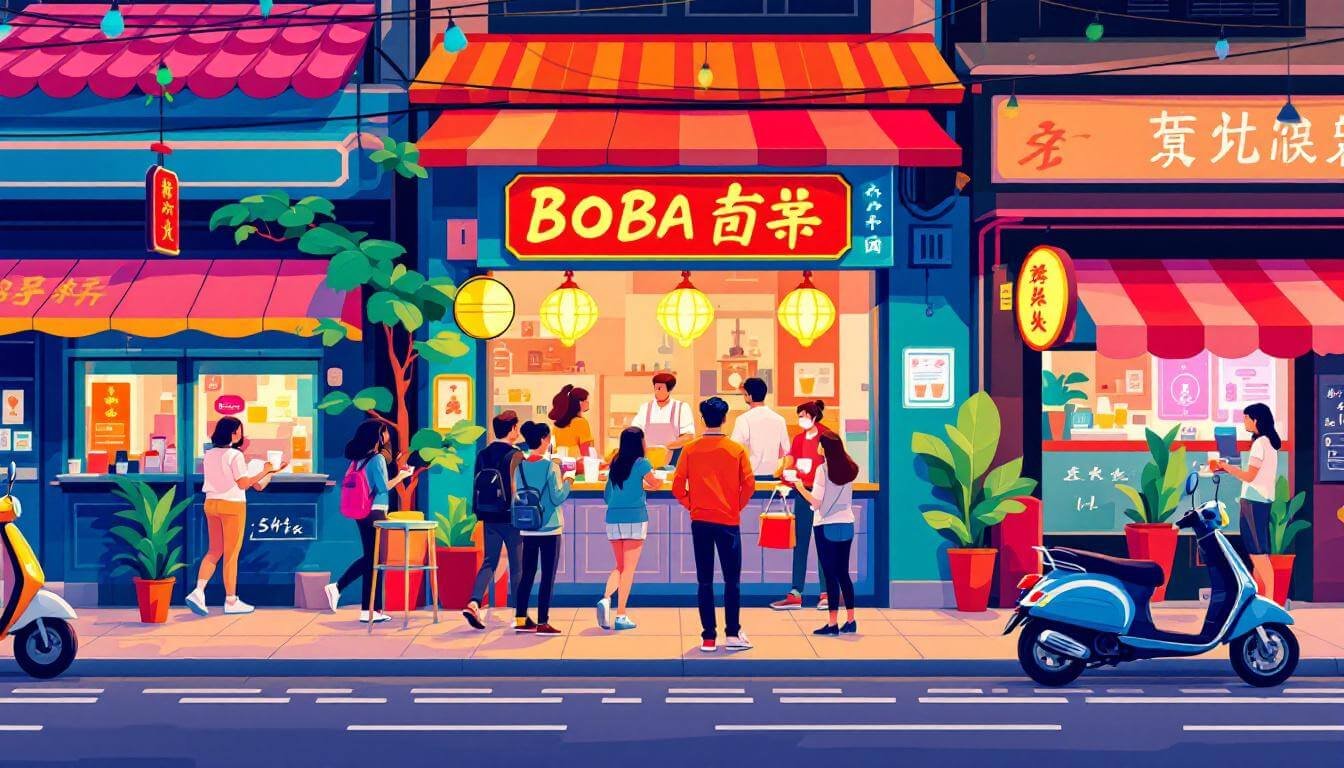
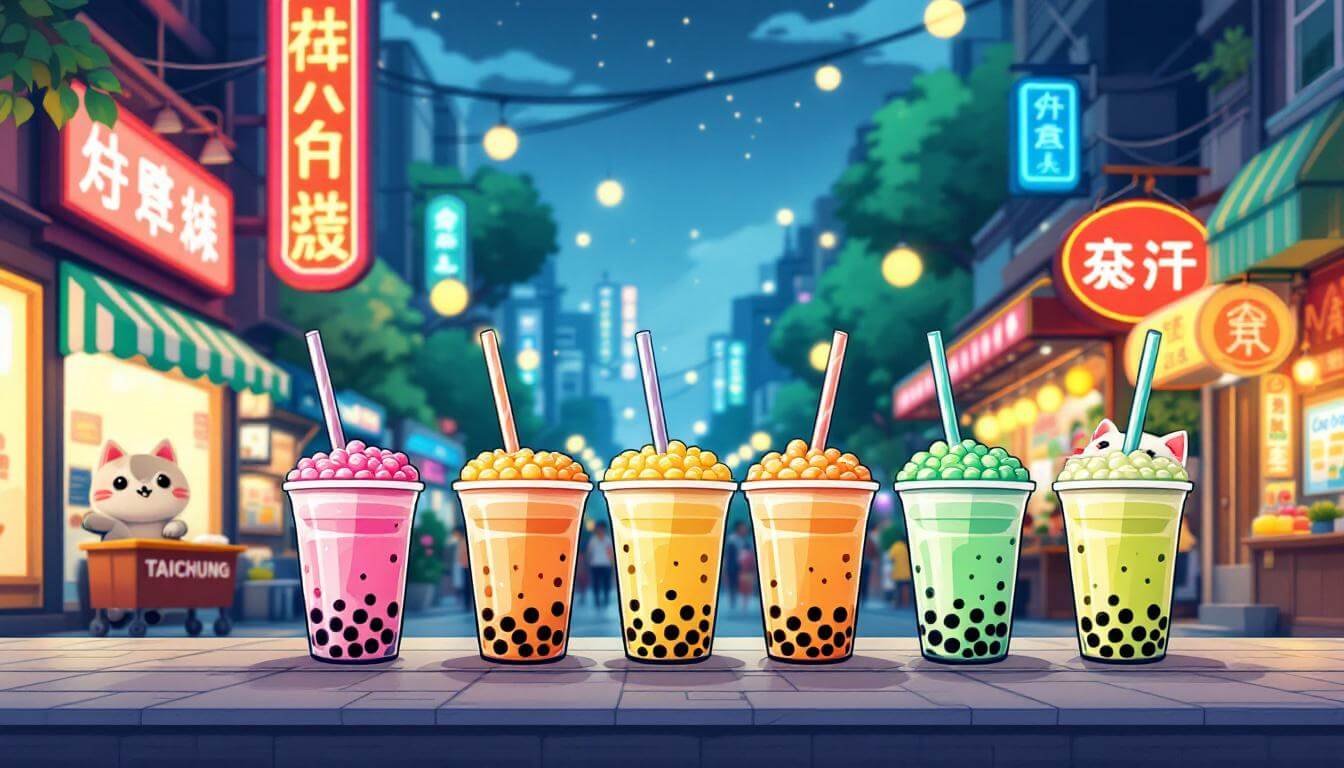
Taiwan has an almost unfair density of tea-drink shops — well over 10,000 across the island, outnumbering convenience stores in many neighborhoods. Here’s how the heavy hitters stack up, and what to order at each.
- Chun Shui Tang (春水堂) — The originator. Sit-down teahouses, not grab-and-go. Order the classic pearl milk tea and respect the lineage.
- 50 Lan / Wu Shi Lan (五十嵐) — The local people’s champion. The chain that became KOI Thé abroad. Famously consistent; the milk tea with pearls is the benchmark everyone else is measured against.
- Tiger Sugar (老虎堂) — The brown-sugar phenomenon. Caramelized syrup “tiger stripes” streaked up the cup, paired with fresh cream. Instagram bait that actually tastes great.
- The Alley (鹿角巷) — Hand-roasted “deerioca” pearls and a moody deer-logo aesthetic. The brown sugar deerioca fresh milk is the signature.
- Milksha (迷客夏) — Obsessive about fresh dairy from its own farm. Cleaner, less cloying — a favorite of people who claim they “don’t like boba.”
- Macu (麻古茶坊) — Fruit-tea royalty. The yang-zhi-gan-lu and fresh fruit teas drink like dessert.
- CoCo (都可) & Gong Cha (貢茶) — Reliable, everywhere, great gateway shops. CoCo’s “bubble milk tea with pudding and pearls” is a classic stack.
- TenRen’s Tea (天仁茗茶) & Yi Fang (一芳) — For tea purists. TenRen leans premium leaf; Yi Fang’s hand-shaken fruit tea uses seasonal Taiwanese pineapple and plum.
No two locals will agree on the “best” — that argument is a national pastime. Tasting your way to your own answer is the entire point, and it pairs perfectly with a wider Taipei street food crawl.
A Boba Pilgrimage: Touring the Birthplace Through Taichung, Taipei & Tainan
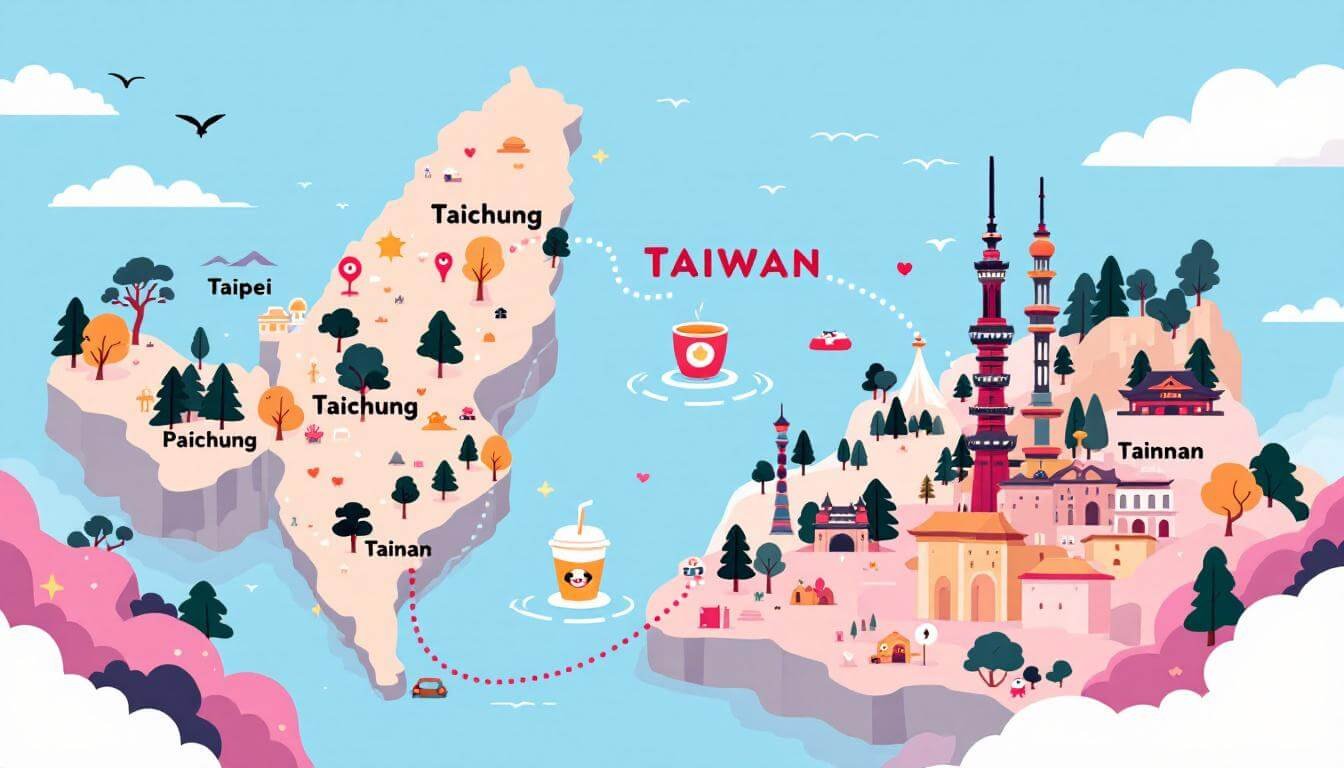
Serious fans turn a Taiwan trip into a boba pilgrimage. Here’s the route that hits the history and the best modern cups in one swoop.
Taichung — the birthplace. Start where it began. Visit a Chun Shui Tang teahouse and order the original pearl milk tea, ideally a sit-down set so you can taste it the slow, intended way. Taichung’s relaxed pace and teahouse culture make it the spiritual home of the drink — and a city that rewards lingering, much like its emerging specialty coffee scene.
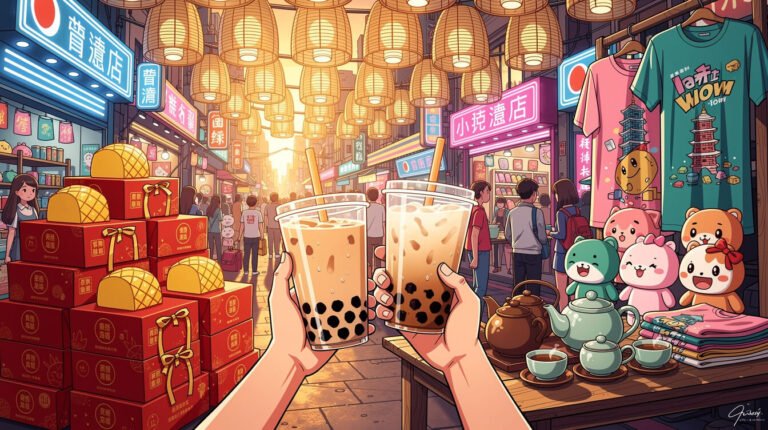
Taipei — the proving ground. The capital is where every chain fights for your loyalty. Crawl Ximending and the Yongkang Street area, then compare 50 Lan, Tiger Sugar, and The Alley back-to-back in a single afternoon. This is also peak souvenir territory: a boba-themed tee or sticker makes the perfect “I drank my way across Taipei” trophy. Our Taiwan Bubble Tea Cat T-Shirt — a kawaii milk-tea-loving cat — is exactly the kind of thing fellow boba obsessives stop you to ask about.
Tainan — the other origin. Close the loop in Taiwan’s oldest city at Hanlin Tea Room, the Tainan claimant, and taste the rival origin story for yourself. Pair it with Tainan’s legendary snack scene for a full day of edible history. Boba is, after all, just one star in the constellation of Taiwan’s most famous foods.
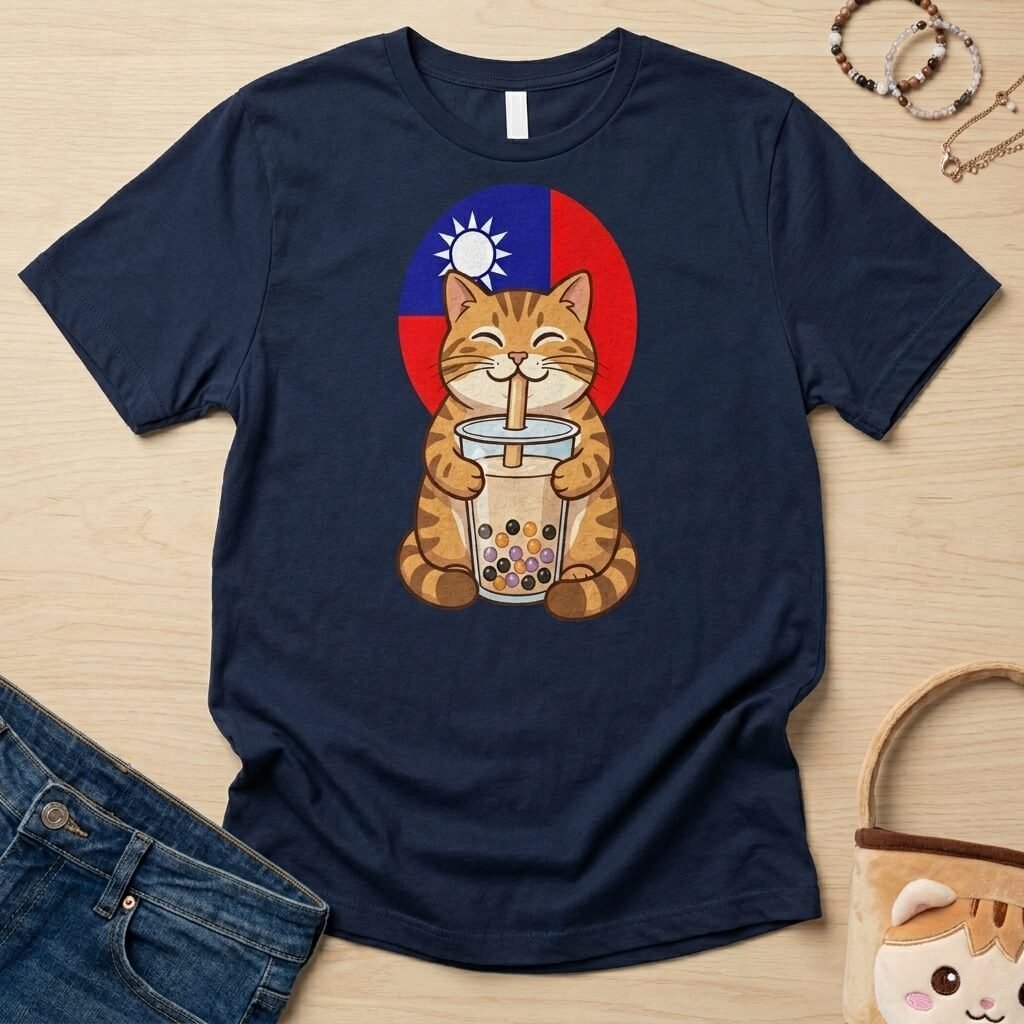
Wear Your Boba Obsession
Can’t stop thinking about pearl milk tea? Our cute kawaii Taiwan Bubble Tea Cat T-Shirt turns that craving into wearable Taiwan pride — soft, playful, and instantly recognizable to fellow boba lovers worldwide.
Prices, Etiquette & Insider Tips for Drinking Taiwan Boba Tea
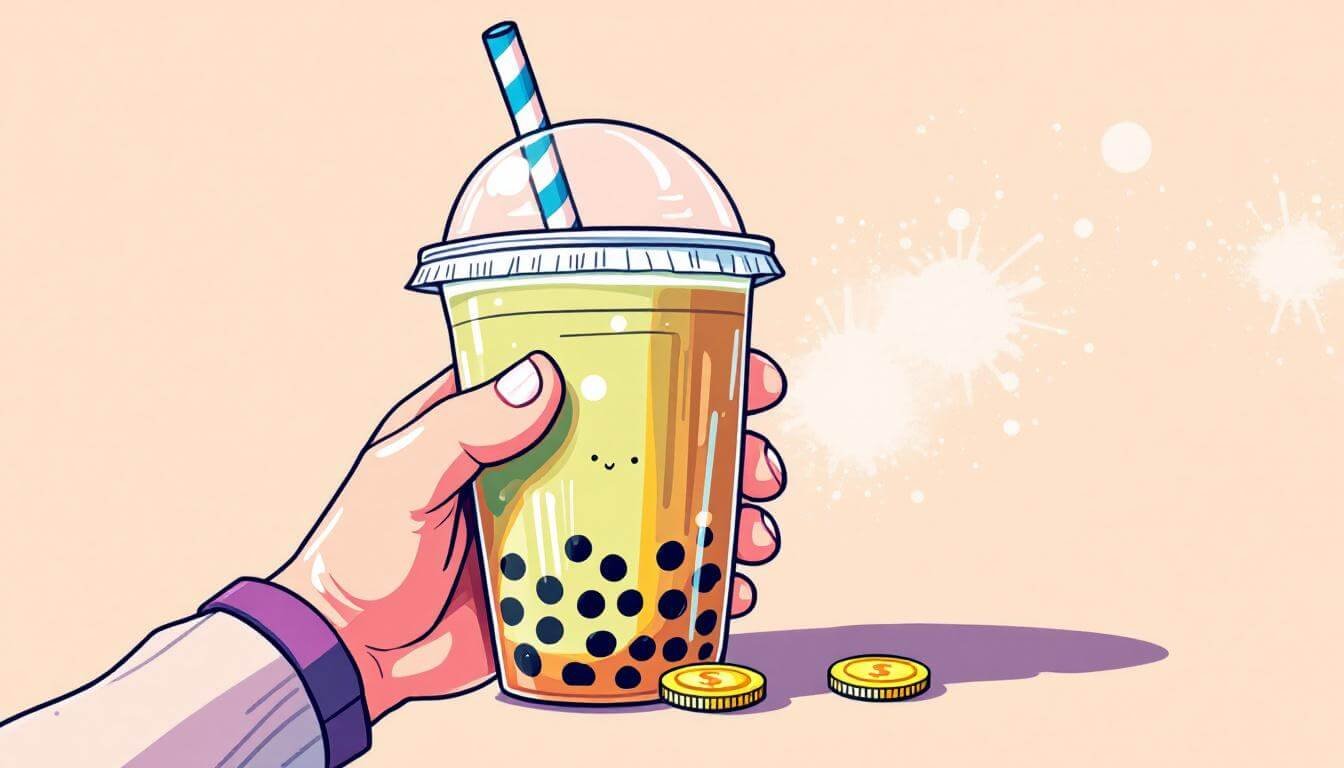
A few things separate tourists from people who drink boba in Taiwan:
- It’s shockingly cheap. Expect roughly NT$30–70 (about US$1–2.30) for a large cup — a fraction of overseas prices. Quality goes up as the price goes down. Wild.
- The film lid is sacred. Shops heat-seal a plastic film over the cup; you stab it with the pointed fat straw. It’s spill-proof engineering perfected over 40 years.
- Bring your own cup. Many shops give a small discount (around NT$5) and skip the seal if you carry a reusable tumbler — eco points and savings.
- Drink it fresh. Tapioca pearls are best within about two hours. After that they harden. This is why Taiwan boba beats the version that sat in a fridge abroad.
- Default sweet is local-sweet. If you don’t specify, you may still get a sweeter pour at tourist-heavy spots. Always state your sugar level.
- It’s a daily ritual, not a treat. Office workers, students, scooter riders at a red light — boba is the rhythm of Taiwanese afternoons, as everyday as the island’s beloved oolong tea tradition.
Is Taiwan Boba Tea Healthy? An Honest Look
Let’s be straight with you, because most guides won’t be. A full-sugar large milk tea with pearls can carry as much sugar as a couple of cans of soda — the tapioca itself is mostly starch with little nutrition, and the syrup it’s soaked in is pure sweetness. Treated as a daily full-sugar habit, boba is a dessert, not a health drink. No spin here.
But here’s the genuinely good news, and it’s the reason drinking it in Taiwan is different: customization is built into the culture. Order 無糖 (no sugar) or 微糖 (30%) and the calorie load drops dramatically. Choose a pure tea base or a fresh-fruit tea instead of creamer-heavy milk tea. Skip the pearls for aiyu jelly or grass jelly, which are far lighter. Many Taiwanese drink boba several times a week precisely because they instinctively dial sugar down — something overseas chains rarely offer.
There’s an upside, too: the tea base in a well-made cup is real brewed Taiwanese tea, rich in the same antioxidants that make the island’s oolong famous. A half-sugar fruit tea with light ice is a genuinely reasonable refreshment. The drink isn’t the problem — defaulting to maximum everything is. In Taiwan, you have the dials. Use them, enjoy it, and don’t let anyone guilt you out of the occasional full-sugar, full-pearl celebration cup. That one’s earned.
Frequently Asked Questions About Taiwan Boba Tea
Is boba tea originally from Taiwan?
Yes. Taiwan boba tea was invented in Taiwan in the 1980s, with Chun Shui Tang in Taichung and Hanlin Tea Room in Tainan as the two competing claimants. A court ultimately ruled the invention couldn’t be exclusively owned by either.
What is the difference between boba and bubble tea?
They’re the same drink. “Boba” originally referred to the larger tapioca pearls (from the Mandarin slang 波霸), while “bubble tea” refers to the foam created by shaking the tea. Today the terms are used interchangeably worldwide.
How much does boba tea cost in Taiwan?
Usually NT$30–70 (about US$1–2.30) for a large cup — far cheaper than abroad, and often higher quality because the pearls and tea are made fresh daily.
Where was bubble tea invented?
In Taiwan. Chun Shui Tang in Taichung is the most widely credited birthplace (around 1987), with Tainan’s Hanlin Tea Room also claiming an mid-1980s origin.
What is the best boba shop in Taiwan?
Locals fiercely debate it. Chun Shui Tang for heritage, 50 Lan (KOI) for consistency, Tiger Sugar for brown sugar, Milksha for fresh milk, and Macu for fruit teas are all top picks. The fun is deciding for yourself.
How do you order boba tea like a local in Taiwan?
Specify three things: drink, sugar level (half sugar / 半糖 is the local favorite), and ice level (less ice / 少冰). Add toppings like pearls or pudding if you want.
Final Thoughts
Taiwan boba tea is more than a trend the world borrowed — it’s a tiny island’s gift to global culture, born from a playful experiment in a Taichung teahouse and perfected on ten thousand street corners. Drinking it in Taiwan, fresh and half-sweet for the price of a snack, is one of those small travel moments that recalibrates what you thought you knew about a drink you’ve had a hundred times.
So go order one — 半糖, 少冰 — toast the courtroom rivals who gave it to us, and wear the obsession proudly. The pearls are waiting.
Grab a Free Taiwan Sticker!
Drop your email and we’ll send you a limited-edition Taiwan sticker — plus insider access to new merch drops and island vibes.
No spam. Unsubscribe anytime.