Raohe Night Market Taiwan: The Complete Guide to Taipei’s Oldest and Most Authentic Night Market
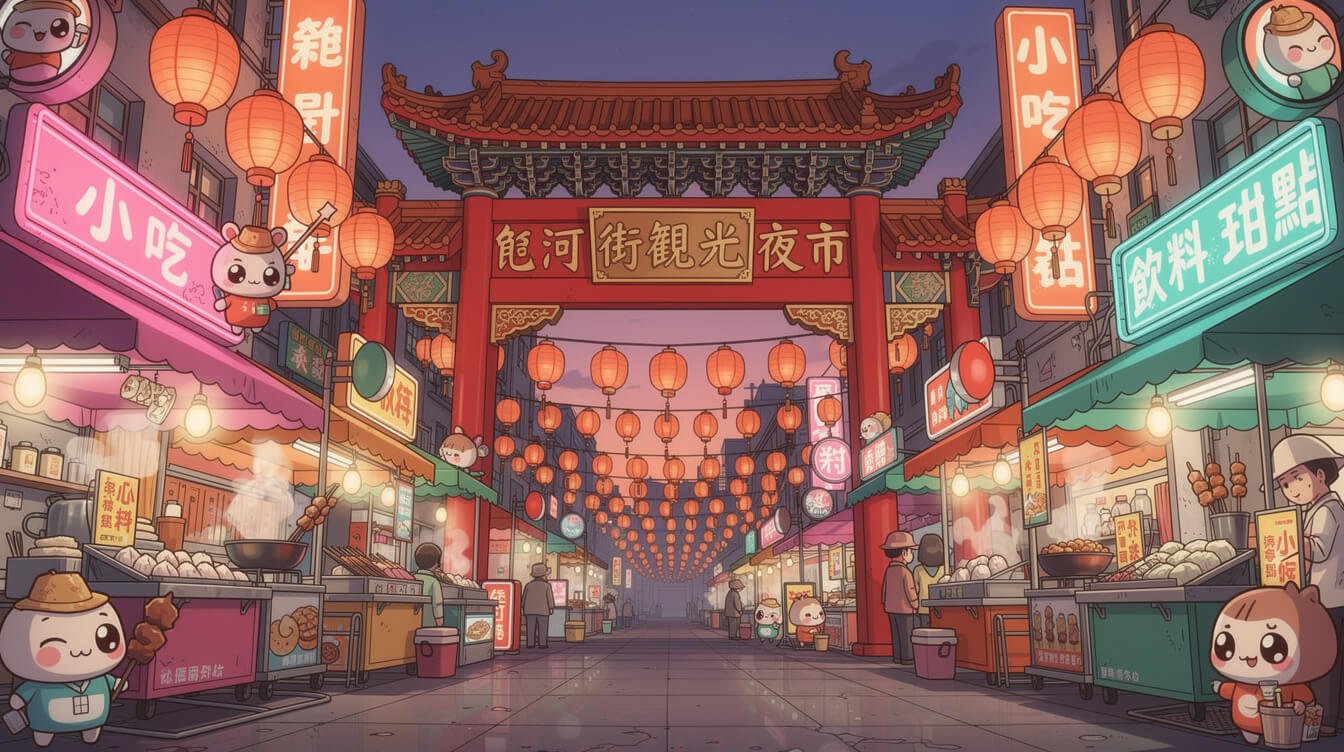
Raohe Night Market Taiwan is Taipei’s oldest tourist night market — a 600-meter ribbon of neon, smoke, and generational hawkers that starts at a 270-year-old Mazu temple and ends at a rainbow-lit river bridge. Every night around 5 p.m., roughly 200 vendors set up along Raohe Street in Songshan District, and within an hour the lane is shoulder-to-shoulder locals, tourists, MRT commuters detouring for pepper buns, and Michelin-recognized food stalls that have been in the same family for three generations.
Most guides to Raohe Night Market Taiwan just hand you a list of things to eat and call it a day. This is not that guide. In this deep dive we’re going to trace Raohe back to its Qing-dynasty roots as a river port, walk you through Ciyou Temple’s spiritual role in the market’s DNA, decode the 10 must-eat stalls (including which ones actually earned Michelin recognition), point you at the non-food stalls locals love, and give you an ordering strategy that works even if your Mandarin is limited to “xiè xie.” By the end you’ll know exactly how Raohe compares to Shilin, Ningxia, and Huaxi — and why “the thinking traveler’s night market” is still worth every single steam-belching, sauce-splattered visit.
Why Raohe Night Market Taiwan Is Taipei’s Most Authentic
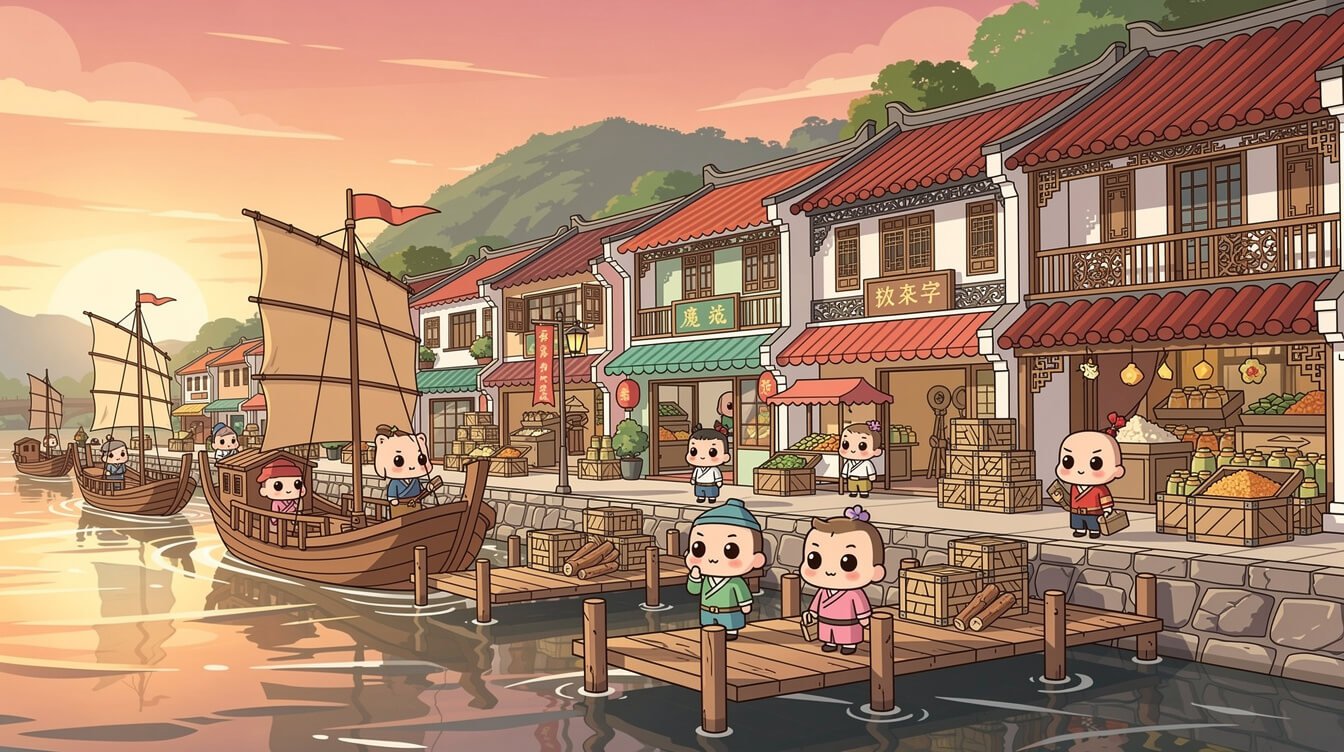
To understand why Raohe feels different from every other Taipei night market, you have to rewind almost 300 years — long before the neon signs and Instagram queues. The neighborhood we now call Songshan used to be known as Xikou (錫口), and in the 1750s it was one of the busiest river ports on the Keelung River. Wooden junks loaded with tea, camphor, indigo, and textiles floated in from Danshui and Yilan, docked along what is now Raohe Street, and unloaded their cargo into the shophouses that lined both sides of the lane. The street was the market. The market was the street.
By the late Qing era, Xikou had become one of northern Taiwan’s most prosperous trading hubs. Then the Keelung River silted up, the trade moved to the Danshui port, and the rail age passed Xikou by. The great commercial street shrank into a quiet residential lane — but the shophouses stayed, the food vendors stayed, and the temple at the eastern end stayed. When Taipei’s city government formally licensed Raohe as one of Taiwan’s very first “tourist night markets” (觀光夜市) in 1987, it wasn’t inventing something new. It was giving official recognition to a 200-year-old street food tradition that had never actually stopped.
This is the piece almost every guide misses: Raohe isn’t a manufactured tourist attraction. It’s a living continuation of a Qing-dynasty commercial street. When you eat a black pepper bun outside the Ciyou Temple gate, you’re standing on a spot where merchants have sold food to river-boat crews since the reign of the Qianlong Emperor. That layered history — Qing port, quiet residential decade, resurgent tourist night market — is why regulars call Raohe the most authentic raohe night market taiwan visitors can experience. It doesn’t feel curated. It feels lived-in.
Ciyou Temple: The Spiritual Heart of Raohe
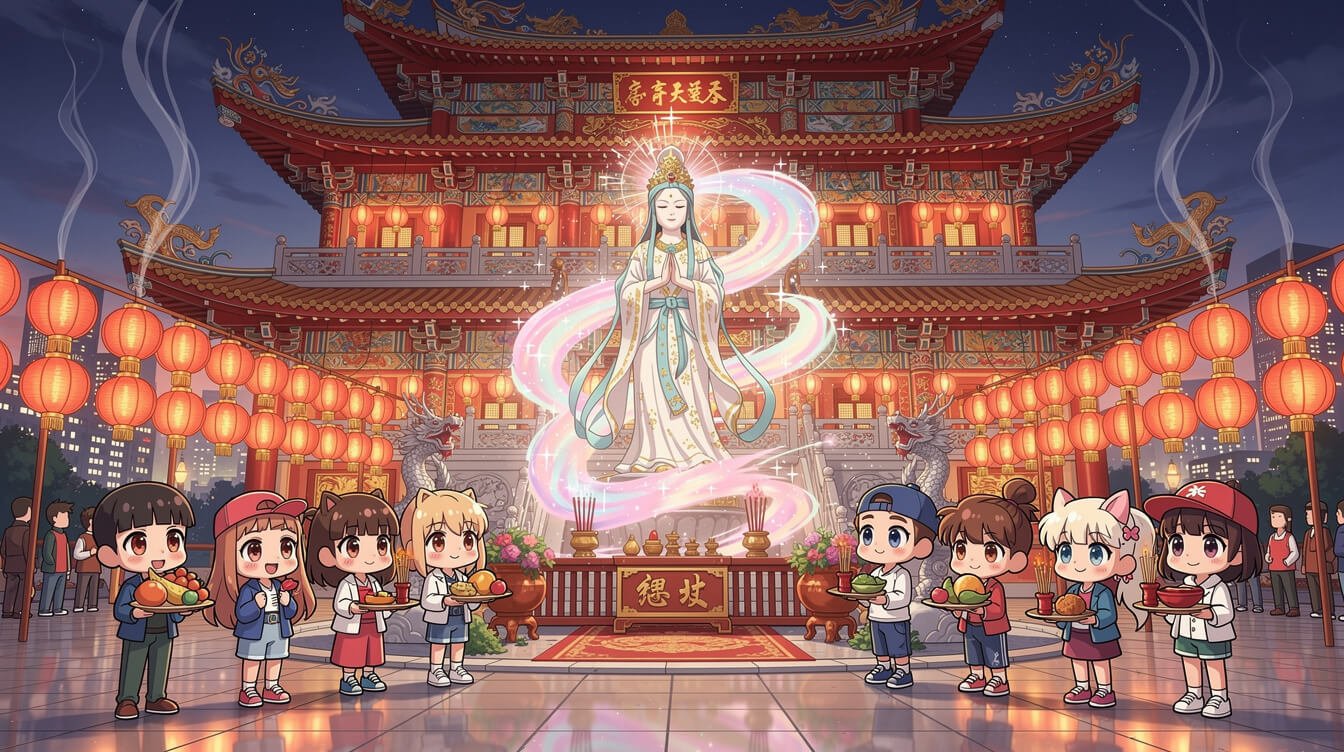
Walk out of Songshan MRT Station Exit 5 and the first thing you’ll see is not a food stall — it’s a six-story ornate red-and-gold temple facade glowing under floodlights. That’s Songshan Ciyou Temple (松山慈祐宮), and it is the reason the market is here at all. Founded in 1753 by monks from Fujian’s Beigang Chaotian Temple, Ciyou is dedicated to Mazu — the Taiwanese goddess of the sea, protector of fishermen and merchants, and one of the most beloved deities on the island.
For 270 years, Ciyou has been the anchor of everything that happens on Raohe Street. Traders in the Qing era came to pray for safe river journeys before setting sail. Today the temple still draws thousands of daily worshippers who light incense, cast jiao bei (moon-shaped divination blocks), and leave offerings at the main altar before wandering into the market to eat. During the annual Mazu pilgrimage season — the seven days leading up to Mazu’s birthday on the 23rd day of the third lunar month — Ciyou becomes one of Taipei’s most vibrant festival sites, with lion dance troupes, palanquin processions, and firecrackers echoing down the lane.
Even if you’re not religious, take five minutes to walk into the temple courtyard before you eat. The incense-perfumed air, the low chant of prayer, and the sight of families placing bunches of chrysanthemums at the altar sets a tone that transforms the market experience. This isn’t just a food street. It’s a food street that grew up around a shrine. Locals still say a quick prayer to Mazu, then get in line for a pepper bun. If you want more on Taiwan’s temple culture and why every night market in the country seems to have one nearby, our complete Taiwan culture guide unpacks the whole story.
The 10 Must-Try Foods at Raohe (Michelin Stalls, Pepper Buns & Hidden Gems)
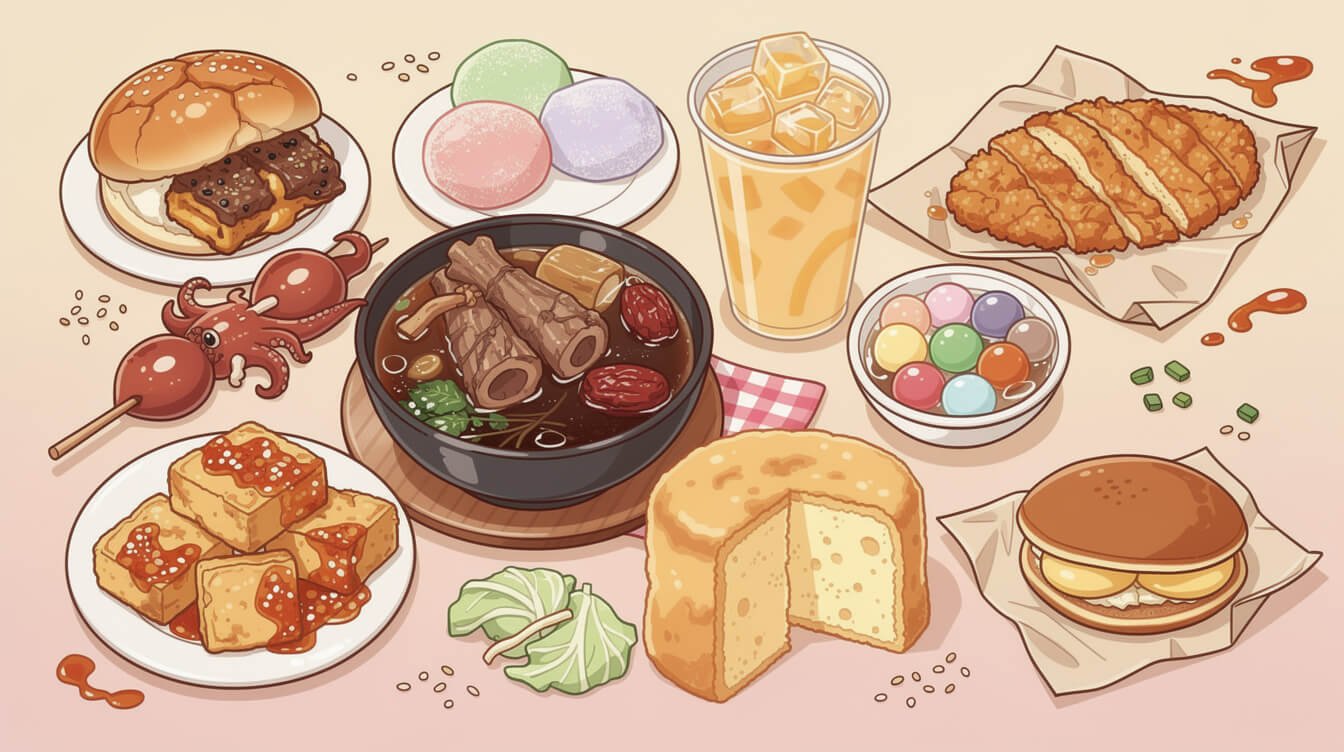
Raohe has the highest concentration of Michelin-recognized street food vendors of any Taipei night market — six of the stalls here appear in the Michelin Guide’s Bib Gourmand or Street Food selections. But some of the best bites are the ones the Michelin inspectors missed. Here are the ten you should not leave without trying, in the order you’ll pass them walking from the Songshan MRT entrance to the far end.
- Fuzhou Shi Zu Black Pepper Buns (福州世祖胡椒餅) — The line at this stall is your landmark. Bib Gourmand every year since 2018. Dough wrapped around fatty pork and a fistful of scallions, then slapped against the inside of a clay tandoor-style oven. NT$70. Wait time: 20–30 minutes. Skip everything else on this list before you skip this.
- Chen Dong Medicinal Herb Ribs Soup (陳董藥燉排骨) — Bib Gourmand pick. A crystal-clear broth simmered with pork ribs, angelica root, ginseng, and a dozen other Chinese herbs. Order the small (NT$120) if you plan to keep eating.
- Jiahe Squid King (加賀魷魚大王) — Whole grilled squid on a skewer, brushed with sweet-savory sauce. Get the seasoned salt-and-pepper version. NT$150–250 depending on size.
- Shi Boss Stinky Tofu (施老闆麻辣臭豆腐) — Fermented tofu simmered in a fiery Sichuan-style broth with duck blood, pickled cabbage, and enoki. If you’ve been intimidated by Taiwan’s most famous smelly food, this is where to break your fast. Our full Taiwan stinky tofu guide explains exactly why it smells the way it does.
- Wu Ji Fried Pork Ribs (吳記排骨酥) — Bone-in pork ribs marinated in five-spice, dredged in sweet potato starch, and fried until the coating cracks like glass. NT$100.
- Xige Papaya Milk (西哥木瓜牛奶) — The palate cleanser you didn’t know you needed. Fresh Taiwan papaya blended with cold whole milk. NT$70. Locals swear it settles a stomach that’s about to break.
- Master An’s Fire & Ice Pineapple Buns (安師傅冰火菠蘿油) — A Hong Kong-style pineapple bun sliced open and stuffed with a slab of cold butter, so the contrast melts on the first bite. Sweet, warm, cold, salty — all four in one square inch.
- Mochi Baby (寶寶麻糬) — Fresh handmade mochi rolled to order in peanut, sesame, or matcha powder. The texture is closer to pillow than paste. NT$50 for a five-piece box.
- He No Ya Grilled Sponge Cake (和の屋脆皮雞蛋燒) — Fresh eggs, cake batter, and a rectangle iron griddle. Comes out crisp on the outside, cloud-soft on the inside. NT$60.
- A-Kuo Luwei (阿國滷味) — Right at the entrance. Pick-your-own braised skewers — tofu, kelp, quail eggs, duck tongue, whatever looks good — dunked in five-spice soy master stock. Pay by weight; NT$100–200 usually covers plenty.
Six of those ten (Fuzhou pepper buns, Chen Dong ribs, Jiahe squid, Shi Boss, Master An, and A-Kuo) are recognized in the Michelin Guide — an insanely high hit rate for a single 600-meter lane. Compare that to any Michelin-starred restaurant tasting menu in Taipei and Raohe delivers ten times the food story at one-tenth the price. For the bigger picture on Taiwan’s food scene and its Michelin history, cross-reference our Taiwan Michelin Guide.
Beyond Food: Shopping, Crafts & Local Fashion at Raohe
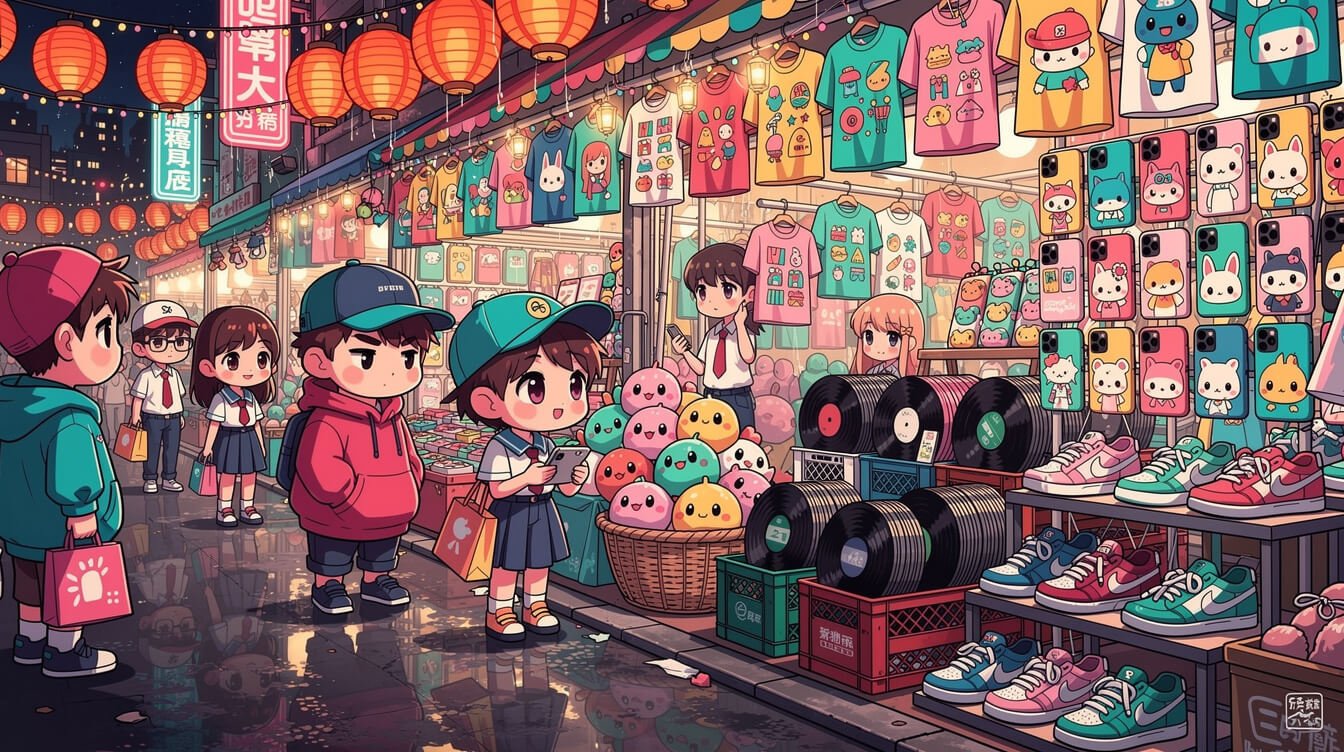
Almost nobody writes about this part, but roughly one-third of Raohe’s stalls sell things you don’t eat — and this is where Raohe pulls ahead of the more purely-food-focused night markets like Ningxia. Walk the lane and you’ll pass tables of handmade leather wallets, brass jewelry hand-hammered while you wait, custom name-stamp carvings (a great souvenir), embroidered iron-on patches, retro Taiwan-brand sneakers, and rows of graphic tees celebrating everything from Formosan black bears to Ming-dynasty warriors.
If you love the aesthetic of Taiwan street fashion — the kawaii-meets-tough-guy energy that Taipei does better than anywhere else — this is your zone. Look for stalls carrying independent Taiwanese apparel brands (they’re marked in Chinese but the designs speak for themselves). If you want to bring that same energy home with you, our Ming General Taiwan Boba Tea Warrior T-Shirt was inspired by exactly this kind of night-market street-art crossover — historical Chinese warrior imagery reimagined with boba tea in one hand.
Beyond fashion, you’ll find claw machines (Taiwan is the claw machine capital of the world for a reason), fortune tellers with hand-drawn signage in classical Chinese, vintage vinyl and cassette sellers, and a rotating cast of “trend of the month” gadget vendors selling everything from ring lights to portable neck fans. Bring cash in small bills — most non-food stalls don’t take cards, and haggling at 10% off the sticker is perfectly acceptable if you smile.
Two hidden-gem non-food stops worth hunting for: the hand-stamp carver about a third of the way down on the south side, who carves a personal seal in soapstone or hardwood while you eat a bowl of ribs soup (NT$300–500, ready in 20 minutes — a legit heirloom souvenir); and the brass jewelry hammering stall near the eastern end, where a mother-and-daughter team hand-forge bracelets and cuffs on a tiny anvil (NT$200–800, sized to your wrist on the spot). These are the kind of purchases that come with a story worth telling — much more memorable than an airport souvenir.
How to Navigate Raohe Like a Local
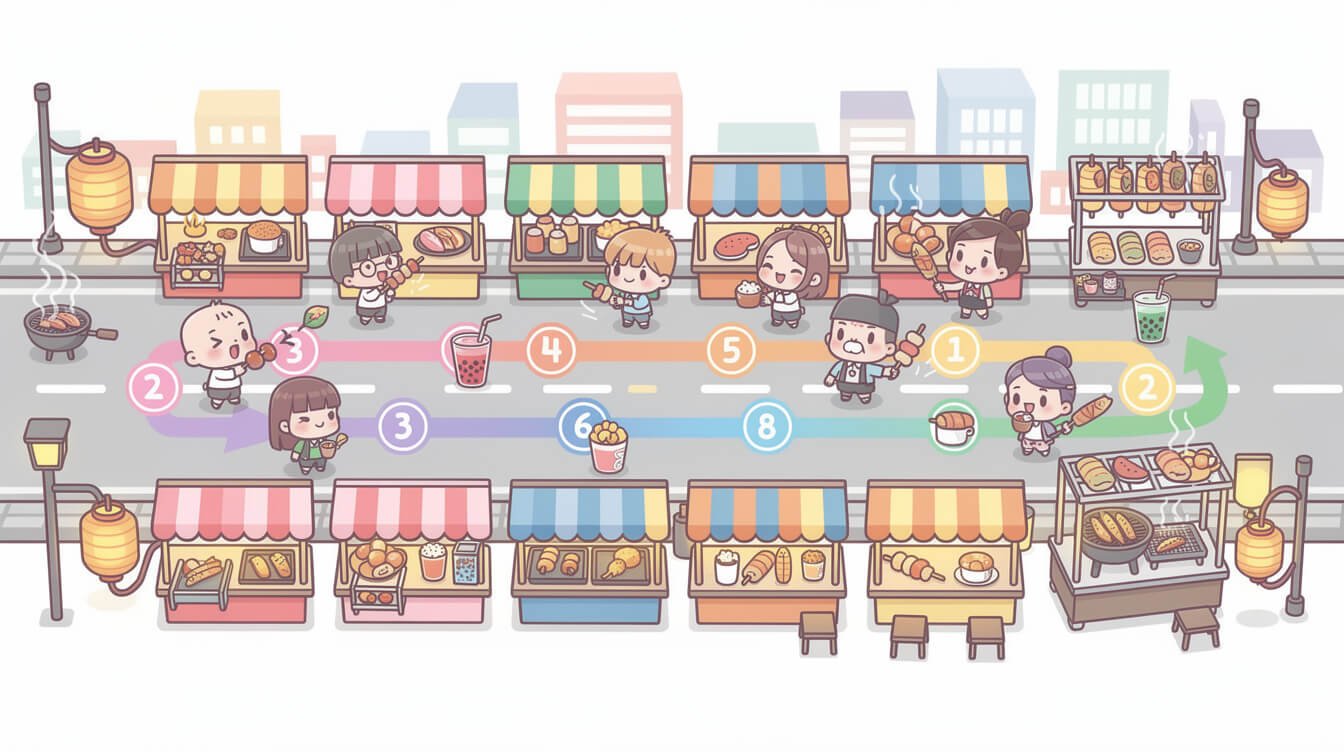
Raohe is a single-lane night market — 600 meters straight in, 600 meters straight out. Unlike Shilin (a maze of side alleys) or Huaxi (an under-cover arcade), Raohe has exactly one route. Enter from the west end at Songshan MRT Station Exit 5, walk east all the way to the Ciyou Temple gate (about 15 minutes without eating; three hours with), then turn around and walk back on the opposite side of the same lane. Every food stall is on the north side; most non-food stalls are on the south. Following this pattern means you see everything without doubling back.
Peak times to avoid or embrace: The lane is quietest from 5:00 to 6:00 p.m., when vendors are just setting up and locals are still at work. From 6:30 to 9:00 p.m. is peak crowd — you’ll spend more time queueing than eating. After 9:30 p.m. the crowds thin, the queues shrink, and the food is often discounted as vendors clear inventory before midnight closing. Serious foodies come at 5 p.m. or 10 p.m. Casual visitors take the 7:30 sweet spot and accept the crowds as part of the experience.
How to order without Mandarin: Point, hold up fingers for quantity, then hand over cash. Every vendor in Taipei can do the math without a shared language. Two useful phrases: “Zhège, yīgè” (this one, one — 這個一個) gets you exactly one of whatever you’re pointing at, and “Xiè xie” (thank you) makes any transaction feel warm. Many stalls now accept LINE Pay and JKO Pay, but cash is universal and expected under NT$200.
Eating strategy: The rookie mistake is to order a full portion at the first three stalls you love, then run out of stomach space in the first 100 meters. Locals share every plate — one person orders, everyone gets a bite, then walk 20 meters and order the next thing. Two people can comfortably taste 8-10 stalls this way for under NT$800 total. Bring hand wipes; most stalls give you a single tiny napkin. If you want more general Taipei planning tips before your trip, our things to do in Taipei guide covers everything else on the itinerary.
Raohe vs Other Taipei Night Markets
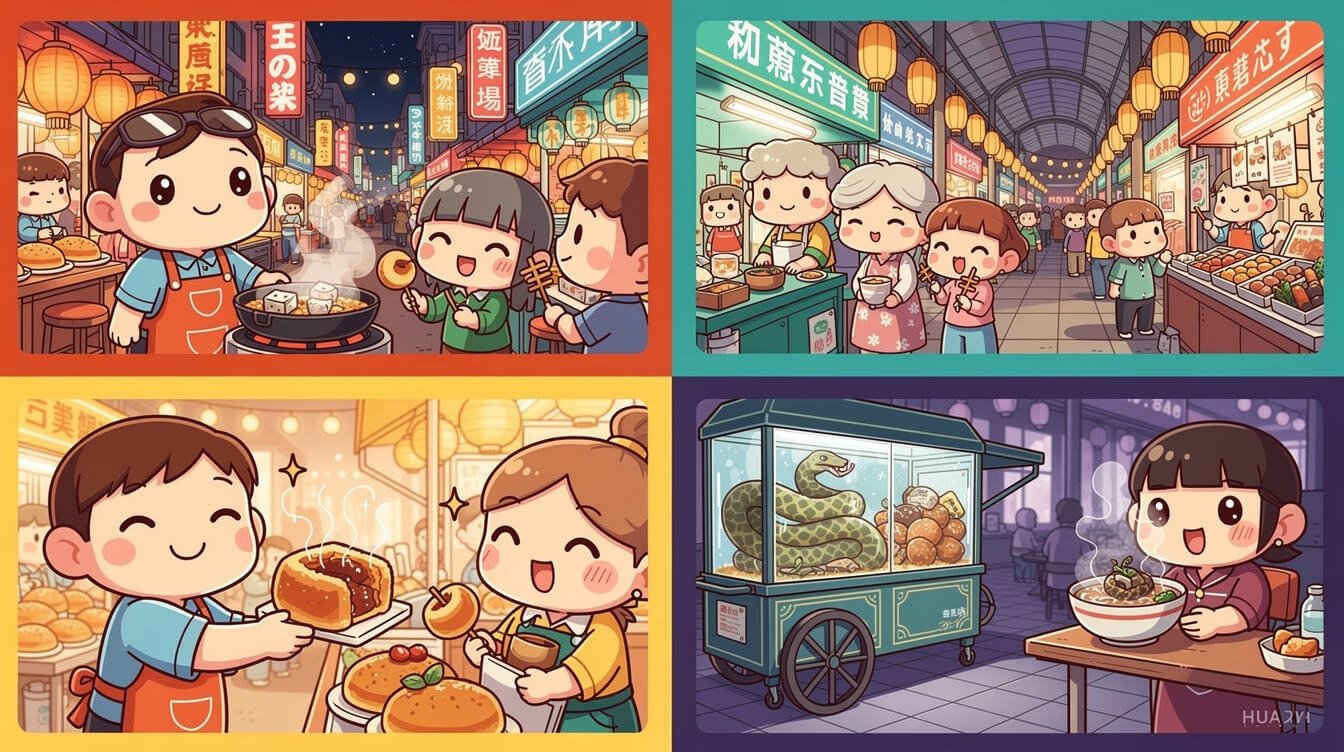
Taipei has more than a dozen night markets. Four are worth planning your evenings around, and each one solves a different craving.
| Market | Vibe | Best For | Skip If |
|---|---|---|---|
| Raohe | Authentic single-lane, Michelin-dense, temple-anchored | Serious foodies, first-time visitors, cultural depth | You hate crowds & queues |
| Shilin | Sprawling maze, tourist-heavy, more games & shopping | Groups, teens, novelty snacks, first-time overwhelm | You want a compact walkable market |
| Ningxia | “Stomach of Taipei” — smallest, oldest, most food-focused | Repeat visitors, generational hawker deep-cuts | You want variety beyond food |
| Huaxi | Covered arcade, dwindling stall count, adventurous eats | Snake soup, turtle blood, old-school Taipei nostalgia | You’re squeamish or looking for polish |
Raohe’s superpower is Michelin density per square meter. Ningxia is the local’s favorite for pure food quality but has almost nothing else. Shilin wins on sheer scale and side-street exploration but has fewer vendors doing anything at Michelin level. Huaxi is a niche pick for adventurous eaters willing to sample things most tourist guides won’t recommend. If you’re only visiting one, make it Raohe. If you have three nights, do Raohe, Ningxia, and Shilin in that order — night one for the flagship experience, night two for the food deep-cut, night three for the sprawling maze.
Raohe Night Market Taiwan: Getting There, Hours & Practical Tips
Address: Raohe Street, Songshan District, Taipei City (饒河街, 松山區, 台北市)
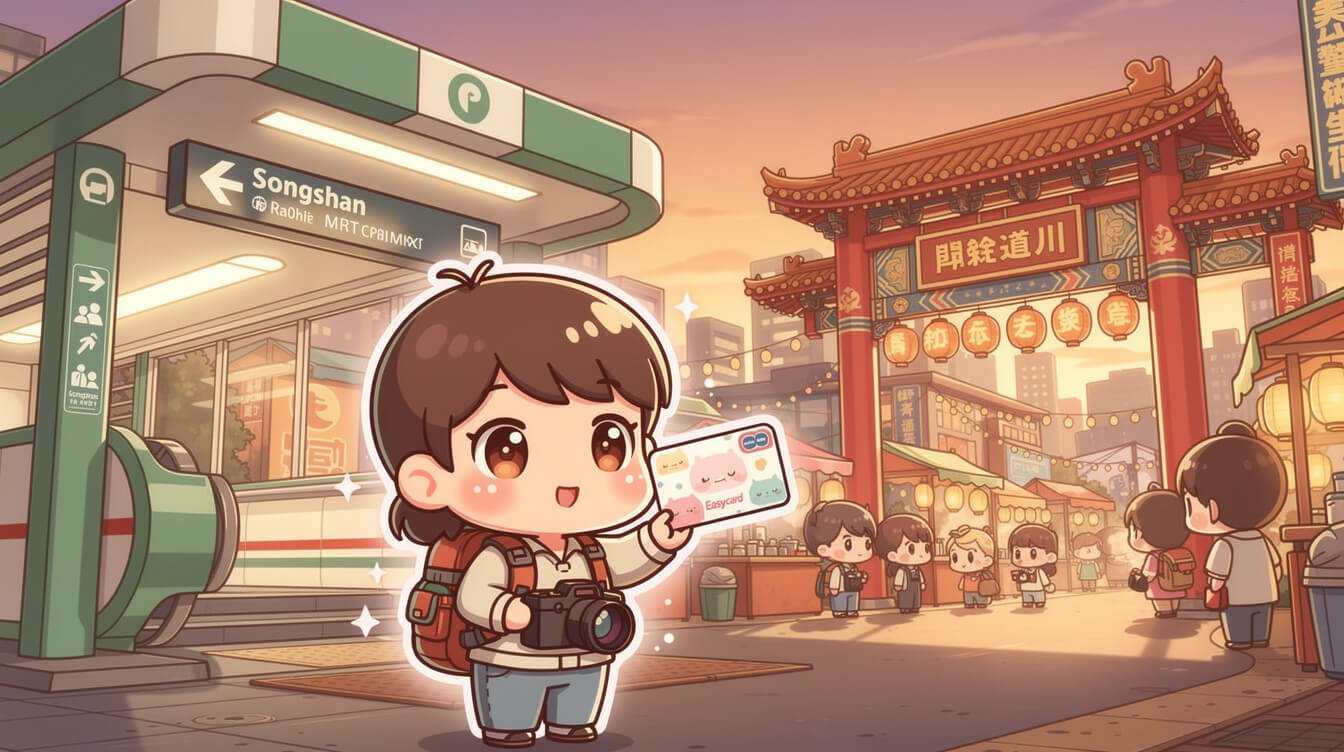
MRT: Take the Green Line (Songshan–Xindian) to Songshan Station (the eastern terminus). Take Exit 5 and you will be standing directly in front of Ciyou Temple, with the market’s east entrance to your left. Do not take Exit 1 — you’ll end up walking 10 minutes the wrong way.
Hours: Every day, 5:00 p.m. to midnight. Some vendors set up as early as 4:30 p.m. and pack up around 11:30 p.m. There are no closed days — Raohe operates 365 nights a year, including Lunar New Year (though a few stalls take the first two days off).
Cash: Bring NT$1,500–2,000 per person in small bills. Most food stalls take LINE Pay and JKO Pay, but ATMs at Songshan Station work fine if you run low.
Bathrooms: Free public restrooms inside Ciyou Temple and Songshan MRT Station. There is no bathroom inside the market lane.
Rainy nights: Raohe is open-air. Bring a light rain jacket April through September. Umbrellas are hard to manage in the crowd — a hood is your friend.
What to wear: Comfortable shoes, no exceptions — you’ll walk 1.2 km and stand for hours. If you want to blend in with locals, throw on a graphic tee; if you want to blend in with locals and represent your Taiwan trip when you get home, a piece from the Taiwan Merch shop does both jobs.
Wheelchair & stroller access: The lane is paved and reasonably flat, but the density of foot traffic between 7 and 9 p.m. makes strollers and wheelchairs genuinely difficult. If mobility is a concern, arrive at 5 p.m. sharp, take the north-side food route only, and expect to detour around dense crowds at the pepper bun and ribs soup stalls. Ciyou Temple has a wheelchair-accessible side entrance on Bade Road.
Language survival kit: Beyond the two phrases above, add “Hǎo chī” (delicious — 好吃) which will get a genuine smile from any vendor, and “Lā dùzi” (upset stomach — 拉肚子) which you may need if you go too hard on the stinky tofu-and-papaya-milk combo. Google Translate’s camera mode reads Chinese menus in real time and works offline if you download the Traditional Chinese pack before your trip — an underrated Raohe hack.
Combining Raohe with other Taipei plans: Raohe pairs well with an early evening at Elephant Mountain (25-minute hike, 20 minutes by taxi from Songshan Station) — do the sunset view first, come back down for pepper buns by 7:30 p.m. It also chains nicely with Bopiliao Historic Block during the day (both are living-history Qing-era streets) for a themed old-Taipei day trip. Skip the Taipei 101 observation deck combo — the walk from 101 to Raohe is uphill and 25 minutes, and the two share zero cultural DNA. For the wider planning picture, cross-reference our Taipei map guide for MRT routes.
Wear the Night Market Home
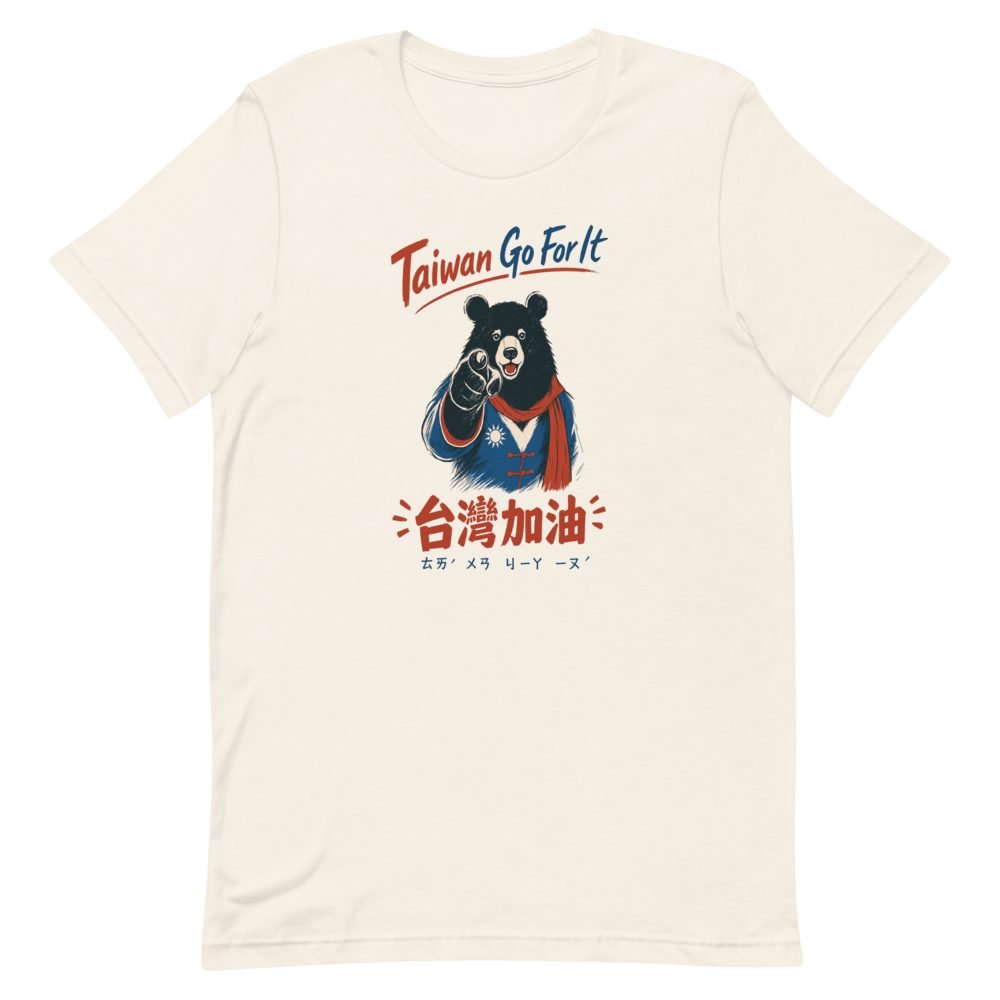
The Taiwan Black Bear Jiayou tee bottles the same kawaii-street-art energy you’ll find on the graphic tee tables at Raohe — Formosan pride, bold cheering script, and a design locals actually stop to comment on.
Final Thoughts on Raohe Night Market Taiwan
Raohe Night Market Taiwan isn’t just Taipei’s oldest tourist night market — it’s a 270-year-old street food tradition that never actually paused, anchored by a Mazu temple that predates the United States. That combination of layered history, Michelin-dense food, non-food stalls that Ningxia doesn’t have, and a single-lane layout you can’t get lost in is what makes it the market to visit if you only have one night in Taipei.
Go around 7 p.m. for maximum atmosphere or 10 p.m. for shorter queues. Start at the Ciyou Temple gate, stop for a black pepper bun before you do anything else, and share every plate with a friend so you can taste ten stalls without exploding. Say a quick thanks to Mazu on your way out — she’s been watching over this street since 1753, and she’s part of the reason the food still tastes this good.
The best Raohe visits leave room to be surprised. Come back a second night and pick a different route down the south-side non-food stalls. Ask a vendor which stall they queue for on their day off — the answer is almost never on any English-language blog. Slow down at the temple to watch a family cast jiao bei and try to guess their fortune. Buy a hand-carved seal with your Chinese name and use it to stamp your passport when you get home. The lane is only 600 meters, but the stories it holds run 270 years deep, and every visit peels back a new layer.
Get More Taiwan Deep Dives Every Week
Join the Taiwan Merch newsletter for weekly cultural deep-dives, hidden-gem food finds, festival calendars, and first looks at new merch drops — straight from Jon in Bali.
Grab a Free Taiwan Sticker!
Drop your email and we’ll send you a limited-edition Taiwan sticker — plus insider access to new merch drops and island vibes.
No spam. Unsubscribe anytime.