What Language Do They Speak in Taiwan? The Complete Guide to Every Language on the Island
What language do they speak in Taiwan? It’s one of the most common questions travelers and culture enthusiasts ask — and the answer is way more interesting than you might expect. Taiwan isn’t just a one-language island. It’s a living, breathing mosaic of at least 20 languages spanning thousands of years of history, from ancient Austronesian roots to modern bilingual ambitions.
Whether you’re planning your first trip to Taipei, connecting with your Taiwanese heritage, or just curious about this incredible island, understanding what language they speak in Taiwan opens a window into the soul of Taiwanese culture. Let’s break it all down — from the official language to the endangered indigenous tongues fighting for survival.
What Language Do They Speak in Taiwan? The Quick Answer
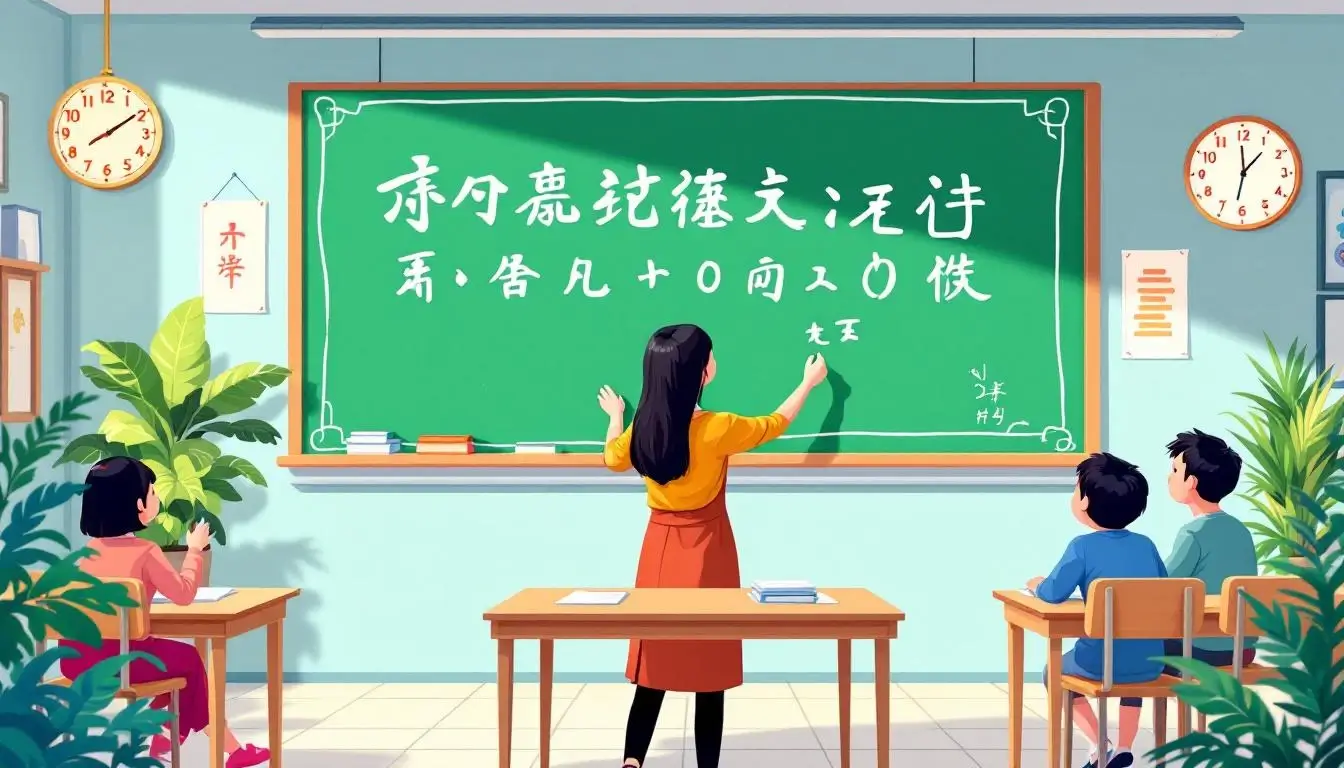
The short answer: Mandarin Chinese is the official language of Taiwan, spoken by roughly 95% of the population. But here’s where it gets fascinating — Mandarin is just the tip of the linguistic iceberg.
Taiwan is home to a remarkably diverse language ecosystem that includes:
- Mandarin Chinese (Guoyu / 國語) — the official language, used in government, media, and education
- Taiwanese Hokkien (Taiyu / 台語) — spoken by roughly 70% of the population, especially in southern Taiwan
- Hakka (Kejiahua / 客家話) — the mother tongue of about 15% of Taiwanese people
- 16 indigenous Austronesian languages — recognized as national languages since 2017
- Japanese — still spoken by some elderly Taiwanese and widely studied by younger generations
- English — increasingly important, with Taiwan’s ambitious 2030 Bilingual Nation plan
- Southeast Asian languages — Vietnamese, Indonesian, Tagalog, and Thai, spoken by Taiwan’s growing immigrant communities
What makes Taiwan’s linguistic landscape truly unique is that these languages aren’t just historical curiosities — they’re actively spoken, fiercely debated, and central to Taiwan’s cultural identity. The language someone chooses to speak in Taiwan can signal their hometown, their generation, their politics, and their sense of self.
Mandarin Chinese: Taiwan’s Official Language and Why It’s Different From China’s
Mandarin Chinese became Taiwan’s official language in 1945 when the Kuomintang (KMT) government retreated from mainland China. Under the “National Language Movement,” Mandarin was imposed as the sole language of government, education, and broadcasting — sometimes at the expense of local languages that had been spoken for centuries.
Today, Mandarin is the lingua franca that ties Taiwan’s diverse communities together. It’s what you’ll hear on the news, in schools, in business meetings, and in most everyday conversations — especially in Taipei and other major cities.
How Taiwanese Mandarin Differs From Mainland Chinese
But don’t make the mistake of thinking Taiwanese Mandarin is the same as what’s spoken in Beijing. There are some key differences:
- Writing system: Taiwan uses Traditional Chinese characters (繁體字), while mainland China adopted Simplified Chinese (简体字) in the 1950s. Traditional characters are more complex and are considered by many to be more aesthetically beautiful — you’ll see them on every sign, menu, and temple in Taiwan.
- Phonetic system: Instead of Pinyin (the romanization system used in China), Taiwan uses Bopomofo (ㄅㄆㄇㄈ), also called Zhuyin Fuhao. Every Taiwanese child learns Bopomofo in elementary school, and you’ll spot it on kids’ books and keyboard settings throughout the island.
- Accent and pronunciation: Taiwanese Mandarin has a softer, more melodic quality. The retroflex sounds (zh, ch, sh) that are sharp in Beijing Mandarin are often softened or dropped entirely. Many Taiwanese speakers mix in Hokkien words and phrases naturally.
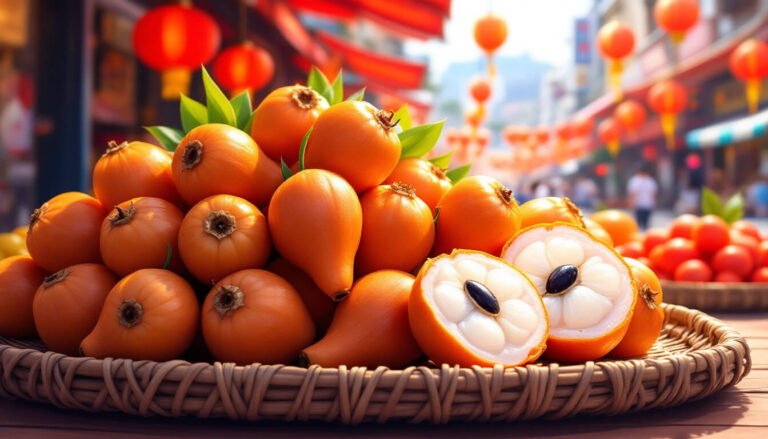
- Vocabulary: Dozens of everyday words differ. A pineapple is fengli (鳳梨) in Taiwan but boluó (菠蘿) in China. A motorcycle is jiche (機車) in Taiwan but motuoche (摩托車) in China — and in Taiwanese slang, jiche also means “annoying,” which leads to some hilarious misunderstandings.
These differences might seem subtle, but they’re a major source of pride for Taiwanese people. The way someone speaks Mandarin in Taiwan immediately marks them as Taiwanese — not Chinese — and that distinction matters deeply on an island still navigating its own unique identity.
Taiwanese Hokkien: The Heart and Soul of Local Culture
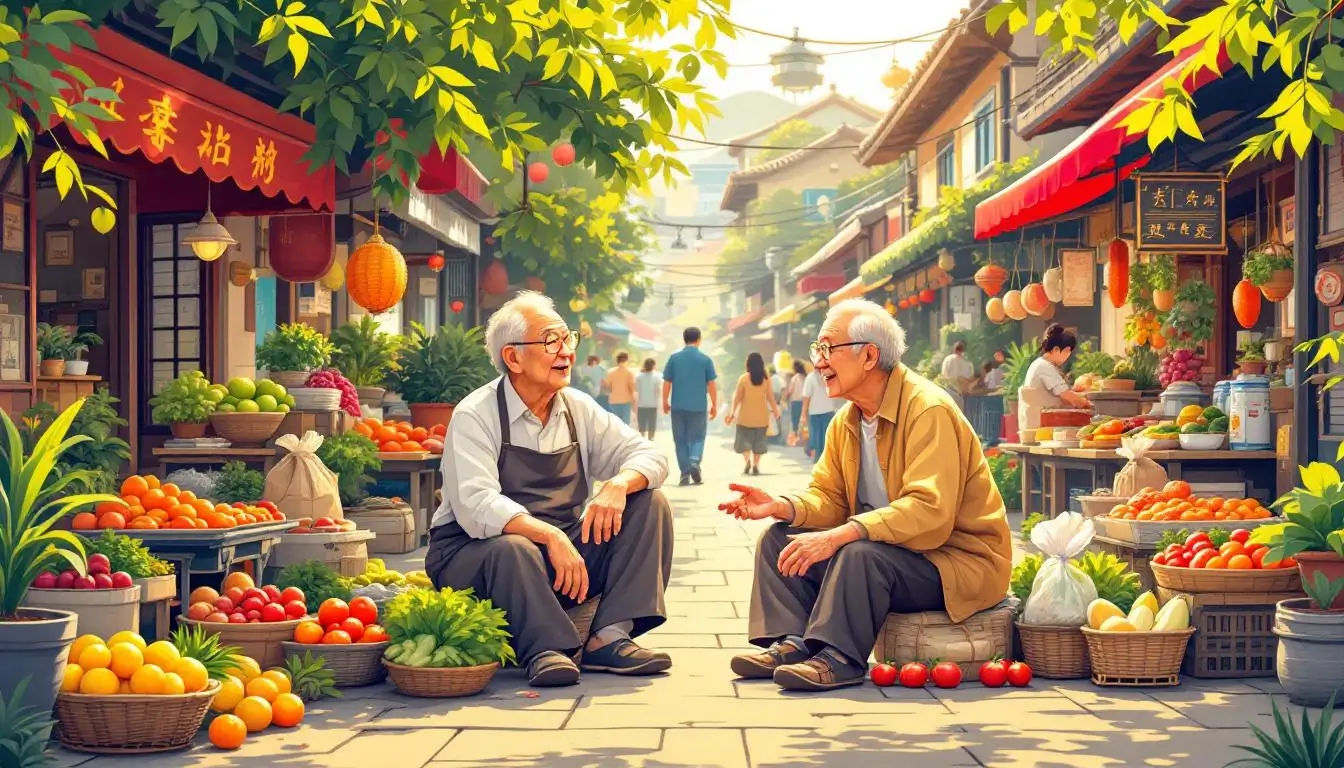
If Mandarin is Taiwan’s official voice, Taiwanese Hokkien (台語 / Taiyu) is its emotional voice. This Southern Min language, brought over by settlers from Fujian Province starting in the 17th century, is the mother tongue of Taiwan’s largest ethnic group and arguably the language that best captures the island’s spirit.
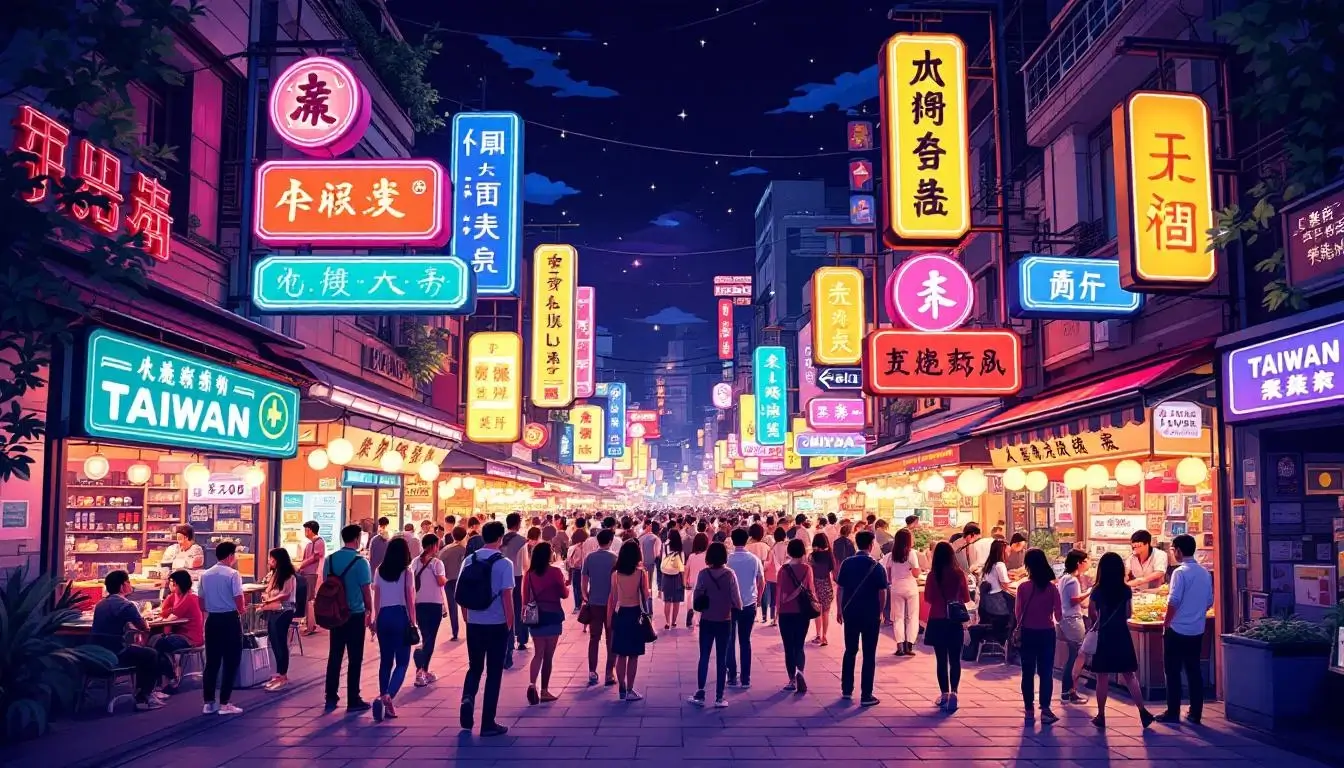
Walk through any Taiwan night market and you’ll hear it — vendors hawking stinky tofu in rapid-fire Hokkien, grandmothers bargaining over fruit prices, taxi drivers chatting on the radio. Head to southern cities like Tainan, Kaohsiung, or Chiayi, and Hokkien becomes the dominant language of daily life.
The Suppression and Revival of Hokkien
Taiwanese Hokkien has a turbulent political history. During the martial law era (1949–1987), the KMT government actively suppressed local languages. Speaking Hokkien in school could get you fined or punished. TV and radio broadcasts in Hokkien were severely restricted. An entire generation grew up being told their mother tongue was “low-class” or “uneducated.”
The democratic era changed everything. Starting in the 1990s, a powerful language revival movement swept Taiwan. Hokkien-language TV channels launched. Schools began offering Hokkien classes. Politicians switched to Hokkien to connect with voters. Today, speaking Hokkien isn’t just acceptable — it’s a badge of authentic Taiwanese identity.
Hokkien in Pop Culture
Some of Taiwan’s most beloved cultural exports are rooted in Hokkien:
- Taiwanese opera (歌仔戲) — performed entirely in Hokkien, this art form has been enchanting audiences for over a century
- Hokkien pop music — artists like Jay Chou occasionally drop Hokkien lyrics, and entire genres of Taiwanese ballads exist in the language
- Film and TV — critically acclaimed films and dramas increasingly feature Hokkien dialogue as a marker of authenticity
- Night market culture — the food names you need to know (ô-á-tsian for oyster omelet, tiān-put-lā for tempura) are all Hokkien
The generational divide is real, though. While most Taiwanese people over 50 are fluent in Hokkien, younger urban Taiwanese (especially in Taipei) may understand it but struggle to speak it fluently. The government has responded with expanded Hokkien education programs, and there’s a growing movement among young people to reclaim the language as part of their identity.
Hakka: The Language of Taiwan’s Mountain Communities
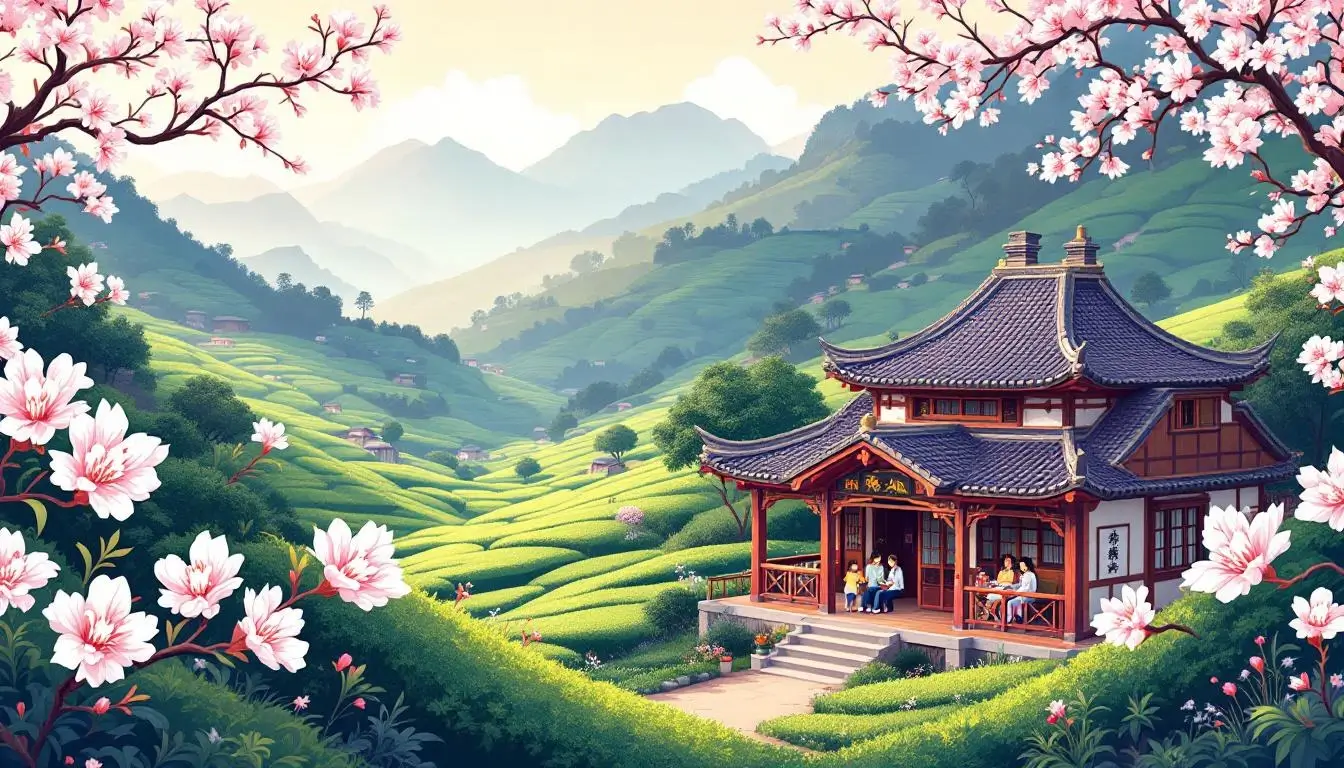
Taiwan’s Hakka people — roughly 4.5 million strong, or about 15–20% of the population — are the island’s other major Chinese-speaking ethnic group. The Hakka migrated to Taiwan primarily from Guangdong and Fujian provinces, settling in the island’s hilly interior regions where they’ve maintained their distinct language and culture for centuries.
Hakka (客家話) is not mutually intelligible with either Mandarin or Hokkien. If you speak Mandarin, you won’t understand a word of Hakka conversation — it’s genuinely a different language with its own tones, vocabulary, and grammar patterns.
Where You’ll Hear Hakka
Hakka communities are concentrated in specific regions of Taiwan:
- Hsinchu County and City — one of Taiwan’s major Hakka population centers
- Miaoli County — perhaps the most traditionally Hakka region, known for tung blossom festivals and Hakka cuisine
- Taoyuan and Pingtung — significant Hakka populations with strong cultural preservation efforts
- Meinong (Kaohsiung) — a famous Hakka township known for oil-paper umbrellas, Hakka stir-fry, and lei cha (pounded tea)
The Hakka Renaissance
Like Hokkien, Hakka was suppressed during the martial law era. But the Hakka community has staged an impressive cultural comeback. In 2001, Taiwan established the Hakka Affairs Council — a cabinet-level government body dedicated to preserving and promoting Hakka language and culture. Taiwan also operates Hakka TV, a public television channel broadcasting entirely in Hakka.
Hakka cuisine has become a major draw for food lovers exploring Taiwan — from the famous bantiao (flat rice noodles) to lei cha (ground tea), Hakka flavors are bold, hearty, and deeply satisfying. The Hakka language is inseparable from this culinary tradition — the food names, cooking techniques, and mealtime expressions are all uniquely Hakka.
Taiwan’s Indigenous Languages: 6,000 Years of Austronesian Heritage
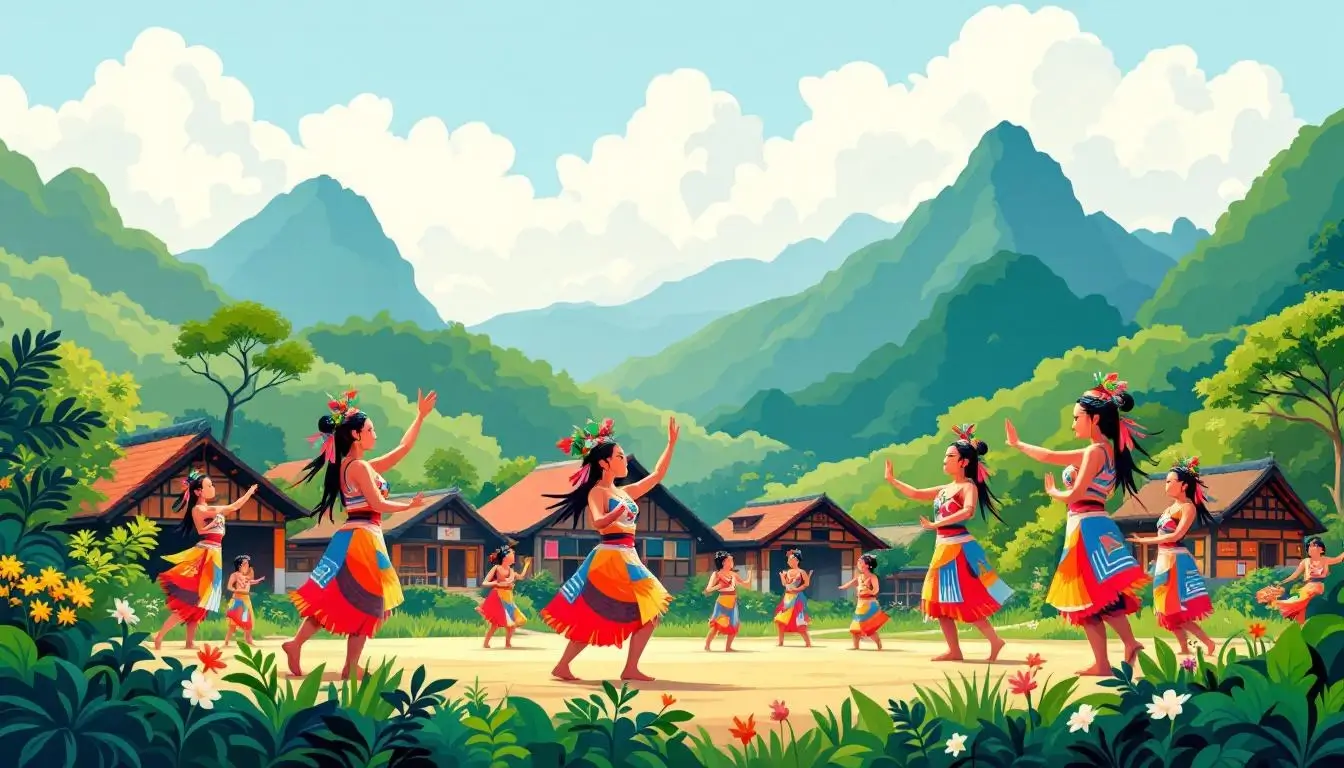
Here’s a fact that blows most people’s minds: Taiwan is widely regarded by linguists as the homeland of the entire Austronesian language family — a language group that stretches from Madagascar to Hawaii, from New Zealand to Easter Island. The 16 officially recognized indigenous tribes of Taiwan speak languages that are the living ancestors of this global language family.
That means when you hear an Amis elder speaking their native tongue in Hualien, you’re hearing one of the oldest continuously spoken language lineages on Earth — predating the arrival of Chinese settlers by thousands of years.
The 16 Recognized Indigenous Languages
Taiwan’s indigenous peoples speak distinct languages belonging to the Formosan branch of the Austronesian family:
- Amis — the largest indigenous group (~210,000), concentrated on the east coast
- Atayal — spread across northern mountainous regions
- Paiwan — southern Taiwan, known for elaborate stone-slab architecture
- Bunun — famous for their Pasibutbut (Eight-Part Polyphonic Singing), a UNESCO-recognized vocal tradition
- Tsou, Rukai, Puyuma, Saisiyat, Yami (Tao), Thao, Kavalan, Truku, Sakizaya, Seediq, Hla’alua, and Kanakanavu
Many of these languages have fewer than 1,000 fluent speakers remaining. The Thao language, spoken by a tiny community living around Sun Moon Lake, has fewer than 10 fully fluent speakers — making it one of the most critically endangered languages on the planet.
The 2017 Indigenous Languages Act
In 2017, Taiwan took a groundbreaking step: the government passed the Indigenous Languages Development Act, officially recognizing all indigenous languages as national languages of Taiwan — on equal legal footing with Mandarin. This means indigenous languages can be used in government proceedings, official documents, and public services in indigenous areas.
The act also mandated:
- Indigenous language classes in schools serving indigenous communities
- Government funding for language documentation and revitalization
- Indigenous-language broadcasting and media production
- Certification programs for indigenous language teachers
Speaking of Taiwan’s incredible cultural diversity, our Taiwan-themed apparel collection celebrates the island’s unique heritage — from indigenous patterns to modern Taiwanese pop culture. If you love what makes Taiwan special, you’ll find something that speaks to you.
Japanese, English, and Other Languages in Taiwan

Taiwan’s linguistic story doesn’t end with its homegrown languages. The island’s complex history and modern global ambitions have layered in several additional languages that play important roles in daily life.
Japanese: The Colonial Legacy That Became Cool
Japan ruled Taiwan for 50 years (1895–1945), and the linguistic impact was profound. During this period, Japanese was the language of education, government, and upward mobility. Many elderly Taiwanese — particularly those born before 1940 — still speak fluent Japanese, and some even prefer it to Mandarin.
But Japanese influence in Taiwan goes far beyond nostalgia. Japan remains Taiwan’s closest cultural ally, and Japanese language study is wildly popular among young Taiwanese:
- Taiwan has one of the highest numbers of Japanese-language learners per capita in the world
- Japanese loanwords pepper everyday Taiwanese speech — obasan (auntie/older woman), ojisan (uncle/older man), and dozens of food terms
- Many Taiwanese product names, restaurant concepts, and fashion trends incorporate Japanese
English: The 2030 Bilingual Nation Dream
English is arguably the most transformative language force in modern Taiwan. In 2018, the government launched the ambitious Bilingual 2030 initiative, aiming to make Taiwan a functionally bilingual Mandarin-English nation within a generation.
The plan includes:
- English-medium instruction in select public schools and universities
- Bilingual signage and government services
- Recruitment of native English-speaking teachers
- English proficiency requirements for certain government positions
While progress has been uneven — Taipei is significantly more English-friendly than rural areas — the trend is clear. Younger Taiwanese are more English-proficient than any previous generation, and Taipei’s international business district, tech hubs, and university campuses are increasingly bilingual environments.
Southeast Asian Languages: Taiwan’s Newest Linguistic Layer
Over the past two decades, Taiwan has welcomed hundreds of thousands of migrant workers and marriage immigrants from Southeast Asia — primarily from Vietnam, Indonesia, the Philippines, and Thailand. Their languages have become part of Taiwan’s soundscape:
- Vietnamese — now the most widely spoken Southeast Asian language in Taiwan, with dedicated media, shops, and community centers
- Indonesian — spoken by a large workforce in Taiwan’s manufacturing and caregiving sectors
- Tagalog — Filipino communities are established in most major Taiwanese cities
Taiwan’s government has recognized this shift by adding Southeast Asian language options in some public services and incorporating “New Immigrant” language courses in elementary schools — a progressive approach that reflects Taiwan’s evolving multicultural identity.

Wear Your Love for Taiwan
From boba culture to indigenous art, our Taiwan-themed collection celebrates everything that makes this island unforgettable. Rep your favorite piece of Taiwanese culture wherever you go.
Can You Get By With English in Taiwan? A Practical Guide for Travelers
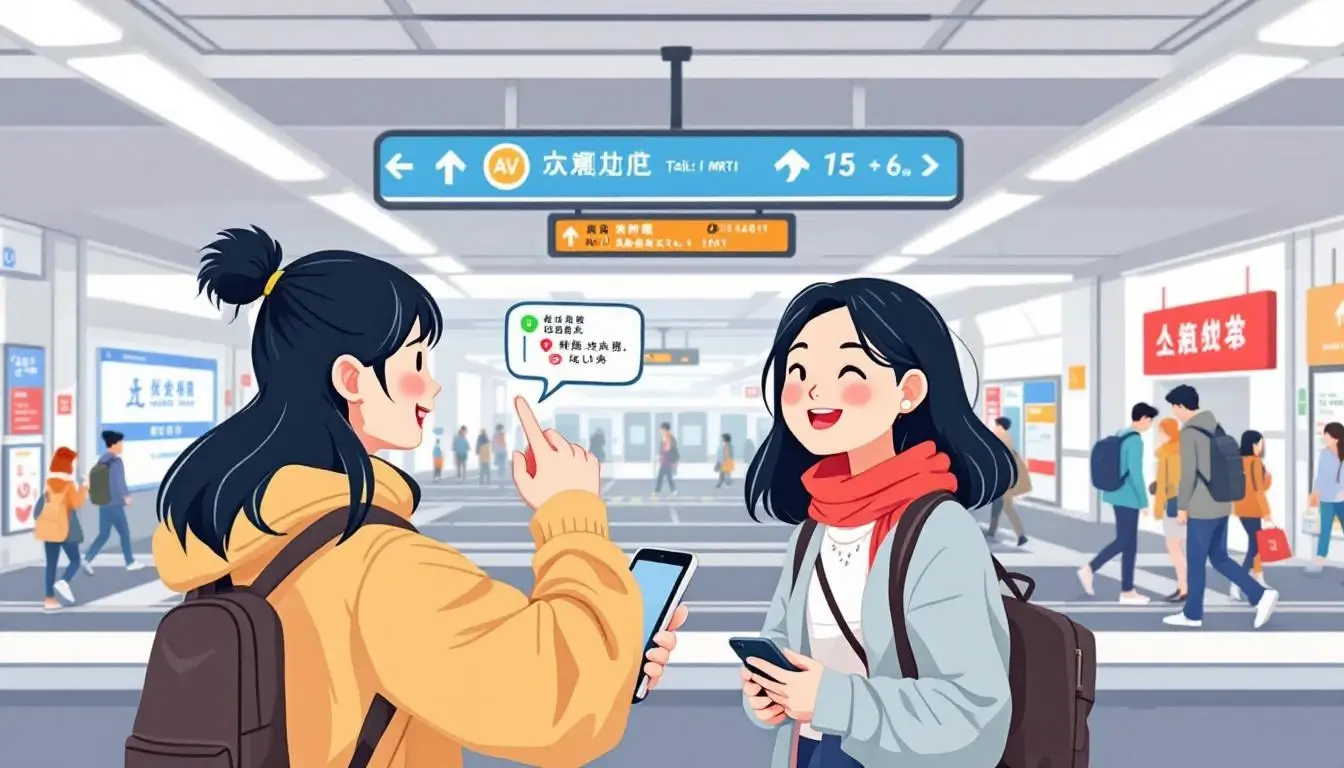
This is the question every first-time Taiwan traveler asks — and the honest answer is: it depends on where you are and what you’re doing.
Where English Works Well
- Taipei and New Taipei City: The capital is increasingly bilingual. MRT signs are in English and Mandarin, major tourist attractions have English guides, and many restaurants in areas like Xinyi, Zhongshan, and Da’an have English menus. Hotel staff and younger service workers often speak conversational English.
- Tourist hotspots: Sun Moon Lake, Taroko Gorge, Jiufen, and other major destinations have English signage and guides.
- Universities and tech areas: Hsinchu Science Park, university districts, and international business areas are English-friendly zones.
- The Taiwan High Speed Rail and MRT systems: All announcements and signage include English.
Where You’ll Need Some Mandarin (or a Translation App)
- Night markets: Most vendors don’t speak English. But pointing, smiling, and holding up fingers for quantities works perfectly — and that’s half the fun.
- Rural areas: Outside major cities, English speakers are rare. Southern and eastern Taiwan, while absolutely gorgeous for your Taiwan travel itinerary, require more Mandarin self-sufficiency.
- Taxis: Most taxi drivers don’t speak English. Having your destination written in Chinese characters on your phone is essential.
- Local restaurants and shops: Neighborhood eateries, traditional markets, and small shops are almost exclusively Mandarin/Hokkien environments.
Essential Mandarin Phrases for Travelers
Even learning a handful of phrases will transform your Taiwan experience — locals genuinely appreciate the effort, and it opens doors that no translation app can:
- 你好 (Nǐ hǎo) — Hello
- 謝謝 (Xièxiè) — Thank you
- 多少錢?(Duōshǎo qián?) — How much?
- 這個 (Zhège) — This one (point and say it — works everywhere)
- 好吃 (Hǎo chī) — Delicious! (the fastest way to make a street food vendor’s day)
- 不要辣 (Bùyào là) — Not spicy, please
- 廁所在哪裡?(Cèsuǒ zài nǎlǐ?) — Where’s the bathroom?
- 我要這個 (Wǒ yào zhège) — I want this one
And here’s a pro tip: learn the Taiwanese Hokkien phrase 多謝 (to-siā) for “thank you.” Use it at night markets and with older Taiwanese people, and watch their faces light up with pure joy. It signals that you respect and appreciate local culture in a way that Mandarin never quite captures.
Frequently Asked Questions About What Language They Speak in Taiwan
Is Taiwanese a language or a dialect?
This is politically charged territory. Linguistically, Taiwanese Hokkien is not mutually intelligible with Mandarin — which, by most academic definitions, makes it a separate language. However, the Chinese government and some scholars classify it as a “dialect” of Chinese. In Taiwan, the term Taiyu (台語, “Taiwanese language”) is widely used and increasingly accepted as the standard term, affirming its status as a distinct language.
What writing system does Taiwan use?
Taiwan uses Traditional Chinese characters (繁體字) — the older, more complex form of written Chinese that has been in use for thousands of years. This is different from the Simplified Chinese characters used in mainland China and Singapore. Taiwanese people take great pride in preserving Traditional characters, viewing them as a connection to classical Chinese culture and literature.
Can I get by with Simplified Chinese in Taiwan?
Educated Taiwanese people can generally read Simplified Chinese, but it’s considered a faux pas to use it in Taiwan. Signs, menus, documents, and all official communications use Traditional characters exclusively. If you’re learning Chinese specifically for a Taiwan trip, learn Traditional characters — it shows respect and cultural awareness.
Do they speak Cantonese in Taiwan?
No — Cantonese is not commonly spoken in Taiwan. This is a common misconception. Cantonese is the primary language of Hong Kong and Guangdong Province in China, while Taiwan’s local Chinese languages are Hokkien and Hakka. There is a small Cantonese-speaking community in Taiwan (primarily post-1949 immigrants from Hong Kong and Guangdong), but it’s not part of the mainstream linguistic landscape.
Is Japanese still spoken in Taiwan?
Some elderly Taiwanese (those born before ~1940) still speak Japanese from the colonial education system. For younger generations, Japanese is the most popular foreign language to study after English, driven by deep cultural ties, tourism, and Japan’s pop culture influence. You’ll find Japanese used in advertising, restaurant branding, and everyday slang throughout Taiwan.
How many languages are spoken in Taiwan total?
Depending on how you count dialects and sub-varieties, Taiwan is home to approximately 20+ distinct languages. This includes Mandarin, Taiwanese Hokkien, Hakka, 16 recognized indigenous Austronesian languages, and the growing presence of Southeast Asian immigrant languages. For an island of just 23 million people, this linguistic diversity is extraordinary.
Final Thoughts: Why Taiwan’s Languages Matter
Understanding what language they speak in Taiwan isn’t just a practical travel question — it’s a window into one of the most fascinating cultural stories in Asia. Every language spoken on this island carries the weight of history: the ancient Austronesian heritage of indigenous peoples, the waves of Chinese migration, the legacy of Japanese colonialism, the democratic awakening that brought suppressed languages roaring back to life, and the modern vision of a bilingual, globally connected Taiwan.
The next time someone asks “what language do they speak in Taiwan?”, you can tell them: all of them. And that’s exactly what makes this tiny, mighty island so remarkable.
Planning your trip to Taiwan? Check out our complete guide to places to travel in Taiwan and the best time to visit to start planning your adventure.

Grab a Free Taiwan Sticker!
Drop your email and we’ll send you a limited-edition Taiwan sticker — plus insider access to new merch drops and island vibes.
No spam. Unsubscribe anytime.