Chiayi Taiwan: The Underrated City That’s So Much More Than Alishan’s Gateway (2026 Guide)
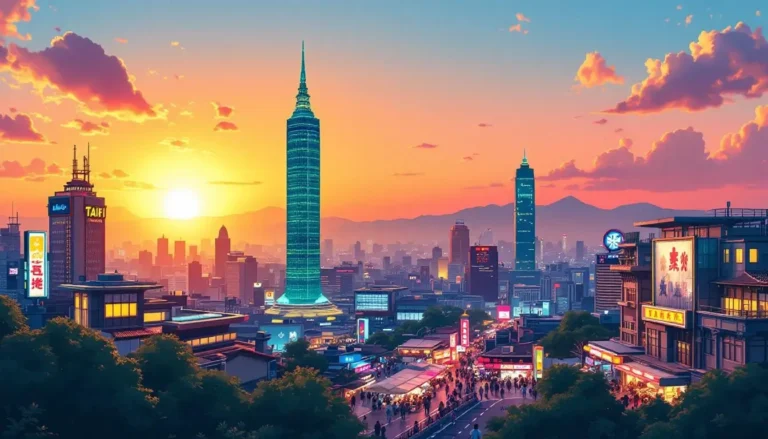
Ask a first-time visitor to Taiwan what they know about Chiayi and you’ll almost always get the same answer: “That’s where you catch the train to Alishan, right?” And technically, they’re not wrong — Chiayi Taiwan is the departure point for the famous Alishan Forest Railway and the main jumping-off city for the high mountain resort area. But treating Chiayi as a train transfer is like flying into Kyoto and only seeing the airport. You’d be missing the actual place.
Chiayi (嘉義, sometimes romanized as Jiayi) is a mid-sized southern Taiwanese city of about 265,000 people, tucked between Tainan and Taichung on the Chianan Plain. It has its own signature dish, its own baseball legend, its own Japanese-era heritage district, and its own laid-back southern-Taiwan personality that feels a world away from Taipei’s high-speed hustle. In this guide, we’ll show you exactly why Chiayi deserves at least an overnight — not a two-hour layover — and how to plan a stay that lets the city speak for itself.
Why Chiayi Taiwan Deserves More Than a Train Transfer
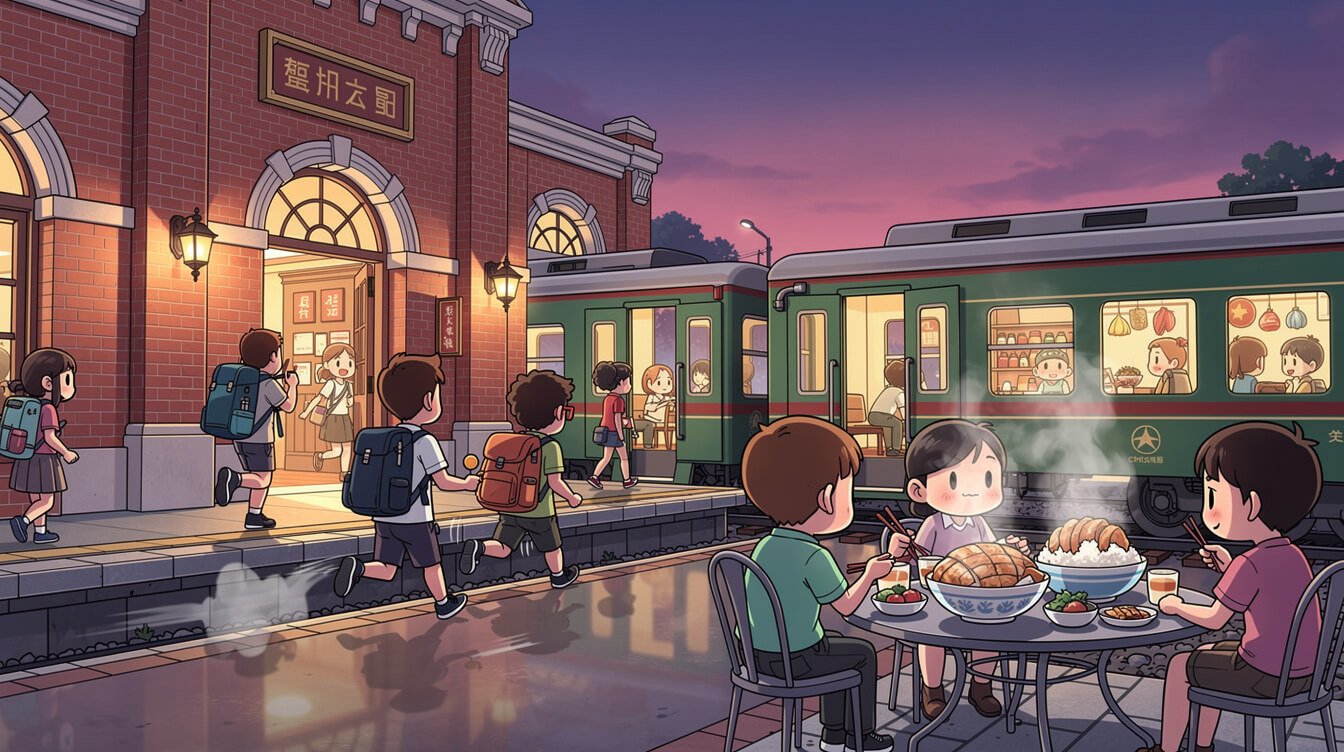
Here’s the honest truth about how most travelers experience Chiayi Taiwan: they roll in on the Taiwan High Speed Rail around 10am, take a 30-minute shuttle to Chiayi Station, buy a ticket for the Alishan Forest Railway or the 7322 bus, and disappear into the mountains before lunch. Two days later they come back down, grab a bowl of chicken rice near the station, and hop the HSR home. Total time actually spent in Chiayi city: about 90 minutes.
That itinerary skips almost everything that makes Chiayi worth visiting. It skips the Hinoki Village, a preserved Japanese-era cypress warehouse district that has quietly turned into one of the most photogenic café clusters in southern Taiwan. It skips Wenhua Road Night Market, whose grilled squid, tofu and shaved ice were featured in an entire episode of Netflix’s Street Food: Asia. It skips the KANO baseball story, in which a 1931 team of aboriginal, Japanese, and Han players from Chiayi became the first from Taiwan to reach Japan’s Koshien final. And it skips the fact that Chiayi city itself sits inside a county that owns three of Taiwan’s national scenic areas — Alishan is only one of them.
The framing of Chiayi as “the Alishan gateway” isn’t wrong, but it’s the way outsiders describe a place they haven’t slowed down for. Locals will tell you their city is famous for chicken rice, baseball, and the way sunset hits the Japanese wooden buildings on Linsen Road. Give it two days, and you’ll leave thinking the same.
Turkey Rice (火雞肉飯): Chiayi’s Iconic Dish and the Post-WWII Story Behind It
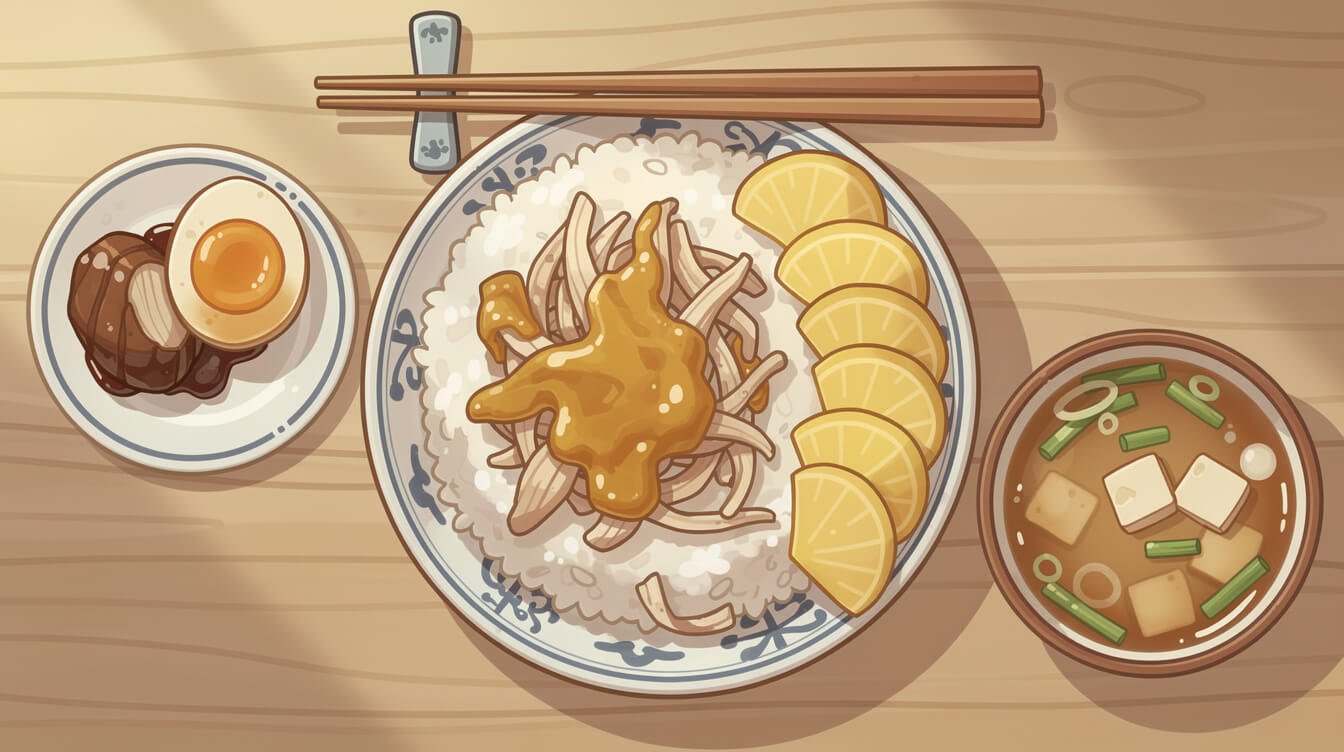
If you ask a Taiwanese person from any other city to name Chiayi’s signature dish, the answer is instant: huǒ jī ròu fàn (火雞肉飯), or turkey rice. And once you understand where it came from, it becomes hard to eat anywhere else.
Turkey isn’t a native Taiwanese ingredient. In fact, before the 1950s, almost no one in Taiwan ate it. The story goes that after World War II, the arrival of American military personnel — particularly the U.S. Air Force base that operated near Chiayi during the Cold War — brought a supply of imported turkeys that suddenly needed a home in the local food economy. Enterprising cooks in Chiayi tried them shredded, hand-pulled or thinly sliced, ladled with schmaltzy chicken fat and a soy-based drippings sauce, and served over hot rice with a strip of yellow pickled daikon on the side. The result was rich, savory, deeply satisfying, and much cheaper than chicken.
Seventy years later, Chiayi’s turkey rice shops now form a serious rivalry landscape. The city has three schools of thought: hand-pulled shreds (the classic), thin slices (the modern), and mixed (the compromise). The most famous names — Liu’s Turkey Rice (劉里長雞肉飯) near the East District, Smart Fish‘s counterpart at Wenhua Road, and Ren Ai Turkey Rice (仁愛火雞肉飯) — each have generational followings, and every local has a strong opinion about which is best. For a wider tour of Taiwan’s savory rice dishes, see our deep dive on Lu Rou Fan, Taiwan’s glossy braised pork bowl — turkey rice’s northern cousin.
How to order like a local
Most shops open early (5am – 6am is normal) and sell out by mid-afternoon. Don’t ask for the menu; there usually isn’t one. Point at the bowl someone else is eating and hold up one finger. A small bowl (小碗) is around NT$40–50, a large (大碗) is NT$60–70. Order a side of braised soy egg (滷蛋), pickled bamboo (筍絲), and a small clear soup — that’s the platonic Chiayi breakfast, and it will ruin every “Taiwanese chicken rice” you eat afterwards.
Hinoki Village & Wenhua Road Night Market: Two Faces of the Same City
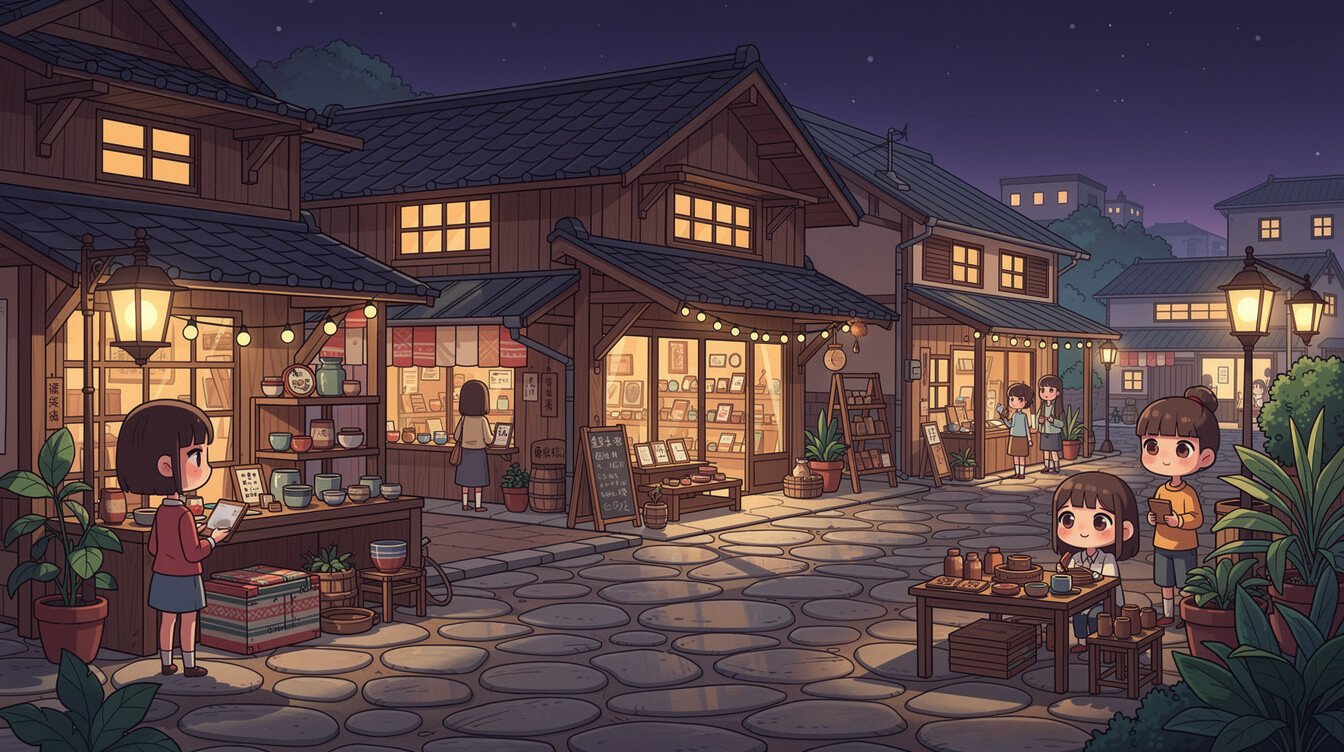
Chiayi’s built environment is a layered history lesson, and two spots capture it better than any museum: Hinoki Village by day and Wenhua Road Night Market after dark.
Hinoki Village (檜意森活村)
Hinoki (檜) is the Japanese word for cypress, and specifically the Taiwan hinoki (Chamaecyparis taiwanensis) that made Alishan’s forests one of the most commercially valuable timber sources in the Japanese Empire. During the colonial period (1895 – 1945), Japan built an extensive logging railway from Alishan down to Chiayi to extract this wood, and the workers, engineers, and forestry officials all needed housing. What remains today is a preserved 3.4-hectare cluster of 28 Japanese-style wooden houses — the largest surviving colonial-era wooden village on the island.
Instead of turning it into a static museum, Chiayi’s city government leased the buildings out to small businesses: independent cafés, ceramics studios, letterpress shops, ice cream parlors, and craft-tea vendors. The result is one of the calmest, most walkable heritage districts in Taiwan. Entry is free, most shops open around 10am, and the whole village photographs beautifully at both sunrise and dusk — the low-angle light on the cypress panels is genuinely gorgeous. Skip the cheesy “Japanese kimono rental” stalls near the entrance and head deeper in, where the more interesting artisans have set up.
Wenhua Road Night Market (文化路夜市)
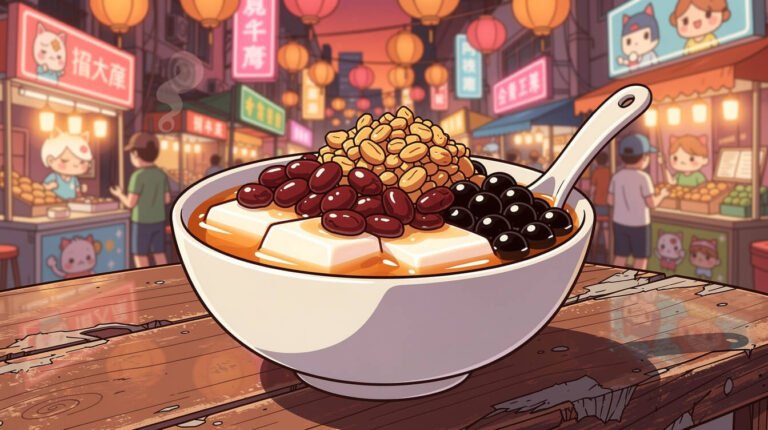
After dark, the city’s energy migrates half a mile east to Wenhua Road, which transforms every night into one of the most food-focused markets in southern Taiwan. Chiayi is a food town first and a tourism town second, and Wenhua Road is where that identity lives. You’ll find the local specialties — turkey rice, of course, but also fāng kuài sū (方塊酥, a flaky Chinese-style crumble), Chiayi-style tofu pudding served warm with peanuts and glutinous rice balls, grilled sausage, and mango shaved ice piled comically high in summer. Netflix’s Street Food: Asia series filmed an entire episode here in 2019, largely built around the family running the Smart Fish (林聰明沙鍋魚頭) shop, whose “fish head clay pot” is worth queuing for even at 10pm. For a bigger picture of how Taiwan’s markets work as a system, see our complete guide to Taiwan’s 300-market ecosystem.
Baseball Town: KANO, Koshien, and Chiayi’s Diamond Legacy
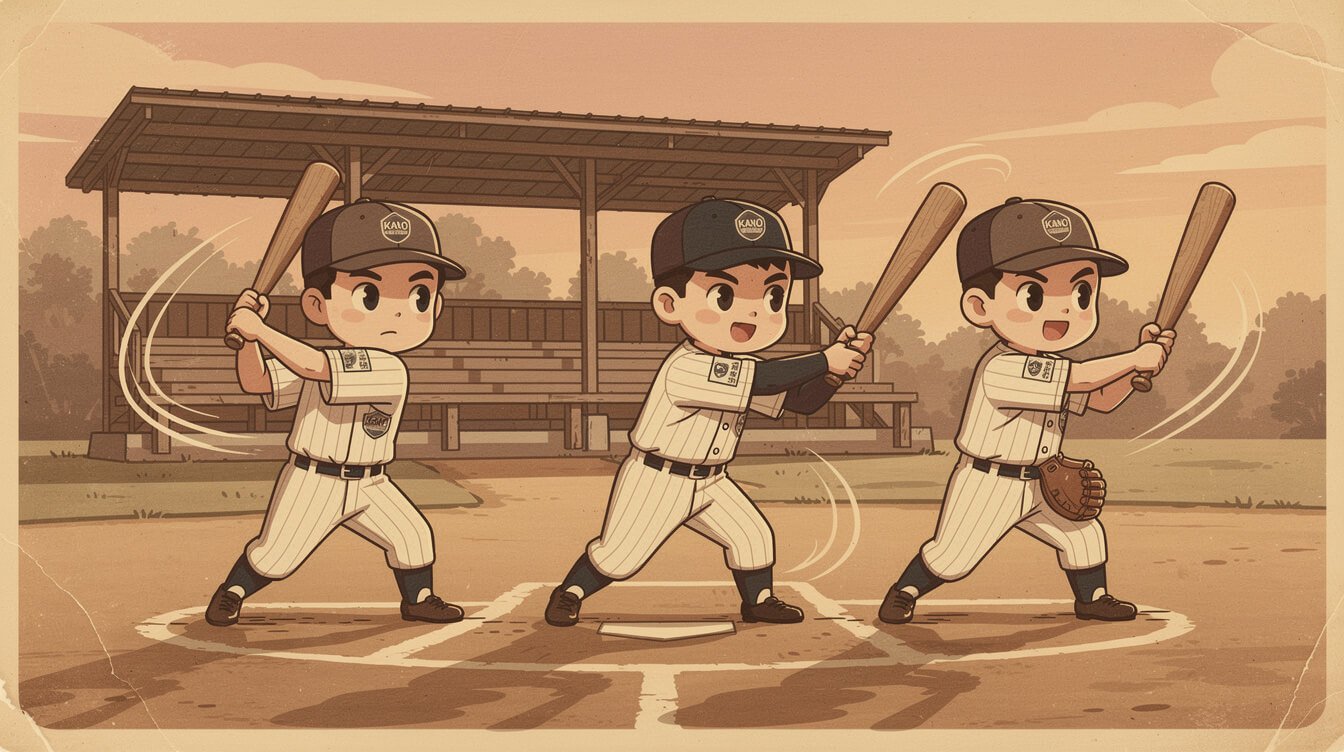
Ask a Taiwanese person about the origins of Taiwanese baseball and Chiayi will come up within about ten seconds. In 1931, a team from the Chiayi Agriculture and Forestry Public School — better known as Kagi Nōrin in Japanese, and shortened to KANO in English — did something no one expected. Coached by a former Japanese pro named Hyotaro Kondo, the team was made up of Han Taiwanese, aboriginal Bunun and Ami players, and Japanese boys — an ethnically mixed roster that reflected Chiayi’s own layered population.
They went undefeated in Taiwan’s colonial-era regional tournament and became the first team from Taiwan to reach the finals of Japan’s Kōshien tournament, the country’s most sacred high school baseball championship. They finished second overall, and their story was later immortalized in the 2014 Taiwanese film KANO, which triggered a wave of national baseball nostalgia and drove a big surge in Chiayi tourism.
You can still visit the site of that history. Chiayi Municipal Baseball Field (嘉義市立棒球場) is where the local Uni-President 7-Eleven Lions and Chunichi CPBL affiliates now play spring training and youth tournaments; the KANO Story Hall is on the same grounds. If you time your visit right, a CPBL (Chinese Professional Baseball League) game night in Chiayi runs about NT$300 for a general seat and is one of the most joyfully rowdy nights out you can have in Taiwan — chants, foam-fingers, thundering drums, beer vendors, and the whole grandstand singing team fight songs on cue. If you’re not sure how CPBL games work, the ticketing app is tixCraft, and you buy day-of at the box office for anything short of a playoff. If you’d rather wear the story than watch it, our Taiwan Baseball 2025 Commemorative T-Shirt is a nod to Chiayi’s Koshien-to-CPBL diamond lineage — a favorite with expats and Taiwanese-American baseball fans.
Alishan, Fenqihu, and Tea Country: The Chiayi Beyond Chiayi
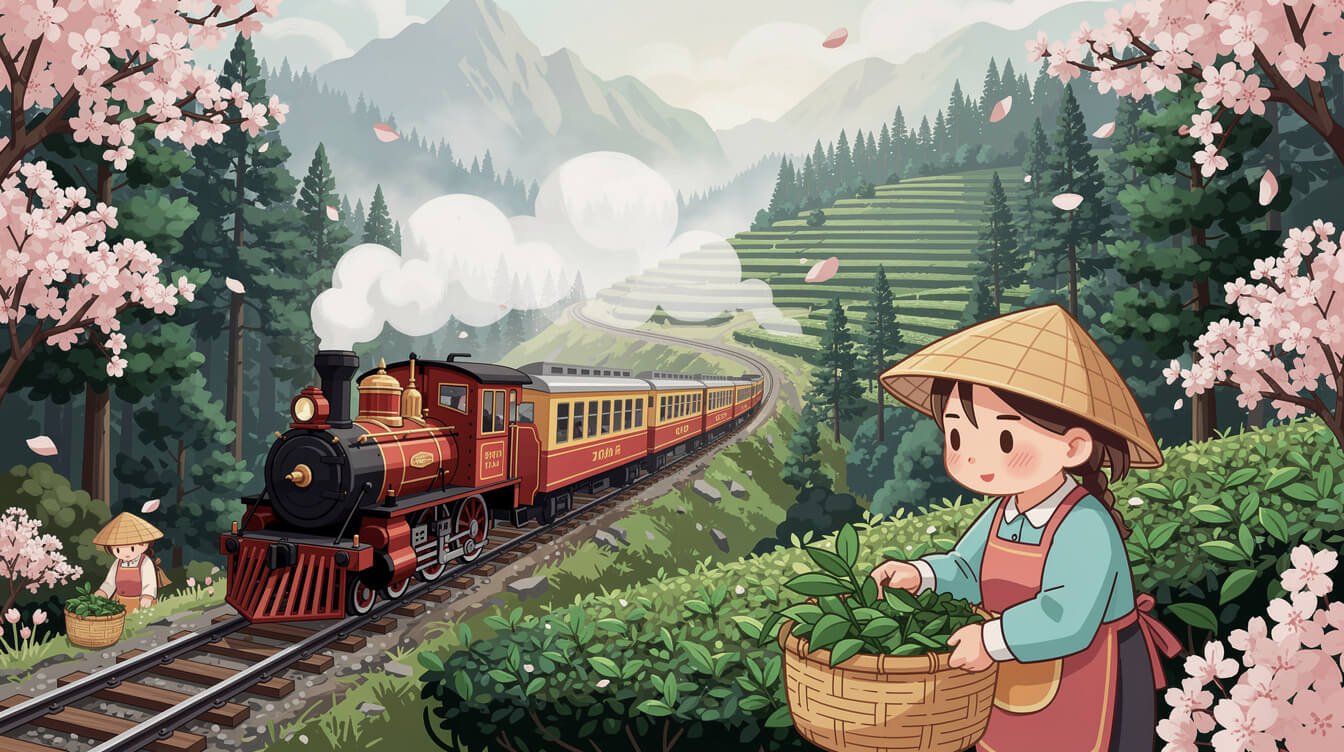
Here’s the plot twist: even after you’ve given the city itself its full weekend, Chiayi county still has more to offer than most Taiwanese counties. It contains three of the country’s national scenic areas — Alishan, Southwest Coast, and the Siraya area — and the county’s mountain half produces most of Taiwan’s most prized high mountain oolong tea.
Alishan National Scenic Area (阿里山)
The obvious one, but you should still plan it properly. Alishan sits at 2,200 – 2,600 meters elevation, gets famously cold at night even in summer, and is best known for its sunrise cloud-sea views from Zhushan and the antique Alishan Forest Railway steam trains that still climb up to Fenqihu and beyond. If you’re arriving from Taipei, we have a detailed Alishan From Taipei transit guide that walks through every route option (HSR + bus, the forest railway, or the direct overnight bus), and a full breakdown of Alishan hotels including in-park, Fenqihu village, and Chiayi city bases depending on your budget and sunrise plans.
Fenqihu (奮起湖)
The mid-mountain village stop on the Alishan Forest Railway line is a great half-day trip on its own. It’s most famous for its old wooden train-station biàndāng (便當, lunch box) — a smoked pork chop over rice tradition that dates to the era when trains between Chiayi and Alishan took all day and the station meal was your main event. Wander the “Old Street,” eat the bento on the platform, and take the 4pm train back down. You’ll be back in Chiayi city in time for turkey rice dinner.
Alishan Oolong tea and Shizhuo village (石棹)
Halfway up the mountain, the Shizhuo area is Chiayi’s tea heartland. The high altitude, cold night mist, and clean air produce oolongs that are consistently ranked among the world’s best; the “Alishan Golden Oolong” cultivar in particular sells for prices that would make a Napa vintner blush. Several tea farms — Longyun Leisure Farm, Optimist Village, and small family homestays — run overnight stays where you can hike the tea trails at sunrise, watch the leaves being rolled and roasted the same afternoon, and drink 12 cups of the same batch through the day.
The Southern Branch of the National Palace Museum (故宮南院)
One of the most underrated art destinations in the country sits about 20 minutes northwest of Chiayi city, in Taibao. Opened in 2015 as a companion to the main National Palace Museum in Taipei, the Southern Branch focuses on Asian art and Buddhist heritage from across the region — Chinese porcelain, Japanese tea ware, Korean folk textiles, Indian sculpture, Persian carpets. It’s an easy half-day excursion by taxi or public bus, the architecture is stunning (a curling, ribbon-like modernist building set on a landscaped lake), and it’s rarely crowded.
Chiayi county coast and oyster country
The western edge of the county drops onto flooded seaside plains around Budai and Dongshi, which produce a large share of Taiwan’s cultivated oysters. It’s not on any tourist trail, but locals will bring visiting friends here for absurdly fresh, absurdly cheap oyster omelets and grilled oyster skewers eaten on plastic stools next to the boats. If your Chiayi trip is more about food than mountains, ask a taxi to take you to the Dongshi fishing port at lunchtime and thank us later.
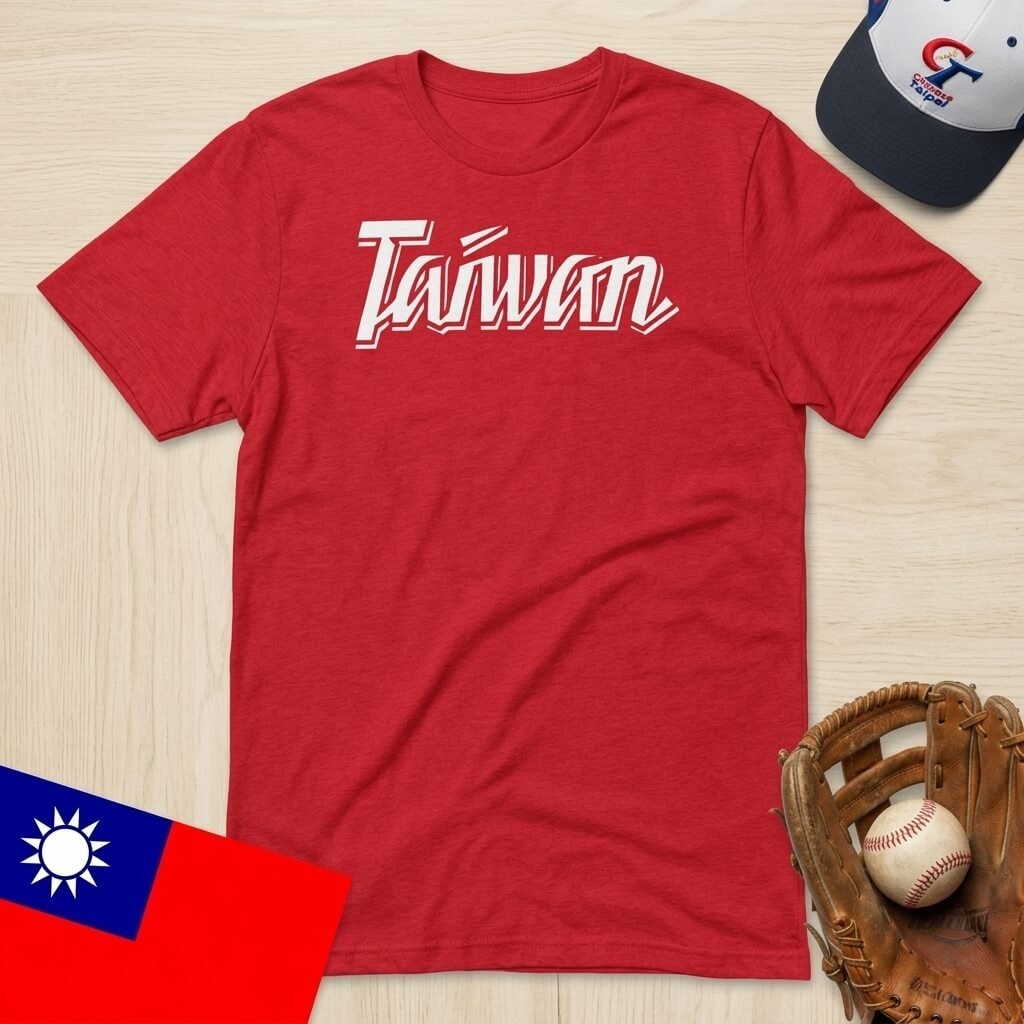
Wear the Chiayi Baseball Legacy
From KANO’s 1931 Koshien final to today’s CPBL grandstand chants, Chiayi built Taiwanese baseball. Our stylized commemorative tee is a subtle nod to a hundred-year lineage — and reads great at Wenhua Road or the ballpark.
Practical Chiayi Taiwan FAQ: Getting There, When to Go, Where to Stay
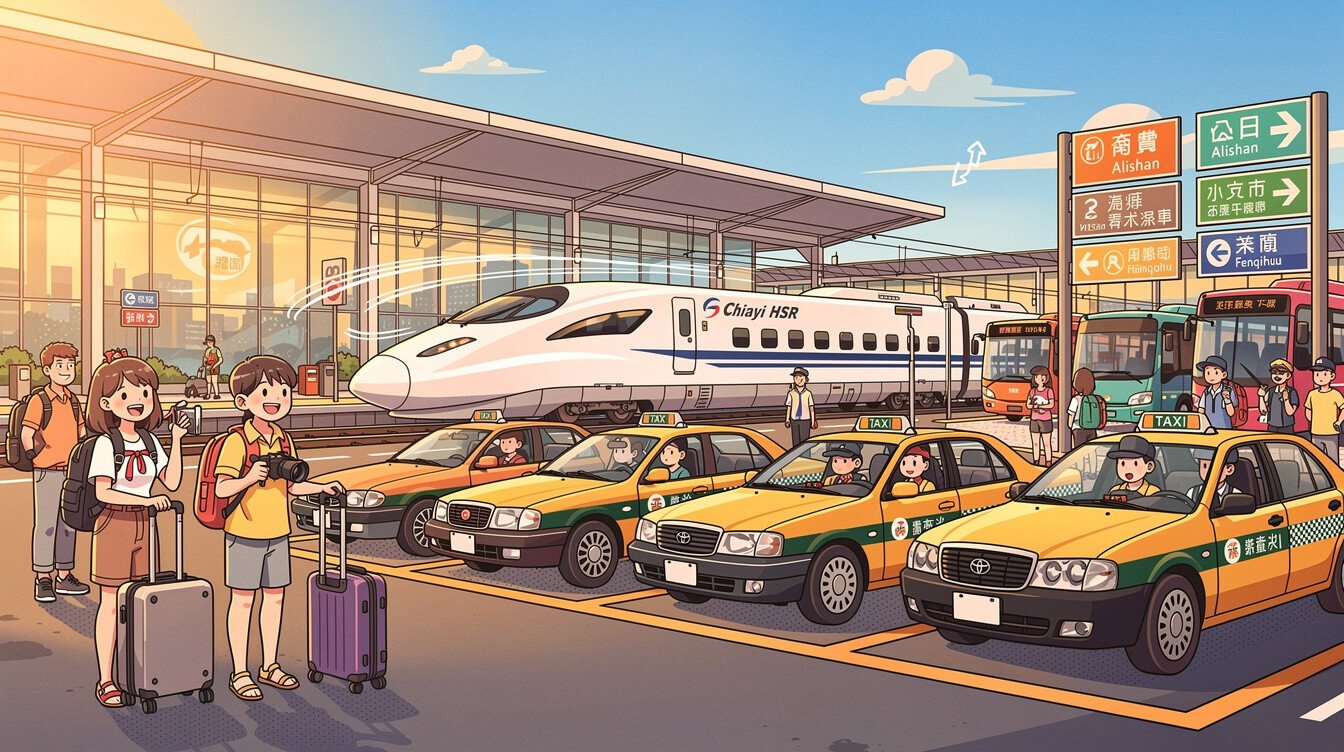
How do I get to Chiayi Taiwan?
The two most useful entries are the Taiwan High Speed Rail (THSR) and the Taiwan Railways (TRA) conventional line. THSR from Taipei is about 90 minutes, from Kaohsiung about 40 minutes; the HSR station (Chiayi HSR, 太保) is out in Taibao, and a free shuttle bus (BRT 7211) connects it to downtown Chiayi TRA Station in about 30 minutes. If you want a scenic overland option, the TRA regular-express (自強號) from Taipei is about 3.5 hours and drops you directly downtown. For a full picture of how Taiwan’s railway options compare, we cover the network in depth in our Taiwan trip planner 2026 guide.
When is the best time to visit Chiayi?
October to April is Chiayi’s sweet spot — cool, dry, and comfortable for both city walking and mountain hiking. Alishan itself gets busy for the Lunar New Year holiday (usually late January or February), Tomb Sweeping in early April, and the cherry blossom window between mid-March and mid-April. Summer (June to September) is hot, humid, and prone to afternoon thunderstorms in the mountains; typhoons periodically shut down the Alishan road between July and September. Winter is beautifully clear but genuinely cold in the mountains — bring layers and, if you’re driving up, check for ice warnings.
How many days do I need?
Give Chiayi itself at least one full day and one night — enough time to eat two proper meals, walk Hinoki Village and Wenhua Road, and catch either a baseball game or a museum visit. For Alishan, add at least two nights if you want the classic sunrise-and-forest-railway experience. So a fair Chiayi + Alishan block is 3 nights, 4 days. Add a Fenqihu overnight or a tea farm stay in Shizhuo and you’re at 5 days without feeling rushed.
Where should I stay in Chiayi city?
For first-time visitors, base yourself within walking distance of Chiayi TRA Station. Reliable mid-range options include Hotel HI, Renyi Lake Hotel, and the Chiayi Maison de Chine; boutique-minded travelers should look at the small independent guesthouses in the Hinoki Village area. Expect NT$1,800 – NT$3,500 (roughly US$60 – US$115) per night for a comfortable double in 2026, with Alishan in-park hotels at a significant premium.
Is Chiayi worth it if I only have one week in Taiwan?
Yes — but with an honest caveat. If your week is Taipei-focused, adding Chiayi means giving up something else (probably Tainan or Kaohsiung). The best all-round southern combination is Chiayi + Tainan (or Chiayi + Kaohsiung) over 3 – 4 days, HSR up and back. If you’re building a two-week trip, then yes: Chiayi and Alishan almost always end up as the highlight because the pace and food get under your skin in a way Taipei never quite does.
Final Thoughts: Give Chiayi Its Weekend
Chiayi Taiwan has spent about 60 years playing the role of Alishan’s front door, and it’s earned an interesting kind of anonymity because of it. The upside for travelers who slow down: the city is affordable, the food is famous within Taiwan and unfamiliar outside it, the heritage is untouristed, and the baseball nights are joyful. You’ll walk out of Hinoki Village at sunset with 300 photos and no queue anywhere in any of them, which is not something you can honestly say about Jiufen or Dihua Street these days.
So on your next Taiwan trip, don’t just transfer through Chiayi at 10am. Book a night. Eat two bowls of turkey rice. Catch a baseball game. Wake up early enough for the Alishan Forest Railway. And when you come home, you’ll be one of the small but growing number of visitors who talks about Chiayi as its own city — not the doorway to somewhere else.
Get More Taiwan in Your Inbox
Weekly deep dives on Taiwan’s underrated cities, food traditions, artisans, and new merch drops. No spam — just the good stuff from Taiwan Merch.
Grab a Free Taiwan Sticker!
Drop your email and we’ll send you a limited-edition Taiwan sticker — plus insider access to new merch drops and island vibes.
No spam. Unsubscribe anytime.