Amis Harvest Festival (Ilisin): Taiwan’s Biggest Indigenous Celebration Is Happening Right Now
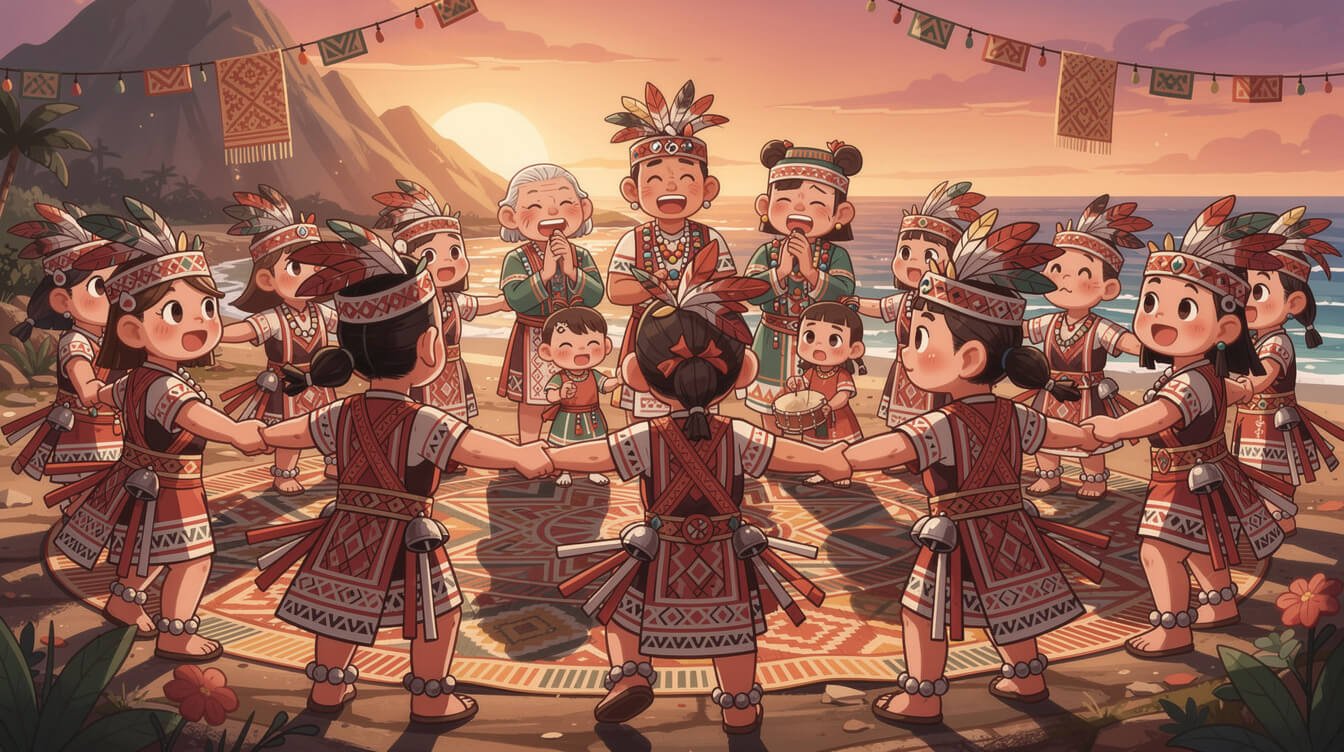
Right now, along Taiwan’s east coast, more than 200 villages are dancing.
Not for tourists. Not for the cameras. For each other, for the ancestors, and for the millet.
This is Ilisin (優麗且) — the Amis Harvest Festival — and it’s arguably the most vibrant, sacred, and misunderstood cultural event in Taiwan. Every July through September, the Amis (阿美族 / Pangcah) — Taiwan’s largest indigenous group with over 200,000 members — gather in their tribal villages for a multi-day celebration that predates almost everything else on the island’s calendar.
What Is Ilisin, Actually?
Ilisin is a harvest thanksgiving. In traditional Amis life, millet (小米) was the staple grain, and its harvest marked the turning of the year. The festival isn’t a single day — it’s a communal, multi-day cycle of ritual, song, coming-of-age initiations, and circle dancing called Malikoda.
Elders lead. Young men are formally welcomed into age-grade brotherhoods. Women bring food and lead specific songs. Everyone eats, drinks (a lot of millet wine), and dances in linked-arm circles that can go on for hours. The songs — passed down orally — are so distinctive that one Amis chant, recorded by an elder named Difang Duana, was famously (and controversially) sampled by Enigma in the 1996 Olympic anthem “Return to Innocence.”
When and Where It Happens
Ilisin runs from mid-July through early September, but the peak weeks are early-to-mid August — right now. It’s concentrated along the east coast in Hualien and Taitung counties, plus a smaller cluster of Amis communities in the East Rift Valley and around Taipei’s Xizhi.
Each village sets its own dates, so there’s no single “the” festival. Some notable clusters:
- Hualien City & Ji’an: Mid-July through late July
- Fengbin, Fuli, Guangfu: Late July through mid-August
- Chenggong & Dulan (Taitung): Mid-August through early September
The Hualien County government publishes an annual schedule (in Chinese) covering dozens of villages — worth checking if you’re on the east coast and want to witness it.
Can Visitors Attend? Yes — But Respectfully
Many Amis villages welcome outside visitors during specific public days. Some don’t. The rules that matter:
- Ask first. Check with the local visitor center or village office before showing up.
- Don’t join the dances uninvited. The circles look inviting, but some rituals are restricted to specific age-groups or genders.
- Ask before photographing. Especially the elders and any ceremonial moment.
- Dress modestly. No swimwear, no offensively short shorts. When in doubt, cover shoulders.
- Don’t call it a “show.” It’s a living tradition. Treat it like you’d treat a religious ceremony in your own culture.
Why It’s Worth Knowing About
The Amis are Austronesian — their language belongs to the same family as Māori, Hawaiian, Tagalog, and Malagasy. Taiwan is now widely accepted by linguists as the original homeland of the entire Austronesian language family, which spread from here across the Pacific and Indian Oceans some 5,000 years ago.
Ilisin isn’t just a Taiwanese story. It’s a thread that connects the island directly to Polynesia, to Madagascar, to half the coastlines of Asia and Oceania. The circle dances happening right now on the Hualien shore are performing something ancient that echoes across an entire ocean.
The takeaway: If you’re on Taiwan’s east coast this August, ask around — the harvest festival might be happening in the next village over. And if you’re not on the island? Look up Difang Duana’s recording of “Elders’ Drinking Song” on YouTube. That’s what Ilisin sounds like.
Want more Taiwan cultural depth? See our full guide to Taiwan’s 16 indigenous peoples and our complete Taiwan culture guide.

Grab a Free Taiwan Sticker!
Drop your email and we’ll send you a limited-edition Taiwan sticker — plus insider access to new merch drops and island vibes.
No spam. Unsubscribe anytime.