Elephant Mountain Taiwan: The Complete Guide to Taipei’s Iconic Skyline Hike (2026)
The hike up Elephant Mountain in Taiwan — Xiangshan (象山) to Taipei locals — is the shortest journey between a subway platform and a jaw-dropping view of Taipei 101 that exists anywhere on Earth. Fifteen minutes on the MRT, another fifteen on foot, and you are staring at Taiwan’s tallest building the way Instagram intended: framed by six giant boulders, silhouetted hikers, and a curtain of subtropical green.
What most guides do not tell you: the money shot is not at the summit. It is at a photo boulder about 600 steps in, and there is a queue at sunset. This guide covers the trailhead, the steps, the boulders, the best times to visit, what to pack, how to extend the hike across the full Four Beasts ridge, and every question first-time visitors ask us. By the end you will know Elephant Mountain better than most Taipei residents who have never actually made the climb.
What Is Elephant Mountain and Why Everyone Photographs Taipei 101 From Here
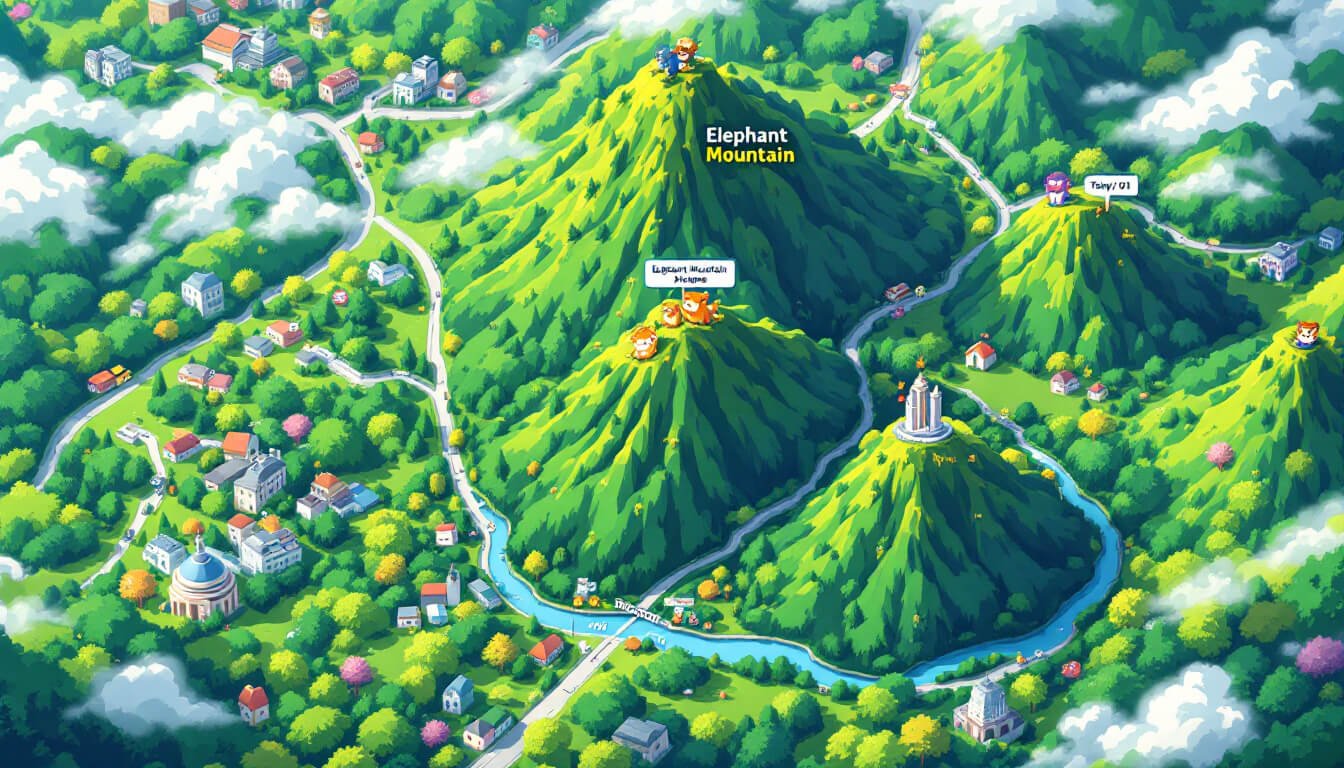
Elephant Mountain is a 183-metre hill sitting on the southern edge of Taipei’s Xinyi District, close enough to Taipei 101 that the tower feels like the mountain’s next-door neighbour. The Chinese name 象山 (Xiangshan) means, literally, “Elephant Mountain” — locals decided centuries ago that the profile of the ridge, seen from above, resembles an elephant’s trunk stretched into the city.
It is not really a mountain in the Alishan or Yushan sense. It is a jungly, forested hill with a paved staircase carved into its western face. But Taipei is a bowl surrounded by mountains, and Xiangshan happens to be the closest one to the skyscraper district. That geography is the entire reason it is the most photographed hike in Taiwan.
Xiangshan is one of the Sishou Shan (四獸山), the “Four Beasts Mountains” — Elephant, Lion, Leopard and Tiger — that make up the Nangang Mountain ridge behind Xinyi. In centuries past, local farmers named each peak after the beast they thought its silhouette resembled. Only Elephant Mountain became famous; the other three are quieter, wilder and rewarding if you want to escape the sunset crowd (more on that below).
Officially it is voted one of the top 100 walks in Taiwan by users of the Hiking Notes app (健行筆記). Unofficially, it is the single most reliable “wow” moment you can deliver a first-time visitor to Taipei with the smallest possible time investment. It is also part of what makes Xinyi District — Taipei’s shopping and business core — one of the most surprising urban neighbourhoods in Asia. Concrete on one side of the block, subtropical forest on the other.
How to Get to the Elephant Mountain Trailhead
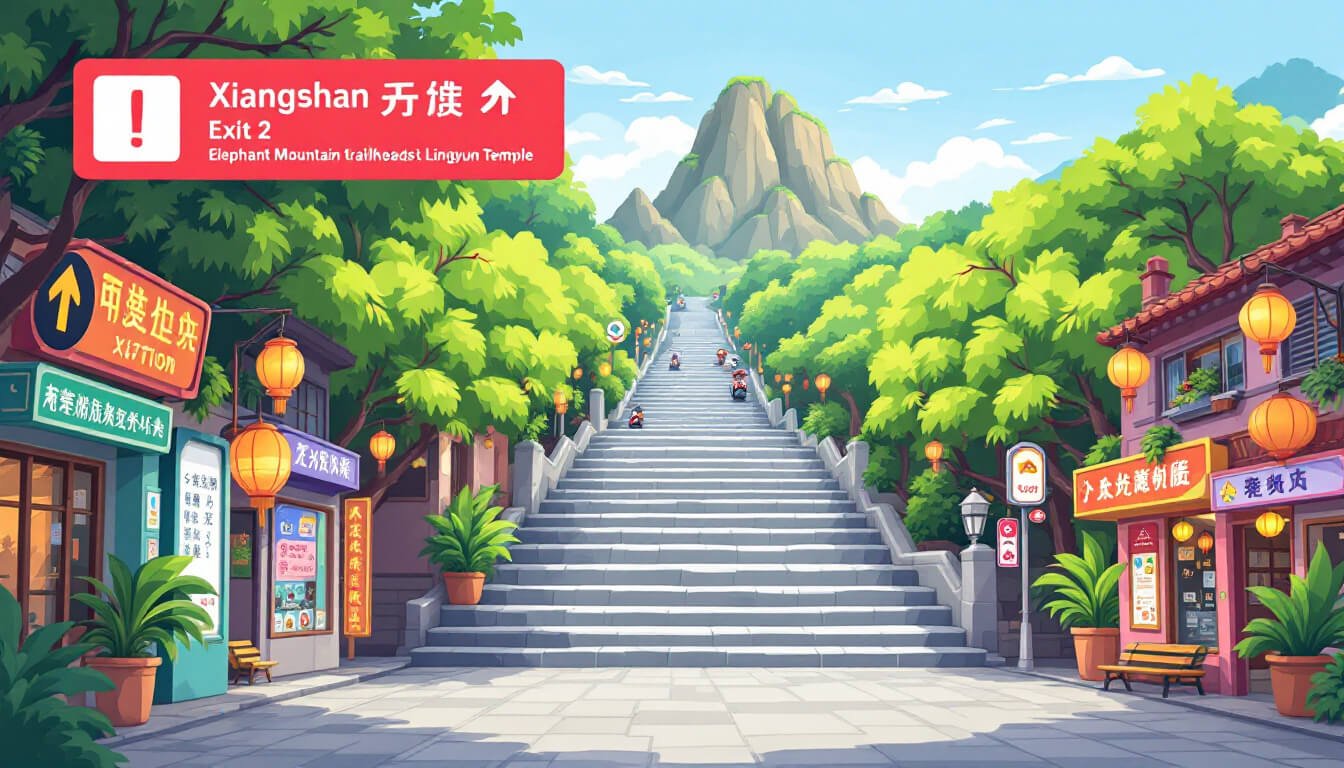
The single easiest route: ride the Taipei MRT Red Line (line 2) to its southern terminus, Xiangshan Station, and take Exit 2. From there it is a flat, well-signposted 10–15-minute walk east through Xiangshan Park, past a handful of coffee shops and a 7-Eleven, to the wooden trailhead beside Lingyun Temple (靈雲宮).
You want an EasyCard for the MRT — every station sells them and they tap in and out in under a second. If you have not ridden the Taipei Metro yet, spend three minutes with our Taipei MRT etiquette guide before you go so you do not accidentally eat your bubble tea on the train (a genuine offence with a genuine fine).
Alternative access points if you are staying near Taipei 101 itself:
- Taipei 101/World Trade Centre MRT (Red Line): Walk 20 minutes south down Xinyi Road, cross under the elevated highway, and you hit the same trailhead. Nice warm-up in cool weather.
- Taxi or Uber: Ask for “象山登山口” (Xiangshan Denshankou — Elephant Mountain trailhead). Drop-off is a narrow lane, so expect the driver to stop 100 metres short.
- YouBike: The nearest docking station is beside Xiangshan MRT. Uphill roads to the trailhead are gentle.
- Bus: Routes 20, 33, 46, 88, 258 and Blue-5 all stop within a few minutes of the trailhead. Google Maps handles the routing better than we can here.
Pin “Elephant Mountain Trailhead” or “Xiangshan Hiking Trail” in Google Maps and you will land within 30 seconds of the correct spot.
The Elephant Mountain Hike, Step by Step
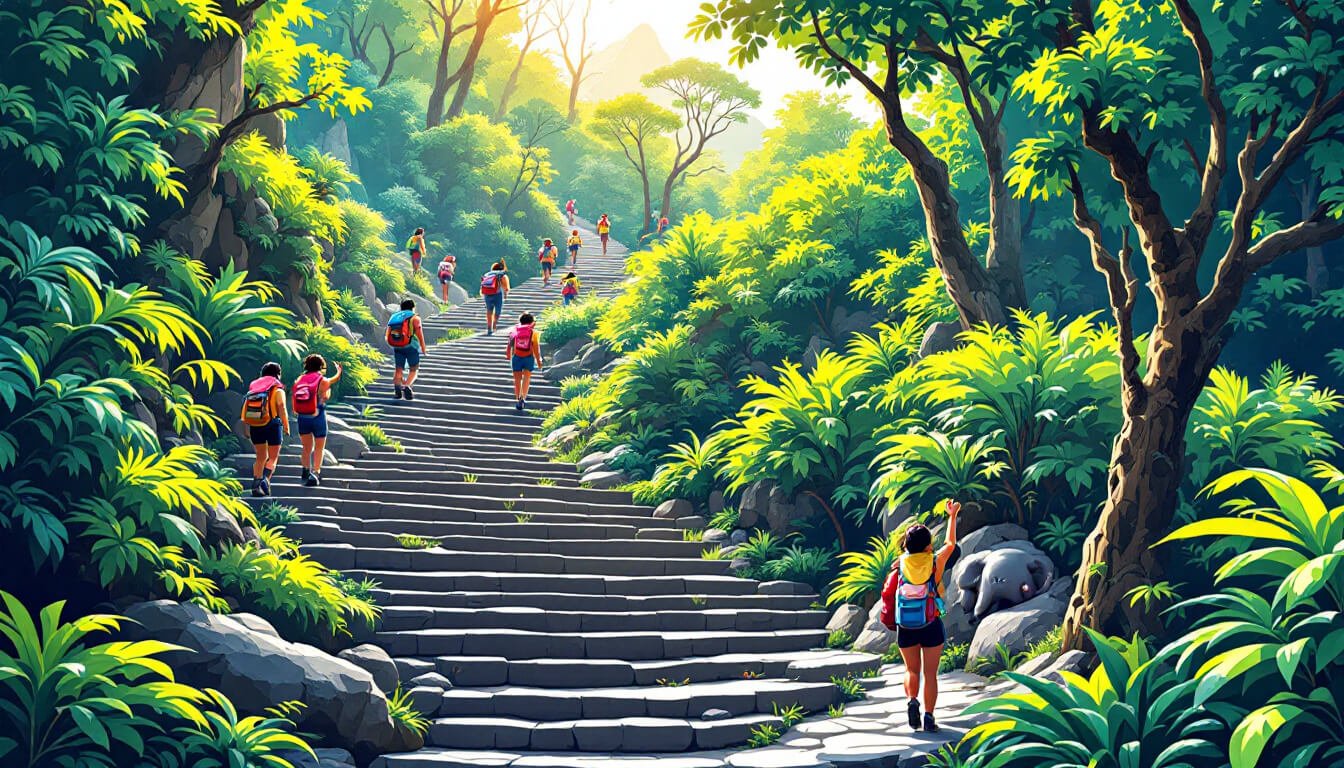
The trail is short, paved and unrelentingly steep. About 500 stone steps to the famous boulders, 600 to the true summit, and no flat sections to catch your breath on. First-time hikers routinely underestimate it and end up gasping past grandmothers with walking poles who overtake them without breaking a sweat. Do not be that hiker. Pace yourself.
Trailhead to First Lookout (~10 minutes)
Turn right at the wooden trail sign behind Lingyun Temple and the stone staircase starts immediately. On a hot day the humidity turns the air into soup. Elephant-shaped concrete benches appear every hundred steps or so — Taiwanese trail designers love a themed rest stop. The first viewing platform arrives after roughly ten minutes of climbing and delivers your first look at Taipei 101 rising above the treeline.
Do not stop here. Every guide will tell you to keep going. The lower platform is partially obscured by a foreground tree that ruins the composition. You have 300 more steps of work to do.
First Lookout to the Six Giant Boulders (~5 minutes)
The stairs continue up past a large white boulder painted with the red characters “象山”. About five more minutes of climbing and you arrive at the cluster of Six Giant Boulders, the massive volcanic rocks that have become the single most photographed spot on the mountain. Small notches carved into the southeast face let you scramble up and pose with Taipei 101 growing behind you at exactly the right angle. This is the shot.
Bring patience. At sunset, expect a queue of ten to twenty photographers taking turns on the largest boulder. Everyone is friendly and everyone takes photos for everyone else. It is one of the more wholesome tourist rituals in Taipei.
Photographer’s Lookout and Fireworks Lookout
Continue another two minutes uphill and a spur trail on the left leads to a sheltered pavilion known locally as the Photographer’s Lookout, with a water fountain to refill your bottle and — arguably — a better angle on Taipei 101 than the boulders. Further along the ridge, the Fireworks Lookout (煙火平台) is the platform designed specifically for the New Year’s Eve pyrotechnics.
The Actual Summit (~600 steps)
Xiangshan Summit sits at 183 metres and, honestly, is a bit of a letdown. Trees block most of the city view, and there are no boulders to pose on. Most hikers turn around at the Six Boulders and never reach the actual peak. That is fine. The peak is more a bragging right than a viewpoint.
When to Hike Elephant Mountain for the Best Views

Sunset is the crowd favourite for a reason. Arrive at the Six Boulders roughly 60–75 minutes before official sunset, get your daylight shots, then stay through blue hour when Taipei 101’s exterior LED cladding switches on. It is the two-photos-in-one payoff every travel blog is chasing. Check a proper sunset time app for your date — Taipei sits at 25° N so sunset ranges from about 5:15pm in December to nearly 7pm in June.
Sunrise is quieter, cooler and often cloudier. In winter the Taipei basin gets cloud inversions that turn the skyline into an island of skyscrapers floating on a white sea. If you can drag yourself out of bed for a 5am hike, you will share the boulders with maybe five other people.
New Year’s Eve is the mountain’s most famous night of the year. Taipei 101’s fireworks are launched off the exterior of the tower itself in a coordinated cascade, and Elephant Mountain has the best free view in the city. Arrive by 3–4pm to claim boulder real estate. Bring a tripod, food, water, warm layers, and a folding stool. It will get crowded to the point of chaos, but the payoff is unforgettable.
National Day (Double Ten, October 10) also delivers a smaller fireworks show over the tower. Same drill, fewer people.
Weather to avoid: Skip during any typhoon warning — high winds, flash floods and lightning strikes turn the exposed boulders into a genuine hazard. Avoid the two or three hours after heavy rain when the stone steps are dangerously slippery. Best months overall are November through March: cooler air, lower humidity, cleaner skyline visibility.
One last practical tip: no matter when you go, Taipei 101 stops the light show sequence on the north face of the tower every hour on the hour. If you are going for the definitive “101 skyline” shot with a Taipei 101 tee on, our Taipei 101 Built to Sway T-Shirt is basically designed for this exact photo op — a minimalist silhouette of the tower on soft cotton, so you become part of the composition. Yes, it is a shameless plug. We designed it because our founder took literally this photo on his first Taipei trip and wanted a wearable version.
What to Wear and What to Pack for the Climb

The mountain is short but the packing list matters more than most first-timers assume. Taipei’s climate is subtropical and the trail is a stone staircase in a rainforest, so heat, humidity and sudden downpours are all in play.
Footwear: Regular trainers with grippy soles are perfectly fine. Skip flip-flops and thin fashion sneakers — the stone steps get slick and there is no forgiveness on a stumble. Proper hiking boots are overkill.
Clothing: Loose, moisture-wicking layers in warm months. Quick-dry T-shirt, running shorts, a thin cap. In winter, add a light long-sleeve layer and a packable windbreaker — the exposed viewpoints are noticeably colder than the trailhead. Whatever you wear, you will sweat through it.
The kit list:
- 500ml water minimum (refill at the Photographer’s Lookout tap)
- Small microfiber towel — you will thank us at the top
- Sun protection: cap, sunglasses, mineral sunscreen
- Packable rain shell (afternoon storms are a Taipei speciality)
- Camera or phone with the lens wiped clean
- Small tripod or gorillapod if you care about sunset shots
- Portable fan (a very Taiwanese hack)
- NT$50 in coins for the vending machines back at the trailhead
- Insect repellent in summer months
Skip the heavy backpack, the walking poles, and any serious camping kit. You will laugh at yourself carrying it back down.

Wear the Skyline You Just Hiked For
Our Taipei 101 Built to Sway tee is a minimalist tribute to the tuned mass damper that keeps Taiwan’s tallest building steady in typhoon season. Soft cotton, unisex fit, ships worldwide from Taipei.
Beyond the Boulders: Extending Into the Four Beasts Traverse
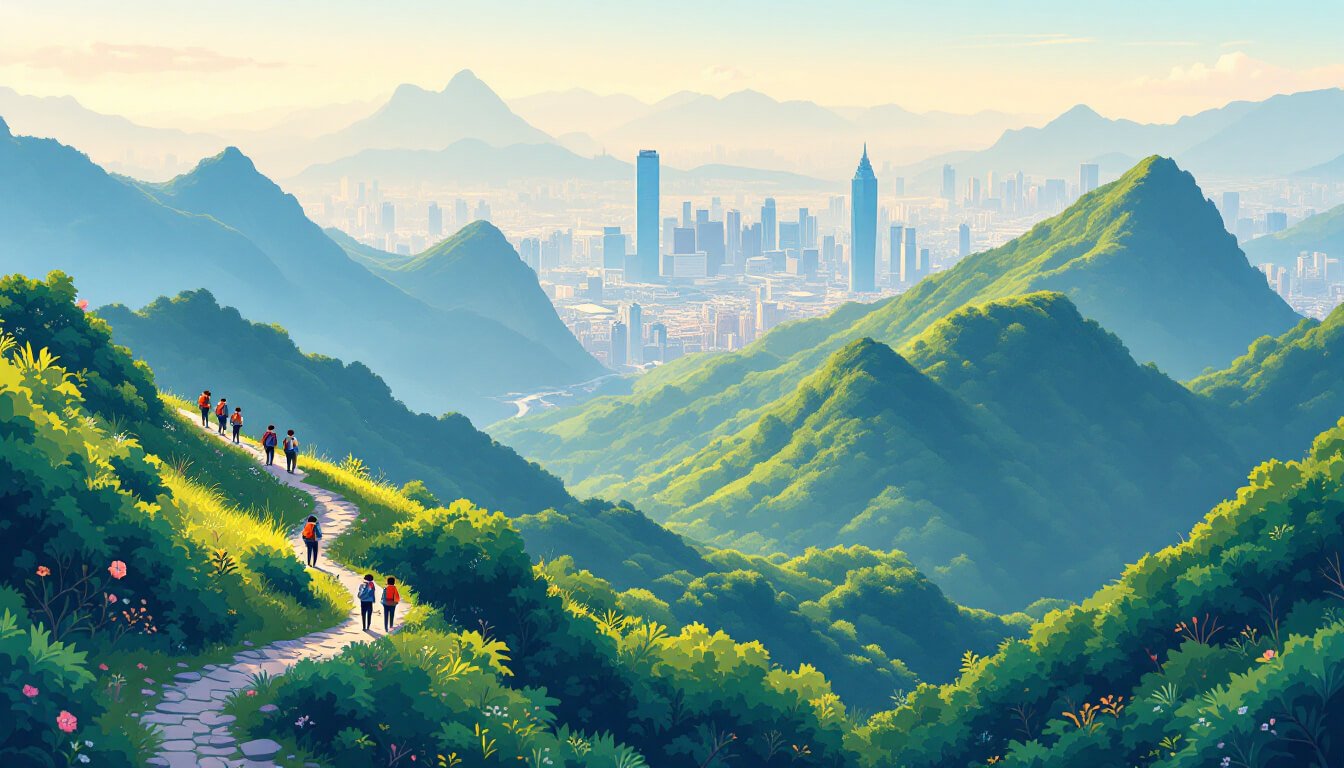
Ninety per cent of visitors turn around at the Six Giant Boulders. The remaining ten per cent discover that the Nangang ridge behind Xiangshan is where Elephant Mountain gets genuinely fun.
The full Four Beasts traverse (Sishou Shan) covers Xiangshan (Elephant, 183m), Shishan (Lion, 122m), Baoshan (Leopard, 142m) and Hushan (Tiger, 158m) — the four peaks that give the ridge its name. End-to-end it runs about 4–5 hours at a moderate pace, with a solid 400 metres of cumulative ascent and descent. Signage at every junction is clear, and the Hiking Notes app (健行筆記) — a Google-Maps-for-Taiwan-hikers used by half the country — has a downloadable GPX route.
Recommended direction: Start at Xiangshan MRT and finish at Houshanpi MRT (or vice versa). Doing it Xiangshan-to-Houshanpi means you climb the steepest section (Elephant) fresh and finish on gentler descending trails.
What you gain past the Six Boulders:
- Empty trails — the sunset crowd never comes here
- Better summit view from Baoshan than from Xiangshan itself
- Songshan Fengtian Temple, a working Buddhist temple tucked into the ridge with drinks and a rest area
- Wilder forest with actual birdsong you cannot hear over the crowd noise on Elephant
- A genuine sense of accomplishment that a 20-minute hike simply cannot deliver
Bring an extra litre of water, a proper snack, and start no later than 2pm so you finish before dark. Trail lighting on the extended ridge is minimal.
For a full day of Taipei hill hopping paired with dinner in the city, this traverse pairs nicely with a night out — see our Taipei nightlife guide for post-hike food and drinks, or the broader Things to Do in Taipei guide if you want to slot Elephant Mountain into a longer itinerary.
Elephant Mountain FAQs: Everything Else Travellers Ask

Is Elephant Mountain free? Yes — no ticket, no permit, no guide required. It is a public trail run by the Taipei City Parks Department. Open 24 hours a day, 365 days a year.
How many steps to the top? Roughly 500 stone steps to the Six Giant Boulders (the money shot), and about 600 to the actual summit. All are proper cut-stone steps with handrails.
How long does the hike take? Twenty to forty-five minutes up for a moderately fit adult, plus however long you spend at the top. Fit hikers regularly do it in 15 minutes. Photographers stay for two hours.
Is it safe to hike at night? Yes. The main trail up to the Six Boulders is well-lit until about 10pm and there are almost always other hikers around, including local runners. After midnight it gets very quiet — go with company if you are heading up in the small hours.
Is Elephant Mountain kid-friendly? Older kids (roughly age six and up) love it — the steps are a challenge and the boulders are a playground. Strollers absolutely cannot make it. Baby carriers work fine for the confident parent.
Wheelchair accessible? No. The entire route is stone stairs from the trailhead.
Are there toilets? Yes — public toilets at Xiangshan Park near the trailhead and a smaller facility near the Photographer’s Lookout on the mountain itself.
Where is the nearest food? A 7-Eleven and Family Mart sit near the trailhead, plus a small cluster of cafes serving coffee and toast. For a proper meal, the entire Xinyi restaurant scene is 15 minutes away by MRT.
Can I do Elephant Mountain and Taipei 101 observatory the same day? Absolutely, and it is a fantastic pairing. Do the observatory in the morning for the outward view, then Elephant Mountain at sunset for the return angle looking back at the tower you just descended.
Do I need a guide? No. The main trail is impossible to lose. Only if you are attempting the full Four Beasts traverse in low light would a guide add value, and even then a GPS-loaded phone will do the job.
Is there parking? Yes, at Xiangshan Park, but it fills up early on weekends and holidays. Take the MRT.
The verdict: Elephant Mountain is the highest reward-to-effort ratio in Taipei tourism. Twenty minutes of stairs for a lifetime photo, plus the option to keep going and traverse an entire animal-themed ridge if you want the day out. Pack water, arrive before sunset, and bring a tripod. Taipei 101 is waiting for its close-up.
A Postcard From Taiwan, Weekly
Every week we send one email with a Taiwan travel tip, a fresh product drop and a story you will not find on the blog. No spam, one-click unsubscribe.

Grab a Free Taiwan Sticker!
Drop your email and we’ll send you a limited-edition Taiwan sticker — plus insider access to new merch drops and island vibes.
No spam. Unsubscribe anytime.