Fo Guang Shan Buddha Museum: The Insider’s Guide to Kaohsiung’s Most Underrated Attraction
Ask ten travelers what they saw in Kaohsiung and you’ll hear about Lotus Pond, Liuhe Night Market, and the Dome of Light MRT station. Almost none will mention the Fo Guang Shan Buddha Museum in Kaohsiung — which is wild, because it happens to be one of the largest and most breathtaking Buddhist complexes on the planet, home to Taiwan’s tallest Buddha (a 108-meter golden colossus you can see from the highway), and completely free to visit. It’s the kind of place that reshapes what you thought southern Taiwan was capable of, and yet somehow it lives in the shadow of the city’s better-marketed attractions.
This is your insider’s guide. We’re covering everything a first-time visitor actually needs — the founding story, the layout (which is confusingly enormous), what to prioritize if you only have a few hours, how to get out there from central Kaohsiung, and the etiquette that keeps you from accidentally embarrassing yourself at a working religious site. By the end you’ll understand why some people build an entire day-trip from Kaohsiung around this one destination, and how to make it work in your own itinerary.
Why the Buddha Museum Deserves a Spot on Your Kaohsiung Itinerary
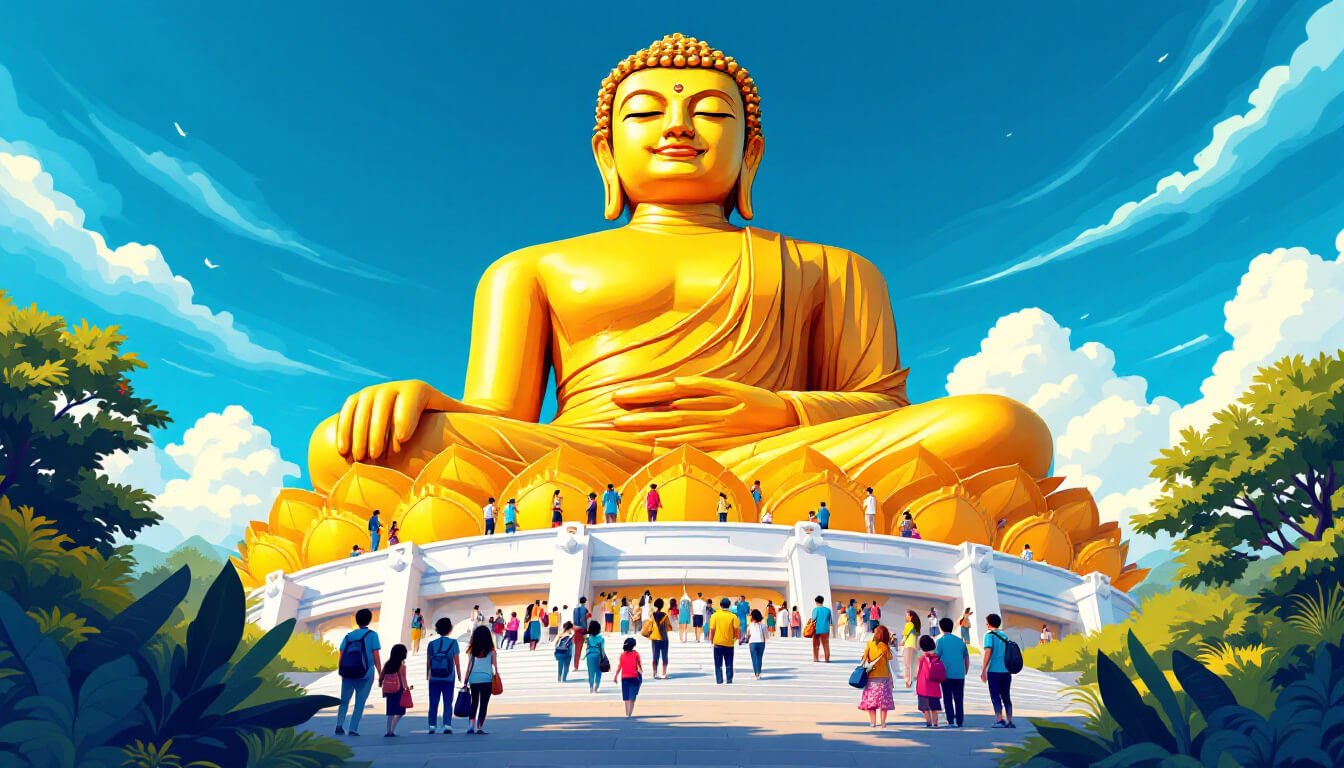
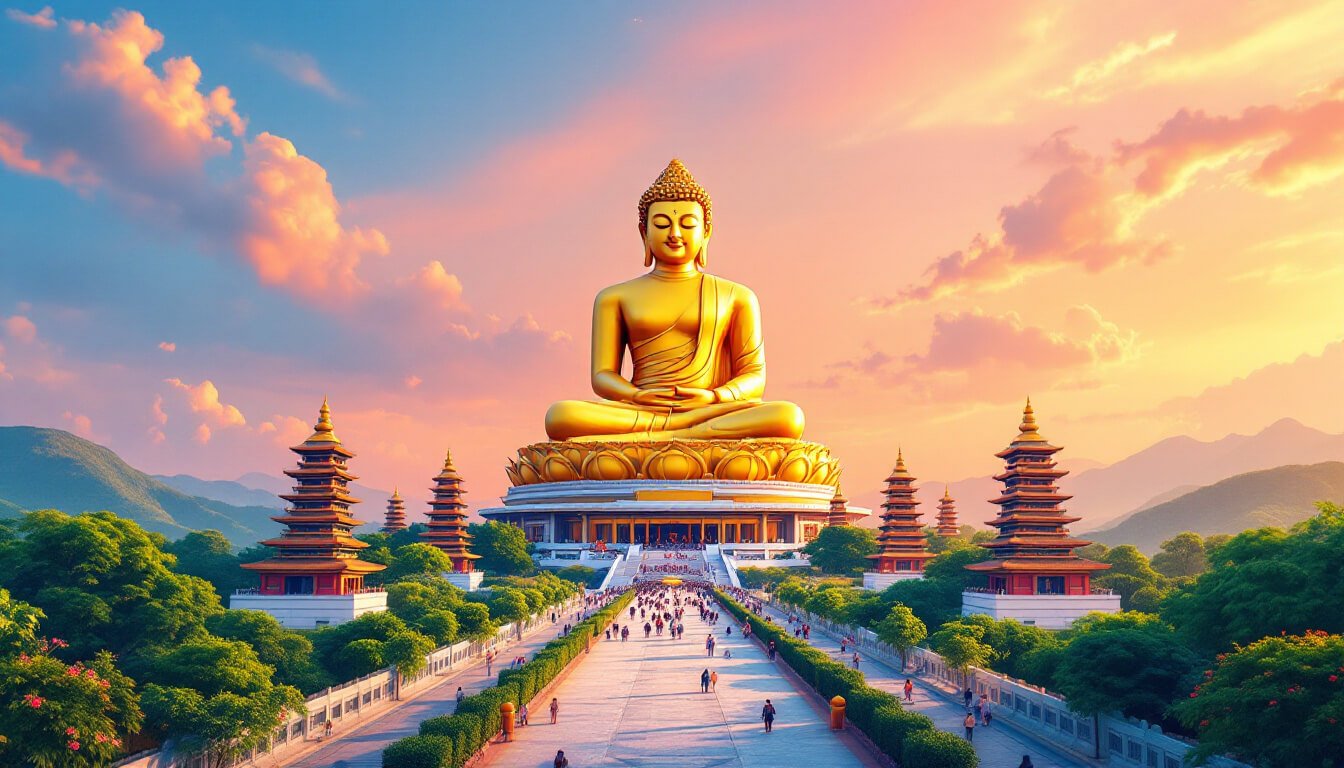
Let’s get the scale out of the way first, because the numbers are genuinely absurd. The Fo Guang Shan Buddha Museum sits on roughly 100 hectares — about the size of 140 football fields — and the whole complex was purpose-built to house a single sacred tooth relic of the Buddha, gifted to Fo Guang Shan in 1998. To honor that relic, the founder commissioned a Great Path to Buddhahood lined with eight towering pagodas, a domed Indian-style Main Hall, and behind it all, the seated Fo Guang Big Buddha — 40 meters of bronze statue on a 68-meter base, totaling 108 meters and roughly 1,800 tons of metal. It’s the largest Buddha in Taiwan by a significant margin.
But sheer size isn’t really why the Buddha Museum belongs on your list. What makes it special is how alive it feels for a religious site. There’s an all-vegetarian Starbucks inside the front hall. Multiple full-service vegetarian restaurants. Buddhist bookstores that look like upscale department stores. Rotating exhibitions on Buddhist history, calligraphy, and jade art. Underground palaces filled with time-capsule artifacts that won’t be reopened for a thousand years. And there’s the older monastery next door, still very much a functioning monastic community, where you can spend the night if you plan ahead.
For visitors, the practical upshot is this: you get an incredibly photogenic, culturally rich, deeply weird half-day experience that costs nothing to enter and rewards curious wandering more than any other attraction in the Kaohsiung region. If you’ve already done the temples and night markets and want something with actual scale to it, this is the place.
Master Hsing Yun and the Story Behind Fo Guang Shan
To understand the Buddha Museum, you have to understand the man who dreamed it up: Master Hsing Yun (1927–2023), a monk who transformed a plot of scrubland in rural southern Kaohsiung into one of the four great Buddhist mountains of Taiwanese Buddhism. The other three — Dharma Drum in the north, Tzu Chi in the east, and Chung Tai Shan in the west — are all towering forces of modern Chinese Buddhism, but Fo Guang Shan in the south is the largest and, arguably, the most publicly visible.
Hsing Yun founded the order in 1967, when he purchased 30 hectares of Dashu District farmland and started building. His philosophy was something he called Humanistic Buddhism — a modernized approach that emphasized integrating Buddhist practice into everyday life rather than retreating from the world. Instead of monks locked away in mountain hermitages, Fo Guang Shan built schools, universities, hospitals, disaster relief organizations, and international branches on nearly every continent. The Los Angeles branch, Hsi Lai Temple, opened in 1988 and remains one of the largest Buddhist temples in the Western Hemisphere.
Over the decades, that original 30 hectares grew and grew. In 2011, after nearly a decade of construction, the Buddha Museum opened next to the monastery — a project so ambitious it more than doubled the physical footprint of Fo Guang Shan. The scale was intentional. Hsing Yun wanted a place that could receive millions of visitors a year without feeling crowded, that could tell the story of Buddhism to non-Buddhists as easily as it could serve devout pilgrims, and that could stand as a physical monument to a modernized, outward-facing form of Buddhist practice. Whether or not you’re spiritually inclined, walking through it, you feel that ambition immediately.
The Layout — Front Hall, Eight Pagodas, Main Hall, and the Big Buddha
Here’s the thing that trips people up: Fo Guang Shan is actually two adjacent complexes. There’s the original Fo Guang Shan Monastery (the working religious community, founded 1967) and there’s the Fo Guang Shan Buddha Museum (the newer public-facing complex, opened 2011). They sit right next to each other and share a bus stop, but they’re separate sites with separate atmospheres. Most first-time visitors focus their energy on the Buddha Museum because that’s where the Big Buddha and the main exhibitions are, but the older monastery is well worth an extra hour if you can spare it.
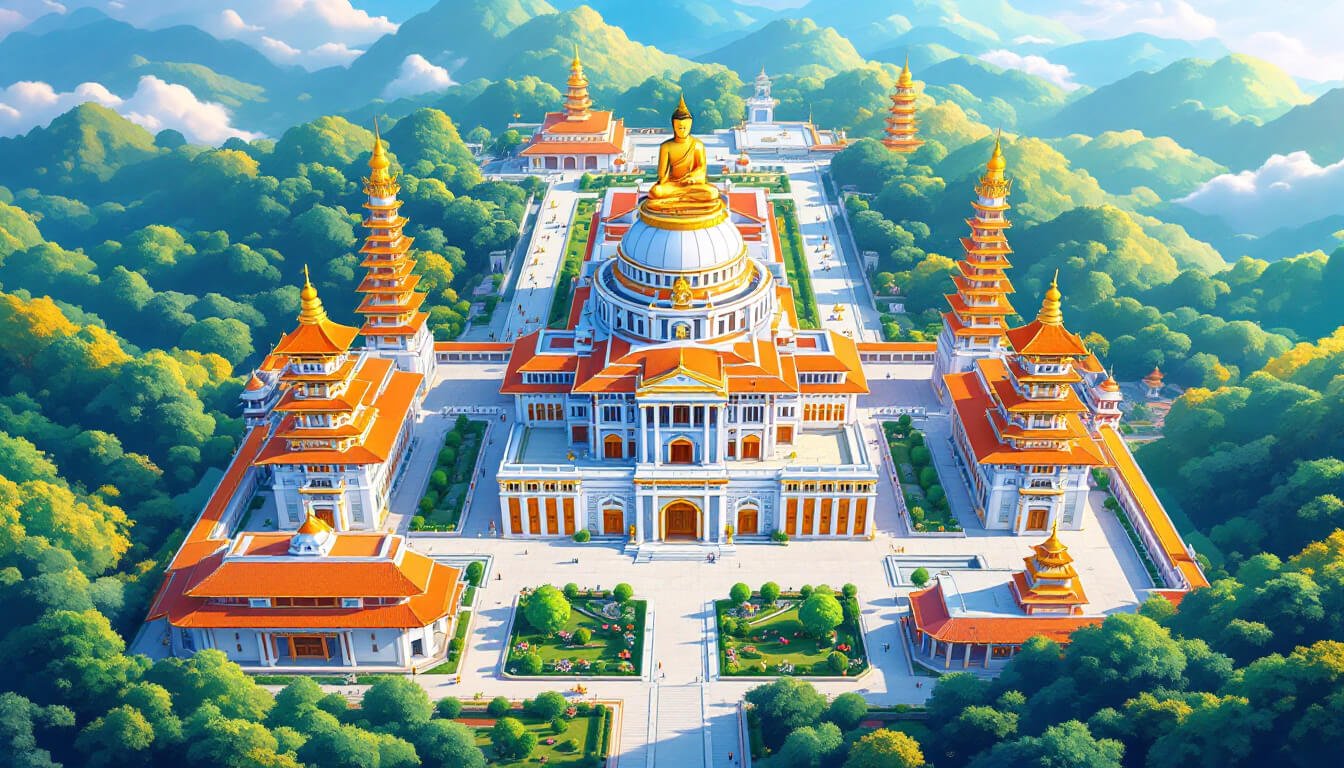
The Buddha Museum itself follows a linear east-to-west layout. You enter at the Front Hall, which functions as a kind of grand welcome pavilion. Inside is where you’ll find the vegetarian Starbucks, gift shops, several full-service vegetarian restaurants, information desks, and beautiful statues that hint at what’s coming. Give yourself 20–30 minutes here just to soak in the scale and grab food or coffee before the long walk.
From the Front Hall, you step out onto the Great Path to Buddhahood — a long processional avenue flanked by eight pagodas, four on each side, each 4–8 stories tall and each dedicated to a different aspect of Buddhist practice (giving, morality, patience, effort, meditation, wisdom, and so on). This walkway is where the museum’s genius as a piece of architecture reveals itself. As you walk, the pagodas frame your view and the Main Hall grows larger with every step, until you’re finally standing at its entrance.
The Main Hall at the end of the Great Path is a domed Indian-style stupa built primarily of stone, with a pagoda at each corner and a golden central spire that reportedly contains one million printed copies of the Heart Sutra. Inside the Main Hall are the exhibition galleries, ceremonial spaces, and the sacred Buddha tooth relic that the entire complex was built to enshrine. Behind the Main Hall, presiding over everything, sits the Fo Guang Big Buddha itself — 108 meters of gleaming bronze against the blue sky of southern Taiwan. Walk around behind the Main Hall to get the classic photo of the Buddha towering over the pagodas.
What to See (and Not Miss) at the Buddha Museum
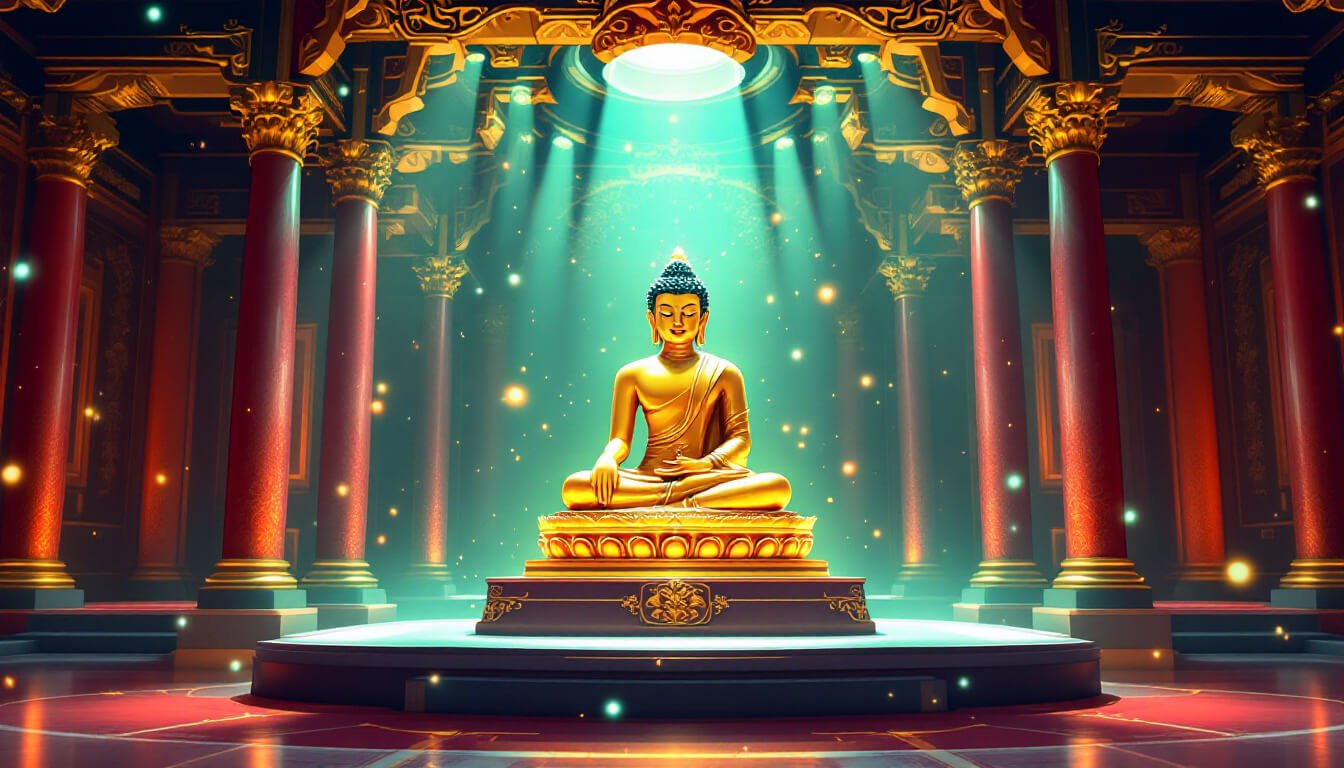
If you only have two or three hours (which is realistically what most visitors spend here), here’s the greatest-hits list, in the order you’ll encounter each one:
- The Front Hall’s grand foyer — Look up. The ceilings and interior statues are stunning and often overlooked because everyone’s beelining for the coffee counter.
- The Golden Buddha exhibition — A 250-kilo solid gold Buddha statue on rotating display, one of the museum’s proudest holdings.
- The Jade Buddha Hall — Cool, quiet, and mesmerizing. The lighting on the jade is genuinely something you have to see in person.
- The Buddha Tooth Relic Shrine — The original reason the museum exists. Enshrined inside the Main Hall, it’s visible only during specific viewing windows, so check the schedule.
- The 48 Underground Palaces — A network of subterranean vaults containing carefully preserved artifacts, art, and time capsules meant to remain sealed for 1,000 years. Only a handful are open to visitors at any time. Wonderfully strange.
- Rotating exhibition galleries — Buddhist calligraphy, historical artifacts, contemporary religious art. Ask at the info desk what’s on the day of your visit.
- The Big Buddha viewing platform — Walk behind the Main Hall and look up. Photos don’t do it justice.
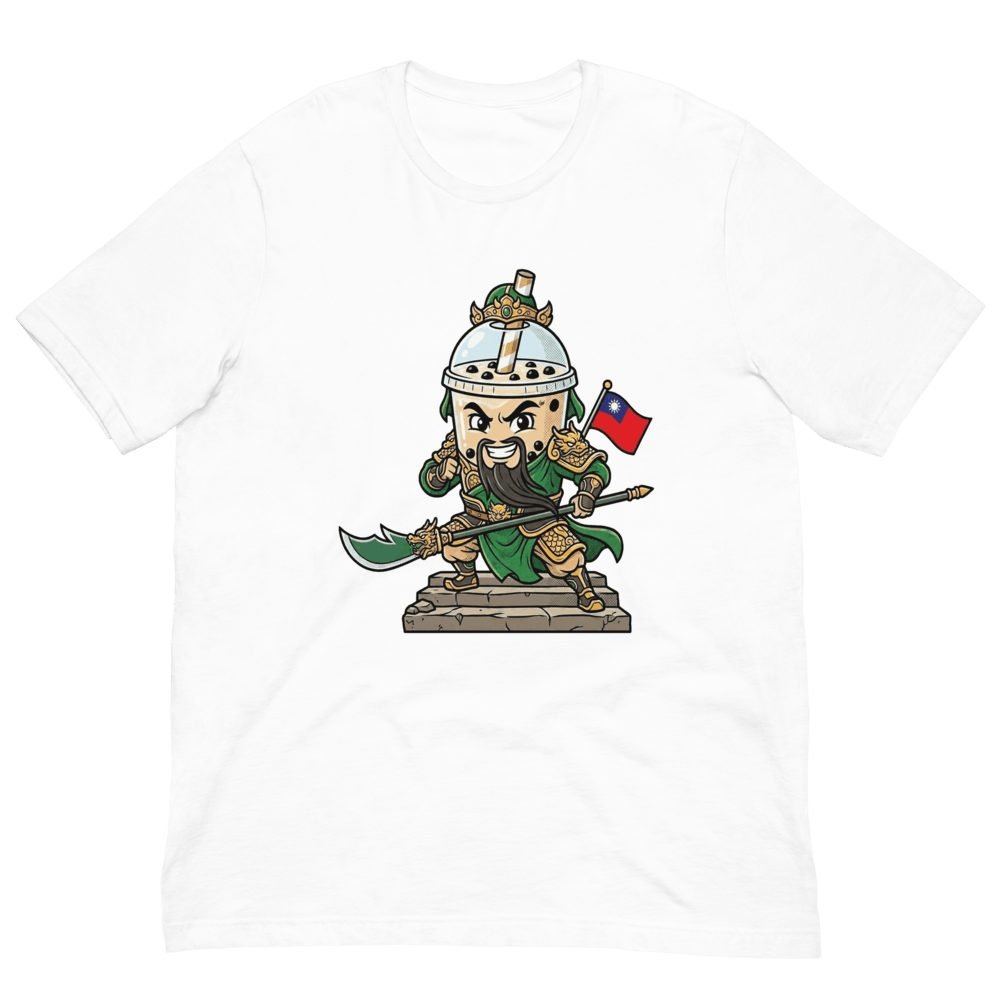
Souvenir-wise, the on-site shops lean religious — prayer beads, small statues, Buddhist books. If you’re looking for a way to remember your Taiwan trip with something that actually feels like Taiwan in your daily life, our Guan Yu Taiwan Boba Tea Warrior T-Shirt mashes up temple iconography (Guan Yu is one of the most venerated deities in Taiwanese folk religion) with the island’s obsession with bubble tea — a fitting kind of memento for a country where the sacred and the everyday sit comfortably side by side.
Take your time on the Big Buddha side — sunset is the golden hour for photography here, and the whole complex takes on a completely different tone in the last two hours before closing.
Getting to Fo Guang Shan from Kaohsiung — HSR, MRT, Bus, and Taxi Options
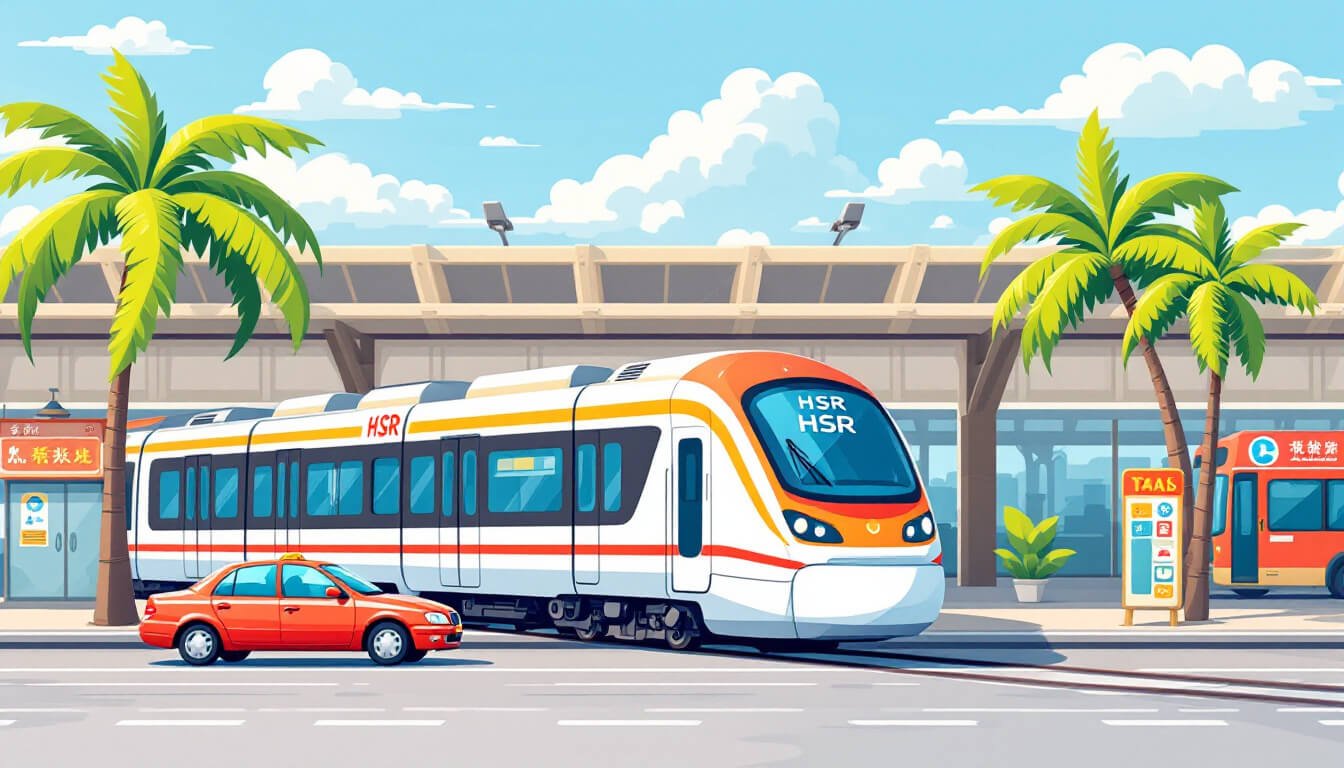
Fo Guang Shan sits in Dashu District, about 20 kilometers northeast of central Kaohsiung. It’s not on the MRT, and public transit out there is possible but slow. Here’s how the options stack up for a 2026 visit.
Option 1: E01 or E02 Kaohsiung Bus (cheapest, slowest)
The E-line express buses from Zuoying HSR Station (High Speed Rail) run directly to Fo Guang Shan. Ride time is 45–60 minutes and the fare is around NT$70 one-way, payable by EasyCard. This is the cheapest option but frequency is limited to roughly once an hour on weekdays and slightly more frequent on weekends. Check the timetable at the info booth in Zuoying station before you commit — missing the last bus back is a genuine risk.
Option 2: MRT + local bus (flexible)
Take the Kaohsiung MRT Red Line to R16 Zuoying HSR Station (about 30 minutes from downtown), then transfer to the E01 or E02 bus. This adds a transfer but gives you the flexibility of using your EasyCard end-to-end and picking your bus time on arrival.
Option 3: Taxi or Uber (fastest)
A taxi or Uber from central Kaohsiung will cost roughly NT$500–700 each way depending on traffic and where in the city you’re starting from, and takes 30–40 minutes. If you’re traveling as a group of two or more, this becomes cost-competitive with the bus once you factor in time saved. Uber works reliably in Kaohsiung, and taxi drivers know Fo Guang Shan by name in Mandarin (佛光山, “Fó guāng shān”).
Option 4: Guided day-tour (easiest)
Multiple operators run half-day Kaohsiung tours that bundle Fo Guang Shan with a nearby attraction like Cheng Ching Lake or the Pier-2 Art Center. Expect to pay NT$1,200–1,800 per person and to give up flexibility over how long you spend at each stop. If Fo Guang Shan is a highlight of your trip, book direct transit instead so you can linger; if it’s an add-on to a broader Kaohsiung day, a tour is a legitimate time-saver.
If you’re arriving in Kaohsiung by high-speed rail on the day you visit, save yourself a transfer and go straight from Zuoying HSR Station — you can drop luggage in the station’s coin lockers and head out. Our guide to the Taipei to Kaohsiung HSR route walks through the ride itself if you’re new to Taiwan’s rail system.
Practical Visitor Info — Hours, Free Entry, Vegetarian Food, and Dress Code
Here’s everything you need to plan your visit at a glance:
- Opening hours: Buddha Museum and Big Buddha are open 9:00 a.m. to 6:00 p.m. daily (until 7:00 p.m. on weekends). Closed on Tuesdays. The adjacent Fo Guang Shan Monastery is open 8:00 a.m. to 5:00 p.m. daily.
- Entry fee: Completely free. There is no admission charge for either the museum or the monastery. Donations are accepted but never solicited.
- Time to budget: A rushed visit to just the Buddha Museum takes about 2 hours. A comfortable half-day visit covering both the museum and monastery takes 4–5 hours. Serious visitors easily spend a full day here.
- Best time of day: Arrive around 9:30 a.m. to beat the tour bus crowds, or plan for late afternoon (3:00 p.m. onwards) to catch the light on the Big Buddha at golden hour.
- Dress code: There’s no strict enforcement, but modest dress is recommended out of respect — cover shoulders and knees, avoid overtly revealing clothing. Shorts are fine. Comfortable walking shoes are essential; you’ll cover kilometers of ground here.
- Food: The entire complex is strictly vegetarian. Multiple restaurants inside the Front Hall serve full meals in the NT$150–300 range. There’s also the famous all-vegetarian Starbucks — grab a photo, it’s one of only a handful in the world. No meat or alcohol is allowed anywhere on site, so don’t bring food in from outside.
- Photography: Allowed almost everywhere, including the Big Buddha and the pagoda avenue. Prohibited inside certain shrines and around the Buddha tooth relic — signs mark these areas clearly. No drones. No flash photography inside the exhibition halls.
- Accessibility: The Buddha Museum is largely wheelchair-friendly with paved paths, ramps, and elevators inside the Main Hall. The older monastery has more steps and uneven paths.
- Bathrooms and rest areas: Plentiful. Air-conditioned indoor spaces are your friend in summer, when Kaohsiung heat and humidity can be brutal.
If you want the full weekend experience, the monastery next door runs an overnight temple stay program — you sleep in a simple pilgrim’s guesthouse, join morning chanting at dawn, and eat all your meals with the monastic community. Reservations are required well in advance and are typically handled by phone or email through the monastery’s Pilgrim’s Lodge. It’s one of the most memorable experiences in southern Taiwan if you’re open to it.
Wear Taiwan Home With You
Fell in love with Taiwan’s temples, boba, and quirky culture? Take a piece home. Our curated collection of Taiwan-themed tees, hoodies, and gifts celebrates everything you loved about the island.
Cultural Etiquette and the Best Time to Visit
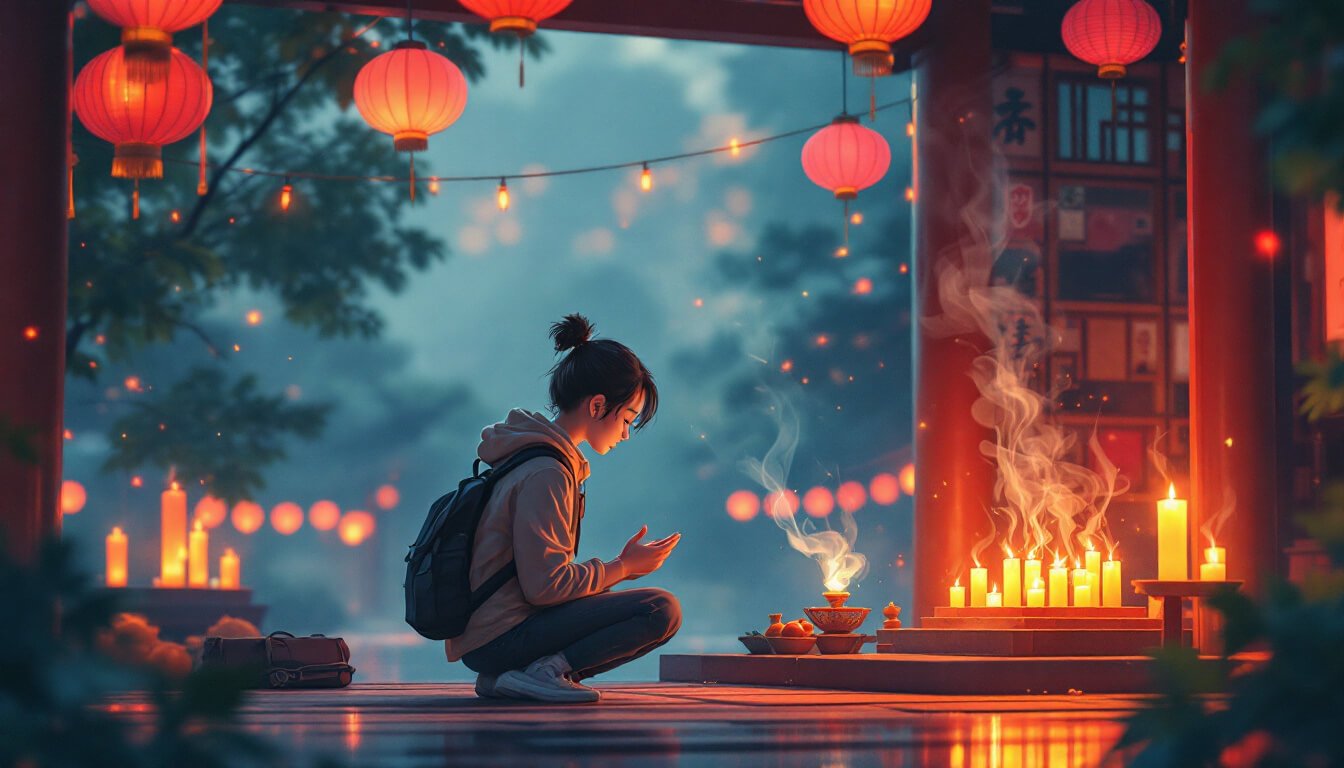
Fo Guang Shan is a working religious community. Monks live and practice here every day, pilgrims come to pray, and ceremonies happen throughout the calendar. That doesn’t mean visitors need to walk on eggshells — the site is genuinely welcoming to non-Buddhists and non-locals — but a little cultural awareness goes a long way.
Basic etiquette
- Keep your voice down in shrine areas. Talking is fine on the walkways and in the food halls; whispers or silence inside the Main Hall and the smaller shrines.
- Never point at Buddha statues with your finger or your feet. Use an open hand or a gentle nod. Never sit or lie with the soles of your feet facing a statue or altar.
- Ask before photographing monks. Most will politely decline. The buildings, statues, and grounds are fair game everywhere except inside marked-off shrine areas.
- Follow the flow of foot traffic in ritual spaces. Some halls have a specific direction to walk around altars (usually clockwise). If you see others doing it, join in.
- Don’t touch offerings. Fruit, flowers, and food left on altars are ritual objects, not decorations.
- Turn off your phone ringer. Especially in shrine areas.
Best time of year
The Buddha Museum is a year-round destination, but a few windows are especially rewarding. The Fo Guang Shan Festival of Light and Peace, which runs for roughly a month starting around Lunar New Year (typically late January or February), transforms the entire complex with thousands of lanterns and light installations at night. If you can time a trip to Kaohsiung around Lunar New Year, it’s unforgettable. Autumn (October–November) has the most pleasant weather and reasonable crowds. Summer (June–September) is hot, humid, and busy — go early morning to beat the heat, and take advantage of the air-conditioned indoor spaces. Winter (December–February) is mild and crowds are lighter outside of the Lantern Festival period.
Best time of day
Weekday mornings right at opening (9:00 a.m.) are the quietest. Weekend afternoons are the busiest, especially during Taiwanese school holidays. If photography is a priority, arrive by 4:00 p.m. to catch the last two hours of golden light on the Big Buddha and to stay through the transition to the museum’s beautifully lit evening atmosphere.
Combining Your Visit With the Rest of Kaohsiung
Fo Guang Shan pairs naturally with a few other stops if you want to build a full-day southern Taiwan itinerary. If your morning is Fo Guang Shan (from 9:30 a.m. to about 1:30 p.m.), you can be back in central Kaohsiung by mid-afternoon and still hit the Liuhe Night Market for a proper street-food dinner. On the way back from Fo Guang Shan, a stop at Cheng Ching Lake is a natural add-on — it’s the largest lake in Kaohsiung and sits just a few kilometers from the temple complex.
If you have two days in Kaohsiung, splitting them by geography makes sense: Day 1 for the eastern Dashu District (Fo Guang Shan plus Cheng Ching Lake), Day 2 for central Kaohsiung (Lotus Pond, Pier-2 Art Center, Liuhe Night Market, Dome of Light). Our full Kaohsiung travel guide covers the rest of the city if you want the wider picture, and if temples in particular fascinate you, we’ve written a broader piece on why Taiwan has more temples than convenience stores that pairs really well with a visit like this.
Final Thoughts
The Fo Guang Shan Buddha Museum is the kind of place that quietly rewires how you think about religious tourism. It’s not a dusty ruin or a paid-entry photo op. It’s a living, breathing complex where the sacred meets a Starbucks, where a 108-meter Buddha shares an address with rotating jade art exhibitions, and where a monk’s decades-long vision to modernize Buddhism became one of the world’s most ambitious religious construction projects. For a free half-day (or full day) out of Kaohsiung, it’s genuinely difficult to think of a better use of your time in southern Taiwan.
Go early, dress comfortably, bring an appetite for vegetarian food, and give yourself permission to wander without a strict schedule. This is a place that reveals itself slowly. The Big Buddha you can see from the highway is only the beginning.
Get the Best of Taiwan in Your Inbox
Weekly stories, hidden gems, and merch drops — all celebrating the island we love. Join thousands of Taiwan fans who read our newsletter.
Grab a Free Taiwan Sticker!
Drop your email and we’ll send you a limited-edition Taiwan sticker — plus insider access to new merch drops and island vibes.
No spam. Unsubscribe anytime.