Taiwan Shaved Ice: The Complete Guide to Xue Hua Bing, Bao Bing & the Island’s Iconic Summer Dessert
If you have ever wondered why Taiwan shaved ice gets its own line in every food traveler’s bucket list, the answer is not one dessert but two. Taiwan quietly invented a whole new style of ice in the 1990s, then kept the old-school roadside version alive alongside it, and today the island juggles both like it is the most normal thing in the world. This is the complete guide to Taiwan shaved ice: what it actually is, why it comes in wildly different forms, where to eat the legendary bowls, and how to make a decent version yourself when the Taipei summer is 4,000 miles away.
We will cover the crunchy grandmother-era bao bing, the airy snowflake xue hua bing that made this island famous, the mango bowl that broke Instagram before Instagram was a verb, a shop-by-shop crawl across Taipei, Tainan and Kaohsiung, and a home setup that will get you 80 percent of the way there without a plane ticket.
The Two Shaved Ices Taiwan Actually Makes
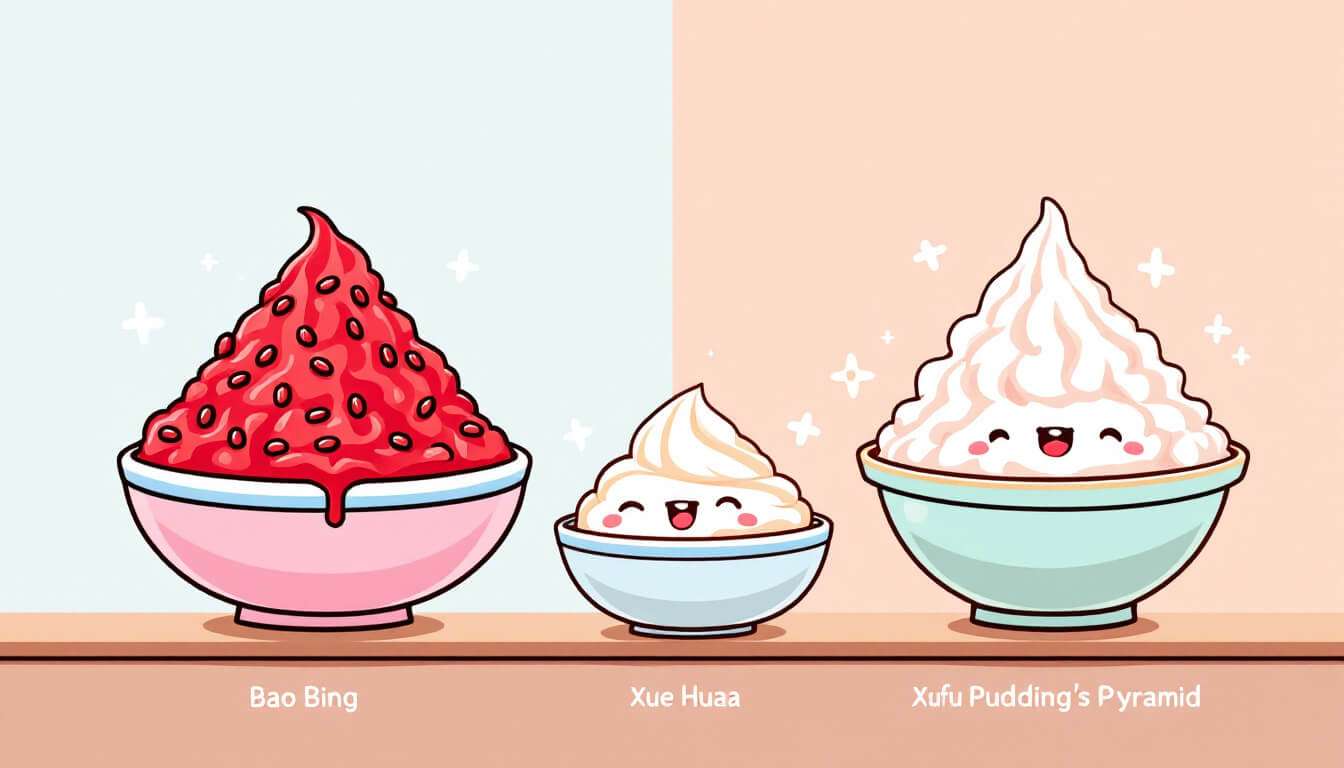
Ask a Taiwanese grandmother what shaved ice is and she will describe bao bing (刨冰) — a chunky, crunchy mound of ice scraped off a solid block with a hand-cranked or motorized blade. Ask her granddaughter, and you will get xue hua bing (雪花冰), or “snowflake ice” — feathery, ribbon-thin sheets that melt on your tongue like frozen silk. Both are Taiwan shaved ice. They are different desserts.
Bao bing is the ancestor. It is made from a solid block of frozen water, run against a spinning blade until you get pebbly ice that holds its shape, doesn’t dissolve on contact, and demands a whole battery of separately syruped toppings to make it interesting. Red bean, mung bean, tapioca, taro balls, grass jelly, sweetened peanuts, canned fruit — the ice is the neutral canvas, and the toppings do the flavor work. You will still find it at old-school stalls, night markets and any dessert shop that calls itself chuan tong (traditional).
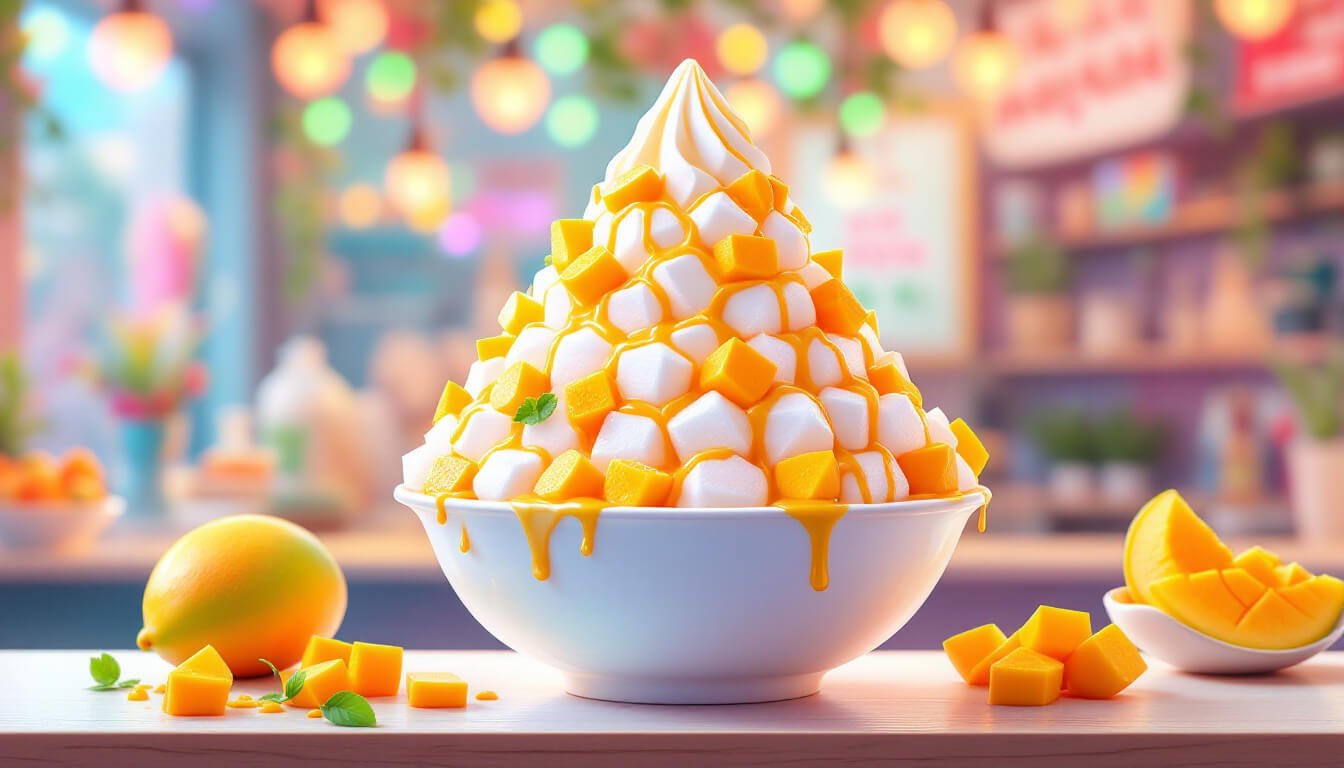
Xue hua bing is the reinvention. Instead of freezing plain water, Taiwanese dessert shops freeze a flavored milk mixture — usually cow’s milk, condensed milk and a little sugar — into a solid cylinder. When that cylinder is shaved on a specialty machine, it comes off in cloud-like sheets that carry the flavor in the ice itself. That is the whole trick. The ice is already sweet, already creamy, already tastes like something. Add mango and you get mango snowflake ice; add peanut and you get peanut snowflake ice; add taro and you get purple heaven.
This second style is a Taiwanese invention, credited to a small shop in Taichung in the mid-1990s, and it is the single biggest reason shaved ice from Taiwan became a global phenomenon. If you have eaten Korean bingsu, Chinese bao bing, or Japanese kakigori and thought Taiwan’s version was noticeably softer and richer, xue hua bing is why.
How Taiwan Shaved Ice Went From Roadside Cart to Global Obsession
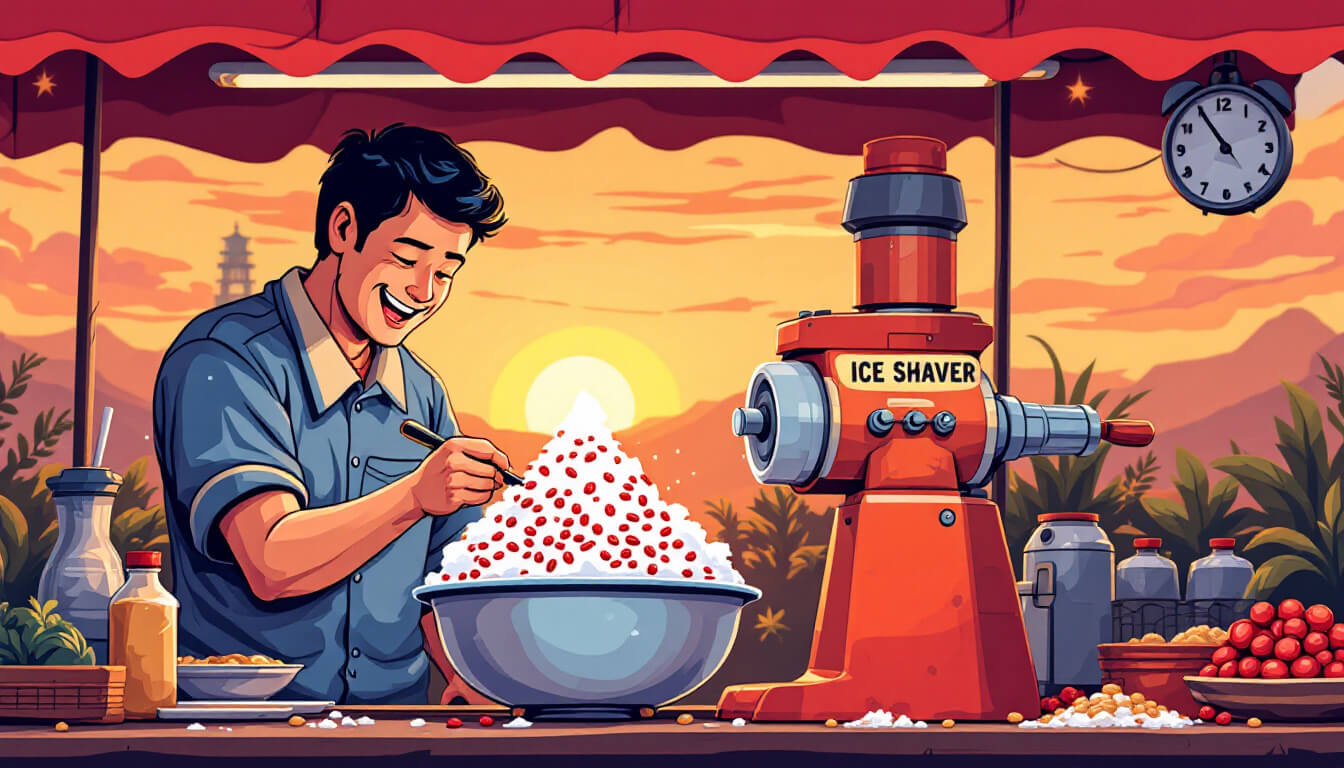
The chunky bao bing style arrived in Taiwan the same way most cheap cold desserts did: with a Japanese ice-block machine and a very hot summer. During the Japanese colonial period, ice-block factories became common on the island, and by mid-century a bowl of shaved ice with red beans, peanuts and sugar syrup was the standard four-cent afternoon snack outside every neighborhood market. The Chinese name literally means “planed ice” — a nod to the woodworking tool the blade resembles.
For decades that was it. Then in 1995 a shop called Chi Kang Bing Shi (奇岡冰室) in Taichung reportedly began experimenting with freezing sweetened milk instead of water, cutting it on a modified blade, and calling the resulting confection “snowflake ice.” Other shops copied it. The technique spread. By the early 2000s, xue hua bing had become the Taipei dessert of the moment, and shops began stacking exotic tropical fruit on top for the summer season.
The truly viral moment came in 2007, when a shop called Ice Monster (冰館, later relaunched as 冰館 Ice Monster) put a photograph of its mango shaved ice on the front page of a Japanese travel magazine. Tour buses started arriving. Every guide to Taipei wrote about it. And when smartphones and Instagram came along a few years later, the mango snowflake bowl became one of the most photographed desserts on earth. Today, “shaved ice” and “Taipei” are permanently linked in the food-tourism consciousness — with a hat tip to the humble grandmother-cart version that started it all.
Mango Xue Hua Bing: The Icon That Broke the Internet
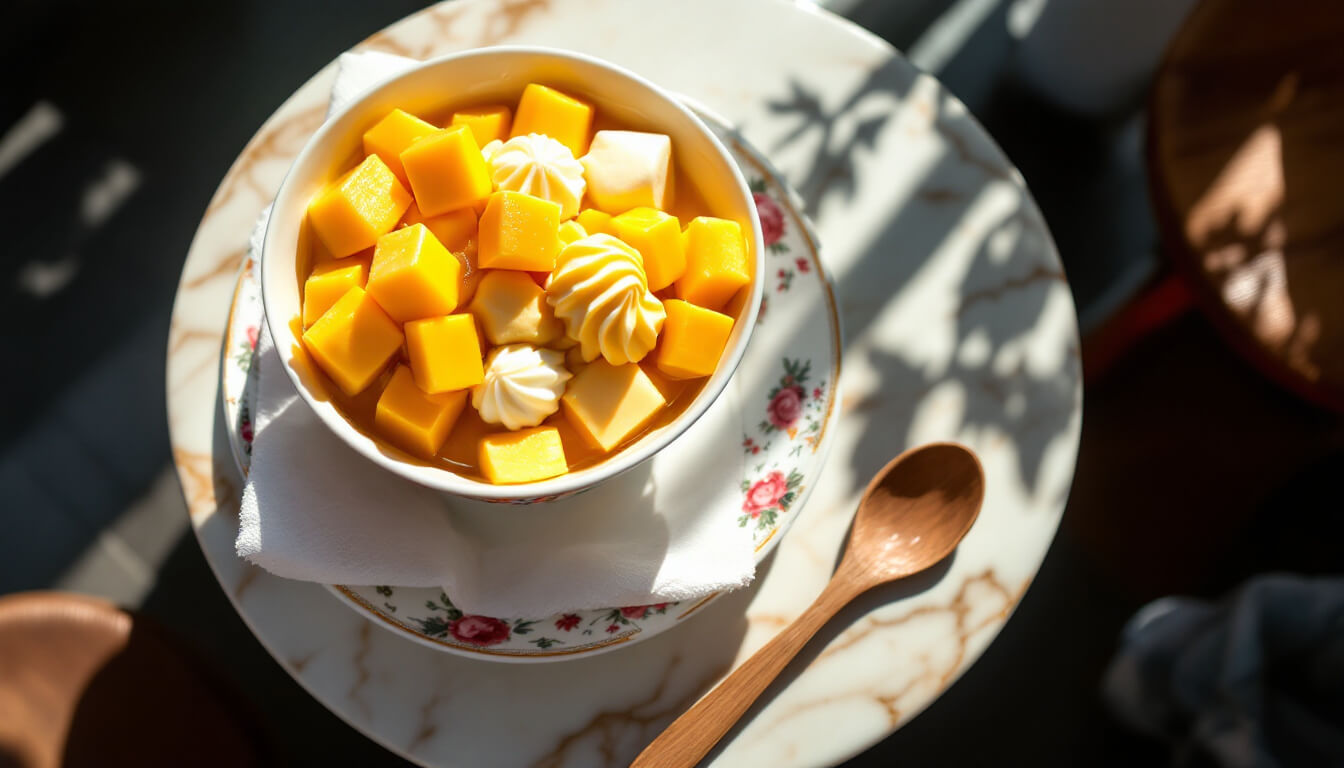
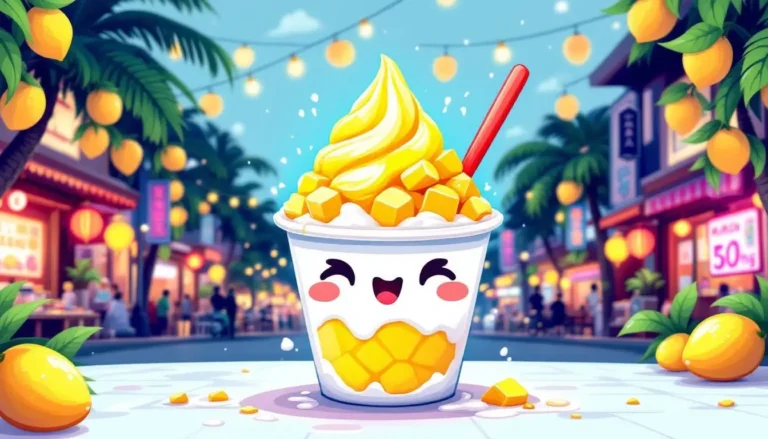
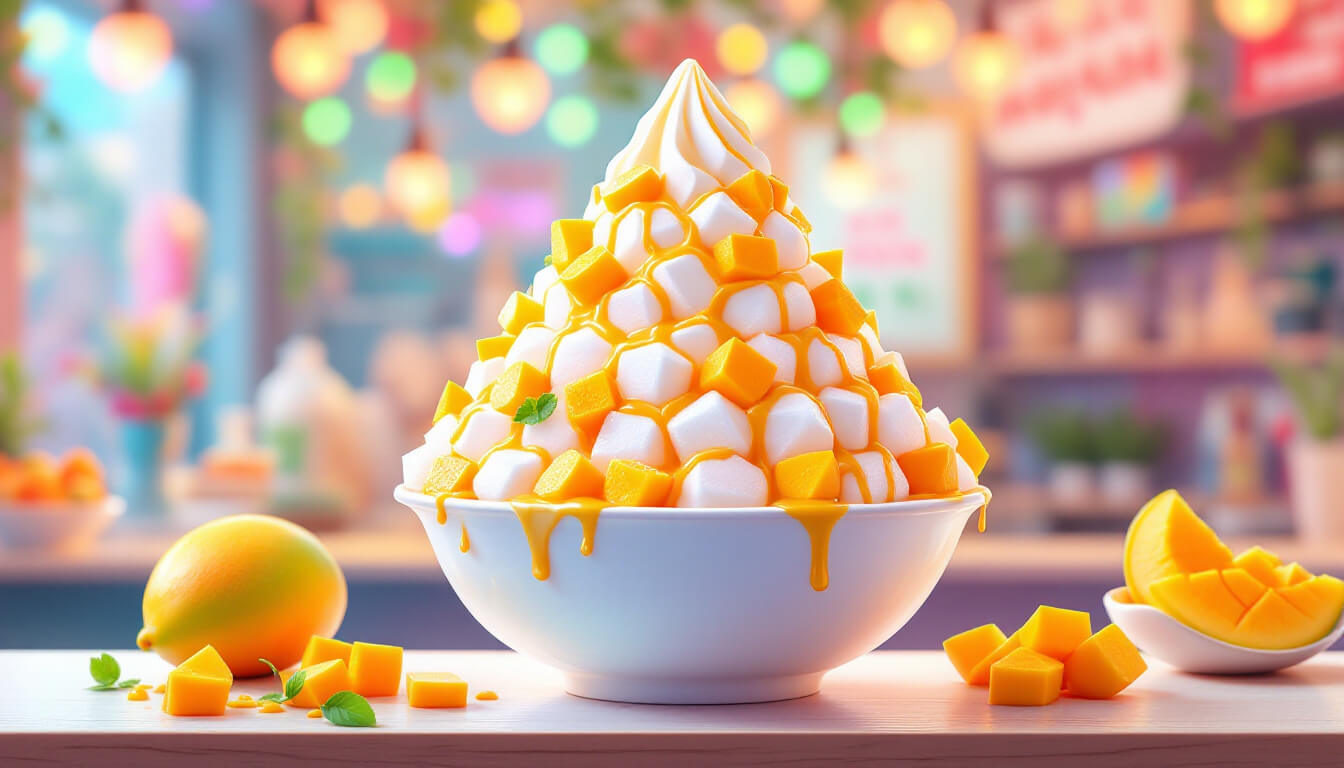
If you order one Taiwan shaved ice on your first trip, order this one. Mango xue hua bing is the platonic ideal of the form — a mountain of milky snow ice, a small avalanche of Irwin mango cubes (“apple mango,” the sweet variety Taiwan grows in Pingtung and Tainan from June through September), a scoop of mango sorbet on top, a drizzle of condensed milk, and sometimes a few little cubes of mango pudding hiding in the layers. Total damage: about NT$220–320 (roughly USD$7–10) for a bowl big enough to share between three people. It is comically large.
The season matters. Real Taiwanese Irwin mangoes are harvested from mid-May through late August. Shops that care will only serve mango xue hua bing when domestic mangoes are in season, and will pivot to strawberry, peach, kyoho grape or lychee in the off-months. If a shop is proudly serving mango shaved ice in December, the mango has been in cold storage for six months and it will taste that way. Our short guide on why Taiwan’s mango snow ice isn’t actually shaved ice goes deeper into the exact difference between milk-based xue hua bing and traditional water-based bao bing.
The etiquette: you get one spoon per person, you dig from the top, you do not stir the ice around aggressively (that kills the texture), and you eat quickly — a bowl of xue hua bing has a working life of about eight minutes before it collapses into a puddle of sweet mango milk. Which, honestly, is also delicious.
Every Topping Decoded: A Guide to Ordering Like a Local
Bao bing menus are choose-your-own-adventure boards. Most old-school shops will have twelve to twenty toppings displayed in metal trays behind the counter, and you point at three or four. Here is what everything is, so you can order without playing charades.
- Red bean (紅豆): Slow-simmered adzuki beans in sugar syrup. The default topping. Slightly savory, deeply satisfying. Order this every time.
- Mung bean (綠豆): Yellow, softer than red bean, more delicate flavor. Traditional summer choice because Chinese medicine considers mung beans cooling.
- Peanut (花生): Whole peanuts boiled to a creamy, almost mash-like softness in sugar syrup. Comfort food in a bowl.
- Taro (芋頭): Chunks of purple Taiwanese taro simmered until they collapse into velvet. If you like sweet potato you will love this.
- Taro balls (芋圓) and sweet potato balls (地瓜圓): Chewy, gummy little dumplings made from the mashed root. Our full breakdown of where taro balls come from and why Jiufen is famous for them covers the origin story.
- Grass jelly (仙草): Black herbal jelly with a light bitter-molasses undertone, considered deeply cooling in Chinese medicine. See our deep dive on why grass jelly has been cooling Taipei summers for 300 years.
- Aiyu jelly (愛玉): Translucent yellow-gold jelly made from a wild Taiwanese fig seed washed by hand. Almost neutral in flavor, incredible texture. This is the one everyone remembers.
- Tapioca (粉圓): The same pearls you get in bubble tea, just at room temperature. Chewy, sweet, unbeatable.
- Fen tiao (粉條): Semi-translucent sweet potato noodles cut into short strands. Slippery, subtle, textural.
- Tofu pudding (豆花): Silken tofu, usually served as its own dessert but often stacked on top of shaved ice in mixed bowls.
- Condensed milk (煉乳): Not a topping, but a mandatory drizzle. Ask for extra.
The move at a good bao bing stall is to pick two beans, one jelly and one chewy thing (taro balls or tapioca), then let the vendor pile the ice on top and finish with condensed milk. That is the classic four-topping bowl and it costs about NT$60–90.
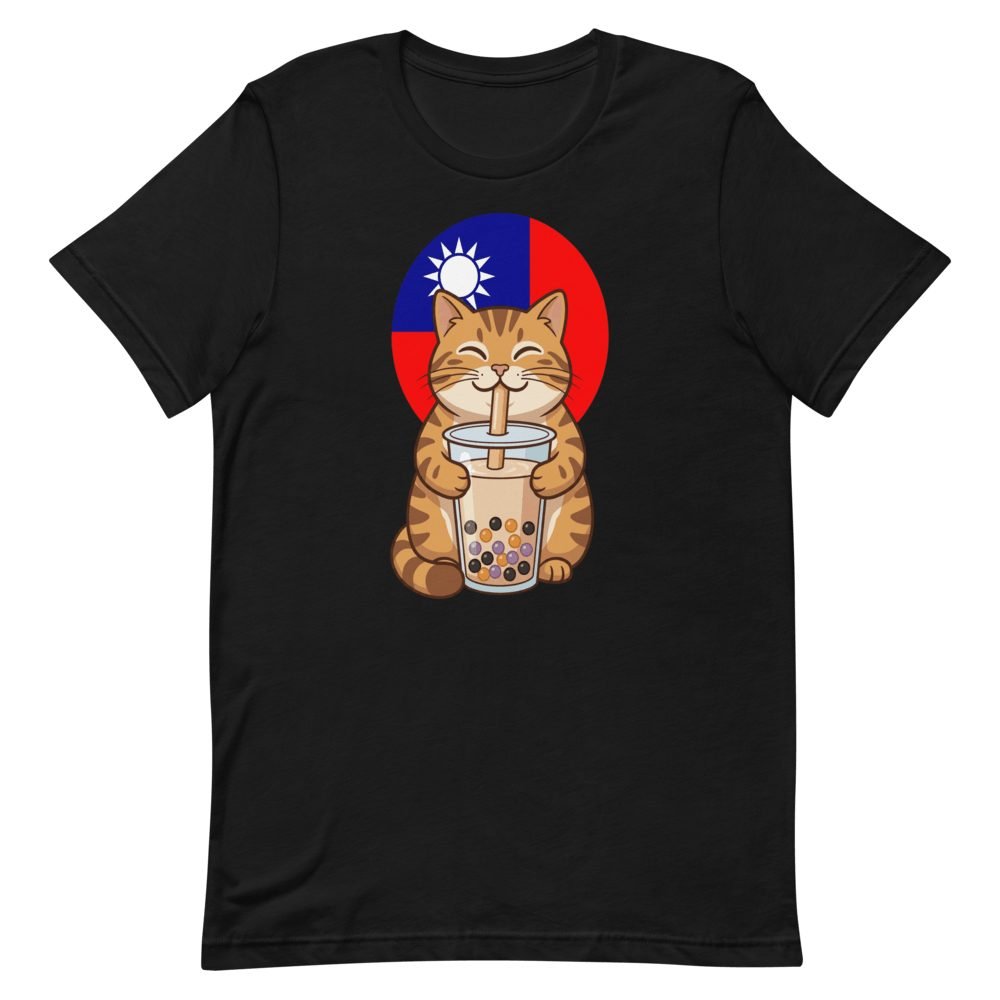
Speaking of pairing your shaved ice run with the rest of your Taiwan food identity — our Taiwan Boba Tea Cat Tee is the exact energy you want to be radiating while destroying a NT$260 bowl of mango xue hua bing at Yong Kang Street in July. Cute cat, giant boba, no notes.
Where to Eat Shaved Ice in Taiwan: 8 Legendary Shops by City
Taipei
Smoothie House (思慕昔) — Yong Kang Street. The shop that most tourists think of as “the mango shaved ice place.” Right by Dongmen MRT, English menu, insane portions. Line up. Worth it.
Ice Monster (冰館) — Zhongxiao East Road. The 1997-founded shop whose original Japanese magazine cover kicked off the global obsession. Relaunched in 2010 in a bigger, cleaner space on Zhongxiao Dunhua. Their signature is the mango sensation bowl.
Yong Kang 15 (永康15). Locals’ pick on the same Yong Kang alley. Less English, shorter line, arguably better ice-to-fruit ratio.
Dongqu Fen Yuan (東區粉圓). Not a snowflake ice shop — a traditional bao bing institution with the best chewy tapioca and taro balls in the city, and a menu wall you will need ten minutes to read. Cheaper than the mango places, and open until 11pm.
Tainan
Tai Cheng Fruit Shop (泰成水果店). The mango bowl to end all mango bowls, served inside a whole hollowed-out mango skin. In the old city, walking distance from the Confucius Temple. Cash only, closed Mondays, worth planning a trip around.
Jiang Ji (江記東門黑砂糖剉冰). The old-school Tainan bao bing counter that specializes in hei tang (dark brown sugar) syrup. If you want to taste what shaved ice was before the mango-and-milk revolution, this is the reference.
Kaohsiung
Yu Zhen Zhai Mango Shaved Ice (裕珍齋). A short walk from the Liuhe Night Market, this shop uses locally sourced Pingtung mangoes at their peak. Cheaper than Taipei by about a third. If you are already night-marketing your way through Kaohsiung — see our complete Liuhe Night Market guide for the surrounding food crawl — do not skip this.
Cai Ji Bing Dian (蔡記冰店). Old-school bao bing counter that has been open since 1954, tucked into a Yancheng-district alley. Cash only. Order the peanut and tofu pudding combo — it will not photograph well and it will ruin every other dessert for you.
Wear the Taiwan Summer Vibe
If mango snowflake ice is your Taiwan summer religion, our Boba Cat tee is the uniform. Soft cotton, unisex fit, Taiwan-pride kawaii energy — pairs perfectly with a NT$260 bowl of xue hua bing.
How to Make Taiwan Shaved Ice at Home
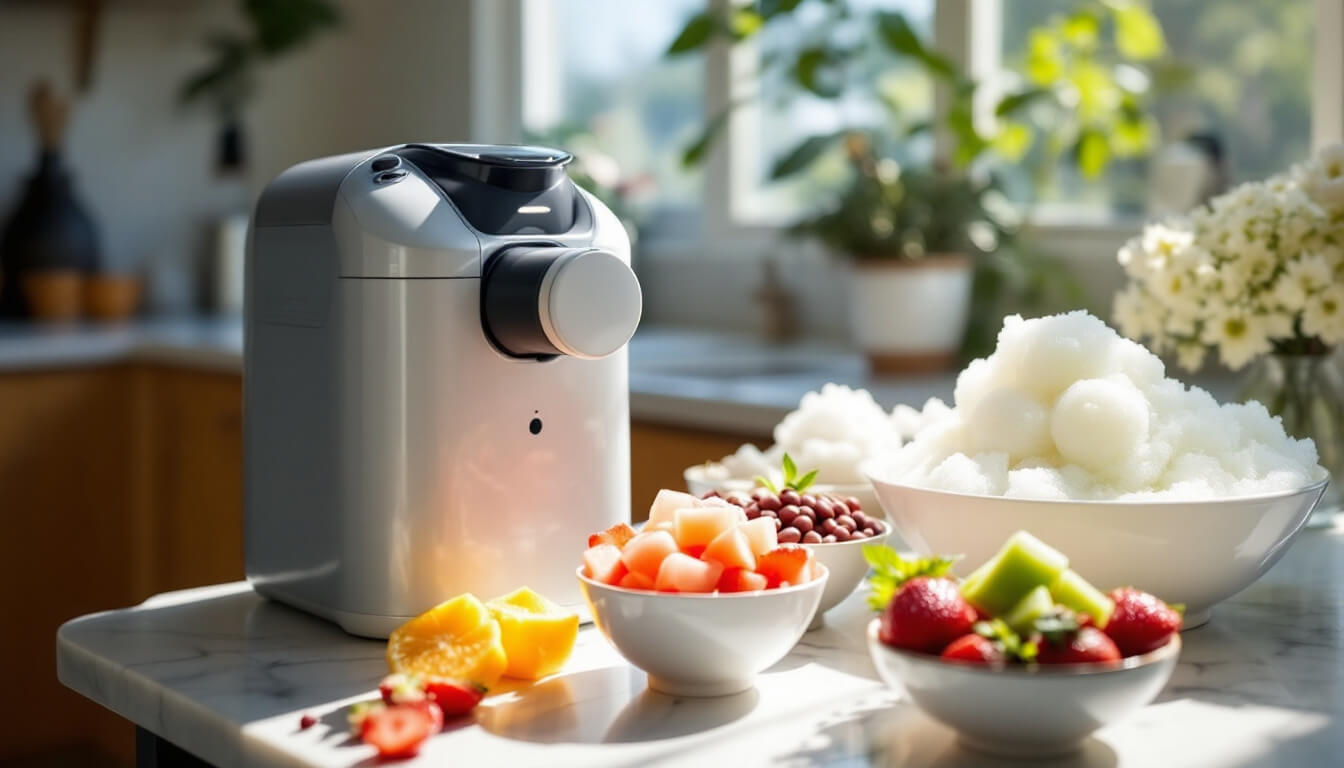
You are not going to make perfect xue hua bing at home. The specialty machine that shaves frozen milk cylinders costs a couple thousand dollars, and even the tabletop consumer versions produce ice that is noticeably grainier than a shop bowl. But you can get a very respectable bao bing without spending money, and a passable xue hua bing with a little planning.
The bao bing setup: A cheap countertop ice shaver from a Chinese grocery or Amazon (US$25–60) gets you snowy ice that behaves almost exactly like the roadside version. Freeze water in cylindrical containers (tall yogurt tubs work), pop the ice block out, feed it into the shaver, and pile the shavings into a chilled bowl. Top with any combination of the toppings above — a can of adzuki beans in syrup from an Asian market, a bag of frozen taro balls, sliced strawberries, condensed milk. Total prep is 15 minutes.
The xue hua bing hack: Freeze whole milk mixed with sweetened condensed milk (roughly 2 parts whole milk, 1 part sweetened condensed milk) in a tall narrow container overnight. Pop out the frozen milk cylinder, run it through the same shaver on the finest setting. You will not get the paper-thin ribbons a commercial machine produces, but the texture will be dramatically closer to xue hua bing than plain shaved water. Top with fresh mango, drizzle more condensed milk, and pretend you are in Taipei.
The extreme-low-effort version: Buy a bag of Vietnamese “iced coffee” style shaved ice from an Asian grocery freezer, dump it in a bowl with fresh mango and condensed milk, and call it lunch. No one will judge you. It is 39°C outside.
Frequently Asked Questions About Taiwan Shaved Ice

What is the difference between Taiwan shaved ice and Korean bingsu? Bingsu is a close cousin. Both are milk-based and cloud-textured, but Korean bingsu typically uses a heavier cream-based ice and often skews toward red bean, injeolmi (rice cake) or coffee flavors. Taiwan xue hua bing is thinner, more delicate, and famously tropical-fruit-forward. If you have had Sulbing in Korea and think Ice Monster in Taipei tastes noticeably lighter, you are not imagining it.
What is the difference between xue hua bing and kakigori? Japanese kakigori is closer to Taiwan’s older bao bing than to xue hua bing — the ice is shaved from a plain water block, and the flavor comes from syrups poured on top. Xue hua bing puts the flavor inside the ice itself.
When is mango shaved ice season in Taiwan? Real Irwin mango season runs from mid-May through late August, peaking in June and July. Serious shops will only serve mango xue hua bing during those months. Off-season, expect strawberry (winter), kyoho grape (late summer/fall) or lychee (early summer) instead.
How much does a bowl cost? Traditional bao bing at a night market or local stall: NT$60–100 (USD$2–3). Mango xue hua bing at a famous Taipei shop: NT$220–320 (USD$7–10). Bowls are enormous — one bowl comfortably feeds two or three.
Do Taiwanese people eat shaved ice year-round? Yes, though summer is peak season. Traditional bao bing shops stay open through winter, and warm dessert versions (with hot red bean or peanut soup ladled over) exist for cold months. You will still see people ordering ice in January.
Is Taiwan shaved ice healthy? Compared to ice cream, yes — the milk base is diluted, and traditional toppings like red bean, mung bean and grass jelly are genuinely nutritious. Compared to a salad, obviously not. Split a bowl and everyone wins.
Where should first-time visitors go? Yong Kang Street in Taipei’s Da’an district has three of the best shops within a two-minute walk of Dongmen MRT station, plus a dozen other essential food stops. If you are in Tainan, Tai Cheng Fruit Shop is a pilgrimage. In Kaohsiung, do the Liuhe Night Market and hit Yu Zhen Zhai afterwards.
Final Thoughts: Why Taiwan Shaved Ice Deserves Its Own Category
Most food histories are about someone importing a technique and doing it well. Taiwan shaved ice is different. The island took a cheap colonial-era dessert, kept the original version alive for the grandmothers, then quietly invented a completely new style — the milk-based snowflake ice — that has since been copied across Asia and mistaken for Korean bingsu by a whole generation of tourists. Both versions coexist. Both are unmistakably Taiwan. And both are exactly what you want when the summer humidity is so heavy the sidewalks look wet.
So the next time someone tells you they had “shaved ice in Taiwan,” ask them which kind. If they say “the fluffy mango one,” they had xue hua bing at a Taipei tourist landmark. If they say “the crunchy one with red beans and jelly from a little stall,” they had bao bing at a place their grandmother would recognize. If they say both, they get it. Now go find your bowl.
Taiwan, One Delicious Story a Week
Get our best food and culture stories, night-market picks, and exclusive Taiwan Merch drops straight to your inbox. No spam, just island vibes.
Grab a Free Taiwan Sticker!
Drop your email and we’ll send you a limited-edition Taiwan sticker — plus insider access to new merch drops and island vibes.
No spam. Unsubscribe anytime.