台灣安全:為何它是全球第四安全的國家(2026 年指南)
Here’s a sentence that surprises almost everyone planning their first trip here: when it comes to Taiwan safety, this island isn’t just “pretty safe for Asia” — it’s officially the fourth-safest country in the entire world. As of the 2026 Numbeo Safety Index, Taiwan scores 83.0, sitting just behind the United Arab Emirates, Qatar, and Andorra — and comfortably ahead of famously orderly places like Singapore, Japan, and South Korea.
If you’ve been nervously Googling whether it’s a good idea to visit, you can exhale. This guide walks through exactly how safe Taiwan is, the real (and often charming) cultural reasons behind those numbers, the handful of risks worth respecting, and a calm, no-drama answer to the China question everyone secretly wants addressed. By the end, you’ll know more about staying safe here than most people who’ve already booked their flights.
Just How Safe Is Taiwan? The 2026 Numbers Don’t Lie
Let’s start with the receipts. Taiwan safety isn’t a vibe or a tourism slogan — it’s measurable, and the data is genuinely impressive across every major index travelers actually check.
這 Numbeo Safety Index 2026 ranks Taiwan as the #4 safest country on Earth with a score of 83.0. Here’s the global top 10:
- United Arab Emirates — 86.0
- Qatar — 84.8
- Andorra — 84.8
- Taiwan — 83.0 🇹🇼
- Macao — 81.8
- Oman — 81.6
- Isle of Man — 79.1
- Hong Kong — 78.6
- Armenia — 77.9
- Bahrain — 77.7
What makes that ranking land even harder is the company Taiwan keeps below it. Singapore — a country practically synonymous with order — scores 77.5. Japan, the gold standard of Asian safety in most people’s minds, sits at 77.2. South Korea trails at 71.0. Taiwan beats all three, and Taipei consistently ranks inside the world’s top-ten safest cities.
It’s not just crowd-sourced perception, either. The U.S. State Department travel advisory for Taiwan is Level 1 — “Exercise Normal Caution,” the lowest and safest tier that exists, the same rating given to most of Western Europe. It was reaffirmed in late 2025 and remains in effect through 2026. The UK, Canadian, and Australian advisories echo it almost word for word. To put that in context: the State Department uses a four-level scale, and Level 1 is reserved for the world’s most stable, low-risk destinations. Taiwan has held that rating consistently, and the only hazard the advisory specifically flags isn’t crime at all — it’s natural events like earthquakes and typhoons, which we’ll cover honestly below.
The crime statistics back the rankings. Taiwan’s homicide rate is a small fraction of the global average and well under that of the United States, while its rate of violent street crime is among the lowest of any populous country. Crucially, the categories that worry tourists most — mugging, assault, and stranger violence — are statistical rarities rather than daily realities. That’s why the day-to-day experience of an island of 23 million people can still feel like a small town where everyone is quietly looking out for each other.
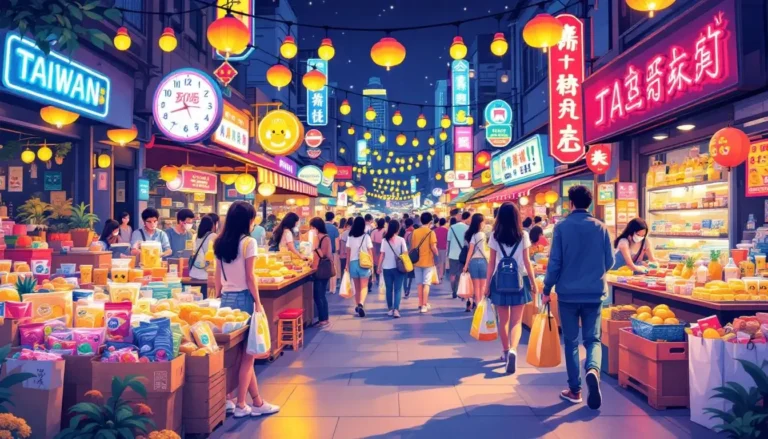
On the ground, the lived experience matches the spreadsheets. Violent crime against tourists is rare to the point of being statistical noise. Travelers routinely describe leaving phones on café tables to reserve seats, walking home through unlit alleys at 3 a.m. after a night market run, and getting lost wallets returned with every NT$1,000 note still inside. That’s not luck — that’s a baseline. If you’re mapping out where to go next, our guide to the best places to travel in Taiwan covers regions you can explore without a second thought.
Why Is Taiwan So Safe? The Culture Behind the Statistics
Numbers tell you that Taiwan is safe. Culture tells you 為什麼 — and this is where the island gets genuinely lovable.
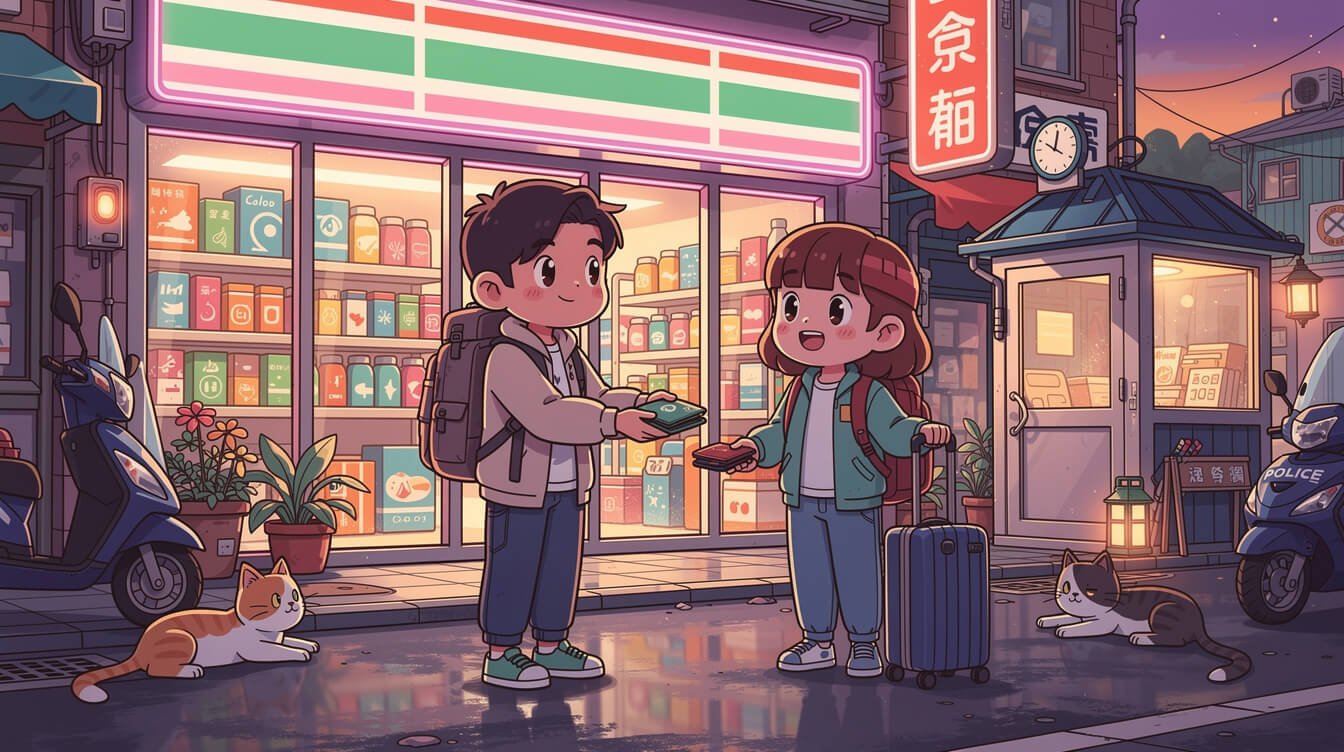
Taiwan runs on an extraordinarily high baseline of social trust. Lost-and-found here borders on a national sport: drop your phone at a 7-Eleven and there’s a very real chance the clerk will have it bagged and waiting for you, or that a stranger will have already handed it to the nearest police box. Convenience stores function as informal safety hubs on practically every corner — clean, bright, staffed around the clock, and happy to call you a taxi or point you home. (We dug into why they’re so central to daily life in our piece on 台灣便利商店文化.)
A few cultural threads weave together to create this:
- Dense, walkable communities. Taiwanese neighborhoods are layered with life — shops, temples, homes, and food stalls stacked together — which means there are always eyes on the street. Quiet isolation, the setting for most travel mishaps, barely exists in urban Taiwan.
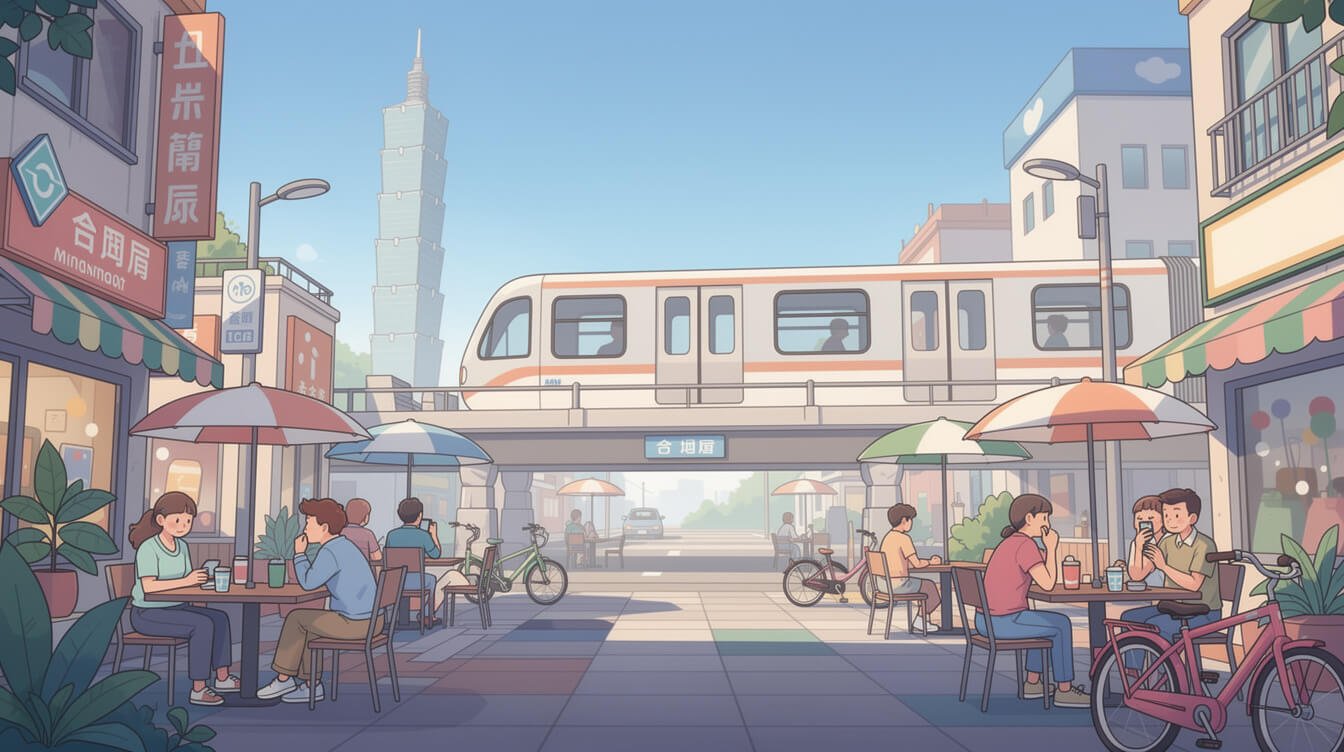
- A genuine ethic of 不是 causing trouble. Public courtesy is deeply ingrained. You’ll see it on the MRT, where riders queue in painted lines, leave the priority seats empty even on a packed train, and keep their voices down out of consideration for everyone else.
- Approachable, low-friction policing. The little neighborhood police boxes (pàichūsuǒ) are everywhere and genuinely helpful — lost tourists use them for directions as often as anything else.
- Hospitality toward visitors. The instinct when a foreigner looks confused isn’t to exploit it — it’s to walk you to where you’re going. It happens constantly.
There’s also a quieter economic reason worth naming: Taiwan has a strong social safety net, near-universal healthcare, very low extreme poverty, and a deep cultural emphasis on education and stable family life. Desperation is one of the biggest engines of street crime anywhere in the world, and Taiwan has comparatively little of it. Add a culture where “saving face” makes public dishonesty genuinely shameful, and you get a society where the social cost of stealing from a stranger is high and the personal incentive is low.
This is the soul of the island, and it’s inseparable from everything else that makes people fall for the place. If you want the bigger picture of how these values formed, our deep dive into 台灣文化 is the natural next read.
Is Taiwan Safe for Solo Travelers, Women, and LGBTQ+ Visitors?
This is the question that fills our inbox, so let’s be specific instead of hand-wavy.
Solo female travelers: Taiwan is regularly cited as one of the best destinations on the planet for women traveling alone. Walking solo at night in Taipei, Tainan, Kaohsiung, or Taichung is something countless women do without incident — late-night MRT rides, solo night-market dinners, and 2 a.m. convenience-store runs are completely ordinary. Standard travel sense still applies (stay aware, trust your gut), but the ambient threat level that shadows solo women in many countries simply isn’t part of the daily texture here.
LGBTQ+ travelers: Taiwan is the most progressive place in Asia, full stop. In 2019 it became the first country in Asia to legalize same-sex marriage, and Taipei Pride is the largest Pride march on the continent, drawing well over a hundred thousand people each October. Same-sex couples can hold hands in public in major cities without a second thought. Smaller rural towns are quieter and more traditional, but hostility toward visitors is rare anywhere.
Families and older travelers: Taiwan is a dream for both. World-class public transit, spotless public restrooms, an excellent and affordable healthcare system, and a culture that genuinely dotes on children and elders. Strollers and grandparents move through the same night markets at the same hour — nobody thinks twice. A relaxed multi-stop trip works beautifully here; our 台灣旅遊行程指南 lays out routes that suit every pace.
The Real Taiwan Safety Concerns — and How to Handle Them
Honest guide, honest section. Taiwan’s risks aren’t the ones first-timers worry about (crime). They’re mostly traffic and nature — manageable once you know what you’re dealing with.
Traffic and scooters — the genuine #1 risk
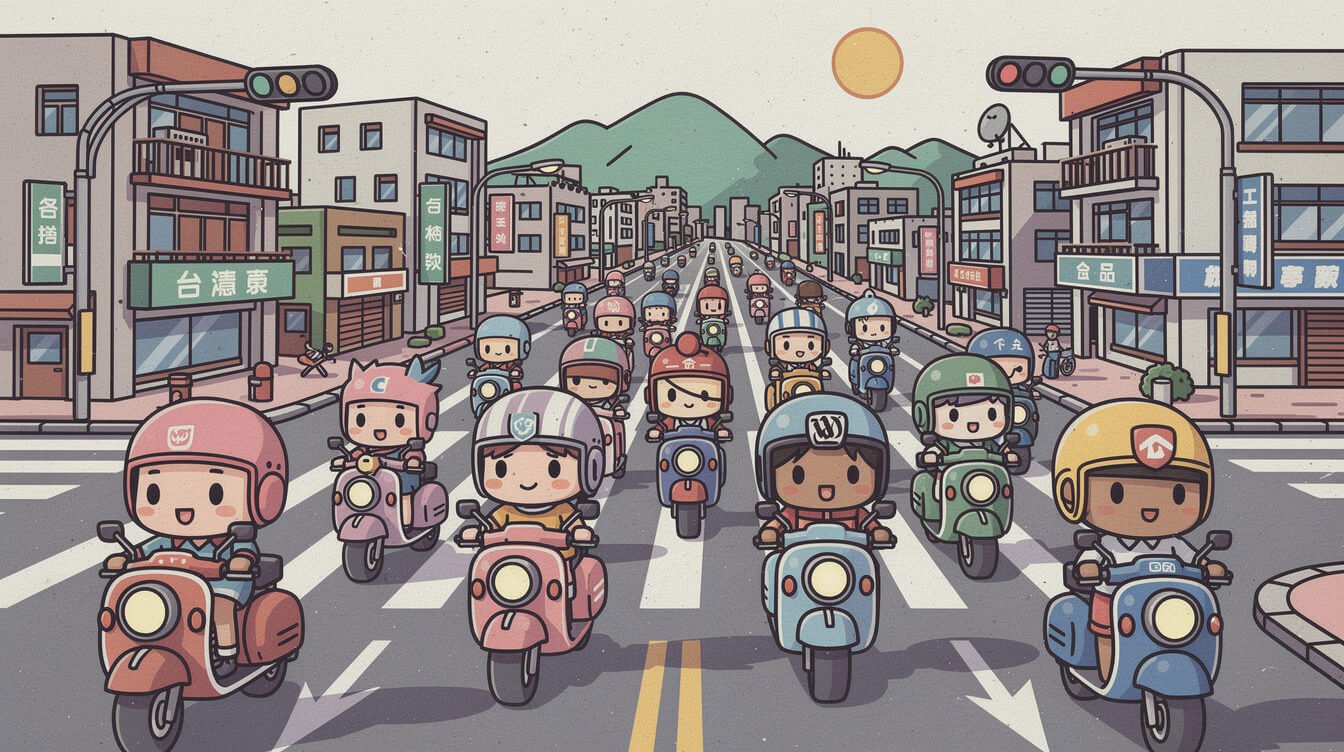
If anything is going to test your Taiwan safety, it’s the road. With millions of scooters flowing like water, intersections can feel chaotic to newcomers. The rules: always cross at marked crossings on the green signal, look both ways even on one-way streets (scooters improvise), and never assume a turning vehicle has seen you. If you rent a scooter, wear the helmet properly and respect that you’re the least protected thing in the flow. We unpack the whole two-wheeled ecosystem in our Taiwan scooter culture guide — worth reading 前 you rent one.
Earthquakes
Taiwan sits on the Pacific Ring of Fire, so small tremors are a normal part of life — most are barely noticeable. The island also has some of the strictest seismic building codes in the world and an excellent public alert system that pushes warnings straight to your phone. If you feel a strong quake: drop, cover under something solid, hold on, and stay away from windows. Don’t bolt outside mid-shake. It’s respect, not fear.
Typhoons
Typhoon season runs roughly July through October. A direct hit means closures and rough weather, not chaos — Taiwan handles typhoons with practiced calm, and an official “typhoon day” often just means everything pauses. Watch the forecast, keep your itinerary flexible, and stay indoors when authorities say so. Timing your trip around the calmer months is the easiest fix; our 去台灣旅遊的最佳時間 guide breaks down the weather month by month.
Nature and hiking
Taiwan’s mountains are spectacular and largely well-managed, but venomous snakes and giant hornets do exist on trails. Stay on marked paths, make noise as you walk, don’t poke into undergrowth, and check whether high-mountain or post-earthquake routes are open before you set out — popular destinations like Taroko Gorge have had partial closures after seismic activity, and conditions change. For serious peaks, Taiwan requires permits precisely because the system is built around keeping hikers safe. Summer heat and humidity are real hazards too: heatstroke sends more travelers to the clinic than anything sinister ever will, so hydrate aggressively, start hikes early, and respect the afternoon sun.
Water and the coast
Taiwan’s beaches are gorgeous but its surf can be deceptively strong, and rip currents cause most water incidents. Swim only at patrolled beaches, heed flag warnings, and don’t underestimate river tracing or “wild” swimming spots — flash flooding in mountain rivers after rain is a genuine danger locals take seriously. None of this should scare you off the coastline; it’s just the same ocean respect you’d bring to any island.
Scams, Petty Crime, and Staying Money-Smart
Coming from cities where you grip your bag on every train, Taiwan can feel almost suspiciously relaxed. Pickpocketing exists but is uncommon, and the elaborate tourist scams that plague other regional hotspots — fake “tea ceremony” bills, rigged taxi meters, gem cons — are essentially absent here. Taxis are metered, honest, and a genuinely safe way to get home late.
That said, “lowest-risk on Earth” still isn’t “zero,” so keep the basics:
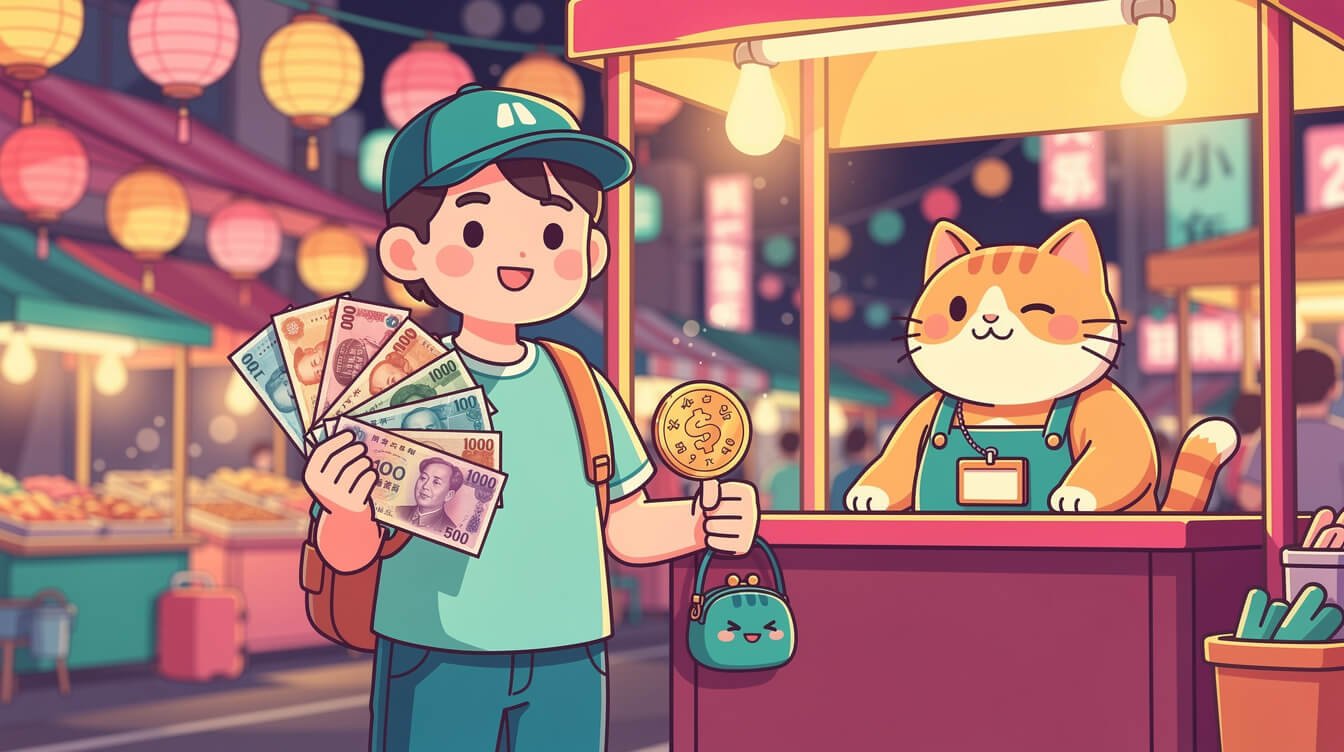
- Carry some cash. Taiwan is more cash-friendly than you’d expect, especially at night markets and small eateries. Use ATMs attached to banks or 7-Eleven/FamilyMart.
- Keep a phone-photo of your passport and a backup card stored separately from your wallet.
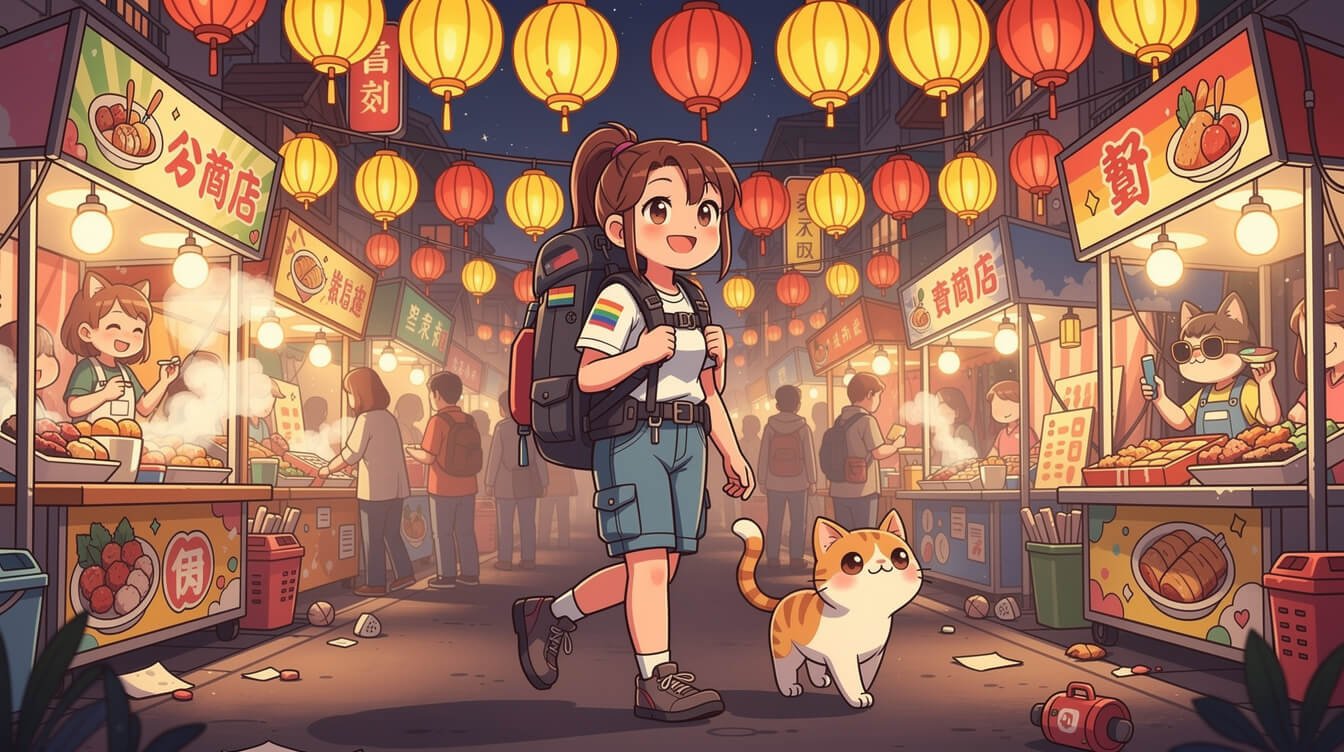
- At packed spots — Shilin Night Market, Ximending on a weekend, Taipei Main Station at rush hour — just keep your bag in front of you. Habit, not hypervigilance.
- Only book tours and rentals through reputable operators (a low-scam country still has the occasional flaky listing).
Honestly, the most likely way you “lose money” in Taiwan is by discovering how easy it is to fill a suitcase with pineapple cakes, bubble tea gear, and Taiwan-pride apparel. Speaking of which, if you want to channel that island affection into something wearable, the Taiwan MRT Safety PSA Shiba Inu Tee is a wink at the very transit-courtesy culture that helps make this place so safe in the first place.
The China Question, Answered Calmly
No Taiwan safety guide is complete without addressing this, so here’s the grounded, non-dramatic version.
Cross-strait tension is real at the geopolitical level and gets heavy international headlines. But here’s what matters for a traveler: it has effectively zero impact on day-to-day life on the island. Taipei in 2026 is bustling, calm, and utterly normal — packed night markets, full cafés, MRT trains running to the minute, hikers on the trails every weekend. Visitors consistently report that the “tension” they read about online is completely invisible on the ground.
The objective signal worth trusting: every major government — the U.S., U.K., Canada, Australia — keeps Taiwan at its lowest travel-advisory tier, the same as most of Western Europe. Those agencies have every incentive to be cautious, and they aren’t telling anyone to stay away. If the situation ever shifted, advisories would update first and clearly — so the practical move is simply to check your government’s official travel page before you fly and, for longer stays, enroll in its traveler program. That’s the same prudent step you’d take for any international trip. Beyond that, it doesn’t need to occupy headspace better spent on which night market to hit first.
It’s also worth remembering that millions of international visitors arrive in Taiwan every year — business travelers, students, digital nomads, multi-generational families — and the overwhelming majority never give cross-strait politics a second thought once they land. Tourism numbers have been climbing back strongly, airlines keep adding routes, and the international community in Taipei is large and settled. People vote with their feet, and the verdict is overwhelmingly “come.”
Taiwan Safety FAQ + Your Practical Safety Kit
Quick answers to what travelers ask most — plus the numbers worth saving before you land.
What are the emergency numbers in Taiwan?
110 — Police. 119 — Fire and ambulance/medical. 1990 — Disaster and road information. 0800-024-111 — the 24-hour Tourist Hotline with English assistance. Save all four in your phone now. English is increasingly common with police and emergency services, especially in cities.
Can you drink the tap water in Taiwan?
Tap water is treated and considered safe at the source, but the convention — followed by locals too — is to boil it or drink filtered/bottled water. Hot and cold filtered water dispensers are everywhere: hotels, MRT stations, convenience stores. You’ll rarely buy bottled water out of necessity.
Is Taiwan safe to travel right now in 2026?
Yes. Taiwan is the world’s #4 safest country on the 2026 Numbeo Index and sits at the lowest tier on every major government travel advisory. The realistic risks are traffic and natural events, not crime.
Is it safe to walk around Taipei at night?
Very. Night markets buzz late, the MRT is clean and secure, streets stay lively, and solo night walks are routine for locals and visitors alike. Use normal city awareness and you’re fine. Need ideas for after dark? See our 台北旅遊攻略 guide.
Do I need any vaccinations or special health prep?
No exotic vaccinations are required for a standard visit — routine vaccines up to date is the usual advice. Taiwan’s healthcare is excellent and affordable, pharmacies are widespread, and travel insurance is still smart for any trip. Mosquito-borne dengue can appear in the far south during summer, so pack repellent if you’re heading to Kaohsiung or Tainan in the hot months.
Is Taiwan safe for first-time and inexperienced travelers?
Arguably it’s one of the best “training wheels” countries in Asia. Signage is bilingual in cities, the MRT is intuitive, EasyCard tap-to-ride works almost everywhere, English is common among younger people, and the low-scam environment means rookie mistakes rarely get punished. If it’s your first big solo trip, Taiwan is a famously forgiving place to start.
What’s the single most useful safety habit in Taiwan?
Treat the road like the one thing that actually deserves your caution. Look twice for scooters at every crossing, and you’ll have neutralized your largest real risk on the island. Everything else is mostly common sense plus a screenshot of the emergency numbers above.
Wear the Reason Taiwan Is So Safe
That famous MRT courtesy culture? It’s a big part of why this island feels so calm. Carry a little piece of it home with our viral Taiwan MRT Safety PSA Shiba Inu tee — soft, kawaii, and very Taiwan.
Final Thoughts: Travel Taiwan With Confidence
Here’s the takeaway worth tattooing on your itinerary: Taiwan safety isn’t something you need to manage so much as something you get to enjoy. This is the fourth-safest country in the world, a place where strangers chase you down to return a dropped wallet and a solo midnight walk to a night market is just… Tuesday. The honest risks — scooters and the occasional typhoon — are easy to respect once you know they’re there.
So book the trip. Eat the stinky tofu, ride the MRT, hike the gorges, wander the back alleys of Tainan after dark. Taiwan rewards curiosity, and it does it in one of the safest environments on the planet. The only thing you really need to protect is your suitcase space — because you will want to bring a piece of this island home with you.
免費領取台灣貼紙!
留下您的郵箱,我們將向您發送限量版台灣貼紙——以及搶先了解最新商品發售信息和感受海島風情的機會。.
絕不發送垃圾郵件。隨時可以取消訂閱。.