肉圓:台灣晶瑩剔透的肉丸,起源於1898年彰化颱風救災廚房。
Bite into a Taiwanese ba wan (肉圓, literally “meat circle”) for the first time and your brain does a little double-take. The chewy, translucent skin wobbles like jelly. The savory pork filling inside is hot enough to steam-burn a rookie’s tongue. And the pinkish-red sauce spooned on top somehow tastes sweet, salty, garlicky, and umami-rich all at the same time. It’s one of the most distinctly Taiwanese things you can eat — and it wouldn’t exist without a devastating typhoon.
The 1898 Typhoon That Accidentally Invented Ba Wan
Trace ba wan back through the archives and you land in Beidou (北斗), a small township in 彰化 County, in 1898. A brutal typhoon had flattened the rice harvest across central Taiwan, and hungry villagers were queuing at temples for emergency food relief. A young man named Fan Wan-chu (范萬居), volunteering at Beidou’s Dongshan Temple, needed a way to stretch what little food was left into as many bellies as possible.
His workaround: mix sweet potato starch with water into a soft, pliable dough, wrap it around a tiny spoonful of pork and vegetables, and steam the little pouches until translucent. It turned scarce protein into a full meal. Locals loved it so much that Fan’s son turned it into a family stall, and by the 1930s Beidou ba wan was famous across the island. If you’ve ever watched a mayor cancel work over a Taiwanese typhoon day, you now know one of the softer things the island has built out of storm season.
North vs South: Deep-Fried or Steamed?
There is no single Taiwan-wide ba wan. There are two big regional camps — and Taiwanese people will absolutely argue with you about which one is the “real” version:
- Changhua-style (deep-fried): The Beidou original tradition. The rice-flour dumpling is briefly steamed, then finished in a low-temperature oil bath (about 130 °C) until the skin turns glossy and crackly on the outside while staying soft and jiggly on the inside. Colder oil, not hotter — that’s the trick.
- Southern-style (fully steamed): Popular in Tainan and Kaohsiung. The dumpling stays soft and translucent all the way through, with an almost custardy skin. No frying, just a bamboo steamer and patience.
Both are correct. Both are delicious. Neither camp will admit that.
What’s Actually Inside That Wobbly Shell
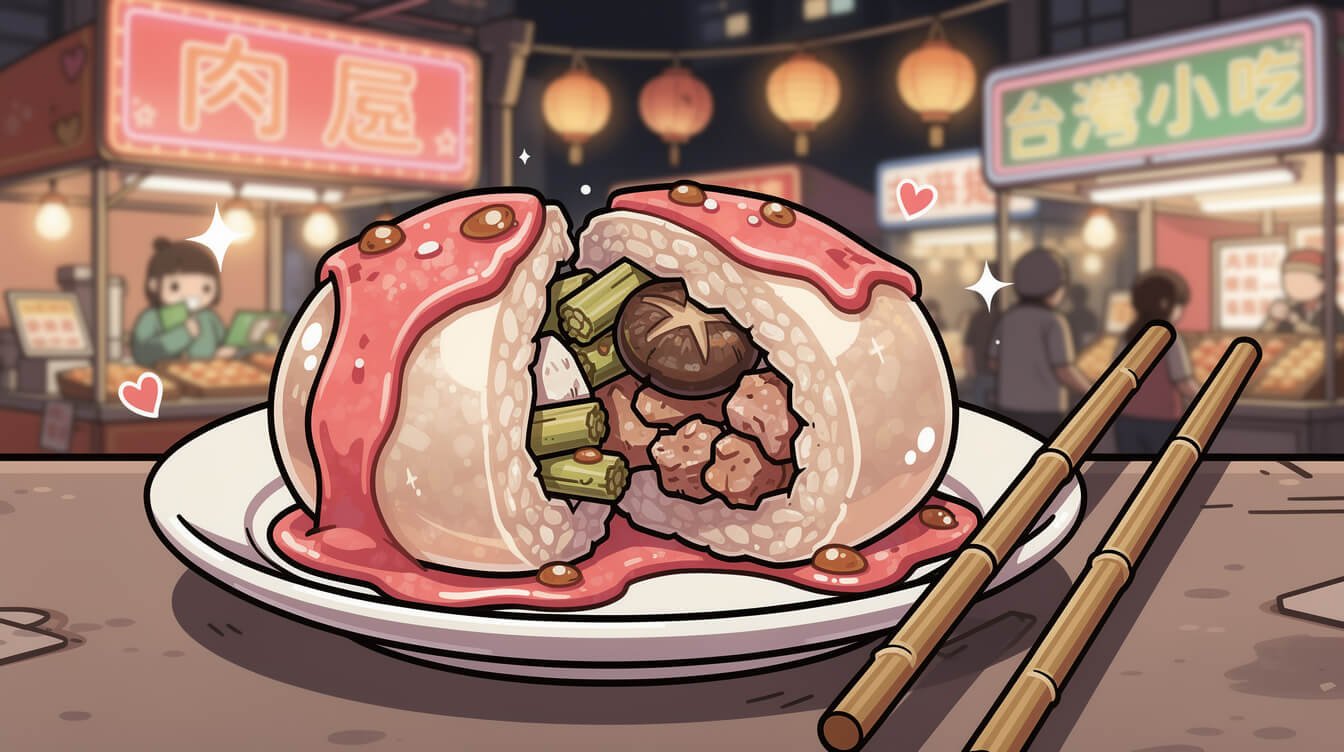
A traditional Changhua-style ba wan tucks four classic ingredients inside its skin:
- Marinated pork shoulder — slow-simmered in soy sauce, sugar, and five-spice until sweet and fall-apart tender.
- Bamboo shoots — often braised, adding a crunchy, slightly sweet contrast.
- Dried shiitake mushrooms — rehydrated and diced for that deep, earthy umami.
- Sometimes a quail egg or shrimp — the stall’s little flex, depending on the region.
The skin itself is a mix of sweet potato starch, rice flour, and a little tapioca starch. That combination is what gives it the signature Q弾 (kyudan) chewiness Taiwanese food obsesses over — that specific bouncy-yet-tender bite you can only describe by making a little bouncing gesture with your fingers.
The Sauce Is the Whole Personality
Ba wan is nothing without its sauce. Most stalls make two, and ladle them on together right before serving:
- A sweet rice paste (often glutinous rice or in-ji rice thickened with sugar and a little pink food coloring — that’s where the pastel color comes from).
- A darker, saltier garlic-soy sauce spiked with fresh grated garlic and a hint of chili.
The vendor scissors the ba wan open at your table, drenches it in both sauces, and hands it back. You’re expected to eat it with a spoon or chopsticks, working through the sauce-soaked filling as you go.
Where to Try Your First Ba Wan
If you’re in Taiwan, some pilgrimages are worth making:
- Beidou, Changhua: The original hometown. Beidou Xiao Wu Ba Wan (北斗肉圓小吳) traces its lineage back to Fan Wan-chu himself.
- Nanjichang Night Market, Taipei: A cult-favorite ba wan stall inside one of the city’s most old-school markets.
- Any Changhua rest stop on Highway 1: Locals genuinely detour just for these.
- Tainan and Kaohsiung food streets: If you want to try the fully-steamed southern version. Explore more in our Taiwan street food A-Z guide.
Ba wan is one of those foods that puts the “small island, big flavor” philosophy of Taiwanese cuisine on a plate. A humble little wobble born from a natural disaster, still feeding people 125+ years later. Order one. Take the messy first bite. Argue about north vs south later.
Love Taiwan’s food stories? Wear them. Our Taiwan-themed tees celebrate the night market snacks, cultural icons, and everyday obsessions that make this island unforgettable.
免費領取台灣貼紙!
留下您的郵箱,我們將向您發送限量版台灣貼紙——以及搶先了解最新商品發售信息和感受海島風情的機會。.
絕不發送垃圾郵件。隨時可以取消訂閱。.