台灣粽子食譜:如何製作正宗的糯米粽子
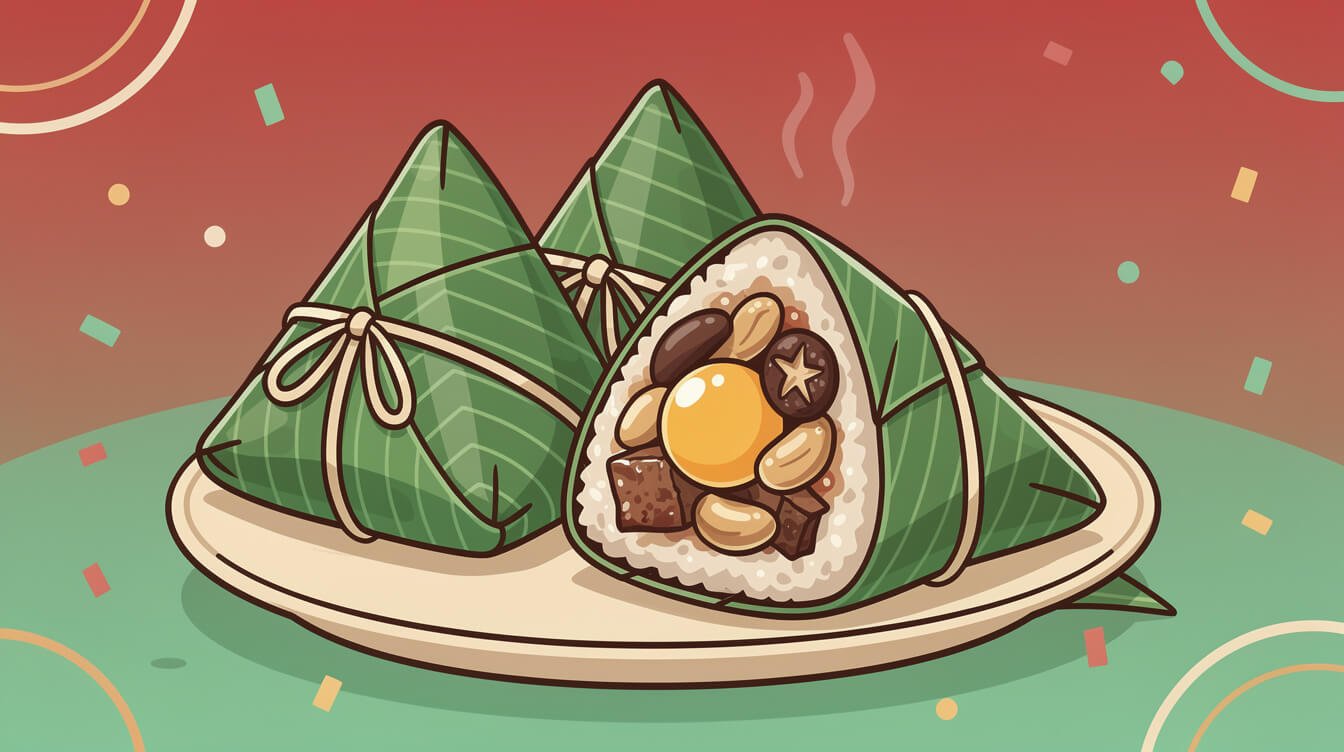
If you have ever peeled back a still-warm bamboo leaf to find a glossy pyramid of sticky rice studded with braised pork, shiitake, and a molten salted egg yolk, you already know why Taiwanese people get genuinely emotional about 粽子. This guide is the only 粽子食譜 you will need to make authentic Taiwanese rice dumplings at home — the kind your friends will fight over and your aunties will grudgingly approve of.
We are not going to hand you a generic Chinese version and call it a day. Taiwan does zongzi its own way — actually, two stubbornly different ways depending on whether you grew up north or south of the Zhuoshui River. Below you will get the full cultural backstory, the legendary North vs. South debate, a complete ingredient list, a foolproof step-by-step method, the sweet and regional variations nobody tells you about, and answers to every question first-timers ask. Perfect timing too, with 2026年端午節 landing on June 19. Let’s wrap.
What Is Zongzi? The Sticky Rice Dumpling Behind Dragon Boat Festival
Zongzi (粽子, zòngzi) is glutinous rice and savory or sweet fillings wrapped in bamboo or reed leaves into a tetrahedral parcel, then tied with string and cooked until the rice turns silky and infused with leaf fragrance. In Taiwanese Hokkien you will hear it called bah-tsàng (肉粽), literally “meat dumpling,” which tells you exactly where Taiwan’s heart lies — savory, pork-forward, and unapologetically rich.
The dish is inseparable from the Dragon Boat Festival (端午節, Duānwǔ Jié), held on the fifth day of the fifth lunar month. The most-repeated origin story ties zongzi to Qu Yuan, a beloved poet-statesman of the Warring States period who, in despair over his kingdom’s corruption, drowned himself in the Miluo River. Heartbroken villagers supposedly threw rice parcels into the water so the fish would eat those instead of his body, and raced boats out to scare the fish away. Whether or not the legend is literal history, it gave Taiwan two of its best traditions: dragon boat racing and an annual excuse to eat your body weight in rice dumplings.
Today zongzi is street food, festival food, comfort food, and gift food all at once. In the weeks before the festival, Taiwanese families wrap them by the hundred, hang them in fragrant bundles from kitchen ceilings, and ship them to relatives overseas. It belongs in the same cultural pantheon as the dishes in our guide to Taiwan’s most incredible traditional foods — a recipe that carries memory in every bite.
There is also a quieter layer of meaning. In many Taiwanese families, the act of wrapping zongzi together is the festival — three generations around one table, the elders narrating which fold their own mother used, the kids on twine duty. Some households still observe the old custom of li-gua: standing an egg on its end at solar noon on the festival for good luck, hanging mugwort and calamus on the door to ward off summer pests and bad energy, and dabbing children with realgar wine. Zongzi sits at the center of all of it — not just a snack, but the edible anchor of a whole day of ritual. Understanding that is the difference between cooking a recipe and cooking a tradition.
Northern vs. Southern: The Great Taiwanese Zongzi Debate
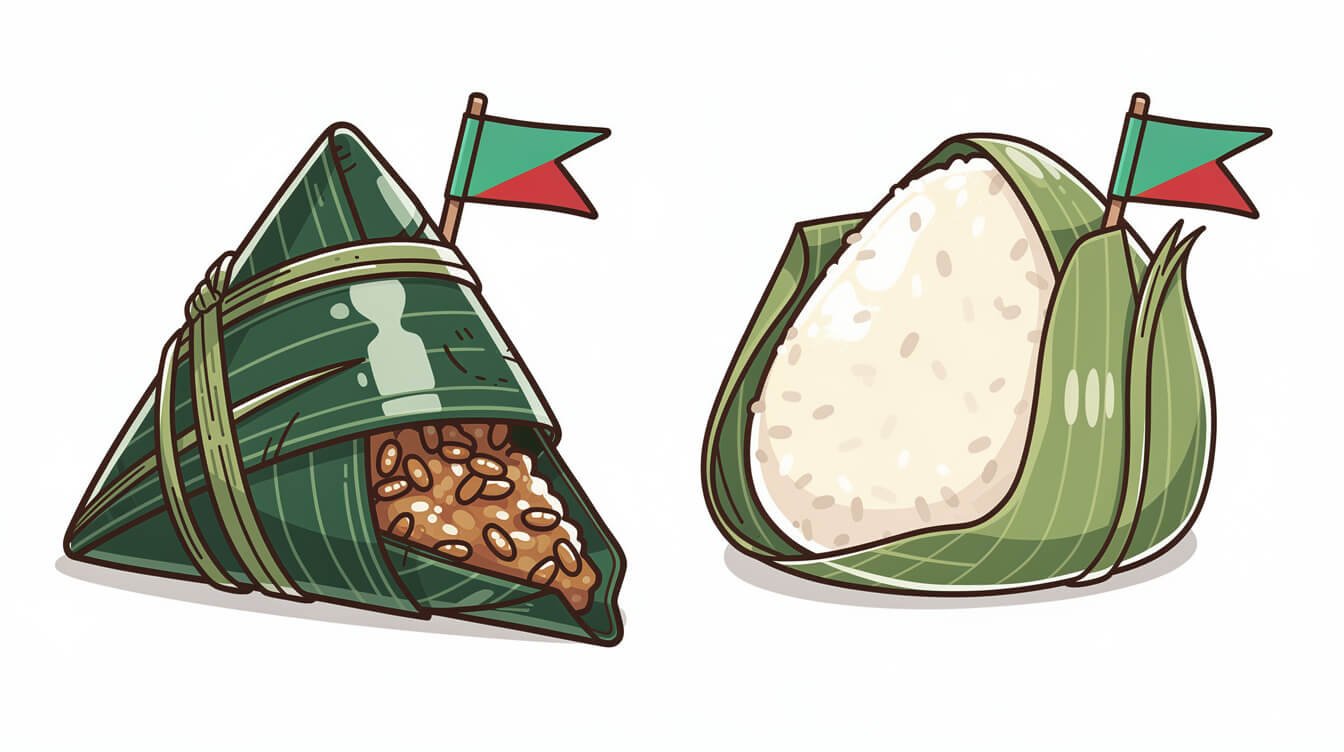
Ask two Taiwanese people how to make zongzi and you may start a friendly war. The island splits, more or less, into two camps, and locals defend their side with the energy most people reserve for sports teams.
Northern Zongzi (北部粽)
The northern style is the one most international readers picture. Glutinous rice is 先翻炒 with soy sauce, shallots, and the braising liquid until each grain glistens and is seasoned through. The fillings — pork belly, shiitake, dried shrimp, peanuts, salted egg yolk — are pre-cooked, tucked in, wrapped, and then the parcels are 蒸. The result is firm, distinct grains with a savory, oily-in-the-best-way punch. Critics (read: southerners) call it “glorified 你是粉絲,” or oily rice in a leaf. Northerners call it perfection.
Southern Zongzi (南部粽)
The southern style takes the patient road. Raw, seasoned glutinous rice and raw or par-cooked fillings are wrapped together and then boiled in water for hours. The rice cooks slowly inside the leaf, absorbing flavor and turning soft, sticky, and almost creamy — closer to a savory rice pudding than a pilaf. It is traditionally dipped in a sweet-savory peanut sauce or a thin garlic soy. Southerners insist this is the only real way; northerners say it is mushy. Both are completely delicious, and your kitchen, your rules.
So where exactly is the dividing line?
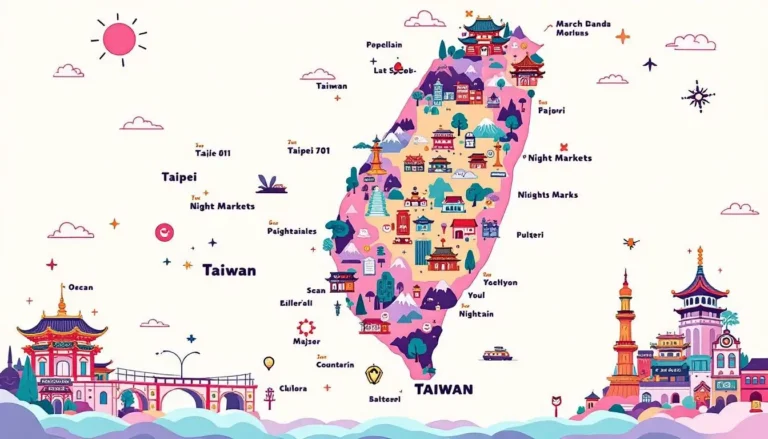
Loosely, “north” means Taipei, Keelung, and the greater northern basin, while “south” covers Tainan, Kaohsiung, and the agricultural heartland — with the Zhuoshui River often cited as the unofficial border. In practice the styles have traveled everywhere, and you will find both sold side by side in any Taipei market. The geography matters less than the family: your grandmother’s province of origin, whether her people were Hoklo, Hakka, or post-1949 mainland immigrants, all shaped which zongzi shows up at your reunion table. That is why two neighbors can make wildly different “authentic” zongzi and both be completely right.
One more regional tell: the dipping culture. Northern zongzi is seasoned through and usually eaten as-is or with a dash of chili-garlic sauce. Southern zongzi leans on a sweet thick peanut-and-soy sauce poured over the top — practically a different dish on the palate. If you have only ever had one style, trying the other is a genuine “oh, that’s what they meant” moment.
For this guide we will teach the northern stir-fry-then-steam method, because it is the most forgiving for beginners, the least likely to leak, and the easiest to nail on your first attempt. Once you have the technique down, the southern version is a small variation away.
Ingredients for an Authentic Taiwanese Zongzi Recipe
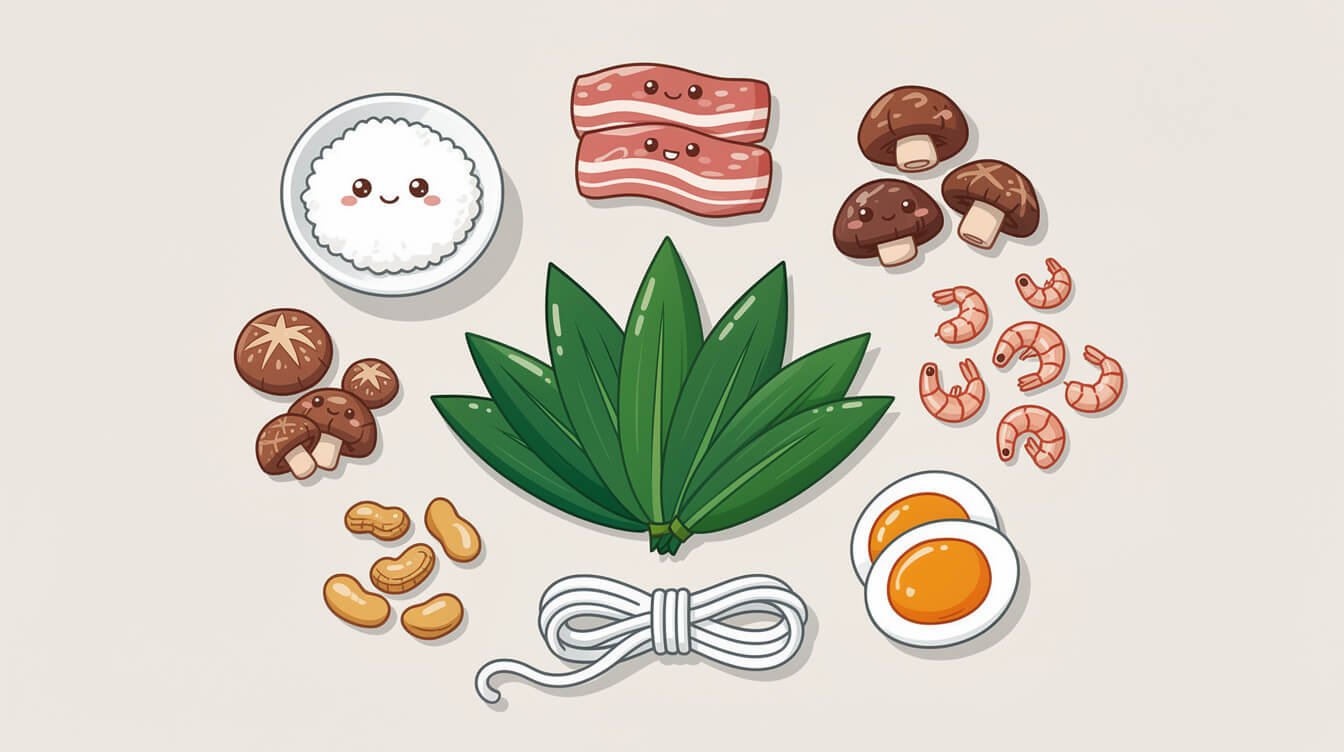
This zongzi recipe makes about 12 to 14 medium dumplings. Quantities are generous on purpose — zongzi freezes beautifully and tastes even better reheated.
For the rice
- 1 kg (about 5 cups) long-grain glutinous rice (sticky rice / 糯米)
- 3 tbsp soy sauce
- 1 tbsp dark soy sauce (for color)
- 1 tsp white pepper
- 3 tbsp shallot oil plus 3 tbsp fried shallots
For the filling
- 700 g pork belly, cut into 2.5 cm chunks
- 12–14 dried shiitake mushrooms, soaked until soft
- 7 salted duck egg yolks, halved
- 100 g dried shrimp, soaked
- 150 g raw peanuts, soaked overnight (or use cooked)
- 3 tbsp soy sauce, 1 tbsp sugar, 1 tsp five-spice powder, 2 cloves garlic, 1 tbsp rice wine
For wrapping
- 30–40 dried bamboo leaves (buy extra — some always tear), soaked overnight and boiled 10 minutes
- Food-grade cotton kitchen twine
No salted egg yolks or dried shrimp nearby? Leave them out — a pork, shiitake, and peanut zongzi is still gloriously authentic. If you want to see where this dish sits among Taiwan’s culinary icons, our roundup of the most famous food in Taiwan puts it in context.
Step-by-Step Taiwanese Zongzi Recipe: From Soaking to Steaming
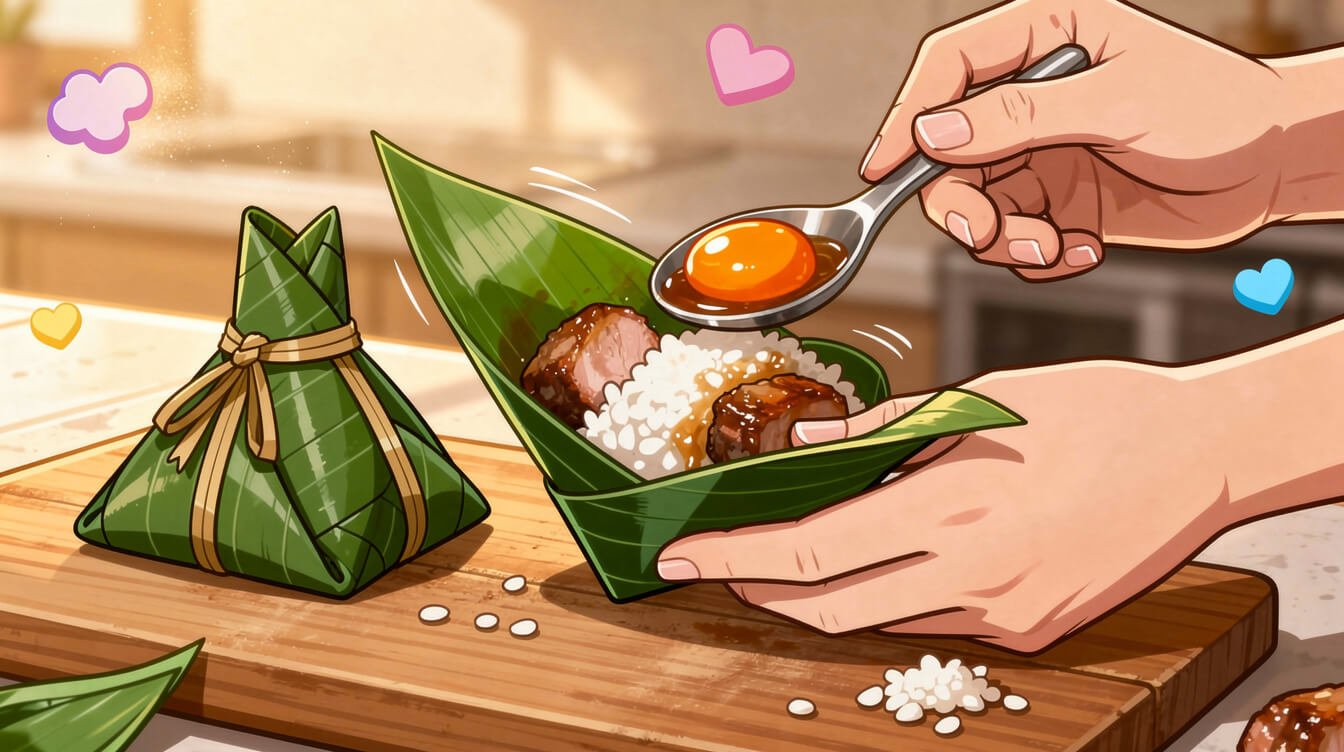
Set aside an afternoon. None of these steps is hard, but zongzi rewards patience. Read the whole zongzi recipe through once before you start.
Step 1 — Soak everything (the day before)
Soak the glutinous rice in cold water for at least 4 hours or overnight, then drain well. Soak the bamboo leaves overnight, then simmer them for 10 minutes to make them pliable and to sterilize them; wipe each leaf clean. Soak shiitake, dried shrimp, and peanuts separately.
Step 2 — Braise the pork and fillings
Brown the pork belly, then add garlic, soy sauce, sugar, five-spice, rice wine, the sliced soaked shiitake, and enough mushroom-soaking liquid to barely cover. Simmer 40–50 minutes until the pork is tender and the braise is glossy. Reserve that braising liquid — it is liquid gold for the rice.
Step 3 — Stir-fry the rice (the northern signature)
In a wide pan, heat shallot oil, add fried shallots, then the drained rice. Toss over medium heat with soy sauce, dark soy, white pepper, and several ladles of the reserved braise until every grain is glossy and lightly seasoned. The rice should be barely sticky and only partly cooked — it finishes inside the leaf.
Step 4 — Wrap (the part everyone fears)
Overlap two bamboo leaves, shiny side up. Fold into a tight cone with no gap at the tip. Add a spoon of rice, then pork, shiitake, half an egg yolk, peanuts, and shrimp, then top with more rice — do not overfill. Fold the top leaves down over the opening, wrap the excess around to form a four-cornered pyramid, and tie firmly with twine. Snug but not strangled: the rice needs a little room to expand.
Channeling the same playful, food-obsessed pride into your wardrobe? Our 台灣街頭美食指南T卹 turns 12 night-market legends — zongzi energy included — into one wearable love letter to the island.
Step 5 — Steam
Stack the tied zongzi in a steamer, cover, and steam over rolling water for 1.5 to 2 hours, topping up water as needed. (Southern style: boil fully submerged for 2.5–3 hours instead.) They are done when the leaves smell intensely fragrant and a test dumpling holds its pyramid shape with tender, translucent rice.
Rest 10 minutes before unwrapping. If your first one looks lumpy, congratulations — that is exactly how grandma’s first hundred looked too. For more home-cooking wins, our 台灣美食食譜指南 has 15 more dishes to master.
Sweet, Hakka, and Alkaline: Taiwan’s Other Zongzi Styles
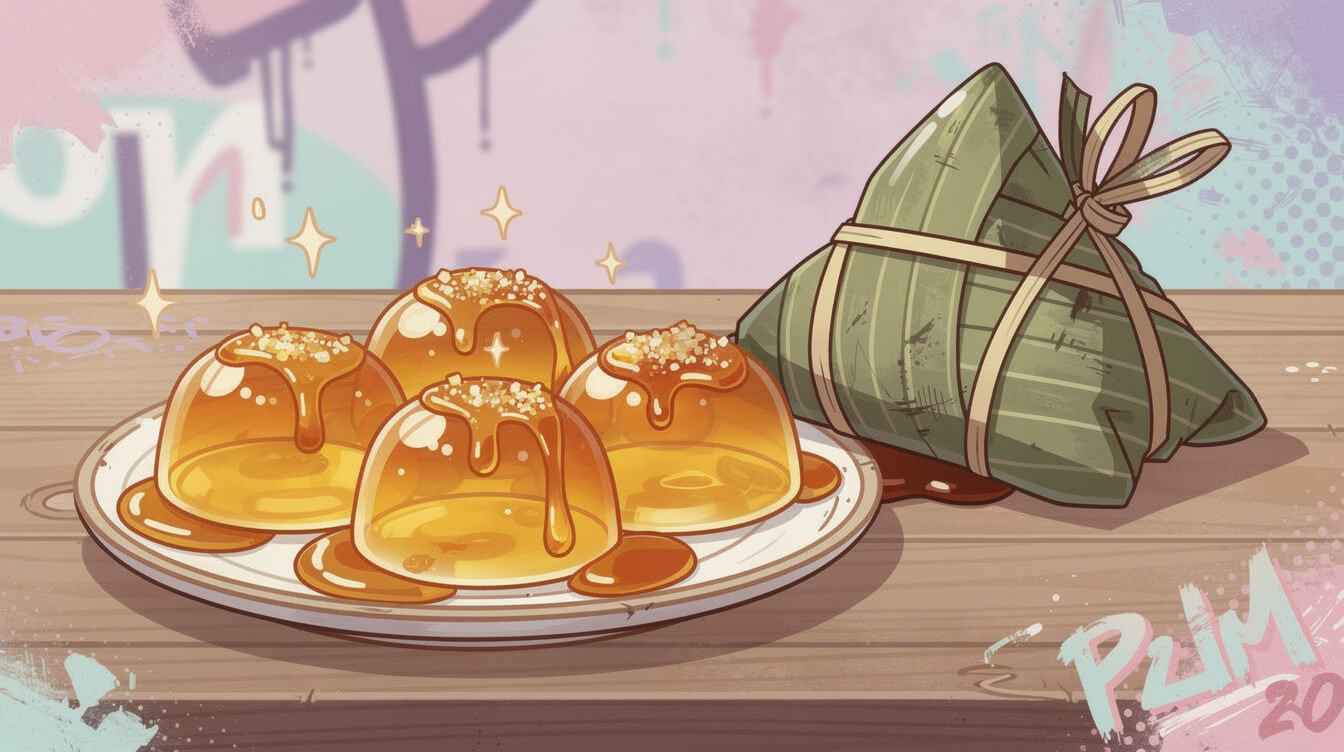
Savory bah-tsàng is the headliner, but Taiwan’s zongzi universe is bigger than most recipe sites admit.
Jian zong (鹼粽) — the dessert zongzi
Made with glutinous rice treated with alkaline water (lye water), jian zong cooks into a translucent, springy, amber jelly-like dumpling with almost no filling. It is served cold, dunked in sugar, honey, or syrup — Taiwan’s answer to a chilled summer dessert. If you have a sweet tooth like the one we celebrate in our 台灣鳳梨酥食譜, this is your gateway zongzi.
Hakka zongzi (粄粽)
The Hakka community makes ban zong, where the outer layer is a chewy pounded-rice dough rather than loose grains, wrapped around a savory dried-radish-and-pork filling. The texture is closer to mochi than to rice — distinctive and deeply regional.
Vegetarian and modern zongzi
Buddhist-influenced vegetarian zongzi swap pork for braised gluten, taro, chestnuts, and mushrooms, and they are excellent. In recent years you will also spot abalone luxury zongzi, cheese zongzi, and even bubble-tea-flavored novelty versions in Taipei — proof that tradition and trend live happily side by side on the island.
Pro Tips, Storage, and Zongzi Mistakes to Avoid
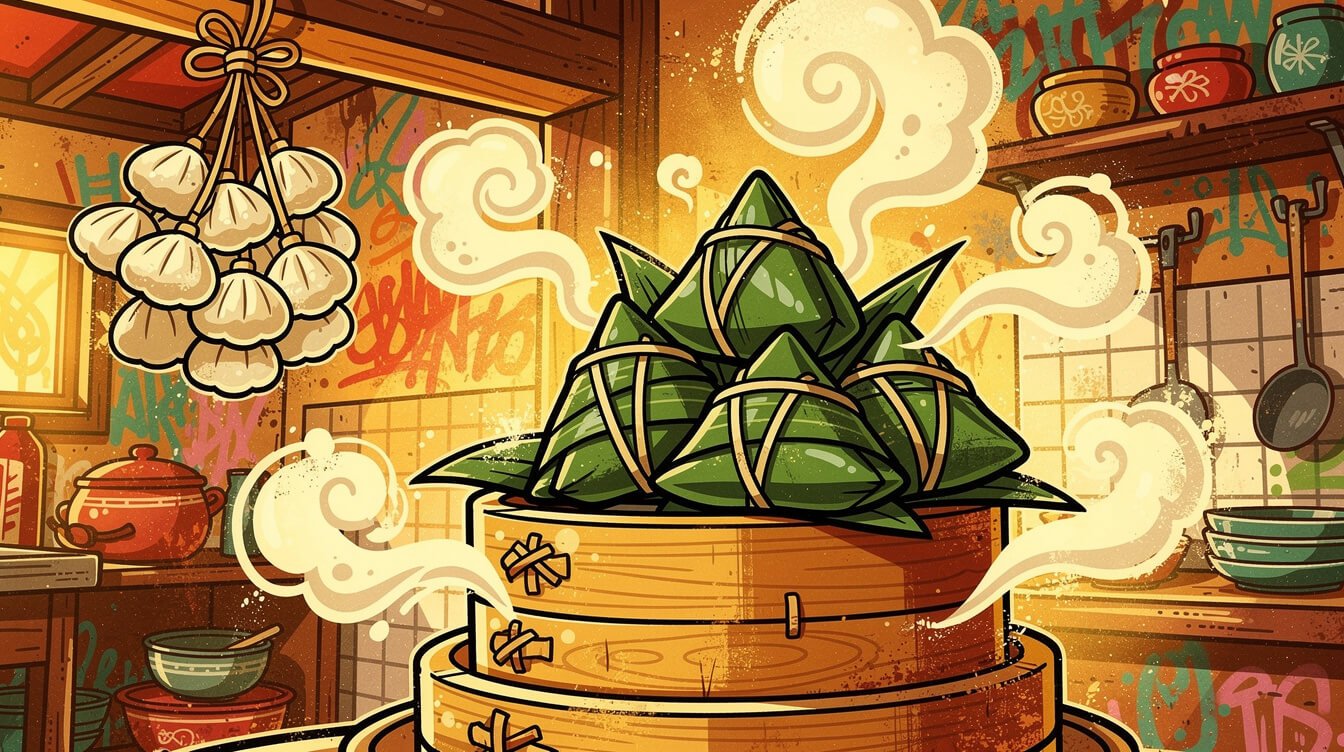
A few hard-won lessons that separate a leaky disaster from a picture-perfect pyramid:
- Do not overfill. The single most common beginner mistake. Glutinous rice swells; a packed parcel splits at the seams.
- Wrap tight at the tip. A loose cone point is where rice escapes during cooking. Pinch it closed before you add a single grain.
- Keep water boiling. Whether steaming or boiling, never let the heat drop or the rice cooks unevenly and stays chalky in the center.
- Boil extra leaves. Dried bamboo leaves crack. Prep 25 percent more than you think you need.
- Salt your egg yolks ahead. Brush halved yolks with rice wine and roast 5 minutes before wrapping to kill any raw taste.
Storage: Cooked zongzi keep 3–4 days refrigerated and up to 3 months frozen, still in their leaves. Reheat by steaming 15–20 minutes (from frozen, 30) or simmering 10 minutes. Microwaving works in a pinch — wrap in a damp paper towel — but steam is king for that fresh-made texture.
How to serve and actually eat one
Snip the twine with scissors, unfold the leaves on a plate (they make a perfect natural wrapper for eating with your hands), and eat warm. Northern-style needs nothing, but a smear of sweet chili sauce or a dab of Taiwanese soy paste is traditional. Southern-style begs for that peanut sauce. A pot of light oolong or a glass of cold soy milk cuts the richness beautifully — pour-over tea pairings are a whole rabbit hole if you love them as much as we do. One savory zongzi is a hearty meal on its own (roughly 400–600 calories depending on size and fillings), so resist the urge to plate three; freeze the rest and feel smug about it next week.

穿上你對台灣美食的熱愛
If wrapping zongzi made you fall harder for Taiwan’s food culture, take it with you. Our vintage-poster street food tee packs 12 island classics into one conversation-starting design.
Frequently Asked Questions About This Zongzi Recipe

What kind of rice do I need for zongzi?
Long-grain glutinous (sticky) rice, labeled 糯米. It is not the same as sushi rice or jasmine rice — only glutinous rice gives that signature chewy, cohesive bite. Soak it for at least four hours.
Can I make this zongzi recipe without bamboo leaves?
Bamboo or reed leaves give zongzi its defining aroma, so they are strongly recommended. In a true pinch you can use large lotus leaves or even parchment-and-foil parcels, but you will lose the perfume that makes zongzi taste like zongzi.
Why did my zongzi fall apart while cooking?
Almost always overfilling or a loose tie. Leave headroom for the rice to expand and cinch the twine firmly, especially at the pointed tip.
How long do they take and can I prep ahead?
Plan for an afternoon: soaking is overnight, assembly is 1–2 hours, cooking is another 1.5–3 hours. You can braise the filling and soak everything a day ahead, then wrap and cook the next day.
Is zongzi only eaten at Dragon Boat Festival?
It peaks around the festival, but Taiwanese eat bah-tsàng year-round as breakfast, a quick lunch, or a snack from breakfast shops and convenience stores. The festival just makes it a national event.
Where can I buy the ingredients outside Taiwan?
Any well-stocked Chinese or Asian grocery will carry glutinous rice, dried bamboo leaves, salted duck eggs, dried shrimp, and shiitake. Online Asian grocers ship the leaves and rice almost anywhere. If salted egg yolks are impossible to find, the dumplings are still excellent without them.
Is zongzi gluten-free?
Glutinous rice is naturally gluten-free despite the misleading name — “glutinous” refers to its sticky texture, not wheat gluten. The catch is the soy sauce and five-spice in the seasoning; use certified gluten-free tamari and check your five-spice blend and the dumplings are safely gluten-free.
Final Thoughts: Wrapping Up Your Zongzi Journey
Making zongzi from scratch is one of those rare kitchen projects that is equal parts cooking and cultural inheritance. Your first batch will be uneven. Your tenth will be muscle memory. Somewhere in between, you will understand why every Taiwanese family guards its own recipe and why the north-south debate never actually ends — because the argument is really just love for the same tradition expressed two ways.
So soak your rice, recruit a friend or two, and wrap a bundle of your own ahead of Dragon Boat Festival on June 19, 2026. Hang them in the kitchen, share them warm, and start your own family’s recipe. Taiwan’s most beloved dumpling is now yours to make — and to be loud and proud about. Bah-tsàng forever.

免費領取台灣貼紙!
留下您的郵箱,我們將向您發送限量版台灣貼紙——以及搶先了解最新商品發售信息和感受海島風情的機會。.
絕不發送垃圾郵件。隨時可以取消訂閱。.