Taiwanese Food vs Chinese Food: What’s the Difference and Why It Matters
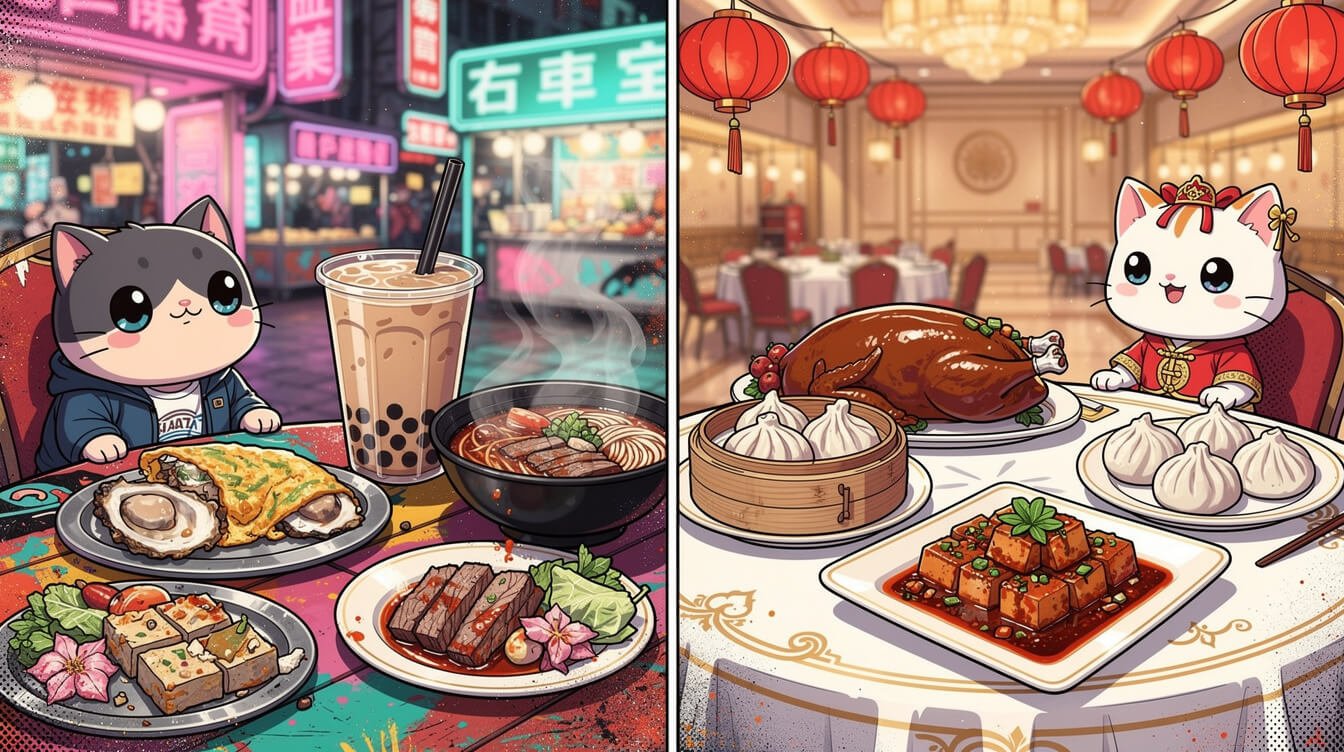
Ask ten people what the difference between taiwanese food vs chinese food really is, and you’ll get ten different answers — usually some mix of “isn’t it the same?”, “Taiwan is smaller and sweeter,” or a thoughtful pause followed by “actually, I don’t know.” It’s one of those questions that sounds simple until you start looking at a Taiwanese beef noodle bowl next to a Lanzhou one, or a Taipei night market spread next to a Sichuan banquet table. Then the differences start jumping out everywhere.
The short answer is that Taiwanese food shares some DNA with Chinese food the way English shares DNA with German — there’s a common ancestor, but four centuries of separate history have made them genuinely distinct cuisines. Taiwan’s food carries the layered fingerprints of Indigenous Austronesian cooks, 17th-century Hokkien fishermen, 50 years of Japanese rule, the post-1949 wave of mainland refugees, and a deep love of American snack culture. The result is a cuisine that’s sweeter, lighter, more seafood-forward, more breakfast-obsessed, and more attached to specific places than anything you’ll find across the strait.
This guide goes way past “Taiwan has bubble tea.” We’ll trace the historical forces, compare ingredients and flavor profiles side by side, pit five iconic dishes against their mainland counterparts, and finish with a practical cheat sheet you can actually use the next time you’re staring at two menus wondering which is which.
Why “Taiwanese Food vs Chinese Food” Is a Real Question (and Not Just a Political One)
For most of the 20th century, English-language food writing lumped Taiwan in with China, the way travel guides used to lump “the Orient” into a single chapter. Even Wikipedia, until pretty recently, treated Taiwanese cuisine as a subsection of Chinese cuisine. That’s now changed — and it changed because chefs, scholars, and a generation of Taiwanese-American food writers (most famously Clarissa Wei, whose 2023 cookbook Made in Taiwan argues the case in nearly 400 pages) made an undeniable case that Taiwan has its own food story.
The honest version goes like this: yes, Taiwan and China share a Han Chinese culinary backbone, especially the Fujianese/Hokkien strand that arrived with 17th-century settlers. But three forces pulled Taiwan’s food in a separate direction. First, Taiwan is a tropical island, so it grew different things — tropical fruits, sweet potatoes, oysters, milkfish — and lost the cold-climate ingredients of northern China. Second, Taiwan was a Japanese colony from 1895 to 1945, which is a long time for a culture to absorb soy sauce techniques, dashi-based broths, sashimi habits, and entire food categories like oden (which Taiwan calls 黑輪, hēi-lûn). Third, after 1949, two million mainland refugees arrived carrying regional Chinese cuisines that Taiwan then reinvented — Taiwanese beef noodle soup, the unofficial national dish, didn’t even exist before this wave.
So the question “is Taiwanese food the same as Chinese food?” has a clear answer: they’re cousins, not twins. And once you can spot the cousin resemblance, you start enjoying both more.
The Five Forces That Shaped Taiwanese Food (and Set It Apart)
Taiwanese cuisine isn’t a single tradition that drifted away from mainland Chinese cooking. It’s a layer cake of five separate influences, each of which Chinese cuisine on the mainland either never had or experienced very differently.
1. Indigenous Austronesian Roots (4,000+ years)
Long before any Han Chinese ship arrived, Taiwan was home to 16 recognized Indigenous tribes with their own millet, taro, wild boar, and bamboo-shoot cooking traditions. Modern Taiwanese food still uses millet wine, mountain-grown ginger, and a deep affection for sweet potato that traces back to these roots — you won’t find this layer anywhere in mainland Chinese cooking.
2. Hokkien (Min Nan) Settlers (17th century onward)
The largest wave of pre-modern migration came from Fujian province, especially the Hokkien-speaking port towns of Quanzhou and Zhangzhou. They brought oyster pancakes, fish ball soups, sweet potato porridge, and a Hokkien food vocabulary that’s still spoken in Taiwanese kitchens today. This is the shared DNA with mainland Chinese food — but already in a regional, coastal, sweet-leaning dialect that’s very different from northern Chinese cuisine.
3. Japanese Colonial Era (1895–1945)
Fifty years of Japanese rule rewired Taiwanese food in ways the mainland never experienced. Dashi-style umami broths, sashimi habits, bento culture, soy sauce brewing techniques, the entire concept of “Japanese-style” Taiwanese restaurants — all of it took root here and not in China. Even Taiwanese rice farming was reshaped by Japanese agronomists who introduced the short-grain Penglai rice strain still grown today.
4. 1949 Mainland Diaspora
When the Kuomintang fled to Taiwan in 1949, roughly two million mainland Chinese arrived carrying recipes from Sichuan, Shanghai, Beijing, Hunan, Shandong, and a dozen other regions. Taiwan absorbed all of it at once and remixed everything. Taiwanese beef noodle soup (台灣牛肉麵) was invented in the 1950s by Sichuanese military veterans in Kaohsiung who couldn’t get their hometown ingredients and improvised with what Taiwan had. It now bears little resemblance to anything you’d find in Sichuan.
5. American Influence and the 7-Eleven Era (1950s onward)
Post-WWII U.S. military presence, then decades of trade and pop culture, embedded American snack and breakfast culture into Taiwan. Hand-shaken iced tea, fried chicken, sandwiches, and Western pastries all got Taiwanified. Mainland China didn’t open to American influence in the same way until much later, and it shaped urban food culture differently.
Ingredients and Flavor Profiles: Side by Side
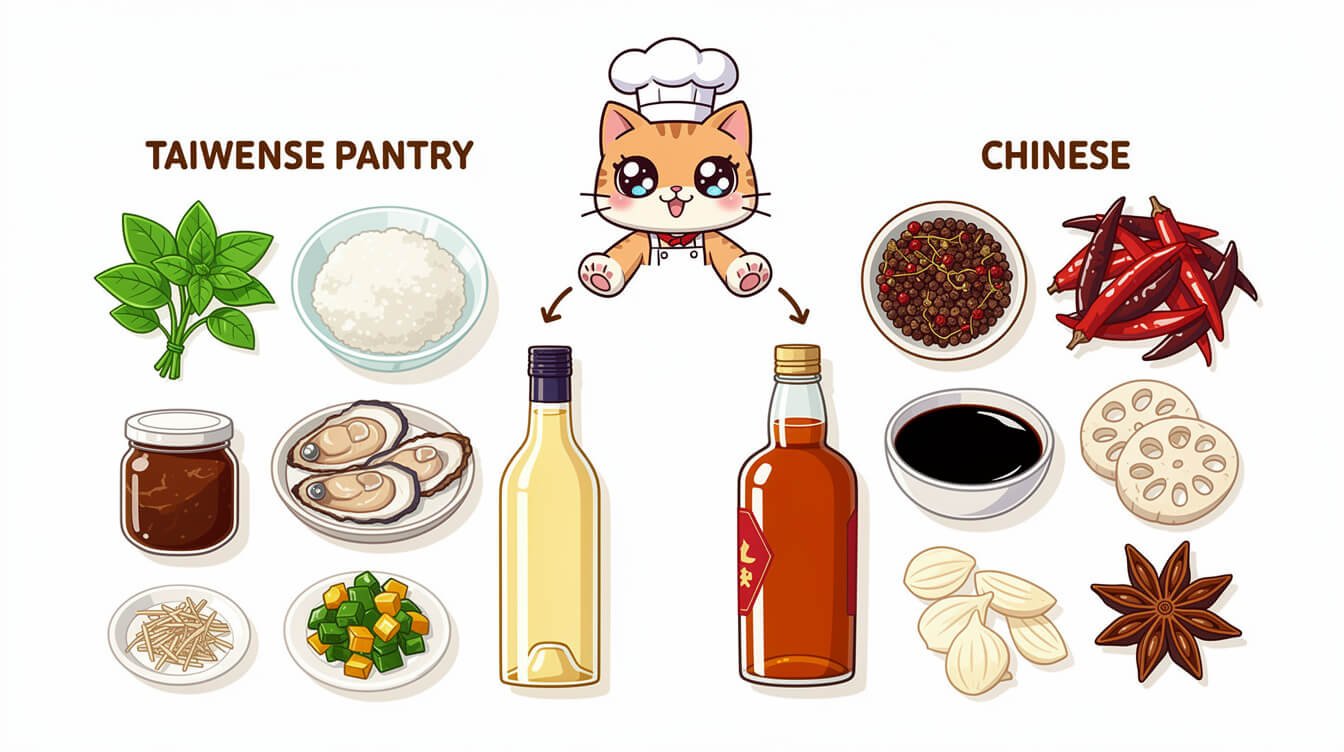
If you opened a Taiwanese pantry and a Chinese pantry side by side, you’d see a lot of overlap — soy sauce, rice wine, scallions, garlic, ginger — but you’d also see immediate divergences. Here’s what jumps out.
Taiwanese pantry essentials: Thai basil (九層塔), sweet potato starch, fresh oysters, milkfish, dried bonito flakes, soy paste (醬油膏 — a thickened, sweeter cousin of regular soy sauce), rice wine, fermented mustard greens (酸菜), Taiwan-grown black tea, pickled daikon, sesame oil, white pepper. The flavor leans sweet, briny, umami, mildly aromatic.
Mainland Chinese pantry essentials: Light and dark soy sauce, Shaoxing wine, Sichuan peppercorns, dried chilies, doubanjiang (fermented broad bean paste), star anise, fennel, lotus root, lily bulbs, fermented black beans, scallions, ginger, garlic. Flavor profiles vary by region but lean salty, savory, often hot or numbing, deeply aromatic.
The big flavor difference: sweetness. Taiwanese cooking uses sugar more freely — in soy braises, in sauces, in beverages, even in savory breakfast dishes. That’s partly a Fujianese inheritance (Hokkien cooking has always leaned sweet) and partly a Japanese influence (Japanese soy braising likes a sweet-savory balance). Mainland Chinese cuisine has plenty of sweet dishes too, but they tend to live in dessert territory or in specific regional styles like Shanghainese hongshao.
The other big one: seafood vs. land protein dominance. Taiwan is an island roughly the size of Maryland, so seafood is everywhere — oysters in particular show up in countless Taiwanese dishes (oyster omelet, oyster vermicelli, oyster soup). Mainland Chinese cuisine has phenomenal seafood traditions in coastal Guangdong and Fujian, but if you average across the country, you get more pork, beef, lamb, and chicken than you do shellfish.
Five Iconic Dishes, Compared Head to Head
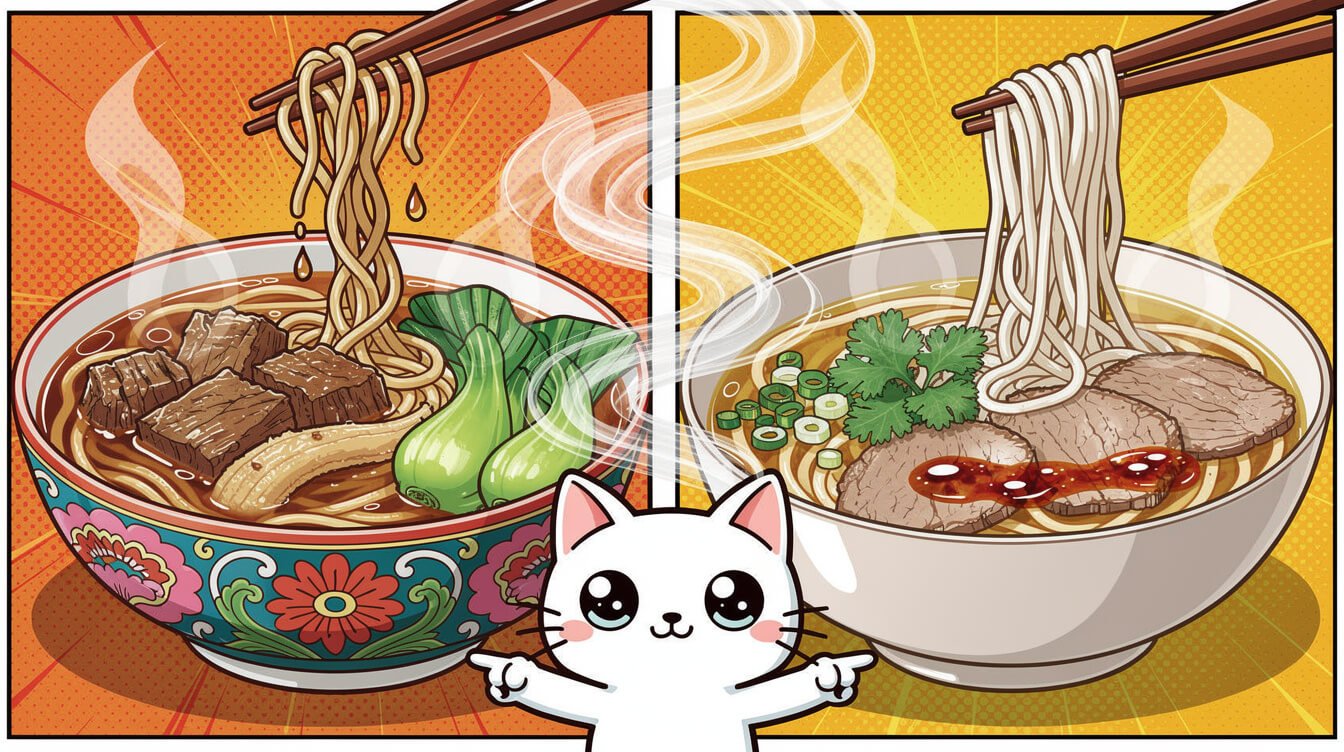
Abstract differences are interesting, but the easiest way to feel the gap between taiwanese food vs chinese food is to put specific dishes next to their mainland cousins. These five comparisons do most of the heavy lifting.
Beef Noodle Soup: Taiwan vs. Lanzhou
The most famous head-to-head. Taiwanese beef noodle soup (台灣牛肉麵) is a dark, amber-brown braise made with soy sauce, doubanjiang (introduced by 1949 Sichuanese vets), rice wine, star anise, ginger, and crucially pickled mustard greens (suāncài) on top. The beef is chunked, often with tendon, slow-braised until it surrenders. Lanzhou beef noodle (兰州牛肉拉面) from Gansu province is its opposite: a clear, golden broth simmered for hours, hand-pulled noodles to order, thin-sliced beef, daikon, cilantro, and chili oil. Both are spectacular. They are not the same dish.
If you love how Taiwan reinvented this dish — and you should — our Taiwanese Beef Noodle Cat Sweatshirt is a tribute to the bowl that became Taiwan’s unofficial national dish (and yes, the cat is holding chopsticks).
Dumplings: Xiaolongbao vs. Northern Jiaozi
Xiaolongbao (小籠包) — the famous soup dumplings perfected at Din Tai Fung in Taipei — actually trace to Shanghai’s Nanxiang district. But the Taiwanese version is thinner-skinned, more delicate, and treated as a precision craft. Northern Chinese jiaozi (餃子) are thicker-skinned, often pan-fried, traditionally eaten by the dozen at Lunar New Year, and meant to be filling rather than refined. Same dumpling family, very different food cultures.
Tofu: Stinky Tofu vs. Mapo Tofu
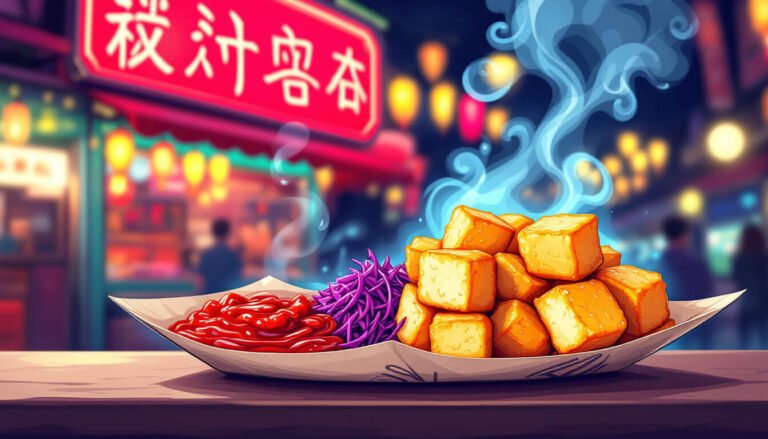
Mainland Chinese cuisine has Sichuan’s mapo tofu — silken cubes in a chili-Sichuan-peppercorn sauce with ground pork. Taiwan has stinky tofu (臭豆腐), fermented for weeks in a brine of vegetables, herbs, and shrimp, then deep-fried to a golden crust and topped with pickled cabbage and sweet sauce. They’re both tofu. They’re both legendary. They have almost nothing else in common.
Breakfast: Taiwanese Soy Milk Spread vs. Mainland Congee
A classic Taiwanese breakfast is hot or cold soy milk (豆漿), youtiao (oil sticks), danbing (egg crepes), shaobing (sesame flatbread), fan tuan (sticky rice rolls), and turnip cakes — a whole sit-down meal at 7 a.m. Mainland breakfast varies wildly by region, but the most common pattern is some form of congee with pickles, baozi, or noodles, and breakfast is generally faster and lighter. Taiwan treats breakfast as serious eating; mainland China generally doesn’t.
Tea Culture: Bubble Tea vs. Gongfu Cha
Taiwan invented bubble tea in the 1980s — cold, sweet, milky, full of chewy tapioca, designed to be slurped through a fat straw on a hot day. Mainland Chinese tea culture, by contrast, runs through gongfu cha — small clay teapots, tiny cups, multiple steepings, ritual focus on aroma and aftertaste. Both are tea cultures. They serve completely different moods.
How to Tell at a Glance: The Practical Cheat Sheet
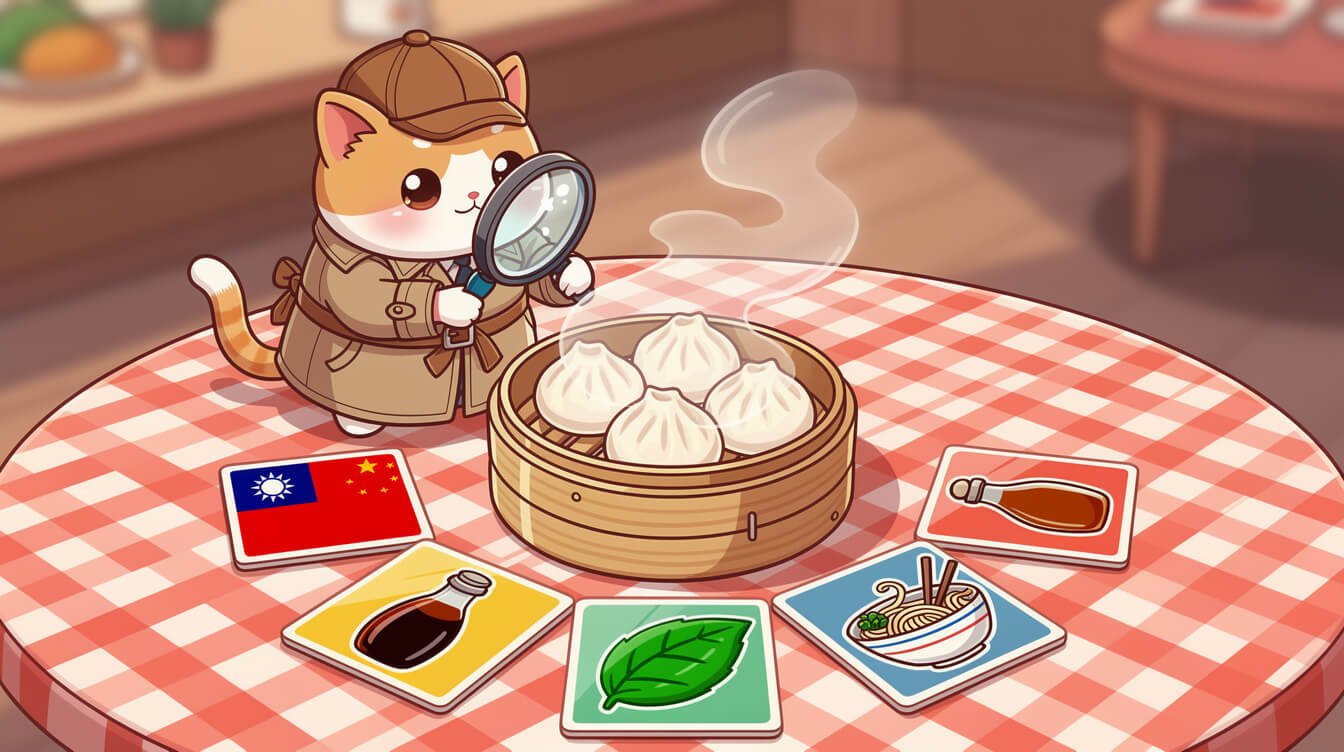
If you’re standing in front of a menu and trying to figure out whether you’re looking at Taiwanese or mainland Chinese cuisine, here’s a quick field guide. None of these are absolute rules, but together they’re pretty diagnostic.
- Spot Thai basil (九層塔): If the menu features Thai basil — three-cup chicken (三杯雞), basil-fried clams, basil pork — you’re almost certainly in Taiwanese territory.
- Look for sweet potato: Taiwan’s affection for sweet potato runs deep. Sweet potato fries, sweet potato leaves stir-fried with garlic, sweet potato porridge, sweet potato balls in dessert soups — these are Taiwanese signals.
- Check for pickled mustard greens on noodle soup: Suāncài on top of a beef noodle bowl is a Taiwanese fingerprint.
- Look at the breakfast offerings: A full sit-down breakfast menu with soy milk, danbing, and shaobing means Taiwanese. Quick congee and baozi grab-and-go is more typical of mainland street culture.
- Listen for Hokkien vocabulary: If you hear or read 蚵仔 (ô-á, oyster) instead of 牡蠣 (mǔlì), or 麵線 (mī-suànn, vermicelli) called by its Taiwanese name, you’re with Taiwanese cooks.
- Notice the sweetness: Taiwanese savory dishes often have a perceptible sugar note — soy-braised pork (lurou) is sweet-savory, even the soy sauce is often thicker and sweeter (醬油膏).
- Watch the heat level: Mainland Sichuan and Hunan dishes can burn your face off. Taiwanese dishes lean mild, with chili usually as a side condiment rather than baked in.
- Look for Japanese borrowings: Oden (黑輪), sushi-style rolls, mochi desserts, ramen-influenced noodle soups — these point Taiwanese.
- Find seafood ubiquity: Oysters in everything, milkfish, squid, mackerel — Taiwan’s island geography shows up on the plate.
- Scan for night-market dishes: Stinky tofu, fried chicken cutlets (鹽酥雞), oyster vermicelli, papaya milk — these are Taiwan night-market specialties that don’t really have mainland equivalents.
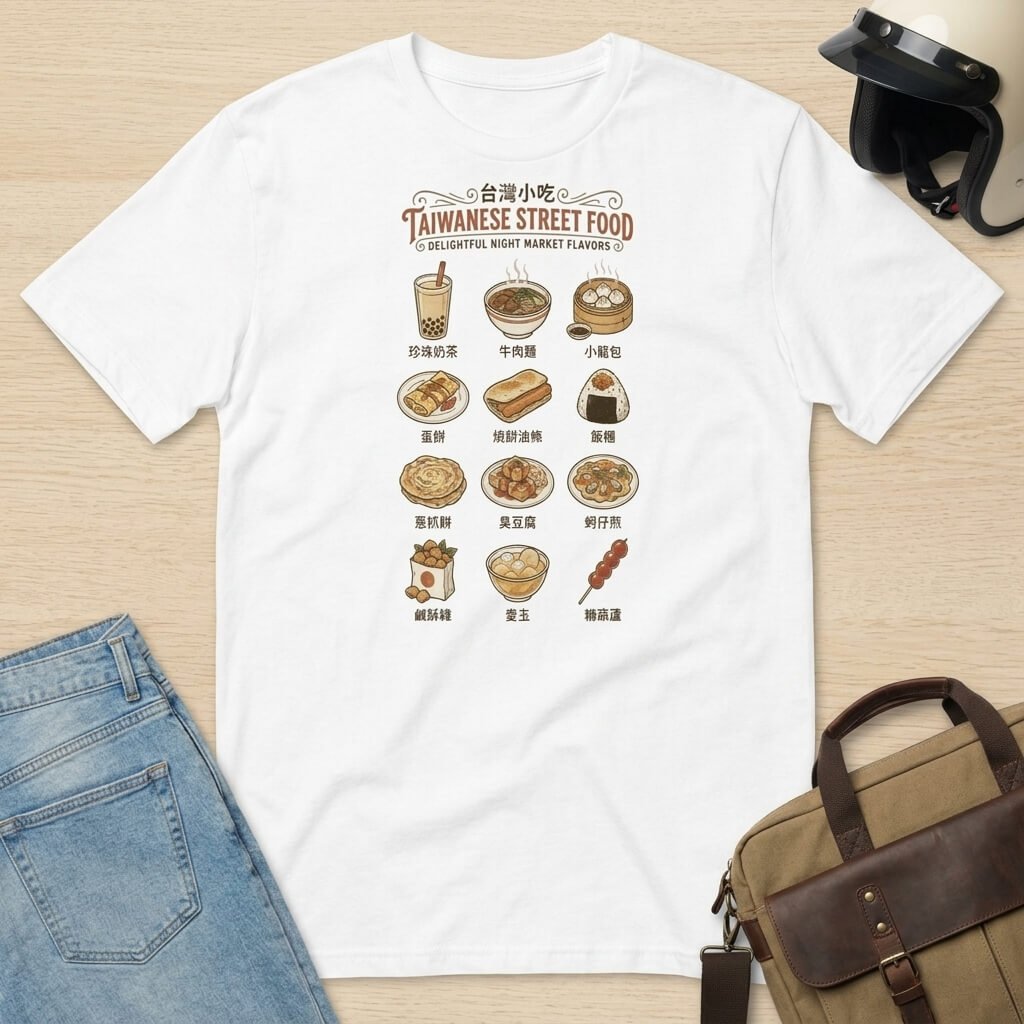
Wear Taiwan’s Food Story
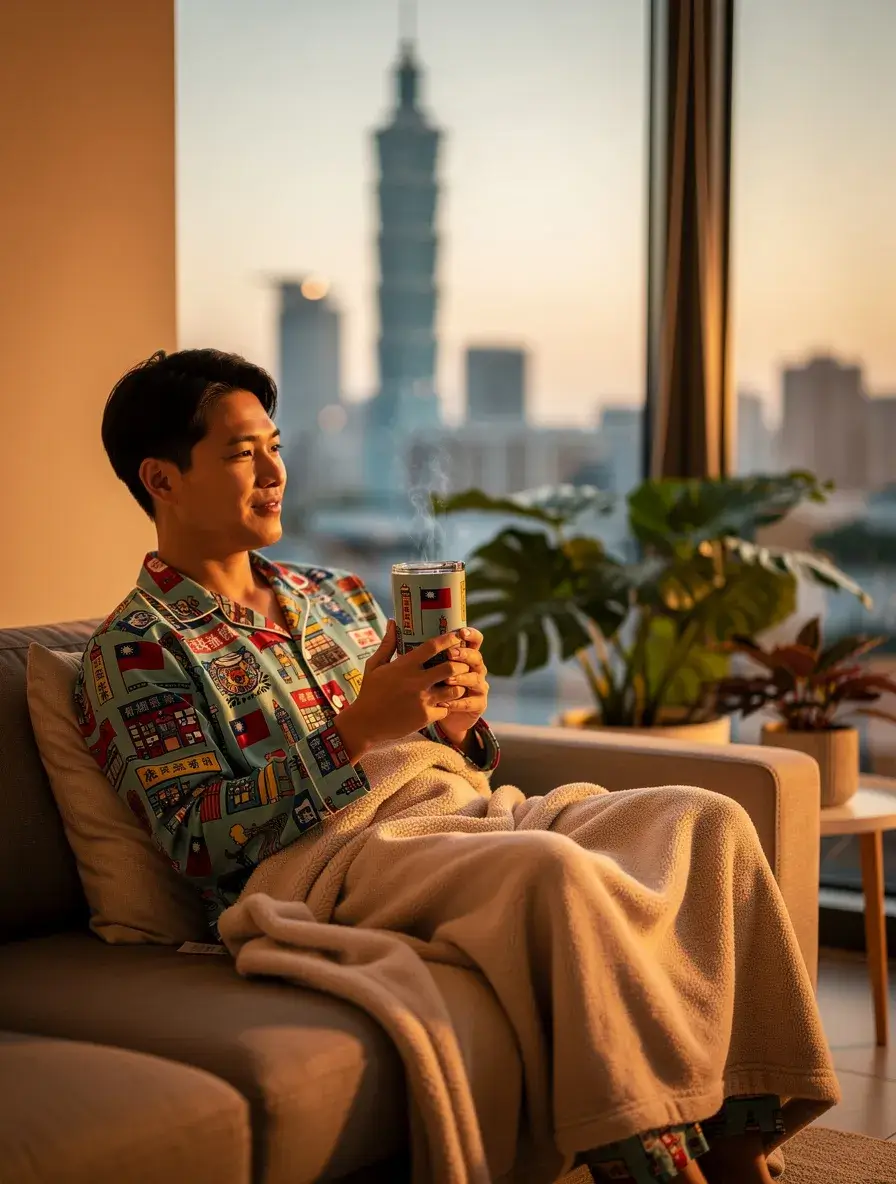
A vintage-poster tribute to the dishes that make Taiwanese cuisine unmistakably its own — beef noodle, stinky tofu, oyster omelet, bubble tea, and more, all on one shirt.
Frequently Asked Questions About Taiwanese Food vs Chinese Food
Is Taiwanese food just a regional Chinese cuisine?
Not really. Taiwanese food shares a Han Chinese — specifically Fujianese — backbone, but it’s been shaped by four centuries of separate history: Indigenous Austronesian, Hokkien, Japanese colonial, post-1949 mainland diaspora, and American. Modern scholarship (notably Clarissa Wei’s 2023 cookbook Made in Taiwan) treats it as its own national cuisine, the way Korean food is distinct from Chinese food despite shared influences.
Why is Taiwanese food sweeter than mainland Chinese food?
Two reasons. First, Hokkien cuisine — Taiwan’s main culinary ancestor — has always leaned sweet, using sugar in soy braises and sauces. Second, 50 years of Japanese rule baked in the Japanese taste for sweet-savory balance (think teriyaki-style glazes). Together they made Taiwanese cooking notably sweeter than most northern or western Chinese regional cuisines.
Did Taiwan really invent bubble tea?
Yes. Bubble tea was invented in Taichung in the 1980s, most commonly credited to Chun Shui Tang teahouse around 1986–88. It then exploded across Taiwan, then East Asia, then the world. It’s now a multi-billion-dollar global category, and the headquarters of the major chains (Tiger Sugar, Coco, The Alley, Gong Cha) are still in Taiwan.
Is Din Tai Fung Taiwanese or Chinese?
Din Tai Fung is Taiwanese. The founder, Yang Bingyi, was born in Shanxi province on the mainland but fled to Taiwan in 1948. He opened a cooking oil shop in Taipei in 1958 and pivoted to xiaolongbao in 1972. The xiaolongbao recipe traces to Shanghai (Nanxiang district), but the company, the craft refinement, and the global brand are entirely Taiwanese.
Are stinky tofu and mapo tofu related?
Only in the sense that both use tofu. Stinky tofu is a Taiwanese (and Hunanese) fermented street food, deep-fried and served with pickled cabbage. Mapo tofu is a Sichuan banquet dish of silken tofu in a spicy-numbing sauce. Completely different traditions, completely different textures, completely different occasions.
What about Cantonese food? Is that more like Taiwanese?
Cantonese cuisine (Guangdong province) shares more with Taiwanese food than northern Chinese cuisines do — both are coastal, seafood-friendly, and slightly sweet — but they’re still distinct. Cantonese cooking emphasizes freshness and steaming and has a huge dim sum tradition that Taiwan doesn’t really share. Taiwanese cooking pulls more from Hokkien and Japanese influences than Cantonese does.
Is “Chinese food” in America actually Chinese or Taiwanese?
Mostly neither. American Chinese food (General Tso’s chicken, fortune cookies, crab rangoon) was largely invented in the U.S. by Chinese immigrants adapting to American tastes. Many of those immigrants were Cantonese, then later Taiwanese and Fujianese. So “Chinese food” in America is its own diaspora cuisine — related to both, identical to neither.
Final Thoughts: Why the Difference Matters
Food carries identity. When you tell someone “I cook Taiwanese food” and they reply “oh, like Chinese food,” it lands the way “you’re from New Zealand? So basically Australian, right?” lands. It’s not hostile, but it erases a real history and a real cuisine. Taiwan has spent decades — through chefs, cookbook authors, restaurateurs, and a relentless street-food culture — making the case that its food is its own thing.
That doesn’t mean the influences don’t matter. Taiwanese food without its Hokkien backbone, Japanese refinements, and 1949 mainland infusions would be unrecognizable. But the same is true the other way: mainland Chinese food without the Mongol meat traditions of the north or the Indian Ocean spice trades of the south would also be unrecognizable. Every cuisine is a layered history. Taiwan’s just happens to be unusually well-documented and unusually distinct — and worth knowing on its own terms.
If this piece pulled you deeper into the rabbit hole, our full guide to Taiwanese traditional food and our island-wide street food atlas are the natural next stops.
Want More Stories Like This?
Join our newsletter for weekly deep-dives into Taiwanese food, culture, and the stories behind the merch. No spam — just the good stuff from the island.
Grab a Free Taiwan Sticker!
Drop your email and we’ll send you a limited-edition Taiwan sticker — plus insider access to new merch drops and island vibes.
No spam. Unsubscribe anytime.