Taiwan Gift Giving Etiquette: Rules, Taboos, and Perfect Gift Ideas for Every Occasion
Taiwan gift giving is one of those quietly intricate corners of Taiwanese culture where a single misstep can turn a thoughtful gesture into an awkward silence — and where getting it right can deepen a relationship faster than almost anything else you do on the island. Whether you are bringing a thank-you gift to a Taiwanese host family, sending a wedding present from abroad, navigating your first Lunar New Year as a new in-law, or wondering what on earth your business counterpart in Taipei would actually appreciate, the rules are real and the meanings run deep. This is the most complete modern guide to Taiwan gift giving on the internet: every taboo, every occasion, every hongbao amount, plus what young Taiwanese actually want in 2026 — and yes, what to do when you live ten thousand miles away and still want to send something that lands beautifully.
Think of this as the etiquette companion to our broader gifts to bring to Taiwan guide. That one focuses on what to pack in your suitcase. This one focuses on the how — the rituals, the timing, the wrapping, the words you say, the way you present, and the way you receive. Because in Taiwan, the gift is rarely just the gift.
The Heart of Taiwanese Gift Giving: Why It Is More Than Politeness
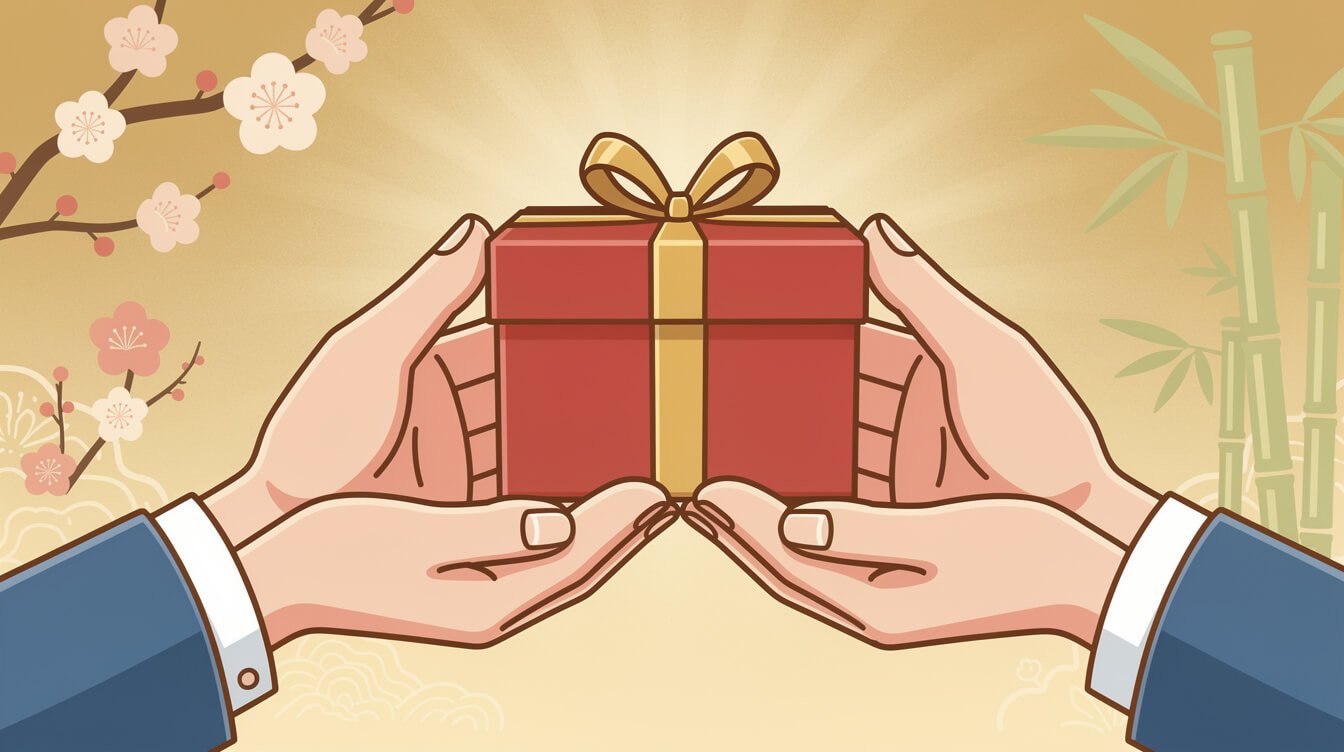
In Taiwanese culture, a gift is a small parcel of guānxì — relationship. It is a way of saying “I see you, I value you, I want this connection to continue.” That sentiment is older than the modern republic and threaded through Confucian, Buddhist, Taoist, Hakka, and Indigenous traditions alike. The Mandarin phrase “禮輕情意重” (lǐ qīng qíng yì zhòng) sums it up: the gift is light, but the feelings behind it are heavy.
This means the value of a Taiwanese gift is almost never about its price tag. A neighbor who brings you a bag of homegrown Taiwan fruit from their backyard is offering something far more meaningful than a stranger handing over a flashy designer box. What matters is the thought, the occasion, the timing, the presentation, and increasingly in modern Taiwan, the story behind the gift.
A few foundational principles to internalize before we get into the do’s and don’ts:
- Reciprocity is sacred. If someone gives you a gift, you will eventually return one of roughly equal warmth and value. Not immediately — that can feel transactional — but the social ledger is always remembered.
- Always present with both hands. Offering a gift one-handed is the cultural equivalent of tossing a wedding ring across the table. Two hands, slight bow, eye contact, soft smile.
- Refuse before you accept. When given a gift, the polite first response is to gently decline once or twice (“這太客氣了” — “this is too kind”) before accepting. The giver expects the small dance.
- Never open it in front of the giver. Opening a wrapped present in front of the person who gave it is considered greedy in Taiwan — even at birthdays. Set it aside, thank them warmly, and open it later in private.
- Wrap it. An unwrapped gift in Taiwan is like serving food on the floor. Even a bag of fruit gets a neat paper handle bag with a little ribbon.
Once you understand that every gift is a quiet sentence in a long conversation about respect, the rules that follow stop feeling arbitrary and start feeling intuitive.
Traditional Taiwan Gift Giving Taboos (The Complete List)
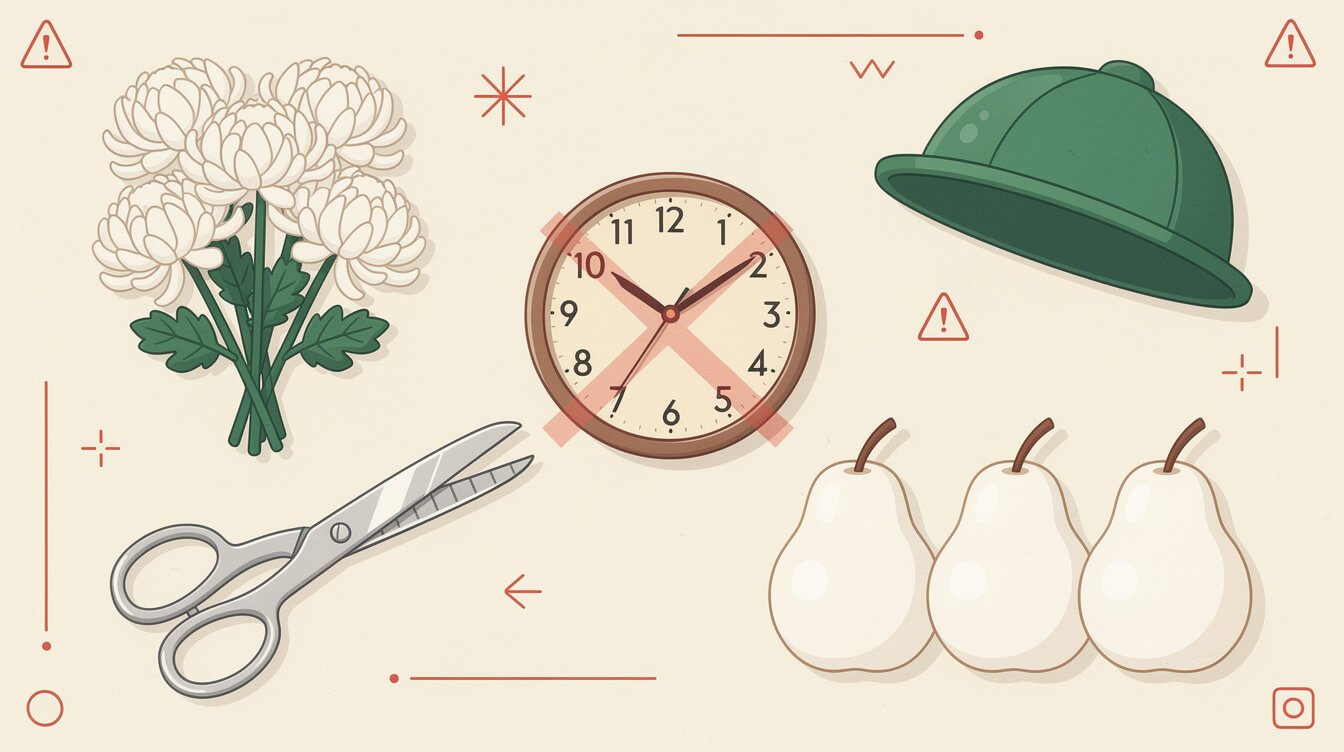
Most blog posts on Taiwanese gift etiquette list the same five or six taboos and call it a day. The reality is richer — many of these rules trace back to homophones in Mandarin and Taiwanese Hokkien, where the sound of a word for an object collides with the sound of a word for something unlucky. Here is the full working list, organized by why each item is avoided.
The Homophone Taboos
- Clocks (鐘). The classic. “Giving a clock” (送鐘 sòng zhōng) sounds identical to “attending a funeral” (送終 sòng zhōng). Never give a wall clock, mantel clock, or even a fancy table clock — especially to an elder. Wristwatches and stopwatches are usually fine because they are called biǎo (錶), not zhōng.
- Umbrellas (傘). The word for umbrella (sǎn) sounds like the word for “to break up” or “scatter” (散 sàn). Avoid for couples, business partners, or anyone you want to stay close to.
- Pears (梨) — when given as a sole gift or split. The word for pear (lí) is a homophone for “separation” (離 lí). Pears are fine in a mixed fruit basket, but never gift a single pear or split one to share with a romantic partner.
- Shoes (鞋). In Taiwanese Hokkien, “shoes” (ê) sounds like “evil” or “bad luck” (邪). Also, giving shoes is symbolically telling the recipient to “walk away.” If someone insists on giving you shoes, a token NT$1 coin from the recipient turns it into a symbolic sale rather than a gift.
- The number four (四 sì). Sounds like “death” (死 sǐ). Never give four of anything — four flowers, four mooncakes, four bottles of wine. Six (good fortune), eight (prosperity), and nine (longevity) are auspicious counts.
The Funeral and Mourning Taboos
- White and yellow chrysanthemums. These are funeral flowers. White lilies and white roses fall into the same category. For happy occasions, choose pink, red, peach, or gold.
- White or black wrapping paper. Both are mourning colors. Wrap in red, gold, pink, orange, or playful pastels. Red and gold are the safest bets for almost any happy event.
- White envelopes for cash. White envelopes (白包 báibāo) are for funerals. Red envelopes (hongbao) are for celebrations. We will get to the math in the next section.
- Handkerchiefs. Associated with tears and goodbyes. Even cute designer ones.
The Sharp and Cutting Taboos
- Scissors, knives, letter openers, and anything bladed. Sharp objects “sever” relationships. If you genuinely need to give someone a kitchen knife set (say, for a housewarming), the same NT$1 coin trick converts it into a symbolic purchase.
The Color and Object Taboos
- Green hats. Possibly the most famous Taiwanese gift taboo. “Wearing a green hat” (戴綠帽 dài lǜ mào) means your partner is cheating on you. Never gift a man a green hat. Other green clothing items are fine.
- Mirrors. They are believed to attract spirits and reflect bad energy. Some superstitious recipients won’t accept them. Skip them outside of intimate gift exchanges.
- Used or secondhand items. Unless it is a deliberate heirloom passed through your family (and framed as such), used items as gifts feel disrespectful.
- Anything broken, chipped, or with damaged packaging. Replace it. The presentation is part of the gift.
One last universal taboo: never let the recipient see the price tag. Remove it cleanly, and never gift anything still wearing a sale sticker.
Red Envelope (Hongbao) Guide: How Much to Give and When
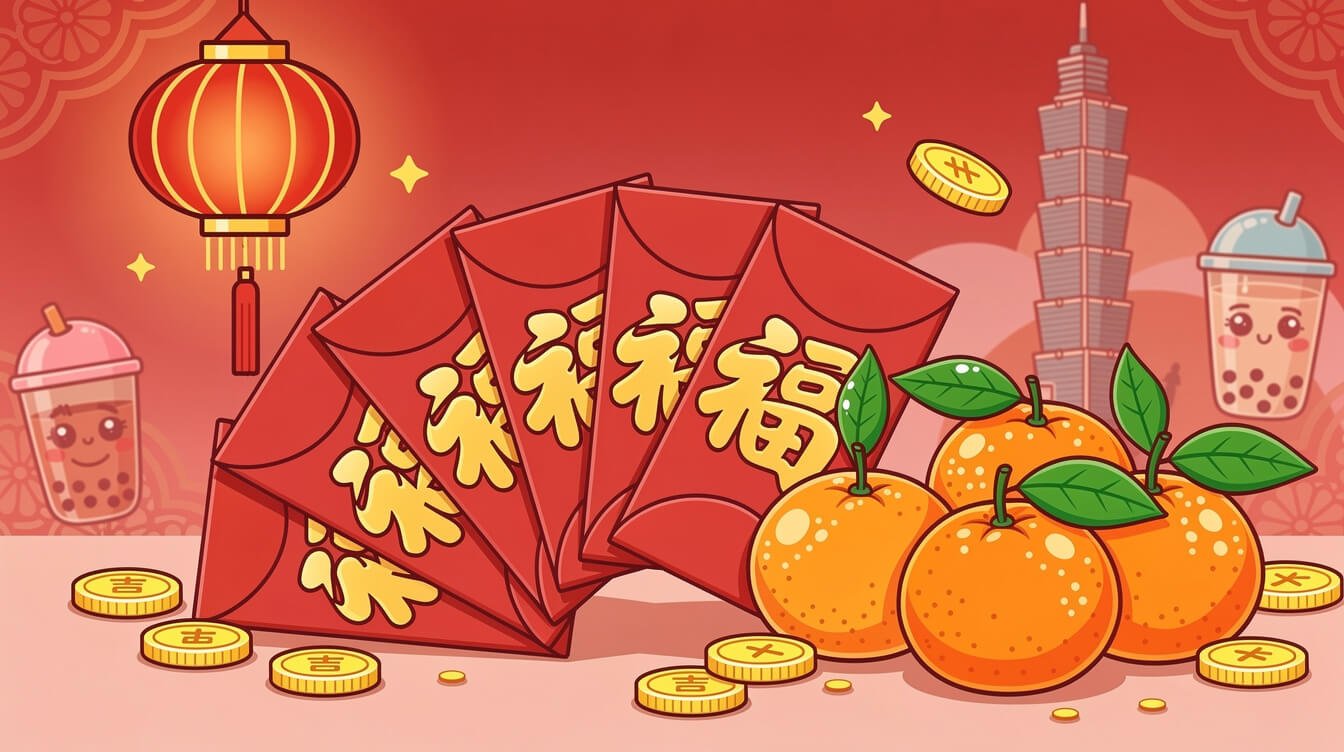
The hongbao (紅包) — literally “red packet” — is the most ritualized form of gift giving in Taiwan, and the one that confuses outsiders the most. The envelope itself is a small red and gold sleeve, usually with auspicious Chinese characters like 福 (fortune), 春 (spring), or 囍 (double happiness) embossed on the front. What goes inside is cash, and the amount carries enormous symbolic weight.
The Universal Hongbao Rules
- Always use crisp, new banknotes. Banks in Taiwan stock fresh bills before Lunar New Year specifically for hongbao. Folded or worn notes are considered careless.
- Always use even-numbered amounts. Even numbers signal happiness. Odd numbers are reserved for funeral white envelopes.
- Avoid any total containing a 4. NT$400, NT$1,400, NT$4,000 — all skipped.
- Favor amounts with 6, 8, or 9. Six is smooth, eight is wealth (its Mandarin pronunciation, bā, rhymes with fā 發 — “to prosper”), and nine signals enduring longevity.
- Always seal the envelope. An open envelope means the gift is “leaking” away.
Hongbao Amounts by Occasion (2026)
These are the modern social benchmarks. Adjust for your relationship and city — Taipei tends to run higher than Tainan or Hualien.
- Lunar New Year — to your own children: NT$200 to NT$2,000 for young children, NT$1,000 to NT$6,000 for teens, NT$6,000+ for unmarried adult children still living at home.
- Lunar New Year — to nieces, nephews, friends’ kids: NT$200 to NT$1,000 per child.
- Lunar New Year — to your parents: NT$6,000, NT$8,800, or NT$16,800 are popular “filial piety” amounts.
- Lunar New Year — to grandparents: NT$6,000 to NT$10,000 if you are working and earning.
- Weddings — close friend or family: NT$3,600, NT$6,000, or NT$6,600 if attending the banquet alone. NT$6,600 to NT$12,000 if attending as a couple. Bump higher if you are the same-generation cousin or sibling.
- Weddings — colleague or distant relative: NT$2,200 or NT$2,600 if not attending the banquet, NT$3,600 minimum if attending.
- Newborn baby (滿月 mǎn yuè, the one-month celebration): NT$1,200 to NT$3,600.
- Housewarming (入厝 rù cuò): NT$1,200 to NT$3,600.
- Birthdays for elders (壽 shòu — especially 60th, 70th, 80th): NT$3,600 to NT$8,800.
If you are not attending the wedding banquet, the rule of thumb is to give roughly half what your seat would have cost the couple — but never less than NT$1,200, because anything below feels like an insult. For business weddings or weddings you receive an invitation to but don’t know the couple well, NT$2,200 to NT$2,600 is the safe minimum, and the envelope should be delivered by hand or by a mutual friend rather than mailed.
The Funeral White Envelope (白包)
For completeness: funeral envelopes use plain white, contain an odd amount, and are typically NT$1,200, NT$2,200, or NT$3,600 (note: 3,600 reads as 三千六, “san qian liu” — and in some families that combination of digits is considered acceptable for either occasion, but as a foreigner, stick to odd totals for funerals). Bills should be folded once. Hand the envelope to the family with both hands, head slightly lowered, and say nothing — silence is the proper expression of respect.
Gift Giving by Occasion: Lunar New Year, Weddings, Birthdays, and More
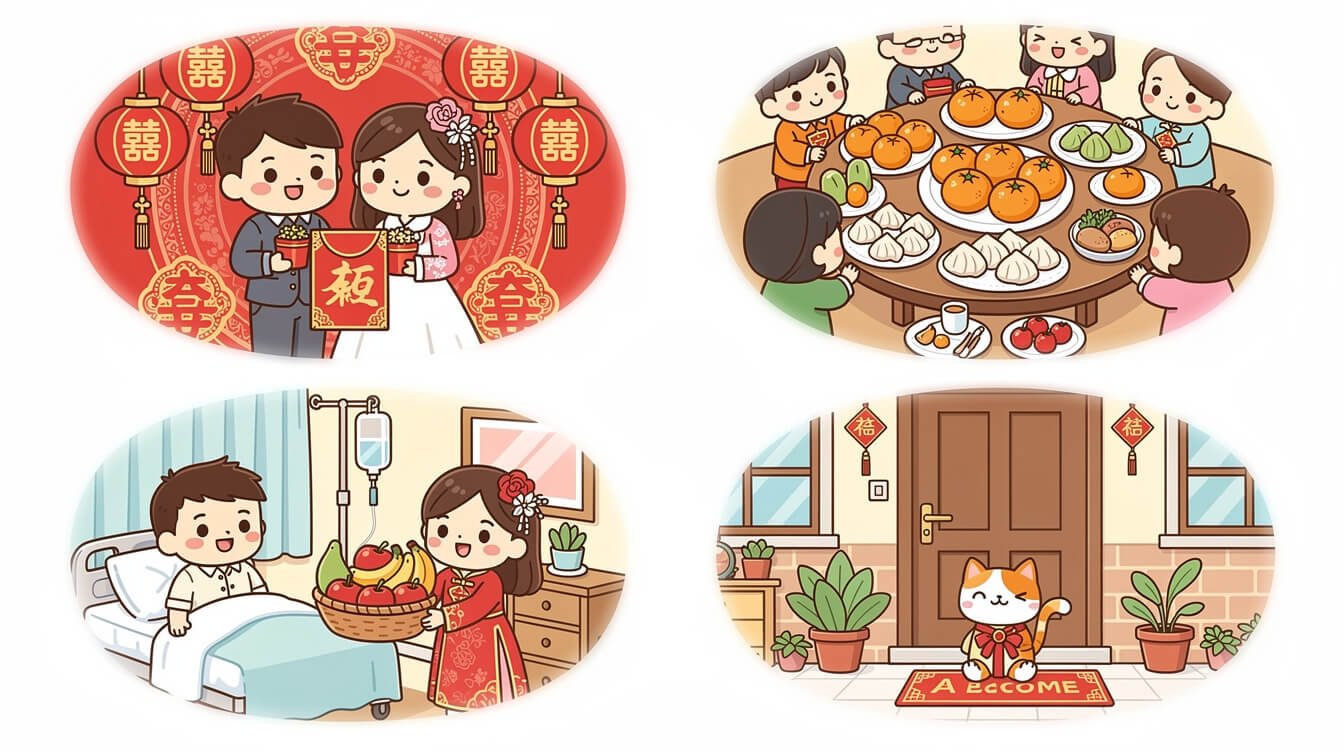
Once you have the universal rules and the hongbao math down, the next layer is occasion-specific gift selection. Each Taiwanese celebration has its own gift grammar.
Lunar New Year (春節 Chūn Jié)
The biggest gifting event of the year. Beyond hongbao, popular gifts include premium Taiwan oolong tea, boxed pineapple cakes, abalone gift boxes, dried mushroom gift sets, premium fruit baskets (apples are popular — 蘋果 píng guǒ contains 平 ping, “peace”), and bottles of Kaoliang liquor or Kavalan whisky for the older men in the family.
Weddings (婚禮 Hūn Lǐ)
In Taiwan, the standard wedding gift is the hongbao. Couples do not typically maintain registries. If you want to give a physical gift in addition to the envelope, a high-quality tea set, a piece of decorative gold jewelry (especially for the bride from family elders), or a luxurious home item like an espresso machine or fine bedding works beautifully. The gift is given at the banquet check-in table, never to the couple directly during the meal.
Birthdays (生日 Shēng Rì)
Younger Taiwanese birthdays look very Western — cake, candles, presents. Specifically Taiwanese touches include longevity noodles (壽麵) for the meal, and for milestone birthdays of elders (60, 70, 80, 90), a more formal “shou” banquet with red embroidered banners and traditional gifts like peach-shaped buns symbolizing long life.
Hospital Visits (探病 Tàn Bìng)
Fruit baskets are the standard, but never include pears (separation), bananas (yellow chrysanthemum-adjacent in some superstitious households), or anything with sharp edges. Apples, oranges, and grapes are safest. Some families also bring flowers — but again, no white or yellow chrysanthemums, no lilies. A potted plant suggesting recovery is even better than cut flowers.
Housewarmings (入厝 Rù Cuò)
Bring something that fills the new home with abundance: a bag of rice (the household will “never go hungry”), a pineapple (鳳梨 fèng lí sounds like 旺來 wàng lái — “prosperity comes”), a potted lucky bamboo or jade plant, or a hongbao tucked inside a card. Avoid clocks (you know why) and mirrors.
Funerals and Memorials
White envelope only. Flowers, if sent, should come through a professional florist who knows the funeral protocols. Personal gifts to the bereaved family are not expected and can feel intrusive. See our Taiwan funeral traditions guide for the full protocol.
Mid-Autumn Festival and Dragon Boat Festival
For Dragon Boat Festival, gift boxes of homemade or premium zòngzi (sticky rice dumplings) circulate through every family and workplace. For Mid-Autumn, mooncakes and pomelos are the currency — and a box of pomelos from southern Taiwan’s Madou or Ruisui regions is considered especially classy.
Mother’s Day and Father’s Day
Taiwanese Mother’s Day involves carnations (red for living mothers, white in remembrance of deceased mothers — important distinction). Father’s Day in Taiwan is celebrated on August 8 (8/8 — sounds like 爸爸 bà ba). Common gifts are a nice meal out, premium tea, a watch (not a clock!), or a quality shirt.
If you are a foreigner attending a wedding or banquet, consider gifting a thoughtful piece of Taiwan-themed merchandise alongside the hongbao. For instance, our Taiwan Bubble Tea Cat T-Shirt is a playful, on-trend gift that lands beautifully with the younger Taiwanese generation — kawaii without being childish, and unmistakably Taiwan-made-for-Taiwan-lovers.
Modern Gift Giving in Taiwan: What Young Taiwanese Actually Want
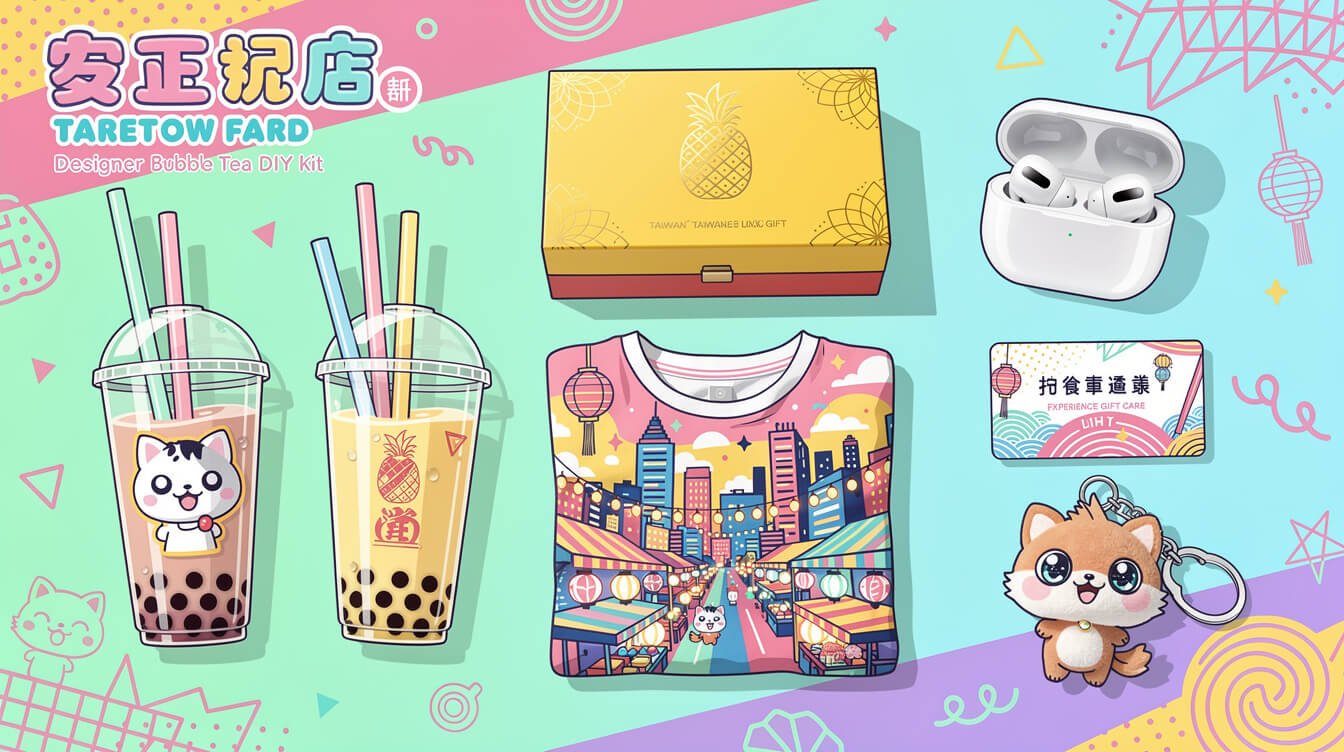
Walk through Ximending or the Eslite bookstore in Xinyi and you will quickly notice that the under-35 Taiwanese gifting world looks very different from the formal Confucian template. The taboos still hold (no clocks, no four-of-anything), but the gift catalog has expanded.
Experiences Over Objects
Young Taiwanese increasingly favor experience gifts: a voucher for a hot pot dinner, tickets to a Mayday concert, a weekend at a Beitou hot spring resort, a pottery class in Yingge, a couple’s spa day, or a guided Houtong cat village day trip. Klook, KKday, and FunNow gift vouchers are increasingly normalized as proper gifts.
Designer Snacks and Premium Food
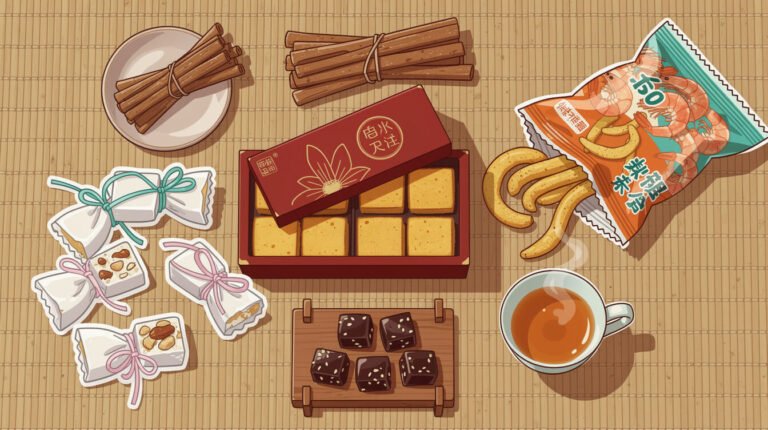
The “premium snack” category has exploded. Boxes of artisan pineapple cakes from SunnyHills or Chia Te, single-origin Taiwanese coffee from Alishan or Gukeng, small-batch oolong, premium dried fruit from Yujing — these signal taste and care without feeling stuffy. A NT$500 to NT$1,500 box of beautifully packaged snacks reads as “I thought about you” in a way a generic gift card never quite does.
Tech and Tools
AirPods, e-reader cases, wireless chargers, ergonomic mouse pads, premium thermos flasks — the practical-but-aspirational category is now firmly mainstream for friend and colleague gifting in Taipei. The catch: under-35s expect a brand they respect, not a generic department-store version.
Local Cultural Merchandise
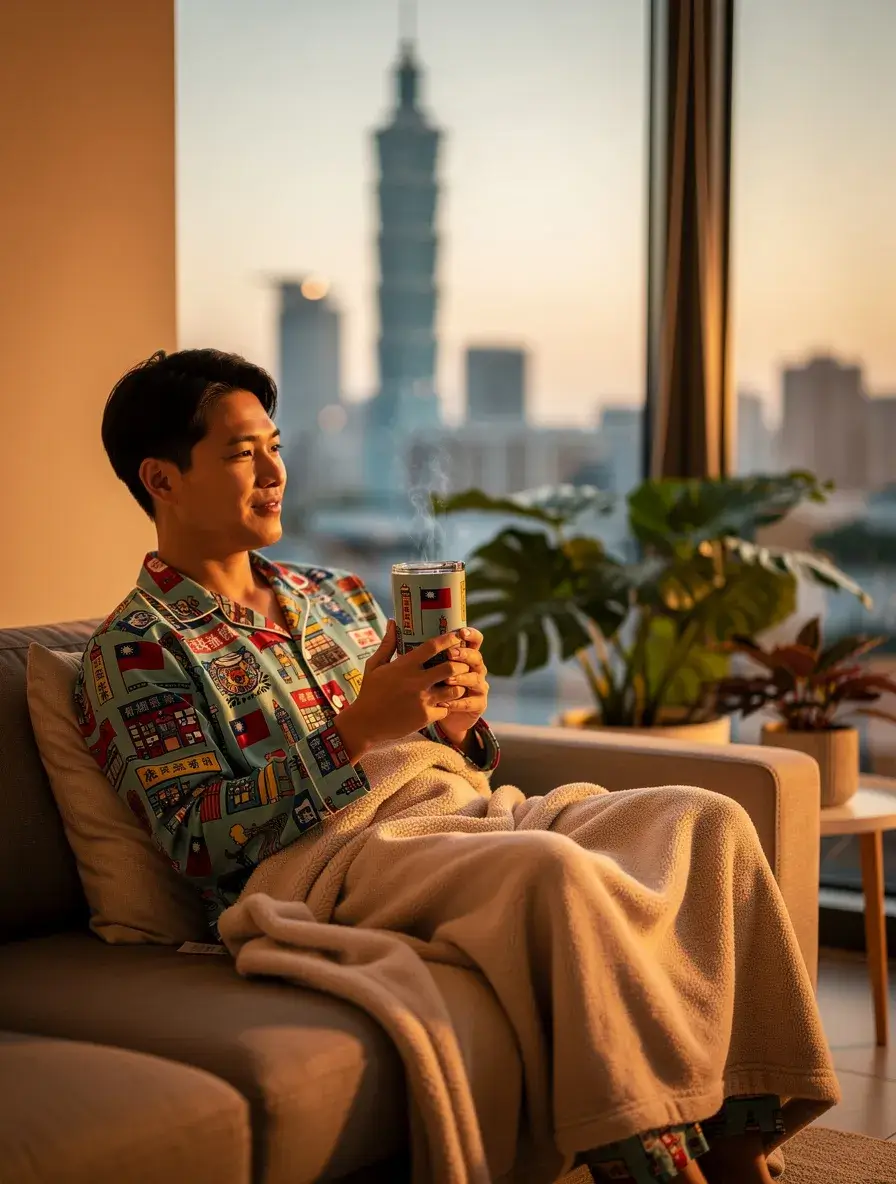
This is the gift category that has grown the most in the last five years. Taiwanese identity has become something young people wear and display proudly — illustrated maps, kawaii-style Taipei MRT designs, Taiwan-themed graphic tees, retro Taiwanese soft-drink logo apparel, kawaii animal mascots representing different Taiwanese counties, and stickers featuring beloved local brands like Apple Sidra or Hey Song. A piece of Taiwan-themed merch from an indie brand reads as “I picked this thoughtfully” in a way a department store gift never does.
Plants and Greenery
Low-maintenance house plants — pilea, monstera deliciosa, lucky bamboo arrangements, and small bonsai — are increasingly popular gifts among young Taipei urbanites with tiny apartments. The “alive” symbolism of a plant carries similar weight to a hongbao but feels more contemporary.
Subscription Boxes and Digital Gifts
Spotify or Apple Music subscriptions, monthly subscription tea or coffee boxes, premium app subscriptions, and even gift-able streaming credits are normalized. A LINE Pay or JKO Pay transfer with a personalized note can also stand in as a “modern hongbao” for casual occasions — though never for weddings, where the physical red envelope is still non-negotiable.
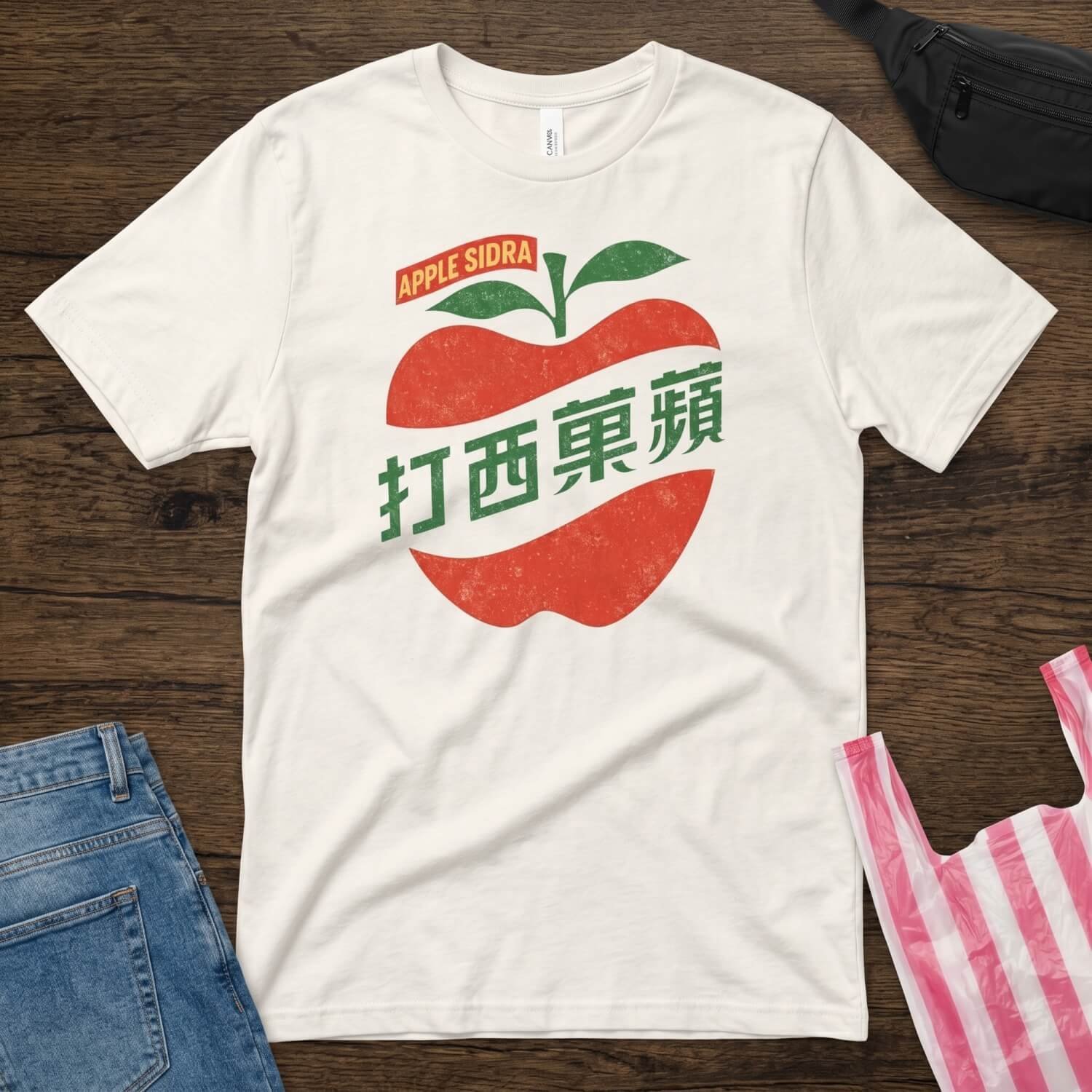
A Gift That Speaks Taiwan
Looking for a gift that lands with diaspora friends, Taiwan-loving family, or anyone who has spent time on the island? Our Apple Sidra Vintage Tee is pure Taiwanese nostalgia — soft, comfy, and instantly recognized by anyone who grew up on the iconic green-apple soda.
Business Gift Giving Etiquette in Taiwan

Business gift giving in Taiwan is more conservative than social gift giving, and the stakes are higher. A misstep with a client or partner can subtly damage a relationship for months. Here is the modern professional playbook.
When and How to Give
Business gifts are typically exchanged at the first meeting, at the end of a successful project, before major holidays (Lunar New Year, Mid-Autumn), and after a significant favor. Always present at the end of the meeting, never the beginning — giving up front can feel like a transactional bribe rather than a relational gesture. Always with both hands. Always with a card or note attached.
What to Give
- Branded gift boxes from your home country. If you are visiting from abroad, something that represents your country or city is the perfect choice. Premium chocolates, single-malt whisky, regional specialty foods, or branded merchandise from a respected local brand all work well.
- High-quality stationery. Branded notebooks, premium pens (think Lamy, Pilot, or Caran d’Ache), and elegant business card holders are perennial winners.
- Premium tea or coffee. Always reads as thoughtful and respectful.
- Whisky or aged spirits. Common for older male executives, especially Japanese whisky, Scotch, or Taiwan’s own Kavalan. Always wrap.
- Branded merchandise from your own company. A high-quality polo or tote bag with your logo is appropriate for first-meeting gifts; avoid for senior executives who already have closets full.
What to Avoid
- Anything overtly political (Taiwan-China tension is a third rail in business — keep gifts apolitical).
- Anything personal — perfume, jewelry, clothing — outside of very established relationships.
- Cash. Never appropriate in a Taiwanese business setting outside of hongbao at company year-end parties (尾牙 wěi yá) from boss to staff.
- Anything that crosses the recipient’s company’s anti-bribery threshold. In 2026, most Taiwanese multinationals and listed companies have gift-value caps (often NT$500 to NT$2,000). When in doubt, ask their assistant or check the recipient’s company gift policy.
The Two-Hand Card Exchange
Even when no physical gift is exchanged, the business card exchange in Taiwan follows gift-giving choreography: card presented with both hands, Mandarin side facing the recipient, slight bow, eye contact. Receive their card the same way, study it briefly, and place it carefully on the table in front of you for the duration of the meeting. Never write on someone’s business card in front of them. Never stuff it into your back pocket.
Long-Distance Gift Ideas: Sending Gifts to Taiwan from Abroad
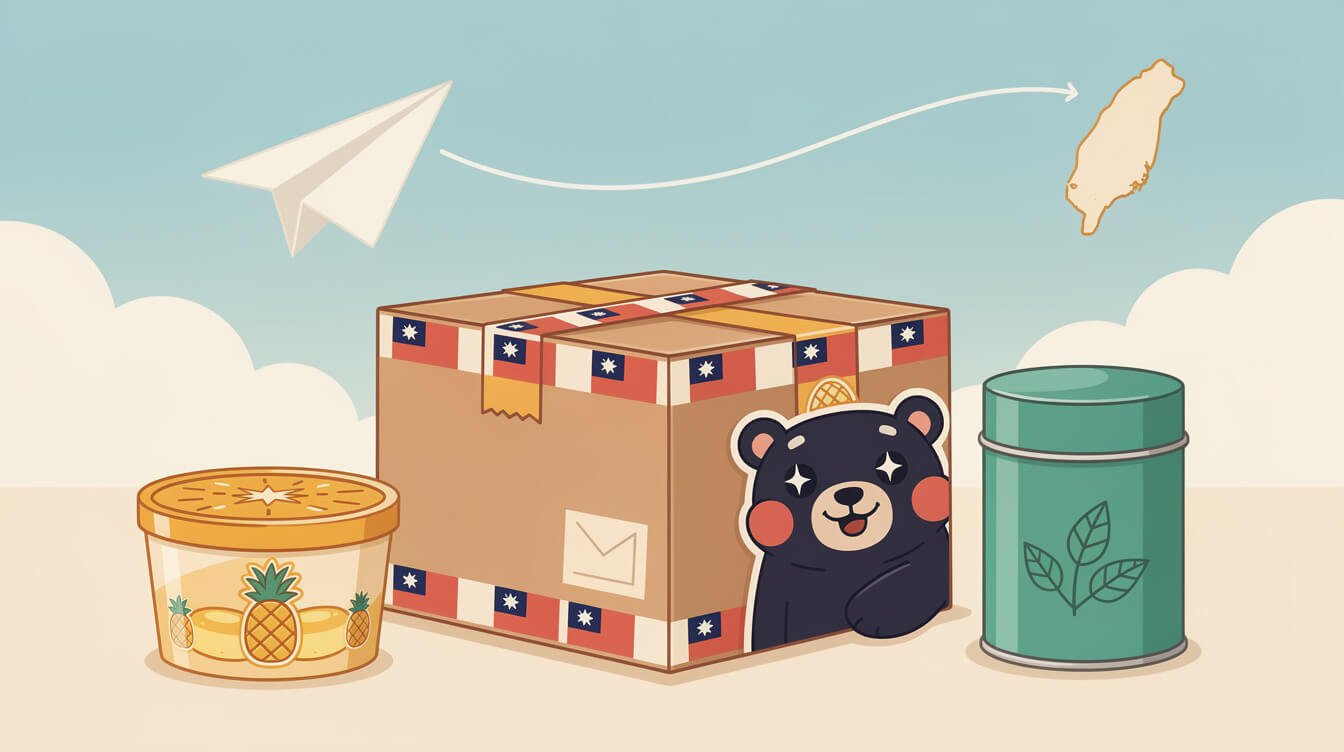
The Taiwanese diaspora is enormous — Los Angeles, Vancouver, Sydney, London, Yokohama — and so is the population of foreigners who fell in love with Taiwan during a study-abroad year or a long trip and now keep up close ties with people on the island. Sending gifts to Taiwan from overseas is its own small art form.
What Ships Well
- Country-specific specialty foods. Vermont maple syrup, French sea salt, Italian olive oil, Korean ginseng, Japanese matcha — anything that represents where you live and is hard to find in Taiwan.
- Local craft chocolates and confections. As long as the climate at destination won’t melt them.
- Coffee beans, premium teas, wines and spirits. Pay attention to Taiwan’s import customs rules — especially on alcohol over 1L per shipment.
- Apparel and accessories. Soft goods are ideal — lightweight, durable, low customs risk.
- Books, art prints, and stationery. Especially in languages other than Mandarin.
- Children’s items. Quality toys, picture books, and clothing from your home country are always appreciated by Taiwanese parents.
What Doesn’t Ship Well
- Anything liquid or fragile that customs may flag.
- Fresh fruit (illegal in many cases) or meat products.
- Heavy or bulky items (shipping cost will eclipse the gift).
- Anything that triggers Taiwan’s import duty thresholds — generally goods valued over NT$2,000 may incur tax.
Sending Taiwan-Themed Merch From Abroad
One of the most thoughtful diaspora gifts is curated Taiwan-themed merchandise that the recipient could not easily get themselves. For diaspora friends in LA or Toronto who miss home, a Taiwan-illustrated map t-shirt or a kawaii Taipei MRT design speaks volumes. For Taiwan-loving foreigners in your life who have visited the island, branded apparel and accessories that capture that affection make the gift feel curated rather than generic. Browse our full collection of Taiwan-themed apparel and gifts — we ship worldwide and handle customs paperwork on our end.
Practical Shipping Tips
- Use a tracked shipping service. EMS, DHL, FedEx, and USPS Priority International all work well to Taiwan. Taiwan Post is famously efficient on the receiving end.
- Time around holidays. For Lunar New Year, post at least three weeks ahead — Taiwan customs slows down before the holiday. For Mid-Autumn, two weeks ahead. For Mother’s Day or birthdays, ten days is usually safe.
- Mark gifts as gifts on the customs declaration. Most personal gift shipments under NT$2,000 in declared value pass through Taiwan customs without duty.
- Include a handwritten note. Even a postcard. The note often matters more to the recipient than the contents.
Frequently Asked Questions About Taiwan Gift Giving
Is it rude to give a gift to a Taiwanese person if I don’t speak Mandarin?
Not at all. Present with both hands, smile warmly, and a simple “this is a small gift for you” in English is completely fine. Most Taiwanese under 50 in cities understand basic English gift exchange phrases. Including a small handwritten note — even in English — adds enormous warmth.
What if I accidentally give a forbidden gift like a clock?
If you realize before giving, swap it out. If after, the recipient may quietly accept and never display it, or may gracefully gift it forward. The relationship survives; most Taiwanese understand foreigners may not know the rules. A quick apologetic follow-up message — “I just learned this is bad luck in Taiwan, I’m so sorry, please consider this a learning moment for me” — can turn a misstep into a charming story.
Should I wrap gifts myself, or is store wrapping fine?
Either is fine. Most Taiwanese department stores will gift-wrap for free in beautifully designed paper with ribbon. If wrapping at home, stick to red, gold, pink, or warm pastel paper. Skip white and black.
Is it OK to give cash directly without a red envelope?
No — cash without an envelope feels cheap and disrespectful, like tossing change at someone. The envelope is the entire point. Hongbao envelopes are available at every Taiwanese convenience store, bookstore, and stationery shop year-round.
Do I need to give gifts to coworkers in Taiwan?
Major holiday gifts (Mid-Autumn, Lunar New Year) — yes, especially to your direct manager and the team you work with most. Birthday gifts to every coworker — not expected unless you are close friends. A team-wide box of premium snacks from a recent trip is a great low-pressure way to keep relationships warm.
Should I give a gift to a Taiwanese host family if I’m staying with them?
Yes — and the most appreciated gift is something from your home country that they could not easily buy in Taiwan. Specialty food, craft chocolates, premium nuts, or a small piece of cultural merchandise (a souvenir mug from your hometown, a book of regional photography, an artisan candle) all land beautifully. Give on arrival or on your first shared meal.
Are flowers ever OK as a gift?
Absolutely — for happy occasions, birthdays, graduations, congratulations. Red, pink, peach, gold, and orange tones all work. Avoid white and yellow chrysanthemums, white lilies, and white roses, which are funeral flowers in Taiwanese tradition.
Final Thoughts: Gift Giving as Relationship Building
The deepest secret of Taiwanese gift giving is that the rules — the wrapping colors, the auspicious numbers, the two-handed presentation, the gentle refusal-then-acceptance — are not really about the objects at all. They are about the relationship. Every taboo exists because at some point, somebody thought through what a gift could symbolically say to its recipient, and decided this message matters. Every hongbao amount carries the weight of how the giver views the relationship. Every two-handed presentation is a small physical declaration of respect.
This is also why getting it right matters less than caring enough to try. A foreigner who shows up to a Taiwanese wedding with a properly stuffed red envelope, presents it with two hands, refuses food twice before accepting, and never opens their own gift in public — that person has just earned years of warmth. A foreigner who shows up with a clock-themed wedding present has accidentally said something they did not mean to say.
Whether you are bringing a small thank-you to your favorite night-market vendor, sending Lunar New Year boxes to your in-laws in Kaohsiung, or shipping a curated Taiwan-themed care package to a diaspora friend in San Francisco, the same principle holds: small thoughtful gestures, presented with care, build the kind of connections that last decades. That is the heart of Taiwan gift giving — and once you internalize it, the etiquette stops feeling like rules and starts feeling like a beautiful, generous language you can speak.
Get More Taiwan Culture in Your Inbox
Weekly stories, gift ideas, and dispatches from Taiwan — plus the occasional treat for newsletter subscribers only.
Grab a Free Taiwan Sticker!
Drop your email and we’ll send you a limited-edition Taiwan sticker — plus insider access to new merch drops and island vibes.
No spam. Unsubscribe anytime.