Currency of Taiwan: The Complete Travelers Guide to the New Taiwan Dollar
The currency of Taiwan is the New Taiwan Dollar (TWD), and once you understand it, the whole island becomes a little easier to navigate. From the NT$10 coin you’ll drop into a night market vendor’s hand for a skewer of grilled squid, to the crisp NT$1000 banknote that buys a memorable dinner with friends, money in Taiwan is woven into the texture of daily life — quietly, efficiently, and full of stories most travelers never hear.
This guide covers everything: the symbols, the history, the banknote portraits, the real-world exchange rates, where to actually exchange money once you land, the cash-versus-card-versus-EasyCard reality on the ground, and the small insider tips that separate first-time visitors from confident return travelers. No converter apps required. Just the full picture.
The Short Answer: The New Taiwan Dollar (TWD), Explained
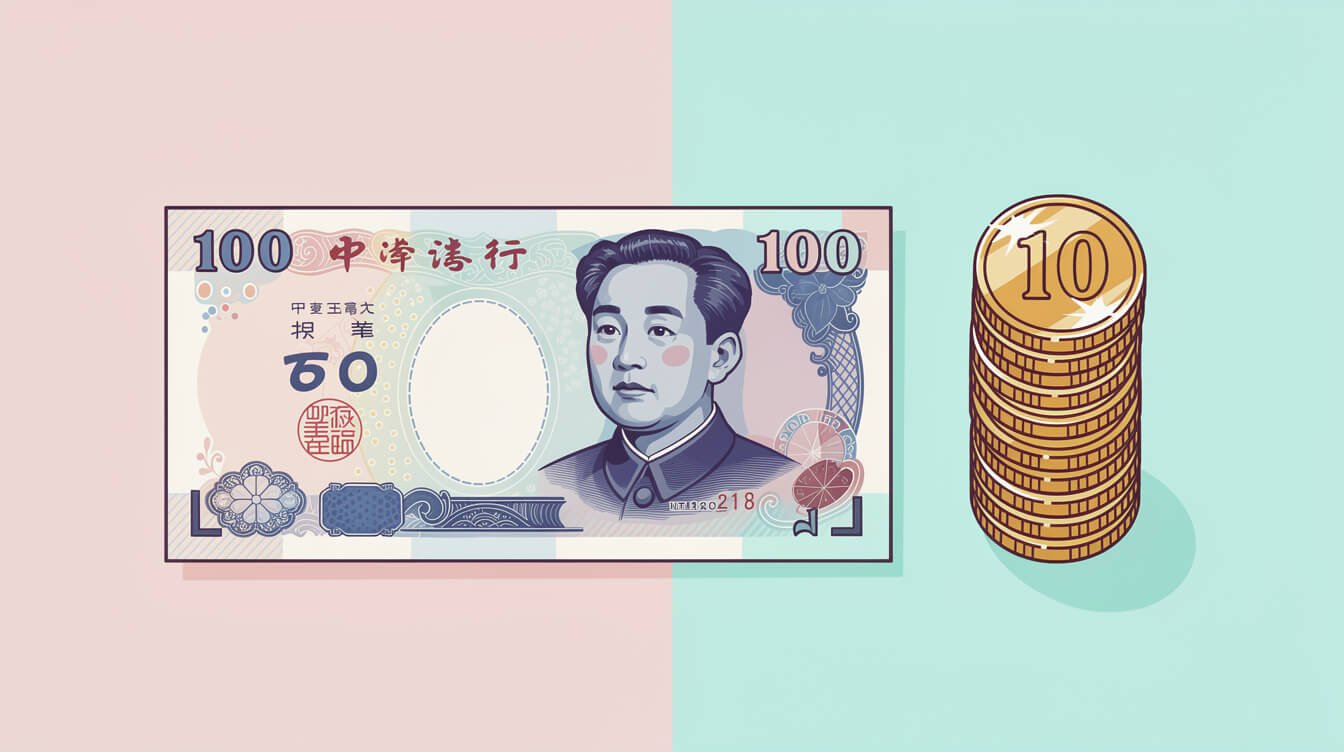
The official currency of Taiwan is the New Taiwan Dollar, written as TWD in international codes and NT$ on every menu, receipt, and ATM screen across the island. Locals just call it kuài (塊) in Mandarin or kho͘ in Hokkien — both meaning, roughly, “bucks.” When you hear a vendor say “wǔ shí kuài” (五十塊), they mean fifty NT dollars, not fifty US dollars. That distinction matters a lot when you’re standing at a night market.
The TWD is issued by the Central Bank of the Republic of China (Taiwan), which has kept the currency remarkably stable for decades. As of mid-2026, one US dollar buys roughly NT$31–32, which makes Taiwan one of the most affordable destinations in developed Asia despite the island’s high quality of life. A bowl of beef noodle soup in Taipei runs NT$180–250, a bubble tea is NT$50–80, and a high-speed rail ticket from Taipei to Kaohsiung sits around NT$1,490 — that’s about US$47 to cross an entire country in 90 minutes.
Here’s the basic anatomy of the currency:
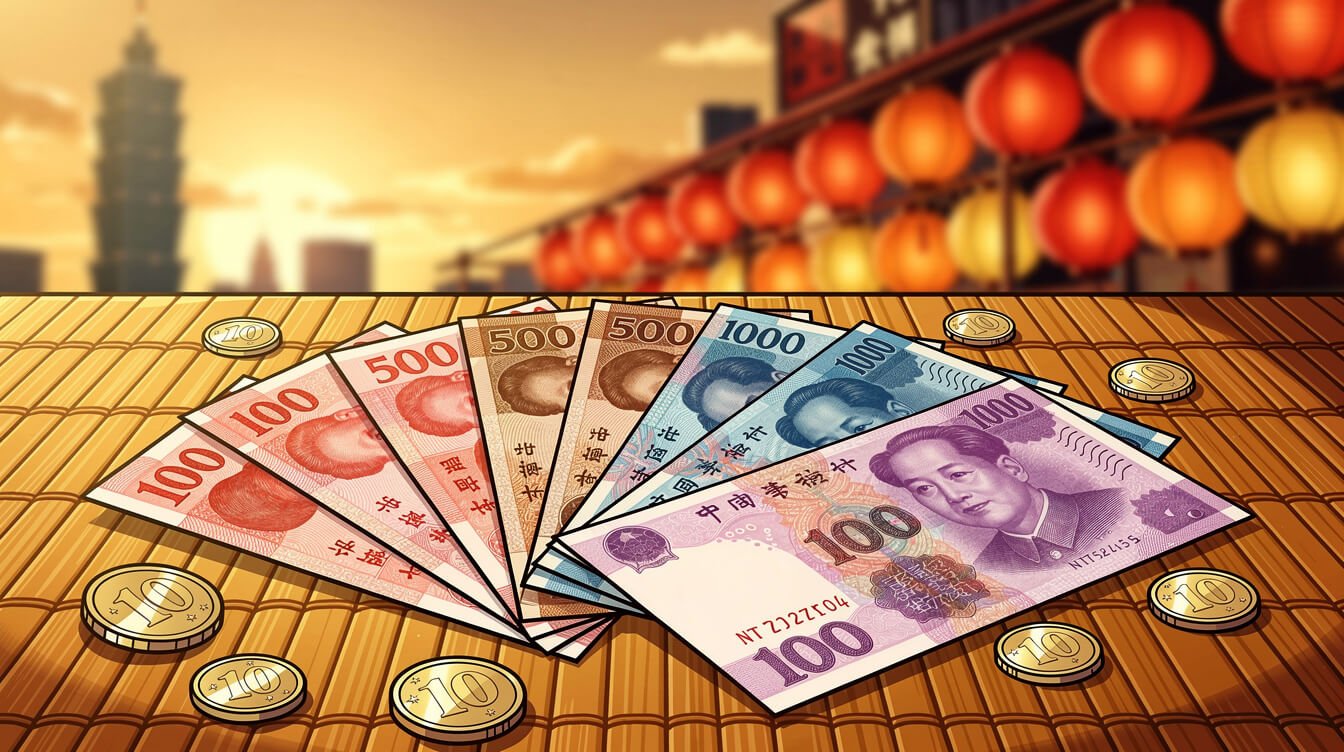
- Banknotes in circulation: NT$100 (red), NT$200 (green, rare), NT$500 (brown), NT$1000 (blue), NT$2000 (purple, also rare)
- Coins in circulation: NT$1, NT$5, NT$10, NT$20 (rare), NT$50
- Symbol: NT$ or 元 (yuán) in Chinese, sometimes just $
- Subunit: Officially 100 cents = 1 dollar, but cents haven’t been minted for decades. Everything rounds to whole dollars.
You’ll almost never see NT$200 or NT$2000 banknotes in daily transactions — they exist, but they confuse small vendors and most ATMs don’t dispense them. Stick with NT$100, NT$500, and NT$1000 notes, plus the standard coins, and you’ll be fluent in Taiwan’s cash language within a day.
A Brief History of the New Taiwan Dollar: How It Saved an Economy
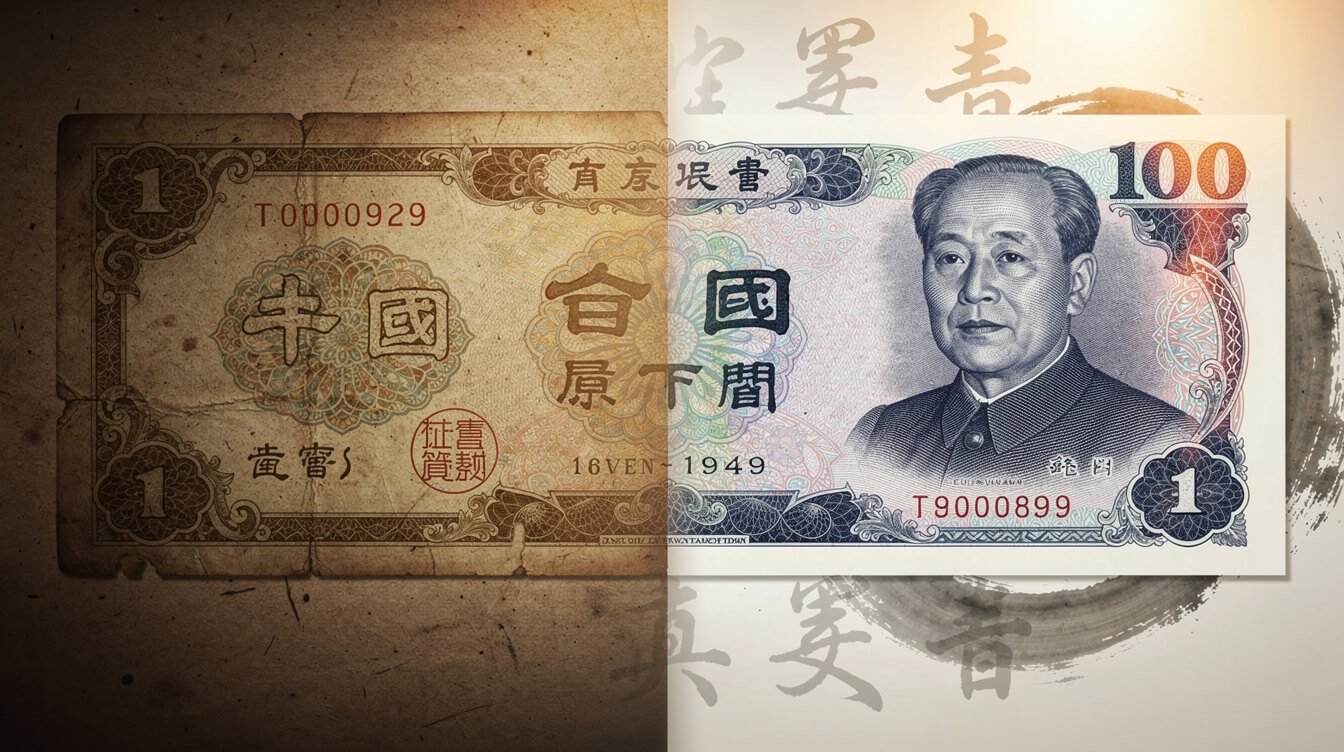
The currency you’ll hold in 2026 has only existed since June 15, 1949. Before that, Taiwan used the Old Taiwan Dollar, a hyperinflated mess that by the late 1940s was essentially worthless. As the Chinese Civil War tore through the mainland and refugees poured onto the island, prices spiraled so badly that vendors were rumored to weigh stacks of banknotes rather than count them. Wheelbarrows of money for a single meal wasn’t quite reality, but it wasn’t far off either.
On the morning of June 15, 1949, the Bank of Taiwan introduced the New Taiwan Dollar with an exchange rate that tells you everything you need to know about how desperate things had become: 40,000 old Taiwan dollars equaled 1 new Taiwan dollar. The reform was brutal but effective. Inflation stopped almost overnight, savings became meaningful again, and a battered post-war economy got the stable foundation it needed to start building.
The political backdrop made the timing even more loaded. A few months after the currency reform, the Republic of China government under the Kuomintang lost the civil war and retreated from the mainland to Taiwan. The new currency, originally designed as a regional fix for one province, suddenly became the de facto national currency of a relocated republic. For decades, the old mainland yuan technically remained the “official” currency of the ROC in legal documents, while everyone on the island spent New Taiwan Dollars. That awkward dual identity wasn’t officially resolved until July 1, 2000, when the Central Bank of the ROC took over issuance and the TWD became unambiguously Taiwan’s national currency.
It’s a quietly profound story. The piece of paper you’ll hand to a 7-Eleven cashier for a hot tea egg is the descendant of an emergency monetary reform that helped stabilize one of Asia’s most extraordinary economic transformations. The “Taiwan Miracle” — the four-decade leap from agricultural island to semiconductor superpower — was built on the back of a currency that was almost never supposed to last beyond an emergency.
Banknotes and Coins: The Faces and Stories Behind Taiwan’s Money
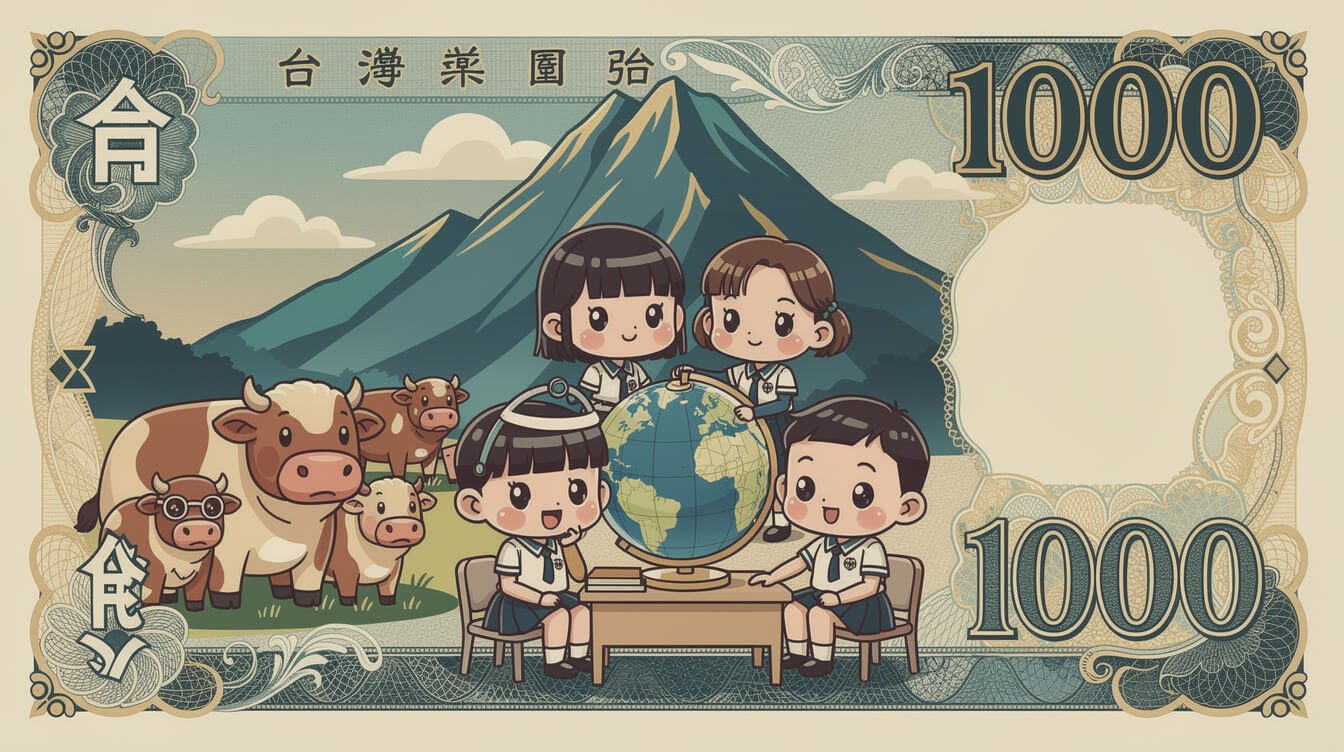
Most currencies put dead politicians and military heroes on their money. Taiwan, refreshingly, mostly puts schoolchildren, mountains, and wildlife. The current banknote series (issued from 2000 onward) is one of the most thoughtful in Asia, and each note tells a small story about what Taiwan values.
NT$100 — Sun Yat-sen and Chungshan Hall
The red NT$100 features Dr. Sun Yat-sen, founding father of the Republic of China, on the front and Chungshan Hall in Taipei (a memorial in his honor) on the reverse. It’s the most “traditional” of the banknotes and the one you’ll handle constantly — perfect for street food, MRT top-ups, and 7-Eleven runs.
NT$200 — Chiang Kai-shek and the Presidential Office
The green NT$200 features Chiang Kai-shek and Taiwan’s Presidential Office Building. It’s rarely circulated, partly because of the politically charged figure on the front and partly because it falls awkwardly between the two notes people actually use.
NT$500 — Schoolchildren, Baseball, and Mount Dabajian
This is where Taiwan’s banknote design gets joyfully unique. The brown NT$500 shows a group of Little League baseball players celebrating mid-game on the front and the dramatic peak of Mount Dabajianshan on the reverse. Taiwanese Little League teams dominated the Williamsport World Series in the 1970s and 80s, and putting kids playing baseball on a national banknote is a deeply Taiwanese choice — equal parts pride, nostalgia, and love of the game.
NT$1000 — Schoolchildren, a Globe, and Mount Yushan
The blue NT$1000 — Taiwan’s most common high-value note — features four children studying with a globe and a telescope on the front, with Mount Yushan (Taiwan’s highest peak at 3,952 meters) and a Mikado pheasant on the reverse. The message is unmistakable: education, curiosity, and the natural majesty of the island itself.
NT$2000 — Science and the Formosan Landlocked Salmon
The purple NT$2000 features the satellite dish of the FORMOSAT-1 satellite and the critically endangered Formosan landlocked salmon (Oncorhynchus formosanus) on the reverse. It’s rarely used in daily life — most cashiers will hesitate when handed one — but it’s a quiet love letter to Taiwan’s scientific ambitions and biodiversity.
The coins: a quick tour
Coins feature Chiang Kai-shek (NT$10), Sun Yat-sen (NT$5), and various flowers, plants, and historical figures on smaller denominations. The chunky golden NT$50 coin is heavy and unmistakable — keep a few; they’re useful for parking meters, vending machines, and the occasional temple offering box.
Exchange Rate & What Your Money Actually Buys in Taiwan
The TWD has been one of Asia’s more stable currencies for the past two decades, hovering between NT$27 and NT$33 per US dollar throughout most of that time. As of mid-2026, you’ll get roughly:
- US$1 ≈ NT$31.50
- €1 ≈ NT$34.00
- £1 ≈ NT$40.00
- A$1 ≈ NT$20.80
- C$1 ≈ NT$23.00
- S$1 ≈ NT$23.50
- HK$1 ≈ NT$4.05
Always confirm with XE.com or your banking app the day you exchange — Taiwan’s central bank is famous for managing the currency carefully, but rates still move 1–3% in either direction over any given month.
What does that get you on the ground? Real-world prices in Taiwan as of 2026:
- A bowl of beef noodle soup: NT$180–280 (US$5.70–8.90)
- A bubble tea: NT$50–80 (US$1.60–2.55)
- A 7-Eleven hot tea egg: NT$10 (US$0.32)
- An MRT ride in Taipei: NT$20–65 (US$0.63–2.06)
- A scooter rental for a day: NT$400–600 (US$12.70–19.00)
- A mid-range hotel room in Taipei: NT$2,500–4,500 (US$79–143)
- A full sit-down dinner at a popular local restaurant: NT$300–600 per person
That last one is worth highlighting. Taiwan punches dramatically above its weight on food value. You can eat extraordinarily well for the equivalent of US$10–15 per meal at restaurants that would cost three or four times as much in Tokyo, Seoul, or Singapore. If you’re planning a longer trip, the rough rule of thumb is NT$2,000–3,000 per day for a comfortable mid-range budget that includes food, transit, and modest accommodations. For a deeper breakdown of low-cost picks worth packing into your itinerary, our budget shopping guide to Taiwan is a great companion piece.
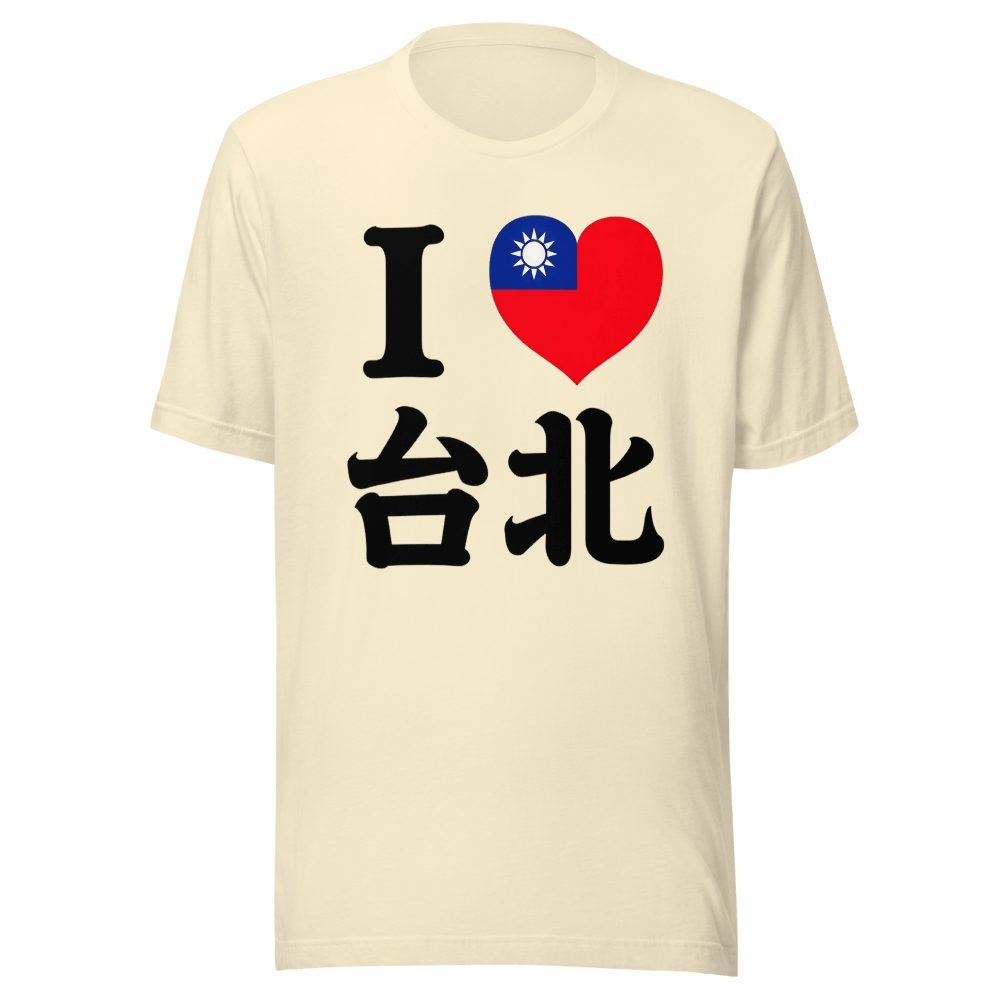
Many travelers heading to Taiwan grab a piece of Taiwan travel pride apparel to wear during the trip — a small way to celebrate the island while also making it easier for friendly locals to start a conversation when they spot the heart-flag design.
Where to Exchange Currency in Taiwan: Your Best Options
Exchanging money in Taiwan is straightforward, but where you exchange matters more than most travelers realize. The rate spread between the best and worst options is meaningful — sometimes 3–5% on a single transaction.
Best: Bank of Taiwan and Mega International Commercial Bank counters
Both Taoyuan and Songshan airports have Bank of Taiwan branches inside the arrivals halls, open from early morning to late at night. The rates are excellent — among the best you’ll find anywhere on the island — and they handle all major currencies without fuss. Mega Bank, Cathay United, and most large Taiwanese banks offer similar rates downtown. Bring your passport, expect to fill in a one-page form, and you’ll be on your way in 10 minutes.
Best for late nights: 7-Eleven Bank ATMs
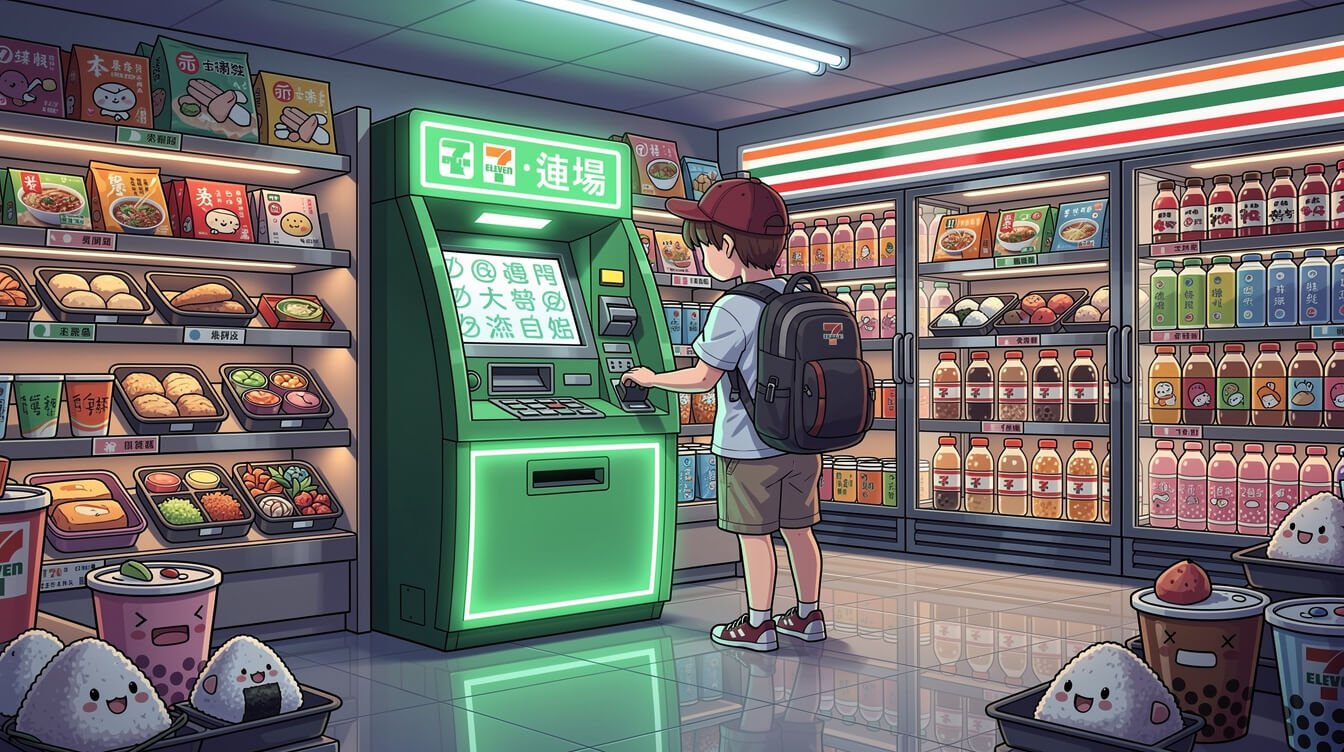
This is the option most savvy travelers actually use. 7-Eleven ATMs (operated by CTBC Bank) accept foreign Visa, Mastercard, Plus, and Cirrus cards 24 hours a day, dispensing NT$ at the official bank rate plus a flat ~NT$100 (US$3) fee. There are over 6,000 7-Elevens in Taiwan. You will literally never be more than five minutes from a working ATM, including at 3 AM in the rain.
Family Mart ATMs work similarly, as do those at Hi-Life and OK convenience stores. Stick with these instead of hunting for a bank branch.
Decent: Post offices
Chunghwa Post (the national postal service) operates currency exchange at major branches and offers competitive rates. Convenient if you’re already mailing a postcard home.
Avoid: Hotels and the random kiosks at tourist hotspots
Hotel front desks will exchange money for guests, but the rate is usually 5–8% worse than a bank. Tourist-area exchange kiosks in Ximending and around Taipei 101 are even worse — some quote rates that would be illegal in most countries. Only use these as a last resort for small amounts.
One small warning
Bring crisp, unfolded bills if you’re exchanging cash. Taiwanese banks are notoriously picky about damaged or torn foreign banknotes, and a creased US$100 bill can occasionally get rejected. ATM withdrawals sidestep this problem entirely.
Wear Your Taiwan Pride While You Travel
Headed to Taipei? Pack the I Love Taipei Taiwan Flag Heart Tee — soft, breathable, and an instant conversation-starter with locals who’ll spot the bold heart-flag design from across a night market.
Cash, Card, or EasyCard? Navigating Taiwan’s Payment Culture
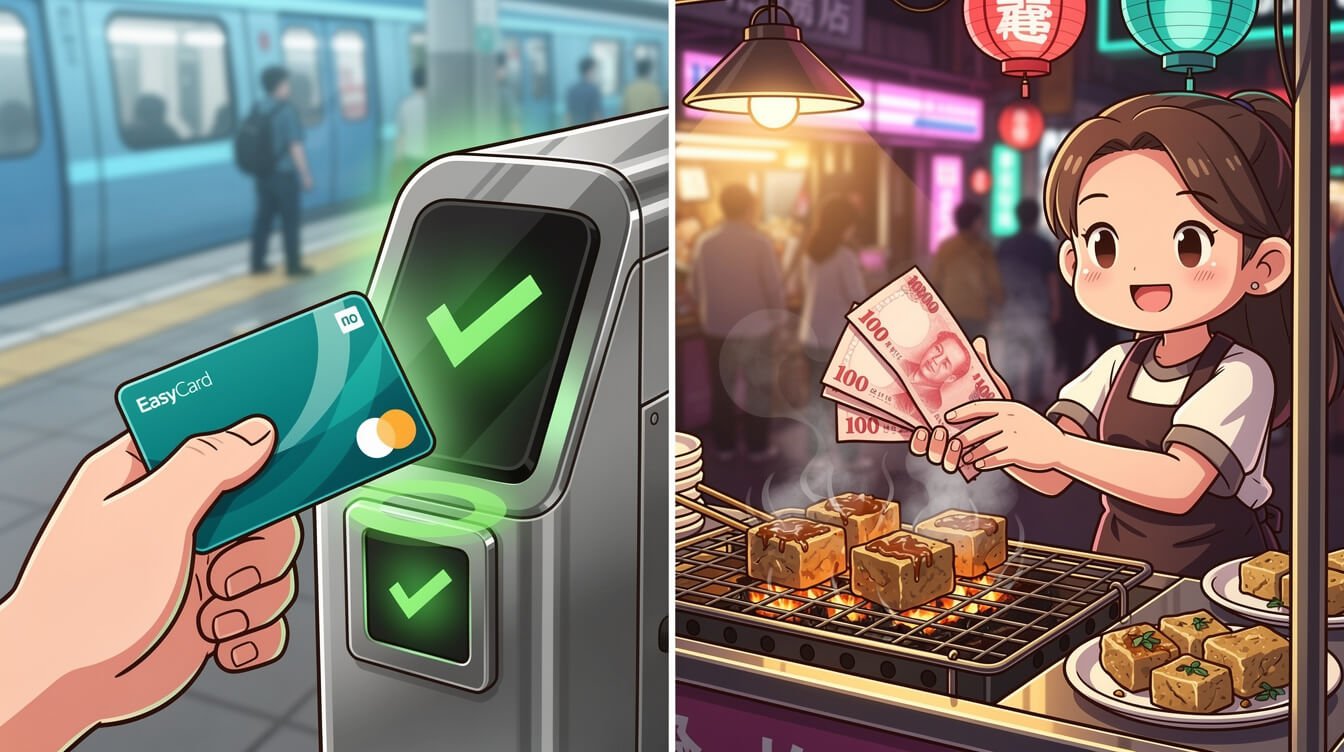
Here’s the most surprising thing about money in Taiwan: despite being one of the most technologically advanced economies on Earth, Taiwan is still a strikingly cash-heavy society. Small restaurants, night market stalls, traditional breakfast shops, family-run dumpling joints, taxis (often), and many independent boutiques only take cash. The Lin family making your scallion pancake at 6 AM has no card reader and zero interest in installing one.
That said, the picture changes dramatically depending on where you are.
Cash is king for:
- Night markets and street food vendors (almost universally cash-only)
- Local restaurants under NT$500 per person
- Older taxis (newer ones increasingly take cards)
- Traditional markets and family-run shops
- Temple offerings and rural attractions
Credit cards work everywhere here:
- Hotels, larger restaurants, chain restaurants
- Department stores (Taipei 101 Mall, Mitsukoshi, SOGO, etc.)
- High-speed rail and Taiwan Railway ticket counters
- Convenience stores (all four major chains)
- Most chain coffee shops including local champion Louisa Coffee
- Online shopping and ride-hailing apps like Uber and 55688
Visa, Mastercard, and JCB are widely accepted. American Express acceptance is spottier — bring a backup card.
The third currency: EasyCard and iPass
EasyCard (悠遊卡, “Yōuyóukǎ”) and iPass (一卡通) are rechargeable contactless smart cards that started as MRT and bus fare cards and have quietly become Taiwan’s most-used payment method for small purchases. You can buy one for NT$100 (non-refundable card fee) at any MRT station or 7-Eleven, then top it up with cash or by linking to a bank account.
Once loaded, an EasyCard works at:
- All MRT systems (Taipei, Kaohsiung, Taoyuan, Taichung)
- All city buses across Taiwan
- Taiwan Railways (TRA) and most YouBike bike-share systems
- All convenience stores (7-Eleven, Family Mart, Hi-Life, OK)
- Major bookstores, drugstores, and chain coffee shops
- Many vending machines and self-checkout terminals
- Some taxis
For travelers, the workflow is delightfully simple: buy an EasyCard at the airport MRT station, load NT$500–1000 on it, and use it for transit and convenience-store snacks throughout your trip. The MRT discount alone (typically 20%) usually covers the card fee within a few rides.
If you’re still mapping out a first-time Taipei itinerary, our complete guide to things to do in Taipei pairs perfectly with this primer — EasyCard plus a rough route plan is genuinely all you need to navigate the city.
Mobile payments
Line Pay, Apple Pay, Google Pay, and JKO Pay are growing fast among locals, especially in Taipei. As a tourist, you’re better off sticking with cash and EasyCard unless you have a Taiwanese bank account or a credit card that supports Apple Pay abroad.
Currency Tips Every Traveler Should Know (FAQ)
How much cash should I bring to Taiwan?
For a one-week trip, NT$5,000–10,000 in cash on hand is plenty for the first few days. Top up at a 7-Eleven ATM whenever you dip below NT$2,000. There’s no need to carry large amounts — Taiwan is extremely safe, but the ATM network is so dense there’s no upside to walking around with a brick of NT$1000s.
Will my Visa or Mastercard work in Taiwan?
Yes, almost universally for ATMs and at any business that takes cards. Tell your bank you’re traveling beforehand so the international transaction doesn’t get flagged. Look for ATMs marked with “International” or with the Visa Plus / Mastercard Cirrus logos — most 7-Eleven and post office ATMs qualify.
Can I use US dollars in Taiwan?
No. Taiwan is strictly a New Taiwan Dollar economy. Even high-end hotels won’t accept USD in lieu of TWD. Exchange or withdraw NT$ before you start shopping.
Should I tip in Taiwan?
Tipping is not customary in Taiwan and locals find it slightly awkward. Most restaurants automatically add a 10% service charge to the bill. Taxi drivers don’t expect tips. If service was exceptional, a small “keep the change” gesture is fine — but standard practice is to pay the exact bill.
What about leftover NT$ at the end of my trip?
Important tip: Taiwan dollars are not widely exchangeable outside of Taiwan. Major banks in the US, UK, and Europe often refuse to convert TWD back to local currency, or offer terrible rates if they do. Spend down your cash before you leave, or exchange leftover NT$ at the airport bank counter on the way out. Coins can’t be exchanged back at all, so put them in the airport’s UNICEF coin donation boxes or a temple offering box rather than carrying them home.
Can I use traveler’s checks?
Technically yes, but practically no. Most banks have stopped accepting them and it’s not worth the hassle when 7-Eleven ATMs are everywhere. Skip the traveler’s checks.
Are there counterfeit bills to watch out for?
Taiwan has one of the lowest counterfeit rates in Asia thanks to highly secure banknote design (watermarks, foil strips, color-shifting ink, microprinting). You’re extremely unlikely to encounter a fake. The Central Bank publishes a detailed counterfeit-detection guide on their official site if you want to dig in.
Is Taiwan expensive?
Compared to Japan, South Korea, Singapore, or Hong Kong — no. Compared to Vietnam or Indonesia — yes, somewhat. Taiwan sits in the sweet middle of Asia for travel cost: high enough that infrastructure and food quality are world-class, low enough that you can travel well on modest budgets. Many visitors are pleasantly shocked at how far their money goes, especially on food and transit.
Final Thoughts: Why Taiwan’s Currency Tells the Island’s Story
The currency of Taiwan isn’t just a unit of exchange — it’s a quiet 75-year-old document of the island’s identity. The faces on the banknotes are children studying with telescopes, Little Leaguers celebrating a win, and the mountains and rivers that shaped a civilization. The history is one of crisis, reform, and stability earned the hard way. The payment culture is a fascinating blend of high-tech contactless cards and cash-only family stalls operating side by side on the same block.
For travelers, the practical takeaway is simple: bring a card with no foreign transaction fees, withdraw NT$ from 7-Eleven ATMs as you go, grab an EasyCard at the airport for transit and convenience stores, and keep enough cash on hand to dive into night markets without hesitation. The rest takes care of itself.
And when you’re handing over a crisp NT$100 for a steaming bowl of beef noodle soup at midnight, take a closer look at Sun Yat-sen on the bill, or the schoolkids on your NT$1000 change. That’s not just money. That’s Taiwan — handing you a piece of itself, one transaction at a time.
Get More Taiwan Stories in Your Inbox
Join thousands of Taiwan fans getting weekly travel tips, culture stories, food guides, and new merch drops delivered straight to your inbox — free, no spam, unsubscribe anytime.

Grab a Free Taiwan Sticker!
Drop your email and we’ll send you a limited-edition Taiwan sticker — plus insider access to new merch drops and island vibes.
No spam. Unsubscribe anytime.