Sun Moon Lake, Taiwan: The Thao Legend Behind the Island’s Most Iconic Landscape
Some places in Taiwan you visit. Sun Moon Lake, Taiwan is a place that visits you back — it lingers in your memory long after you’ve left, the way a half-remembered dream does. Cradled 748 meters up in the mountains of Nantou County, this glassy expanse of jade-green water is the island’s largest lake, its most photographed landscape, and arguably the single image most people picture when they imagine the soul of Taiwan. But the postcard version only tells a sliver of the story.
This guide goes deeper than the tour-bus highlights. We’ll trace the white deer legend that led the Indigenous Thao people here, decode why the lake is shaped like a sun and a moon, walk through the layered history that turned it into a national symbol, and cover everything practical — what to do, what to eat and drink, when to go, and how to get there. By the end, you’ll understand not just where Sun Moon Lake is, but why it matters so much.
The White Deer Legend: How the Thao People Found Sun Moon Lake

Long before tour boats and cable cars, the shores of this lake belonged to the Thao people (邵族, Ita Thao), one of the smallest of Taiwan’s officially recognized Indigenous peoples — today numbering fewer than a thousand. Their origin story is one of the most beautiful in all of Taiwanese folklore.
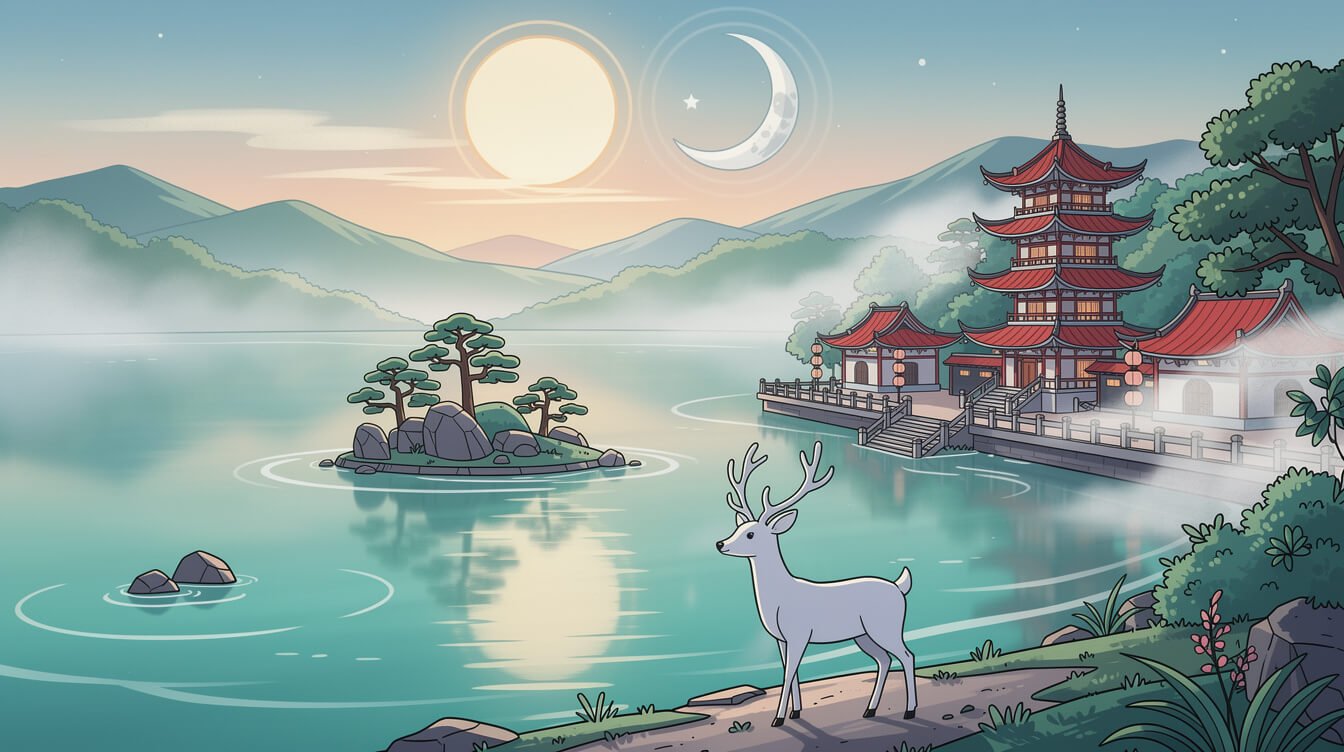
As the legend goes, a band of Thao hunters were tracking game deep in the central mountains when a brilliant white deer bounded across their path. Enchanted, they gave chase, following the creature for days through ridge and forest. The deer finally led them over a rise — and there it was: a vast, mirror-still lake teeming with fish, ringed by mountains, untouched. The hunters never caught the deer, but they had found something far better. They brought their families, and the Thao have called these shores home ever since.
That white deer isn’t just a charming bedtime tale. It’s immortalized today as a marble statue on Lalu Island, the tiny islet at the lake’s heart that the Thao consider sacred ground — the dwelling place of their ancestral spirits. Lalu is so sacred that visitors are no longer permitted to set foot on it; you can only circle it by boat. When you understand that the lake was, in the Thao worldview, a gift revealed by the spirit world, the hush that falls over visitors at sunrise starts to make a lot more sense. The Thao still hold their annual harvest and ancestral ceremonies in the lakeside village of Ita Thao, keeping a culture alive that has weathered centuries of change.
Why Sun Moon Lake Taiwan Looks Like a Sun and a Moon
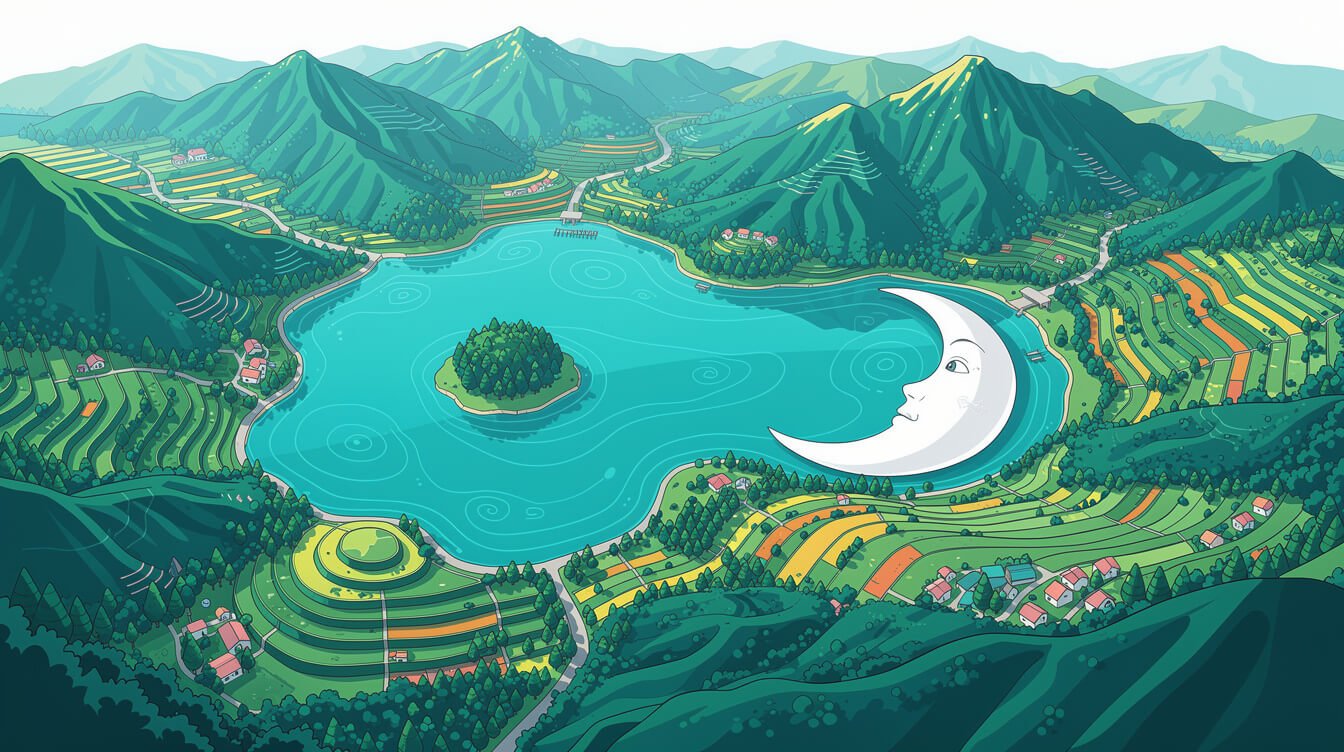
The name is wonderfully literal. Lalu Island sits roughly in the middle of the water, and it splits the lake into two distinct shapes. The eastern half is broad and round, like a blazing sun. The western half curves into a slender arc, like a crescent moon. Put them together and you get 日月潭 — Rìyuè Tán, literally “Sun Moon Pool.” The Thao name is Zintun, and in older English travel writing you’ll even find it called “Lake Candidius,” after a 17th-century Dutch missionary.
The numbers behind the beauty are just as striking. Sun Moon Lake covers roughly 7.93 square kilometers, plunges to a maximum depth of about 27 meters, and sits 748 meters above sea level — high enough that the air is noticeably cooler and crisper than the lowland cities. That elevation is the secret behind the lake’s signature mood: in the early morning, cool mountain air meets the warmer water and the whole basin fills with a slow, silver mist that drifts between the peaks. Photographers chase that fog for years.
It’s officially designated one of Taiwan’s thirteen National Scenic Areas, and it draws around six million visitors a year — putting it in the same league as Alishan and Taroko Gorge among the island’s must-see natural wonders. If you’re mapping out a bigger trip, our guide to the most beautiful places to travel in Taiwan puts the lake in context with the rest of the island.
A Lake Rewritten by History: Dams, an Earthquake, and a Name Reclaimed
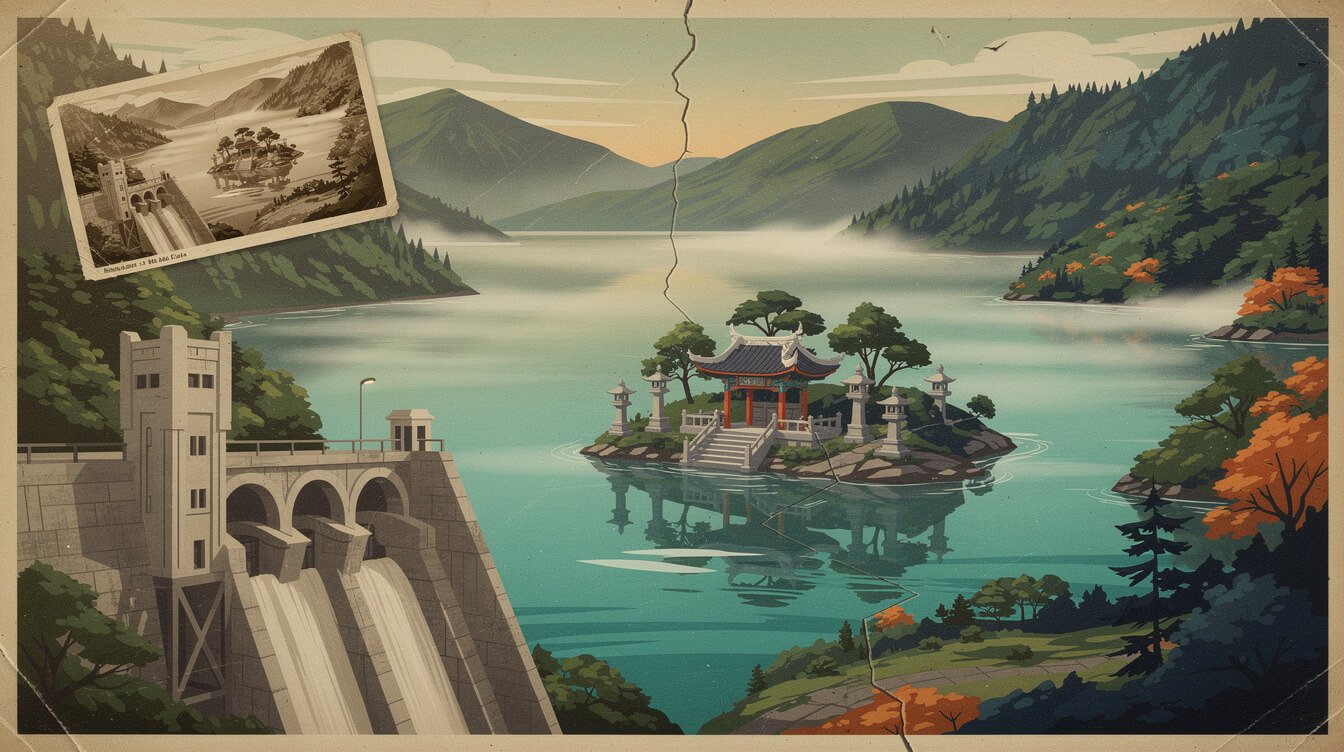
Here’s the part most travel guides skip — and it’s the reason Sun Moon Lake became more than just a pretty view. The lake you see today is partly engineered. Under Japanese rule, the original “Moon” lake was dammed in 1919 at its southern end, and a series of hydroelectric projects followed. When the first major power station was completed in 1934, it was considered one of the most important pieces of infrastructure of its era. Engineers even rerouted water from the Zhuoshui River to feed the system, and the Jiji rail line was laid specifically to haul construction materials in. To this day, the basin’s pumped-storage stations remain a backbone of Taiwan’s power grid.
Damming raised the water level so much that smaller lakeside temples had to be relocated — which is how the grand Wenwu Temple came to stand where it does. The little island in the middle went through its own turbulent century of renaming, each name reflecting who held power: the Japanese called it “Jade Island”; the incoming Nationalist government renamed it “Kwanghwa Island.” A pavilion was built there in 1978 for ceremonial weddings.
Then came September 21, 1999. The catastrophic 921 earthquake devastated central Taiwan, destroyed the pavilion, and sank most of the island beneath the surface. In the rebuilding and reckoning that followed, something quietly profound happened: the island was given back its original Thao name, Lalu. That small act — a place reclaiming its Indigenous identity after a century of being renamed by others — is a big part of why Sun Moon Lake resonates as a symbol of modern Taiwanese identity. It’s a landscape that carries the island’s whole story: Indigenous roots, colonial layers, natural disaster, and resilient renewal, all in one stretch of water.
The Best Things to Do Around Sun Moon Lake
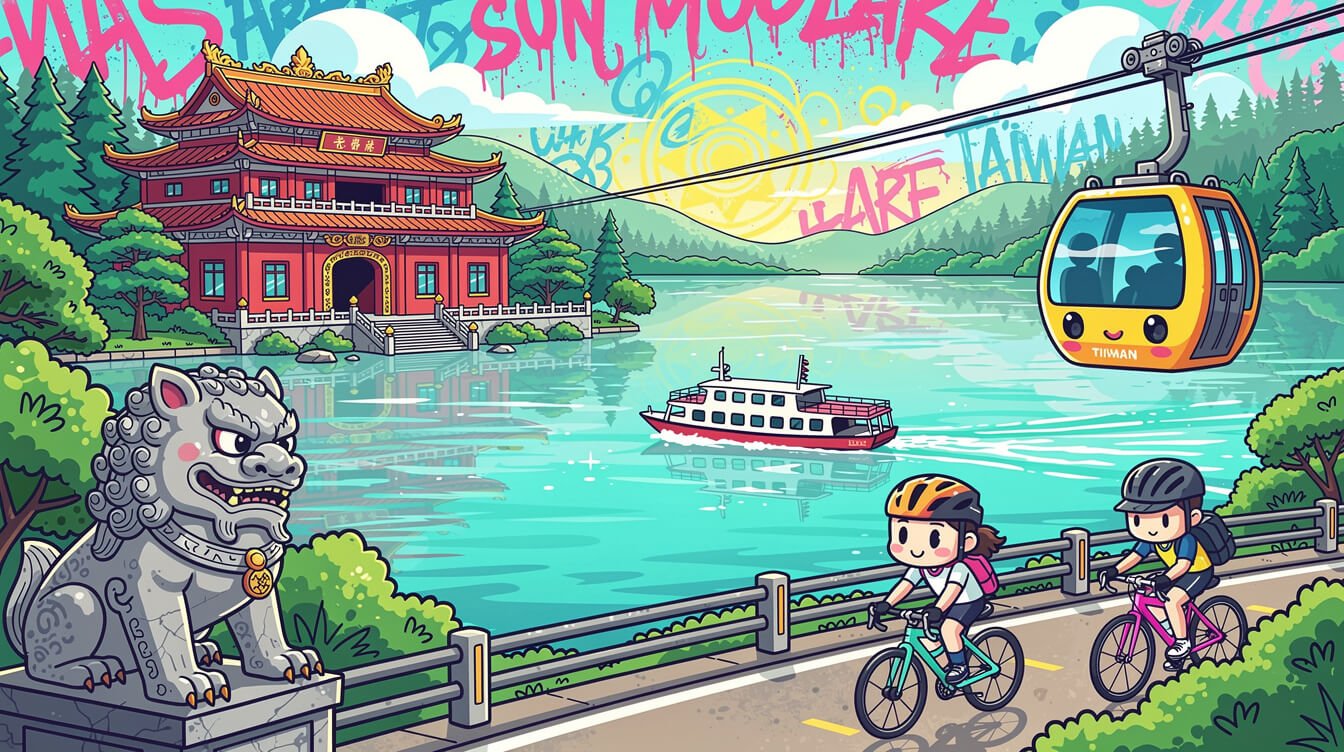
You could spend a lazy afternoon here, but the lake rewards anyone who stays a night or two. Here’s what’s actually worth your time:
- Wenwu Temple — A dramatic, multi-tiered temple honoring Confucius and the warrior gods, guarded by two enormous stone lions. The terrace behind it offers the iconic postcard view of the lake.
- The Sun Moon Lake Ropeway — A scenic cable car that glides over forested ridges, connecting the lake to the Formosan Aboriginal Culture Village. The aerial perspective is where most visitors finally “get” the hype.
- Ci’en Pagoda — A nine-story tower commissioned by Chiang Kai-shek in 1971 in memory of his mother. A short uphill walk earns you the highest viewpoint over the entire basin.
- Boat-hopping the three piers — Ferries connect Shuishe, Ita Thao, and Xuanguang. Hop off at Ita Thao village to taste Thao specialties, and at Xuanguang for the lakeside temples and the famous tea-egg stall.
- The lakeside cycling path — Roughly 30 kilometers of dedicated bike trail hug the shoreline and skim out over the water on boardwalks. It’s regularly ranked among the most beautiful cycling routes on the planet. Rent a bike (including electric ones for the hilly stretches) near Shuishe pier — it’s the single best way to experience the lake slowly.
- Xiangshan Visitor Center — A sweeping, award-winning piece of modern architecture that frames the lake like a living painting. Often overlooked, never disappointing.
- Xuanzang and Xuanguang Temples — Quieter, mist-wrapped temples on the southern shore with a serene, contemplative feel and sweeping water views.
- The Formosan Aboriginal Culture Village — A large cultural park (linked by the ropeway) celebrating Taiwan’s Indigenous peoples, with performances, traditional architecture, and gardens.
One thing visitors love is bringing a piece of the trip home. If you’re the kind of traveler who collects the island one landmark at a time, our Taiwan Island Map Illustration Youth T-Shirt maps out Taiwan’s icons in a fun pop-art illustration — a low-key way to keep that lakeside feeling in your wardrobe long after the mist has lifted.
Sun Moon Lake’s Famous Black Tea
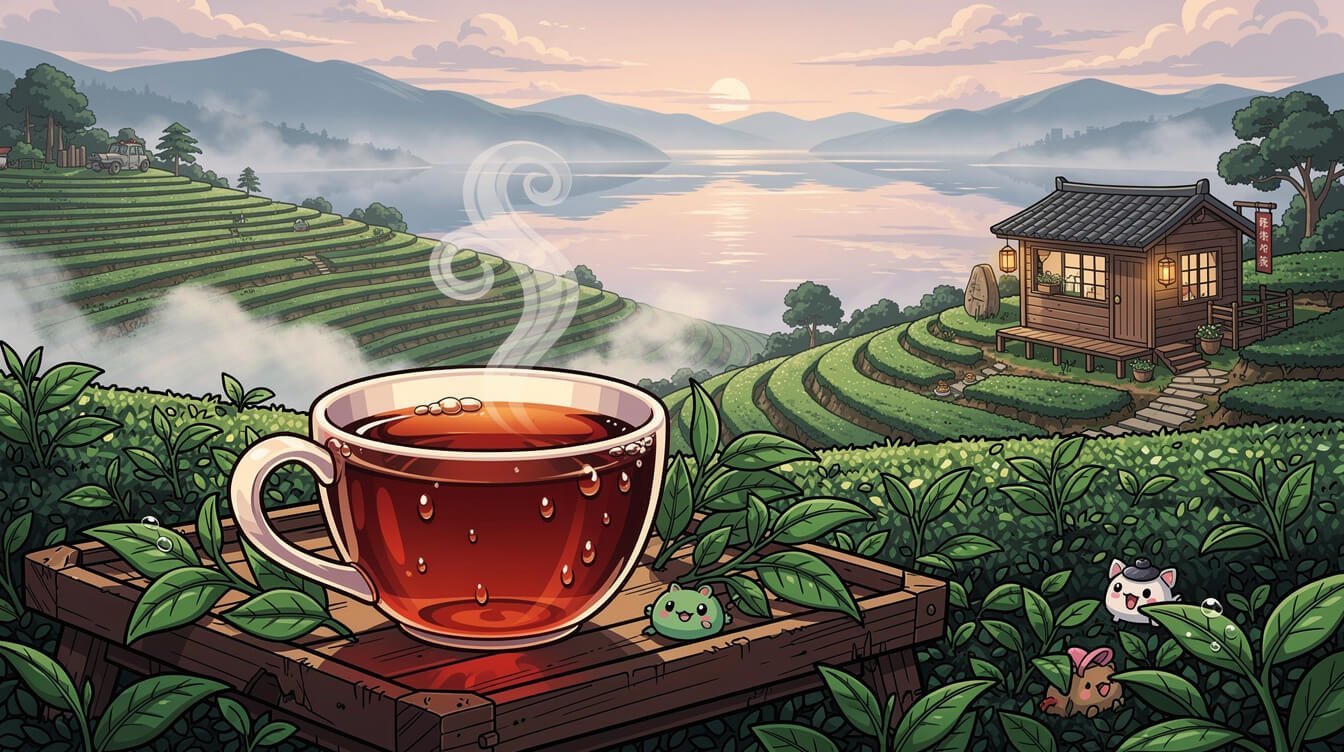
If there’s one flavor that defines the lake, it isn’t a dish — it’s a cup of tea. The warm, humid, mist-fed hills around Sun Moon Lake turned out to be near-perfect for growing black tea, and the region has quietly become one of Taiwan’s most celebrated tea origins. The story starts in the Japanese era, when Assam tea cuttings from India were planted in the Yuchi area. They thrived. Decades of crossbreeding later, Taiwan’s Tea Research and Extension Station produced the now-legendary cultivar Taiwan Tea No. 18, better known as Ruby black tea (紅玉, Hong Yu) — a cross between Burmese Assam and a native wild Taiwanese tea plant.
Ruby tea is unlike any black tea you’ve had: a deep amber liquor with natural hints of mint and cinnamon, smooth enough to drink without milk or sugar. Sip it on a misty morning by the water and you’ll understand why locals are so proud of it. You can taste and buy it everywhere around the lake — the Ita Thao village stalls and the Antique Assam Tea Farm are favorites — and it makes one of the most authentic, easy-to-pack souvenirs in Taiwan. If tea is your thing, pair this stop with our deep dive into Taiwan’s wider tea culture to taste the full spectrum of the island in a cup.
When to Visit Sun Moon Lake Taiwan (and How to Get There)
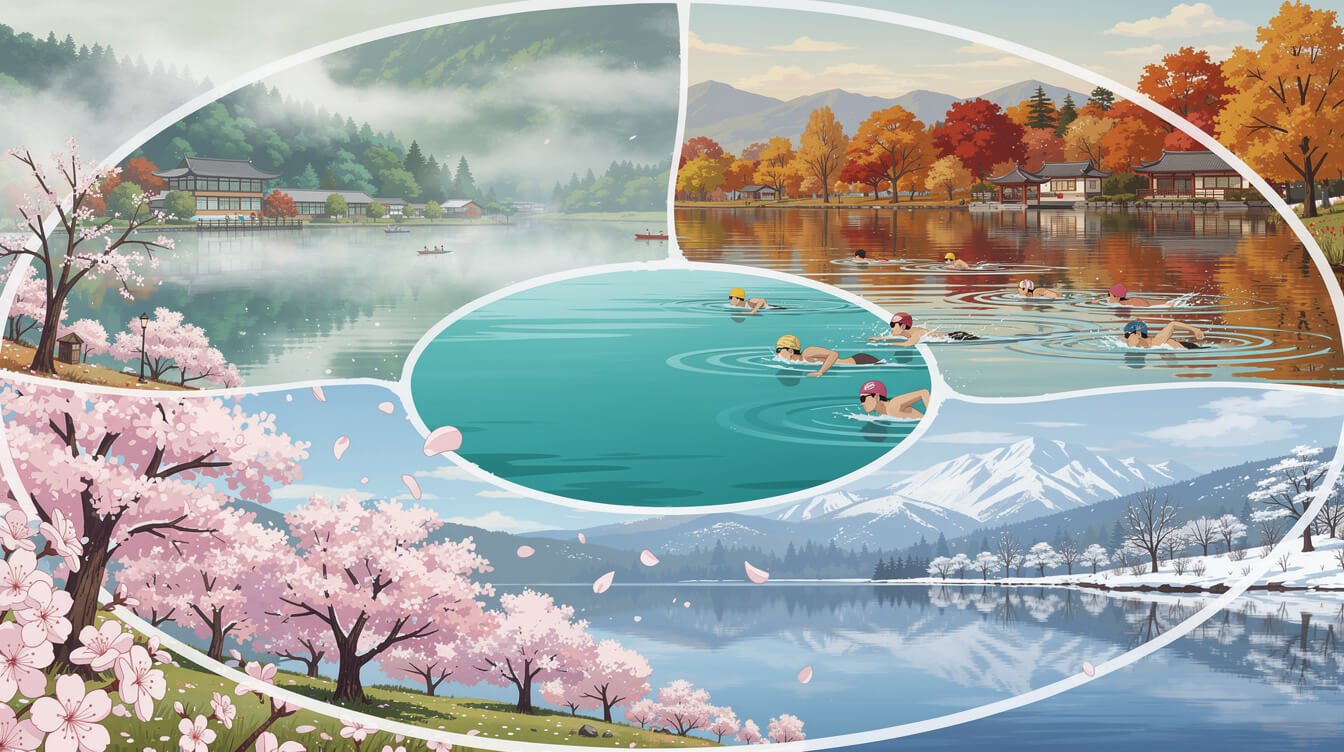
Because of the altitude, Sun Moon Lake runs a few degrees cooler than Taipei year-round. Roughly speaking: December to February is the coolest stretch (around 17–20°C) and brings the famous cherry blossoms in late winter; June to August is warmest (25–28°C) and the wettest; and spring and autumn are the sweet spots — mild, clear, and gorgeous. May often delivers that dreamy lake mist as a bonus.
Two timing notes worth planning around. First, the lake gets packed during Lunar New Year and the early-October Golden Week holiday — book accommodation well ahead if those are your only options. Second, if you want a true bucket-list experience, the annual Swimming Carnival of Sun Moon Lake takes place around the Mid-Autumn Festival. Launched back in 1983, it’s the one day a year swimming is permitted, and tens of thousands of people from around the world cross the roughly 3-kilometer course together. It’s listed among the top open-water swims in Asia. For broader trip timing, cross-reference our month-by-month guide to the best time to travel to Taiwan.
Getting there: The main gateway is Taichung. From Taichung’s high-speed rail or main train station, frequent intercity buses (the Nantou Bus / Taiwan Tourist Shuttle) run directly to the Shuishe pier in roughly 1.5–2 hours. Consider buying a Sun Moon Lake Pass, which bundles round-trip boat rides, the ropeway, and round-the-lake buses into one good-value ticket. While it’s technically possible to attempt a day trip from Taipei, it makes for an exhausting day — the lake is at its most magical at dawn and dusk, so plan at least one overnight. Slot it into a wider route using our Taiwan travel itinerary guide.

Wear the Island You Love
From Sun Moon Lake to Taipei 101, our hand-illustrated Taiwan map tee turns the whole island into wearable art. Comfy, colorful, and unmistakably Taiwan.
Sun Moon Lake Taiwan FAQ
Is Sun Moon Lake worth visiting?
Yes — though it’s a little polarizing. A few honeypot spots get crowded with tour buses, but the lake is genuinely stunning, and the crowds are easy to escape by cycling the quieter shore or staying overnight when the day-trippers have gone. Seen from a high vantage point like Wenwu Temple or Ci’en Pagoda, it’s unforgettable.
How many days do you need at Sun Moon Lake?
One full day covers the headline sights, but two days and one night is the sweet spot. The lake is most beautiful at sunrise and dusk, both of which you’ll miss on a rushed day trip.
Can you swim in Sun Moon Lake?
Not normally — swimming is prohibited year-round to protect the water and for safety. The single exception is the annual Swimming Carnival around the Mid-Autumn Festival, when the lake opens to tens of thousands of registered swimmers for one day.
Can you visit Sun Moon Lake as a day trip from Taipei?
Technically yes, but it’s a long, tiring day (3+ hours each way) and you’ll miss the magical light. It’s far better as a day trip from Taichung, or — best of all — an overnight stay.
Who are the Thao people of Sun Moon Lake?
The Thao are one of Taiwan’s smallest recognized Indigenous groups, with deep ancestral ties to the lake and to sacred Lalu Island. Many live in the lakeside village of Ita Thao, where you can experience Thao culture, performances, and food.
Where should you stay near Sun Moon Lake?
Most visitors base themselves around Shuishe (the main hub, with the widest range of hotels, restaurants, and the central pier) or the quieter, more atmospheric Ita Thao village on the opposite shore. Lakefront rooms with a sunrise view are worth the splurge if your budget allows — waking up to mist over the water is the whole point.
How do you get around Sun Moon Lake once you arrive?
You have four easy options that combine well: the round-the-lake shuttle bus, the passenger ferries that hop between the three piers, the Sun Moon Lake Ropeway cable car, and rental bikes (including electric ones) for the lakeside cycle path. Most travelers mix all four over a two-day stay — and the Sun Moon Lake Pass bundles several of them together.
What is Sun Moon Lake famous for?
Its mirror-like scenery and signature mist, the sacred Lalu Island, the white deer legend, the lakeside cycling route, Wenwu Temple, the cable-car ropeway, and locally grown Assam and Ruby (Hong Yu) black tea.
Final Thoughts: The Lake That Holds Taiwan’s Soul
Sun Moon Lake is more than Taiwan’s prettiest body of water. It’s a place where a white deer legend, a century of dams and earthquakes, an Indigenous community’s reclaimed sacred ground, a world-class black tea, and six million yearly visitors all share the same shoreline. Stand on the terrace behind Wenwu Temple at first light, watch the mist peel back to reveal that sun-and-moon silhouette, and you understand instantly why this single landscape ended up representing an entire island’s spirit.
Go for the views. Stay for the story. And when you get home and the mist starts fading from memory, keep a little of Taiwan close — explore the full Taiwan Merch collection and wear the island you fell for.

Grab a Free Taiwan Sticker!
Drop your email and we’ll send you a limited-edition Taiwan sticker — plus insider access to new merch drops and island vibes.
No spam. Unsubscribe anytime.