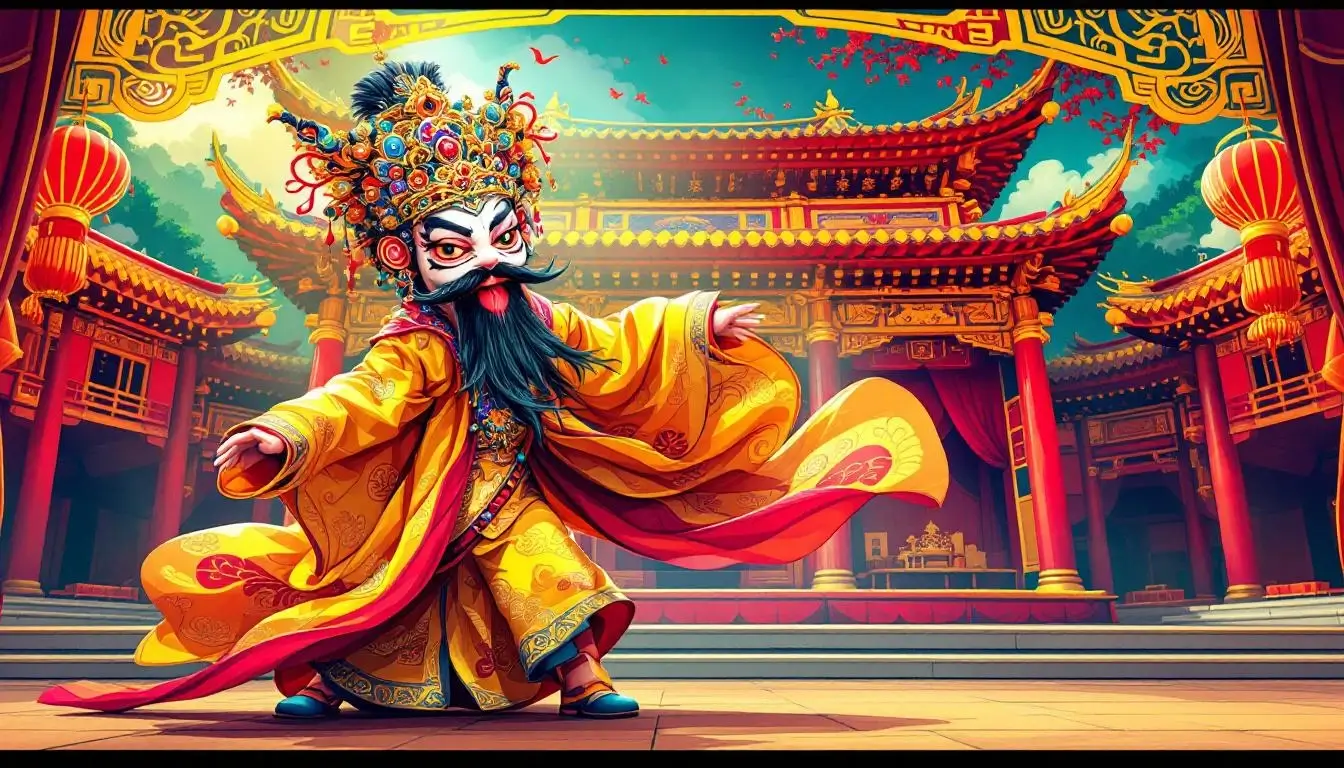
Taiwan Puppet Theatre: Why Budaixi Glove Puppetry Is the Island’s Most Epic Art Form
Imagine a puppet so intricately carved and costumed that it makes Hollywood action figures look like stick drawings. Now imagine that puppet flying through the air, breathing fire, and delivering Shakespearean-level monologues — all controlled by a single puppeteer’s hand. Welcome to budaixi (布袋戲), Taiwan’s legendary glove puppet theatre.
What Is Budaixi?
Budaixi — literally “cloth bag drama” — is a form of glove puppetry where hand-carved wooden puppets with elaborate silk costumes perform martial arts epics, historical dramas, and folklore tales on ornately decorated stages. The puppeteer controls everything: movement, voice, and emotion, often performing dozens of distinct characters in a single show.
While glove puppetry originated in China’s Fujian province centuries ago, Taiwan transformed it into something entirely its own. The island didn’t just preserve the art — it supercharged it.
From Temple Stages to TV Screens
Traditionally, budaixi performances happened at Taiwan’s temples during festivals and religious celebrations. Troupes would set up portable stages, and entire neighborhoods would gather to watch puppet warriors battle demons and corrupt officials.
Then came the 1970s, when master puppeteer Huang Hai-tai brought budaixi to television. His show Yunzhou Daxia (雲州大儒俠) became the highest-rated program in Taiwanese TV history — so popular that the government briefly banned it because too many people were skipping work to watch.
Yes, a puppet show was so good it threatened national productivity.
Pili: Taiwan’s Puppet Cinematic Universe
The Huang family didn’t stop there. In the 1980s, Huang Hai-tai’s sons launched Pili International Multimedia, fusing traditional puppetry with cinematic special effects, CGI, and symphonic soundtracks. The result? A sprawling puppet universe with over 2,000 episodes, feature films, video games, and a Netflix series.
Pili puppets are works of art — each one hand-carved from camphor wood, standing about 90 centimeters tall, with real human hair and costumes that cost thousands of dollars. The fight choreography rivals live-action martial arts films, complete with wire work, explosions, and slow-motion sequences.
If you think puppets are just for kids, Pili will change your mind in about thirty seconds.
A Living Cultural Treasure
Taiwan’s government recognizes budaixi as an important cultural heritage. Master puppeteers like Chen Hsi-huang (a designated National Living Treasure) continue teaching the traditional art, while Pili pushes the boundaries of what puppet theatre can be.
You can experience budaixi at temples during festivals, at the Taiyuan Asian Puppet Theatre Museum in Taipei, or by diving into the Pili universe online. The Mazu Pilgrimage season is especially good for catching live traditional performances along the procession route.
Why It Matters
Budaixi represents something beautifully Taiwanese: taking a traditional art form and making it bigger, bolder, and more creative without losing its soul. It’s tradition meets innovation — the same spirit you’ll find in everything from Taiwan’s fashion heritage to its street food scene.
Next time someone says “it’s just puppets,” show them a Pili fight scene. Case closed.

Grab a Free Taiwan Sticker!
Drop your email and we’ll send you a limited-edition Taiwan sticker — plus insider access to new merch drops and island vibes.
No spam. Unsubscribe anytime.