Taiwan Oolong Tea: The Complete Guide to Every Variety, Region, and Brew
Taiwan oolong tea is widely regarded as some of the finest tea on Earth — and for good reason. This tiny island, roughly the size of Maryland, produces oolong varieties so complex, so layered, and so utterly addictive that tea connoisseurs around the world will pay premium prices just to get their hands on a few ounces. From the misty peaks of Alishan to the volcanic soils of Lugu, Taiwan’s unique geography and centuries of tea-making expertise have produced a category of oolong that stands in a league of its own.
Whether you’re a tea beginner curious about your first real oolong or a seasoned drinker hunting for your next obsession, this guide covers everything you need to know about Taiwan oolong tea — every major variety, the regions that produce them, how they’re processed, how to brew them properly, and where to buy the good stuff without getting ripped off.
Why Taiwan Oolong Tea Is in a League of Its Own
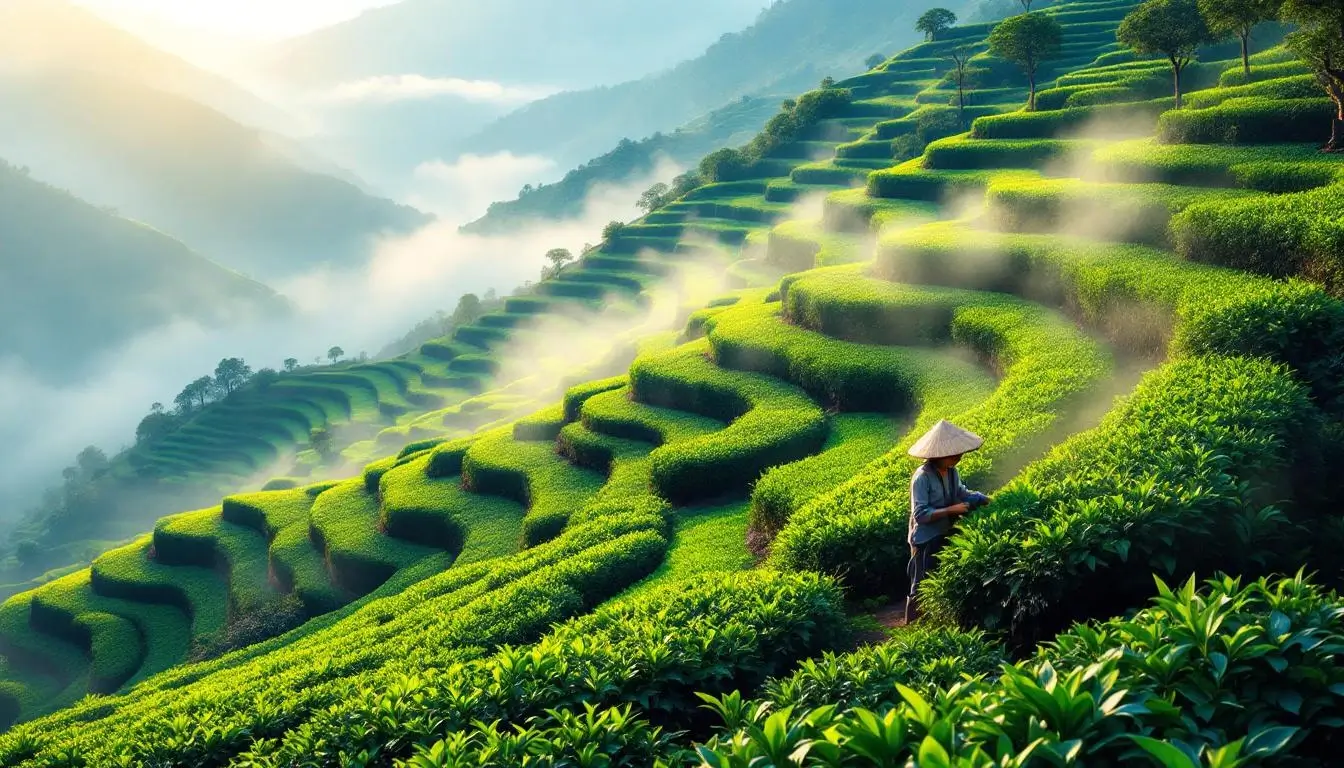
Taiwan accounts for roughly 90% of the world’s oolong tea production. That’s a staggering number for an island with only 36,000 square kilometers of land. But it makes sense once you understand what makes Taiwan’s terroir so special for tea growing.
First, there’s the elevation. Taiwan’s Central Mountain Range rises over 3,000 meters, creating a dramatic range of microclimates. Tea grown at higher altitudes — typically above 1,000 meters — develops more slowly in cooler temperatures, producing leaves with concentrated flavors, natural sweetness, and that coveted huigan (回甘), the pleasant aftertaste that lingers long after your last sip.
Then there’s the moisture. Taiwan receives abundant rainfall and is frequently blanketed in fog, especially in the mountain tea regions. This natural humidity creates ideal growing conditions — the leaves stay tender, the chlorophyll levels stay high, and the resulting tea has a freshness and vibrancy that lowland oolong simply can’t match.
Taiwan’s tea heritage also runs deep. When Fujian Province immigrants brought tea plants to Taiwan in the 18th century, they brought centuries of Chinese tea-making knowledge with them. Over the next 200+ years, Taiwanese tea masters refined and innovated these techniques, developing entirely new styles of oolong that don’t exist anywhere else in the world. The result is a tea tradition that honors its Chinese roots while being distinctly, proudly Taiwanese.
If you’ve ever wondered why Taiwanese tea commands premium prices at specialty shops — now you know. It’s not marketing hype. It’s geography, climate, and generations of craft converging on one small island.
The Major Varieties of Taiwan Oolong Tea You Need to Know
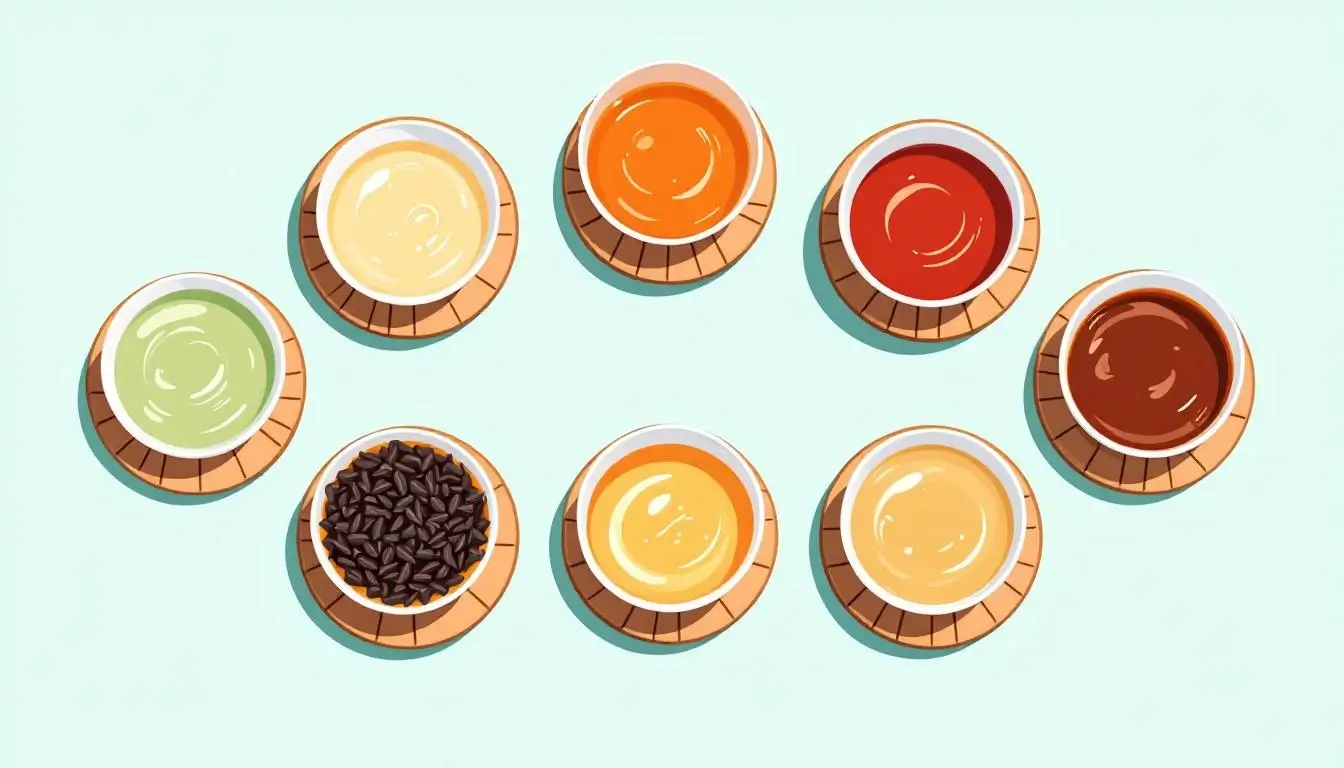
Not all oolong is created equal. Taiwan produces a dizzying array of styles, each with its own personality. Here are the ones that matter most.
High Mountain Oolong (Gao Shan Cha / 高山茶)
This is the crown jewel of Taiwanese tea. Grown above 1,000 meters — with the very best coming from 1,500 meters and higher — gao shan cha is defined by its floral aroma, buttery texture, and clean sweetness. The most famous high mountain oolong growing regions include Alishan (阿里山) in Chiayi County, Lishan (梨山) in Taichung, and Shanlinxi (杉林溪) in Nantou. These teas are lightly oxidized (15-25%) and typically unroasted, which preserves their bright, garden-fresh character. A good Alishan oolong will smell like gardenias and taste like liquid silk.
Dong Ding Oolong (凍頂烏龍)
The OG of Taiwanese oolong. Dong Ding (literally “Frozen Summit”) comes from the Lugu Township area of Nantou County and has been produced since the 19th century. Unlike high mountain oolong, Dong Ding is medium-oxidized (25-40%) and traditionally roasted over charcoal, giving it a warm, toasty character with notes of caramel, roasted nuts, and stone fruit. It’s richer and more full-bodied than its high mountain cousins — think of it as the red wine to high mountain oolong’s white wine.
Oriental Beauty (Dong Fang Mei Ren / 東方美人)
This is arguably Taiwan’s most unique tea. Oriental Beauty is heavily oxidized (60-80%) and gets its extraordinary flavor from an unlikely source: tiny green leafhoppers called jacobiasca formosana that bite the tea leaves during summer. The plant’s natural defense response triggers a chemical reaction that produces honey-sweet, muscatel flavors that are absolutely impossible to replicate artificially. Queen Elizabeth II reportedly gave it the name “Oriental Beauty” after tasting it — and whether that story is true or not, the name stuck. The best Oriental Beauty comes from Hsinchu County and Miaoli County in northwestern Taiwan.
Baozhong (包種茶)
Also spelled “Pouchong,” Baozhong is the lightest of Taiwan’s oolongs — barely oxidized at all (8-15%), making it almost closer to green tea than traditional oolong. It’s produced primarily in the Pinglin and Wenshan areas near Taipei. Baozhong is known for its intense floral fragrance — think lilac, gardenia, and melon — with a delicate, almost ethereal body. It’s the perfect entry point for people who think they don’t like tea because “it’s too bitter.” Baozhong is never bitter. It’s pure flowers in a cup.
Jin Xuan (Gold Lily / 金萱)
Developed in 1981 by the Taiwan Tea Research and Extension Station (TRES), Jin Xuan — officially known as Tai Cha #12 — was bred specifically for Taiwan’s climate. It’s famous for its naturally creamy, almost milky flavor and smooth texture. Yes, this is the cultivar behind the “milk oolong” hype — but authentic Jin Xuan doesn’t need any added flavoring to taste creamy. The real thing is grown primarily in Alishan and Nantou, and it’s a crowd-pleaser for tea newcomers and veterans alike.
Tieguanyin (鐵觀音)
While Tieguanyin originated in Fujian, Taiwan developed its own distinctive version — particularly in the Muzha district of Taipei. Taiwanese Tieguanyin is heavily roasted, producing deep, complex flavors of dark chocolate, dried plum, and toasted rice. It’s a winter comfort tea, the kind you brew on a rainy afternoon and sip slowly. The Muzha Tieguanyin tradition is kept alive by just a handful of families, making authentic versions increasingly rare and collectible.
Four Seasons Spring (Si Ji Chun / 四季春)
Named for its ability to produce quality tea leaves across all four seasons, this cultivar is grown at lower elevations (200-600 meters) and is known for its bold floral aroma and approachable price point. It’s the everyday oolong — less refined than high mountain varieties but dependably delicious and incredibly fragrant. If you’re buying Taiwan oolong tea on a budget, Four Seasons Spring delivers the best bang for your buck.
How Taiwan Oolong Tea Is Made: From Leaf to Cup
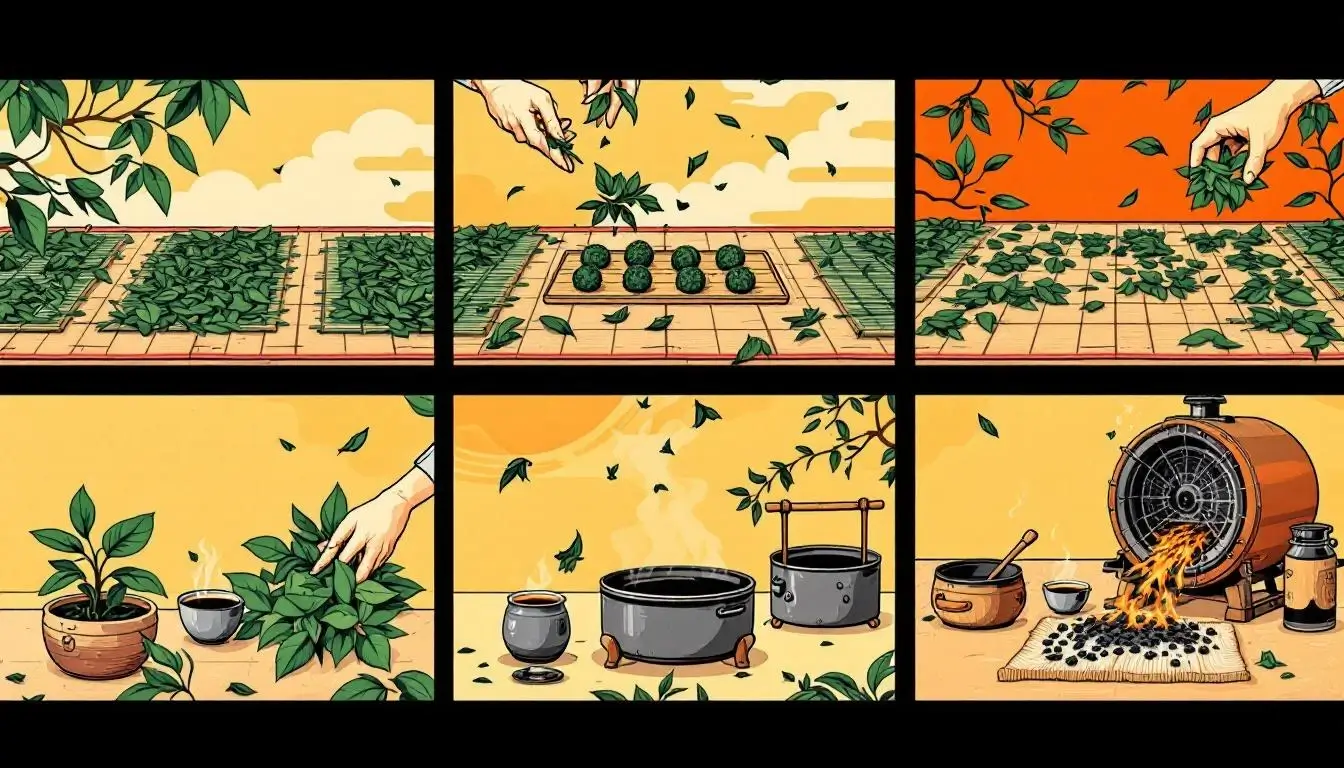
What separates oolong from green tea or black tea is partial oxidation — and the processing is where Taiwanese tea masters truly earn their reputation. Each step requires precise timing, intuition built over decades of practice, and an almost spiritual attention to the leaves.
Withering (萎凋)
Freshly picked leaves are spread on bamboo trays and left to wither in the sun for 30 minutes to 2 hours, depending on the weather and the desired style. This step begins reducing moisture and kickstarts the oxidation process. Indoor withering follows, where the leaves continue to lose moisture in a controlled environment.
Tossing and Bruising (搖青)
This is the step that defines oolong. Tea masters gently toss, shake, or tumble the leaves in bamboo drums to break down cell walls along the leaf edges. This controlled bruising exposes the leaf’s juices to oxygen, triggering oxidation. The master repeats this cycle — toss, rest, toss, rest — for anywhere from 6 to 24 hours, monitoring the aroma and color changes constantly. The degree of bruising directly controls the final flavor profile. Less bruising = floral and light. More bruising = fruity and complex.
Fixing (殺青)
When the oxidation hits the sweet spot, the leaves are heated rapidly — either in a tumble dryer or wok — to halt the enzymatic reaction. This “kills the green” and locks in the flavor profile. Get this timing wrong by even a few minutes, and months of careful cultivation go to waste.
Rolling (揉捻)
The fixed leaves are then rolled — either by hand or machine — into their characteristic shape. High mountain oolongs and Dong Ding are rolled into tight balls (the “semi-ball” style unique to Taiwan), while Baozhong is rolled into loose, twisted strips. Rolling also breaks down remaining cell walls, which helps the leaves release their full flavor during brewing.
Drying and Roasting (乾燥/焙火)
Finally, the tea is dried to reduce moisture below 5% for shelf stability. Some oolongs — particularly Dong Ding and Tieguanyin — undergo additional charcoal roasting, sometimes for days, which adds depth, warmth, and caramelized complexity. The roasting level is classified as light (清焙), medium (中焙), or heavy (重焙), and it dramatically transforms the character of the finished tea. If you’re exploring Taiwan’s traditional food culture, you’ll notice this same attention to fire and timing runs through the island’s entire culinary DNA.
How to Brew Taiwan Oolong Tea the Right Way
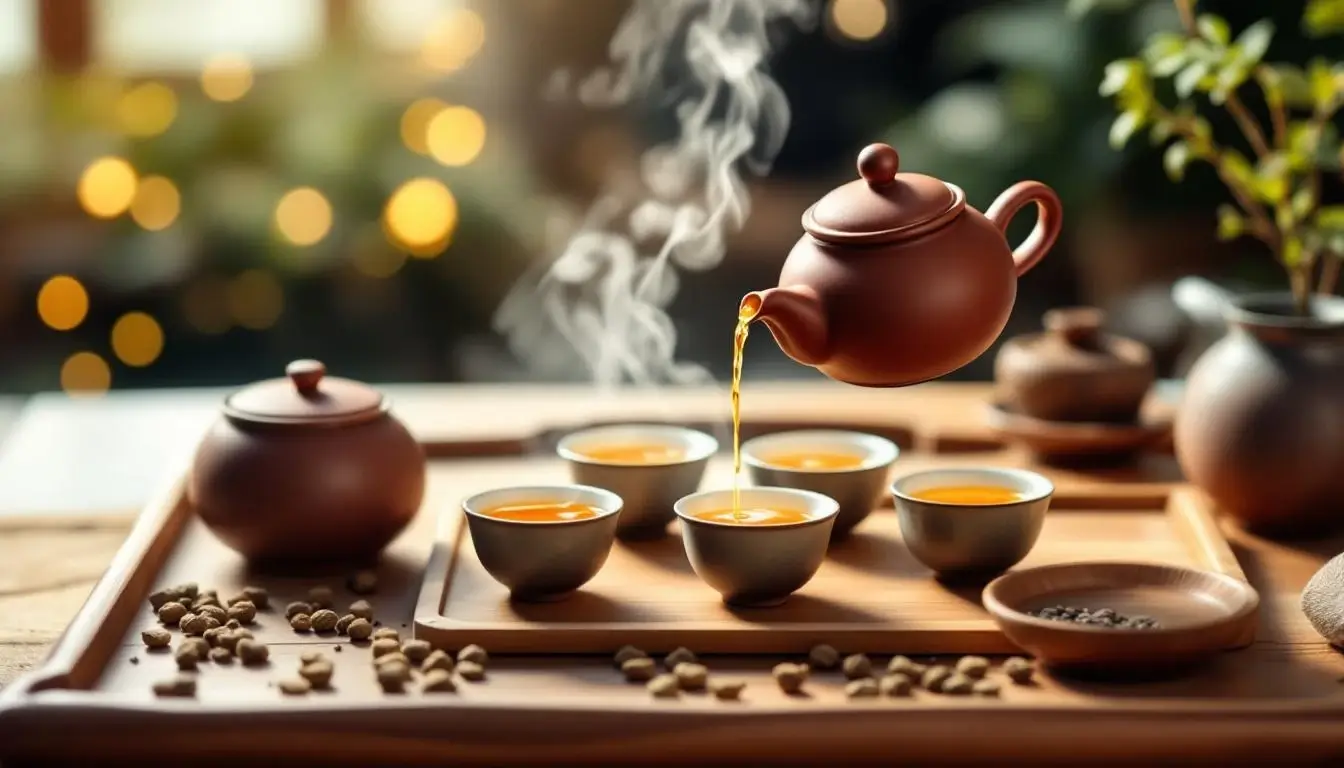
You can absolutely brew Taiwan oolong tea in a regular mug with an infuser — and it’ll taste great. But if you want to experience the full depth and evolution of flavors that make Taiwanese oolong special, you’ll want to try gongfu (功夫) style brewing. It’s easier than it sounds.
The Gongfu Method
What you need: A small teapot or gaiwan (100-150ml), a fairness pitcher, small tasting cups, a tea tray, and a kettle with temperature control.
- Warm your vessels. Pour hot water over the teapot and cups to preheat them. This isn’t optional — cold ceramics will steal heat from your brew and mute the flavors.
- Measure your tea. Use 5-7 grams of tea per 100ml of water. This ratio feels aggressive compared to Western brewing, but gongfu uses much shorter steep times to compensate.
- Rinse the leaves. Pour hot water over the leaves and immediately discard. This “awakens” the tightly rolled leaves and washes off any dust from processing.
- First infusion. Pour water at the correct temperature (see chart below) and steep for 30-45 seconds. Pour into the fairness pitcher, then distribute to cups.
- Subsequent infusions. Add 10-15 seconds to each successive steep. A good Taiwan oolong will yield 5-8 infusions, with the flavor evolving beautifully from steep to steep — floral early, sweet and buttery in the middle, and mineral and clean at the end.
Temperature and Timing by Variety
Getting the water temperature right makes a huge difference:
- High Mountain Oolong: 90-95°C (194-203°F), 30-45 second first steep
- Dong Ding: 95-100°C (203-212°F), 45-60 second first steep
- Oriental Beauty: 85-90°C (185-194°F), 30-45 second first steep
- Baozhong: 85-90°C (185-194°F), 30-40 second first steep
- Jin Xuan: 90-95°C (194-203°F), 30-45 second first steep
- Tieguanyin: 95-100°C (203-212°F), 45-60 second first steep
Pro tip: If your oolong tastes bitter, your water is too hot or your steep time is too long. Dial back the temperature 5°C and shorten the steep by 10 seconds. Taiwan oolong should never taste bitter — if it does, you’re overextracting.
Speaking of Taiwan’s incredible beverage culture, the island also invented bubble tea — which, fun fact, often uses a base of oolong tea for its more sophisticated versions.
If you’re a boba lover who also geeks out over real tea, our Taiwan Bubble Tea Cat T-Shirt is basically your spirit animal in wearable form — a kawaii cat sipping boba, because Taiwan’s tea culture deserves to be celebrated in every possible way.
Where to Buy Authentic Taiwan Oolong Tea
The Taiwan oolong tea market has a counterfeiting problem. As demand has surged — particularly from mainland China — lower-quality teas from Vietnam and other Southeast Asian countries are sometimes relabeled and sold as “Taiwan oolong.” Here’s how to buy the real deal.
Buying in Taiwan
If you’re planning a trip (check our Taiwan travel itinerary guide for planning help), buying tea directly from the source is one of the best things to do in Taipei and beyond.
- Maokong (貓空), Taipei: Take the Maokong Gondola from Taipei Zoo and visit the tea houses lining the mountain. This is where Muzha Tieguanyin comes from, and many shops offer tastings before you buy.
- Pinglin Tea Museum, New Taipei: The heart of Baozhong country. The museum is educational, and the surrounding village is packed with family-run tea shops selling direct.
- Alishan, Chiayi: The source for high mountain oolong. Roadside tea farms sell freshly processed leaves, and you can often watch the tea being made.
- Lugu, Nantou: Dong Ding’s homeland. The Lugu Farmers’ Association holds annual tea competitions — competition-winning teas are premium but worth every penny.
Shopping tip: Always ask for a tasting. Reputable Taiwanese tea shops will always let you try before you buy — it’s part of the culture. If a shop won’t let you taste, walk away. And if you’re looking for other things to bring home, don’t miss our guide to cheap things to buy in Taiwan.
Buying Online
For those of us who can’t hop on a flight to Taipei tomorrow, several reputable online vendors specialize in authentic Taiwan oolong:
- Eco-Cha Teas — Based in Nantou, Taiwan. Excellent curation, transparent sourcing, and detailed tasting notes. Their Four Seasons Spring and Charcoal Roasted High Mountain are standouts.
- Beautiful Taiwan Tea — Specializes in high mountain oolong from Alishan and Lishan. Small-batch, seasonal offerings.
- Taiwan Tea Crafts — Great selection across all major varieties, from budget-friendly everyday oolongs to competition-grade teas.
- Floating Leaves Tea — Seattle-based but sources directly from Taiwanese tea farmers. Known for exceptional Dong Ding and Oriental Beauty.
Red Flags When Buying
- Suspiciously low prices: Authentic high mountain oolong costs $15-40+ per 100g. If someone is selling “Alishan oolong” for $5 per 100g, it’s almost certainly not from Alishan.
- “Milk oolong” with actual milk flavor: Real Jin Xuan has a subtle, natural creaminess. If it tastes like someone poured milk into it, it’s been artificially flavored.
- No origin information: Reputable sellers will tell you the specific mountain, elevation, season, and often the farmer’s name. Vague descriptions like “premium Taiwan tea” are a red flag.
- Stale aroma: Fresh Taiwan oolong should smell vibrant and alive. If it smells flat or musty, it’s either old or poorly stored.

Wear Your Tea Obsession
Our kawaii Bubble Tea Cat tee celebrates Taiwan’s legendary tea culture — from oolong mountains to boba shops. Soft, comfy, and undeniably Taiwanese.
Taiwan Oolong Tea Health Benefits: What the Science Says
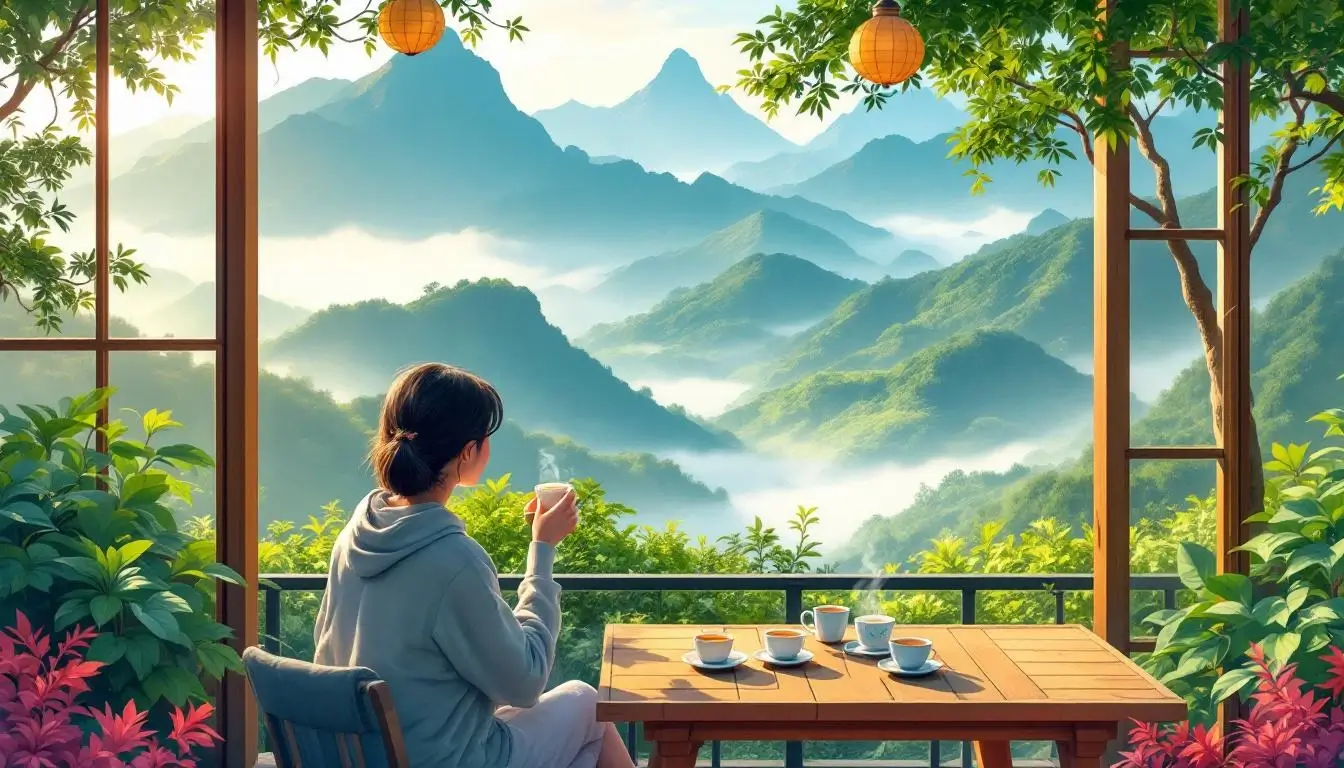
Taiwan oolong tea isn’t just delicious — it’s packed with compounds that researchers have been studying for decades. While tea isn’t medicine and no one should treat it as such, the science behind oolong’s health-supporting properties is genuinely impressive.
Metabolism and Weight Management
Oolong tea contains unique polyphenols that may help boost metabolism. A 2009 study published in the Chinese Journal of Integrative Medicine found that participants who drank oolong tea daily for six weeks showed reductions in body weight and body fat. The partial oxidation of oolong creates a specific polyphenol profile that’s different from both green and black tea, which may explain its particular effects on lipid metabolism.
Antioxidant Power
The catechins and theaflavins in oolong tea are potent antioxidants. High mountain oolong in particular — because of its slow growth at altitude — tends to have higher concentrations of epigallocatechin gallate (EGCG) and other beneficial compounds. These antioxidants help neutralize free radicals and support cellular health.
Mental Clarity Without the Jitters
Oolong contains both caffeine and L-theanine, an amino acid that promotes calm focus. The combination produces a state that tea drinkers in Taiwan call “tea drunk” (茶醉) — a gentle, sustained alertness without the anxiety or crash of coffee. One cup of Taiwan oolong typically contains 30-50mg of caffeine, roughly half of what you’d get from coffee.
Gut Health
Emerging research suggests that oolong tea polyphenols may support a healthy gut microbiome. A 2019 study in Nutrients found that oolong tea consumption was associated with increased diversity of beneficial gut bacteria. Given how central food is to Taiwanese culture, it’s fitting that their signature beverage supports digestive health too.
Frequently Asked Questions About Taiwan Oolong Tea
What’s the difference between Taiwan oolong and Chinese oolong?
While both originate from the same tea plant (Camellia sinensis), Taiwanese oolong tends to be lighter in oxidation and emphasizes floral and creamy notes, while Chinese oolongs (like Wuyi rock tea or Anxi Tieguanyin) tend to be more heavily roasted with mineral and earthy profiles. Taiwan also developed unique cultivars like Jin Xuan (#12) and Cuiyu (#13) that don’t grow in mainland China.
How should I store Taiwan oolong tea?
Keep your oolong in an airtight, opaque container away from light, heat, moisture, and strong odors. Lightly oxidized oolongs (high mountain, Baozhong) are best consumed within 6-12 months of purchase. Roasted oolongs (Dong Ding, Tieguanyin) actually improve with age — some collectors cellar them for years, re-roasting periodically to maintain freshness.
Is Taiwan oolong tea caffeinated?
Yes. A typical 150ml cup of Taiwan oolong contains 30-50mg of caffeine — less than coffee (95-200mg) but more than most green teas (20-30mg). Heavily oxidized varieties like Oriental Beauty tend to have slightly more caffeine than lightly oxidized ones like Baozhong.
What does “high mountain” actually mean?
In Taiwan, “high mountain tea” (高山茶) officially refers to any tea grown above 1,000 meters (3,280 feet) elevation. The most prized high mountain teas come from 1,500+ meters. The altitude matters because cooler temperatures slow leaf growth, concentrating flavors, amino acids, and aromatic compounds in the leaves.
Can I cold brew Taiwan oolong?
Absolutely — and many Taiwanese people do, especially in summer. Place 8-10 grams of oolong in a liter of room-temperature water and refrigerate for 6-8 hours. Cold brewing produces a smooth, sweet, low-caffeine tea that’s perfect for hot weather. High mountain oolong and Jin Xuan are particularly amazing cold-brewed.
Why is some Taiwan oolong so expensive?
Three factors drive the price: altitude (higher = more expensive), hand-picking (machine harvesting is cheaper but rougher on the leaves), and competition awards. Competition-winning Dong Ding or Alishan oolong can sell for $200-500+ per 100 grams at auction. For everyday drinking, excellent Taiwan oolong is available in the $20-50 per 100g range.
Your Taiwan Oolong Tea Journey Starts Here
Taiwan oolong tea is one of those rare things in life that’s genuinely worth the hype. Behind every cup is a story — of mountain mist and volcanic soil, of tea masters who’ve spent decades perfecting the exact moment to halt oxidation, of an island that turned a Chinese import into something unmistakably its own.
If you’re just getting started, grab a good Alishan high mountain oolong or a Jin Xuan from a reputable vendor. Brew it gongfu style — small pot, lots of leaves, short steeps — and pay attention to how the flavor changes from the first infusion to the fifth. That evolution is what hooks people. Once you’ve tasted the real thing, supermarket tea bags will never hit the same way again.
And when you’re deep into your Taiwan tea obsession, planning your first trip to the island just to visit a tea farm in Alishan — don’t worry. We’ve all been there. Taiwan has a way of pulling you in, one sip at a time.
Grab a Free Taiwan Sticker!
Drop your email and we’ll send you a limited-edition Taiwan sticker — plus insider access to new merch drops and island vibes.
No spam. Unsubscribe anytime.