Taiwan Traditional Food: The Complete Guide to the Island’s Most Incredible Dishes
Taiwan traditional food is one of those rare culinary experiences that hits every note — savory, sweet, spicy, chewy, crispy, and soul-warming — often in a single meal. From steaming bowls of beef noodle soup slurped at hole-in-the-wall shops to delicate pineapple cakes wrapped in golden pastry, Taiwanese cuisine tells the story of an island shaped by indigenous traditions, Fujian and Hakka immigrants, Japanese colonial influence, and a creative modern food culture that refuses to stand still.
Whether you’re planning your first trip to Taiwan, craving a taste of the island from afar, or simply curious about why Taiwanese food has captured the world’s attention, this guide covers everything. We’ll walk through the iconic comfort dishes, legendary street food, regional specialties, classic desserts, and the cultural traditions that make eating in Taiwan one of the greatest food experiences on the planet.
What Makes Taiwan Traditional Food So Special
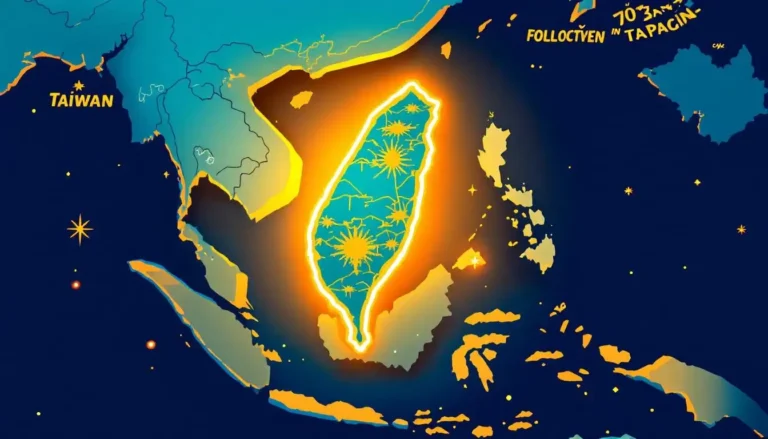
To understand Taiwan traditional food, you need to understand the island itself. Sitting at the crossroads of East Asia, Taiwan has absorbed culinary influences from every direction — and then made them entirely its own. The result is a cuisine that feels simultaneously familiar and completely unique.
The foundation of Taiwanese cooking traces back to Hokkien (Fujian province) immigrants who brought braising techniques, soy-based seasonings, and a deep love of pork. Hakka settlers added their tradition of preserved and pickled foods — dried mustard greens, fermented tofu, and hearty one-pot dishes designed to fuel hard agricultural work. Fifty years of Japanese colonial rule (1895–1945) introduced tempura, sashimi, bento culture, and a meticulous attention to ingredient quality that persists today.
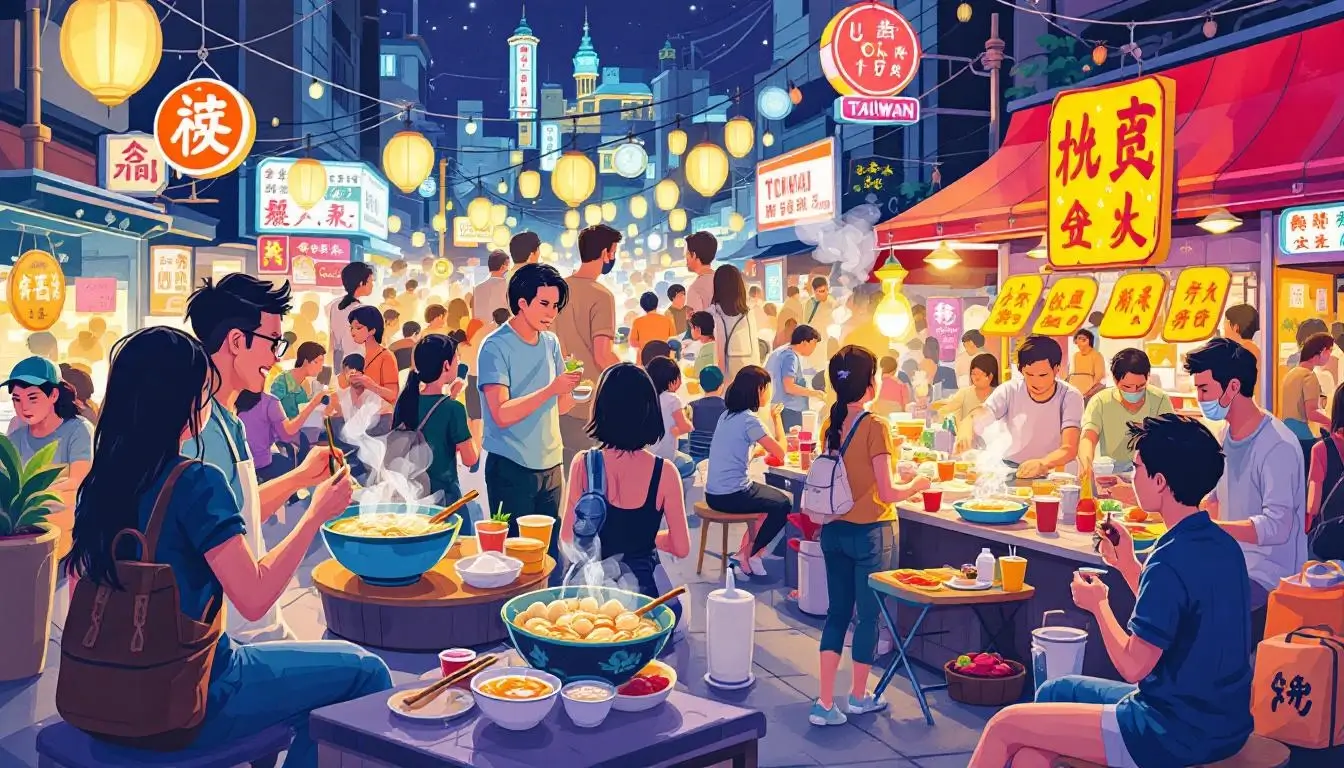
But the magic ingredient is Taiwan’s own xiaochi (小吃) culture — literally “small eats.” These aren’t just snacks. Xiaochi are an entire eating philosophy built around Taiwan’s legendary night markets, where hundreds of vendors each perfect a single dish over decades. You don’t go to one restaurant for dinner in Taiwan. You eat your way through a night market, three bites at a time, building a meal from a dozen different stalls.
This xiaochi tradition means Taiwanese food rewards exploration. Every neighborhood, every city, every region has its own specialties. And because competition between vendors is fierce, quality stays remarkably high even at the most humble street stalls.
The Five Flavor Pillars of Taiwanese Cooking
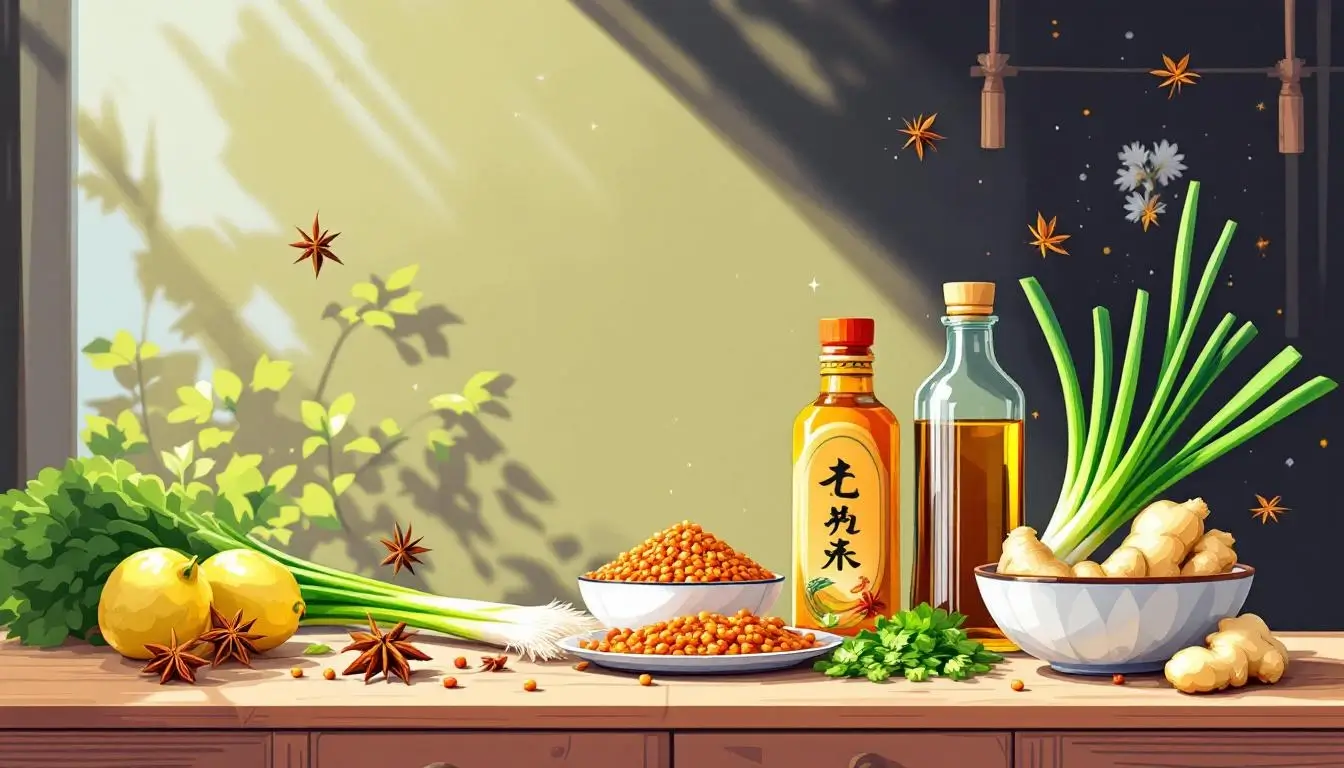
Taiwanese cuisine balances five essential flavor profiles that appear again and again across its traditional dishes:
- Soy and sesame — the savory backbone of braises, dressings, and dipping sauces
- Rice wine and vinegar — brightness and depth in marinades and soups
- Five-spice and star anise — the warm, aromatic signature of Taiwanese stewed meats
- Fermented black beans and pickled vegetables — funky, umami-rich accents inherited from Hakka cooking
- Fresh herbs and aromatics — scallions, cilantro, garlic, and ginger appear in nearly everything
Understanding these pillars helps you navigate any Taiwanese menu with confidence. When you taste that distinctive sweet-savory-aromatic combination, you’re experiencing centuries of culinary evolution on a tiny, food-obsessed island.
Classic Taiwanese Comfort Food You Need to Try
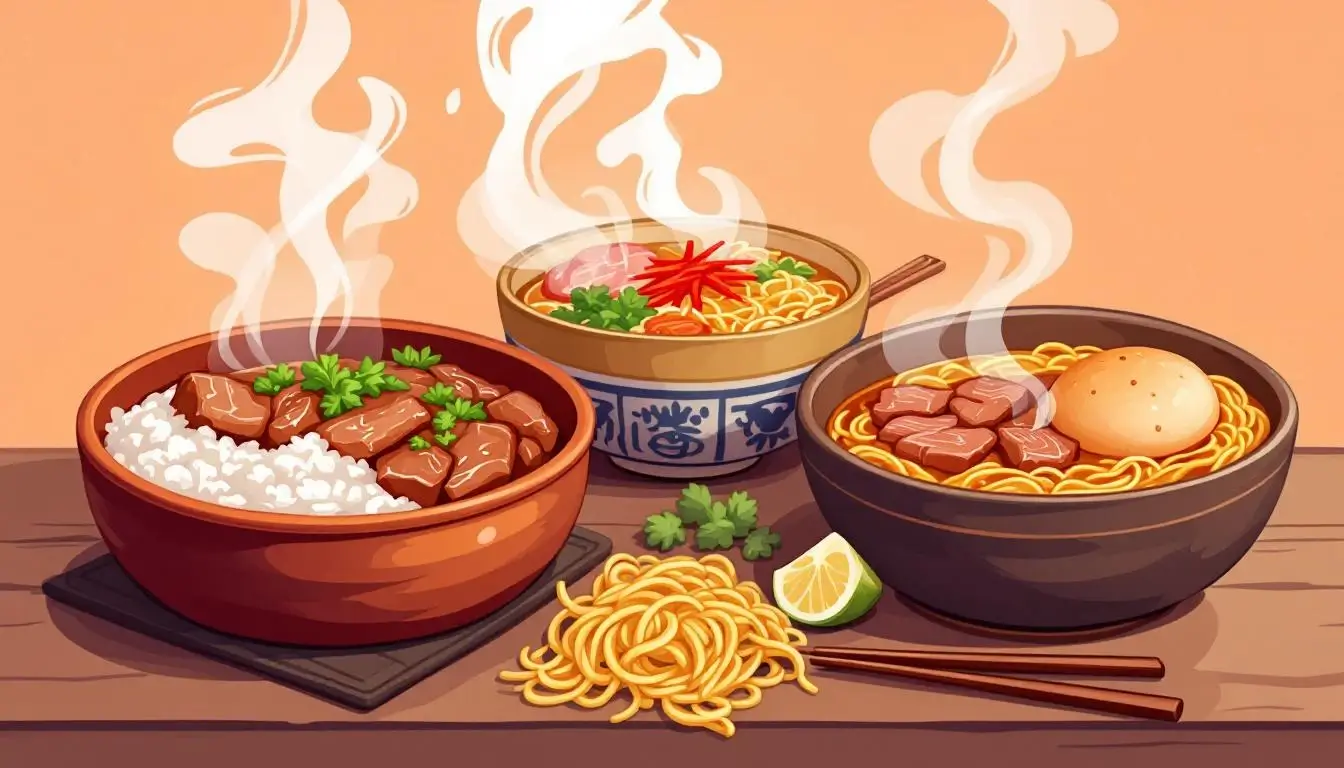
These are the dishes that define everyday eating in Taiwan — the comfort food that Taiwanese people grow up with, crave when they’re abroad, and debate endlessly about which shop makes the best version.
Lu Rou Fan (滷肉飯) — Braised Pork Rice
If Taiwan has a national dish, it’s lu rou fan. A bowl of steamed rice topped with minced pork belly that’s been slowly braised in soy sauce, five-spice, fried shallots, and rice wine until it becomes a glossy, unctuous sauce. It costs around 30-50 TWD (about $1 USD) and you’ll find it everywhere from night market stalls to Michelin-recommended restaurants.
The beauty of lu rou fan is its simplicity. The best versions use fatty pork belly cut into tiny pieces (not ground), with the shallots caramelized until deeply golden. A soft-boiled egg and pickled mustard greens on the side are traditional accompaniments. Every Taiwanese person has strong opinions about which shop makes the definitive version — it’s a debate that will never be settled, and that’s part of the fun.
Niu Rou Mian (牛肉麵) — Beef Noodle Soup
Taiwan’s other contender for national dish status, niu rou mian is a rich, deeply flavored beef broth loaded with tender braised beef chunks and thick, chewy wheat noodles. The broth typically simmers for hours with tomatoes, chili bean paste, soy sauce, star anise, and Sichuan peppercorns.
Taipei hosts an annual Beef Noodle Soup Festival where shops compete for the title of best bowl in the city — that’s how seriously Taiwan takes this dish. The two main styles are hong shao (紅燒, soy-braised, darker and richer) and qing dun (清燉, clear broth, lighter and more herbal). Both are extraordinary, and every serious food lover should try multiple bowls across different shops, as covered in our Taiwan Michelin guide.
Gua Bao (刈包) — Taiwanese Pork Belly Bun
Long before the Western “bao bun” trend, Taiwan had gua bao — a fluffy steamed bun folded around a thick slice of braised pork belly, topped with pickled mustard greens, crushed peanuts, and fresh cilantro. The combination of soft, rich, tangy, crunchy, and herbal in every bite is pure Taiwanese genius.
Gua bao is often called “Taiwanese hamburger” by tourists, though that comparison doesn’t do justice to its centuries-old heritage. It’s a night market staple and a common offering during the Lunar New Year’s Eve dinner, symbolizing prosperity (the folded bun resembles an old coin purse).
San Bei Ji (三杯雞) — Three-Cup Chicken
Named for its three key ingredients — one cup each of soy sauce, sesame oil, and rice wine — san bei ji is comfort food at its most aromatic. Chicken pieces are braised in a clay pot with garlic, ginger, chili, and fresh Thai basil until the sauce reduces to a sticky, intensely flavorful glaze.
The fragrance of basil and sesame oil hitting the hot clay pot is one of the most evocative aromas in Taiwanese cooking. San bei ji originated in Jiangxi province in mainland China but was perfected in Taiwan, where the addition of Thai basil became the definitive local twist.
Fan Tuan (飯糰) — Taiwanese Rice Roll
A staple of Taiwanese breakfast culture, fan tuan is a tightly packed cylinder of sticky rice wrapped around a crispy fried dough stick (youtiao), pickled vegetables, dried pork floss, and sometimes a preserved egg. It’s handheld, portable, and surprisingly filling — the perfect grab-and-go breakfast that fuels Taiwan’s morning commuters.
Taiwan’s Street Food and Night Market Legends
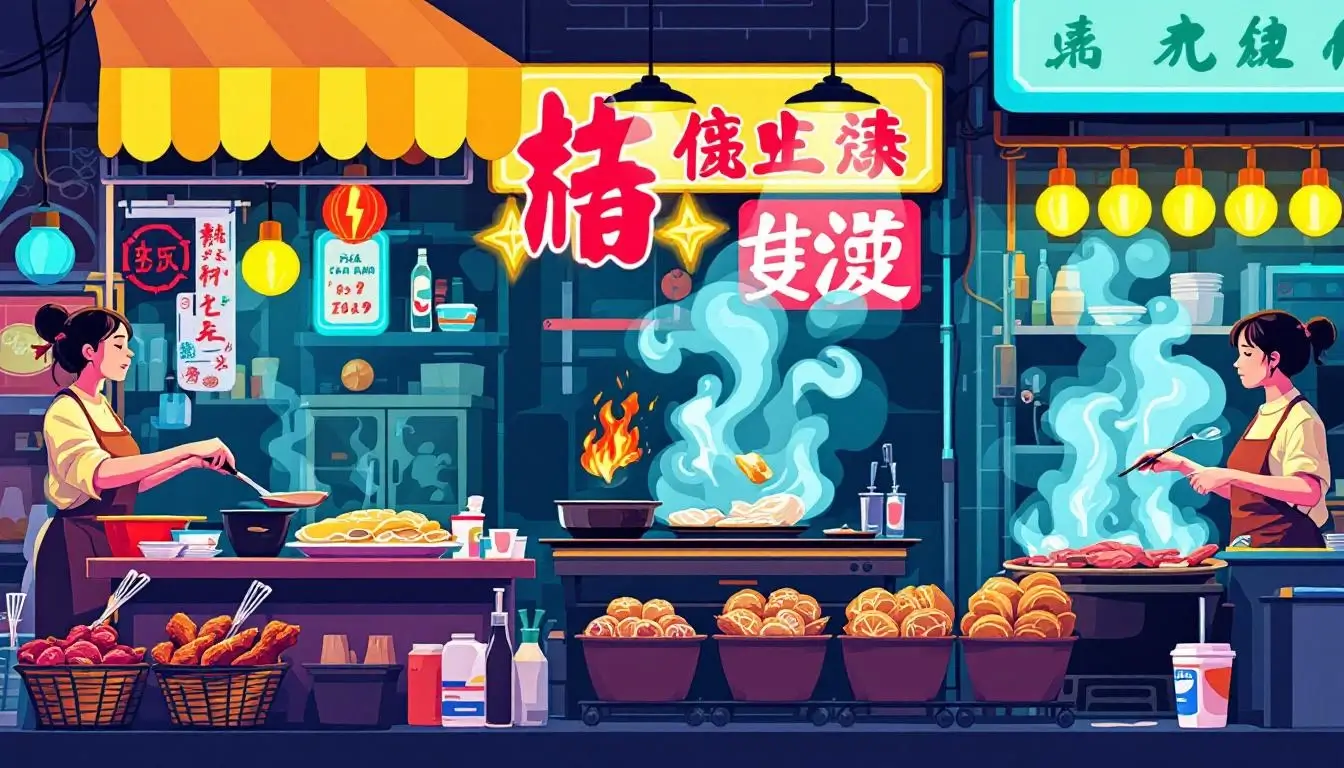
Taiwan’s night markets are more than just food courts — they’re living cultural institutions where families have perfected single recipes across three or four generations. Here are the street food dishes that have made Taiwan famous worldwide.
Xiao Long Bao (小籠包) — Soup Dumplings
While Shanghai claims origin rights, Taiwan elevated xiao long bao to an art form. These delicate steamed dumplings are filled with seasoned pork and a burst of hot, savory soup that’s trapped inside the thin wrapper. The technique requires pinching exactly 18 folds into each dumpling — a skill that takes years to master.
Din Tai Fung, the Taipei restaurant that perfected xiao long bao, has earned Michelin stars and spawned locations worldwide. But for the authentic night market experience, seek out smaller shops where aunties hand-fold each dumpling to order.
Oyster Omelette (蚵仔煎) — O-A-Jian
A signature dish of Taiwan’s coastal food culture, the oyster omelette combines plump, briny oysters with eggs and sweet potato starch into a half-crispy, half-gooey pancake, topped with a sweet-and-savory red sauce. The starch creates a uniquely chewy, slightly translucent texture that’s unlike anything in Western cooking.
Every night market has at least one oyster omelette vendor, and the dish is so beloved that it regularly tops “favorite Taiwanese street food” polls. Fresh oyster quality is crucial — the best versions use small, tender oysters harvested from Taiwan’s western coast.
Stinky Tofu (臭豆腐) — Chou Doufu
No guide to Taiwan traditional food would be complete without addressing the elephant in the room — or rather, the smell. Stinky tofu is fermented tofu that smells absolutely terrible and tastes absolutely incredible. It’s deep-fried until the exterior shatters with a satisfying crunch while the inside stays creamy and soft, served with pickled cabbage and chili sauce.
First-timers often need courage for that first bite, but the flavor is mild, savory, and surprisingly addictive. The fermentation process breaks down proteins into amino acids, creating a depth of umami that regular tofu can’t match. If you can get past the aroma, you’ll understand why Taiwanese people are obsessed with this snack.
Taiwanese Fried Chicken (鹽酥雞) — Yan Su Ji
Forget everything you know about fried chicken. Taiwanese yan su ji starts with bite-sized pieces of marinated chicken, battered and deep-fried until impossibly crispy, then tossed with fried basil, garlic, chili, and a generous shower of white pepper salt. You can usually add extras to the frying basket — sweet potato, tofu, mushrooms, broccoli — all fried together in the same fragrant oil.
The seasoning is what sets Taiwanese fried chicken apart. That combination of five-spice, white pepper, garlic, and fried basil creates an aromatic, slightly spicy flavor profile that’s become one of Taiwan’s most popular late-night snacks.
Pepper Meat Buns (胡椒餅) — Hu Jiao Bing
Imagine a flaky, blistered pastry shell — baked in a tandoor-like clay oven — filled with juicy, black pepper-seasoned pork and scallions. Hu jiao bing is one of those night market snacks that draws the longest lines, and for good reason. The exterior shatters when you bite through it, releasing a rush of peppery, meaty steam.
The clay oven technique likely traces back to Fuzhou, but Taiwan made the dish its own with a heavier hand on the black pepper and a thinner, crispier crust. Raohe Night Market in Taipei is particularly famous for hu jiao bing, with vendors that attract hour-long queues.
Traditional Taiwanese Soups, Stews, and Hot Pot
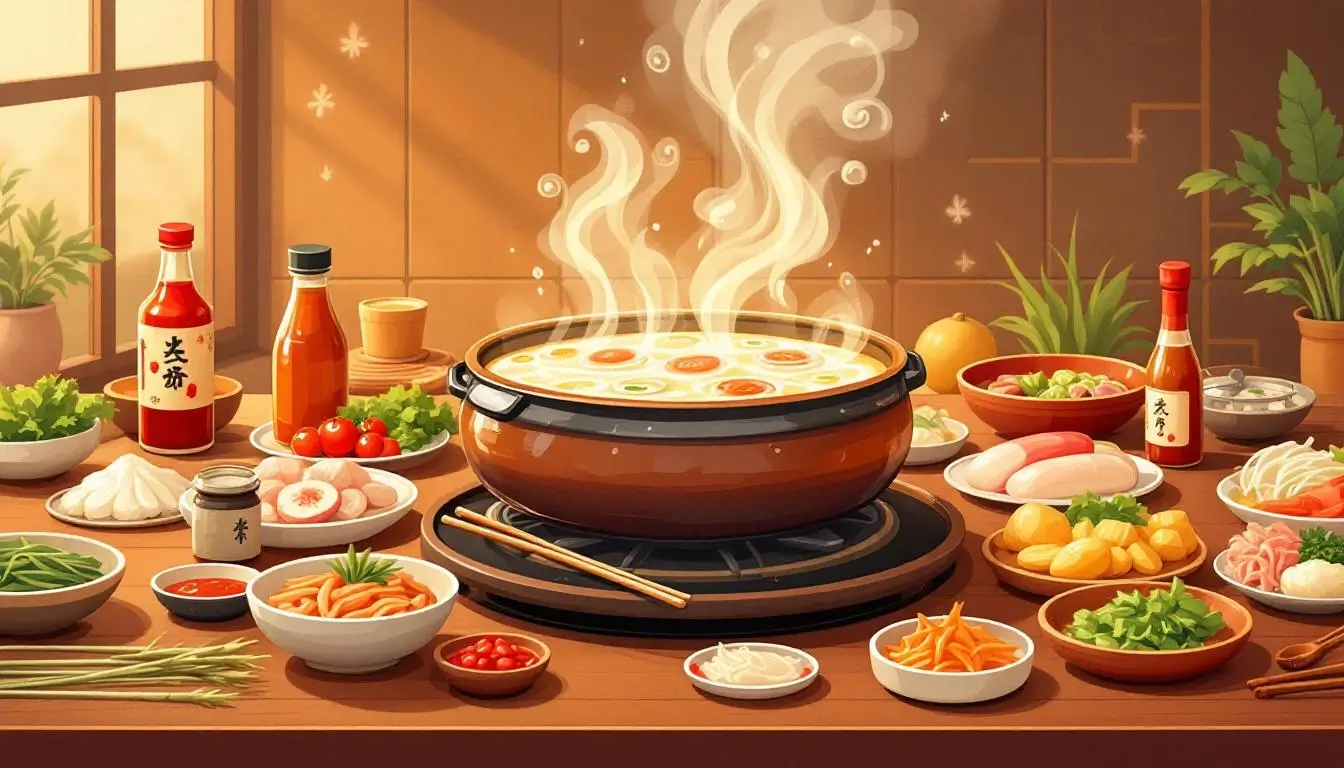
Soup is not a side dish in Taiwan — it’s the soul of the meal. Nearly every traditional Taiwanese meal includes at least one soup, and many of the island’s most treasured dishes are liquid-based.
Taiwanese Hot Pot (火鍋) — Huo Guo
Hot pot in Taiwan is a communal dining ritual where friends and family gather around a bubbling pot of broth and cook their own ingredients tableside. Unlike Sichuan-style hot pot (though that’s popular in Taiwan too), the traditional Taiwanese version features a milder broth — often kombu (kelp), pork bone, or herbal — that lets the quality of the fresh ingredients shine.
What makes Taiwanese hot pot special is the dipping sauce bar. Most restaurants offer a build-your-own station with soy sauce, sesame paste, sa cha sauce (a savory, slightly fishy paste unique to Taiwan), chili oil, raw egg, garlic, and fresh scallions. The art is in your personal sauce ratio.
Sesame Oil Chicken Soup (麻油雞) — Ma You Ji
A nourishing winter soup made by cooking chicken pieces in generous amounts of black sesame oil, ginger, and rice wine. Ma you ji is traditionally prepared for new mothers during their postpartum recovery month (坐月子, zuo yue zi), as it’s believed to restore warmth and strength to the body.
Even outside of postpartum contexts, this soup is a beloved cold-weather comfort food. The aroma of toasted sesame oil and rice wine filling a kitchen is one of the defining scents of a Taiwanese winter.
Milkfish Congee (虱目魚粥) — Si Mu Yu Zhou
A specialty of Tainan — the oldest city in Taiwan and arguably its food capital — milkfish congee is a silky rice porridge loaded with tender chunks of milkfish, fried shallots, and white pepper. Milkfish farming has a 400-year history in southern Taiwan, and this humble breakfast dish showcases the fish at its buttery, sweet best.
If you’re visiting Tainan (and you absolutely should — check our Taiwan destinations guide for planning tips), eating milkfish congee for breakfast at a decades-old local shop is a quintessential Taiwanese food experience.
Sweet Traditions: Taiwan’s Classic Desserts and Snacks
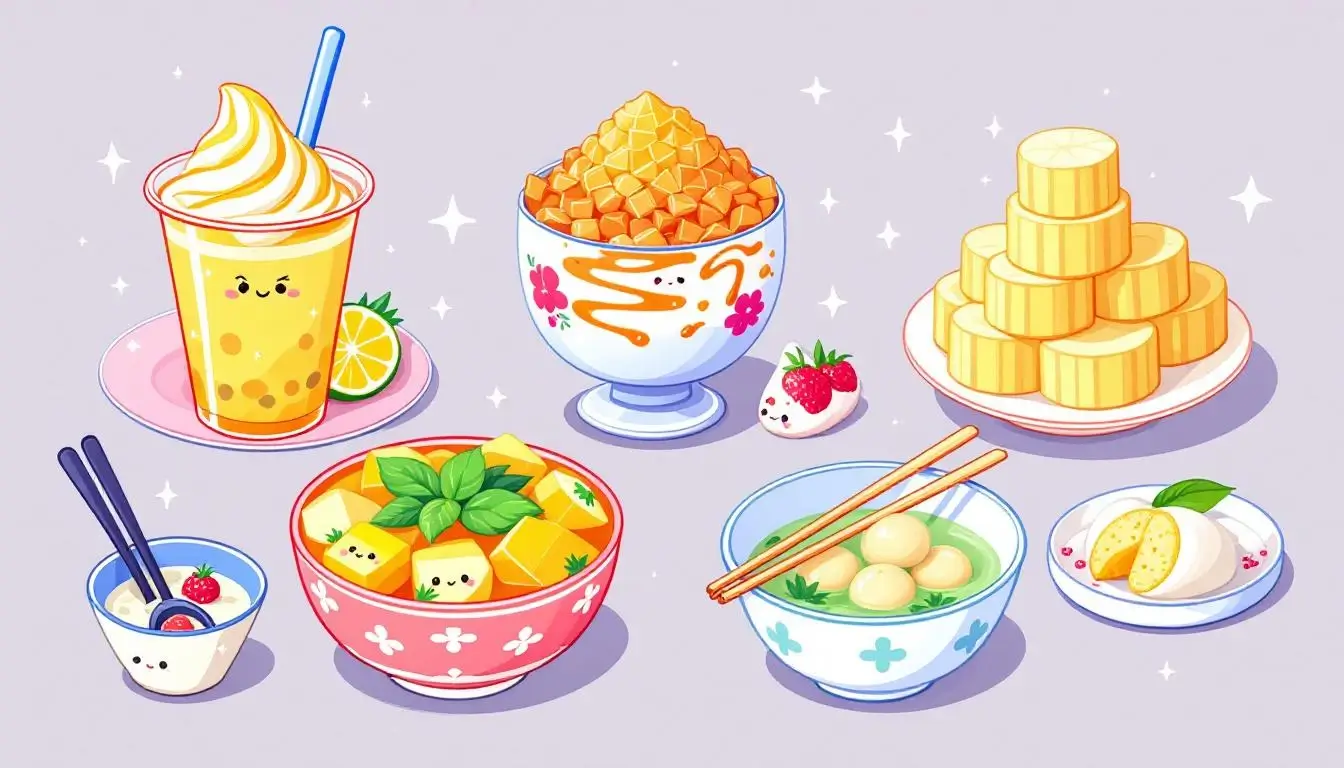
Taiwanese desserts are a world unto themselves — often less sweet than their Western counterparts, with textures ranging from chewy to silky to refreshingly icy. And then there’s the drink that changed everything.
Bubble Tea (珍珠奶茶) — Zhen Zhu Nai Cha
Taiwan’s single greatest culinary export, bubble tea was invented in Taichung in the 1980s and has since conquered the entire world. The classic version combines strong black tea, creamy milk, and chewy tapioca pearls (boba) into an addictive drink that’s spawned a global industry worth billions.
In Taiwan, bubble tea culture runs deep. Every block has at least one tea shop, and the variety goes far beyond the basic milk tea — fresh fruit teas, brown sugar boba, cheese foam teas, taro milk, and seasonal specialties keep the innovation flowing. Speaking of boba culture, our Taiwan Bubble Tea Cat T-Shirt captures the playful spirit of Taiwan’s tea obsession — perfect for any boba lover who wants to wear their love for Taiwan on their sleeve.
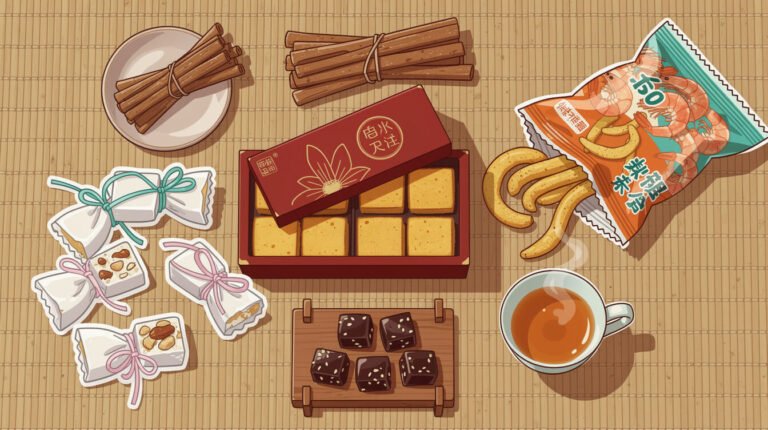
Pineapple Cake (鳳梨酥) — Feng Li Su
Taiwan’s most famous souvenir and one of its most beloved traditional treats, pineapple cake consists of a buttery, crumbly shortcrust pastry filled with sweet-tart pineapple jam. The best versions use 100% pineapple filling (called tu feng li su, using native Taiwanese pineapples) rather than the traditional wintermelon-blended filling.
Chia Te Bakery in Taipei is perhaps the most famous pineapple cake producer, with lines stretching around the block. But dozens of excellent bakeries across Taiwan put their own spin on this classic. If you want to try making them at home, check out our Taiwan pineapple cake recipe.
Shaved Ice (剉冰) — Cua Bing
Taiwan’s answer to the summer heat, cua bing is a mountain of finely shaved ice topped with an array of sweet toppings — mung beans, red beans, taro balls, grass jelly, condensed milk, fresh mango, and sweetened peanuts are all popular choices. The modern evolution, xue hua bing (snow ice), uses frozen flavored milk instead of plain ice, creating an incredibly creamy, snow-like texture.
Mango shaved ice in particular has become a Taiwanese icon. Shops like Ice Monster and Smoothie House in Taipei serve massive bowls of shaved ice buried under fresh Alfonso mangoes, mango ice cream, and mango syrup — pure tropical heaven.
Taro Balls (芋圓) — Yu Yuan
Chewy, bouncy balls made from taro, sweet potato, and mountain yam, served in a warm sweet ginger soup or over shaved ice. Yu yuan are a specialty of Jiufen, the atmospheric mountain town that inspired the scenery of Miyazaki’s Spirited Away. The chewy, slightly starchy texture combined with the natural sweetness of root vegetables makes these utterly addictive.
Douhua (豆花) — Tofu Pudding
Silky-smooth soft tofu served in sweet ginger syrup with toppings like tapioca pearls, peanuts, red beans, and taro balls. Douhua is one of Taiwan’s most comforting desserts — delicate, not too sweet, and available from breakfast through late-night snacking. The texture should be impossibly smooth, almost like custard, achieved through careful coagulation of fresh soy milk.
Regional Specialties: Food Traditions Across the Island
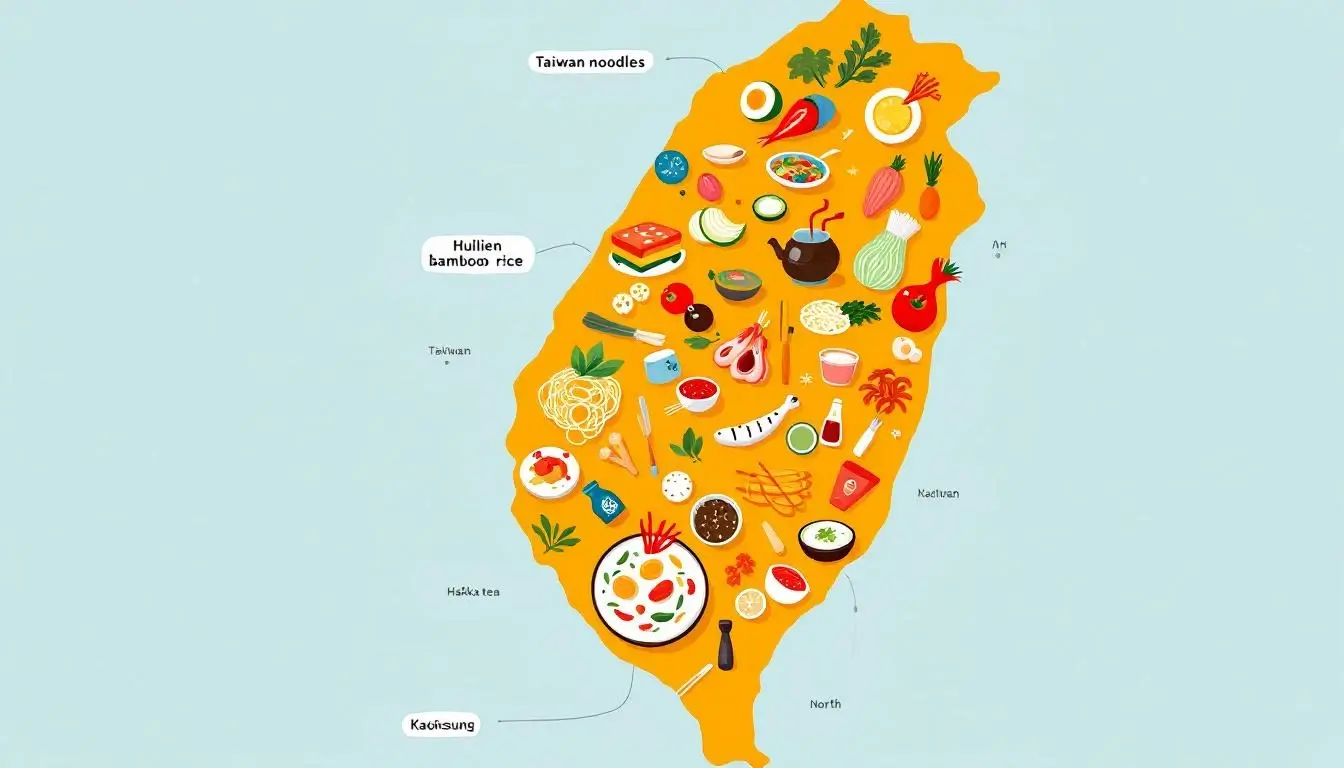
One of the greatest joys of exploring Taiwan traditional food is discovering how each region has developed its own iconic dishes. Here’s a taste of what awaits beyond Taipei.
Tainan — The Food Capital
Often called Taiwan’s culinary birthplace, Tainan is famous for dan zai mian (擔仔麵, a delicate shrimp and minced pork noodle soup), coffin bread (棺材板, thick toast hollowed out and filled with creamy seafood chowder), and a-gei (fried tofu stuffed with glass noodles). Tainan food tends to be slightly sweeter than the rest of Taiwan, reflecting its historical sugar cane industry.
Hualien and Taitung — Indigenous Flavors
Taiwan’s eastern coast is home to many indigenous communities whose food traditions predate Chinese immigration by thousands of years. Look for zhutong fan (竹筒飯, rice steamed inside bamboo tubes), wild boar sausage, mochi made from millet (an indigenous grain staple), and dishes featuring foraged mountain vegetables. These flavors offer a glimpse into Taiwan’s deepest culinary roots, quite different from the Hokkien and Hakka traditions that dominate the west coast.
Hakka Country — Beipu and Miaoli
The Hakka communities of northern Taiwan have preserved a distinct culinary tradition centered on preservation, bold flavors, and hearty dishes. Lei cha (擂茶, ground tea) is a unique Hakka drink made by grinding tea leaves, peanuts, sesame seeds, and grains into a thick, nutritious paste — quite different from standard Chinese tea. Ban tiao (板條, flat rice noodles) stir-fried with dried shrimp and bean sprouts is the quintessential Hakka noodle dish.
Kaohsiung — Southern Seafood
Taiwan’s largest port city brings a seafood focus to its food scene. Qizijin (旗津), a narrow island accessible by ferry, is famous for its seafood street where you pick live fish, crabs, and shrimp from tanks and have them cooked to order. Kaohsiung is also home to some of Taiwan’s best dan bing (egg crepes) and a thriving night market scene.
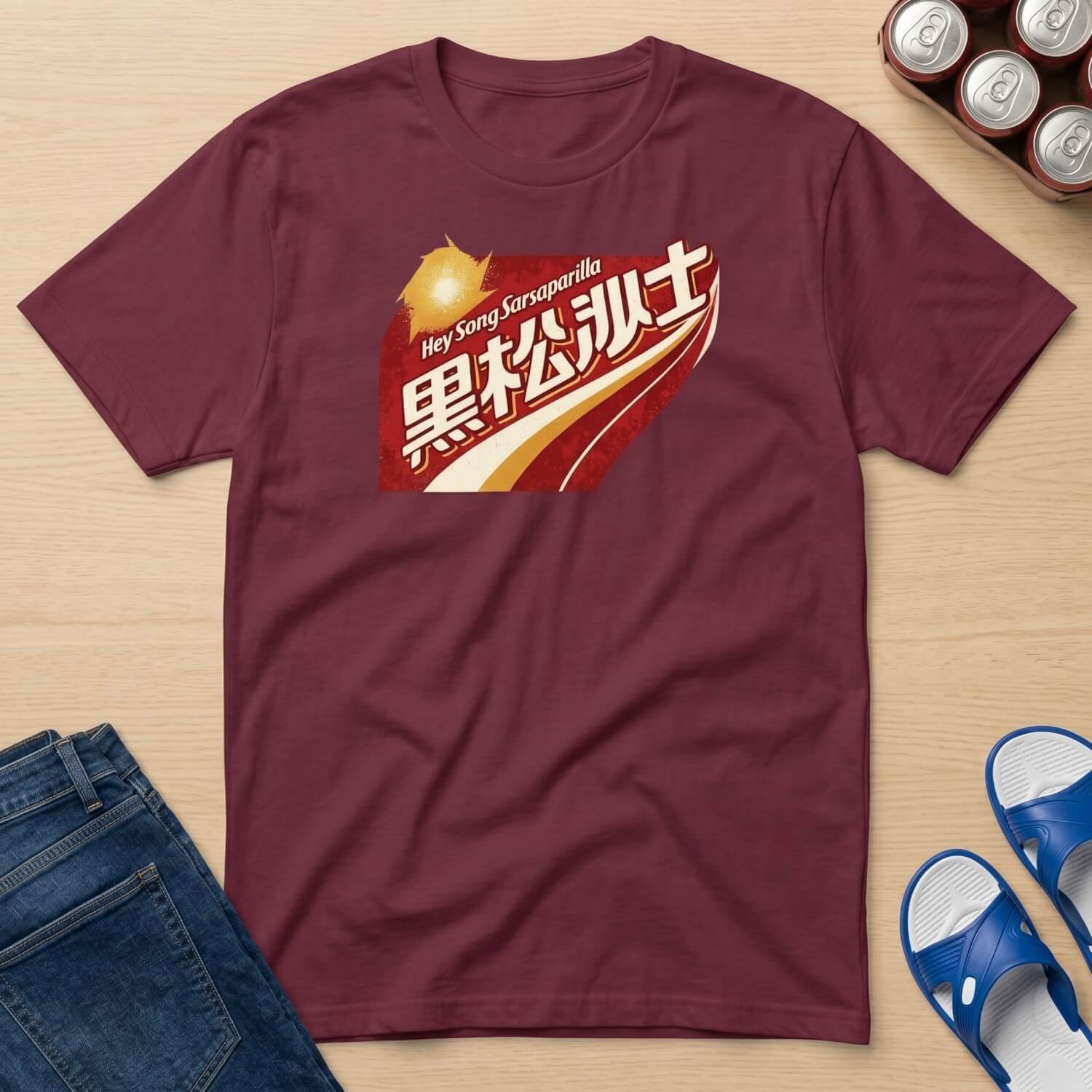
Wear Your Love for Taiwan’s Flavors
Rep Taiwan’s iconic Hey Song Sarsaparilla — the classic drink every Taiwanese person grew up with. This vintage-style tee is the perfect conversation starter for food lovers and Taiwan fans alike.
Frequently Asked Questions About Taiwan Traditional Food
Planning a food-focused trip to Taiwan or just curious about the cuisine? Here are the most common questions answered.
What is the most famous traditional food in Taiwan?
Lu rou fan (braised pork rice) and niu rou mian (beef noodle soup) are arguably the two most iconic dishes. Bubble tea is Taiwan’s most famous culinary export worldwide. For souvenirs, pineapple cake is the undisputed champion.
Is Taiwanese food spicy?
Traditional Taiwanese food is generally not very spicy compared to Sichuan or Thai cuisine. Flavors tend toward savory, sweet, and aromatic. However, chili sauce and chili oil are common condiments, and dishes like ma la hot pot (Sichuan-influenced) are extremely popular. You can usually control the heat level.
Is Taiwanese food healthy?
Many traditional Taiwanese dishes are quite nutritious — steamed fish, vegetable-heavy stir-fries, tofu-based dishes, and clear soups are all staples. However, night market food tends to be fried or rich. A balanced approach is easy: pair your fried chicken with a bowl of nutritious congee and blanched vegetables, the way locals do.
How is Taiwanese food different from Chinese food?
While Taiwanese cuisine shares roots with Fujian and Hakka Chinese cooking, it has been transformed by indigenous ingredients, Japanese colonial influence, and 70+ years of independent culinary evolution. Key differences include heavier use of sweet potato (a historical staple), more seafood, Japanese-influenced presentations, the unique xiaochi street food culture, and distinctly Taiwanese innovations like bubble tea and modern night market food.
What should I eat first in Taiwan?
Start with the Holy Trinity of Taiwanese food: a bowl of beef noodle soup for lunch, a night market crawl for dinner (try oyster omelette, stinky tofu, and fried chicken), and bubble tea to wash it all down. This gives you the full spectrum of Taiwan’s food culture in a single day. For morning fuel, don’t miss the Taiwanese breakfast experience — dan bing, soy milk, and fan tuan.
Final Thoughts on Taiwan Traditional Food
Taiwan traditional food is so much more than a list of dishes — it’s a window into the soul of an island that has turned eating into an art form. From the grandmother braising pork belly with the same recipe her grandmother used, to the night market vendor who’s spent forty years perfecting a single snack, Taiwanese food is built on a foundation of craft, pride, and genuine love for feeding people well.
What makes Taiwan’s food culture truly extraordinary is its accessibility. The best meals in Taiwan don’t require reservations or dress codes. They happen at plastic tables on busy sidewalks, in steamy breakfast shops at 6 AM, and under the neon lights of night markets where the air smells like pepper buns and fried basil. Every bite tells a story — of migration, adaptation, and a small island’s outsized determination to eat better than everyone else.
Whether you’re booking flights to Taipei, hunting for authentic Taiwanese recipes to try at home, or simply falling in love with Taiwan’s incredible culture from afar, the food is always the perfect entry point. Start eating, keep exploring, and you’ll understand why people who visit Taiwan always come back — mostly for the food.

Grab a Free Taiwan Sticker!
Drop your email and we’ll send you a limited-edition Taiwan sticker — plus insider access to new merch drops and island vibes.
No spam. Unsubscribe anytime.