Did You Know? Kinmen’s Horseshoe Crabs Are Older Than the Dinosaurs — and Travel in Couples
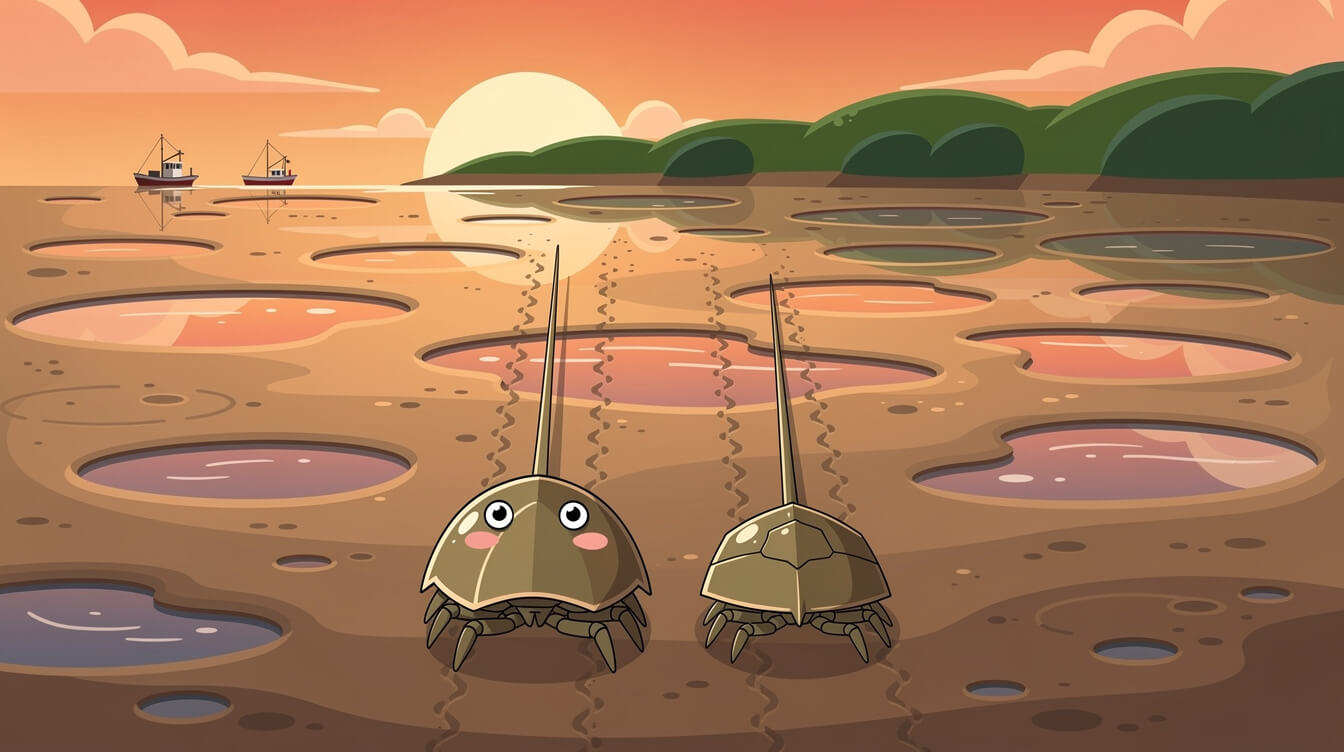
Walk the tidal flats off Kinmen at low tide and you might spot something that looks like a rusty army helmet dragging a tent peg. That’s a 鱟 (hòu), the tri-spine horseshoe crab, and it’s one of the oldest designs still walking the planet. Horseshoe crabs were around long before the dinosaurs, and they’ve barely changed since.
Not a crab, and the blood is blue
Despite the name, Tachypleus tridentatus isn’t a true crab. It’s closer kin to spiders and scorpions. It’s also the largest of the four horseshoe crab species alive today. Its blood runs blue because it carries oxygen with copper instead of iron. The long spike at the back isn’t a weapon either. It’s a rudder, and a lever the crab uses to flip itself over when a wave rolls it.
The “couple fish”
In Taiwan the 鱟 has a sweet nickname: 夫妻魚, the “husband-and-wife fish,” or 海底鴛鴦, the “mandarin ducks of the sea.” In breeding season the smaller male hooks onto the back of the larger female’s shell, and the two travel as a pair. Old fishermen used to say if you caught one, you caught two. In Kinmen, adults come ashore to spawn from June to September, timing it to the big spring tides around the 1st and 15th of the lunar month. By late autumn they’ve headed back to deeper water for the winter.
Why Kinmen matters so much
These crabs were once common along Taiwan’s northern and western coasts. Today you only see them on the main island now and then. Their strongholds are the outlying islands, and Kinmen is the big one. A survey reported by Taiwan’s Ocean Conservation Administration in 2025 estimated roughly 63,000 adults and 205,000 juveniles around Kinmen, against about 1,700 adults in Penghu.
Kinmen County set up Taiwan’s only horseshoe crab reserve on the intertidal flats northwest of Guningtou, announced in December 1999. The county added a full fishing ban on the species from March 17, 2025. The species has been listed as Endangered by the IUCN since 2019. The newest threat is an invasive salt-marsh cordgrass that’s smothering the muddy flats where juveniles grow up. Locals point out that it grows right back when it’s only cleared from the surface.
The Kinmen Fisheries Research Institute runs a horseshoe crab eco-culture hall alongside its juvenile restoration program. It’s a great stop for anyone who’d rather not wade out at dawn.
The takeaway
Kinmen is famous for cannon-shell knives and kaoliang, but our Kinmen island guide doesn’t even mention its oldest residents. Next time you’re there, check out the tidal flats too. Watch your step, leave the crabs where they are, and say hi to the wind lions on your way back. For another Taiwan sea creature with a sand-based secret, read how sand temperature decides a baby sea turtle’s sex.
Love Taiwan’s weird and wonderful wildlife? Shop Taiwan Merch for island-inspired tees, stickers and gifts.

Grab a Free Taiwan Sticker!
Drop your email and we’ll send you a limited-edition Taiwan sticker — plus insider access to new merch drops and island vibes.
No spam. Unsubscribe anytime.