Taiwan Last Names: Why Your Family Name Has Five Different Spellings
If you have ever filled in a form and hesitated over your own surname, you already know the problem. Taiwan last names are famously few in number and famously unstable in spelling: the same character can reach the Latin alphabet as Chang, Jang, Jhang or Zhang, and your cousin’s passport may disagree with yours. One family, one character, several spellings, all of them official.
Most pages about Taiwanese surnames are frequency rankings — here are the ten most common, here is a chart. Useful, but it answers a question nobody actually asks at 11pm. The real question is why my family name looks different everywhere it appears. That question has a precise answer, and it lives in four romanisation systems, one passport bureau, a Qing-dynasty British diplomat and a law amended in 2024.
This guide answers it properly. Every number below comes from the Ministry of the Interior’s own name-statistics report and every spelling from the Bureau of Consular Affairs’ official comparison table — primary sources linked throughout, so you can check us.
Taiwan Last Names and the Hundred-Names Problem
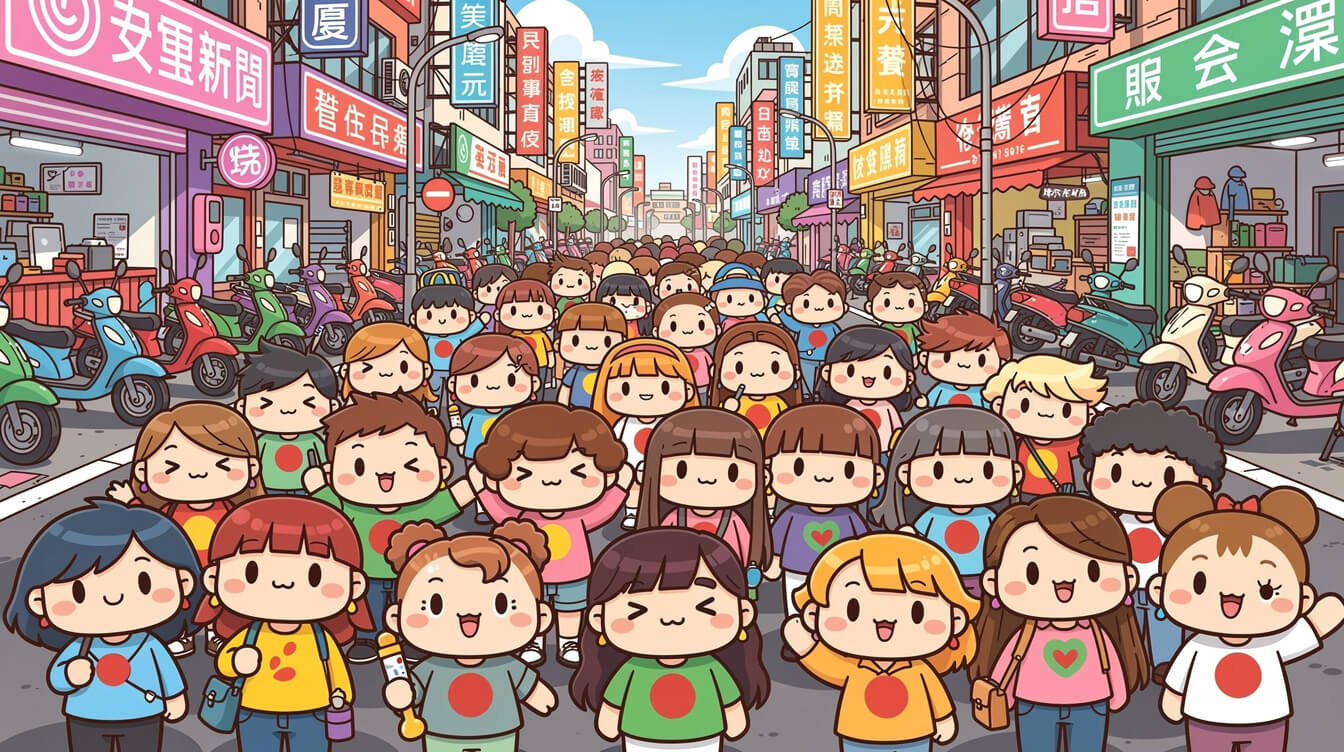
Mandarin has a word for “the common people”: 百姓 (bǎixìng), literally “the hundred surnames”. It is not poetic exaggeration. It is roughly accurate.
According to the Ministry of the Interior’s National Name Statistics Analysis — compiled by the Department of Household Registration from registration data as of 30 June 2023 — Taiwan’s population of 23,373,283 people shares just 1,785 surnames between them. Of those, 1,667 are single-character surnames covering 99.85% of everyone. A further 118 are compound surnames, held by 27,404 people (0.12%).
The concentration is the part that surprises people. The ten most common surnames alone account for 12,339,778 people — 52.79% of the country. Stretch to the top twenty and you have covered 68.63%. Stretch to the top hundred and you have covered 96.62% of Taiwan.
Turn that around: 1,685 surnames split the remaining 3.4% — hundreds of them held by a handful of families, some by a single household.
Geography concentrates it further. In Lienchiang County (the Matsu Islands) 62.60% of residents carry one of the national top ten, and in Yunlin 59.29%. The only places where top-ten surnames do not form a majority are Hsinchu County (44.99%), Penghu, Taoyuan and Miaoli — all areas with large Hakka populations, whose surname mix runs differently.
If you meet five Taiwanese people at random, odds are better than even that one of them is a Chen, Lin, Huang, Chang or Li.
This is why Taiwanese social life leans so heavily on given names, titles and nicknames. When half the room shares ten surnames, the surname stops being a useful way to tell people apart — which, incidentally, is why the question of which language Taiwan actually speaks matters here too: forms of address shift depending on whether you are in Mandarin, Taiwanese or Hakka.
Chang, Jang, Jhang, Zhang: How One Surname Ends Up With Five Spellings
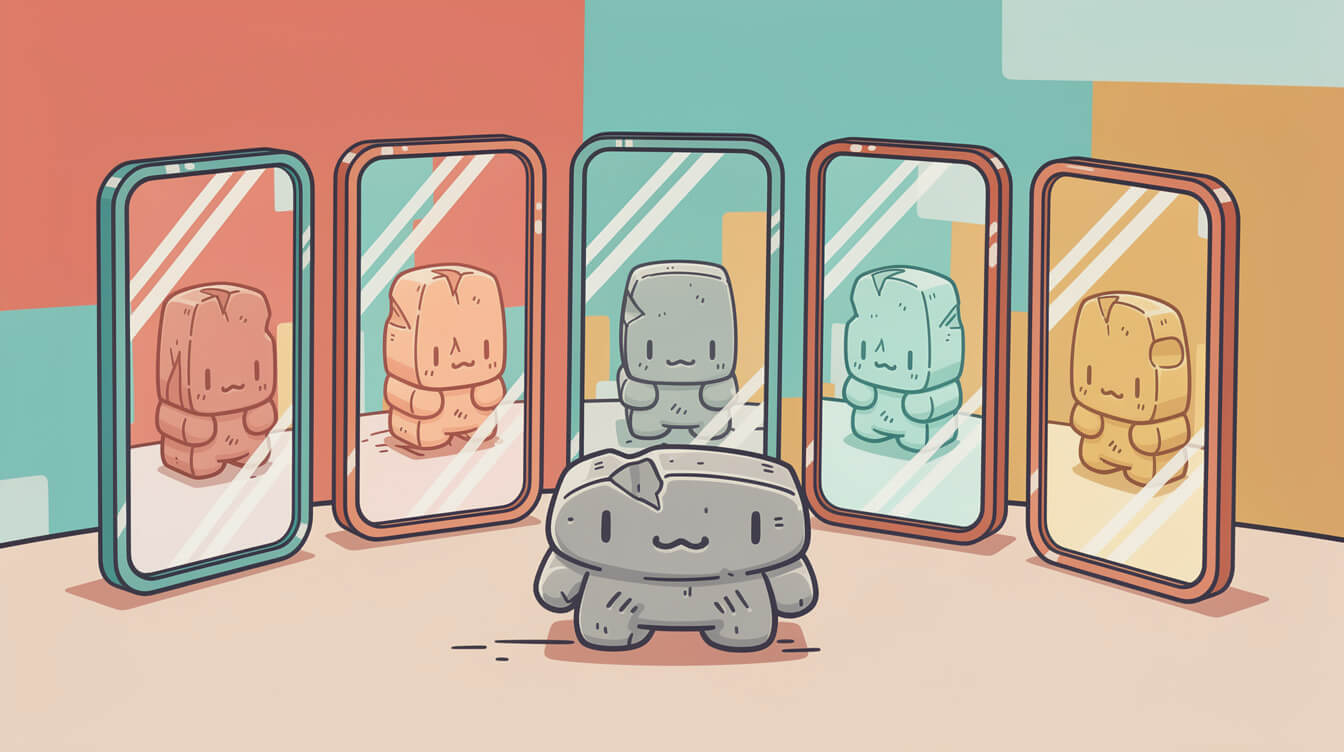
Here is the mechanism, and it is simpler than it looks. Chinese characters do not encode their own pronunciation in Latin letters. To write 張 in the alphabet, somebody has to choose a system for mapping Mandarin sounds onto letters. Taiwan has used four such systems, and all four are still in circulation.
The Bureau of Consular Affairs publishes the official syllable-by-syllable comparison table used for passports. Pulled straight from it, in the all-capitals form passports use:
| Character | Wade-Giles | MPS II | Tongyong | Hanyu Pinyin |
|---|---|---|---|---|
| 張 | CHANG | JANG | JHANG | ZHANG |
| 謝 | HSIEH | SHIE | SIE | XIE |
| 鄭 | CHENG | JENG | JHENG | ZHENG |
| 周 | CHOU | JOU | JHOU | ZHOU |
| 許 / 徐 | HSU | SHIU | SYU | XU |
| 邱 | CHIU | CHIOU | CIOU | QIU |
| 蕭 | HSIAO | SHIAU | SIAO | XIAO |
| 曾 | TSENG | TZENG | ZENG | ZENG |
| 高 | KAO | GAU | GAO | GAO |
| 蔡 | TSAI | TSAI | CAI | CAI |
Four systems give 張 four distinct spellings. Add the Taiwanese Hokkien reading — Tiunn, which is also a legal passport option, and which we get to below — and you have five. Same for 謝: Hsieh, Shie, Sie, Xie, and Hokkien Tsiā.
But — and this matters, because the internet will tell you otherwise — not every Taiwanese surname fractures. Look at the actual top ten:
- Identical in all four systems: 陳 CHEN, 林 LIN, 黃 HUANG, 李 LI, 王 WANG, 吳 WU, 楊 YANG
- Two spellings: 劉 LIU/LIOU, 蔡 TSAI/CAI
- Four spellings: 張 CHANG/JANG/JHANG/ZHANG
So seven of Taiwan’s ten most common surnames are perfectly stable, and only 張 is a genuine four-way mess. The fracture is not random, either. We worked through all 434 syllables in the BOCA table, and the pattern is clean: if your surname’s initial sound is written b-, d-, g-, j-, q-, x-, zh-, z-, c- or r- in Hanyu Pinyin, every single syllable gets multiple spellings — no exceptions. If it starts with ch-, sh-, l-, m-, n-, h-, f-, w- or y-, the systems mostly agree, and whether yours varies depends on the vowel that follows.
The reason is Wade-Giles. It systematically used unaspirated letters for sounds that Hanyu Pinyin writes as voiced, so b became p, d became t, g became k, z became ts, and the whole zh/j/q cluster collapsed toward ch. That one design decision, taken by a British diplomat in the late nineteenth century, is why so many Taiwan last names look nothing like their Pinyin form today.
There is a nastier wrinkle: the systems also collide. 蔣 and 江 are both CHIANG in Wade-Giles. 許 and 徐 are both HSU. And 呂 is LIU in MPS II while 劉 is LIU in Hanyu Pinyin — two completely different surnames landing on the same five letters. Romanisation does not just multiply spellings; it merges distinct families.
Wade-Giles vs Hanyu Pinyin vs Tongyong: A Plain-English Guide

Four systems, four origin stories — and between them they account for nearly every odd spelling of Taiwan last names you will ever meet. MOFA publishes a short official introduction to all four, credited to the Ministry of Education; here is what it says, unpacked.
Wade-Giles (威妥瑪拼音) — the one that gave us Hsieh and Kao
Assembled by the British scholar and diplomat Thomas F. Wade in the late Qing dynasty out of the church romanisations Ming and Qing missionaries had been using, then revised by Herbert A. Giles. MOFA dates the system at roughly 130 years old. It was the default for Chinese names, place names and proper nouns in Western writing for most of the twentieth century, and in Taiwan it survives in personal names, some place names and the historical record.
Wade-Giles is also why Taiwan’s cities look the way they do in English: hs for the sound Pinyin writes x gives us Kaohsiung and Hsinchu. It marked aspiration with apostrophes too (Ch’en vs Chen) — a distinction almost everyone dropped, collapsing the very contrast the system was built to preserve.
MPS II (國語注音符號第二式) — the one nobody remembers
The forgotten sibling, with the longest pedigree. The lineage starts in November 1918, when the Ministry of Education published the Zhuyin symbols ㄅㄆㄇㄈ still taught in Taiwanese primary schools today, and continues through a 1928 Latin companion that was renamed 譯音符號 in 1940. A 1984 Ministry of Education panel revised it against the other systems then circulating; the result, Mandarin Phonetic Symbols II, was published for use in January 1986.
MPS II never caught on publicly, but it is still one of the four the passport system will generate — which is why spellings like JANG, SHIU and TZENG exist on real documents.
Tongyong Pinyin (通用拼音) — the Taiwanese one
The most politically interesting of the four, and the most misunderstood — it did not start as a national project. Taipei City Government commissioned the Translation Society of the ROC to develop it, devised under Yu Bor-chuan of Academia Sinica’s Institute of Ethnology, and published it for use in January 1998.
Its design goal was genuinely ambitious. Per MOFA, Tongyong was built to serve the phonetic needs of Mandarin, Taiwanese Hokkien and Taiwanese Hakka at once — a single notation for the languages actually spoken on the island, not Mandarin alone. That is a different brief from every other system here, and it is why Tongyong matters to anyone interested in the full range of languages spoken in Taiwan.
The Ministry of Education approved it in 2002 — use stayed optional — making it Taiwan’s official Mandarin romanisation from 2002 to 2008. From 1 January 2009 the Ministry promoted Hanyu Pinyin instead, and local governments lost central funding if they kept Tongyong spellings. Its fingerprints are still on street signs and passports: the giveaway is jh where Pinyin has zh, and s where it has x.
Hanyu Pinyin (漢語拼音) — the international standard
Developed in mainland China from the 1950s to annotate and teach characters rather than replace them. MOFA is matter-of-fact about why Taiwan adopted it: Hanyu Pinyin is the romanisation standard recognised by ISO, and it dominates international academic publishing, media and library systems. Its advantage is interoperability, not elegance.
What Your Passport Did to Your Name
Here is where the theory stops being trivia and becomes your problem, because the passport office is where Taiwan last names get fixed in law. The rules below come from the Bureau of Consular Affairs’ name-translation system page, which is the authority that decides what goes in the passport.
First-time applicants. If you have no existing foreign-language name, your Chinese name is transliterated syllable by syllable into Latin letters from its reading in a national language of Taiwan. The BOCA tool will generate all four versions — Wade-Giles, MPS II, Tongyong and Hanyu Pinyin — and you choose. There is no single “correct” answer; the state hands you four and lets you pick.
You can romanise from Hokkien, Hakka or an indigenous language. This is the provision almost nobody knows about. BOCA explicitly allows a first-time applicant’s name to be transliterated from the reading in any of Taiwan’s established community languages — Hokkien, Hakka or indigenous languages — and points applicants to the Ministry of Education’s dictionaries and its dedicated Taiwanese and Hakka name-lookup tools for the spellings. A 陳 does not have to be a Chen. A 陳 can be a Tân.
Already have a passport? You are mostly locked in. BOCA requires the foreign-language name to match your previous passport. There is one escape hatch: if your romanised name does not match the national-language reading of your Chinese name, you may apply to change it — once. Not twice.
Your surname should match your relatives’. BOCA states plainly that surname romanisation should be consistent with family members’. This is guidance rather than a hard block, which is exactly how families end up with a Hsieh, a Shieh and a Xie across three siblings who each applied in a different decade.
Formatting. Surname first, then a comma. The hyphen between given-name syllables (Mei-ling, Wen-hsiung) exists only to make syllable boundaries legible, and BOCA will leave it out if you would rather not have it.
And on the Chinese side, the Name Act (姓名條例, last amended 29 May 2024) adds constraints of its own. Article 2 requires that characters used for household registration, naturalisation or a passport appear in a recognised dictionary — 辭源, 辭海, 康熙, or the Ministry of Education’s Mandarin dictionary. A character outside those is simply not registered. Article 3 requires surname first, with no space or symbol between surname and given name.
The Act is also surprisingly generous about changes. Article 9 lets you change your given name for reasons including that it is coarse, unpleasant, or that its transliteration is too long — up to three times. Article 8 allows a surname change where a transliteration is overlong, and Article 10 covers a name whose original transliteration is too long or simply incorrect. If your romanisation is wrong, the law anticipated you.
The Most Common Taiwan Last Names (and How to Actually Pronounce Them)
Rankings are easy to find and usually stop at the character. Below is the Ministry of the Interior’s top ten with exact counts and percentages, plus the Mandarin and Taiwanese Hokkien readings — the latter in Tâi-lô, the Ministry of Education’s own romanisation, taken from its Taiwanese dictionary.
| # | Surname | Usual English | People | % of Taiwan | Hokkien (Tâi-lô) |
|---|---|---|---|---|---|
| 1 | 陳 | Chen | 2,618,994 | 11.21% | Tân |
| 2 | 林 | Lin | 1,947,520 | 8.33% | Lîm |
| 3 | 黃 | Huang | 1,402,808 | 6.00% | N̂g |
| 4 | 張 | Chang / Zhang | 1,239,880 | 5.30% | Tiunn |
| 5 | 李 | Li / Lee | 1,199,920 | 5.13% | Lí |
| 6 | 王 | Wang | 955,035 | 4.09% | Ông |
| 7 | 吳 | Wu | 935,684 | 4.00% | Ngôo |
| 8 | 劉 | Liu | 737,607 | 3.16% | Lâu |
| 9 | 蔡 | Tsai / Cai | 684,531 | 2.93% | Tshuà |
| 10 | 楊 | Yang | 617,799 | 2.64% | Iûnn |
Two pronunciation notes. Chen is not “chen” as in “chenille”: the initial is a retroflex ch with the tongue curled back, and the vowel sits closer to the u in “bun”. Tsai starts with the ts of “cats”, not a ch — former president Tsai Ing-wen’s surname is the same 蔡 that Pinyin writes Cai.
For the frequency rabbit hole — how your name ranks and how it is distributed — Forebears’ Taiwan surname index does a lookup job no blog post can.
The compound surnames
Taiwan’s 118 compound surnames are a genuine curiosity. The top five, per the same report: 張簡 (Chang-chien, 9,162 people), 歐陽 (Ou-yang, 7,653), 范姜 (Fan-chiang, 4,259), 周黃 (Chou-huang, 594) and 江謝 (Chiang-hsieh, 533).
They are also startlingly regional. Kaohsiung holds 38.72% of everyone in Taiwan with a top-five compound surname, and Taoyuan another 16.29%. Several of these names record a specific historical merger of two lineages — 范姜 traces to a Hakka family in the Taoyuan–Hsinchu area, which is precisely where the Taoyuan concentration comes from. A compound surname is a family history compressed into two characters.
The surname that is disappearing: 冠配偶姓氏
One more finding from the same report, and it is the most quietly dramatic number in it. Until the Civil Code was amended on 17 June 1998, Article 1000 had a wife take her husband’s surname as the default. After the amendment, each spouse keeps their own name and may only add a spouse’s surname by written agreement, reversible at any time.
As of mid-2023, 918,462 people in Taiwan carried a spouse’s surname — 3.93% of the population, of whom 99.86% are women. Now look at the ages: 97.23% of them are 60 or older. The largest single bracket is 70–74. Among people aged 20–24 there are eighteen. Among people under 20, there is exactly one.
A practice that was the legal default within living memory now has a single holder under the age of twenty. You can watch a social norm end in one column of a government spreadsheet.
Hokkien vs Mandarin: One Character, Two Sounds
If your grandparents said your family name differently from how you say it, nothing was lost in translation. They were speaking a different language.
A Chinese character carries meaning, not a fixed sound. 陳 is Chén in Mandarin and Tân in Taiwanese Hokkien — not a slurred variant but a separate inherited pronunciation, as distinct as English “two” and French “deux”. Mandarin became dominant through twentieth-century language policy; Hokkien was what many families had always spoken at home. The surname never changed. The language around it did.
Across the top ten: 陳 Tân, 林 Lîm, 黃 N̂g, 張 Tiunn, 李 Lí, 王 Ông, 吳 Ngôo, 劉 Lâu, 蔡 Tshuà, 楊 Iûnn. Some are recognisable from the Mandarin; 黃 N̂g and 吳 Ngôo really are not.
This is also the key to a puzzle many diaspora readers have wondered about: why do Taiwanese and Southeast Asian Chinese surnames look so different in English? Because the Southeast Asian spellings were made from Hokkien, not Mandarin. A Singaporean Tan and a Taiwanese Chen are the same 陳. Lim is 林. Ong is 王. Goh is 吳. Ng is 黃. Families that emigrated south romanised the sound they actually used at home; families that stayed were romanised through Mandarin by a state bureau. Same character, two alphabets, one ocean apart.
Which makes the BOCA provision above quietly significant: a Taiwanese applicant today can choose the Hokkien reading, recovering a spelling their great-grandparents would have recognised. Our guide to what language they speak in Taiwan has the fuller history.
We will admit a soft spot for this stuff: a few of the designs in our shop lean on Taiwanese-language wordplay rather than Mandarin, because the Hokkien version is usually the one that sounds like home.
Indigenous Names and the Right to Reclaim Them
Everything above concerns Han surnames. For Taiwan’s indigenous peoples, the history of the family name is a history of having it overwritten — and, more recently, of getting it back.
Indigenous Taiwanese naming systems were never Han. Depending on the nation, a name may pair a personal name with a parent’s, or tie it to a house or lineage; it does not reduce to one surname character plus a given name. Twentieth-century administration forced it to anyway, assigning indigenous families Han surnames, often arbitrarily — so relatives ended up with unrelated surnames and the lineage information in the original name was destroyed.
The Name Act now addresses this directly. Article 1 provides that indigenous and other minority peoples register names according to their own cultural custom, and that anyone already registered under a Han name may apply to restore their traditional name — and, if they wish, to go back again, each direction once. Article 2 permits traditional names to be registered in the indigenous people’s own script, meaning Latin letters, carving out an explicit exception to the dictionary-character rule everyone else is bound by. Article 4 allows a traditional name in indigenous script to be registered in parallel with a Chinese name, rather than forcing a choice. And Article 8 specifically lists, as grounds for changing a surname, that conversion to a Han surname caused a family’s surname to be recorded wrongly in the first place.
The passport rules follow through: where a traditional name is registered in indigenous script alone, BOCA states that script shall be the foreign-language name — the romanised indigenous name becomes the official one, not a translation of a Han substitute.
You can see the scale of this in the statistics, if you know where to look. In the Ministry of the Interior’s surname table there is a residual category of 8,089 people — 0.03% of the population — filed under “other”, defined as including indigenous traditional names and names registered by original Chinese name or foreign transliteration. These are the people whose names do not fit the surname column at all. It is a small number that represents a large reversal, and it is growing. For the fuller story, see our guide to Taiwan’s indigenous peoples and the Austronesian connection.
Tracing a Family Name: Ancestral Halls and 族譜 Genealogy Books

If you want to go past the spelling and into the family, Taiwan has unusually good infrastructure for it. Taiwan last names are shallow as identifiers and deep as records: the surname tells you almost nothing, but the paperwork behind it can go back six hundred years.
The central document is the 族譜 (zúpǔ), a lineage genealogy recording generations of descent — often back centuries, frequently to an ancestral village in Fujian or Guangdong. Because these were kept by the lineage rather than the state, they survive in family hands, ancestral halls and temple collections. If an older relative mentions “the book”, this is the book.
Two practical starting points. First, the ancestral hall (宗祠): many Taiwanese surnames have clan associations that maintain one, hold the genealogies and are often glad to help someone tracing a line. Second, your family’s 堂號 (tánghào) or hall name — a short phrase naming the ancestral place of origin, sometimes still painted above a door or carved on a grave. It can be more informative than the surname itself, because it points at a specific place rather than one of 1,785 names.
Two tips from people who have done this. Work from the characters, never the romanisation — a 族譜 is written in characters, and your Wade-Giles spelling will not help you search one. And expect the generation name: many lineages gave every cousin of one generation a shared character in their given name, so a run of same-middle-character relatives is a dating tool, not a coincidence.
If the line runs into the indigenous Han-surname assignment described above, the records may genuinely stop — and in that case the history of Taiwan’s indigenous nations is the more useful place to look than any genealogy.
Final Thoughts: Your Spelling Is Not a Mistake
The thing worth taking away is that none of this is error. Taiwan last names look inconsistent in English because the island ran four romanisation systems across a century of shifting language policy, and because the state has consistently chosen to let people pick rather than impose one spelling retroactively. Your Hsieh and your cousin’s Xie are both correct. They are dated, not wrong — each one a timestamp showing which decade and which system was in play when somebody filled in the form.
That is a more generous way to hold it than “my name is spelled wrong on half my documents”. A Chang who is also a Jhang carries a piece of the Tongyong years in their passport. A Tan rather than a Chen carries their grandparents’ language. A restored indigenous name in Latin script carries a reversal of policy.
And if you remember one practical thing: the Bureau of Consular Affairs will let you romanise from Hokkien, Hakka or an indigenous language, and the Name Act will let you fix a transliteration that is wrong. Most people never find out either is an option.
A Postcard From Taiwan, Every Week
Culture, food, language and the odd corner of Taiwan you will not find in a guidebook — plus first look at new designs. No spam, unsubscribe any time.

Grab a Free Taiwan Sticker!
Drop your email and we’ll send you a limited-edition Taiwan sticker — plus insider access to new merch drops and island vibes.
No spam. Unsubscribe anytime.