Taiwan Tea Eggs Recipe: How to Nail the 7-Eleven Classic at Home
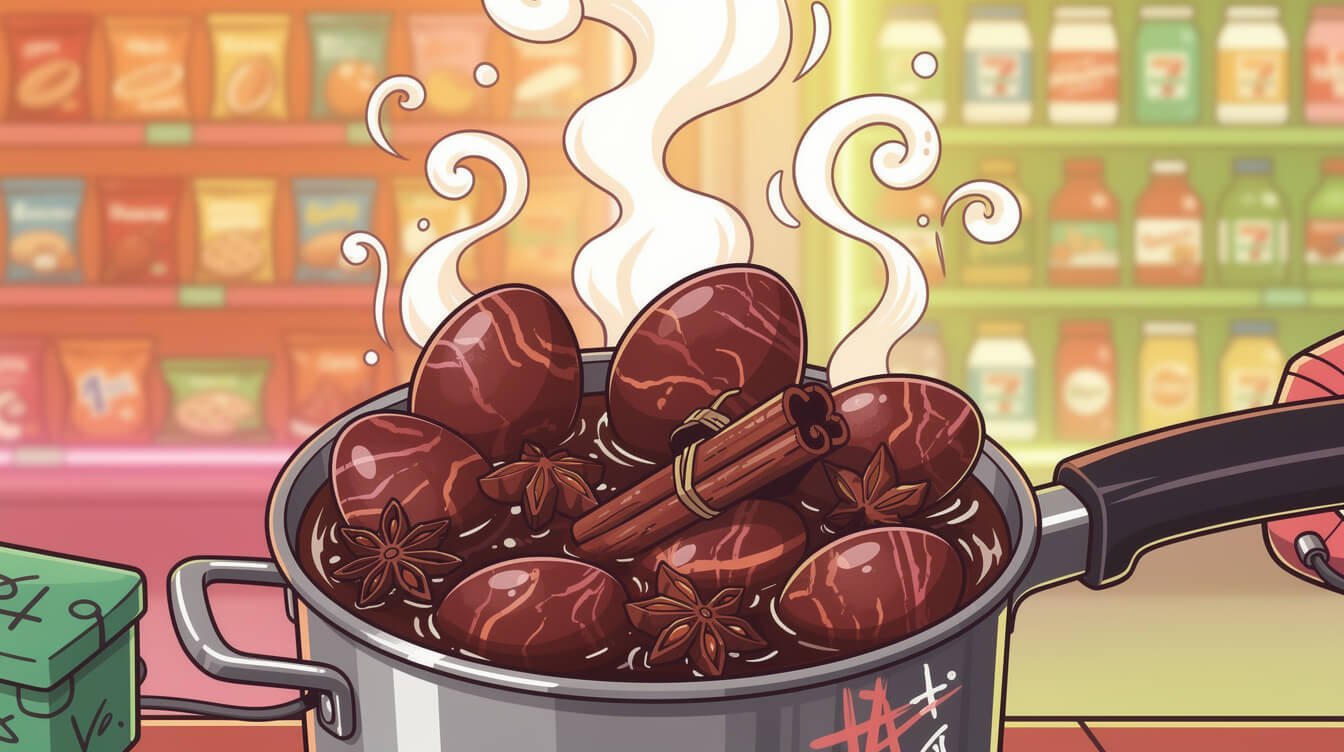
Walk into any 7-Eleven in Taiwan and the first thing that hits you isn’t the fluorescent lights or the racks of Pocari Sweat — it’s the smell. That warm, dark, five-spice steam rising from a small stainless-steel pot near the register, where dozens of marbled brown eggs are quietly braising in a broth so aromatic it doubles as a shopping decision. That pot is the target of this Taiwan tea eggs recipe, and once you’ve made a batch at home, the craving never really goes away.
What follows is the definitive Taiwan tea eggs recipe — the 7-Eleven-style spice blend, the marble-crack technique that gets you those iconic web-like patterns, and the “never-ending braise” trick that Taiwanese aunties have been using for generations. It’s easier than you think, cheaper than takeout, and after the first bite you’ll understand why homesick Taiwanese abroad talk about tea eggs the way people talk about their grandmother’s cooking.
The 7-Eleven Tea Egg Legacy: Why Taiwan Perfected This Snack
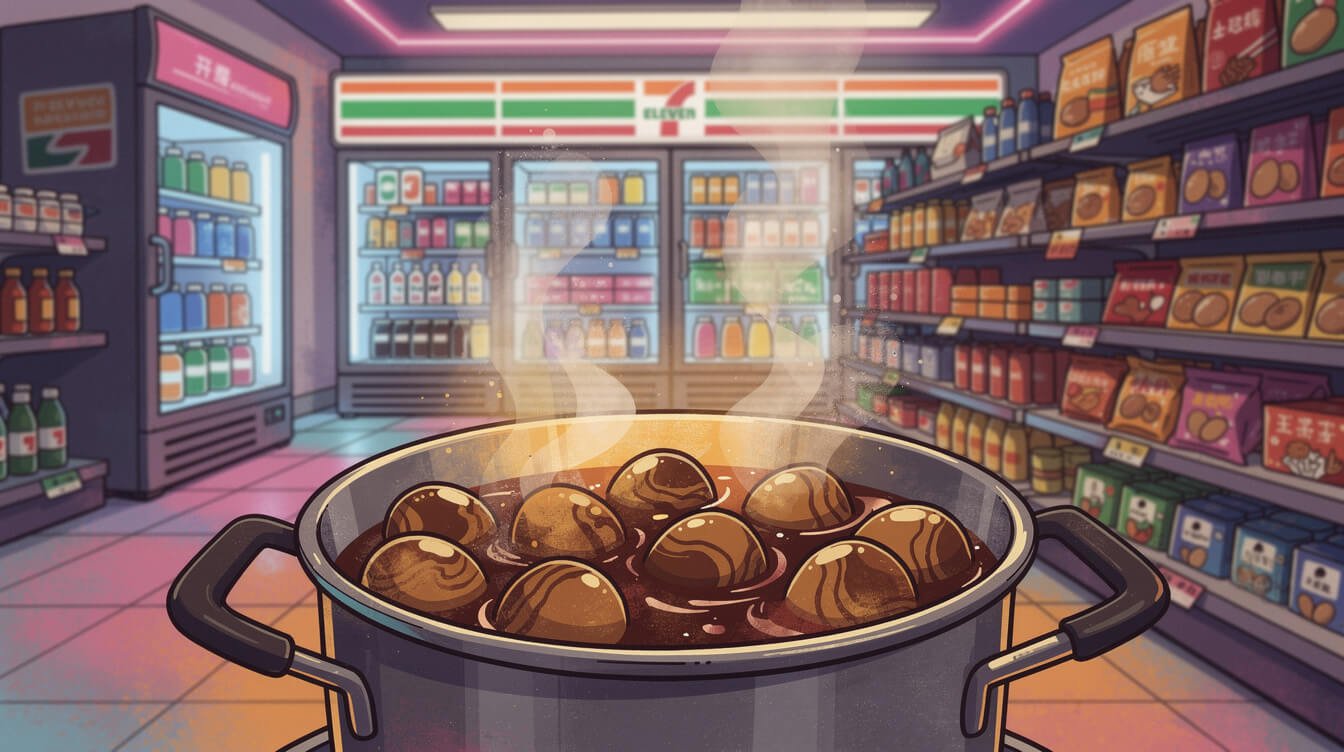
Tea eggs (茶葉蛋, chá yè dàn) have been simmering somewhere in the Chinese-speaking world for centuries — the technique of braising eggs in spiced tea broth almost certainly predates modern Taiwan by a thousand years. But somewhere along the way, Taiwan took the humble tea egg and turned it into a national obsession. The catalyst wasn’t a chef or a food critic. It was a convenience store.
7-Eleven landed in Taiwan in 1980, and by the mid-1980s, franchise operators started keeping a small hot pot of tea eggs by the register as an impulse buy for late-night workers, students, and commuters. It stuck. Today, more than 5,000 7-Elevens across the island cook and sell tens of millions of tea eggs every year — Uni-President, the local operator, has publicly said tea eggs are among their top-selling hot foods, moving well over 40 million eggs annually. Family Mart and Hi-Life do the same.
The result is a snack that lives in a very specific Taiwanese emotional register: warm, salty, spice-forward, cheap (about 13 NT$ apiece), and available 24 hours a day within walking distance of practically anywhere. For anyone who has ever lived in Taiwan and moved away, the tea egg is the flavor of missing home. That’s the target this recipe aims at.
What Makes a Taiwanese Tea Egg Different from Other Regional Versions
Tea eggs exist all across greater China, but they aren’t the same everywhere. If you’ve eaten a tea egg in Shanghai or Chengdu, you’ve probably had something noticeably different from the 7-Eleven version — and the difference is the whole reason a dedicated Taiwan tea eggs recipe exists.
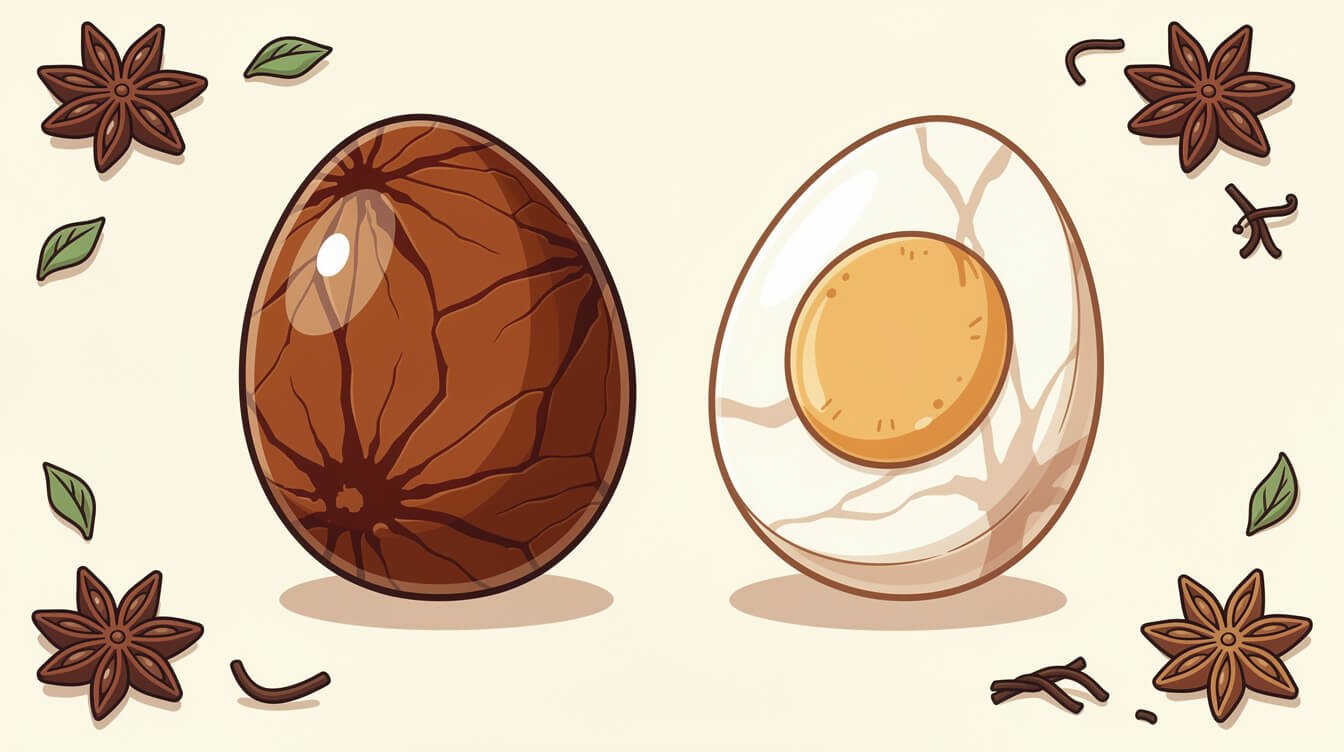
Colour and marbling. Taiwanese tea eggs are dark. Not tan, not caramel — properly braised, the whites turn a deep chocolate brown at the marble lines and a warm mahogany around the edges. That comes from a longer braise time (often overnight) and a heavier hand with dark soy sauce.
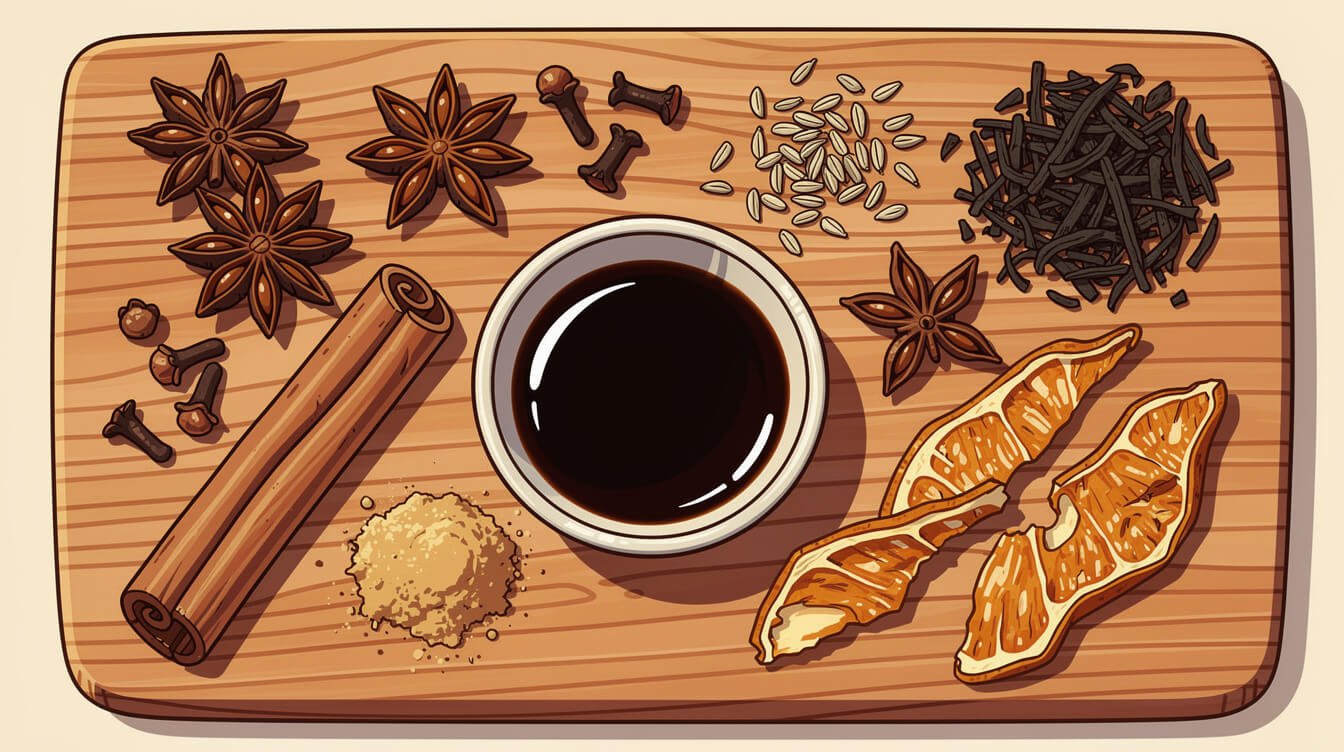
Spice profile. Mainland versions often lean on five-spice and star anise alone. The Taiwan style layers in whole cloves, fennel seed, Sichuan peppercorn (numbing but not blistering), a stick of cinnamon, a few bay leaves, and — crucially — a real base of black tea, usually Sun Moon Lake red tea or a strong Assam. Some old-school recipes add a slice of dried tangerine peel for a citrus lift.
Broth style. Convenience-store tea eggs sit in their broth continuously, which means the flavor deepens over days. You aren’t making a soup — you’re making a marinade that keeps braising every time you turn the heat back on.
Nail those three things — dark colour, layered spice, continuous braise — and you’re already 90% of the way to a proper Taiwan tea egg. The rest is technique.
Ingredients for the Best Taiwan Tea Eggs Recipe (with Substitutions)
For a batch of 10-12 eggs, here’s the ingredient list that matches the 7-Eleven flavor as closely as a home cook can get. Nothing here is exotic — everything is on the shelf at a decent Asian grocery, and most substitutions still land in the right ballpark.
The eggs and the base
- 10-12 large eggs — use eggs that are at least a week old (they peel more cleanly)
- 4 cups (1 L) water — enough to just cover the eggs
- 3 tablespoons black tea leaves, or 4-5 bags of strong black tea (Sun Moon Lake red tea is authentic; Assam or a robust English Breakfast works)
The salt and sweetness
- 1/2 cup (120 mL) regular soy sauce
- 3 tablespoons dark soy sauce (this is what turns the whites dark brown — don’t skip it; sub with 2 more tablespoons of regular soy if you have to)
- 2 tablespoons rock sugar or brown sugar
- 2 teaspoons salt
The Taiwan tea egg spice blend
- 3 whole star anise pods
- 1 stick cinnamon (cassia, about 3 inches)
- 5-6 whole cloves
- 1 teaspoon Sichuan peppercorns (sub black peppercorns if you must)
- 1 teaspoon fennel seeds
- 3 bay leaves
- 1 tablespoon Chinese five-spice powder (optional but recommended — reinforces the flavor)
- 1 strip dried tangerine or orange peel (optional — old-school Taipei touch)
If you can’t find whole spices, a heaping tablespoon of five-spice powder plus a star anise pod and a cinnamon stick will get you 80% of the way there. But if you’re going to make this recipe more than once — and you will — invest in the whole spices. They keep for months in a jar and they’re what separates a homemade Taiwan tea egg from a supermarket-brine imitation.
The Taiwan Tea Eggs Recipe: Step-by-Step Instructions
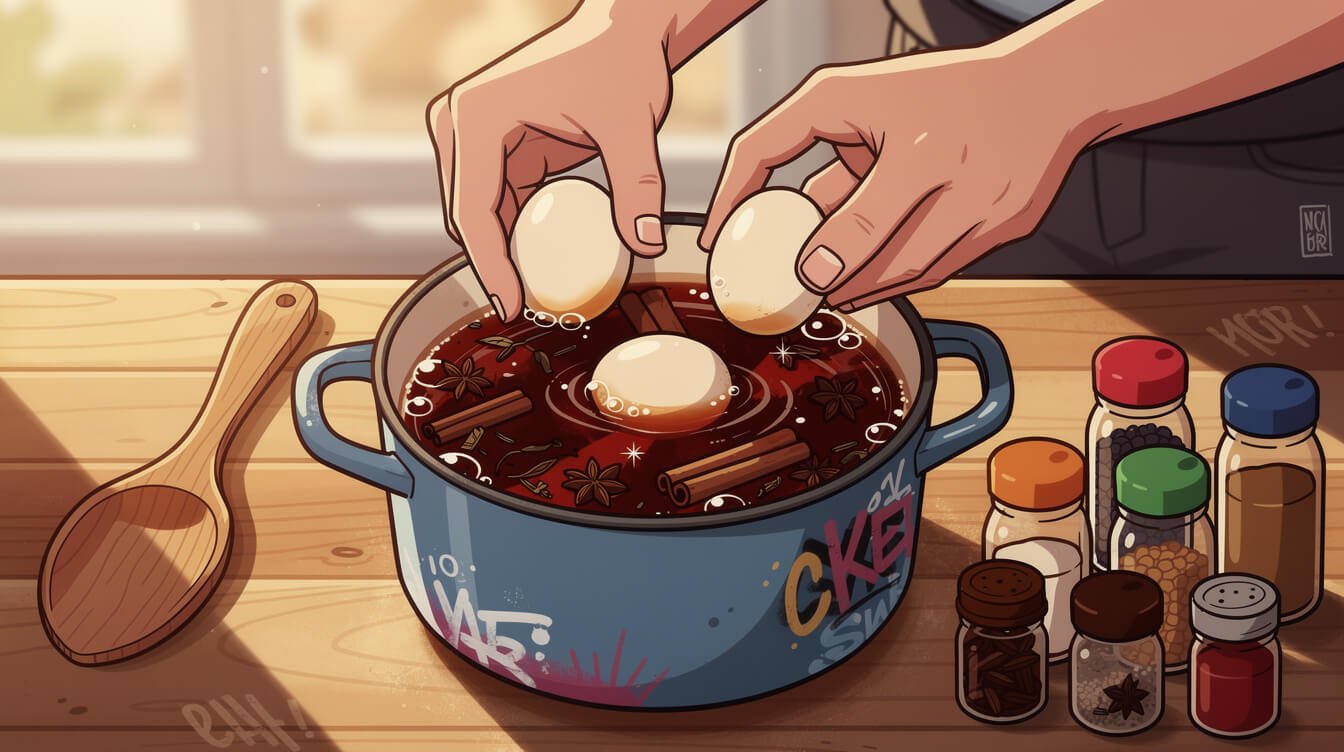
Active time is about 20 minutes. Total time is anywhere from 3 hours to overnight, depending on how deep you want the colour and flavor. Longer is always better.
Step 1: Hard-boil the eggs (gently)
Place the eggs in a single layer in a pot and cover with cold water by an inch. Bring to a gentle simmer over medium heat — not a rolling boil, which cracks the shells prematurely and gives you rubbery whites. Simmer for 7 minutes for a just-set yolk, or 9 minutes for fully firm. Transfer immediately to a bowl of cold water and let them sit for 5 minutes.
Step 2: Build the marinade
While the eggs cool, add 4 cups of water to a medium pot along with the black tea, both soy sauces, sugar, salt, and every single spice on the list. Bring to a simmer over medium heat and let it bubble uncovered for 10-15 minutes so the tea and spices have time to fully steep. Your kitchen will smell like a Taipei alleyway. This is correct.
Step 3: Crack the shells (do NOT peel)
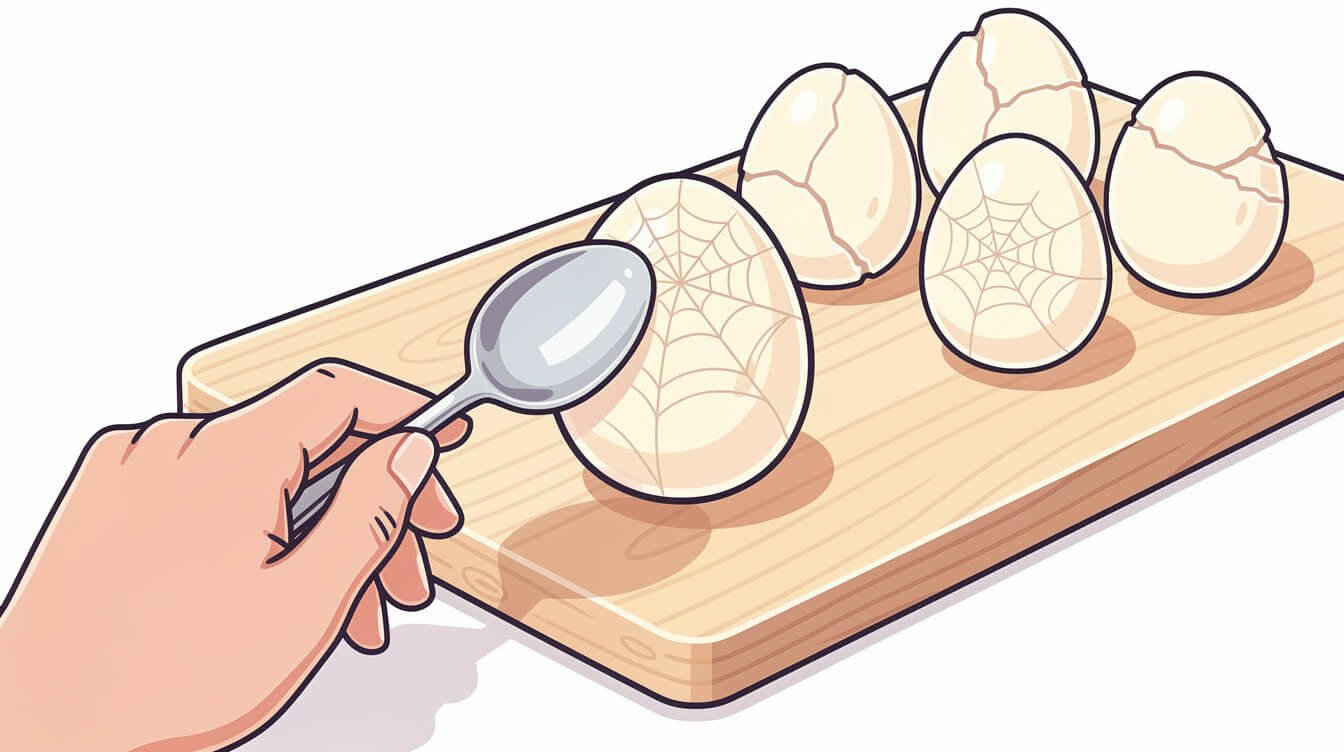
This is the money step, and we’ll cover technique in detail in the next section. For now: gently tap each hard-boiled egg all over with the back of a spoon so the shell develops hairline cracks — like a subtle spiderweb — but stays completely attached. This is where the marble pattern comes from.
Step 4: Braise, braise, braise
Add the cracked eggs to the simmering marinade, making sure they’re fully submerged (top up with water if needed). Reduce heat to low and simmer for 30 minutes with the lid on. Then turn the heat off completely and let the eggs sit in the hot marinade — this is where the magic happens.
For a light braise: 2 hours resting after the simmer. For proper Taiwan depth: overnight in the fridge, still in the marinade. For 7-Eleven-level darkness: reheat and rest for a second overnight cycle. The flavor keeps deepening for at least 48 hours.
Step 5: Peel and eat
Peel one when you’re ready to eat it — the shell will come off in satisfying big pieces, revealing the marbled white beneath. Serve warm or cold. The marinade should be kept (see Section 6).
Getting the Marble Effect Right (The Cracking Technique)
If your Taiwan tea eggs come out with a solid white interior and no pattern, the culprit is almost always the cracking step. Here’s how to get those signature marble lines every time.
Use the back of a spoon, not a knife. A knife concentrates force in a straight line and tends to punch a hole in the shell. The rounded back of a metal teaspoon spreads the pressure and creates the fine, branching cracks that give tea eggs their name.
Tap, don’t smash. Hold the egg loosely in one palm and tap the shell all over with the spoon — top, bottom, sides — the way you’d tap a boiled egg for eating. You want to hear a small, dull click each time. About 15-20 taps per egg is right. The shell should look like it’s been through a very gentle earthquake but still hold its shape completely.
Don’t peel anything off. The shell has to stay attached. The marinade seeps into the cracks and stains the white underneath — that’s the marble. If any shell falls off, the underlying white will absorb marinade in a solid patch instead of a line, and you’ll get a dark blob instead of a pattern.
More cracks equals more marble. If you want an intense, deep-brown web, tap more. If you want a subtle look, tap less. There’s no wrong answer — just don’t undercrack, or the tea won’t get in and your eggs will look sad and pale when you peel them.
One pro tip from Taiwanese home cooks: after cracking, gently roll each egg between your palms for a few seconds. It spreads the fractures and makes the marbling more even. It also feels genuinely satisfying, which is worth mentioning.
Reusing the Marinade: The Never-Ending Braise Trick
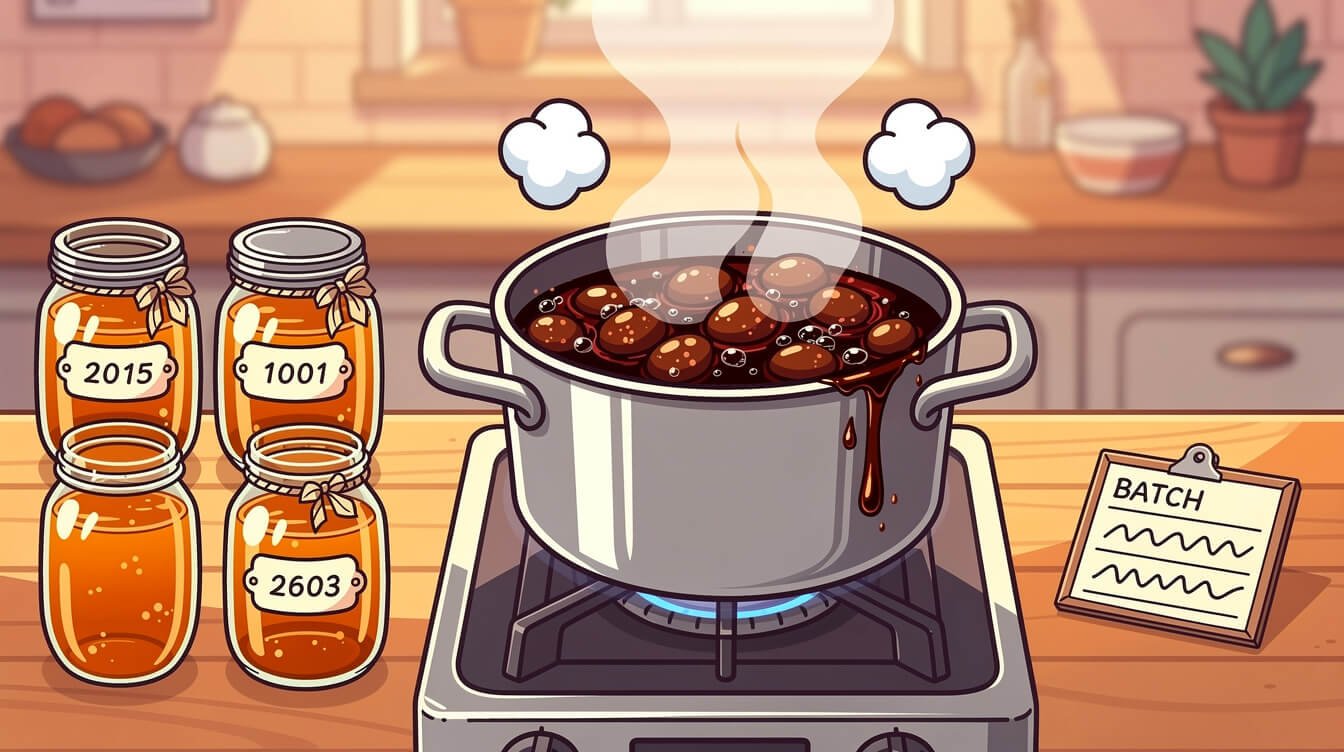
Here’s the trick that separates people who make tea eggs once from people who make tea eggs forever: don’t throw the marinade away. In Taiwanese kitchens, the tea egg broth is treated like a sourdough starter — the older it gets, the better it tastes. Some family recipes trace a single “mother marinade” back years.
After you’ve fished out your first batch of eggs, strain the marinade through a fine mesh sieve to catch the spent tea leaves and any loose spice fragments, then let it cool completely. Pour it into a sealed glass jar and store in the fridge. It’ll keep for two weeks easily, and up to a month if you re-boil it every week.
When you’re ready for the next batch, hard-boil fresh eggs, crack them, and drop them straight into the reheated marinade. You’ll need to top it up with a splash of water and maybe a tablespoon of soy sauce — plus one or two fresh star anise pods and a pinch of fresh spices to replenish what’s been absorbed. But the base flavor deepens with every round, and by batch three or four, you’re eating tea eggs that a 7-Eleven manager would nod approvingly at.
If you’re keeping a serious “mother,” freeze half of it whenever the jar starts getting low. That way if your batch ever goes off, you’ve got a backup. Speaking of drinks-and-snacks pairings, this whole approach fits the wider Taiwanese food-culture rhythm — the same one celebrated on our Taiwan Boba Tea Cat T-Shirt, which is basically the wearable version of a warm 7-Eleven at 2 a.m.
How to Serve Taiwan Tea Eggs: Breakfast, Snack, or Beer Night
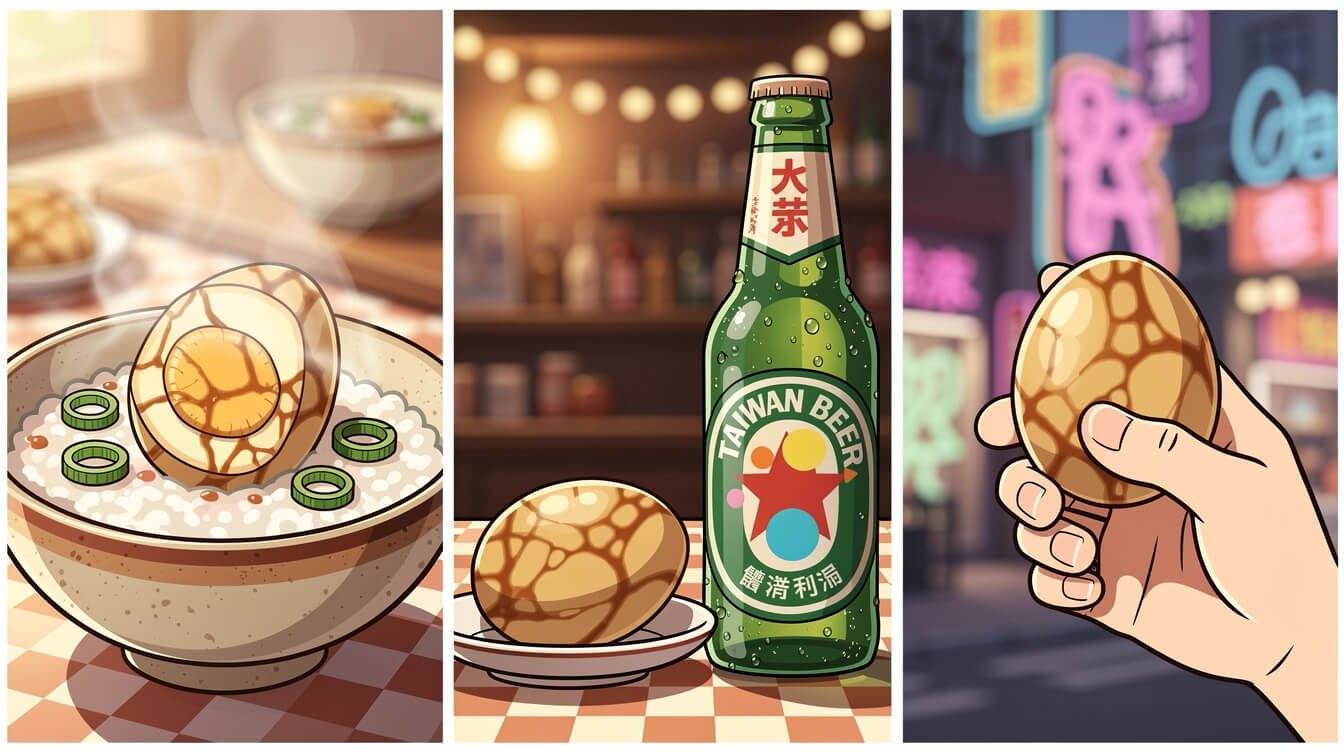
Tea eggs are one of those Taiwanese foods that slide into any part of the day without complaining. Here’s how they typically show up.
Breakfast. Sliced in half over a bowl of congee (rice porridge), with a spoonful of pickled cucumbers and a splash of the marinade drizzled on top. This is the classic weekend breakfast in a lot of Taipei households — the kind of thing you’ll find on the menu at old-school breakfast shops next to shao bing you tiao and warm soy milk.
Snack, anytime. Straight from the fridge, peeled and eaten in three bites, ideally while walking somewhere. This is the 7-Eleven default and honestly the way most tea eggs get consumed in Taiwan — a small salty hit of protein between meals, a study snack, a post-workout thing. Pair with a bottle of unsweetened oolong iced tea and you’re basically a Taipei university student.
Beer night. Warmed briefly in the microwave (or straight from a fresh braise), served alongside cold Taiwan Beer and a plate of five-spice dried tofu, peanuts, and stinky tofu if you’re feeling brave. The salty-spice profile of the egg cuts through the crispness of the beer in a way that few other snacks manage. This is also a very common late-night order at old-school Taiwanese night markets and rechao (stir-fry) joints.
Ramen topping. Slice one lengthwise and drop it into a bowl of beef noodle soup or spicy instant noodles. It absorbs some of the broth on its way down and the yolk goes creamy against the soup.
Bento box. One tea egg in a lunch box, sliced or whole, is a Taiwanese classroom staple. The eggs travel well, don’t smell too aggressive at room temperature, and hold up for six hours without fridge.
The point is: once you’ve got a fridge jar of Taiwan tea eggs going, you’re never really out of snacks. That’s why 7-Eleven built an entire snack-culture empire on the back of a small pot of braising eggs, and why anyone who’s spent time in Taiwan ends up chasing that smell across every kitchen they set foot in afterward.
Final Thoughts: One Small Pot, One Big Culture
Cooking Taiwan tea eggs at home is one of those small victories that punches above its weight. The recipe itself is genuinely simple — hard-boil eggs, crack the shells, braise them in aromatic spiced tea, wait. But the flavor is deep in a way that store-bought never quite matches, and the marbled pattern that emerges when you peel one is legitimately beautiful.
More than that, making tea eggs at home is a tiny act of connection to a very specific Taiwanese food culture — the convenience-store hot-pot ritual, the auntie’s simmering stockpot, the late-night snack that everyone from schoolkids to office workers has grown up with. Once your kitchen smells like a Taipei alleyway on a rainy Tuesday, you’ll understand why. Then start your mother marinade, keep it going, and the next batch will be even better.

Wear the Snack-Culture Vibes
If tea eggs are the flavor of Taiwan’s convenience-store culture, our Boba Cat tee is the wearable version. Playful, kawaii, and unmistakably Taiwan.

Grab a Free Taiwan Sticker!
Drop your email and we’ll send you a limited-edition Taiwan sticker — plus insider access to new merch drops and island vibes.
No spam. Unsubscribe anytime.