7-Eleven Taiwan: The Ultimate Guide to Character Collabs, Cult Merch & the World’s Best Convenience Store
There are around 6,700 7-Eleven Taiwan stores packed onto an island the size of Maryland, which means you can barely walk two blocks in Taipei without tripping over that red-orange-green logo. But calling them “convenience stores” is a bit like calling a night market “just some food stalls.” Taiwan turned 7-Eleven into a full-blown pop-culture ecosystem — themed character stores, exclusive collectible merchandise, in-house cafés, drone-show tie-ins, and a food menu that regularly outperforms actual restaurants in blind taste tests.
This is the guide we wish existed the first time we tried to explain to a friend why we spent an entire afternoon photographing a Mofusand-themed 7-Eleven in Neihu. We’ll cover why Taiwan’s version blows Japan’s out of the water, catalogue the character collabs worth planning a trip around, rank the food by what’s actually worth your stomach space, and tell you exactly which cult merchandise to bring home. If you’re a first-timer, a returning fan, or a die-hard kawaii culture nerd — welcome to the deep end.
Why 7-Eleven Taiwan Is a Cultural Phenomenon, Not Just a Convenience Store
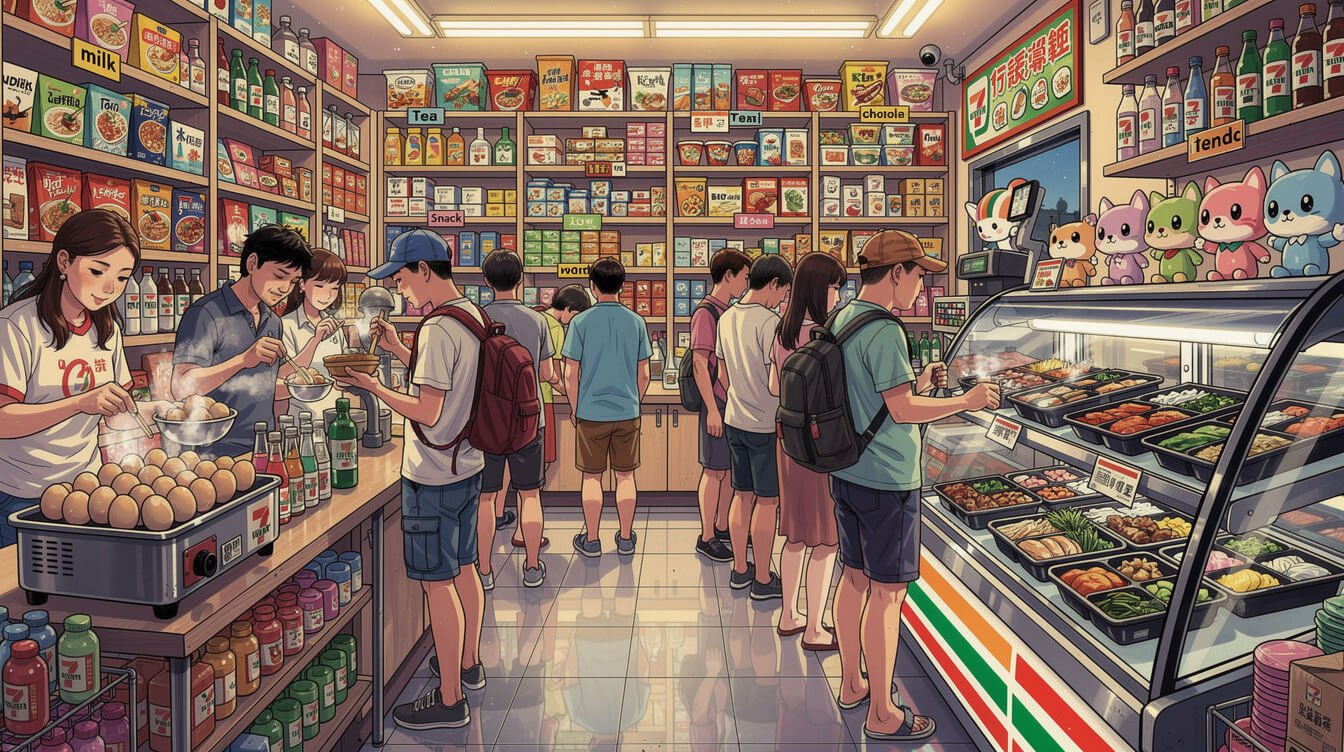
Taiwan has more 7-Elevens per capita than almost anywhere else on Earth, second only to South Korea in convenience-store density. But density alone doesn’t explain the obsession. The real story is what happens inside the store. A 7-Eleven Taiwan run isn’t a quick pit stop — it’s a functional service center where locals pay bills, ship packages, print train tickets, top up transit cards, grab a hot bento, sit down with a latte, buy lottery tickets, and pick up their online orders. All at 3 a.m., all in one building.
The chain landed in Taiwan in 1980 through Uni-President Enterprises, a homegrown food conglomerate that took the American franchise idea and rebuilt it around Taiwanese daily life. Instead of gas-station chips and slurpees, Taiwan 7-Elevens became mini social infrastructure — the sort of place your grandma stops in to pay her water bill, your college roommate goes to eat lunch, and a group of high schoolers gathers to do homework after cram school. The stores don’t just serve the community; they are the community’s rhythm.
What makes them a phenomenon rather than just useful is Uni-President’s willingness to lean into personality. Every seasonal drop is themed. Every holiday brings a new collectible line. Regional stores get regional flair — Alishan branches sell high-mountain oolong you can’t find elsewhere; Kaohsiung stores stock local snacks Taipei doesn’t. It’s the opposite of chain-store sameness. The best comparison isn’t another convenience store at all — it’s Japan’s gachapon culture, but stretched across an entire retail category. For a much broader look at the ecosystem, read our complete guide to Taiwan convenience store culture, then come back here for the collab deep-dive.
Taiwan 7-Eleven vs Japan 7-Eleven — Which One Actually Wins
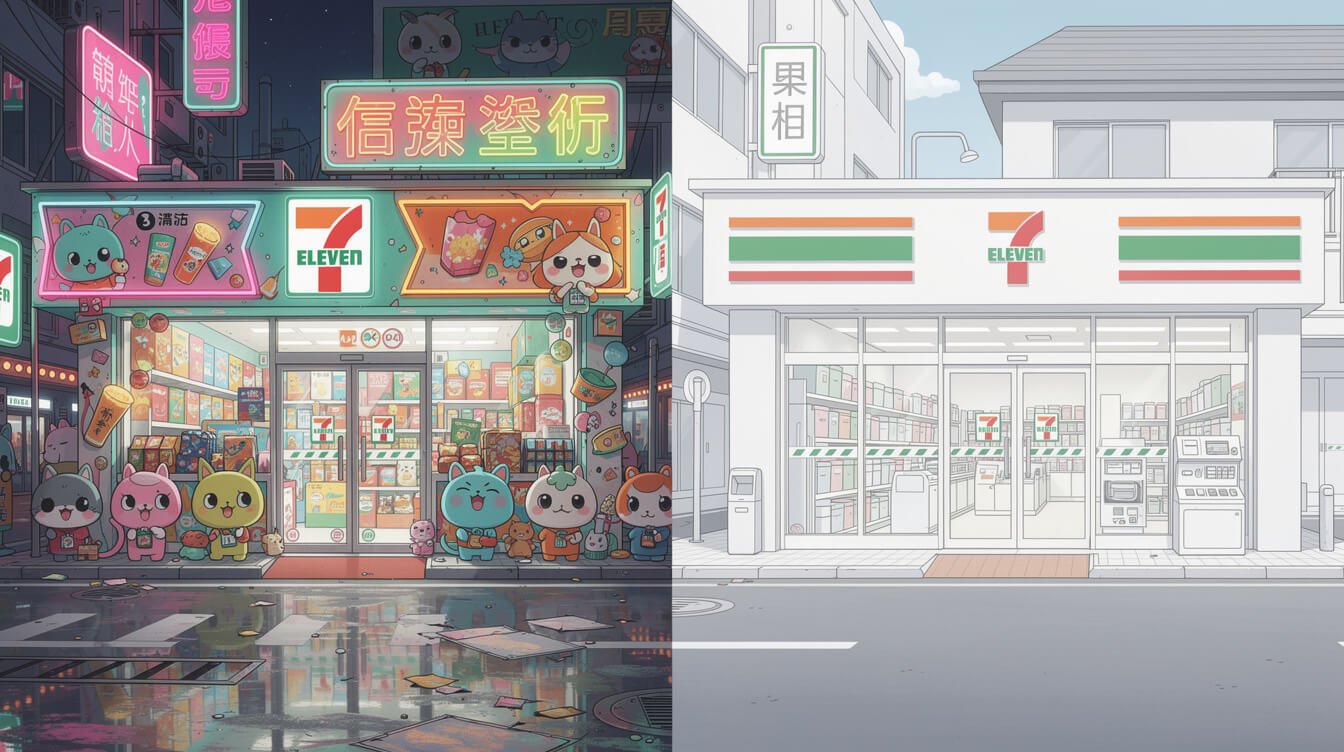
If you’ve traveled to Tokyo, you’ve probably heard “Japan 7-Eleven is life-changing.” True. Japanese konbini perfected the tuna onigiri, the egg salad sando, and the fried chicken that shouldn’t taste that good at a gas station. But Western travelers rarely make the comparison the other way — and once you spend a week bouncing between Taiwan branches, Japan’s version starts to feel restrained. Both are elite. They’re just elite at different things.
Japan 7-Eleven wins at: premium cold food (onigiri, sandwiches, salads), consistency across every location, and clinical presentation. Japanese branches feel like they were designed by a UX team — orderly, minimalist, dependable to the millimeter.
Taiwan 7-Eleven wins at: hot food (toasties, bento, microwave-with-QR-code meals), theming and character collabs, in-store seating and café setups, services (bill pay, ticketing, package pickup), and price. A full hot meal with a drink runs NT$100–150 (~US$3–5), and you get more variety than most food courts. Taiwan also blows Japan away on beverages — the smoothie bars, custom-blended coffees, and craft beer selections in Taiwan stores are constantly rotating.
The biggest structural difference is the theming. Japan’s 7-Elevens all look identical by design. Taiwan’s are constantly being redecorated — this month it’s Hello Kitty in Xinyi, next month it’s Mickey in Taichung, the following quarter it’s Mofusand in Ximending. If you’re the kind of traveler who plans stops around Instagram photos, Taiwan’s the winner by a mile. If you want the best cold sandwich of your life, Japan still holds the crown.
The takeaway: don’t skip Japan’s 7-Elevens when you’re in Tokyo. But don’t dismiss Taiwan’s as “the same idea.” They’re playing different games, and Taiwan’s game is built for anyone who came to the island for its unique cultural energy in the first place.
The Themed & Character Collab Stores — A Visual Tour
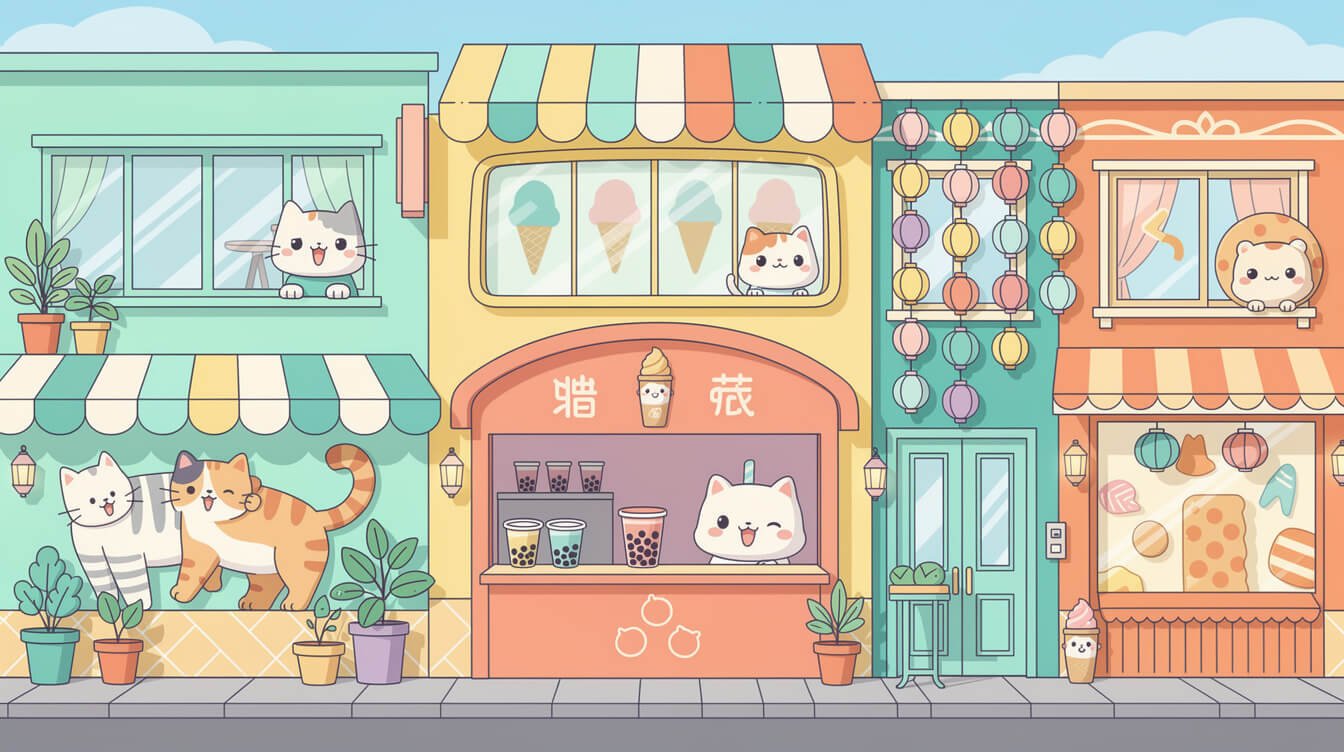
This is where 7-Eleven Taiwan stops being a convenience store and becomes a moving pop-up museum of Asian pop culture. Uni-President partners with major IP holders — Sanrio, Disney, Bandai, homegrown artists — to launch themed stores that stay open for months at a time. Some are permanent; most rotate. Here’s the current 2026 lineup worth planning around.
Mofusand (もふさんど) — the cat-and-shark internet sensation
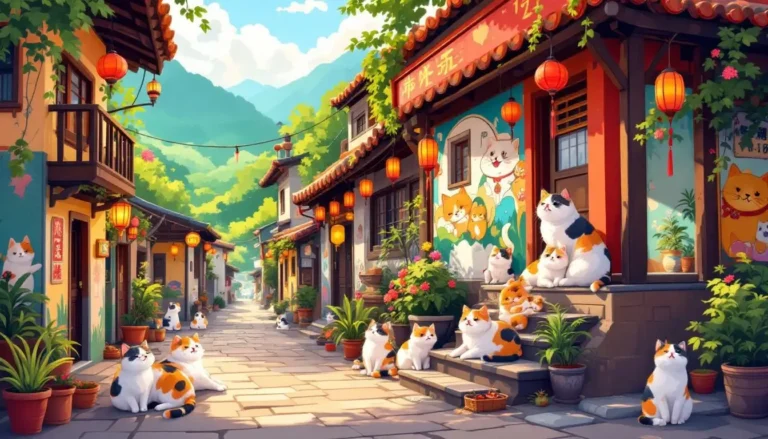
The Mofusand collab has been the biggest hit of 2025–2026. Japanese illustrator Kagawa Yuka’s chubby cats-dressed-as-things characters (shark cat, dinosaur cat, strawberry cat) took over multiple Taiwan branches, complete with wall-sized murals, custom shopping baskets, themed exclusive snacks, and a merchandise wall that empties out within hours of a drop. Look for flagship Mofusand branches around Neihu (Taipei), Ximending, and Taichung’s West District. Follow @7ELEVEN.taiwan on Instagram for drop calendars.
Hello Kitty & Sanrio
Hello Kitty stores are Taiwan’s longest-running themed 7-Eleven. Multiple locations rotate through Sanrio characters — Hello Kitty in the classic pink palette, Cinnamoroll blue-and-white winter drops, Kuromi’s edgier goth-pastel drops. Notable branches: Taipei Xinyi and Kaohsiung Meilidao.
Ultraman
The Ultraman-themed 7-Eleven near Zhongxiao Fuxing MRT and select Taichung branches are pilgrimage sites for tokusatsu fans. Life-sized Ultraman figures greet you at the entrance, and the store carries exclusive Ultraman snack packaging, keychains, and collector cards you cannot find at regular branches.
Disney (Mickey, Winnie the Pooh, Marvel)
Disney runs multiple concurrent themed branches. The Mickey store in Kaohsiung is a personal favorite — the entire exterior is red-and-yellow Mickey livery. Winnie the Pooh took over the Taichung Fengjia area in late 2025; a Marvel branch opened briefly near Taipei 101.
Starlux Airplane 7-Eleven
Genuinely one-of-a-kind: a 7-Eleven designed to look like the inside of a Starlux Airlines cabin, complete with airline seats, overhead compartments, and a service galley you can order from. Located in Taipei’s Neihu district near the Starlux HQ. Even non-aviation nerds find themselves photographing every corner.
The Cult Merch — Character Goods, Collectible EasyCards & Custom Tees
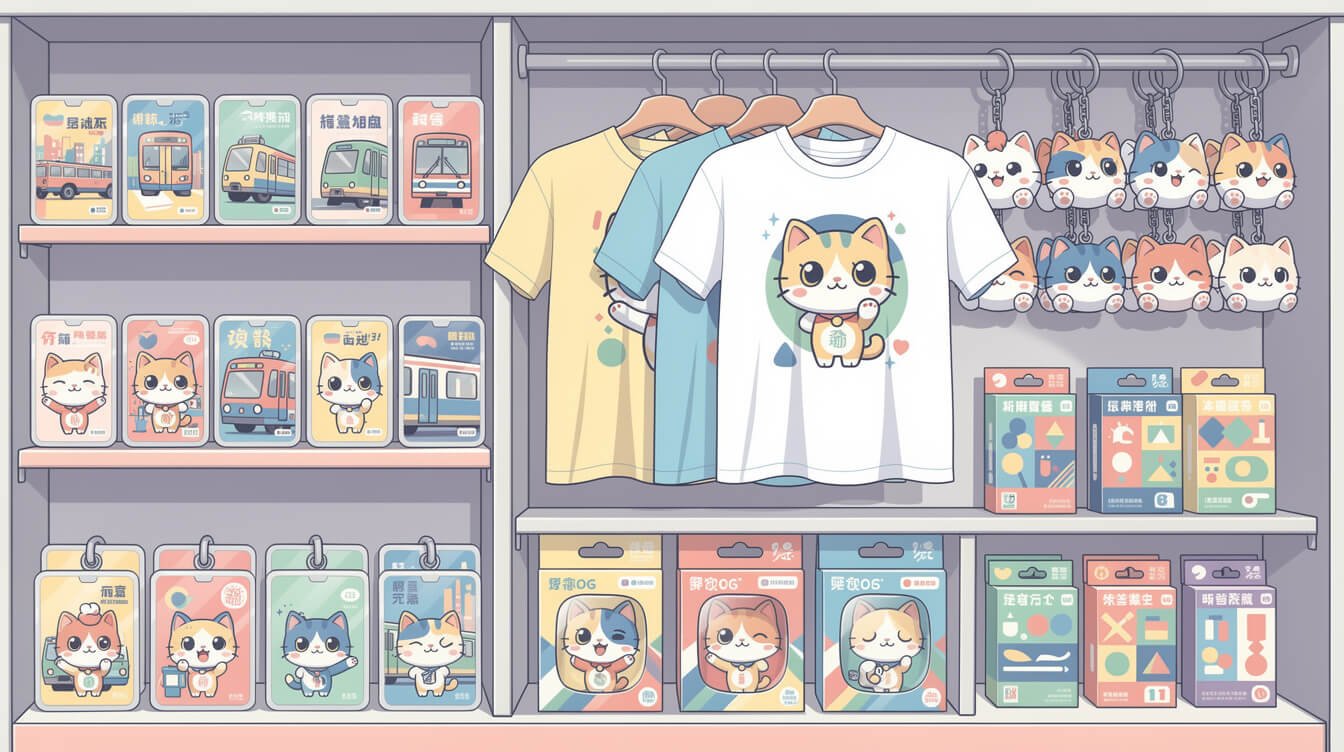
If you skip the themed stores and only go once to a normal 7-Eleven, the merchandise wall is still worth ten minutes of your time. Taiwan’s 7-Elevens have quietly become one of the biggest character-goods retail channels on the island, and much of the stock is exclusive — you cannot buy it anywhere else. Here’s what to hunt for.
Collectible EasyCards & iCash cards
The Taiwan EasyCard is the transit card you use for MRT, buses, YouBike, and small purchases — and 7-Eleven sells the best collectible designs. Character EasyCards (Mofusand, Sanrio, Doraemon, Ghibli), 45th anniversary limited editions, and film tie-ins drop regularly. Prices range from NT$100 (basic) to NT$500+ (limited plush-attached editions). Some sell out the day of launch. If you want a functional souvenir that fits in your wallet, this is it.
Exclusive character snacks & drinks
Themed collabs come with themed snacks. Mofusand had its own bubble milk tea run in 2025; Hello Kitty branches had exclusive pineapple cake tins; Ultraman drops always include limited-edition energy drink cans in illustrated packaging. Even if you don’t drink the drink, the cans are collector-tier.
Plush toys, keychains & stationery
The merchandise wall at any themed branch will have plush character keychains, standing figurines, stickers, sticky-notes, and card holders. Prices are gentler than department-store versions — NT$150–400 for most items.
Custom-printed t-shirts & tote bags
Select 7-Eleven branches (mostly in Taipei) have print-on-demand kiosks where you can design your own t-shirt or tote in under 15 minutes. It’s the sort of gimmick that shouldn’t work but does — the shirts come out surprisingly good, and it’s a legitimately fun way to kill time.
If you’re already obsessed with kawaii Taiwan culture and want to keep the vibe going after you fly home, check out our Taiwan Merch character tee collection — it’s the same aesthetic energy in wearable form, minus the collab exclusivity. Consider the Mofusand and Ghibli-adjacent designs as the closest thing to bringing a themed 7-Eleven home with you.
The Food, Ranked — Every 7-Eleven Category Worth Your Stomach Space
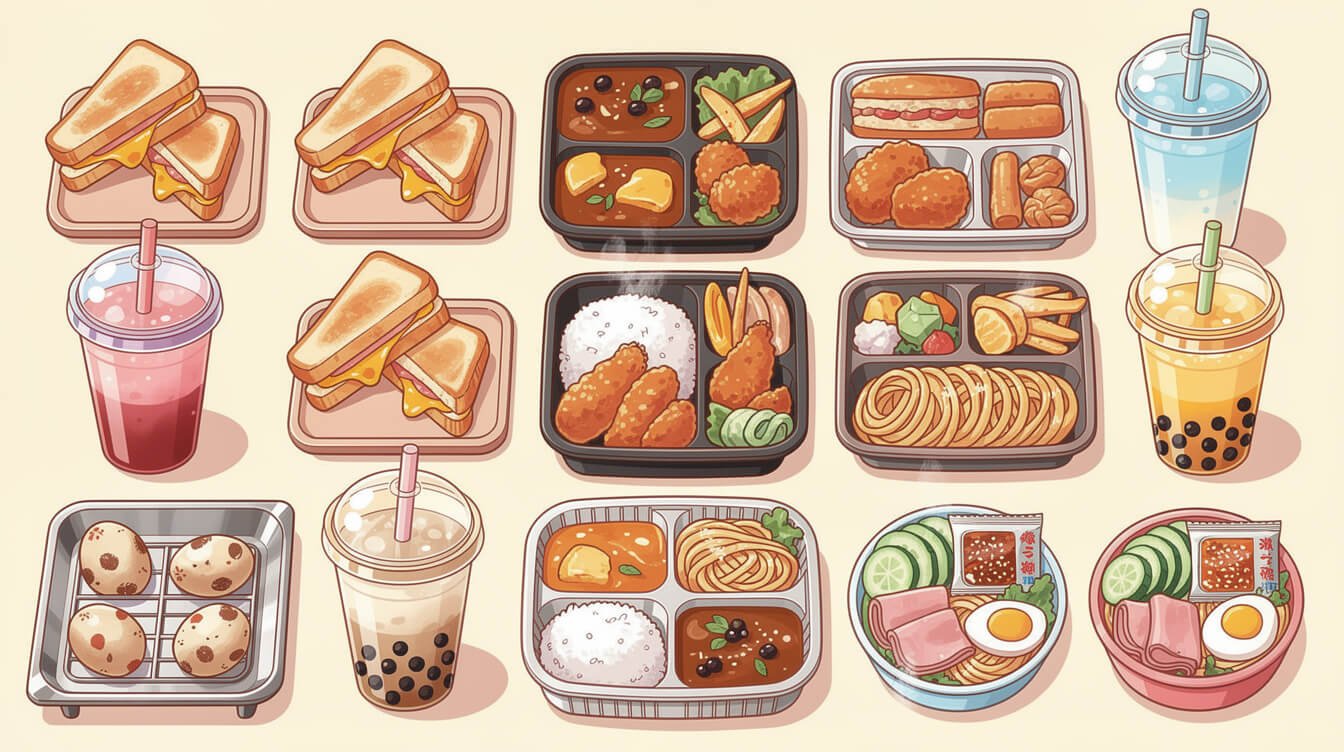
You could eat every meal in Taiwan at a 7-Eleven and still not have exhausted the menu after two weeks. But not everything is equally worth your calories. Here’s the honest ranking after way too much fieldwork.
Tier S — must try
- Toasties (烤三明治). Ham-and-cheese, tuna-corn, pizza-melt — pressed hot and handed to you in a paper sleeve. Around NT$45. Ridiculous value. Better than most airport-lounge sandwiches.
- Tea eggs (茶葉蛋). Simmered in a giant warmer near the register — soy, black tea, five-spice. NT$15 each. Buy two. Every convenience store in Taiwan sells them; 7-Eleven’s are consistently among the best.
- Microwave bento boxes (便當). Chicken chop, three-cup chicken, braised pork over rice, teppanyaki beef. Around NT$85–120. Scan the QR code on the lid; the store microwaves it to spec. Genuinely delicious, not just “good for a convenience store” delicious.
Tier A — order regularly
- City Café coffee. Freshly ground, decent beans, NT$45–65 depending on the cup. Menu goes deeper than expected — flat whites, dirty chais, seasonal iced drinks.
- Onigiri (飯糰). Not quite at Japan’s level but respectable — spicy tuna, salmon, plum, kimchi pork.
- Cold noodle sets. Sesame-oil ramen, cold soba with dipping sauce — surprisingly satisfying in Taiwan’s summer heat.
Tier B — try once
- Instant noodle bar. Every branch has a hot-water dispenser for cup noodles. Fun in a pinch, especially the exclusive Taiwan-only flavors.
- Smoothie bar (select stores). Fresh fruit smoothies to order in the newer flagship branches — mango, taro, matcha. NT$65–95.
- Craft beer selection. Way better than any American 7-Eleven — Taiwan Beer’s specialty range, plus imported Japanese and Belgian labels.
Tier C — worth a look
- Potato chips. Wasabi-mayo, seaweed, spicy squid, honey-mustard chicken — flavors you cannot find outside Taiwan. Great gifts. Add these to our full Taiwan snacks guide for a bigger haul list.
- Steamed buns. Salted egg custard, pork, red bean. Grab one for breakfast under NT$30.
Beyond Snacks — Bars, City Cafés, Ibon & the Services That Actually Run Taiwan
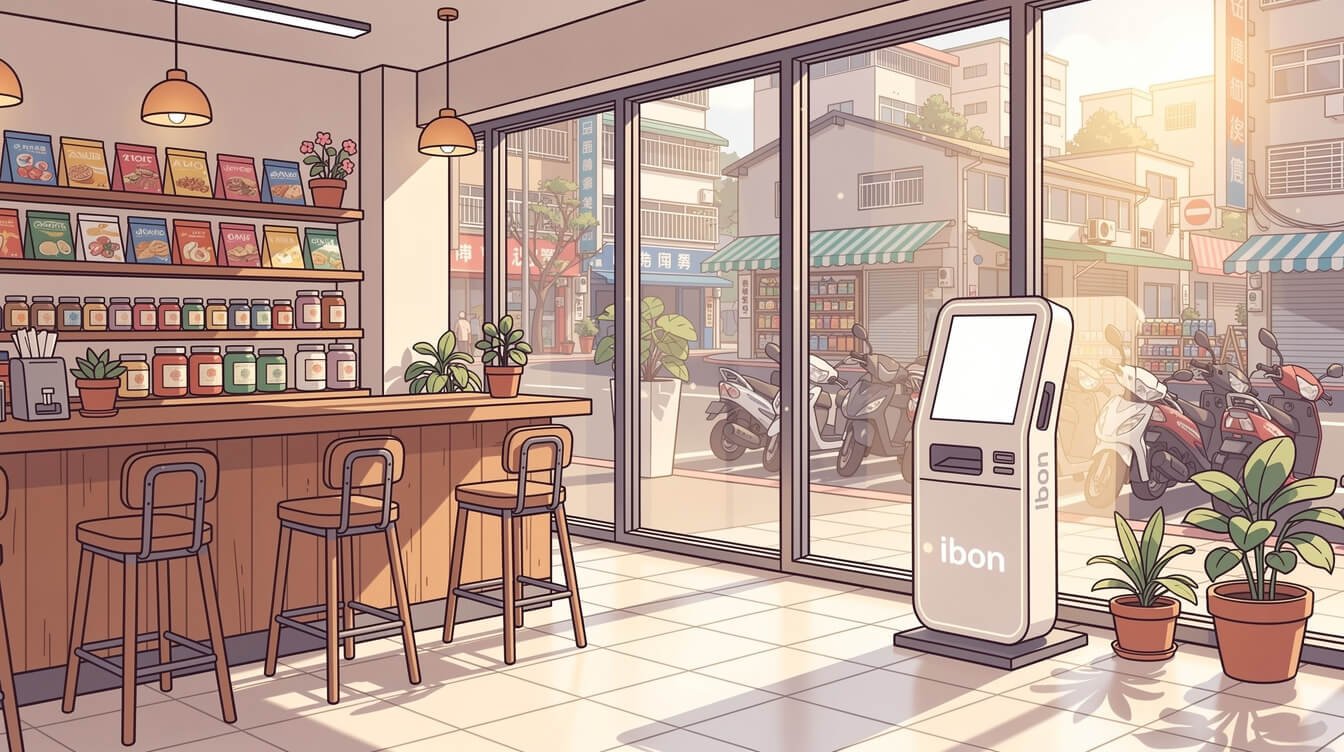
Once you understand that 7-Eleven Taiwan is functionally the country’s most-used shared service layer, everything makes more sense. Here’s what you can actually do inside one.
City Café seating & work stations
Many newer branches — especially in Taipei’s business districts and around Taichung’s Fengjia University — include full sit-down café areas with power outlets, wooden bar counters, and floor-to-ceiling windows. Bring a laptop, order a coffee, work for two hours, no one blinks. It’s the equivalent of a free co-working space with a snack aisle.
7-Eleven bars & night lounges
A small but growing number of Taiwan 7-Elevens have added beer-and-cocktail bars at the back of the store. You order at the counter, get a real glass, and drink at an actual bar. The best-known ones are in Taipei’s Xinyi and Songshan districts, and in Kaohsiung’s Yancheng. Yes, this is a normal Tuesday-night hangout for locals.
Ibon self-service kiosks
The Ibon (ibon) is the tall touchscreen machine near the register. It handles almost every logistical need a resident might have: buying high-speed rail tickets, concert tickets, movie tickets, event tickets, national exam registration, printing documents, faxing, sending packages, applying for parking passes, paying tickets, and topping up your EasyCard. Tourists mostly use it for HSR tickets and concert bookings — the interface has English toggles at the top.
Lottery, bill pay & package pickup
Every 7-Eleven sells lottery tickets, receives utility bill payments (water, electricity, gas, phone, internet, credit-card statements), and holds packages for pickup. Online shopping in Taiwan often uses 7-Eleven as the default delivery address — the store texts you when your package arrives, you show them your name and phone number, they hand you the box. It’s the reason Taiwanese e-commerce is so smooth.
ATMs, ATMs, ATMs
Almost every branch has a Chunghwa Post or E.SUN Bank ATM that accepts international cards (Cirrus, PLUS, UnionPay). Withdrawals cap around NT$20,000 per transaction with a NT$100 international fee. This is the cheapest way to get local cash if your bank charges no foreign ATM fee.
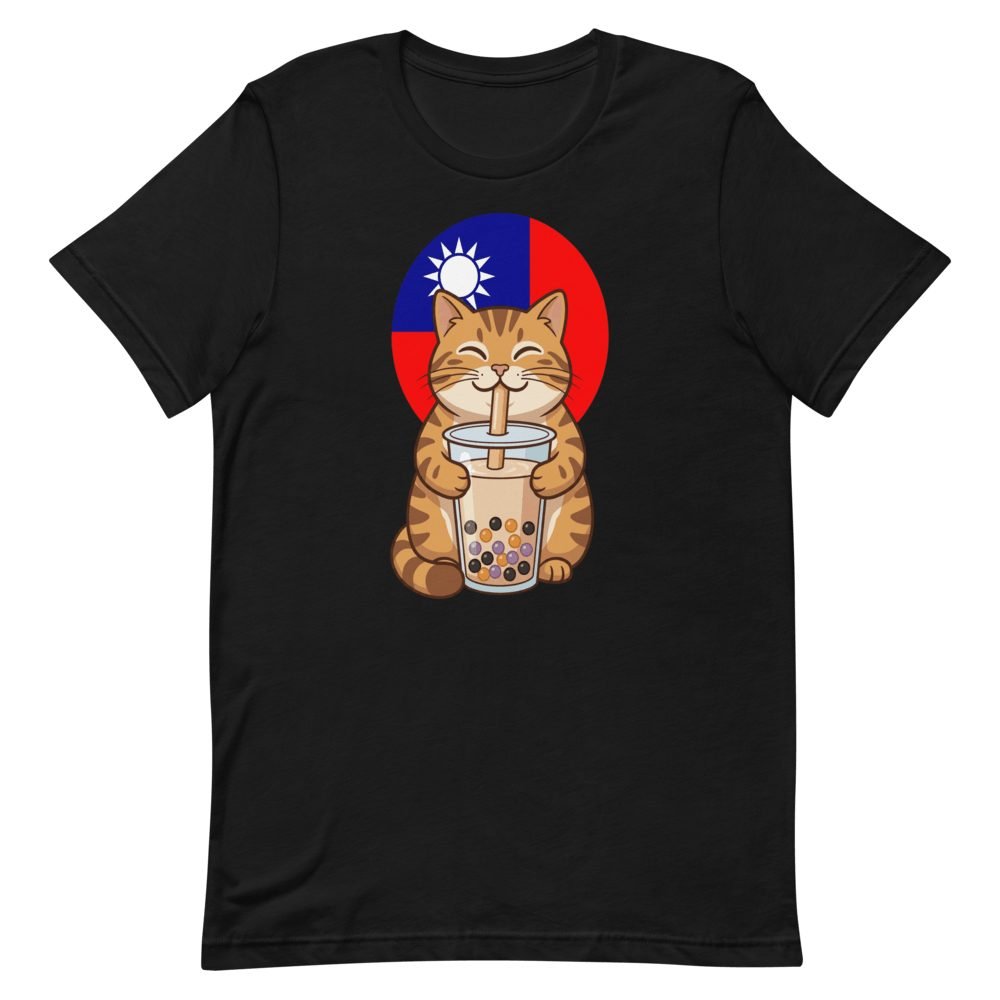
Obsessed with Taiwan Kawaii Culture?
You can’t take a themed 7-Eleven home in your suitcase — but our Taiwan Boba Tea Cat T-Shirt is the closest thing. Bring the character-collab energy back with you and wear your Taiwan obsession every day.
Frequently Asked Questions About 7-Eleven Taiwan
Is 7-Eleven Taiwan open 24/7?
Yes, nearly all branches are open 24 hours, 365 days. Themed branches sometimes have posted café-only hours (usually 7 a.m.–11 p.m. for the sit-down seating area), but the store itself stays open round the clock.
Do 7-Elevens in Taiwan accept foreign cards?
Yes — Visa, Mastercard, JCB, and UnionPay contactless work at the register. Mobile payments (Apple Pay, Google Pay, LINE Pay, and their own OPEN Wallet) also work. You can even pay with your EasyCard for anything under NT$1,000.
What’s the difference between 7-Eleven and FamilyMart in Taiwan?
Both are excellent. 7-Eleven has the largest footprint (~6,700 stores) and the biggest theming budget. FamilyMart is roughly half the size but often has better cold desserts, especially their signature roll cakes and puddings. If you’re a completionist, hit one of each on the same street and compare — this is a normal Taipei activity.
Which themed 7-Eleven should I visit if I only have time for one?
The Starlux Airplane 7-Eleven in Neihu is the most photogenic and one-of-a-kind. But if a specific character collab is running during your visit (Mofusand, Hello Kitty, Ultraman), prioritize that — those rotate out, and once they’re gone, they’re gone. Check @7ELEVEN.taiwan on Instagram before your trip.
Can I use 7-Eleven Ibon in English?
Partially. The main menu has English, but many sub-menus (concert booking, exam registration) revert to Traditional Chinese. For HSR tickets and package pickup, English works fine. For anything else, ask a staff member — they’re used to it.
Are the themed store snacks worth the higher price?
The snacks themselves are usually normal 7-Eleven prices with themed packaging. The collectible items (plush, cards, stickers) carry a premium, but the packaging is what you’re paying for — and for collectors, absolutely worth it.
How do I know when a new character collab is launching?
Follow @7ELEVEN.taiwan on Instagram — every drop is announced 2–3 weeks ahead with launch dates and participating branch addresses. The Taiwan-based fan account @711fan.taiwan also tracks unofficial store openings and secondary-market prices.
Final Thoughts — Why Every Taiwan Trip Needs at Least One 7-Eleven Pilgrimage
You don’t have to be a completionist to fall for 7-Eleven Taiwan. Even one afternoon spent wandering through a themed branch — coffee in hand, EasyCard freshly bought, camera full of Mofusand murals — will do the job. It’s genuinely one of the things that makes Taiwan feel like Taiwan. Not because a convenience store should be interesting, but because Uni-President spent forty years quietly building the world’s most personality-forward retail chain and no one outside East Asia has really noticed yet.
Bring cash, bring a folded tote bag, bring more luggage room than you think you need. You’ll fill it.
Get More Taiwan Deep-Dives Like This
Weekly cultural bites, food finds, and travel tips from Taiwan — straight to your inbox. Plus early drops on new merch.
Grab a Free Taiwan Sticker!
Drop your email and we’ll send you a limited-edition Taiwan sticker — plus insider access to new merch drops and island vibes.
No spam. Unsubscribe anytime.